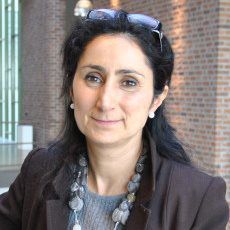
Stephanie Cronin is a Researcher affiliated with the Faculty of Asian and Middle Eastern Studies at the University of Oxford. A historian specializing in modern Iranian and Middle Eastern history, she has held academic positions at SOAS, the University of Cambridge, and the University of Oxford, where she served as Lecturer in Iranian History until 2021. Her work emphasizes history from below, focusing on marginalized communities, social protest, and state-society relations.
Amity Doolittle is a Senior Lecturer II at the Yale School of the Environment (YSE), Yale University. Her research focuses on property rights, natural resource management, and the social and political processes shaping environmental inequities. She employs interdisciplinary methods from anthropology, political science, environmental history, and political ecology. Notable projects include historical land-use studies in New Haven, Connecticut, and analyses of indigenous rights in global climate policy. She teaches graduate courses on qualitative research methods, environmental justice, and property rights, emphasizing active, collaborative learning. Doolittle holds a B.A. from Harvard University and M.E.S./Ph.D. from Yale University. Her office is located in Kroon Hall, Yale’s environmental campus. Education: B.A., Harvard University; M.E.S., Ph.D., Yale University Her research interests include legal pluralism, historical resource conflicts, and the intersection of colonial and postcolonial discourses. Current projects examine urban land-use changes in New Haven and the rhetorical strategies of indigenous leaders in climate negotiations. She advises 10–12 master’s students annually on thesis projects and placements worldwide. Teaching highlights include Qualitative Research Methods , Environmental Justice , and Political Ecology of Tropical Forests . Her courses integrate hands-on methods, such as analyzing oral histories and policy documents. Labs/Teams: Collaborates with the Urban Resources Initiative (URI) on greenspace stewardship and community-led projects.
Priya Lal is an Associate Professor in the History Department at Boston College, based in Stokes Hall. She holds a B.A. from Columbia University and a Ph.D. from New York University. Her research focuses on modern African history, particularly East Africa, with an emphasis on decolonization, nationalism, development policies, African socialism, and gender dynamics. She currently leads a project on the transnational training and labor of educational/medical professionals in post-independence southeastern Africa, supported by major fellowships from the ACLS. Her first book, African Socialism in Postcolonial Tanzania , examines the ujamaa villagization initiative and won prestigious recognition. Her work bridges micro-historical analysis with global frameworks, exploring how Tanzanian socialist policies intersected with transnational movements. Research interests include Cold War-era ideological exchanges, the gendered dimensions of developmental labor, and the material connections between African and Asian revolutionary movements. She has published widely in top journals like Humanity and Africa: Journal of the International African Institute , with articles addressing topics such as Maoism in Tanzania and the New International Economic Order. Professor Lal’s awards reflect her scholarly impact, including the ACLS Burkhardt Fellowship and a book prize honorable mention. Her teaching spans African history and global modern history, with courses emphasizing comparative postcolonial experiences. Current research expands beyond Tanzania to consider broader themes of resource sovereignty and transnational professional networks in decolonizing contexts.
Sebastian Henn is a Professor of Economic Geography at the Institute of Geography, Friedrich Schiller University Jena, where he has held the Chair since 2014. He serves as Dean of Studies for the Faculty of Chemistry and Geosciences (since 2020) and Deputy Director of the Leibniz ScienceCampus "Eastern Europe - Global Area". His research spans transnational entrepreneurship, knowledge-based regional development, cluster dynamics, polarization/peripheralization, and migration studies . Education: Dipl.-Geogr. (University of Mannheim, 2001); Dr. rer. nat. (University of Halle, 2006); Habilitation (University of Halle, 2014) Key research areas include spatial perception, mobilities, health geography, and global-local interactions in sectors like pharmaceuticals, medical technology, and the diamond industry. Publications (2013-2024) focus on global production patterns, cluster evolution, regional embitterment, and the role of transnational entrepreneurs in industries from Gujarat to Antwerp. His 2023 work explores populist resentments in rural regions and health infrastructure disparities in Thuringia. Awards include the 2017 Journal of Economic Geography Best Referee Award. He co-edits the Springer series "Perspectives in Human Geography" and holds leadership roles in academic societies like the Schumpeter Centre for Social and Economic Change. Editorial and Review Activities : Active on boards of the Journal of Economic Geography and ZFW journal. Regular reviewer for 20+ journals and funding bodies including DFG and DAAD. Leads research on BRIC investments, Southern multinationals, and spatialization processes under globalization .
Leila M. Harris is a Professor at the University of British Columbia (UBC), holding dual appointments in the Institute for Resources, Environment and Sustainability (IRES) and the Institute for Gender, Race, Sexuality and Social Justice (GRSJ). She co-directs UBC’s Program on Water Governance and is affiliated with the Department of Geography and the Peter Wall Institute for Advanced Studies. Her work focuses on environmental governance, water equity, and social justice, particularly in marginalized communities across Africa, South Asia, and Turkey. Harris’s research examines the intersection of environmental issues with inequality, gender, and ethnicity. Key projects include analyzing non-material dimensions of water insecurity (emotions, trust, belonging), water governance shifts in South Africa, Brazil, and Canada, and the socio-political impacts of emerging water testing technologies. She has led international research networks like the SSHRC-funded WaTERS program and contributed to policy briefs on water governance in Ghana, South Africa, and British Columbia. Her scholarship bridges feminist political ecology, critical development studies, and postcolonial theory. Recent work explores participatory methods, water justice in Indigenous contexts, and the human right to water. Harris has advised on water policy reforms in Canada and globally, emphasizing equity and marginalized community voices. Education: PhD (Geography), University of British Columbia (2002) Lab/Teams: Program on Water Governance, EDGES Collaborative
Jeff Sahadeo is a Professor of Russian and Eurasian History at Carleton University, affiliated with the Department of History within the Faculty of Public and Global Affairs. He specializes in contemporary Central Asia and the Caucasus, with a strong focus on empire, migration, and nationalism. BA, Simon Fraser University MA, Carleton University PhD, University of Illinois at Urbana-Champaign His research explores the intersections of empire and identity in Russia and Central Asia, with particular attention to diaspora, migration, and comparative colonialisms. He investigates how historical memory shapes ethnic relations, especially in post-Soviet contexts like Kyrgyzstan and the Ferghana Valley. His work often employs oral history and interdisciplinary methods to understand the lived experiences of marginalized groups in Soviet and imperial Russia. Jeff Sahadeo's recent scholarly output reflects a deep engagement with themes of race, urban life, and empire. His publications analyze the racialization of southern migrants in Soviet cities, the imperial administration of Tashkent, and the geopolitical dynamics of contemporary Central Asia. The articles span disciplines including history, sociology, political science, and memory studies, with recurring subfields such as postcolonial theory, urban marginality, and historical trauma. His current research projects—funded by SSHRC—include studies on rivers and societies in Soviet Georgia and the multinational character of Soviet cities like Moscow and Leningrad. Committee Member, Reginald Zelnik Prize for Best Book in History, ASEEES (2018–2019) He has advised various research initiatives and leads the Migration Research Laboratory at South Ural State University, Russia. His public engagement includes media appearances on CBC, CTV, ABC News, and CFRA, particularly during the Ukraine crisis and on issues related to Russian foreign policy. He has also contributed to policy discussions through the Global Centre for Pluralism and the Kyrgyz Presidential Commission on Historical Science. Jeff Sahadeo teaches core courses in European, Russian, and Eurasian Studies, including graduate seminars on research methodology, imperialism, and Soviet culture. He co-teaches a course on Nazism and Stalinism, reflecting his broader interest in totalitarian regimes and comparative history.
Professor Lisa De Propris is a full-time faculty member at the University of Birmingham , affiliated with the Birmingham Business School , where she holds the position of Professor of Regional Economic Development . She is actively engaged in research, teaching, and international collaboration, with a strong focus on industrial and regional economics. Her research interests include knowledge economy, innovation systems, industrial districts, clusters, regional competitiveness, technological change, and EU regional and industrial policies. She has published extensively in top-tier journals such as Regional Studies , Cambridge Journal of Economics , Urban Studies , and Journal of Economic Geography . Her recent publications highlight a consistent focus on regional transformation, Industry 4.0, digitalisation, global value chains, and policy transitions , particularly in European contexts. She explores how regions adapt to technological shifts, reshoring trends, and sustainability challenges, often through qualitative and comparative analysis. She has secured significant research funding from Horizon 2020 , FP7 , AHRC , and EPSRC-ESRC , working as a Co-investigator and Lead at Birmingham. Her projects include MAKERS , Skillup , Welfare, Wealth and Work for Europe , and Cultural Intermediation . She teaches undergraduate modules such as Economics for Business , Business Economy and Government , and Globalisation, Innovation and Competitiveness , and is open to supervising PhD students in areas related to technological change, green transitions, and regional development. She is also involved in international networks and has served as a keynote speaker for the European Commission and the Committee of the Regions .
Ivan Franceschini is a Research Fellow at the Department of Asian and North African Studies, Ca' Foscari University of Venice, and a Postdoctoral Fellow at The Australian National University's Coral Bell School of Asia Pacific Affairs. His work focuses on Chinese labor movements, civil society, and political transformations. University: Ca' Foscari University of Venice Department: Department of Asian and North African Studies Email: ivan.franceschini@unive.it Franceschini's research spans labor activism, NGO strategies, and historical narratives in China. His publications in journals like The China Quarterly and Pacific Affairs analyze state-labor relations, digital activism, and garment industry exploitation. He co-edits the Made in China Journal , exploring labor and civil society dynamics. Key article trends include comparative labor studies across China and Cambodia, legal mobilization by workers, and historical reinterpretations such as the Taiping Rebellion. His 2019 work on collective bargaining and 2018 comparative analysis of garment workers highlight systemic labor challenges.
Dr. Chelsea Fisher is Assistant Professor of Anthropology at the University of South Carolina, where she researches environmental justice, traditional ecological knowledge, and sustainable food systems. She directs the Yaxunah Haciendas and Lands Archaeological Project (PAHTY) in Yucatán, Mexico, collaborating with Maya community members to study colonial ranching sites and contemporary land relations. Education: PhD Anthropology - University of Michigan (2019) MA Anthropology - University of Michigan (2014) BA Archaeology - The College of Wooster (2011) Her interdisciplinary research bridges archaeology, environmental studies, and food systems. Fisher's 2023 book Rooting in a Useless Land examines colonial narratives, celebrity chef interventions, and Maya environmental justice. She has received numerous awards including the Louise Ann Williams Dissertation Award and multiple teaching honors. Research funding includes grants from Wenner-Gren Foundation, National Science Foundation, and U.S. Department of Education.
Xueguang Zhou is the Kwoh-Ting Li Professor in Economic Development and Professor of Sociology at Stanford University, with a joint appointment as a Senior Fellow at the Freeman Spogli Institute for International Studies (FSI). He also serves as Director of Graduate Admissions and Director of Graduate Studies in Sociology. His research focuses on institutional changes in contemporary Chinese society, particularly the Chinese bureaucracy, governance, and state-society relationships. Zhou holds a Ph.D. in Sociology from Stanford University (1991). His work includes studies on bureaucratic state evolution, rural governance, and the dynamics of China's administrative systems. Notable contributions include The Institutional Logic of Governance in China (2017) and The Dynamics of Rules (2000). Awards include the Distinguished Scholarly Contribution Award from the International Association for Chinese Management Research (2014) and a Spencer Fellowship (1993-1994). Zhou has taught at Duke University and Cornell University and is a guest professor at Peking University, Tsinghua University, and the People’s University of China. His research spans sociological analysis of organizations, social inequality, and governance models in China, with a focus on bureaucratic behavior, policy implementation, and institutional logics.
Ashley Bradford is an Assistant Professor at the School of Public Policy within Georgia Tech's Ivan Allen College of Liberal Arts. Her research focuses on the economics of risky behaviors, substance use, and the impact of public policies on health outcomes in the U.S., particularly examining drug policy innovations and housing policy intersections. She holds a Ph.D. in Public Affairs from Indiana University, an MPA from the University of Georgia, and a B.A. in Sociology from the same institution. Her work bridges policy analysis and health economics, with recent studies addressing opioid reformulations, cannabis legalization effects on mental health treatment, and the interplay between evictions and healthcare outcomes. Her research has been published in high-impact journals such as Health Affairs and JAMA Internal Medicine , and featured in major media outlets like The New York Times and Forbes . Bradford joined Georgia Tech in 2023, continuing her focus on policy interventions to address systemic issues in healthcare access, addiction treatment, and housing stability. Her interdisciplinary approach combines rigorous quantitative analysis with real-world policy applications.
David Lewis is a Professor of Social Policy and Development at the London School of Economics (LSE), specializing in South Asia and Bangladesh. His work bridges anthropology and development studies, focusing on NGOs, civil society, and the historical dimensions of development policy. He has advised international agencies like Sida, DFID, and UNDP, and his research explores 'policy amnesia' and the interplay between development narratives and grassroots realities. Research Interests Anthropology of Policy NGO Effectiveness and Critique South Asian Development Dynamics Historical Analysis of Development Interventions Entrepreneurship Advice in Bangladesh/Sri Lanka Professional Engagements Consultant for major development organizations Author/editor of influential texts including Bangladesh: Politics, Economy and Civil Society (2011) and New Mediums, Better Messages? (2022) Editor of Popular Representations of Development (2013), analyzing media's role in shaping development perceptions His work critiques top-down development paradigms while emphasizing historical context and local agency.
Christina Hertel is an Assistant Professor of Entrepreneurship and Director of the Geneva Responsible Entrepreneurship Center (GREC) at the University of Geneva (UNIGE). She holds a PhD from the Technical University of Munich (TUM School of Management) and completed a postdoctoral fellowship at the École Polytechnique Fédérale de Lausanne (EPFL). Her research focuses on the intersection of entrepreneurship, sustainability, and collective action, particularly exploring community-based approaches for sustainable local development and impact measurement for responsible businesses. Christina leads a Swiss National Science Foundation-funded research project on community entrepreneurship and civic wealth creation. Her work bridges academic research with practical applications, collaborating with startups, incubators, and policymakers to design strategies that enhance economic, social, and environmental impact. She aims to establish Geneva and UNIGE as global hubs for responsible entrepreneurship. In teaching, she emphasizes experiential learning, designing courses that empower students to tackle real-world challenges. She organizes GREC events to foster student engagement in responsible entrepreneurship. Her research has been published in top journals like the Journal of Business Venturing and Academy of Management Discoveries, and she actively presents at international conferences such as the Academy of Management Annual Meeting and Social Entrepreneurship Conference. Key initiatives include developing frameworks for community resourcefulness in new ventures and advancing standards for responsible entrepreneurship. Her contributions span academic publications, policy engagement, and educational programs, all aligned with fostering sustainable and impactful business practices.
Hannes Schammann is Professor of Political Science with a focus on migration policy at the University of Hildesheim , where he leads the Migration Policy Research Group since 2018. His work bridges academic research and practical implementation through the Research and Transfer Center for Migration Policy , addressing migration, integration, and refugee policy challenges. In January 2025, he joined the German Council of Experts on Integration and Migration (SVR) as a scientific advisor. Research Focus: Schammann specializes in local authorities' scope for action in refugee-related migration, national migration policy analysis, and educational integration aspects. He co-authored the textbook Migration Policy (2021) and contributes to international journals like Journal of Refugee Studies and Journal of Ethnic and Migration Studies . Key Projects: He leads third-party funded initiatives including Match'In (algorithmic asylum seeker distribution), SOLDISK (solidarity discourses in migration), Country.Home.Future (rural integration), When Mayors Make Migration Policy (municipal EU influence). Expert Engagements: Schammann serves on editorial boards including Zeitschrift für Flucht- und Flüchtlingsforschung , and participates in advisory roles for institutions like the German Federal Ministry for Family Affairs and Robert Bosch Foundation . He also engages in public discourse through media appearances in Deutschlandfunk , ARD , and SWR regarding migration challenges.
Miriam Stock is Professor of Cultural Studies at the Institute of Humanities at Pädagogische Hochschule Schwäbisch Gmünd, where she also serves as Director of the Cultural Studies Department and Spokesperson for the Master's program 'Interkultur und Integration.' She is a founding member of the Center for Migration and Integration Studies 'Migration – Society – School.' Dr. Stock holds a PhD in Geography from Europa-Universität Viadrina Frankfurt (Oder) and completed her diploma in Geography at Ludwig-Maximilians-Universität München. Her academic journey includes research fellowships, organizational roles in international projects, and advisory work with refugee communities. Her research focuses on migration geographies, cultural theories, postcolonial approaches, urban development from post-migrant perspectives, and qualitative research methodologies. She examines migration and flight between the Arab region and Europe, urban development and consumption, rural perspectives on migration society, anti-discrimination in schools, critical masculinity and family studies, and theoretical-practical approaches. Dr. Stock's recent publications reveal a strong emphasis on transnational migration experiences, particularly Syrian refugee families, with attention to emotional dimensions, gender dynamics, and educational contexts. Her work frequently bridges theoretical frameworks with practical applications through projects like Erasmus Mundus Joint Master Program 'Education, Migration, and Diversity' (2024-2030). Success Story 2020 award for the Enable project As an advisor, Dr. Stock has supervised PhD candidates like Sara Mazzei (University of Calabria/PH Schwäbisch Gmünd) working on Arab-Islamic education systems in migrant experiences. Her grant portfolio includes significant Erasmus+ projects such as Enable (Self-learning for Arab refugee children) and PARENTable (Communicating with parents of newly migrated children), alongside research funded by the Werner-Zeller Foundation. Dr. Stock leads the Institute for Humanities and directs Cultural Studies department activities, including organizing lecture series on topics like 'Right Established - How the New Right Changes Education and Society,' 'Migration and Body,' and 'Emotions in Migration Society.'