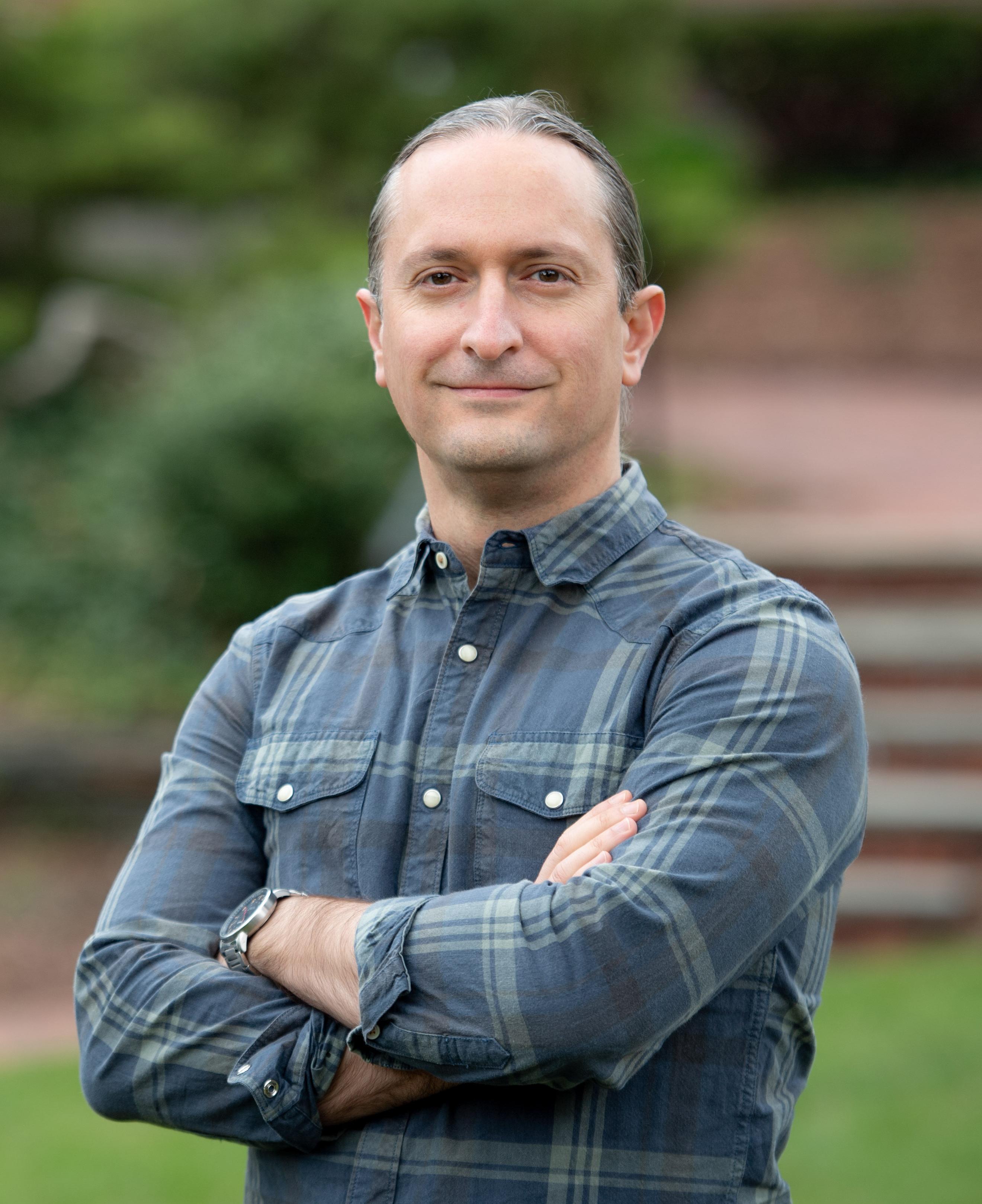
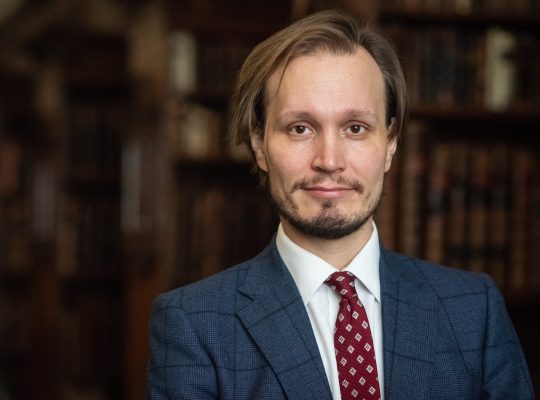
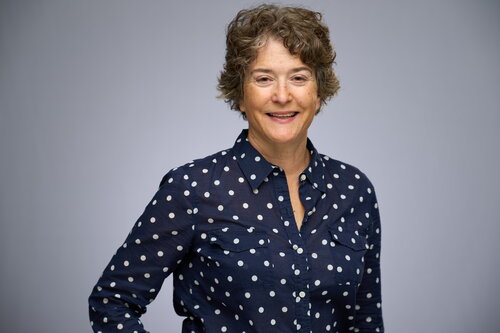
Prof. Dr. Wouter van der Brug is a full-time Professor at the University of Amsterdam 's Faculty of Social and Behavioural Sciences , specializing in democratic representation and electoral behavior. His research focuses on populist parties, voter dynamics, and European integration. Current affiliation: University of Amsterdam Academic rank: Professor Email: W.vanderBrug@uva.nl Research interests include: Generational political alignment and dealignment Populist party support and parliamentary behavior Regional disparities in voting patterns European integration and institutional trust Urban-rural political divides Authoritarian attitudes and far-right voting Recent publications analyze 2024 European Parliament elections, fiscal austerity effects on EU trust, and youth political cognition. His work combines comparative politics, political psychology, and electoral geography across 15 recent articles. Contact: W.vanderBrug@uva.nl | +31 (0)20 000 00000
Andrew Scherer is the Pierre and Patricia Bikai Professor of Anthropology and Archaeology at Brown University, where he also serves as Director of the Joukowsky Institute for Archaeology and the Ancient World. His work focuses on Mesoamerican (particularly Maya) archaeology, integrating bioarchaeology, landscape analysis, and political studies to examine Classic Maya polities along the Usumacinta River. Co-directs interdisciplinary projects in Mexico/Guatemala (Lacanja Tzeltal, Piedras Negras, Tikal, El Zotz, Yaxha) Research themes: mortuary archaeology, ritual practice, warfare, political organization, and diet/subsistence Selected Publications : As the Gods Kill: Morality and Social Violence among the Precolonial Maya (2025), Mortuary Landscapes of the Classic Maya (2015), and co-edited volumes including Substance of the Ancient Maya (2024) and Embattled Bodies, Embattled Places (2014). Research Funding : Multiple NSF grants (2003-2015) National Geographic Society support (2009) Wenner-Gren and Heinz Trust grants Academic Affiliations : Society for American Archaeology, Dental Anthropology Association, Dumbarton Oaks (as Pre-Columbian Fellow 2008-2009) Teaching : Courses on human evolution, bioarchaeology, Maya violence studies, and archaeological principles at Brown University.
Colin Jerolmack is a Professor of Sociology and Environmental Studies at New York University, where he also served as Chair of the Environmental Studies Department (2017–2023). His work bridges ethnography, environmental sociology, and human-animal studies. He holds a Ph.D. in Sociology from the City University of New York (2009) and a B.S. in Psychology from Drexel University (2000). Research Interests: - Ethnography of urban and rural communities - Environmental policy and climate change impacts - Human-animal relations (e.g., The Global Pigeon ) - Social theory and qualitative methodologies Key Publications: - Up to Heaven and Down to Hell (2021): Explores fracking's social and environmental impacts in rural Pennsylvania. - The Global Pigeon (2013): Analyzes urban human-animal interactions. - Over 40 peer-reviewed articles on ethnography, climate justice, and animal studies. Media & Outreach: - Featured in The New York Times , Los Angeles Review of Books , and podcasts like Stand Up! with Pete Dominick . - Regular contributor to climate and energy policy discussions. Awards: - PROSE Award Finalist (2021) for Up to Heaven and Down to Hell . - Recognized for interdisciplinary contributions to environmental sociology. Labs & Initiatives: - Co-founded NYU's Animal Studies Master's program and Center for Environmental and Animal Protection.
Simon Partner is a Professor of History at Duke University specializing in late 19th- and 20th-century Japanese history. His research focuses on consumer markets, technology’s role in social change, and Japanese rural society. He holds degrees from Columbia University (Ph.D. 1997), the University of Cambridge (B.A. 1980, M.A. 1985), and the University of Manchester (M.B.A. 1984). He has authored multiple acclaimed books, including *Koume’s World* (2024) and *The Merchant’s Tale* (2017). Partner has received prestigious awards like the Humboldt Research Award (2015). His recent publications analyze samurai women’s lives, Meiji-era social dynamics, and the cultural impact of technological adoption. He teaches courses on modern Japanese history, global rural life, and pedagogy. Partner’s work bridges historical analysis with interdisciplinary methods, emphasizing archival research and comparative frameworks.
Professor Vili Lehdonvirta is a leading academic in digital economies and platform governance, holding dual roles as Professor of Economic Sociology and Digital Social Research at the University of Oxford’s Oxford Internet Institute (OII) and Professor of Technology Policy at Aalto University’s Department of Computer Science. He leads the Digital Economic Security Lab (DIESL) and has advised the European Commission, OECD, and World Bank on digital policy. His work focuses on the geopolitical implications of digital infrastructure, including cloud computing and AI compute resources, and the governance challenges posed by digital platforms. Education: PhD in Economic Sociology (University of Turku, 2009), MSc in Information Networks (Helsinki University of Technology, 2005), and studies in Law (National University of Singapore, 2023-2024). Prior to academia, he worked as a software developer and game programmer. Research Interests: Geopolitics of digital infrastructure, platform governance, AI compute distribution, cloud sovereignty, and the intersection of technology policy with international relations. His influential books *Cloud Empires* (MIT Press, 2022) and *Virtual Economies* (MIT Press, 2014) explore how digital platforms reshape economic and political landscapes. Key Projects: GEOCLOUD (mapping global cloud infrastructure), Political Geography of AI Infrastructure (tracking AI compute resources), and iLabour (examining platform labor markets). His research has been supported by major grants from the European Research Council and UK ESRC. Awards: PROSE Award Finalist (2023), multiple ERC grants, and advisory roles on EU expert groups. He co-organizes the SASE Digital Economy Network and sits on editorial boards of journals like *Information Society*. Labs/Teams: Leads the DIESL lab at OII, collaborating with global researchers on digital infrastructure geopolitics and policy strategies. Supervises doctoral students exploring AI governance, platform monopolies, and public sector AI projects.
University of Illinois Urbana-ChampaignUnited States
Elizabeth T. Powers is an Associate Professor in the Department of Economics at the University of Illinois at Urbana-Champaign (UIUC), serving as Director of Undergraduate Programs. She holds affiliations with the Institute of Government & Public Affairs (Partnering Scholar), Family Resiliency Center, and Center for the Study of Global Gender Equity. Her research focuses on public policy impacts on well-being, caregiving systems, child development, and gender disparities in economics education. Dr. Powers earned her Ph.D. from the University of Pennsylvania and B.A. from Vassar College. Prior roles include economist positions at the Federal Reserve Bank of Cleveland and U.S. Council of Economic Advisers. Her work has influenced policy decisions, including Supreme Court rulings on caregiver labor disputes and state-level childcare regulations. She has conducted groundbreaking studies on childcare program efficacy during crises, gender participation in economics fields, and long-term care workforce challenges. Current projects address childcare infrastructure resilience and parental decision-making. Her research has been supported by grants from institutions like the Joint Centers for Poverty Research and Michigan Retirement Research Center. Awards include recognition for policy-relevant scholarship, though no explicit awards are listed. Public service includes data analysis for Illinois Department of Human Services and expert testimony in critical social welfare cases.
Noemi Vergopolan is an Assistant Professor in Earth, Environmental and Planetary Sciences at Rice University. Her research focuses on computational hydrology and the water-climate nexus, leveraging satellite remote sensing, machine learning, and high-performance computing to improve hydrological prediction and decision-making for water resource management. Education: B.S. in Environmental Engineering (Federal University of Paraná), M.A. and Ph.D. in Civil and Environmental Engineering (Princeton University). Research Interests: Computational hydrology, satellite remote sensing of soil moisture, Earth system modeling, and the water-energy-food nexus. Her work emphasizes scalable approaches for high-resolution hydrological prediction and bridging gaps between local and global monitoring systems. Awards: 2022 American Geophysical Union - Science for Solutions Award 2022 Paul F. Boulos Excellence in Computational Hydrology Award Her research includes developing frameworks like HydroBlocks and SMAP-HydroBlocks for field-scale hydrological modeling, advancing drought monitoring, and integrating machine learning with climate models. Current projects address flash drought dynamics, agroforestry systems, and hyper-resolution soil moisture applications in India and Malawi.
Godwin Arku is a Professor at the Department of Geography and Environment at Western University, holding the title of Western Faculty Scholar. His research focuses on regional economic development policy, urban development, immigrant integration, and global development challenges. He has supervised numerous PhD and Master's students, guiding their research on topics ranging from climate resilience in Ghana to housing experiences of caregivers in Canada. His work frequently addresses policy implementation gaps and urban transformation in Global South contexts, with a particular emphasis on Africa. Arku has contributed extensively to academic discourse through over 100 publications in journals such as Urban Affairs Review , Journal of Urban Affairs , and Canadian Geographer . His collaborative projects often examine how local governments navigate crises like plant closures and pandemics, emphasizing the importance of face-to-face interactions in economic resilience. He co-leads research initiatives on SDG localization in Ghana, migration impacts, and climate adaptation strategies for vulnerable communities. Notable areas of contribution include: Urban policy analysis in Accra and Harare Climate change resilience among smallholder farmers Integration challenges for live-in caregivers in Ontario Rights of street vendors in African cities Reconceptualizing immigrant integration frameworks His teaching portfolio includes courses on Economic Geography, Urban Development, and Global Urban Issues, reflecting his commitment to linking academic theory with policy practice. Arku's work bridges multiple disciplines, consistently emphasizing the intersection of spatial politics, economic dynamics, and human well-being in development contexts.
Carol Hunsberger is an Associate Professor in the Department of Geography and Environment at Western University. Her research focuses on political ecology, energy justice, biofuels, pipeline politics, and environmental governance. She examines how energy projects impact livelihoods and ecologies, and how discourses around climate change, economic priorities, and development influence governance and decision-making processes. Her work emphasizes justice and fairness in energy systems, particularly in Canada, though she has prior research experience in Kenya and Puerto Rico. Teaching interests include courses on energy and power dynamics, environmental justice, and climate change. She supervises graduate students in interdisciplinary studies, including topics like urban cycling behavior, Indigenous resistance to pipelines, and corporate social responsibility in Africa’s mining sector. Her research has been published in journals like Energy Research & Social Science, GCB Bioenergy, and The Canadian Geographer. Hunsberger’s recent publications analyze Canadian pipeline reviews, energy transition discourses, and biofuel policies. She critiques regulatory processes and advocates for inclusive decision-making frameworks. Her work bridges academic research with policy implications, addressing global environmental challenges through a justice-oriented lens.
Overview Jasper van Vliet is an Associate Professor in Land Use and Urban Development at the Vrije Universiteit Amsterdam's Faculty of Science, specializing in Environmental Geography. His research focuses on understanding land use change, urban development processes, and their impacts at global to local scales, with particular attention to food systems and human settlements' role in land use dynamics. He leads initiatives such as the VIDI-funded 'Guiding human settlements towards sustainable development' project and the RUGBIS project on urban densification's ecological impacts. Education PhD in Geo-Information Science, Wageningen University (2013) MSc in Geo-Information Science, Wageningen University (2006) Research Interests Dr. van Vliet's work integrates methodologies like spatial analysis, land use modeling, and case studies to address challenges in sustainable development. His current projects explore trade-offs between urbanization and biodiversity conservation, food security in Southeast Asia, and the spatial structuring of cities across regions. He emphasizes multi-scale approaches to bridge rural-urban divides and advance SDG-aligned policies. Key Contributions Recent publications highlight his focus on rural-urban biodiversity threats, Lao PDR's agricultural sustainability, and global urban land-use equity. He has pioneered studies on solar energy infrastructure siting in the EU and comparative urban spatial structures across continents. His work consistently bridges empirical analysis with policy-oriented solutions. Awards & Grants NWO Vidi Grant (2019) for sustainable human settlement research Teaching & Mentorship As program director for the Bachelor in Earth, Economics, and Sustainability, he teaches GIS, land use change, and urban development courses. He actively supervises student theses and collaborates with international teams on projects like the SDG food initiative in Laos and Myanmar. Labs & Collaborations His research involves partnerships with institutions like PBL Netherlands Environmental Assessment Agency, TU Delft, and the Athena Institute. Key projects include land-use modeling capacity building in the Mekong region and urban vulnerability assessments globally.
Beshara Doumani is the inaugural Mahmoud Darwish Professor of Palestinian Studies and Professor of History at Brown University. He also holds the former title of Joukowsky Family Distinguished Professor of Modern Middle East History (2012-2020). As founding director of Brown's Center for Middle East Studies (2012-2018), he spearheaded New Directions for Palestinian Studies and contributed to the Palestinian Museum's strategic planning (2009-2011). His academic journey includes tenures at UC Berkeley and the University of Pennsylvania, alongside fellowships at institutions like the Woodrow Wilson Center and the Institute for Advanced Study, Princeton. His research focuses on marginalized histories of the Middle East, emphasizing Palestinian social, economic, and legal dynamics. Notable works include Rediscovering Palestine (1995) and Family Life in the Ottoman Mediterranean (2017). He has also edited key volumes on family history and academic freedom post-9/11. Education: PhD (1990), MA (1980) from Georgetown University; BA (1977) from Kenyon College Research Interests: Ottoman social history, Palestinian Studies, displacement phenomena, academic freedom Recipient of the 2015 Mellon Foundation Sawyer Seminar Award for interdisciplinary work on displacement's global impact. His current project explores Palestinian history through stone's socio-cultural significance. Awards: Mellon Sawyer Seminar Award (2015) Woodrow Wilson Fellowship (1997-1998) Radcliffe Institute Fellowship (2006-2007) Teaching & Leadership: Courses include History of the Palestinians, Middle East Studies, and displacement studies. Served as President of Birzeit University (2021-2023).
Nathan Tabor is an Assistant Professor of History at Western Michigan University specializing in Muslim South Asia and the wider Middle East. His research focuses on Urdu and Persian literatures from the early modern period to present, examining sociability and the construction of publicity in Islamicate societies through ethnographic, historical, and digital humanities approaches. Dr. Tabor holds a Ph.D. in Asian Cultures and Languages from The University of Texas at Austin (2014). His teaching portfolio includes World History Since 1500, History and Film, and specialized courses on the Modern Middle East. His research explores cultural institutions like the musha'irah (poetry gatherings), wrestling manuals as cultural artifacts, and the emergence of populist Muslim voices in Urdu literature. Current projects investigate drugs and trade on the Indian Ocean and Islamic devotional musics. He leads a Department of Education-funded initiative developing undergraduate courses on Hindi language and South Asian culture at WMU.
Erika Wolters is an Assistant Professor in Political Science at Oregon State University's School of Public Policy. She also serves as Associate Director for the Public Policy Undergraduate Program and Water Resources Policy and Management Graduate Program. Her roles include leadership in OSU's Policy Analysis Laboratory (OPAL). Affiliated with the College of Liberal Arts, her work integrates environmental policy, science communication, and community resilience. Education: PhD in Environmental Science (OSU, 2012), MA in Environmental Studies (CSU Sacramento, 2000), BA in Political Science (UC Davis, 1995). Professional experience includes EPA National Advisory Committee membership and OPAL directorship. Research focuses on environmental politics with emphasis on climate change, water policy, wildfire mitigation, and the Food-Water-Energy Nexus. Key themes include public policy preferences, socio-cultural factors in environmental decision-making, and science-policy interactions. Recent work examines rural policy dynamics and coastal adaptation strategies. Publications span over 25 peer-reviewed articles and book chapters, including edited volumes on Western public lands and climate change framing. Her work bridges empirical research with actionable policy insights.
Evangeline Linkous is an Associate Professor and MURP Program Director at the University of South Florida (USF) School of Public Affairs. She specializes in land use policy, growth management, rural planning, and coastal community development. Her research explores fiscal instruments in land policy, institutional governance, and market-based tools like Transfer of Development Rights (TDR). Dr. Linkous holds a PhD and Master's from the University of Pennsylvania and a BA from New College of Florida. She has served on the Hillsborough County Planning Commission and is actively involved with the American Planning Association. Her work bridges academic research with community-engaged projects, addressing topics like Florida’s growth management challenges and coastal adaptation strategies. Education: PhD (2012) and Master’s (2004) in City/Regional Planning from University of Pennsylvania; BA in English (1998) from New College of Florida. Research interests include land use law, urban/rural interface dynamics, and sustainable development. Recent work examines TDR programs nationally and post-socialist planning in Tbilisi. She has published in top journals like the Journal of the American Planning Association and Urban Affairs Review. Grants include a Fulbright award (2021-2022) for research in Georgia/Tbilisi State University, USF MURP fellowships, and FDOT transportation planning grants. Awards include 2021 Planner of the Year and recognition for community-engaged teaching. Labs/Initiatives: Leads USF’s MURP program and collaborates on projects like Tampa’s Coastal Area Action Plan. Engages in town-gown partnerships to promote diversity in planning education.
Paolo Buono is Associate Professor at the Department of Computer Science, University of Bari Aldo Moro, Italy. He holds a PhD in Computer Science with specialization in Visual Data Analysis. His research focuses on Information Visualization, Visual Analytics, Human-Computer Interaction, and Mobile Applications. Co-founder and CEO of LARE (2010), a university spinoff providing real-time surgical support through audio-video telestration Member (since 2002) and computer science coordinator at METEA Research Center for environmental protection Visiting scientist at AVIZ (France), University of Maryland (USA), and Fraunhofer IPSI (Germany) His work spans multiple application domains including: Cultural Heritage through interactive exploration systems Healthcare with smart therapeutic devices Environmental Monitoring via CET system IoT-based Smart Interactive Experiences He has contributed to: Dynamic hypergraph visualization techniques End-User Development frameworks (EUDroid) Usability evaluation methodologies Mobile health applications As project leader, he has coordinated: EU-funded VisMaster Coordination Action (2008-2010) Italian Ministry-funded LOGIN project (2014-2015) Apulia Region environmental projects His professional engagements include: Co-chair roles at INTERACT, AVI, IS-EUD conferences Program committee participation in VIS series and HCI conferences Member of ACM, IEEE, and SIGCHI Italy