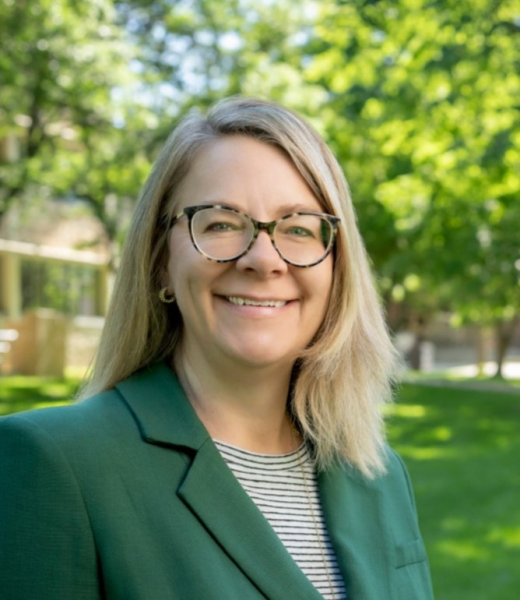
Mario Artuso is an External Lecturer and Teaching Assistant at the Interuniversity Department of Territorial Sciences, Planning and Policies (DIST) under the College of Architecture and Design at Politecnico di Torino. He has been delivering courses since 2019/20 academic year, focusing on Urbanism, Sustainable Design, and Heritage Conservation modules. Teaching Roles: Course Lecturer for Urbanism (2024/25, 2023/24, 2022/23, 2019/20), Heritage Renovation (2021/22), Atelier Urban Design E (2020/21), and City and Territory Studio (2019/20). Email: mario.artuso@polito.it Research Interests: His work bridges urban planning with local policy analysis, emphasizing sustainable development and heritage conservation. Publications explore urban agriculture in Turin's metropolitan area, global urban prosperity metrics, taxation-driven sustainability in Sub-Saharan African cities, and academic cooperation frameworks. Publication Trends: 50% of his works focus on Sub-Saharan Africa urban challenges, 40% on European sustainable urban practices, and 30% on heritage integration in city planning. Keywords cluster around Urban Development , Policy Analysis , and International Cooperation .
Anna Weissman is a Political Scientist completing her PhD at the University of California, Berkeley in 2025. She will join the Center for the Study of Democratic Politics at Princeton University as a Postdoctoral Fellow starting September 2025. Her academic home is within the Department of Political Science in the College of Letters and Science at UC Berkeley. PhD, Political Science, University of California, Berkeley (2025) B.A., Political Science, Philosophy, and German, Tufts University Weissman's research focuses on representation, local political economy, and political geography, with specific attention to who holds power in American local governments and how this drives policymaking. Her work examines municipal officials' embeddedness in their communities and the implications for policy outcomes, particularly relating to land use, with special interest in small-town and rural America. Another significant branch of her research investigates attitudes about descriptive representation at the national level. She employs diverse methodological approaches including causal inference designs for observational data, text analysis, and original surveys and survey experiments. Her publication record shows a strong focus on representation and local politics, with articles appearing in top political science journals including the Journal of Politics and the Journal of Political Institutions and Political Economy. Her work demonstrates consistent attention to how representation functions across different political contexts and scales. Research Associate, Political Science Department, MIT (prior to graduate school) Weissman has served as a Graduate Student Instructor and Tutor at UC Berkeley for multiple courses including Decision Analysis and Quant Methods, Politics of Public Policy, Introduction to American Politics, and research methods courses. Her teaching experience spans both graduate and undergraduate levels, demonstrating her commitment to political science education. Her research portfolio includes significant work on local government dynamics, representation, and political behavior, with several publications in prestigious journals and multiple works in progress examining the relationship between place-based attachment and political attitudes.
Professor Rachel V Harrison is a leading academic in Thai Cultural Studies at SOAS University of London. Her work bridges cinema, modern literature, postcolonial theory, and gender studies, with a focus on Thailand and mainland Southeast Asia. She also contributes to medical humanities and public engagement, particularly in Northeast Thailand (Isan) and Laos. Education: BA and PhD from the University of London. Roles: Professor of Thai Cultural Studies, Steering Committee Member of MA Cultural Studies. Research Interests : Cultural studies, cinema, and gender analysis intersect with themes of Orientalism, cultural difference, and literary criticism. Her work explores medical humanities and the comparative study of Southeast Asian literatures. She emphasizes the interplay between traditional and modern elements in Thai cultural production. Recent Publications : Harrison’s scholarship spans Thai cinema, postcolonial identity, and healthcare access for sex workers. Her 2025 article Entangled Worlds, Situated Knowledge highlights cultural context in global-local dynamics. Earlier works examine folk legends, masculinities, and eroticism in Thai literature. PhD Supervision : She has guided students on topics like Thai literature, diasporic identities, Burmese women’s writings, and Thai cinema’s gender representations. Collaborations : Frequent collaborations with scholars in medical humanities and Southeast Asian studies, including co-authoring on bullying in medicine and cultural engagement.
Pauliina Patana is an Assistant Professor at Georgetown University's Edmund A. Walsh School of Foreign Service and core faculty in the BMW Center for German and European Studies. She holds a PhD in Political Science from Cornell University and previously served as a Democracy Postdoctoral Fellow at Harvard Kennedy School's Ash Center. Her research focuses on European political transformations, including globalization's impact on party politics, populism's rise, political representation in diverse societies, and climate change politics. She is writing a book analyzing why populist radical right parties thrive in certain local contexts. At Georgetown, she teaches courses on EU politics, populism, and electoral political economy. Education: PhD in Political Science, Cornell University. Prior affiliations include Harvard Kennedy School as a postdoctoral fellow. Research interests emphasize party politics, populism, political behavior, and the intersection of political economy with electoral dynamics. Her work bridges macro-level structural changes (e.g., economic restructuring, migration) with micro-level voter behavior. Recent studies explore how residential constraints and political geography influence support for populist radical right parties in France and Finland. Awards: Democracy Postdoctoral Fellowship (Ash Center/Harvard Kennedy School). Her research also extends to inclusive education policy, social service integration for vulnerable groups, and mental health policy analysis across Nordic countries. She collaborates internationally on projects analyzing cross-sectoral service delivery innovations. Labs/Teams: Active contributor to the BMW Center's initiatives on European studies and global governance. Engaged in interdisciplinary collaborations linking political science with urban studies and public health.
Leandro "Leo" Pongeluppe serves as an Assistant Professor of Management at the Wharton School of the University of Pennsylvania, holding the distinguished position of Leonard J. Horwitz Faculty Scholar. His academic journey culminated with a PhD from the Rotman School of Management at the University of Toronto, positioning him at the forefront of research at the intersection of business and societal challenges. Pongeluppe's research program centers on understanding how organizational design and governance mechanisms influence the achievement of United Nations Sustainable Development Goals. His work spans multiple continents and contexts, with field research conducted in Brazilian favelas, the Amazon rainforest, worldwide desalination plants, and African HIV/AIDS treatment clinics. Methodologically, he employs innovative mixed-methods approaches that combine econometric causal inference with ethnographic techniques to tackle complex socio-environmental challenges. His publication portfolio reveals a consistent focus on stakeholder management within contexts of socioeconomic development and environmental sustainability. The research demonstrates how businesses can effectively address global challenges through strategic stakeholder engagement, showing particular promise in environmental conservation efforts and inclusive business models. His work on the Amazon rainforest reveals how companies like Natura have successfully preserved forests through stakeholder alignment, while his favela research exposes the complex social consequences of economic mobility. Wharton AI & Analytics Initiative Research Funding (2024) Wharton Teaching Excellence Awards (2023-24) Wiley Blackwell Outstanding Dissertation Award (Academy of Management, 2023) Multiple Best Paper Awards from Strategic Management Society and Academy of Management conferences Wharton Global Initiatives and ESG Initiative Funding (2023) Prior to his academic career, Pongeluppe co-founded Insper Metricis, a research group focused on socio-environmental impact evaluation, where he contributed to Brazil's first Social Impact Bond in partnership with São Paulo State Government and international development institutions. His professional experience also includes three years as an associate researcher at the Accenture Institute for High Performance, working on inclusive innovation projects across Brazil, China, Ghana, India, Mozambique, Nigeria, and South Africa. This practical experience deeply informs his scholarly work and teaching approach, particularly in his course on Managing Established Enterprises which addresses strategic challenges facing incumbent firms.
Dragana Obradović is an Associate Professor and Associate Chair, Graduate at the University of Toronto's Department of Slavic Studies (St. George Campus). Her research focuses on the legacy of socialism in Eastern Europe, sexual politics, rural-urban divides in Yugoslavia, and Marxist criticism. She holds a PhD from University College London (2009), an MA from University College London (2005), and a BA from the University of Nottingham (2004). Her work examines the Yugoslav Wars through literary and postmodern frameworks, emphasizing ethical representation. She has published a monograph on this topic (University of Toronto Press, 2016). No scientific awards are listed, but her academic leadership includes overseeing graduate programs in Slavic Studies. Her academic trajectory includes education at prestigious UK institutions, and she maintains an active role in graduate student mentorship. No lab affiliations or grant details are provided in the text.
Sebastian Henn is a Professor of Economic Geography at the Institute of Geography, Friedrich Schiller University Jena, where he has held the Chair since 2014. He serves as Dean of Studies for the Faculty of Chemistry and Geosciences (since 2020) and Deputy Director of the Leibniz ScienceCampus "Eastern Europe - Global Area". His research spans transnational entrepreneurship, knowledge-based regional development, cluster dynamics, polarization/peripheralization, and migration studies . Education: Dipl.-Geogr. (University of Mannheim, 2001); Dr. rer. nat. (University of Halle, 2006); Habilitation (University of Halle, 2014) Key research areas include spatial perception, mobilities, health geography, and global-local interactions in sectors like pharmaceuticals, medical technology, and the diamond industry. Publications (2013-2024) focus on global production patterns, cluster evolution, regional embitterment, and the role of transnational entrepreneurs in industries from Gujarat to Antwerp. His 2023 work explores populist resentments in rural regions and health infrastructure disparities in Thuringia. Awards include the 2017 Journal of Economic Geography Best Referee Award. He co-edits the Springer series "Perspectives in Human Geography" and holds leadership roles in academic societies like the Schumpeter Centre for Social and Economic Change. Editorial and Review Activities : Active on boards of the Journal of Economic Geography and ZFW journal. Regular reviewer for 20+ journals and funding bodies including DFG and DAAD. Leads research on BRIC investments, Southern multinationals, and spatialization processes under globalization .
Professor Linda M. Burton is a leading sociologist and ethnographer specializing in child welfare, poverty, and family dynamics. Currently serving as Dean of Berkeley Social Welfare (2019-2024) and holding the Eugene and Rose Kleiner Chair, she previously held the James B. Duke Professorship at Duke University and directed its Center for Child and Family Policy. Education: PhD in Sociology from the University of Southern California Leadership: Dean at Berkeley Social Welfare, Director of Duke's Center for Child and Family Policy, Co-director of Duke's undergraduate International Comparative Studies program Her research integrates life course theory, developmental frameworks, and ecological perspectives to examine: Intergenerational family structures and role transitions Context/place influences on family dynamics Childhood adultification and accelerated life courses Recent publications focus on health disparities, welfare reform impacts, and multi-method ethnographic approaches. Key subfields include poverty, African-American families, rural/urban contexts, racial inequality, and kinship networks. Scientific honors include: 2022 Fellow of the American Academy of Social Work and Social Welfare 2017 Dean’s Excellence in Mentoring Award (Duke University) 1996 American Family Therapy Academy Award for Innovative Contributions Burton's ethnographic work spans decades, with landmark studies like the Three-City Study (2002-2006) and the Family Life Project (2003-2008). She has mentored extensively in child development and multi-generational research.
Claudio Holzner is a Professor of Political Science at the University of Utah, affiliated with the College of Social and Behavioral Science. His career spans over two decades, during which he has held roles including Assistant Professor (2002–2010), Associate Professor (2010–2022), and Professor (2022–present). He previously served as Director of the Culture and Languages Across the Curriculum (CLAC) program (2016–2021). Education: PhD in Political Science from the University of Michigan (2002). Languages: German, Italian, Spanish, and English. Dr. Holzner’s research focuses on political participation, clientelism, and democratic consolidation in Latin America. His work examines how community organizations and social networks influence voting, protesting, and civic engagement, particularly among marginalized populations. He has also explored immigrant political behavior in U.S. local elections and the impact of authoritarian legacies on democracy in Mexico. His scholarly output includes analyses of neoliberal reforms, electoral clientelism, and institutional barriers to political inclusion. Grants from the Rockefeller Foundation, Russell Sage Foundation, and the U.S. Department of Education have supported his research on topics like STARTALK programs, Latin American studies, and immigrant civic integration. Scientific Awards: CSBS Superior Teaching Award (2023) Distinguished Teaching Award (2022) Seligson Prize for Best Book (2022) Academic Writing Residency at Bellagio Center (2012) Rockefeller Foundation support (2012–2014, 2018–2020) Russell Sage Foundation grants (2008–2010, 2011–2012) Department of Education Title VI grants (2012–2018) Mexico Government grants (2011–2014) Dr. Holzner has taught courses such as Political Analysis, International Comparative Politics, and Thesis Research. He engages in community outreach through lectures on Latin American politics, workshops on indigeneity, and presentations for K-12 educators.
Jeremy Brown is a Professor in the Department of History at Simon Fraser University. He specializes in the social and political history of the People’s Republic of China, with a focus on urban-rural dynamics, Maoist-era policies, and the Tiananmen protests. His research integrates oral histories and grassroots sources to challenge state-centric narratives. Brown earned his PhD from the University of California, San Diego (2008), and has held editorial roles for Cambridge Studies in the History of the People’s Republic of China (2014–2021). He is a recipient of the SFU Excellence in Teaching Award (2017) and multiple SSHRC grants. His books include June Fourth: The Tiananmen Protests and Beijing Massacre of 1989 (2021) and Maoism at the Grassroots (2015). He currently supervises graduate students in Asian history and oral history. Education: PhD in History, UC San Diego (2008); Language training at Harbin Institute of Technology (1997) and Tsinghua University (2000–2001). Key Research Themes: Maoist ideology, urban-rural divides, Cultural Revolution, memory studies, and political repression. Grants: SSHRC Standard Research Grant (2010–2013), Henry Luce Foundation Fellowship (2014–2015). His work often examines everyday life under Maoism, including resistance to state policies, grassroots agency, and the legacies of trauma in modern China. Brown is also active in teaching innovation, such as using Wikipedia to engage students with contested historical events.
Parfait Martial Eloundou-Enyegue is a Professor in the Department of Global Development at Cornell University and serves as Section Head and President of the Recruitment, Tenure and Promotion Committee at Institut National D'Etudes Démographiques (INED, France). He also holds appointments at Cornell's Brooks School of Public Policy and leads the Cornell Institute of African Studies. His work spans demography, sociology, and development economics with a focus on reconciling micro- and macro-level social change analysis. Education : Doctorate and Master's from Pennsylvania State University; Ingenieur Agroeconomiste from University of Dschang (Cameroon) Research Interests center on demographic transitions, global inequality, education-development linkages, fertility-schooling relationships, and decomposition methods for social change. His work examines how population dynamics affect economic development, poverty, and policy in sub-Saharan Africa. Recent Articles explore demographic dividends, micro-macro integration in sociology, and global child inequality trends. Awards include Pennsylvania State University's Distinguished Alumnus (2020), multiple Comparative International Education Society recognitions, and UN-related policy engagements. Scientific Awards : 2020 Pennsylvania State University Distinguished Alumnus, 2018 Cornell CALS Science & Policy Award, 2008 Marilyn Emmons Williams Undergraduate Research Advising Award Teaching includes courses on social indicators, education inequality, and development empirics. He has consulted for UN, World Bank, and USAID, and led large-scale demographic training initiatives across Francophone Africa.
Dr. Damian Mazurek, M.A., is a researcher at the Department of Rural Geography and Local Development, Institute of Geography and Spatial Organization (Polish Academy of Sciences). He holds a Master's degree in Geography from Maria Curie-Skłodowska University (2015), specializing in regional development and geoinformatics. Research Focus: Application of GIS in regional development analysis, methodological approaches to identifying regional specializations, and spatial planning for rural areas. Key Contributions: Co-author of 15+ publications (2017-2025) addressing peri-urban dynamics, small town typologies, waste management systems, and digital accessibility in rural Poland. Notable work includes mapping suburban zones using diagnostic indicators and analyzing Wi-Fi distribution patterns. Collaborative Projects: Regular contributor to cross-border initiatives like the PL-SK 2007-2013 program and co-PI on National Science Centre (NCN) grants. Active participant in international conferences (IGU, European Geographical Society).
Kjerstin Thorson serves as the Dean of the College of Liberal Arts at Colorado State University, a position she assumed on August 1, 2024. Previously, she was the Brandt Endowed Professor of Political Communication and Associate Dean for Strategic Initiatives at Michigan State University’s College of Communication Arts & Sciences. An internationally recognized scholar, her research centers on digital platforms and their impact on civic life and culture. Her educational background includes: BA in English from Macalester College MA in Journalism from the University of Missouri-Columbia PhD in Mass Communication from the University of Wisconsin-Madison Thorson's research explores the intersection of digital media, political communication, and civic engagement. She investigates how social media platforms shape political participation, news consumption, and civic discourse, with a particular focus on young adults and historically marginalized communities. Her work addresses critical issues such as equity in digital civic infrastructure, the role of algorithms in political exposure, and the dynamics of online moderation and community governance. She examines both the empowering potentials and the challenges of digital media for democratic participation. Her recent publications (2023-2025) reveal a sustained investigation into platform governance, volunteer moderation, and the urban-rural divide in digital civic engagement. She also delves into Gen Z's civic behaviors, the spread of misinformation, and the evolving landscape of political learning on social media. Her work often employs mixed-methods approaches, combining digital trace data with surveys to understand complex media effects. Thorson has received notable recognition for her contributions: Michigan State University’s Teacher-Scholar Award 2022-2023 Fellow of the Big 10 Academic Alliance Leadership Program Her research has been supported by prestigious organizations including the National Science Foundation (NSF), the Social Science Research Council, and the Spencer Foundation. In her administrative roles, she has prioritized student success through initiatives like the Ignite the Future program, which supports first-generation and marginalized students, and has championed faculty development through the creation of a Center for Teaching and Learning. While specific advisees are not listed, her leadership in student success programs underscores her commitment to mentoring. Under her leadership at Michigan State University, the College of Communication Arts & Sciences expanded its revenue-generating partnerships, created a college-wide Center for Teaching and Learning, launched the Ignite the Future family of programs, and grew the esports initiative. She has also focused on improving culture and climate through promotion pathways for non-tenure track faculty, climate surveys, and community-building events.
Stephanie Cronin is a Researcher affiliated with the Faculty of Asian and Middle Eastern Studies at the University of Oxford. A historian specializing in modern Iranian and Middle Eastern history, she has held academic positions at SOAS, the University of Cambridge, and the University of Oxford, where she served as Lecturer in Iranian History until 2021. Her work emphasizes history from below, focusing on marginalized communities, social protest, and state-society relations.
John Z. Ayanian serves as the Alice Hamilton Distinguished University Professor of Medicine and Healthcare Policy at the University of Michigan, holding joint appointments as Professor of Internal Medicine in the Medical School, Professor of Health Management and Policy in the School of Public Health, and Professor of Public Policy in the Gerald R Ford School of Public Policy. As inaugural Director of the Institute for Healthcare Policy and Innovation (IHPI), he leads a consortium of 700 faculty members across 15 schools and maintains clinical practice as a general internist at Michigan Medicine. His academic foundation includes a Bachelor of Arts in history and political science from Duke University (1982), medical degree from Harvard Medical School (1987), and master's in public policy from Harvard Kennedy School (1987), followed by residency and fellowship at Brigham and Women’s Hospital and post-doctoral training in health services research at Harvard School of Public Health. Dr. Ayanian's research program investigates health equity, access to care, and quality of care with particular attention to social determinants including race/ethnicity, gender, socioeconomic status, and insurance coverage. His work critically examines Medicaid expansion impacts, Medicare Advantage disparities, and policy responses to health inequities, often utilizing large-scale claims databases and cross-institutional collaborations. Current projects include the federally-authorized evaluation of Michigan's Medicaid expansion program serving over 700,000 adults. Analysis of his 15 most recent publications (2025) reveals three dominant research thrusts: (1) Medicare Advantage vs Traditional Medicare comparisons across diverse clinical conditions, (2) Medicaid policy evaluation including unwinding impacts and expansion effects, and (3) innovative measurement of health equity through new indices and AI applications. His work consistently emphasizes methodological rigor in health services research while maintaining strong policy relevance. His scientific honors include: Election to the National Academy of Medicine Master status in the American College of Physicians John Eisenberg National Award for Career Achievement in Research Distinguished Investigator Award from AcademyHealth Election to Alpha Omega Alpha and Association of American Physicians Dr. Ayanian leads the federally-funded Healthy Michigan Plan evaluation team of 15 faculty members and serves as founding Editor-in-Chief of JAMA Health Forum, previously holding editorial positions at the New England Journal of Medicine. His research receives substantial federal support focused on health policy evaluation, with particular emphasis on vulnerable populations. He actively mentors students and junior faculty across multiple disciplines. As Director of IHPI, he fosters interdisciplinary collaboration across 15 schools at the University of Michigan. His leadership extends to center memberships in AI and Digital Health Innovation, Caswell Diabetes Institute, and Center for Global Health Equity, where he promotes data-driven solutions to health disparities through cross-campus partnerships and innovative research methodologies.