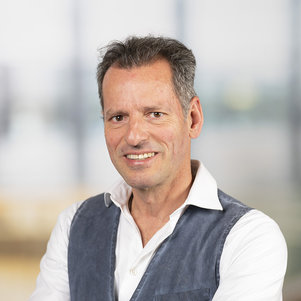
Martijn Kuller is Assistant Professor of Nature-Based Solutions and Water at Utrecht University's Copernicus Institute of Sustainable Development. He holds a PhD in Urban Water Management from Monash University, an MSc in Urban Environmental Management from Wageningen University, and a BSc in Economics and Policy. Research expertise includes: Nature-based solutions for urban water management Spatial planning support systems (SSANTO tool developer) Climate adaptation strategies for cities Publications demonstrate strong focus on blue-green infrastructure planning, flood vulnerability assessment, and decision-making frameworks for sustainable urban development, with recent work in Colombian cities. Awarded the prestigious Marie Sklodowska-Curie Fellowship for transnational research. International experience includes positions at Eawag (Switzerland), Université Laval (Canada), and University of New South Wales (Australia), working on projects ranging from flood early warning systems to stormwater quality modeling.
Prof. Hens Runhaar is a Full Professor of Sustainable Food System Governance at Utrecht University's Copernicus Institute of Sustainable Development. His research focuses on reconciling food production with biodiversity recovery, environmental sustainability, and health through innovative governance frameworks. He emphasizes connectivity issues in food systems, such as disconnects between production and environmental conditions, and advocates for transformative practices like agroecology and nature-inclusive agriculture. Key roles include chairing the Board of Examiners for Sustainable Development and membership in Future Food Utrecht. His projects include NWO-funded initiatives like COMBINED (grassland biodiversity) and REWIRE (circular agricultural missions). He actively engages in policy dialogues, such as advising BirdLife Netherlands and contributing to the Dutch Biodiversity Council. Research highlights systemic barriers to sustainability transitions in agriculture, with recent work analyzing dairy farming and farmer collectives. His outreach includes media appearances on nitrogen policy, nature restoration, and sustainable food systems. Professional memberships span international networks like Earth System Governance and the Wageningen School of Social Sciences.
Jampel Dell'Angelo is an Associate Professor with ius promovendi in Water Governance and Politics at the Department of Environmental Policy Analysis, Institute for Environmental Studies (IVM), Vrije Universiteit Amsterdam. He holds concurrent roles as a Visiting Scholar at the University of California, Berkeley's Ecohydrology Lab, and an Environmental Governance Affiliate Scholar at SESYNC, Maryland. His research focuses on multilevel dimensions of water governance, climate adaptation in African irrigation systems, and transnational land investments' impacts. He leads the EU-funded NEWAVE project, coordinating 15 Early Stage Researchers across 10 institutions. Educated with a dual PhD in Environmental Science (Autonomous University of Barcelona) and International Cooperation (Sapienza University), he also holds advanced degrees from the LSE, Sapienza, Curtin, and the University of Siena. As Editor-in-Chief of World Development , he promotes interdisciplinary research on socio-environmental systems. His work contributes to UN SDGs related to clean water, sustainable cities, and responsible production. Research interests span water grabbing dynamics, socio-ecological resilience, and policy frameworks for equitable resource management. Recent projects address Mediterranean water scarcity solutions and the socio-political implications of global land rushes. He supervises PhD candidates exploring themes like water democracy, agrifood transitions, and environmental justice. Key contributions include pioneering analysis of 'water commons grabbing' and documenting the Global Water Grab Syndrome. His documentary work complements field research, such as Working Together: Research and Water Governance on Mount Kenya . Current projects emphasize innovative governance models and climate-resilient water management in transboundary contexts.
Prof. Peter H. Verburg is a Full Professor in Environmental Spatial Analysis at the Vrije Universiteit Amsterdam, leading the Environmental Geography group within the Institute for Environmental Studies (IVM) under the Faculty of Science. He holds roles as a member of the Earth Commission and the Science-Policy Interface of UNCCD, and co-Editor-in-Chief of Landscape and Urban Planning . His work focuses on land use modeling, interdisciplinary research, and sustainability challenges, notably developing the globally used CLUE model. Education: PhD in Land Use Modelling (2000), Wageningen University MSc in Physical Geography (1996), Wageningen University Research Interests: His expertise includes land change analysis, spatial modeling, ecosystem services, and human-environment interactions. He employs methods from social sciences, econometrics, and earth sciences to address global issues like climate adaptation, sustainable city planning, and multi-functional land use. Recent projects emphasize small island resilience, European nature narratives, and food systems in urban and global contexts. Publications & Projects: With over 300 peer-reviewed articles and contributions to EU-funded initiatives such as BrightspotsCSA and CONtract SOLutions, his research bridges theory and policy. Recent publications highlight urban food interventions, spatial planning for island states, and climate impacts on agriculture. Awards: Highly Cited Researcher (top 1% in Web of Science) Advising & Grants: As a project leader and researcher in multiple grants, he supports sustainability transitions and climate-smart agriculture. He has advised through post-graduate courses and workshops on land use modeling and ecosystem services. His work emphasizes practical applications of research to decision-making frameworks. Labs/Teams: He leads the Environmental Geography group at IVM, fostering interdisciplinary collaboration and advancing land system change research globally.
Dr. Jennifer Koch is an Associate Professor at the Laboratory of Geo-information Science and Remote Sensing, part of Wageningen University & Research. Previously, she served as an Associate Professor and Associate Research Director at the University of Oklahoma's Data Institute for Societal Challenges. Her research integrates data-driven methods like simulation modeling to address socio-economic and climate change challenges, focusing on sustainable urbanization and environmental management. Education: She holds a Diplom (Univ.) in Geoecology from the University of Bayreuth and a Dr.-Ing. in Electrical Engineering/Computer Science from the University of Kassel. She teaches courses on geo-information management and data analytics. Research emphasizes multi-scale modeling, stakeholder engagement, and participatory approaches to socio-ecological systems. Recent work explores urban growth in Africa, methane emission monitoring, and renewable energy siting. Articles highlight interdisciplinary methods in GIS, climate policy, and community geography. Professional service includes roles with iEMSs, IALE, and the AAG. No ancillary activities reported. Her work bridges technical geospatial tools with societal challenges, emphasizing practical policy applications.
Amsterdam University of Applied SciencesNetherlands
Miguel Mujica Mota is a Senior Lecturer at the Faculty of Technology, National Autonomous University of Mexico (UNAM), and a member of the Centre of Applied Research Technology. His research focuses on airport operations, multimodal transport systems, and simulation modeling. He has expertise in analyzing capacity challenges in multi-airport systems, particularly in Mexico City, and developing decision support systems for airport security and resource allocation. His work integrates sustainability and efficiency, addressing topics like environmental reporting in airlines and post-pandemic airport recovery strategies. Research Contributions: Dr. Mujica Mota has published extensively on airport capacity optimization, multimodal transport integration, and simulation-based methodologies. Key projects include the X-TEAM D2D initiative for door-to-door travel and the IMHOTEP project for smart passenger flow management. His work often involves collaboration with institutions like Schiphol Airport and the H2020 EU framework. Research Interests: Airport terminal design, air traffic management, simulation modeling, multimodal logistics, and sustainable aviation. Awards: A-BOOST Research Fund (2020) Beste paper award EMM2018 X-TEAM D2D Project Recognition (2020) Activities: Organized conferences like the 2023 EUROSIM Simulation Seminar and served on committees for events such as the 2024 Multilog Conference. Grants & Projects: Involved in EU-funded initiatives like H2020, focusing on multimodal integration and sustainable transport solutions. His research also explores climate change impacts on infrastructure and simulation-based validation approaches.
Roel C.G.M. Loonen is an Associate Professor at the Unit Building Physics and Services within the Department of the Built Environment at Eindhoven University of Technology (TU/e), Netherlands. He holds joint appointments with EAISI High Tech Systems and EIRES Research groups, focusing on building performance simulation and energy systems. His work bridges academic research with practical applications through collaborations with SMEs in the building industry. Loonen received his BSc and MSc (cum laude) in Building Services from Eindhoven University of Technology, followed by a PhD in 2018 with a dissertation on 'Approaches for computational performance optimization of innovative adaptive facade concepts.' His educational background has positioned him as a leading expert in building performance simulation and sustainable building technologies. His research interests center on developing and applying modeling and simulation strategies to support decision-making for designing buildings that combine high indoor quality with minimal environmental impact. Key areas include adaptive facades, building-integrated renewable energy systems, and energy-efficient building envelopes. He specializes in creating and validating new building performance simulation models to advance innovative building technologies. His recent publications demonstrate a strong focus on practical applications of building performance simulation, with emphasis on residential energy efficiency, photovoltaic systems, and occupant-centered approaches to building design. The work shows increasing integration of machine learning techniques with traditional building simulation methods, particularly for sensitivity analysis and optimization of building performance. REHVA Young Scientist Award (2021) Best PhD supervisor award from Department of the Built Environment, TU/e (2018) First prize - REHVA International student competition (2011) Smart daylight control for optimal building performance (NWO Take-off award, 2018) Best paper award (2021) Loonen actively supervises PhD and Master's students, evidenced by his Best PhD Supervisor Award in 2018. He manages multiple research projects including Sustainable Summer Comfort (2024-2027), Modeling Innovative Use Scenarios for Future Domestic Comfort (2023-2026), and Just Prepare (2022-2026), with funding from sources including the Dutch Research Council (NWO). His professional service includes being a board member of the Dutch-Flemish IBPSA affiliate and co-chair of IBPSA World's website committee, plus reviewing for 35 academic journals. He leads research within the Building Performance group, focusing on creating practical tools and methodologies that bridge the gap between theoretical building performance models and real-world implementation in the construction industry. His work particularly emphasizes the integration of occupant behavior and practices into building performance models, recognizing that human factors are critical to achieving sustainable building performance in practice.
Hens Runhaar is Professor of Policy and Governance for Sustainable Food Systems at Utrecht University's Copernicus Institute of Sustainable Development. He holds positions as Chair of the Examination Committee for Sustainable Development and is a member of the Core Team of Future Food Utrecht. Additionally, he serves on the Editorial Board of Earth System Governance Journal and as Associate Editor of Frontiers in Sustainable Food Systems journal. His research focuses on sustainable food systems, policy and governance for biodiversity conservation, and nature-inclusive agriculture. Runhaar's research interests center on understanding the connectivity issues in Western food systems that lead to sustainability challenges including biodiversity loss, climate change, and food-related diseases. He investigates the decoupling of food production from environmental conditions, disconnects between feed production and livestock farming, and the separation between food production and consumption areas. His work emphasizes biodiversity as a key indicator of sustainable food systems, with special interest in scaling up agroecology, regenerative agriculture, and nature-inclusive agriculture. He delivered his inaugural lecture on January 17, 2025, titled 'Governing towards sustainable food systems: new connections for more diversity'. His recent publications demonstrate a strong focus on biodiversity policy integration, nature-based solutions, and transformative food system changes. Runhaar has been instrumental in special issues on biodiversity governance and environmental policy integration. His research projects include COMBINED (2025-2031), REWIRE, DivGrass, and work on the Water Framework Directive after 2027. Editorial Board Member of Earth System Governance Journal Associate editor of Frontiers in Sustainable Food Systems journal Member of the Scientific Advisory Committee of Dutch Bird Protection Association Senior Research Fellow of Earth System Governance research network Fellow of Wageningen School of Social Sciences Runhaar actively supervises numerous PhD students and postdoctoral researchers, with a focus on sustainable food systems, biodiversity conservation, and nature-inclusive agriculture. He has contributed significantly to societal debates through media appearances in NRC, De Volkskrant, and EenVandaag, addressing topics like nitrogen policy, nature restoration, and the role of farmers in sustainability transitions. Beyond academia, he volunteers with the Badger Working Group Utrecht and 't Gooi Foundation, monitoring badgers since 2012 and contributing to nature conservation efforts.
Prof. Dr. Ir. Andy van den Dobbelsteen is a Professor of Climate Design & Sustainability at Delft University of Technology's Faculty of Architecture and the Built Environment . His work focuses on integrating sustainable energy systems , climate adaptation strategies , and urban development through innovative design solutions. Department: Architectural Engineering + Technology Expertise: Energy systems, climate-responsive architecture, urban sustainability He actively translates research findings into actionable concepts for heritage building retrofitting , data center energy alternatives , and vertical urban farming , emphasizing interdisciplinary collaboration and knowledge transfer. His recent publications explore parametric modeling for energy efficiency, renewable backup systems , and synergetic urban design . He received prestigious awards including the edX Prize and Knight of the Netherlands Lion . 2020 edX Prize for Zero-Energy Design MOOC 2020 Golden Heron for educational film 'Energy Slaves' 2019 Solar Decathlon Europe 2nd prize As a dedicated educator, he supervises students in user-centred sustainability projects while maintaining active industry partnerships through secondary roles as speaker and columnist.
Dr. Debraj Roy is a Visiting Professor at the University of Amsterdam (UvA), affiliated with the Faculty of Science, Mathematics and Computer Science and the Informatics Institute. His research focuses on agent-based modeling, socio-economic dynamics, environmental resilience, and blockchain technology. He investigates complex systems such as urban slums, disaster recovery, and climate adaptation using computational methods like remote sensing and machine learning. His work bridges theory and practice, offering insights into policy design for sustainable development and social equity. Key research interests include slum dynamics, poverty traps, and the application of blockchain oracles for decentralized systems. He employs advanced techniques such as global sensitivity analysis and manifold learning to explore multi-scale socio-environmental challenges. His recent articles highlight trends in carbon pricing, flood risk valuation, and multi-agent systems. Earlier work concentrated on urban inequality in cities like Bangalore and Mexico City, leveraging geospatial and statistical tools. No scientific awards or grants are explicitly listed. His advising and team collaborations are unspecified in the provided text.
Dr. Dirk Oudes is an Assistant Professor in the Department of Landscape Architecture and Spatial Planning at Wageningen University. His research focuses on the intersection of renewable energy transitions and landscape transformation, particularly solar power plants and agrivoltaics in the Netherlands. He explores how solar energy systems interact with agricultural landscapes, urban planning, and policy frameworks, emphasizing sustainable land use and climate adaptation. Recent trends in his publications highlight spatial analysis of solar infrastructure, regulatory challenges in energy projects, and circular economy principles in agrivoltaics. His work often bridges academic research with practical implementation, as seen in reports and media engagements addressing landscape aesthetics, public acceptance, and policy-relevant findings. Dr. Oudes collaborates with researchers like Sven Stremke and actively participates in workshops, keynote speeches, and expert consultations. He supervises PhD projects on landscape-inclusive energy transitions and spatial quality frameworks, contributing to both academic discourse and professional practice in sustainable design.
Prof. LFM (Leo) Marcelis is a Professor and Chairholder at the Department of Horticulture and Product Physiology, Wageningen University & Research. His research focuses on plant physiology in controlled environments, energy-efficient horticultural systems, and vertical farming technologies. He leads major projects such as SKY HIGH and 'LED it be 50%', aiming to revolutionize plant production through smart lighting and sustainable practices. Key research interests include optimizing crop growth under LED lighting, closed-system agriculture, and enhancing resource use efficiency. Marcelis coordinates courses on plant physiology, greenhouse horticulture, and vertical farming. He actively collaborates with industry partners, governments, and international institutions to bridge academic research with practical applications in global horticulture. He serves as Vice Chair of the Leibniz Institute’s Science Advisory Board and as Chief Editor of the Crop and Product Physiology section in Frontiers in Plant Science . His work emphasizes interdisciplinary approaches, integrating physiology, engineering, and data science to address food security and sustainable agriculture challenges. Marcelis advises numerous PhD students on projects related to plant-light interactions, crop modeling, and vertical farming scalability. His research has contributed to advancing energy-saving technologies and improving crop quality in both greenhouse and urban agricultural settings.
Prof. Miranda Meuwissen is a Professor of Risk Management and Resilience in Agri-Food Systems at Wageningen University, Netherlands. She specializes in financial management, agricultural insurance, and resilience frameworks for farming systems. Her work focuses on sustainable transitions, climate resilience, and policy design for agricultural systems across Europe and beyond. Education: PhD in 'Insurance as a risk management tool for European Agriculture' (1995-2000). Previous roles include Associate/Assistant Professor positions at Wageningen (2005-2017), and senior researcher roles in agricultural risk management. She coordinates major initiatives such as the EU-funded SURE-Farm project (2017-2021), exploring sustainable and resilient farming systems, and the 4TU-Redesign initiative designing future food systems. Research Interests: Development of resilience assessment frameworks, risk management strategies in agriculture, financing sustainable transitions, and exploring synergies between production efficiency, environmental sustainability, and socio-economic resilience. Notable contributions include frameworks for resilience measurement in farming systems and analysis of pandemic impacts on agricultural resilience. Grants & Leadership: Coordinator of H2020 SURE-Farm (€6.5M+), 4TU-Redesign (2023-2028), and WUR-SSG system transition team (2022-2024). Organizes international seminars on sustainable transitions and annually coordinates the PhD Summer School on Risk Management in Agriculture. Key Projects: Participatory impact assessments of farming systems resilience, analysis of soil quality economic value, and innovative financing models for aquaculture. Her work bridges academic research with policy through collaborations with institutions like IAMO and 4TU Alliance.
Prof. Bettina van Hoven holds the Aletta Jacobs Chair in 'Place, Social Change and Collaborative Research for Wellbeing and Justice' at University College Groningen (University of Groningen). She earned her PhD in 1999 from the University of Plymouth with research on post-socialist rural societies in Germany. Her work focuses on participatory methodologies addressing marginalized groups' spatial experiences, including disability, aging, migration, and environmental challenges. She advocates 'slow science' emphasizing ethical collaboration and community co-creation. Education: PhD (University of Plymouth, 1999), studies in Biology and Physical Geography (University of Osnabrück and Plymouth). Research: Integrates visual methods, community partnerships, and arts-based dissemination to produce inclusive knowledge. Key themes include urban wellbeing, disability inclusion, and participatory resilience-building. Teaching: Project-based learning focused on bridging theory and real-world challenges. Advising: Supervised 9 PhD students since 2013, including works on climate action, Syrian refugee masculinities, and aging-in-place. Labs/Teams: Leads the Aletta Jacobs Chair research group, collaborating with organizations like 'This Abled City' to improve urban accessibility. Serves on editorial boards for Emotion, Space and Society and Journal for Undergraduate Ethnography .
Prof. Niki Frantzeskaki is a Chair Professor of Regional and Metropolitan Governance and Planning at Utrecht University's Geosciences Faculty. Her expertise focuses on urban transitions, climate resilience, and nature-based solutions. Previously, she held roles at Swinburne University (Research Professor/Director) and Erasmus University (Associate Professor). She has published over 100 peer-reviewed articles and authored/co-authored four books. Her research emphasizes sustainable urban governance, ecological justice, and transformative urban planning. Education: Advanced degrees in environmental science and urban planning (details not explicitly stated in provided texts). Research interests include urban sustainability transitions, climate adaptation, and the governance of nature-based solutions. She has led projects in Australia, Canada, and the U.S., with a focus on global urban challenges. Notable awards include Clarivate's Highly Cited Researcher (2020-2023), Elsevier's top 2% global researchers (2021-2023), and the Ecological Society of America's Sustainability Science Award (2023). Her work bridges academic research with policy impact, particularly through transdisciplinary collaborations like the URBES and ARTS projects. Grants and projects include the EU-funded ARTS and URBES initiatives, and current leadership in the Pathways to Sustainability (PtS) research group. She advises on urban resilience strategies and serves on editorial boards for journals like Urban Transformations and Nature-Based Solutions .