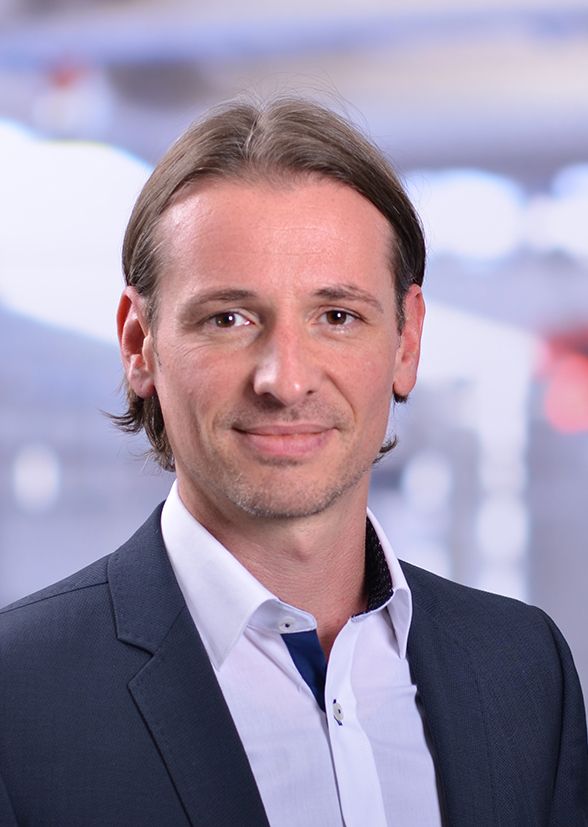
Dr. phil. Stefan Ladwig is a researcher at the Institute for Automotive Engineering (Institut für Kraftfahrzeuge) at RWTH Aachen University, specializing in traffic psychology, user acceptance, and human-machine interaction for automated driving systems. His work addresses psychological and ergonomic aspects of emerging mobility technologies, including seating ergonomics, trust-building mechanisms, and communication strategies for autonomous delivery robots. Research Focus: Automated driving, interior design psychology, driver/passenger behavior, and safety requirements. Projects: Lead roles in UrbANT (autonomous delivery robot) and SteeringBow (dynamic driving experience). Collaborations: Affiliated with Aldenhoven Testing Center, Future Mobility Partnership e.V., and innocam.NRW. Ladwig’s recent publications examine rotated seating positions, visual dominance in speed adaptation, and trust-relevant driving scenarios, reflecting his interdisciplinary approach to optimizing human-vehicle interactions. His work spans ergonomics, energy management, and behavioral interventions to enhance safety and usability in next-generation mobility solutions.
Prof. Dr.-Ing. Werner Lang serves as Vice President for Sustainable Transformation and holds the Chair of Energy Efficient and Sustainable Design and Building (ENPB) at the Technical University of Munich (TUM), within the TUM School of Engineering and Design. Previously, he was Professor of Sustainable Building and Director of the Center for Sustainable Development at the University of Texas School of Architecture in Austin (2008-2010). Lang also directs the Oskar von Miller Forum and is a partner at Lang Hugger Rampp GmbH Architekten in Munich. Lang's research focuses on developing strategies for buildings with positive environmental footprints through regenerative energy systems, renewable materials, and closed material cycles. His work emphasizes comprehensive life cycle analysis considering ecological, economic, and social aspects. Current research areas include climate-resilient urban neighborhoods, circular economy in construction, and sustainable building materials. The ENPB institute conducts numerous research projects such as Building Climate-Municipal, CircularFTmehrRAUM, and Urban Green Infrastructure. Lang's publications reveal a strong trend toward life cycle assessment, multi-criteria decision-making, and computational approaches for sustainable building design. His recent work integrates machine learning with building performance analysis and focuses on practical implementation of circular economy principles in urban contexts, with increasing emphasis on quantifying environmental benefits of urban green infrastructure. TUM Sustainability Award 2022 Doce et Delecta (Second Prize for Best Teaching), 2019 Bayerischer Energiepreis 2014 International Building Skin Tech Award (2008) Promotionspreis der TUM (2000) Lang leads the Institute of Energy-Efficient and Sustainable Design and Building with numerous research grants including projects like Building.Lab+, NAWAREUM, and ECO+. His team includes researchers working on topics ranging from urban mining to life cycle assessment tools. The institute maintains several products and startups including MoMeBo, Bilanzlabor, and EnergyML that translate research into practical applications for the building industry.
Farzan Banihashemi serves as a Research Fellow at the Chair of Energy Efficient and Sustainable Design and Building at the Technical University of Munich (TUM), maintaining this affiliation since 2019 while concurrently working as a Data Scientist at Climateflux GmbH since 2023. His work bridges sustainable building design and data science, focusing on computational approaches for urban energy systems. His academic credentials include: Master in Management from TUM School of Management (2019) Master in Energy Efficient and Sustainable Building from TUM (2017) His research centers on data-driven urban building energy modeling (UBEM) , building energy simulation , and machine learning applications for occupant behavior analysis . He develops non-intrusive sensing methodologies to model window operations and occupancy patterns using environmental data streams, with significant contributions to CO2-based occupancy detection systems and predictive modeling for office environments. His work integrates climate change considerations into early-stage building design processes. Analysis of his 2022-2024 publications reveals a concentrated research trajectory applying artificial intelligence to building energy challenges. Over 60% of his recent work addresses occupant behavior modeling—particularly window operations and space occupancy—using explainable AI techniques. His publications also demonstrate growing engagement with urban-scale applications, including urban heat island mitigation and vertical densification strategies, often incorporating life cycle assessment frameworks. No scientific awards were documented in the source materials. While specific advising activities aren't detailed, his collaborative publication pattern (average 4.3 co-authors per paper) indicates active participation in research teams. Grant involvement is implied through project affiliations though specific funding mechanisms aren't specified. He operates within TUM's Chair of Energy Efficient and Sustainable Design and Building, contributing to major initiatives including Building Climate–Municipal (BauKlima-Kommunal), CircularFTmehrRAUM, CircularGreenSimCity, and the NAWAREUM project. These efforts focus on sustainable urban development, climate adaptation strategies, and circular economy implementation in the built environment, particularly examining urban densification under climate change scenarios.
Fatma Deghim is a Research Fellow at the Technical University of Munich , affiliated with the Chair of Energy Efficient and Sustainable Design and Building. Her work focuses on urban microclimate, building energy simulation, and data-driven methods for sustainability. Education : Master’s Degree in Civil Engineering (2019–2022) and Bachelor’s Degree in Civil Engineering (2015–2019), both from TUM. Research Interests include: Urban microclimate and indoor-outdoor interactions Building energy simulation and comfort analysis Integration of green infrastructure in climate-resilient design Data-driven methods for environmental monitoring Publications highlight her expertise in applying machine learning to occupancy modeling, thermal comfort prediction, and multi-objective optimization frameworks for sustainable building design. Her work emphasizes uncertainty analysis, resource efficiency, and computational methods. Teaching contributions include assisting in courses on sustainable architecture, building energy principles, and urban water systems at TUM.
Prof. Dr.-Ing. Jörg Knieling (HafenCity University Hamburg) specializes in Urban Planning and Regional Development , focusing on sustainable metropolitan governance, climate resilience, and land use policy. As co-chair of Hamburg's Senate Climate Advisory Board , he drives policy recommendations on net-zero land consumption , climate action plans , and spatial governance reform . Co-chair, Hamburg Climate Advisory Board (2021–present) Member, Advisory Council for Spatial Development, German Federal Ministry Co-leader, DFG Research Training Group 'City Science Lab' Coordinator, EU projects 'SMARTilience', 'RESCUE', 'Area21' His research explores climate-resilient urban governance through comparative studies of cities like Halle (Saale) and Mannheim , emphasizing collaborative planning and smart city technologies . Recent work addresses heat action planning , spatial equity , and digital policy tools for sustainable development. Key publication trends include land consumption reduction (30 ha/day target), urban-rural partnerships , and AI in spatial planning . His Urban Governance Toolbox project (2023) exemplifies solutions for municipal climate resilience. Students under his supervision include: Leon Thümer (B.Sc., 2020 - 'Co-Creation in Real Estate') Laura-Darleen Klein (M.Sc., 2023 - 'Age-Friendly Cities') Charlotte Muhl (M.Sc., 2018 - 'Urban Commons') He leads the Urban Planning and Regional Development department, mentoring 12+ research associates and coordinating interdisciplinary projects with institutions like Goldsmiths University , Leuphana University , and Georgia Tech .
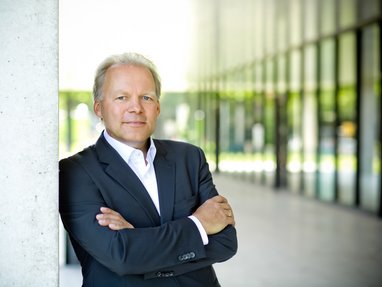
Dieter Uckelmann serves as Professor of Information Logistics and Scientific Director of the Institute for Applied Research at Stuttgart University of Applied Sciences (HFT Stuttgart). He holds multiple leadership positions including Spokesperson for the research focus 'Smart Technologies, Processes and Methods' at HFT Stuttgart since March 2023 and Scientific Director of the Institute for Applied Research since September 2023. His academic journey began with mechanical engineering studies in Braunschweig, followed by doctoral research at the University of Bremen focusing on 'Quantifying the Value of RFID and the EPCglobal Architecture Framework in Logistics.' Uckelmann's research spans Internet of Things applications across Industry 4.0, logistics, smart buildings, and smart cities, with significant contributions to educational technology including learning analytics and AI in teaching. His work bridges technical innovation with practical implementation, particularly in digital transformation of laboratories and smart city infrastructure. He has led numerous research projects including KNIGHT (AI for teaching), InDeckLe (earth composite ceiling systems), iCity initiatives, and DigiLab4U (online laboratories). His publication record shows a clear progression from foundational RFID and IoT research toward emerging technologies like the Industrial Metaverse, 5G applications, and AI-driven educational systems. Recent work demonstrates strong integration of physical and digital systems, particularly in urban environments and educational contexts, with increasing emphasis on sustainability and energy efficiency applications. Co-editor of International Journal of RF-Technologies: Research and Applications Member of PhD Association BW, Research Unit III Computer Science and Electrical Engineering Mentor in the HAWCareer mentoring program Program Committee Member for IEEE RFID, IEEE/ITMC, AIET, and other major conferences Associate Editor for Journal of Online and Biomedical Engineering Professor Uckelmann actively mentors students and researchers, with his team contributing to projects across smart city infrastructure, digital learning platforms, and industrial IoT applications. He leads the Industrie 4.0 Laboratory which focuses on industrial IoT applications, digital twins, and the industrial metaverse, with research spanning RFID, RTLS, wireless sensor networks, AR/VR, and IoT architectures. His work extends to international collaborations including visiting professorships at Auburn University and the University of Parma.
Dr. Ihab Hijazi is a researcher at the Chair of Geoinformatics , Technical University of Munich, specializing in 3D geospatial modeling and BIM-GIS integration . He teaches courses such as CAFM - Facility Management and GIS and contributes to advancing CityGML standards and urban digital twins . Research Focus : Hijazi’s work bridges Building Information Modeling (BIM) and Geographic Information Systems (GIS) , emphasizing interoperability , semantic transformation , and smart city infrastructures . His projects include the Smart Sustainable Districts (SSD) and Smart District Data Infrastructure , focusing on urban energy systems and data harmonization. Publications highlight his contributions to CityGML utility networks , urban growth simulations , and semantic modeling frameworks. He actively develops 3DCityDB and participates in standardization initiatives like the DIN Spec 91607 Digital Twin for Cities .
Helmholtz Centre Potsdam - German Research Centre for GeosciencesGermany
Yuyu Zhou is a Professor in the Department of Geography at The University of Hong Kong. With an extensive publication record of 301 papers and over 18,000 citations, Dr. Zhou is a leading researcher in urban environmental studies, climate change, and sustainability science. Dr. Zhou received their PhD in Environmental Science from the University of Rhode Island (2004-2008) and previously worked as a Research Scientist at Pacific Northwest National Laboratory's Joint Global Change Research Institute (2010-2015). They currently serve as Chief Editor for Earth System Science Data (Copernicus Publications), Associate Editor for Ecological Processes, and Section Editor for All Earth. Dr. Zhou's research focuses on the intersection of urbanization, climate change, and environmental sustainability. Their work spans several key areas including urban heat island effects, vegetation phenology in urban environments, energy modeling, and sustainable urban development. Through innovative remote sensing approaches and spatial analysis, Dr. Zhou investigates how urban environments respond to and influence global environmental change. Analysis of Dr. Zhou's recent publications reveals a strong emphasis on urban environmental challenges, with particular attention to urban heat islands, vegetation dynamics, and climate change impacts in cities. Their work combines remote sensing data with ground observations to develop high-resolution models of urban environmental processes. Recent research has focused on urban greening effects, building energy use under climate change, and environmental justice issues related to urban heat exposure. Dr. Zhou has received significant recognition for their work, as evidenced by the high citation count of their publications. Their research has important implications for urban planning, climate adaptation strategies, and sustainable development policies worldwide. As an educator and mentor, Dr. Zhou advises numerous graduate students and collaborates with researchers globally. Their work with international teams has resulted in significant contributions to understanding urban environmental systems across different geographical contexts.
Prof. Dr.-Ing. Jana Bochert is a faculty member at the Faculty of Sustainable Infrastructure at Technische Hochschule Ingolstadt , specializing in Construction Informatics , Construction Mechanics , and Foundations of Civil Engineering . She focuses on seismic analysis, soil-structure interaction, and structural dynamics, particularly for critical infrastructure like nuclear power plants. Email: Jana.Bochert@thi.de Phone: +49 841 9348-2393 Office: Room CN115 Research Interests Her research centers on: Seismic soil-structure interaction Wave propagation in soil under dynamic loads Development of computational methods for structural analysis Dynamic response of nuclear power plant foundations Impact of transportation and demolition on soil vibrations Finite element modeling of civil structures Publications & Research Trends Her work spans 2008–2021 , with a focus on: Seismic safety protocols for nuclear infrastructure Time-domain modeling of soil dynamics Comparison of simulation methods (2D vs 3D) Acoustic and vibration analysis in urban environments Integration of soil nonlinearities into structural design Dynamic load effects from trains and demolition
Armin Grunwald serves as Head of the Institute for Technology Assessment and Systems Analysis (ITAS) at Karlsruhe Institute of Technology (KIT) and Head of the Office of Technology Assessment at the German Bundestag (TAB). Since 2007, he has held the Chair of Philosophy and Ethics of Technology at KIT's Institute of Philosophy, building on his previous professorship at the University of Freiburg (1999-2007). His leadership positions include membership in the German Ethics Council, the National Advisory Board for Repository Search, and the Science-Policy Advisory Board of ETH Zürich. Grunwald's research focuses on the theory and practice of technology assessment, ethics of technology, sustainability concepts, and digital transformation. His work explores humanity's relationship with technology, particularly examining how digitalization challenges human self-understanding and autonomy. He investigates philosophical questions surrounding artificial intelligence, anthropocentrism in the Anthropocene, and the ethical dimensions of technological progress. His extensive publication record demonstrates consistent scholarly output across multiple disciplines. Recent work shows increasing focus on AI ethics, the philosophical implications of digital transformation, and technology assessment methodologies for addressing grand societal challenges. His publications span philosophical analyses, empirical studies on technology implementation, and policy-relevant assessments for governmental bodies. Grunwald has supervised numerous doctoral students across interdisciplinary fields including energy transition, AI governance, urban sustainability, and technology ethics. His leadership extends to directing major research initiatives through ITAS, which serves as Germany's parliamentary technology assessment body providing scientific advice to the Bundestag on emerging technologies and their societal implications.
Dr. Jann Michael Weinand is the head of the Integrated Scenarios department at the Institute of Climate and Energy Systems (ICE-2) within Forschungszentrum Jülich GmbH. He leads a team of 30 scientists, PhD students, and master students focusing on energy system analysis, complexity management, and AI integration. His work addresses regional and international energy systems, emphasizing renewable energy resource assessment and techno-economic feasibility. Dr. Weinand holds a Dr.-Ing. from the Karlsruhe Institute of Technology (2020) and a Mechanical Engineering and Business Administration degree from RWTH Aachen University (2016). His research spans energy autonomy, renewable resource optimization, and the socio-technical challenges of energy transitions. Key research areas include energy system modeling, geothermal and wind energy potential, and data-driven methodologies. He coordinates interdisciplinary projects with academic and industrial partners, contributing to high-impact journals like Nature Energy and Joule. His team develops open-source tools (e.g., ETHOS workflows) for reproducible energy assessments and advocates for spatially disaggregated energy planning. Publications highlight trade-offs in energy system design, AI risks, and land-use conflicts for renewables. He emphasizes integrating social, technical, and environmental factors into energy policy frameworks.
Dr. Sven Mackenbach serves as a Postdoctoral Researcher and Senior Engineer at RWTH Aachen University's Institute of Construction Management, Digital Engineering and Robotics in Construction (ICoM) since January 2023. Holding a doctorate in circular construction from the same institution, he leads the development of the "Circular Construction" research area, oversees multidisciplinary projects, and teaches Sustainable Construction Management to engineering students. His academic credentials include: PhD in Circular Construction, RWTH Aachen University (2023) Mackenbach's research integrates circular economy principles with digital construction technologies, focusing on strategic management frameworks for sustainable building practices. His expertise spans modular construction methods, BIM-based sustainability assessment, and digital twinning applications for infrastructure management. He bridges theoretical research with practical implementation through sustainability consulting for construction stakeholders, addressing real-world challenges in resource efficiency and regulatory compliance. His publication portfolio reveals a decisive shift toward data-driven circular construction solutions, with increasing emphasis on BIM-ontology integration for deconstruction planning, public participation systems, and sewer infrastructure management. Recent works demonstrate sophisticated methodological approaches to quantify ecological, economic, and social sustainability metrics without specialized expertise. As a scientific supervisor, Mackenbach mentors research assistants in project execution while contributing to curriculum development through his specialized course instruction. His leadership in research project coordination indicates substantial grant management experience, though specific funding sources aren't detailed in available materials. Within ICoM's collaborative environment, he contributes to cross-disciplinary teams advancing digital engineering and robotics applications in construction, particularly through the KaSyTwin sewer management project and BIPV facade digitalization initiatives.
Prof. Dr. Bernd Möller is a faculty member at Europa-Universität Flensburg, specializing in sustainable energy systems management for developing countries. His research focuses on renewable energy integration, spatial analysis, and environmental planning, leveraging GIS tools for energy system transformation. Current position: Professor at Department Energy and Environmental Management Alumni of Flensburg University of Applied Sciences and Aalborg University (PhD in Energy Planning) Research interests encompass wind/solar/biomass systems, energy atlas development, and climate-resilient infrastructure. His work bridges technology, economics, and spatial planning in renewable transitions. Publications highlight trends in offshore wind modeling, biomass logistics, district heating expansion, and GIS-driven energy solutions. Key themes include decarbonization, resource constraints, and regional energy equity. Teaching involves applied GIS science, energy planning frameworks, and development cooperation. He leads the PhD program in Energy and Environmental Management for Developing Countries.
Helmholtz Centre for Environmental ResearchGermany
Prof. Dr. Roland A. Müller serves as Department Head of Systemic Environmental Biotechnology at the Helmholtz Centre for Environmental Research - UFZ in Leipzig, Germany, and holds an Honorary Professorship for Integrated Wastewater Resource Management at Leipzig University of Applied Sciences (HTWK) since 2016. With over three decades of experience at UFZ, he has held progressively senior positions including Head of Department SUBT since 2013, Speaker of the Department from 2010-2012, and Head of Infrastructure Unit from 1996-2010. His educational foundation includes university studies in Technical Microbiology at the Carolo-Wilhelmina Technical University of Braunschweig (1984-1990). This technical microbiology background has informed his interdisciplinary approach to environmental biotechnology. Prof. Müller's research pioneers the integration of ecological principles into urban water management systems, particularly focusing on Multifunctional BlueGreen Water Infrastructures for Water Sensitive Cities. His work spans Decentralized Rainwater & Wastewater Treatment, Ecological Engineering, and Resource-efficient Wastewater Treatment systems, with special attention to applications in water-scarce regions like Jordan. He has developed innovative approaches for implementing nature-based solutions that simultaneously address urban flooding, water scarcity, and climate adaptation challenges. His research combines engineering, ecology, and urban planning to create resilient water systems that enhance urban sustainability. Analysis of his recent publications reveals a consistent focus on implementing the 'Leipziger Modell Blau-Grün' - a comprehensive approach to integrated blue-green infrastructure in urban settings. His work demonstrates how nature-based solutions can simultaneously address stormwater management, irrigation needs, and urban greening. A significant portion of his research examines decentralized wastewater treatment systems, with particular attention to their application in arid and semi-arid regions where water resources are constrained. His publications increasingly emphasize participatory planning approaches involving municipal authorities, housing associations, and research institutions to co-design water-sensitive urban developments. 2018: German Environmental Award for solving a central water problem in a decentralized manner in Jordan 2016: Winner of UFZ Knowledge Transfer Award for contributions to Jordanian wastewater policy framework 2014: UFZ Technology Transfer Award for development of vertical filter systems for groundwater purification 2014: Finalist for Hugo Junkers Prize for innovative groundwater purification research Prof. Müller has been instrumental in advising on water policy frameworks, particularly in Jordan where he served as the German representative in the National Implementation Committee for decentralized Wastewater treatment. His work directly influenced the development of national certification standards for wastewater treatment systems with capacities up to 5,000 PE in Jordan. He leads the 'Leipziger BlauGrün' project, a German model city initiative for resource-efficient urban districts that demonstrates practical implementation of his research concepts. His department collaborates with international partners on projects addressing water challenges across diverse climatic conditions. As head of the Systemic Environmental Biotechnology department at UFZ, Prof. Müller oversees research at the intersection of environmental engineering, microbiology, and urban planning. His department is actively involved in the Technical Biogeochemistry Integration Platform, which focuses on 'Tapping Nature's Potential' for sustainable water management solutions. The department maintains strong international partnerships, particularly with institutions in water-stressed regions, to develop and implement decentralized wastewater management concepts that are both scientifically sound and practically implementable in resource-constrained settings.
Professor Irene Peters, Ph.D., serves as a faculty member in the Infrastructure Planning and Urban Engineering department within the Urban Planning school at HafenCity University Hamburg. Her office is located at Henning-Voscherau-Platz 1, 20457 Hamburg, with contact number 040 42827-4571. She maintains an active research agenda focused on sustainable urban infrastructure systems and energy planning. Her research interests center on urban energy systems, with particular emphasis on heat demand and supply modeling, renewable energy integration, and decarbonization strategies for urban environments. Professor Peters employs microsimulation techniques to analyze neighborhood-level energy dynamics and has developed spatial models for urban heat mapping. Her work bridges technical infrastructure planning with sustainable urban development goals, addressing critical challenges in energy transition for cities. Professor Peters leads significant research initiatives including the GEWISS (Geographical Heat Information and Simulation System) project, which ran from 2014-2020 as part of the EnEff:Stadt program funded by the German Federal Ministry for Economy and Energy. This project created interactive tools for visualizing spatial heat demand and supply in Hamburg, with applications for urban energy planning. She has supervised an extensive portfolio of student research, with documented thesis supervision from 2007 through 2024 across bachelor's, master's, and doctoral levels. Her advising spans topics including photovoltaic integration, district heating systems, urban cooling strategies, waste-to-energy systems, and sustainable building materials. Professor Peters frequently collaborates with colleagues like Prof. Schiewe on interdisciplinary research projects. Her work integrates data science, urban modeling, and energy system analysis to address practical challenges in urban sustainability. Professor Peters' research has direct applications for municipal energy planning, particularly in the context of Germany's energy transition (Energiewende) and climate action goals.