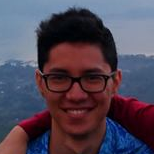
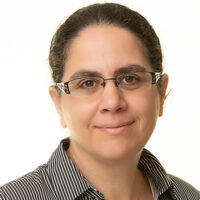
Dr. Harshala Gammulle is a Research Fellow at Queensland University of Technology (QUT), School of Electrical Engineering & Robotics. She holds a PhD in Computer Vision from QUT (2019), receiving the QUT Executive Dean's Commendation for Outstanding Doctoral Thesis. Her expertise spans machine learning, computer vision, and spatio-temporal modeling for human behavior understanding. She leads interdisciplinary projects with funding from DST Group, SmartSat CRC, QLD DESI, and others. Research focuses include: human action recognition, medical anomaly detection, satellite image analysis, and AI for environmental monitoring. Key projects involve quantum-classical hybrid ML for biomedical signal analysis, disaster forecasting via hyperspectral data, and autonomous combat vision systems. She has supervised PhD/MPhil candidates in ML and quantum hybrid ML. Education: PhD (Computer Vision, QUT 2019), BSc (University of Peradeniya, Sri Lanka). Awards: WiT Emerging Achiever Technology Award finalist (2021), University Award for Academic Excellence (2015). Teaching includes units like Digital Signals and Image Processing (EGH444), and Computing & Data for Engineers (EGB103). Current grants involve QLD DESI, SmartSat CRC, and Rheinmetall Defence Australia collaborations. Active in labs like SAIVT and QUT's Early Career Research schemes.
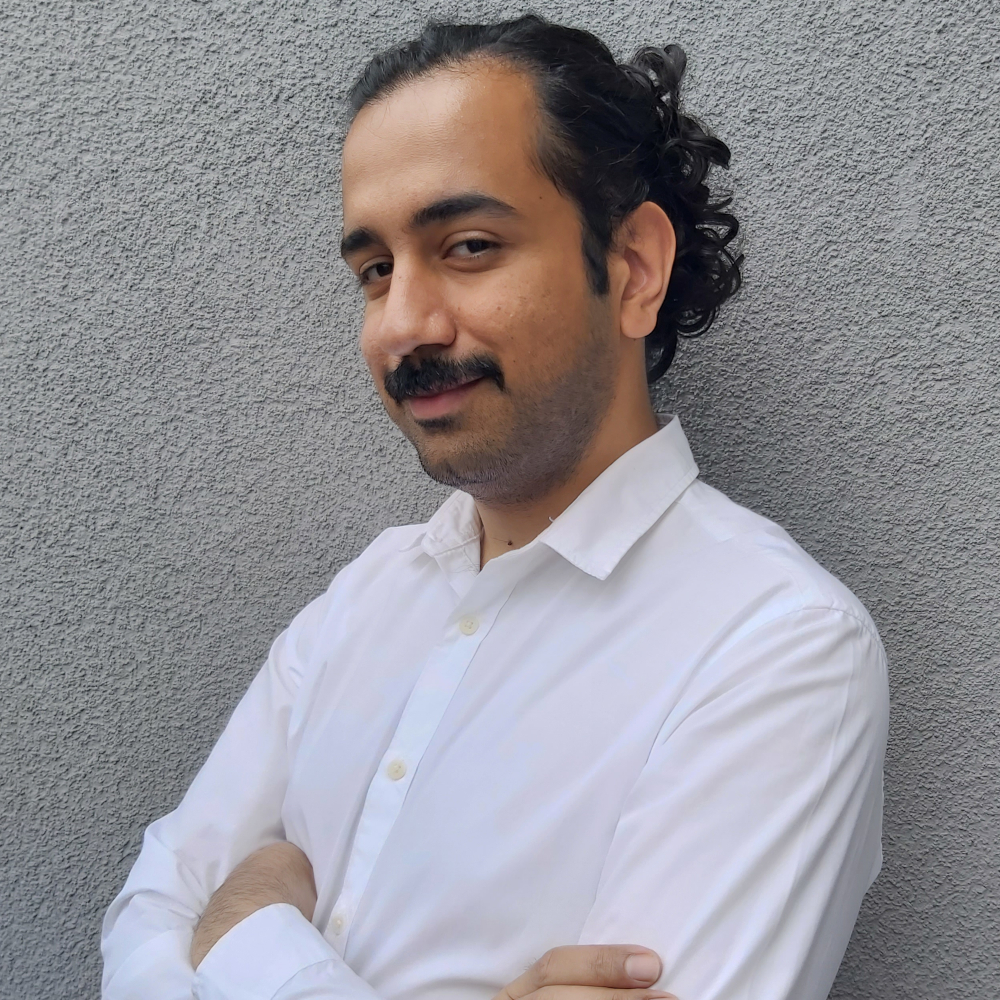
Rémi Flamary is a Professor in the Applied Mathematics department at École Polytechnique, France, and a member of the CMAP Laboratory. Previously, he held an Associate Professor position at Université Côte d'Azur in the Department of Electronics and Lagrange Laboratory. He completed his PhD at Rouen University under Alain Rakotomamonjy, focusing on statistical signal processing and optimization. His research interests span machine learning, optimal transport, domain adaptation, and their applications in biomedical engineering, energy, and remote sensing. He leads the development of the POT (Python Optimal Transport) library and contributes to projects like SKADA for domain adaptation. Education: PhD in Applied Mathematics, Rouen University (LITIS Laboratory) Research Focus: Flamary's work emphasizes leveraging optimal transport theory for machine learning tasks such as graph prediction, signal normalization, and cross-domain adaptation. His contributions include novel algorithms for unbalanced transport, semi-relaxed Gromov-Wasserstein distances, and end-to-end graph generation frameworks. He actively collaborates on applications in neuroscience, astronomy, and energy systems. Professional Activities: He has presented at NeurIPS and other top conferences, supervised PhD students like Cédric Vincent-Cuaz, and contributed to open-source software. His teaching includes courses on signal processing and machine learning at École Polytechnique.
Antoine Miech is a Researcher at DeepMind's Vision Group , with prior affiliations at Inria and Ecole Normale Supérieure where he completed his computer vision Ph.D. under Ivan Laptev and Josef Sivic . He has collaborated with researchers from Facebook AI and Google during his academic career. Research Interests span video understanding, weakly-supervised machine learning, and multimodal analysis. His work focuses on: Text-video embedding Self-supervised video representation Action localization Anticipatory video modeling Scalable multimodal learning Scientific Contributions include: HowTo100M - A massive dataset of narrated instructional videos MIL-NCE - A novel loss function for video-text alignment MEE - A model for handling heterogeneous data Context Gating - Learnable pooling architecture Awards & Recognition : Google Ph.D. Fellowship (2018) Technical Leadership : Created the LOUPE TensorFlow toolbox for feature pooling and maintained annotated video dataset catalogs. Organized the Data Science Game competition (2016-2017).
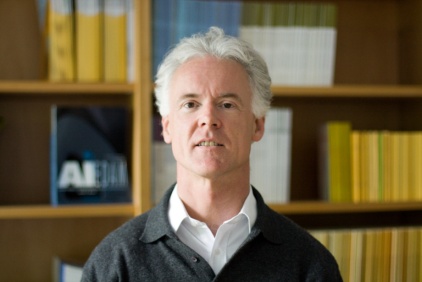
Wolfgang Nejdl is a Full Professor of Computer Science at Leibniz Universität Hannover since 1995 and the Head of the L3S Research Center since 2001. His research focuses on Web Science, search and information retrieval, semantic web technologies, peer-to-peer infrastructures, databases, technology-enhanced learning, and artificial intelligence. Education: M.Sc. (1984) and Ph.D. (1988) in Computer Science from Vienna University of Technology. Previous Positions: Assistant Professor in Vienna (1988–1992), Associate Professor at RWTH Aachen (1992–1995), and visiting professor/researcher at Xerox PARC, Stanford, University of Illinois at Urbana-Champaign, EPFL Lausanne, and PUC Rio. His research spans foundational and applied Web technologies, including social networks, trust and reputation, Web infrastructure, digital libraries, semantic web, collaborative filtering, and privacy-preserving systems. Recent projects like PHAROS, OKKAM, LiWA, and LivingKnowledge highlight his work in audio-visual search, web entities, web archive management, and diversity bias algorithms. Wolfgang Nejdl published over 230 scientific articles and held leadership roles as General Chair for AH'08 and PC Chair for WWW'09. He co-founded iSearch IT Solutions in 2006 to commercialize digital library and web engineering research from L3S projects. Scientific Awards: Founding member and head of the L3S Research Center The L3S Research Center, with a 2009 budget of €6 million (75% third-party funding), focuses on connecting the Web to real-world entities through research in Web Science, service computing, and security. Funding comes equally from the European Union and national/industry sources.
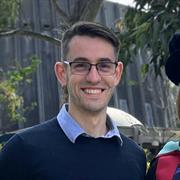
Steven Korevaar is a Lecturer and holder of an Early Career Development Fellowship (ECDF) at the School of Computing Technologies, RMIT University. His research focuses on deep learning and computer vision, particularly in domain generalization, medical imaging analysis, and algorithmic evaluation. He is actively involved in supervising research projects such as 'Learning optimal control of games and machines in real-time' and 'Learning Robust and Generalisable Models for Computer Vision Using Animation'. His publications emphasize medical imaging applications, exploring domain adaptation techniques to enhance model generalization. He has contributed to interdisciplinary work in health informatics and computer-aided diagnosis, addressing challenges in medical image classification and domain invariance. Steven is open to supervising Master's and PhD students in relevant fields. His research aligns with RMIT's commitment to innovation in computing technologies, with a focus on real-world applications in healthcare and machine learning.
Paul Siebert is a Reader in Computing Science at the University of Glasgow, specializing in computer vision and robotics. He leads the Computer Vision and Graphics research group and teaches Digital Image Processing and Computer Systems. His research focuses on 3D vision systems, biologically inspired vision, and cognitive robot vision, with applications in clinical and media domains. He has pioneered commercial 3D surface scanning technology and collaborated with clinical groups such as Glasgow Dental School. Affiliations: University of Glasgow (Computing Science Department) Roles: Reader, Group Leader (Computer Vision and Graphics) Research interests include active binocular robot vision, 2D/3D sensing, and visual perception for robotics. Notable projects include work on driver attention monitoring, virtual character creation, and clinical anatomical imaging. Siebert previously directed the 3D-MATIC Faraday Partnership and served as Chief Executive of the Turing Institute, developing commercial vision systems. Publications span over 140 works, emphasizing applications like rain removal algorithms, continual learning in robotics, and foveated imaging. His work integrates deep learning, biological vision models, and real-world robotics challenges. Awards and recognitions are not explicitly listed, but his contributions to 3D vision commercialization and robotics research highlight significant impact in the field.
Venu Govindaraju is a SUNY Distinguished Professor of Computer Science and Engineering at the University at Buffalo, where he also serves as Vice President for Research and Economic Development. He founded the Center for Unified Biometrics and Sensors (CUBS) in 2003 and leads the National AI Institute for Exceptional Education, funded by a $20M NSF grant. His research focuses on artificial intelligence, pattern recognition, biometrics, and handwriting analysis, with notable contributions to postal automation, cybersecurity, and early screening for dyslexia/dysgraphia in children. Govindaraju holds IEEE and ACM Fellowships, and was named Person of the Year by the Council of Heritage and Arts of India in 2024. He has advised 47 doctoral students and pioneered foundational AI technologies impacting global industries. Research interests include: AI-driven education tools, handwriting recognition systems, document analysis, and cross-domain biometric technologies. His work bridges AI with humanities through projects like the Marianne Moore Digital Archive. Recent initiatives focus on leveraging AI to address speech-language pathologies and enhance K-12 education accessibility. Leadership roles include co-chair of SUNY’s AI Task Group and advisor to the SUNY-IBM AI Research Alliance. He is a vocal advocate for responsible AI policy, advising lawmakers at White House events and contributing to legislative briefings. His innovations are highlighted in Empire AI, New York’s $400M computing consortium.
LIU Peng is an Assistant Professor of Quantitative Finance (Practice) at the Lee Kong Chian School of Business, Singapore Management University. He holds a Ph.D. in Statistics and Data Science (Part-time) from the National University of Singapore (2021), an M.S. in Business Analytics (2015), and a B.Eng. in Electronic Science and Technology (2012). Prior to his academic role, he worked as a Manager at Standard Chartered Bank (2019–2022) and in analytics roles at Marina Bay Sands and IBM. Education: Ph.D. (NUS), M.S. (NUS), B.Eng. (Beijing Technology and Business University) His research focuses on generalization in deep learning, sparse estimation, portfolio optimization via reinforcement learning, financial text mining, risk management, and Bayesian optimization. His work bridges theoretical advancements with practical applications in quantitative finance and data science. Notable contributions include studies on explainable neural networks, Bayesian optimization frameworks for portfolio management, and risk analytics integrating human decision-making. His recent articles emphasize model risk assessment, cost-aware optimization, and financial data analysis. Awards: Best Ph.D. Graduate Research Award (NUS, 2020), Google TensorFlow Developer Certificate (2020–2023) He teaches courses in quantitative finance, machine learning, and risk management, and has secured grants including the Research Capability Building Fund (2023–2025). His research aligns with strategic priorities in digital transformation and financial innovation.
Iman Nematollahi is a PostDoc in Robot Learning at the University of Freiburg under Prof. Dr. Abhinav Valada, having completed his PhD under Prof. Dr. Wolfram Burgard. He holds a MSc in Embedded Systems from the University of Freiburg and a BSc in Electrical Engineering from Shahid Beheshti University. His research focuses on robot learning, world models, and reinforcement learning, particularly in enabling robots to understand physics through world models and adapt skills in unstructured environments. Education: PostDoc in Robot Learning, University of Freiburg (2025–Present) PhD in Robot Learning, University of Freiburg (2019–2024) MSc in Embedded Systems, University of Freiburg (2015–2018) BSc in Electrical Engineering, Shahid Beheshti University (2010–2015) Research Interests: Robot manipulation, world models, reinforcement learning, computer vision, and self-supervised learning. His work emphasizes intuitive physics understanding, skill generalization, and sample-efficient policy improvement. Key Articles: Recent work includes LUMOS (language-conditioned imitation learning), Bayesian optimization for policy refinement, and 3D video prediction (T3VIP). These contributions bridge theory and real-world robotic applications, emphasizing long-horizon tasks and cross-environment adaptation. Awards & Grants: No explicit awards mentioned. His research has been supported through projects like OML (Organic Machine Learning). Teaching: Taught Deep Learning Lab (2020–2022) and Introduction to Mobile Robotics (2019).
Shueng-Han Gary Chan is a faculty member in the Department of Computer Science and Engineering at the Hong Kong University of Science and Technology (HKUST), within the College of Engineering. He is actively engaged in research and mentoring, with a strong publication record in mobile computing, indoor localization, and AI for pervasive systems. His research focuses on indoor localization using Wi-Fi, geomagnetic, and inertial signals , sensor fusion , crowd counting with deep learning , domain adaptation , and efficient mobile AI systems . His work bridges theoretical innovation with real-world deployment, as seen in systems for missing person search and indoor navigation. Recent publications (2023–2025) show a consistent trend toward self-supervised and domain-agnostic learning , efficient model design for mobile devices , and robust signal fusion in noisy environments . His team leverages transformer architectures, graph neural networks, and novel optimization techniques to solve real-world challenges in urban and indoor spaces. He has advised numerous graduate students, including Jierun Chen, Zhuoxuan Peng, and Tianlang He, who have contributed as first authors to joint publications. His collaborations span institutions and include work on large-scale system deployments and mobile AI. He leads a research group focused on mobile and pervasive computing , with projects involving IoT-based contact tracing, indoor navigation (e.g., DeepNavi, SiFu), and real-time localization systems. The team emphasizes practical deployment and system robustness.
Sivan Sabato is an Associate Professor at McMaster University's Department of Computing and Software , a Canada CIFAR AI Chair, and faculty member at the Vector Institute of Artificial Intelligence . She holds a joint appointment at Ben-Gurion University's Department of Computer Science while on leave. Her research focuses on machine learning theory, active learning algorithms , and fairness in machine learning . Education: PhD in Computer Science, Hebrew University of Jerusalem Postdoctoral Fellowship, Microsoft Research New England Her theoretical work develops interactive learning frameworks that optimize information costs through algorithmic interaction patterns. Recent publications emphasize differential privacy and discriminative feature analysis with applications to healthcare and social data. She serves as Action Editor for Journal of Machine Learning Research and organizes conference tracks including ICML 2022-2023 and ALT 2021 . Awards include the Alon Scholarship and Google Anita Borg Memorial Scholarship . Advising: Actively supervises Computer Science PhD and MSc students through McMaster's Faculty of Engineering. Research interns can apply via the Vector Institute program with Summer 2026 opportunities.
Marc Hanheide is a Professor of Intelligent Robotics and Interactive Systems at the University of Lincoln 's School of Computer Science. With a career spanning EU projects like VAMPIRE, COGNIRON, CogX, and STRANDS, his work focuses on long-term robotic behavior, human-robot spatial interaction, and cognitive system architectures. He has secured over 12 major grants from organizations including EPSRC, BBSRC, and the European Commission. Key Research Areas : Autonomous robotics, HRI, AI, cognitive systems, agricultural robotics Current Projects : STRANDS (long-term behavior), AgriFoRwArdS (robotics training), NCNR (nuclear robotics) Major Contributions : Human-aware navigation modules, topology optimization for robot fleets, causal analysis frameworks Scientific Awards: While no specific awards are listed, his numerous EPSRC grants and leadership in multi-institutional projects highlight his impact. He has over 172 publications and collaborates with institutions like CoR-Lab and CITEC.
Jeremy Teitelbaum is a Professor in the Department of Mathematics at the University of Connecticut within the College of Liberal Arts and Sciences. He serves as Director of UConn's interdisciplinary Masters Program in Data Science, a one-year professional degree program. His academic career spans both pure mathematics and data science applications. Teitelbaum's research bridges classical algebraic number theory and modern machine learning. Initially focused on p-adic geometry, elliptic curves, modular forms, and p-adic L-functions , his work evolved significantly toward machine learning and data science . Current interests include bioinformatics, unsupervised learning (particularly clustering), and mathematical foundations of machine learning. He maintains active GitHub repositories documenting his computational work and lecture materials. His publication trends reveal a transition from pure number theory (2000s) toward machine learning applications (2020s), with consistent mathematical rigor throughout. Keywords across his work include algebraic geometry, representation theory, p-adic analysis, and statistical learning theory, reflecting both his foundational expertise and contemporary applications. Teitelbaum has held significant administrative roles including Dean of the College of Liberal Arts and Sciences (2008-2017) and interim Provost (2017-2018). He is a Certified Instructor for The Software Carpentry and develops extensive online educational materials, including complete video lecture series for Abstract Algebra and Transition to Higher Mathematics based on open-source textbooks. His teaching portfolio includes graduate courses like Fundamentals of Data Science (Grad 5100) and Mathematics of Machine Learning (Math 3094), alongside core mathematics courses such as Abstract Algebra and Linear Algebra. He maintains specialized interests in mathematical visualization tools, including Bokeh library applications and linear algebra pedagogy tools.
Gemma Catolino is an Assistant Professor at the Department of Computer Science, University of Salerno, and affiliated with the Software Engineering (SeSa) Lab. She has also served as an Assistant Professor at Tilburg University and Eindhoven University of Technology through the Jheronimus Academy of Data Science from September 2022 to December 2023, and previously as a Postdoctoral Researcher at Delft University of Technology and Tilburg/Eindhoven institutions. PhD in Computer Science, University of Salerno (2020), supervised by Prof. Filomena Ferrucci MSc in Management and Information Technology, University of Salerno (2016, magna cum laude) BSc in Computer Science, University of Molise (2014) Her research centers on empirical software engineering, focusing on both technical and social aspects affecting software development. Key areas include code smells, defect prediction, testability, changeability, and the emerging concept of “Community Smells”—social dysfunctions in developer teams. She investigates how human factors, team diversity (especially gender), and developer experience influence software quality and maintenance effort, often using mining software repositories and machine learning techniques. Her recent publications span high-impact journals and conferences such as IEEE TSE, EMSE, JSS, ICSE, and ICSME, with a strong trend toward integrating social and technical metrics for just-in-time defect prediction in mobile applications, analyzing community dynamics, and applying software quality metrics to cybersecurity contexts like dark web analysis. She has also contributed to MLOps and serverless computing. She has received several honors including a DEI research grant (2020), Best Technical Paper at BENEVOL 2019, first and second place in ACM Student Research Competitions (2018, 2017), and the Best Master Thesis award from the Italian Software Metrics Association (2017). Gemma Catolino has been actively engaged in academic service as a referee for top journals like IEEE TSE, EMSE, JSS, and IST, guest editor for special issues, and program/organizing committee member for major conferences including ICSE, MSR, SANER, and MobileSoft, where she served as Program Co-Chair in 2022. She has also contributed as a teaching assistant, lecturer, and course coordinator in machine learning and software engineering courses. She leads and contributes to research projects involving international collaborations, particularly with researchers such as Prof. Filomena Ferrucci, Prof. Andy Zaidman, Prof. Willem-Jam van den Heuvel, and Prof. Alexander Serebrenik. Her work bridges empirical software engineering with practical tool development and socio-technical analysis, positioning her at the forefront of modern software engineering research.
Dr Andrew Starkey is a Reader in the School of Engineering at the University of Aberdeen, where he also completed his PhD in 2001. He holds an Honours degree in Applied Mathematics from the University of St Andrews. He is actively involved in research and currently accepting PhD students in Engineering. His work bridges academia and industry, with a focus on AI applications in engineering, bioinformatics, and geosciences. University: University of Aberdeen School: School of Engineering Academic Rank: Reader Email: a.starkey@abdn.ac.uk Phone: +44 (0)1224 272801 Dr Starkey's research centers on Explainable AI (XAI) , Green AI , and Autonomous AI , with applications in robotics, econometrics, bioinformatics, seismic data analysis, and virtual reality. He has developed novel methods for feature selection, autonomous learning, and knowledge abstraction from agent-environment interactions. His work emphasizes low computational cost and transparency in AI systems. The most recent publications reflect a strong trend in applying AI to complex real-world problems, including digital rock technology, robotic grasping, real-time event detection, and medical data analysis. His interdisciplinary research combines machine learning with domain-specific knowledge in engineering and life sciences, often resulting in practical, industry-ready solutions. Millennium Product Award John Logie Baird Award for Innovation Enterprise Fellowship from Royal Society of Edinburgh and Scottish Enterprise Dr Starkey has supervised multiple research projects and secured funding from major bodies including EPSRC, BBSRC, and industry partners. His past work on the GRANIT project led to the development of AI-based condition monitoring for ground anchorages, resulting in commercialization through BlueFlow Ltd. He has collaborated with researchers across disciplines, including Dr Alasdair MacKenzie (bioinformatics), Dr Anne Schwab (seismic analysis), and Dr David Hazlerigg (genomics). He leads research in AI-driven engineering solutions and is the CEO of BlueFlow Ltd, a spinout company commercializing AI technologies developed at the University of Aberdeen. His lab focuses on developing autonomous, explainable, and environmentally sustainable AI systems for real-world deployment.