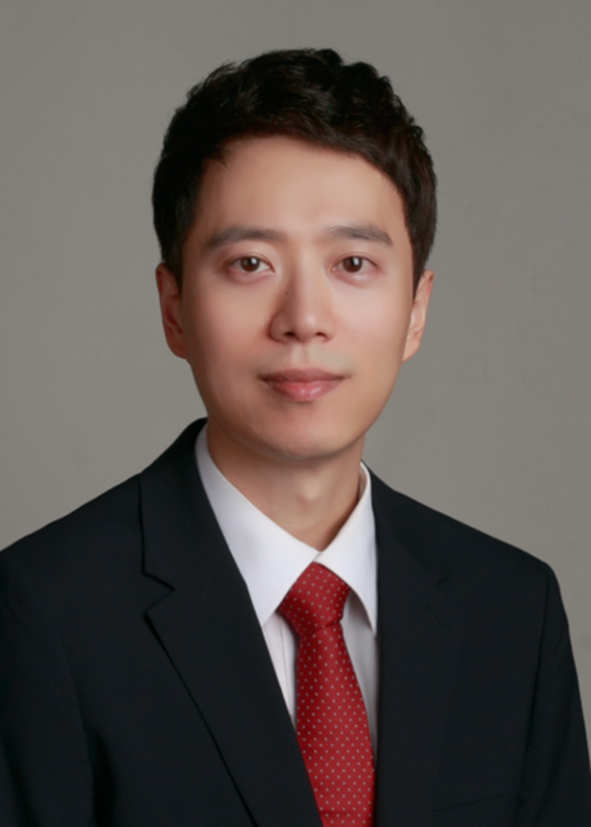
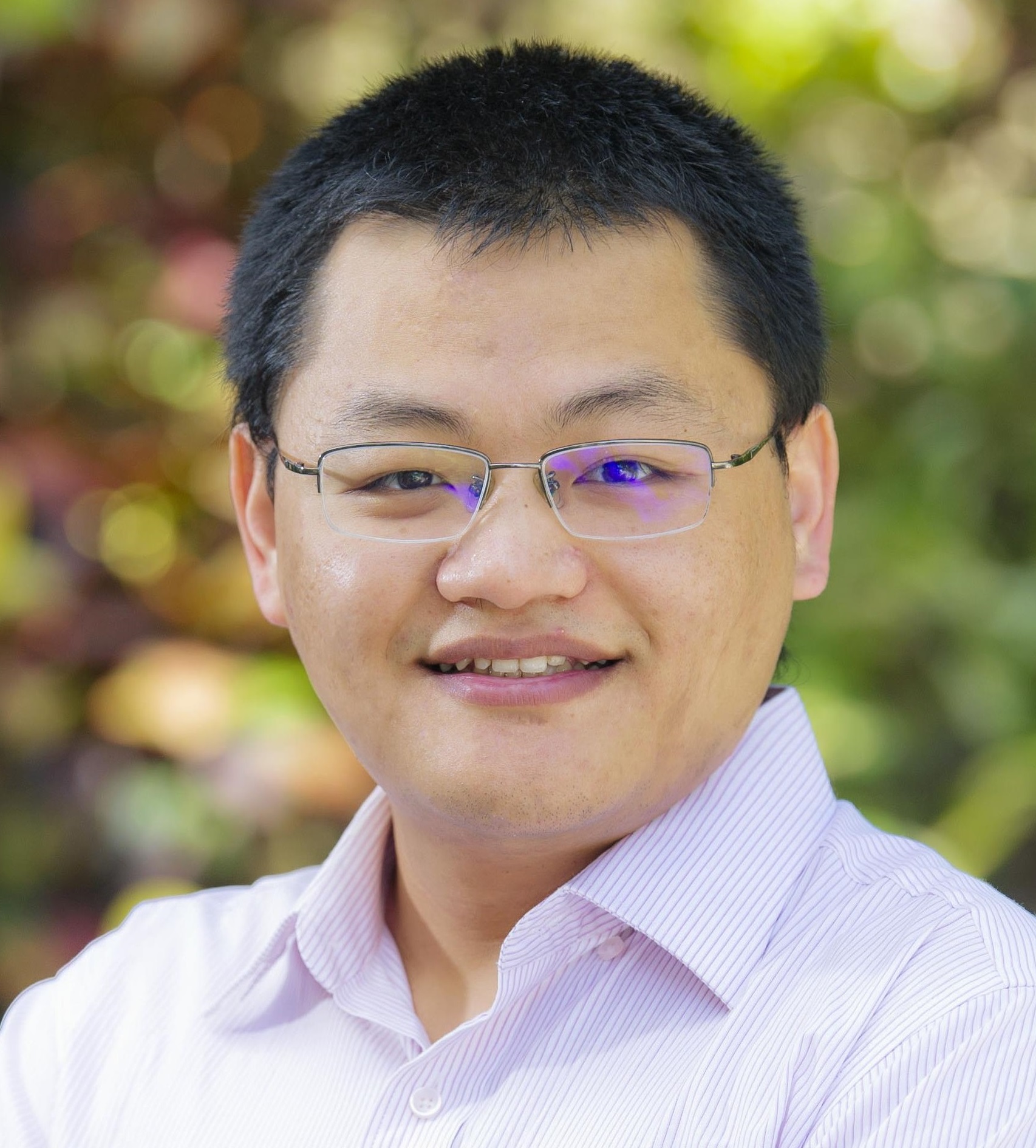
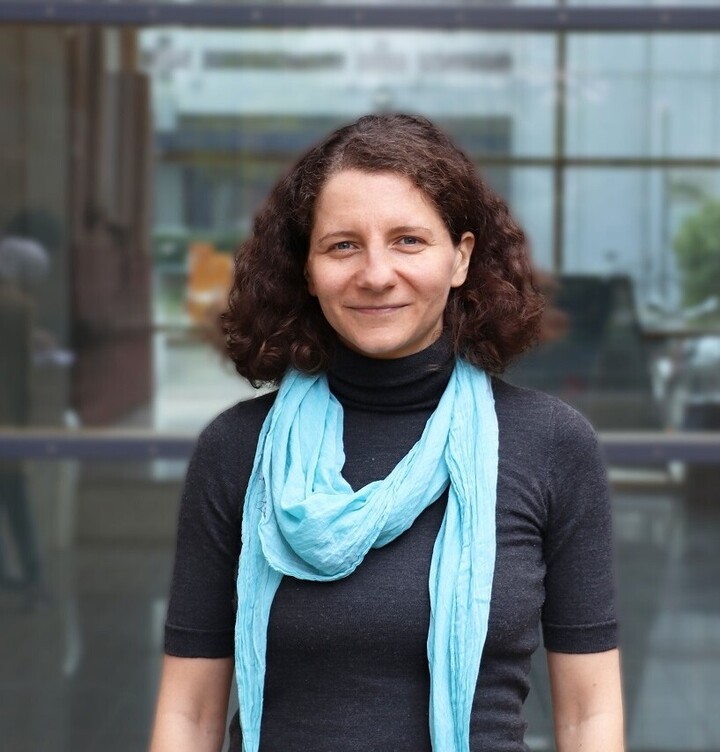
Hyun Oh Song is an Associate Professor in the Department of Computer Science and Engineering at Seoul National University , focusing on machine learning, combinatorial optimization, and algorithms. Previously, he was a Research Scientist at Google Research and a Postdoctoral Fellow at Stanford University . Education : Ph.D. in Computer Science (2014) from UC Berkeley , B.S. from Hanyang University Research Interests : Solving combinatorial problems in AI, with applications in neural network compression, adversarial robustness, and reinforcement learning. Teaching : Courses include Deep Learning, Machine Learning, and Probability & Computing at SNU. His startup DeepMetrics raised $2.2M in combined VC and government funding. Scientific Awards : Samsung Lee Kun Hee Scholarship Foundation (5-year Ph.D. fellowship) Publications : 15 recent works span efficient CNN compression (ICML2022), adversarial attack mitigation (ICML2022), neural relation graphs for label noise detection (NeurIPS2023), and Co-Mixup data augmentation (ICLR2021).
Roman Pflugfelder is a Marie Curie Fellow and active researcher at the Technical University of Munich (TUM), where he is affiliated with the Chair for Computer Vision and Artificial Intelligence in the School of Computation, Information and Technology. He simultaneously holds a postdoc position at the Technion in Israel under Prof. Michael Lindenbaum and serves as a lecturer at TU Wien. Currently on leave from a Scientist position at the AIT Austrian Institute of Technology in Vienna, Pflugfelder focuses on solving occlusion challenges in machine and human vision through his Marie Curie project 'Video De-Occlusion'. His research spans object tracking and detection, motion analysis, object recognition, and visual learning, with strong emphasis on practical applications in video surveillance systems. Pflugfelder has developed notable technologies including traffic monitoring systems based on competitive learning, the CMT tracker using consensus of parts, and indoor localization with non-overlapping security cameras. His work bridges theoretical computer vision with real-world implementation, having been deployed by governmental organizations and companies. Analysis of his recent publications (2022-2025) reveals a consistent focus on multi-object tracking, satellite imagery analysis, and occlusion handling in visual recognition systems. His work shows progression from traditional tracking methods toward more sophisticated deep learning approaches for satellite video analysis and temporal modeling to address occlusion challenges. The publications span top-tier venues including CVPR, ICCV, ECCV, and NeurIPS, demonstrating his standing in the computer vision community. Marie Skłodowska-Curie Fellowship (2022) IEEE/CvF WACV Best Paper Prize (2014) Multiple reviewer awards (2016 - Journal of Image and Vision Computing, 2017 - Journal of Pattern Recognition, 2019 - CVPR) Pflugfelder supervises Master's students at TUM and previously managed a team of six researchers at AIT, coordinating the strategic 'Mobile Vision' program. He co-initiated the VOT challenges and workshop series in 2012, contributing significantly to benchmarking in visual object tracking. His research often involves interdisciplinary collaborations across European institutions and Israel, with strong emphasis on translating theoretical advances into practical surveillance applications. As part of the Dynamic Vision and Learning Group at TUM under Prof. Laura Leal-Taixé, Pflugfelder works within a vibrant research ecosystem focused on cutting-edge computer vision problems. His current project investigates how temporal information in video sequences can overcome limitations of single-image recognition systems, drawing inspiration from cognitive science concepts like visual persistence and anorthoscopic perception.
Stephanie Shih is an Associate Professor in the Department of Linguistics at the University of Southern California. Her research employs computational and quantitative methods to investigate phonological systems and their interfaces with other linguistic domains, particularly morphosyntax and cognition. She directs a research lab focused on modeling language as a cognitive system through data-driven approaches. Research Focus Shih's work bridges theoretical linguistics with computational modeling, spanning: Phonological theory (tone, harmony, prosody) Sound symbolism and cross-modal cognition Morphosyntax-phonology interfaces Statistical learning of lexical patterns Cross-linguistic corpus analysis Scientometrics of linguistic scholarship Her recent publications demonstrate strong emphasis on: Empirical studies of sound symbolism across languages (e.g., baseball names, Pokémonastics) Computational modeling of phonological variation Interface phenomena in Austronesian languages (Tagalog word order) Prosodic structure in text-setting (Japanese/English) No awards or student advisees are documented in available materials.
Marc Hanheide is a Professor of Intelligent Robotics and Interactive Systems in the School of Computer Science at the University of Lincoln, UK. His academic career spans positions at the University of Lincoln (2012-present), University of Birmingham (2009-2011), and Bielefeld University (2006-2009). His doctoral training at Bielefeld University (2001-2006) established his foundation in computer science, leading to significant contributions in robotics research. He began his research career working on the EU IST project VAMPIRE, followed by leadership roles in major EU projects including COGNIRON, CogX, and the long-running STRANDS project. Marc Hanheide's research focuses on Autonomous Robotics, Human-Robot Interaction, Long-term Autonomy, Agricultural Robotics, and Nuclear Robotics . His work addresses fundamental challenges in enabling robots to operate effectively in dynamic, real-world environments over extended periods. He has pioneered approaches to human-robot spatial interaction, long-term localization, and multi-robot fleet management. Analysis of his recent publications reveals a strong trajectory toward practical applications in agriculture and hazardous environments, with emphasis on long-term stability, human-aware navigation, causal modeling for interaction, and fleet optimization. His work integrates theoretical advances in AI with tangible robotics applications that address real-world challenges in food production and nuclear decommissioning. Principal Investigator for major research initiatives: EU FP7 STRANDS project on long-term robotic behavior EPSRC Centre for Doctoral Training in Agri-Food Robotics (AgriFoRwArdS) National Centre for Nuclear Robotics (NCNR) Multiple agricultural robotics projects including ILIAD and Bacchus Long-Term His research leadership has secured substantial funding from EPSRC, BBSRC, Innovate UK, and the European Commission. He actively mentors students and early-career researchers, with a focus on translating theoretical robotics research into practical applications. His work demonstrates strong industry engagement, particularly in agricultural technology and nuclear robotics sectors. Based at the Lincoln Centre for Autonomous Systems (LCAS), Hanheide leads research on enabling robots to operate continuously in changing environments through innovations in perception, navigation, and human-robot interaction. His team develops systems that maintain functionality despite environmental changes, sensor degradation, and evolving task requirements.
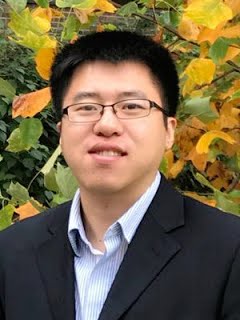
Xiang Chen is an Associate Professor at the Department of Software Engineering, School of Artificial Intelligence and Computer Science, Nantong University, China. He received his B.Sc. degree from Xi'an Jiaotong University in 2002 and his M.Sc. and Ph.D. degrees in computer software and theory from Nanjing University in 2008 and 2011 respectively. He is an editorial board member of Information and Software Technology and serves as a program committee member for prestigious conferences including FSE 2026 and ASE 2025. Chen is also a senior member of the China Computer Federation (CCF) and active in various academic committees. Chen's research focuses on empirical software engineering, mining software repositories, and software testing and maintenance, with particular emphasis on applying AI techniques to software engineering problems. His work spans large language models for software engineering, security vulnerability analysis, code change representation, and regression testing. He has published over 110 papers in top-tier journals and conferences including IEEE Transactions on Software Engineering and ACM Transactions on Software Engineering and Methodology. His recent publications demonstrate a strong trend toward integrating AI techniques, particularly large language models, with traditional software engineering practices. The research spans code generation evaluation, deep learning framework testing, vulnerability detection, and automated program repair, showing a consistent focus on improving software quality through innovative testing and analysis techniques. ACM SIGSOFT Distinguished Paper Award (ICSE 2021) ACM SIGSOFT Distinguished Paper Award (ICPC 2023) Top 1% CNKI Highly Cited Scholar (2024) Top 2% Scientist by Stanford University (2023-2025) NASAC 2019 Prototype Competition First Prize Chen has successfully advised numerous graduate and undergraduate students who have gone on to prestigious institutions including Nanjing University, Tsinghua University, and Zhejiang University. Many of his students have won national programming competitions and received scholarships. His research group, smartSE, actively works on projects funded by the Natural Science Foundation of China and various provincial research programs. Chen also serves as a reviewer for top journals including IEEE Transactions on Software Engineering and ACM Transactions on Software Engineering and Methodology.
Fang Liu is an Assistant Professor at the School of Computer Science & Engineering, Beihang University, China. She has made significant contributions to the field of software engineering, particularly in the intersection of artificial intelligence and software development practices. Dr. Liu received her Ph.D. in Computer Science from Peking University (Sep. 2017 - Jul. 2022), supervised by Prof. Zhi Jin and Prof. Ge Li. Prior to that, she earned her B.S. in Computer Science from Chongqing University (Sep. 2013 - Jul. 2017). Her research interests focus on AI for Software Engineering, including program understanding and generation, program repair, and applications of Large Language Models to software development tasks. Dr. Liu teaches Compiler Technology as a compulsory course at Beihang University (Fall 2024) and Programming in Cangjie Language as an elective course (Spring 2025). Her recent publications demonstrate a clear trend toward leveraging large language models for various software engineering tasks, with a particular emphasis on code editing, program repair, and code translation. Her research spans both theoretical advancements in model architectures and practical applications to real-world software development challenges, with numerous publications in top-tier venues like ASE, ICSE, and FSE. Distinguished Paper Award at ICPC'20 for "A Self-Attentional Neural Architecture for Code Completion with Multi-Task Learning" Dr. Liu actively participates in the software engineering research community as a program committee member for major conferences including ASE, FSE, and ICSE. Her work has significant implications for improving developer productivity, software quality, and the integration of AI technologies into the software development lifecycle.
Pong C Yuen is a Professor in the Department of Computer Science and Associate Dean of Science Faculty at Hong Kong Baptist University (HKBU). He earned his B.Sc. (1989) from City Polytechnic of Hong Kong and Ph.D. (1993) from The University of Hong Kong. His academic career at HKBU spans since 1993, including a six-year term as Department Head (2011–2017). Dr. Yuen's research focuses on video surveillance , human face recognition , and biometric security and privacy . His work bridges theoretical advancements in deep learning , sparse representation , and domain adaptation with practical applications in medical imaging and human-computer interaction . Recent publications included in this summary demonstrate expertise in unsupervised learning for person re-identification, adversarial domain adaptation for anti-spoofing, and physiological signal analysis for biometric security. These works span venues like IEEE Transactions on Image Processing (TIP) , CVPR , and AAAI . Scientific awards include: University Fellowship (1996) Outstanding Editorial Board Service Award (2018) Guangdong Province First-prize Natural Science Award Ministry of Education China Second-prize Natural Science Award Fellow of IAPR As an educator, Dr. Yuen has taught courses ranging from fundamental programming to graduate-level medical image processing , with a focus on interdisciplinary applications. He has served as Editorial Board Member for journals like Pattern Recognition and SPIE Journal of Electronic Imaging , and as Vice President (Technical Activities) of the IEEE Biometrics Council.
Chen Wang is an Assistant Professor in the Department of Statistics and Actuarial Science at The University of Hong Kong. He holds a PhD in Statistics from the National University of Singapore (NUS). His research focuses on Random Matrix Theory, Time Series Analysis, and High-dimensional Data Analysis. His work explores theoretical foundations and applications in econometrics, multivariate statistics, and high-dimensional inference. Key contributions include studies on spurious factor analysis, spectral distribution of time series, and cointegration analysis in large VARs. His teaching includes courses such as STAT2602 (Probability and Statistics II) and STAT3600 (Linear Statistical Analysis). Recent publications highlight advancements in AI-driven methodologies for single-cell biology, molecular modeling, and biomedical applications. Notable trends include integrating AI agents for experimental design, spatial biology analysis, and deep learning for medical imaging. Chen's work bridges statistical theory with practical applications, emphasizing high-dimensional data challenges in diverse scientific domains.
Joseph Le Roux is an Associate Professor at the University of Paris 13, affiliated with the LIPN laboratory. His research focuses on Natural Language Processing (NLP), Machine Learning (ML), and their applications to optimization problems. He has supervised multiple PhD students, including Yash Kankanampati, Nicolas Floquet, and Francesco Demelas, among others. Le Roux's work emphasizes dependency parsing, attention mechanisms, and optimization techniques in NLP. His research has been published in top venues such as NAACL, ICML, and EMNLP. He also contributes to academic service, including roles as an Action Editor for ARR and a member of the TAL journal's editorial board. His teaching responsibilities include courses on neural networks, generative models in NLP, and programming for AI. He co-manages the Data Science hub at LIPN and leads research projects like SemiAmor (ANR CE23-2023-0005) and ParSiTi (ANR-16-CE33-0021). Le Roux's academic contributions span over two decades, with a PhD in 2007 and an HDR (Habilitation) in 2024. His lab collaborations include work on XMG, a metagrammar compiler, and projects addressing challenges in social media NLP and MIP solving via ML.
James Tompkin is an Associate Professor in the Department of Computer Science at Brown University, specializing in visual computing. His research focuses on computer graphics, computer vision, and human-computer interaction, with an emphasis on techniques for image/video creation, editing, analysis, and interaction. His lab develops methods for scene reconstruction (especially from multi-camera systems), dynamic scene modeling, and applications in 2D, multi-view, and VR/AR displays. Research interests include neural radiance fields (NeRFs), Gaussian splatting, time-of-flight sensing, and generative adversarial networks (GANs). He has collaborated extensively with industry partners (Adobe, Amazon, Meta) and received funding from NSF, DARPA, NASA, and UK/EPSRC. His work is disseminated via top-tier venues like CVPR, SIGGRAPH, and ECCV. Teaching includes visual computing topics, and his lab maintains active projects on GitHub and project webpages. Office hours are held weekly, with scheduling via Google Calendar integration.
Shiqi Wang is an Associate Professor in the Department of Computer Science at City University of Hong Kong. He holds a Ph.D. from Peking University (2014) and a B.Sc. from Harbin Institute of Technology (2008). His career includes postdoctoral and research roles at the University of Waterloo, Nanyang Technological University, and Microsoft Research Asia. He specializes in semantic/visual communication, AI content management, and image/video quality assessment. Education: Ph.D. in Computer Application Technology (2014), Peking University B.Sc. in Computer Science and Technology (2008), Harbin Institute of Technology Research focuses on Large Visual-Language Models (LVLMs) , Generative Face Video Coding , and Information Forensics . Recent work includes video coding innovations, AI-driven quality assessment, and bias mitigation in facial analysis. Awards include the IEEE Multimedia Rising Star Award (2021) , NSFC Excellent Young Scientist Fund (2020) , and multiple best paper awards at IEEE conferences. He serves as Associate Editor for IEEE Transactions on Image Processing and leads MPEG standardization efforts for generative video coding. Professional activities include TPC roles at ICML, CVPR, and ACM Multimedia. His lab actively collaborates on standards for generative AI and multimedia systems, with a focus on ethical AI and cross-domain applications.
Brendan Prawdzik is an Assistant Teaching Professor of English at Penn State University, specializing in early modern English literature and culture. His research explores relationships between poetic language and materiality through affect theory, phenomenology, and theatrical rhetoric. Prawdzik examines how emergent capitalism influenced landscape perception, aesthetics, and consciousness in early modern texts. His research interests include John Milton's poetic works, theatrical structures in literature, early modern cultural studies, affect theory applications, and the intersection of capitalism with aesthetic perception. He investigates how economic transformations shaped literary expression. Prawdzik's publications have established him as a significant voice in Milton studies and early modern literary criticism. His book Theatrical Milton examines theatrical rhetoric in Milton's works and has received international recognition. Current research explores early anthropocene poetics in response to historical loss.
Chenliang Li is a Professor at the School of Computer Science and Engineering, Nanyang Technological University, Singapore. He holds a PhD in Computer Science from the same institution (2013). His research focuses on information retrieval, machine learning, recommendation systems, natural language processing, and social media analysis. He has published extensively in top-tier venues such as SIGIR, CIKM, ACL, and IEEE TKDE. Key contributions include advancements in sequential recommendation systems using diffusion models and transformers, knowledge graph reasoning with GNNs, and applications of pretrained language models in NLP tasks. His work bridges theory and practice, addressing challenges in data-driven decision making and large-scale systems. Recent publications (2023-2025) explore topics like cross-city POI recommendation, bias-agnostic recommender systems, and multimodal vision-language models. He collaborates widely with industry and academia, contributing to open-source projects like ModelScope-Agent.
Andrea Galassi is a Junior assistant professor (RTD-A) at the University of Bologna's Department of Computer Science and Engineering (DISI), part of the Language Technologies Lab led by Paolo Torroni. He holds a PhD in Computer Science and Engineering from the University of Bologna (2021), with a dissertation on integrating deep neural networks and symbolic knowledge. His postdoctoral research included roles at Stanford, Imperial College London, and the Humane-AI-Net European project on ethical AI. He also served as an Adjunct Professor at the University of Bologna. His research focuses on Machine Learning, Natural Language Processing (NLP), and neuro-symbolic techniques applied to argument mining, legal text analysis, and ethical AI. Notable projects include the FAIR initiative (developing scalable AI techniques), CLAUDETTE, PRIMA, and ADELE legal analytics projects, and StairwAI's horizontal matchmaking services. He is an expert in argument mining for judicial decisions and automated analysis of privacy policies. Galassi has taught over 300 hours of courses, ranging from foundational computer science to advanced NLP topics. He holds National Scientific Qualification for Associate Professor in Computer Engineering (ASN 2023-2025). His recent work emphasizes ethical AI applications, misinformation detection, and AI-driven legal systems, with publications in areas like cross-lingual legal benchmarking (LEXTREME) and subjectivity detection in news media. He leads projects on AI for social impact, including chatbots for asylum seekers and privacy-preserving dialogue systems. His lab participates in CLEF challenges on news credibility and legal argumentation analysis, demonstrating expertise in collaborative AI frameworks and real-world societal applications.
Ioana Hulpus is a post-doctoral researcher in the Data and Web Science Group at the University of Mannheim, collaborating with Prof. Heiner Stuckenschmidt and Prof. Simone Paolo Ponzetto. Her work bridges text mining and knowledge representation, with prior research at Insight Centre (NUI-Galway) involving projects with Elsevier, RTE, and Irish Times. She holds a Ph.D. from the National Insight Centre (2014), focusing on unsupervised word-sense disambiguation and knowledge graphs under Dr. Conor Hayes. Research Interests: Knowledge Graph Mining Entity Linking & Word-Sense Disambiguation Knowledge Representation & Linked Data Financial Network Analysis Research Trends in Articles: Her recent work emphasizes predictive analytics in education and knowledge-driven argument analysis, leveraging machine learning and semantic technologies. Earlier contributions explored argumentation frameworks integrated with knowledge graphs. Advising & Grants: No specific grants or advising roles explicitly listed. Collaborations include industry-academic partnerships with Elsevier and media organizations. Labs/Teams: Core member of the Data and Web Science Group, focusing on interdisciplinary applications of knowledge representation techniques.