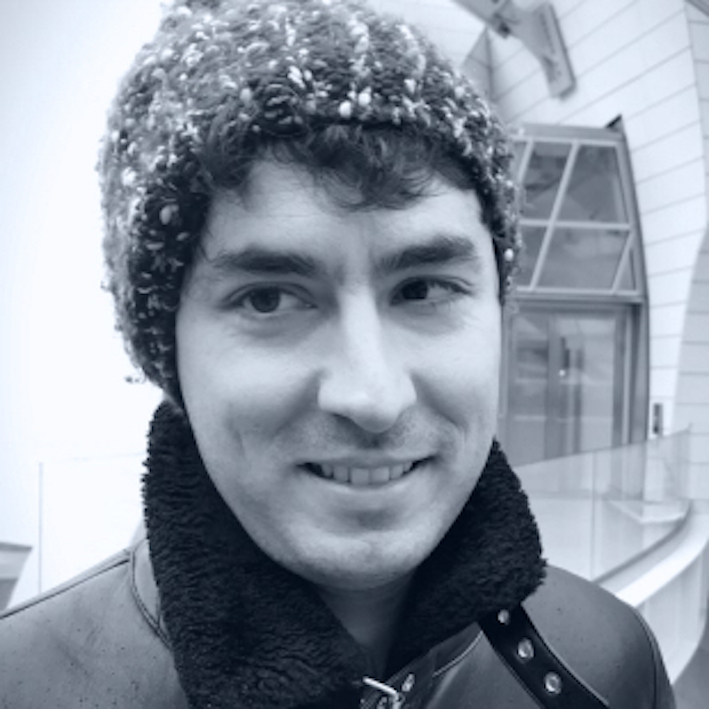
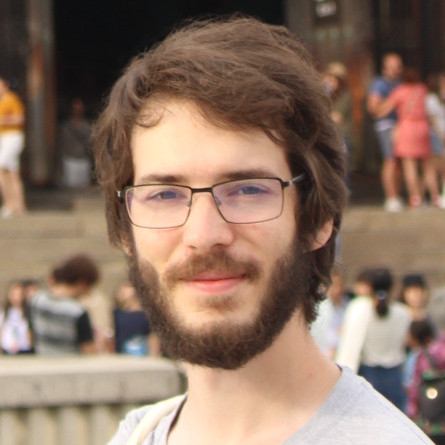
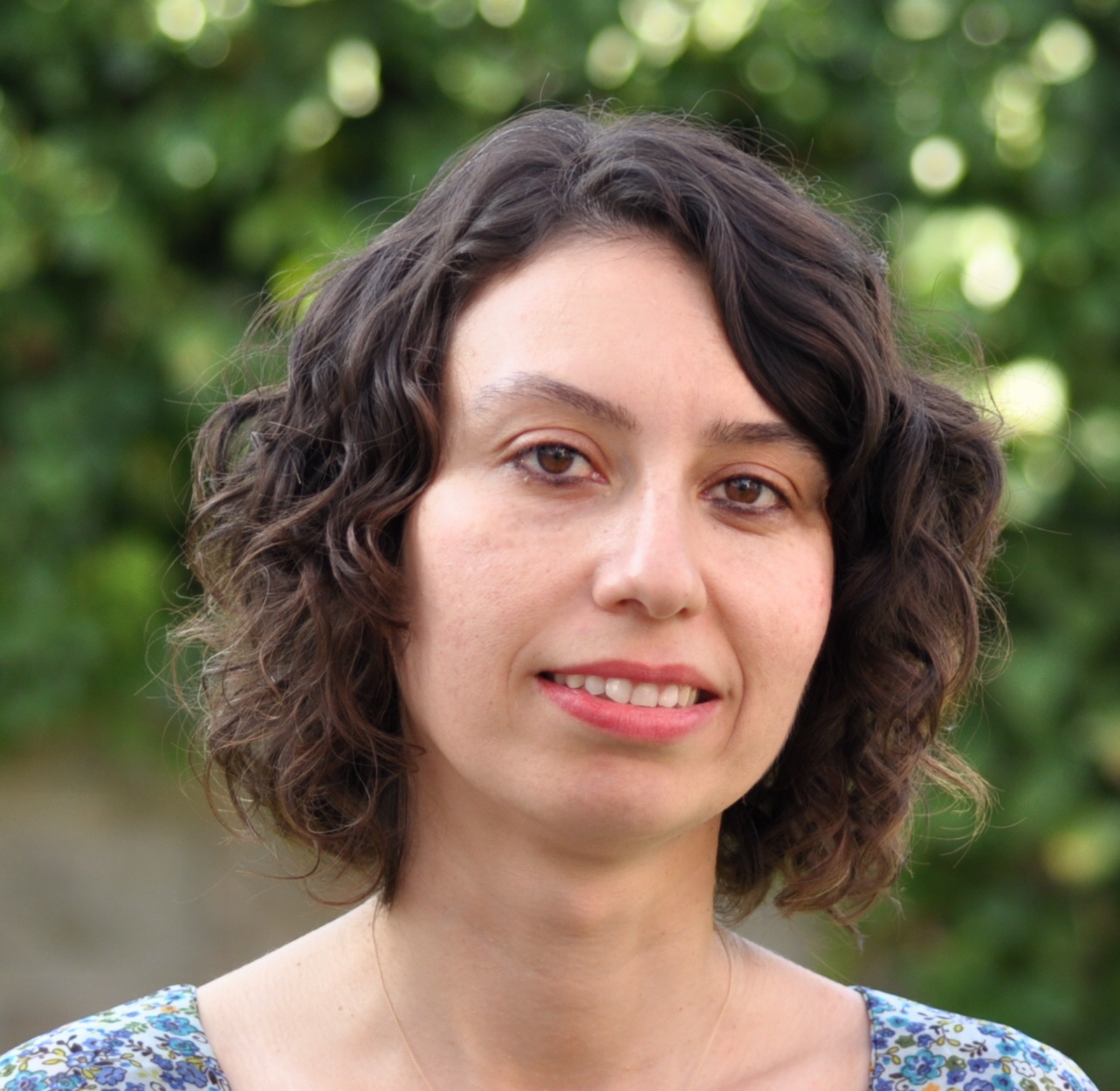
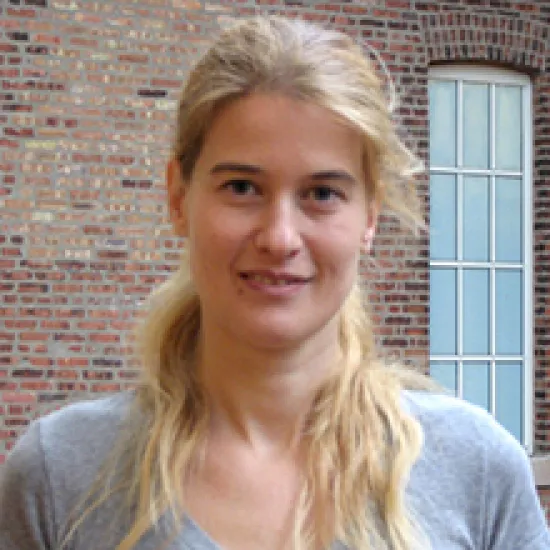
Nathanaël Fijalkow is a senior researcher at CNRS in LaBRI, Bordeaux, where he leads the Synthesis team. His work bridges program synthesis, games on graphs, automata theory, and applications in machine learning and formal verification. Research interests include: Program synthesis and code generation Game theory for algorithmic verification Linear Temporal Logic learning Probabilistic automata and dynamical systems Boolean network synthesis for biological modeling Recent publications focus on GPU-accelerated program synthesis, decidable classes of POMDPs, and optimal transformations in automata theory. He received the AAAI 2025 Outstanding Paper Award. He supervises PhD students and collaborators in the Synthesis team, working on projects like ANR ZADyG, ANR Shannon meets Cray, and PEPR IA SAIF. The team develops tools such as Scarlet and BoNesis for LTL learning and Boolean network analysis.
Phil Blunsom is a Professor of Computer Science at the University of Oxford and a Senior Research Fellow at St Hugh's College. His research focuses on the intersection of machine learning and computational linguistics, particularly using deep learning for natural language analysis, understanding, and generation. He has led the Natural Language research group at DeepMind London from 2014 to 2021. University of Oxford St Hugh's College DeepMind London (2014-2021) Blunsom's research explores algorithms for grounding natural language in AI systems, emphasizing compositional semantics, syntax, and multilingual distributed representations. His work spans neural machine translation, semantic parsing, and explainable AI, with a focus on adversarial learning and verification of explanatory methods. Selected publications highlight trends in NLP, robotics, and wireless signal analysis. Key themes include neural inertial tracking, multilingual models, and coreference resolution. Awards include the BEST PAPER at EWSN'13 and the best application paper at ICML 2014. Scientific contributions include: 2020 : Advancing adversarial generation of NLP explanations 2019 : MotionTransformer for domain transfer in robotics 2014 : Multilingual compositional distributional semantics 2013 : NLOS signal mitigation techniques Blunsom has advised numerous students in NLP and ML, including Satwik Bhattamishra, Jan Botha, and Yishu Miao. His research has received recognition for technical innovation in grammar induction, translation models, and lexicon modeling.
Nicolas Audebert is a Computer Vision and Machine Learning researcher working as a junior research director at the French National Institute of Geographic and Forest Information (IGN) in the LASTIG laboratory, STRUDEL team. He is currently on leave from his position as Associate Professor of Computer Science at the Conservatoire national des arts et métiers (Cnam) where he was part of the Vertigo team. His research spans computer vision, machine learning, and Earth Observation with applications in remote sensing and video games. Dr. Audebert earned his PhD in Computer Science from ONERA and IRISA in 2018, followed by an MEng in Computer Science from Supélec and an MSc in Human-Computer Interaction from Université Paris-Sud in 2015. In May 2025, he successfully defended his habilitation à diriger des recherches (HDR) titled "Learning representations from observations". His research focuses on representation learning , where he develops methods to create abstract representations of raw data that allow computers to manipulate high-level concepts numerically. In Earth Observation , he processes and makes sense of large volumes of satellite data for land cover mapping, change detection, and image interpretation. His work in machine learning for games explores how to use reinforcement learning to generate diverse and challenging AI in video games. Additional research interests include generative models, multimodal learning, and domain adaptation techniques. His recent publications demonstrate expertise in cross-sensor learning, super-resolution of satellite imagery, diffusion models for Earth Observation, and robust image retrieval systems. His work bridges theoretical advances in deep learning with practical applications in geospatial analysis, with a particular focus on developing methods that work across different sensor types and environmental conditions. Outstanding Reviewer for ECCV 2024 Outstanding Reviewer for BMVC 2021 Outstanding Reviewer for ICCV 2021 Best Benchmarking Contribution Award at GEOBIA 2016 2nd best student paper award at JURSE 2017 Google Research Scholar Program gift Dr. Audebert currently advises four PhD students: Maxime Merizette (semantic segmentation of 3D point clouds), Georges Le Bellier (domain adaptation for Earth Observation), Léo Géré (generative models for music), and Aimi Okabayashi (super-resolution of satellite image time series). He has successfully supervised two PhD students to completion: Perla Doubinsky (controlling generative models) and Elias Ramzi (robust image retrieval), whose thesis won the AFRIF PhD award 2024. He has mentored numerous MSc students on diverse topics including flood detection, procedural generation of video game levels, and deep learning for communication systems. He leads the MAGE project (2022-2026), funded by the Agence Nationale de la Recherche, which investigates using procedural generation and modern rendering engines to create labeled synthetic data for Earth Observation models, particularly for disaster mapping applications. He also leads the SESURE project (2021-2023) focused on super-resolution of Sentinel-2 time series, and previously led the RL-Games project (2020-2022) exploring reinforcement learning applications for video games.
Milan Straka is a professor at the Institute of Formal and Applied Linguistics (ÚFAL) within the Faculty of Mathematics and Physics at Charles University, Prague. His research focuses on machine learning, artificial neural networks, deep learning, and structured prediction with applications to natural language processing (NLP) tasks including POS tagging, dependency parsing, named entity recognition, and optical music recognition. University: Charles University School: Faculty of Mathematics and Physics Department: Institute of Formal and Applied Linguistics Straka has developed several NLP tools like UDPipe and NameTag, contributing to multilingual coreference resolution, Czech grammar error correction, and historical language processing pipelines. His recent work involves contextualized embeddings, semantic parsing, and large-scale dataset creation for Czech NLP tasks. He collaborates on European Language Grid initiatives and has participated in multiple shared tasks (CRAC, MRP, W-NUT). His publications span topics from algorithm design (functional data structures) to modern transformer-based language models (RoBERTa) with emphasis on Czech language resources.
Dr. Burcu Can Buglalilar is a Lecturer in Computing Science at the Department of Computing Science and Mathematics, University of Stirling, where she is a member of the Data Science and Intelligent Systems Research Group. She previously held academic positions at Hacettepe University (2015-2020) and University of Wolverhampton (2020-2022). Her research focuses on Natural Language Processing with particular emphasis on unsupervised learning techniques for morphology, syntax, and semantics in agglutinative languages like Turkish. She applies both statistical methods (including nonparametric Bayesian learning) and deep learning approaches to language representation problems. Dr. Can Buglalilar's recent work shows a clear trajectory toward Large Language Models and their applications, with upcoming lectures scheduled for 2025 on both Large and Small Language Models. Her publications consistently address fundamental challenges in representing and processing morphologically rich languages. Scientific Recognition: Best Paper Award at RepL4NLP, ACL 2018 TUBITAK Project Performance Award (2022) As an active member of the NLP community, Dr. Can Buglalilar serves as Senior Associate Editor for ACM TALLIP and Associate Editor for Journal of Natural Language Engineering. She has organized workshops including the 8th Representation Learning for NLP (Repl4NLP) at ACL 2023. She is currently developing the Turkish Neural NLP Toolkit and welcomes MSc and PhD students interested in natural language processing, computational linguistics, and machine learning for language.
Sanja Fidler is an Associate Professor at the University of Toronto (Department of Computer Science) within the Mathematical and Computational Sciences School. She is also a co-founder and affiliated faculty at the Vector Institute and serves as VP of AI Research at NVIDIA. Her research focuses on the intersection of Computer Vision, Machine Learning, and Graphics, with emphasis on 3D reconstruction, generative models, and interactive methods. She previously held a Research Assistant Professor position at the Toyota Technological Institute at Chicago. Research Interests: Dr. Fidler specializes in Computer Vision and Machine Learning, particularly in areas such as 3D vision, 3D reconstruction/synthesis, object detection, and interactive scene understanding. Her work bridges graphics and vision, addressing challenges in geometric representations, generative models, and real-world applications like medical imaging and autonomous systems. Awards: She has received notable awards including the Canada CIFAR AI Chair (2018), Connaught Innovation Award (2020), NVIDIA Pioneer of AI Award (2016), and multiple outstanding reviewer distinctions at top conferences. Her teaching excellence was recognized with the Professor of the Year award by UofT's CS Student Union in 2014/2015. Collaborations & Labs: Leading the NVIDIA Toronto AI Research Lab and contributing to initiatives at the Vector Institute, her work integrates academic and industrial research. She co-organized workshops on topics like 'Geometry Meets Deep Learning' and '3D Indoor Scene Understanding' at major conferences.
Natalie Schluter is an Associate Professor at the Department of Applied Mathematics and Computer Science, Technical University of Denmark (DTU), and a Machine Learning Researcher at Apple's Machine Learning Research Organisation under Samy Bengio. She previously held roles including Head of Programme for the Data Science BSc at the IT University of Copenhagen, Senior Research Scientist at Google Brain/DeepMind, Lead Data Scientist at MobilePay, and postdoctoral researcher positions at the University of Copenhagen and Malmö University. Her education includes a PhD in Natural Language Processing from Dublin City University, an MSc in Mathematics from Trinity College Dublin, an MA in Linguistics (Semantics) from Université de Montréal, and a BA in French and Spanish from the University of British Columbia. Her research interests span Theoretical Computer Science (Graph Algorithms and Automata), Machine Learning, and their applications in Natural Language Processing and Data Science. Key areas include text summarization, parsing, cross-lingual NLP, and algorithmic fairness. She has contributed significantly to multilingual NLP datasets like MassiveSumm and DaNewsroom, and her work bridges theoretical foundations with practical NLP systems. Publications highlight innovations in neural network regularization, dependency parsing, and cross-lingual inference, with a focus on Danish and low-resource languages. Current advisees include PhD student David Sasu. She has advised numerous students and researchers, contributing to impactful NLP tools like the UniParse toolkit. Her career reflects a blend of academic and industry leadership, driving advancements in NLP theory and application while fostering education through pioneering programs like the Data Science BSc.
Dr. Tamara Polajnar is a Visiting Researcher at the Department of Computer Science and Technology, University of Cambridge. Her research focuses on computational linguistics and natural language processing, with particular emphasis on distributional semantics and semantic compositionality. Her research interests span multiple areas including computational semantics, distributional models, and semantic composition. She develops tensor-based methods for representing meaning and investigates techniques for semantic analysis of text at different levels from phrases to documents. Her work combines theoretical linguistics with practical machine learning approaches. Her publications primarily focus on compositional distributional semantics, exploring how to effectively combine word vectors to represent larger linguistic units. Recent work examines discourse-level representations and evaluation methods for semantic models. She has contributed datasets and frameworks that advance the understanding of how computational models can capture linguistic phenomena. She actively contributes to the research community through the development of specialized datasets and evaluation resources. Her work on RELPRON provides valuable resources for evaluating compositional distributional models, while her research on short scientific summaries addresses challenges in processing academic text.
Jiebo Luo is a Professor of Computer Science at the University of Rochester, where he has been since 2014. Prior to this, he spent over 15 years at Kodak Research Laboratories, rising to Senior Principal Scientist. His research spans computer vision, natural language processing, machine learning, and computational social science. BS and MS in Electrical Engineering from University of Science and Technology of China (USTC), 1989 and 1992 PhD in Electrical Engineering from University of Rochester, 1995 Dr. Luo's work focuses on bridging computer vision with social science through multimedia analysis, social media modeling, and digital health. His research includes innovative approaches to unsupervised learning, event recognition in videos, and multi-label classification. His publications highlight trends in deep learning for medical imaging, social media as sensors, and video analytics. Key subfields include semantic understanding, attention mechanisms, and multimodal fusion. 2021 ACM SIGMM Technical Achievement Award 2018 IEEE Region 1 Technological Innovation in Academic Award 2004 Eastman Innovation Award Fellowships: ACM, AAAI, IEEE, IAPR, SPIE Dr. Luo serves as Editor-in-Chief for IEEE Transactions on Multimedia (2020-2022) and has held leadership roles in multiple IEEE Technical Committees. He is a Data Science CoE Distinguished Researcher at the Goergen Institute for Data Science and a Board Member of the Greater Rochester Data Science Industry Consortium.
Prof. Olgierd Unold is a faculty member at the Faculty of Information and Communication Technology at Wrocław University of Science and Technology, where he is affiliated with the Department of Computer Engineering. He holds the academic rank of Professor and conducts research in machine learning, computational intelligence, and bioinformatics. Research Interests: Machine Learning, particularly Grammatical Inference Computational Intelligence: Evolutionary Algorithms, Learning Classifier Systems, Fuzzy Rule Systems Bioinformatics and DNA Computing Natural Language Processing and Pattern Recognition His recent publications demonstrate a strong focus on applying AI techniques to bioinformatics, log analysis, formal language inference, and optimization problems. The work spans from theoretical algorithm development to practical applications in software reliability and biological data classification. Scientific Awards: No awards listed in the provided text. Advising and Grants: Prof. Unold has supervised or collaborated with numerous researchers and students, including Wojciech Wieczorek, Norbert Kozłowski, and Łukasz Śmierzchała, on projects involving classifier systems, grammatical inference, and bioinformatics. While specific grants are not mentioned, his consistent publication output suggests active research funding. Labs and Research Teams: He is part of the research ecosystem within the Department of Computer Engineering, contributing to projects in AI, machine learning, and computational intelligence, likely involving student-led and collaborative research initiatives.
Jakob Grue Simonsen is a Professor and Department Chair at the Department of Computer Science (DIKU), University of Copenhagen. He holds a Dr. Scient., PhD, and MBA. His research focuses on the mathematics of computation, including computability theory, term rewriting, lambda calculus, complexity hierarchies, and symbolic dynamics, with applications in information retrieval and human-computer interaction. His primary research explores infinite computational processes and their finite representations, alongside practical work in neural hashing, fact-checking systems, and quantum language models. Previously, he contributed to constructive mathematics and biocomputing. An analysis of his 15 most recent publications (2015–2022) reveals strong emphasis on: Theoretical computability and game-theoretic models Neural networks for NLP (BERT, semantic hashing) Fact verification and explainable AI methodologies Efficient retrieval algorithms and recommendation systems Awards: RTA 2004 Best Paper Award CHI '13 Honorable Mention CHI '14 Honorable Mention
Dr Raquel Garrido Alhama is an Assistant Professor of Artificial Intelligence for text and human interaction at the Institute for Logic, Language and Computation (ILLC) , University of Amsterdam. She also co-directs the /k/omputation and Language Lab and previously served as Assistant Professor at the Cognitive Science and Artificial Intelligence department of Tilburg University. She earned her PhD from the ILLC under the supervision of Jelle Zuidema, Remko Scha and Carel Ten Cate, with a dissertation entitled Computational Modelling of Artificial Language Learning . Prior post-doctoral positions include the Max Planck Institute for Psycholinguistics and the Basque Center on Cognition, Brain and Language. Research Interests: Computational modelling of language learning and evolution Language acquisition, word learning and sentence processing Neural-symbolic integration and connectionist architectures Visual and auditory word recognition, syntactic parsing and part-of-speech tagging In recent years her work has converged on validating developmental milestones—such as the onset of productive determiner–noun combinations—using large-scale child corpora and neural models. She also investigates how multi-agent referential games can lead to emergent compositional languages, moving from image to richer graph representations. Scientific Awards: Best Article Award (2019) from Psychonomic Bulletin & Review for the review on computational models of rule learning Best Poster Award (2015) at the International Conference on Cognitive Modeling Teaching & Supervision: Dr Alhama has designed and lectured courses on advanced programming for cognitive science, computational linguistics, linear algebra and language acquisition at Tilburg University, University of Amsterdam, Radboud University and the University of the Basque Country. She currently supervises eleven MSc and BSc students in AI, Logic and Cognitive Science. Labs & Teams: She is the founding co-director of the /k/omputation and Language Lab together with Phong Le, where they use Language Emergence frameworks to explore the cognitive prerequisites for displacement and compositionality in human language.
Xiaobai Liu is an Assistant Professor in the Department of Computer Science at San Diego State University, College of Sciences. His research bridges Computer Vision, Machine Learning, and Computational Statistics, with applications in Clinic Diagnosis, Sports, Transportation, Surveillance, and Video Games. Education: PhD in Computer Science from HuaZhong University of Science and Technology (2012) His research focuses on image parsing, video analysis, and deep learning techniques for 3D reconstruction, object tracking, and marine mammal detection. Recent publications highlight advancements in LiDAR generation, scene text recognition, and automated spectrogram processing. Notable grants include NSF-funded projects on autonomous vehicle safety simulations, marine mammal classification, and AI-driven recycling systems. He has advised over 30 students in real estate analytics, robotics, and computer vision projects. Scientific Awards: 2018 San Diego State University President’s Excellence Award