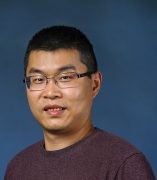
Wei Tang is an Assistant Professor at the Department of Computer Science , University of Illinois Chicago , focusing on computer vision and machine learning with emphasis on visual compositionality and data-efficient approaches. PhD from Northwestern University (2019) Research Interests : Computer Vision Machine Learning Visual Compositionality Data-Efficient Vision 3D Reconstruction Human Pose Estimation Recent Publication Trends : Pioneering part-whole structure modeling for 3D objects (CVPR'25, ECCV'24) Advancing visual dependency modeling in semantic segmentation (CVPR'21, PR'22) Innovating graph networks for pose estimation (ICCV'21, BMVC'20) Developing compositional networks integrating stochastic grammars (ECCV'18, ICCV'17) Academic Service : Associate Editor for Pattern Recognition (2024-present) Area Chair for ICCV'25 , BMVC'25 , ICME'25 , etc. NSF Panelist (2023-2024) Teaching : CS 515 Advanced Computer Vision (Spring 2025) CS 415 Computer Vision I (Fall 2024) CS 412 Introduction to Machine Learning (Spring 2024)
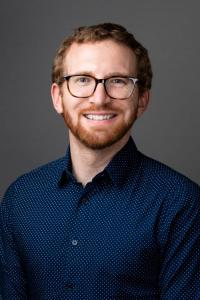
François Jacquenet is a Professor of Computer Science at the University of Saint-Etienne, where he is a member of the Machine Learning Team at the Hubert-Curien Laboratory. His research focuses on machine learning and data mining applications for natural language processing, with significant contributions to privacy-preserving systems including Hippocratic Multi-Agent Systems and Automata-Based Sequence Mining. His research interests span Machine Learning , Data Mining , Natural Language Processing , and Privacy-Preserving Systems . Jacquenet has led multiple research projects including the PASCAL II Network of Excellence (2008-2012), the Bingo2 project (2008-2010), and the Web Intelligence project (2006-2008), where he focused on ethical web design and privacy protection techniques. His work bridges theoretical foundations with practical applications in areas like fraud detection, meeting summarization, and video tag correction. Analysis of his recent publications reveals a consistent research trajectory in deep learning applications , privacy-preserving techniques , and cross-modal learning . His work shows a progression from foundational research in grammatical inference and automata theory to contemporary applications in neural networks and self-organizing systems. The publications demonstrate strong interdisciplinary connections between computer science, physics, and security applications. Best AI Paper Award at Conference (2006) Professor Jacquenet has supervised numerous PhD students including Maria Galvan, Hoang-Tung Tran, Ludivine Crépin, and Stéphanie Jacquemont. His research has been supported by significant grants including the French Research Agency (ANR), the Rhône-Alpes region, and international networks like PASCAL. He has organized multiple conferences including Privacy on the Web at the ACM Symposium on Applied Computing and the PASCAL Workshop on Teaching Machine Learning. He is actively involved with the Machine Learning Team at Hubert-Curien Laboratory , contributing to the PASCAL Network of Excellence and the REWERSE Network. His research group focuses on developing practical applications of machine learning while addressing fundamental theoretical questions in pattern mining and language learning.
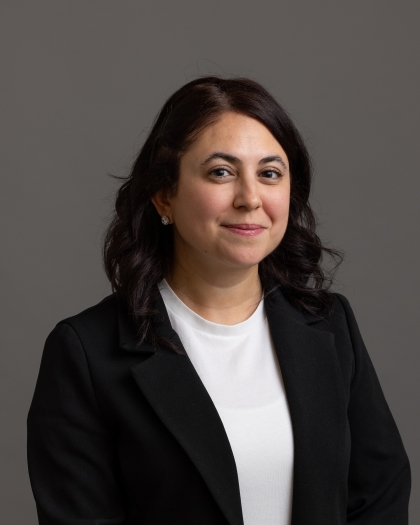
Preetam Ghosh, Ph.D. , is a Research Professor in the Department of Computer Science at Virginia Commonwealth University (VCU) , with cross-disciplinary focus in computational biology, machine learning, and network science. His work bridges engineering and biomedical research , particularly in pandemic modeling, multiomics data integration, and bioinformatics tool development. Academic Role: Research Professor, VCU School of Engineering Key Research Areas: Computational Biology, Network Analysis, Pandemic Modeling, Multiomics Data, Bioinformatics Algorithms Recent Research Trends include: Application of machine learning to biomedical data (e.g., drug-target affinity prediction, breast cancer subgroup classification) Development of physics-informed models for pandemic propagation and chemical reaction networks Innovations in network science , such as link prediction and vulnerability analysis for biological and IoT systems Advancing single-cell genomics through consensus algorithms (COFFEE, CHAI, CORTADO) Design of adaptive routing protocols for disaster-resilient IoT networks (ADRIN, ADRIN2.0)
Stephanie Shih is an Associate Professor in the Department of Linguistics at the University of Southern California. Her research employs computational and quantitative methods to investigate phonological systems and their interfaces with other linguistic domains, particularly morphosyntax and cognition. She directs a research lab focused on modeling language as a cognitive system through data-driven approaches. Research Focus Shih's work bridges theoretical linguistics with computational modeling, spanning: Phonological theory (tone, harmony, prosody) Sound symbolism and cross-modal cognition Morphosyntax-phonology interfaces Statistical learning of lexical patterns Cross-linguistic corpus analysis Scientometrics of linguistic scholarship Her recent publications demonstrate strong emphasis on: Empirical studies of sound symbolism across languages (e.g., baseball names, Pokémonastics) Computational modeling of phonological variation Interface phenomena in Austronesian languages (Tagalog word order) Prosodic structure in text-setting (Japanese/English) No awards or student advisees are documented in available materials.
Dr. Cong Zhang is a Lecturer in Phonetics and Phonology at the School of Education, Communication and Language Sciences, Newcastle University, where he also serves as the Academic Lead for Student Employability and Enterprise. Previously, he held positions as a Postdoctoral Research Associate on the ERC project SPRINT at University of Kent (2019-2020) and Radboud University (2020-2022), and worked as a TTS linguist at Rokid Inc. in Beijing. Dr. Zhang's educational background includes: DPhil in General Linguistics and Comparative Philology from University of Oxford (2018), supervised by Professor Aditi Lahiri M.A. with Distinction in Linguistics & Language Acquisition from Newcastle University (2012) B.A. in Translation and Interpreting from Beijing Foreign Studies University (2011) His research primarily focuses on speech prosody, examining intonation, lexical tone, and rhythm across languages. He employs diverse methodologies spanning Phonetics and Phonology (particularly Laboratory Phonology), Psycholinguistics, Computational Linguistics, and Language Acquisition. His work often investigates tonal languages, particularly Mandarin varieties, exploring how sentence-level prosody interacts with word-level prosody. He also maintains research interests in translation and interpreting studies. His recent publications demonstrate a strong emphasis on methodological rigor in phonetic research, with multiple papers comparing recording methods and analytical approaches. He has made significant contributions to understanding citation tone production across languages, prosody in aphasia, and the application of gamification in linguistic data collection. His work bridges theoretical linguistics with practical applications in speech technology and clinical settings, reflecting an interdisciplinary approach that spans computational methods, experimental phonetics, and clinical linguistics. Dr. Zhang's scientific achievements include: Second Prize of Newcastle University's Open Research Awards (2024) Funding from ESRC for Festival of Social Sciences event 'Wey aye, man - Think you know a North-East accent when you hear one?' (2024) Dr. Zhang has been actively involved in knowledge exchange, with his Festival of Social Science event reported by BBC, Mirror, and Chronicle. He has collaborated extensively with researchers across multiple institutions on projects related to speech prosody, including the ERC-funded SPRINT project. His work on remote data collection methods has been particularly timely given the challenges of conducting phonetic research during the pandemic, demonstrating that lossless format phone recordings can be a viable option for certain phonetic studies. His invited talk at HKPU on 'Tonal Tug-of-War: The Interplay of Lexical and Sentence Prosody' further highlights his expertise in this specialized area. Dr. Zhang is affiliated with the LingLab facilities at Newcastle University and contributes to the Children's Speech and Language Clinic. His previous work with the Language and Brain Lab at Oxford and the ERC SPRINT project demonstrate his engagement with interdisciplinary research teams focused on the cognitive and communicative aspects of speech prosody, establishing him as a significant contributor to contemporary phonetic and phonological research.
Mitchell Browne is a Research Fellow in the Department of Linguistics at Macquarie University. His research focuses on endangered Australian Aboriginal languages, particularly Pama-Nyungan and Ngumpin-Yapa language families. He specializes in grammar description, syntactic and semantic analysis, and language documentation. Current projects include investigating language genesis in Aboriginal communities and leveraging computational methods for speech analysis in endangered languages. Education: PhD in Linguistics (2021, unpublished doctoral thesis on Warlmanpa) His research interests span grammar description, morphosyntax, language contact, and community-based language revitalization. He combines traditional fieldwork with computational approaches to address challenges in documenting endangered languages. Recent work includes cross-referencing in Pama-Nyungan languages and collaborative projects with First Nations communities in Geelong. He has authored a peer-reviewed book on Warlmanpa grammar and contributed to Oxford's guide on Australian languages. His projects include MQRF 2025 examining language genesis through speaker identity and EES 2024 focused on employment pathways for Indigenous communities. Browne collaborates with institutions like ANU Press and Deakin University, emphasizing ethical engagement with Indigenous knowledge systems. His work bridges theoretical linguistics with applied community initiatives.
Jordan Kodner is an Assistant Professor in the Department of Linguistics at Stony Brook University, with affiliations to the Institute for Advanced Computational Science, Department of Computer Science, Institute for AI-Driven Discovery and Innovation, and the Natural Language Processing (NLP) group. He holds a PhD in Linguistics (2020) and a Master's in Computer and Information Science (2018) from the University of Pennsylvania. His research focuses on computational models of child language acquisition, particularly morphology, and its implications for NLP and language variation/change. He has worked on defense/medical projects at Raytheon BBN Technologies (2013-2015) and interned at Amazon Alexa AI in 2020. Research interests include computational linguistics, morphology, language acquisition, cognitive science of language, and low-resource NLP. He is writing a book on language change mechanisms grounded in child acquisition models. Teaching includes courses like LIN 260 (Language and Mind), LIN 330 (Language Acquisition), and LIN 537 (Computational Linguistics I). His work spans multiple languages (e.g., Arabic, Armenian, German, Korean, Spanish) and integrates findings from historical linguistics, sociolinguistics, and computational methods. Key contributions include studies on morphological learning, neural network limitations, and language change actuation via acquisition processes.
Dr. Jennifer Foster is an Associate Professor and Associate Dean for Teaching and Learning in the Faculty of Engineering and Computing at Dublin City University. She specializes in Natural Language Processing (NLP) and AI, with a focus on language parsing, sentiment analysis, and Irish language technology. She leads projects funded by Science Foundation Ireland (SFI) and other agencies, supervising 11 PhD students to completion and currently mentoring four more. Her research spans NLP applications including grammar checking, question answering, and neural language model evaluation. She teaches NLP courses for Data Science and Computing programs, as well as introductory Python programming. Foster has authored over 100 peer-reviewed publications and serves on conference program committees, including the Association for Computational Linguistics executive board (2016-2019). Recent work includes developing gaBERT, an Irish language model, and exploring machine-generated story coherence. Her contributions to resources like the Irish Universal Dependencies Treebank and the GenERRate error-generation tool highlight her commitment to advancing NLP for under-resourced languages.
Simon Todd is an Assistant Professor in the Department of Linguistics at the University of California, Santa Barbara (UCSB), with affiliations in Computer Science, Cognitive Science, and Quantitative Methods in the Social Sciences. He directs the Computational Psycholinguistics of Listening and Speaking (CPLS) Lab and co-leads the CEILing research group. His research focuses on speech perception's cognitive processes and their long-term linguistic implications, combining computational modeling, experiments, and corpus analysis. He also investigates phonology-morphology interactions. Education: PhD in Linguistics from Stanford University (2019), advised by Dan Jurafsky and Meghan Sumner. Previously completed a BA(Hons) in Mathematics and Linguistics at the University of Canterbury (2012), followed by a postdoc at the New Zealand Institute of Language, Brain and Behaviour. Holds adjunct status at the University of Canterbury's NZILBB. Research emphasizes small-scale perceptual biases' role in language change and evolution. Key projects include Māori language phonotactic knowledge among non-speakers, reduplication in morphological segmentation, and BERT's syntactic insights. Recent work explores implicit proto-lexicons and ambient language exposure effects. Teaching includes courses on programming for linguists, computational linguistics foundations, and advanced topics in speech/text processing. Active in developing tools like Morfessor extensions for reduplication analysis. Collaborates internationally on projects linking perception to language structure and change.
Samia Touileb is an Associate Professor in Natural Language Processing (NLP) at the University of Bergen's Department of Information Science and Media Studies. She co-leads the NLP work package at MediaFutures, a research center focused on responsible media technology. Her research emphasizes bias, fairness, and ethical implications of AI, particularly in language models and under-resourced languages. Education: PhD in NLP from the University of Bergen (2017), postdoctoral research at the University of Oslo's Language Technology Group, and prior roles in MediaFutures. Research Interests: - Bias and fairness in NLP models - Information extraction and summarization - Applications of NLP in social sciences - Scandinavian and under-resourced languages Notable Projects: - Co-developer of the NorBench benchmark for Norwegian language models - Creator of the EDEN dataset for event detection in Norwegian news - Lead in MediaFutures' NLP initiatives Publications focus on event extraction, bias measurement, and ethical AI, with contributions to conferences like NoDaLiDa and ACL.
Professor Katrien Beuls is a leading researcher at the Namur Digital Institute within the Faculty of Computer Science at the University of Namur. With over 69 research outputs and an h-index of 30, her work bridges artificial intelligence, computational linguistics, and cognitive science. She actively contributes to the United Nations Sustainable Development Goals through her research in human-inspired AI systems. Her research focuses on developing human-like language processing systems through computational construction grammar, neuro-symbolic approaches, and grounded language learning. Professor Beuls investigates how machines can learn language through situated interactions similar to human language acquisition, with particular emphasis on explainable AI systems that combine neural and symbolic approaches for better interpretability. Her work spans theoretical linguistics, cognitive modeling, and practical AI applications. Analysis of her recent publications reveals a strong trend toward integrating symbolic and neural approaches in language processing, with increasing focus on explainability, grounded language understanding, and construction grammar formalisms. Her research demonstrates consistent progression from theoretical computational linguistics toward practical applications in visual dialogue systems, recipe understanding, and language acquisition modeling. Professor Beuls leads significant research projects including CxG-LEARN (Syntactic-Semantic Operators for Machine Learning of Usage-Based Construction Grammars, 2024-2027), ARIAC by DigitalWallonia4.AI (Applications and Research for Trusted Artificial Intelligence, 2021-2027), and Meaning and Understanding in Human-Centric AI (2020-2024). These projects demonstrate her leadership in advancing construction grammar implementations and neuro-symbolic AI approaches. She has been actively involved in academic dissemination with 12 recorded activities including invited talks, conference organization (10th European Starting AI Researchers' Symposium), and workshop participation. Her media presence includes 11 contributions where she discusses topics like human-inspired language models, kindergarten-inspired AI, and the future of intelligent systems.
Michael Striewe is a prominent academic in the fields of software engineering and educational technology. Currently, he serves as a scientific assistant at the University of Duisburg-Essen, but will transition to a professorial role at Trier University of Applied Sciences in October 2024. He holds a Ph.D. from paluno - The Ruhr Institute for Software Technology, where his thesis focused on automated assessment of programming and modeling tasks. Striewe's research spans integrated e-assessment systems, software engineering methods, and competency-based feedback mechanisms. His work emphasizes technology-enhanced assessment, including automated grading and domain-specific task generation. He has contributed to projects like the JACK e-assessment system and co-authored an anthology on automated assessment in programming education. Striewe is actively involved in academic communities, serving on committees for conferences such as DELFI, ITiCSE, and TEA. He chairs workshops on topics like automatic assessment of programming tasks and software engineering for e-learning systems. His teaching roles include membership in examination boards for computer science and applied computer science programs. He has led master’s project groups on topics like variability in programming tasks and e-assessment using text analysis. Striewe’s research interests include graph grammars, UML modeling, software performance engineering, and educational technologies. His recent publications focus on modularizing e-assessment systems, analyzing collusion in online exams, and developing competence models for graphical modeling. He has addressed challenges in digitalizing chemistry exercises and improving the scalability of assessment frameworks.
Alexander Bauer is a Postdoctoral Researcher in the Machine Learning Group at Technical University of Berlin, and a member of BASLEARN—a joint lab between BASF and TU Berlin focusing on machine learning applications. His academic background includes a PhD in Computer Science (2017) and a Diploma degree in Computer Science (2012), both from TU Berlin, alongside a B.Sc. in Mathematics (2011) from the same institution. His research interests span Deep Learning , Computer Vision , and Natural Language Processing . In Computer Vision, he specializes in visual anomaly detection , image classification , and semantic segmentation , with industry applications in automotive quality assurance. In NLP, he focuses on transformer architectures and foundation models for tasks like question answering and textual entailment. His earlier work centered on structured prediction , including optimization techniques for MAP inference in graphical models. His publications emphasize algorithmic efficiency and practical applications, with recent work exploring self-supervised learning and model interpretability. Bauer has contributed to both theoretical advances (e.g., exact inference algorithms) and applied solutions (e.g., anomaly detection in manufacturing). He collaborates with industry partners like BASF through BASLEARN, bridging academic research and industrial challenges. His technical expertise spans neural network design, optimization frameworks, and interdisciplinary problem-solving in vision and language domains.
Dr. Gabriel Ferrer is a Professor of Computer Science at Hendrix College, where he has been since 2002. He holds a PhD in Computer Science from the University of Virginia (2002) and teaches courses such as CSCI 150 Lab, CSCI 320, and CSCI 335. His research interests focus on Robotics, Artificial Intelligence, and Computer Science Education. Ferrer has published extensively in journals like Journal of Computing Sciences in Colleges and conferences including AAAI and FLAIRS. His work spans topics like real-time clustering, imitation learning in robotics, and pedagogical approaches to robotics education. Notable publications include studies on KNN distance metrics and unsupervised clustering algorithms. Ferrer actively contributes to academic discourse through blogs like Computing Intelligently and participates in upcoming AI conferences. His research emphasizes practical applications of AI in robotics and innovative educational methodologies in computing.
Professor Gertjan van Noord is affiliated with the University of Groningen , working in the Language Technology group under the Faculty of Arts . His research focuses on computational linguistics , dependency parsing , natural language processing , and machine translation , particularly for morphologically rich languages .