Antoine ANDRÉ serves as a Research Fellow at the University of Picardy Jules Verne within the Perception and Robotics Field (Research Unit UR 4290). His primary institutional affiliation centers on advanced robotics research at this French public university. His research spans critical domains in modern robotics including Computer Vision for environmental interpretation, Machine Perception systems for sensor data processing, and Autonomous Systems development. This work integrates artificial intelligence methodologies with practical robotics applications, focusing on creating machines capable of understanding and interacting with complex environments through multimodal sensor processing. The Perception and Robotics Field (PR) research unit provides his primary laboratory environment where experimental robotics platforms are developed and tested. Current research directions emphasize real-world perception challenges in unstructured environments, requiring robust integration of visual, tactile, and spatial sensing modalities.
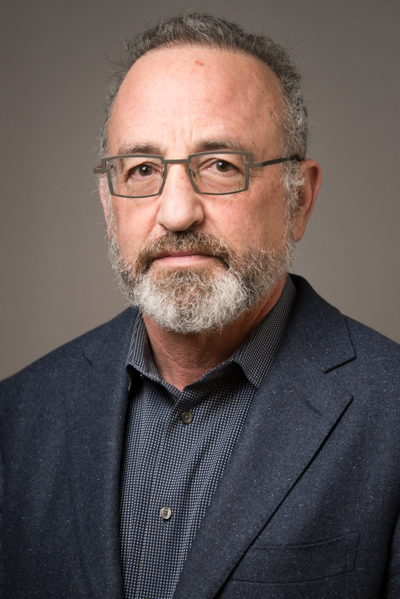
Professor Eyad Elyan is a leading academic and researcher at Robert Gordon University's School of Computing, Engineering and Technology, where he serves as a Professor in Machine Learning and Computer Vision. He is the founder and head of the Machine Vision Research Group, driving innovative research in applied computer vision and deep learning with significant industry impact. Professor Elyan's research focuses on converting complex and unstructured data into knowledge and actionable insights, with particular emphasis on learning from images, videos, and other forms of unstructured data. His work spans engineering diagrams processing, remote inspection for oil and gas installations, intelligent condition monitoring of offshore assets, predictive maintenance, biometric applications, and medical datasets analysis. His expertise in ensemble-based learning and learning from unstructured and imbalanced datasets has been successfully implemented in various real-world applications. Professor Elyan was awarded the UK Knowledge Transfer Partnership Academic of the Year Award in 2023 for his transformative work in developing pioneering AI solutions for the oil and gas sector, and was a finalist for the Scottish Knowledge Exchange Award in 2024. These recognitions highlight his exceptional ability to bridge academic research with practical industry applications. His research has been supported by various public funding bodies including Innovate UK, the Data Lab Innovation Centre, Oil and Gas Innovation Centre (OGIC), NetZero Technology Centre (NTZ), and Historic Environment Scotland. Professor Elyan has supervised twelve PhD students to completion and examined more than fifteen others. He plays an active role in the academic community as a Fellow of the British Higher Education Academy and The International Neural Network Society, and serves as the Scotland Data Lab Innovation Centre Ambassador. Under Professor Elyan's leadership, the Machine Vision Research Group has developed innovative solutions including an end-to-end system for processing Piping and Instrumentation Diagrams (P&ID), AI-driven inspection systems for oil and gas assets, and defect recognition technologies. His work demonstrates a consistent commitment to translating cutting-edge research into practical tools that address real-world challenges, particularly in the energy sector.
Robert Benke serves as an Assistant Lecturer at the Department of Computer Systems Architecture within the Faculty of Electronics, Telecommunications and Informatics at Gdańsk University of Technology. His research focuses on graph-based machine learning methodologies and their practical implementations. His core research domains include: Graph Neural Networks Machine Learning Natural Language Processing Graph Analytics Deep Learning Hardware Acceleration Recent publications reveal concentrated efforts in optimizing Graph Convolutional Networks for specialized hardware architectures (Intel PIUMA), addressing critical challenges in memory efficiency and computational scalability. His work bridges theoretical graph analytics with real-world applications in text classification, demonstrating how graph structures capture complex dependencies in unstructured data through neural network approaches.
Robert Davis serves as Professor of Pediatrics and UT-ORNL Governor's Chair for Biomedical Informatics at the University of Tennessee Health Science Center (UTHSC), appointed in 2013. He is the founding director of UTHSC's Center for Biomedical Informatics and leads the innovative 100K Genomes Project, which aims to collect genetic data from 100,000 Tennessee residents with special focus on African American populations. Dr. Davis earned his BA in Natural Science from Bennington College (1979), MD from University of California San Diego (1983), and MPH in Epidemiology from University of Washington (1993). His medical training includes internship at Emanuel Hospital, residency at Oregon Health Sciences University, and fellowship in General Academic Pediatrics at University of Washington. His research focuses on biomedical informatics, health disparities, genomic medicine, and pediatric health outcomes. Davis has spent over 30 years collecting medical data to improve drug and vaccine safety while investigating genetic links to disease. His groundbreaking work includes discovering a genetic link between APOL1 variants and preeclampsia in African-American women, which earned Gates Foundation funding for follow-up research in Ghana. Analysis of his recent publications reveals consistent themes across biomedical informatics, with particular emphasis on health disparities in minority populations, application of machine learning to medical data, genomic medicine, and pediatric health outcomes. His work consistently bridges technology, computation, and clinical research to address critical healthcare gaps. Among his notable honors are his prestigious appointment as a UT-ORNL Governor's Chair and Gates Foundation funding for international preeclampsia research. These awards recognize his leadership in addressing health disparities through innovative research approaches. As Governor's Chair, Davis mentors UT's emerging STEM leaders and serves as principal investigator for the 100K Genomes Project, a DNA biorepository created with Le Bonheur Children's Hospital. His research has secured significant funding, including support from the Gates Foundation for international preeclampsia research in Ghana. Dr. Davis directs the Center for Biomedical Informatics, which bridges technology, computation, and health research at UTHSC. The center supports his 100K Genomes Project and other initiatives focused on applying data science to improve health outcomes, particularly for underserved populations.
Charles Condevaux is a Researcher at Université de Nîmes (U-Nîmes), France, actively engaged in Engineering Science with a focus on artificial intelligence and computational methodologies. His work bridges technical innovation and interdisciplinary applications, particularly within legal analytics frameworks. His research centers on Deep Learning architectures, notably Transformers and Attention Mechanisms , with specialized applications in Jurimetrics (quantitative legal analysis) and Data Compression . This portfolio reflects a commitment to advancing efficient neural network design for complex real-world problems, especially in unstructured data processing. Dr. Condevaux operates within U-Nîmes' Analytical Techniques Platform, utilizing infrastructure for physico-chemical analysis, molecular biology, and microbiology. He collaborates with permanent researchers, contractual staff, and doctoral candidates ( Doctorants ) across institutional projects, partnerships, and valorization initiatives. While advising doctoral students is implied through departmental structure, specific supervisees and grant details remain undisclosed in available records.
Dr. Narasimha Rao Vajjhala is Associate Professor and Dean of the Faculty of Engineering and Architecture at the University of New York Tirana. His academic appointments include positions at the American University of Nigeria and the University of Roehampton. He holds a Ph.D. in Information Systems and Technology from the University of Phoenix, an MBA from Institut Universitaire Kurt Bösch, and an M.Sc. in Computer Science from Osmania University. His research explores Information Technology Risk Management , Agricultural Information Systems , and Machine Learning applications across domains including healthcare, education, and cybersecurity. Recent work emphasizes predictive analytics for project management, blockchain solutions for healthcare records, and machine learning optimization for SMEs. His interdisciplinary approach connects technical innovation with organizational decision-making frameworks. Analysis of his 15 most recent publications (2021-2023) reveals strong focus on: Machine learning implementations in healthcare diagnostics and biological data processing Risk assessment methodologies for project management and cybersecurity Educational technology effectiveness and curriculum design Data-driven solutions for agricultural and SME challenges Notable scientific awards include: Best Researcher Award, UNYT (2023) Three Best Paper awards at international conferences (2023) Emerald Literati Outstanding Paper Award (2021) Doctoral Research Scholarship, University of Phoenix (2013) As Dean, he oversees academic programs in engineering and computer science while maintaining industry consulting engagements focused on ICT strategy. His editorial leadership includes serving as Editor-in-Chief for the International Journal of Risk and Contingency Management.
Benjamin Hall is a Senior Lecturer at Leeds Beckett University's Leeds School of Arts and member of the Leeds Arts Research Centre (LARC). With over 15 years of industry experience, he has contributed to BAFTA-winning animation productions and directs animated content through Inkco studio. His research explores narrative experimentation through digital platforms, participatory art, and the interplay of chance in creative processes. Research interests focus on: Animation as a tool for democratic expression and community representation Collaborative methodologies combining analog/digital practices Pedagogical innovation through experiential learning and play Data-driven storytelling in post-digital contexts Notable projects include the ISRF-funded 'Picturing Security' examining risk perception through animation, XR Stories-supported installation 'The Gyre' exploring digital consumption, and ongoing narrative platform 'Project Something'. His pedagogical work features radical experiments like 'Drawing Out' (market-based residencies) and 'The Camp' (collaborative online writing). Honors include: BAFTA Award for Children's Animation (Charlie and Lola) Selection for Annecy International Animation Festival Exhibitions at SXSW, Sheffield Design Week, and Leeds Digital Festival He teaches animation and design courses emphasizing process-oriented experimentation and advises on creative technology integration. Current PhD research investigates authorship through chance methodologies spanning animation, writing, and performance.
Dr. Hayden Wimmer is an Associate Professor in the Department of Information Technology at Georgia Southern University, with affiliate status at the Institute for Health Logistics & Analytics. He holds a PhD in Information Systems from the University of Maryland Baltimore County, an MS from UMBC, an MBA from Penn State, and a BS from York College of Pennsylvania. His research focuses on: Artificial Intelligence : Generative models, ethical safeguards, and neural network applications Data Science : Mining techniques for fraud detection and big data analytics Digital Forensics : Mobile device analysis and IoT security frameworks Publication analysis shows consistent output since 2012 (176+ works), with recent emphasis on AI ethics (2025), counterfeit detection systems (2025), and healthcare data interoperability (2017-2018). He leads multiple funded projects including: NSA grants for cybersecurity education ($200k+) Microsoft Azure research grants for cloud-based AI NSF-funded workforce development initiatives ($300k total funding) Dr. Wimmer directs the DAC Lab and holds key editorial positions in major information systems journals.
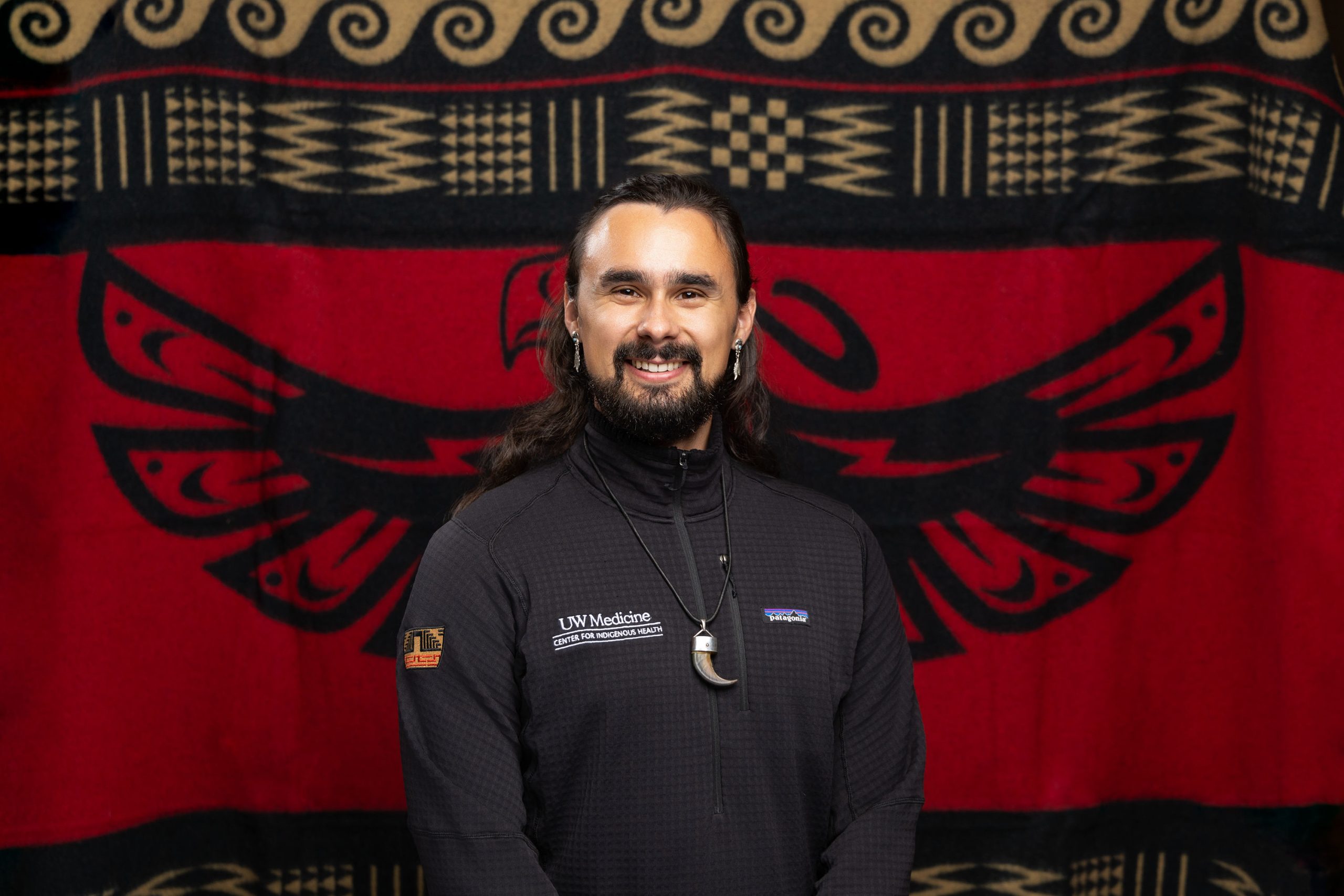
Oliver J. Bear Don’t Walk IV, Apsáalooke, serves as Assistant Professor in the Department of Biomedical Informatics and Medical Education at the University of Washington with special responsibilities at the Center for Indigenous Health. His work fundamentally reimagines biomedical informatics through Indigenous knowledge systems and community-driven ethics. His academic foundation includes: PhD in Biomedical Informatics, Columbia University MA, Stanford University BS, Stanford University Dr. Bear Don’t Walk's research pioneers epistemological justice in health AI through three interconnected pillars: technical development of NLP/ML systems for social driver identification, community governance models ensuring Tribal data sovereignty, and theoretical integration of intersectionality into algorithmic design. His projects actively collaborate with Indigenous communities to transform EHR data practices and rectify colonial research legacies. Recent publications (2020-2025) reveal consistent innovation at the ethics-technology nexus, particularly in race/ethnicity annotation frameworks, community-informed social driver extraction, and Tribal data governance protocols. His work demonstrates how technical NLP advancements must be inseparable from decolonial research partnerships. Dr. Bear Don’t Walk currently leads U01-funded research on HIV patient social drivers and mobile-based hallucination studies while teaching BIME 585. He explicitly welcomes new students committed to community-engaged, justice-oriented informatics and maintains active collaborations with Tribal health organizations through formalized research agreements.
Nicolas Garcelon leads the data science platform at the Imagine Institute , specializing in developing biomedical data infrastructure for translational research between hospitals and research institutions. The platform manages 82 phenotypic databases covering 480,000 patients and has developed multiple software tools including eCohorte for database creation, BioPancarte for lab result visualization, and Dr. Warehouse for comprehensive clinical data integration. Director of a platform managing 36 million biological results Developed software registered with Program Protection Agency Open-source contributor with GNU GPL licensed Dr. Warehouse His research focuses on automated phenotypic data processing , clinical text mining , and patient similarity metrics for rare disease diagnosis. The platform enables Google-like search across 4 million clinical documents and provides diagnostic support through patient similarity calculations. Key publication themes include: Biomedical data warehouse architecture Phenotypic similarity algorithms Clinical decision support systems Unstructured clinical data processing Rare disease patient recruitment As part of the Necker-Enfants Malades Hospital collaboration, his team manages a data warehouse containing: 4 million clinical documents 36 million biological results 35 million extracted phenotypes Over 1000 completed studies
Dr. Ramya Tekumalla serves as Assistant Professor in the Department of Informatics and Mathematics within Mercer University's College of Professional Advancement. Her research centers on mining massive unstructured datasets and curating domain-specific data through advanced machine learning, natural language processing, and statistical inference methodologies. Her educational foundation includes: PhD in Computer Science, Georgia State University (2022) MS in Computer Science, Georgia State University (2015) BS in Computer Science, Gitam University (2013) Dr. Tekumalla's research spans Data Mining, Natural Language Processing, and Biomedical Informatics , with demonstrated impact in pharmacovigilance and pandemic characterization. Having processed over 16 billion Tweets for NLP applications, she develops open-source data pipelines using Python, SQL, and NLP tools while adhering to FAIR data principles to maximize research reproducibility and community benefit. Her scholarly contributions show strong alignment with health informatics applications, particularly in automated phenotype extraction using large language models as evidenced by her 2024 Genomics and Informatics publication and OHDSI Symposium presentation. Recognition includes: Best Community Contribution Award, OHDSI (October 24, 2024) As an educator with seven years of engineering experience, she teaches INFD 602, INFD 615, and INFD 645, integrating practical data engineering skills with cutting-edge research applications. Her commitment to open science drives community-oriented research development and collaborative problem-solving in health data sciences.
Dr. Yunseon Choi serves as Associate Professor at Valdosta State University, specializing in Library and Information Science with research focusing on knowledge organization systems. Her academic work centers on metadata, ontologies, and linked data applications in social media and children's literature contexts. Her educational background includes: Ph.D. in Library and Information Science, University of Illinois at Urbana-Champaign (2011) M.A. in Library and Information Science, Yonsei University (1999) Bachelor of Library Science, Chung-Ang University (1995) Dr. Choi's research program investigates how knowledge organization principles apply to contemporary digital environments, particularly examining reader-generated content in social media and online book reviews. She develops methods to extract meaningful metadata from unstructured discussions about children's multicultural literature, creating bridges between computational analysis and traditional cataloging practices. Her work aims to improve book recommendation systems through sentiment analysis and feature clustering techniques. No scientific awards were mentioned in the available documentation. Dr. Choi actively contributes to the academic community through committee service in professional organizations including ALISE, ASIS&T, and the iConference. While specific grant information isn't provided, her consistent publication record in top-tier journals and conferences demonstrates active research productivity. She teaches foundational courses in information organization, classification, and metadata systems. Based in the Odum Library at Valdosta State University, Dr. Choi collaborates with professional organizations rather than maintaining a formal research laboratory. Her work connects theoretical knowledge organization frameworks with practical applications in digital library environments, particularly focusing on children's literature discovery systems.
Nadia Pinardi is an Associate Professor of Oceanography in the Department of Physics and Astronomy at the University of Bologna, Italy, and a Founding Fellow at the CMCC Foundation (Euro-Mediterranean Center on Climate Change) in Bologna. Her primary contact is nadial.pinardi@cmcc.it, and she holds a Ph.D. in Applied Physics from Harvard University. Her research spans ocean numerical modeling, data assimilation for marine environments, marine biogeochemical modeling, and oil spill forecasting. Current emphases include uncertainty quantification in ocean forecasting systems, long-term Mediterranean Sea variability, sea level trends, and energetics of semi-enclosed seas. This work underpins operational oceanography advancements for regional climate adaptation. Recent publications demonstrate a cohesive focus on Mediterranean physical and biogeochemical processes, integrating tidal dynamics, sea level change, freshwater fluxes, and climate impacts through advanced numerical frameworks. Methodologies prominently feature the SHYFEM model for coastal dynamics, ensemble prediction systems, and high-performance computing implementations addressing policy-relevant environmental challenges. Her accolades include: European Geophysical Union (EGU) Fridtjof Nansen Medal for Oceanography (2007) Roger Revelle Unesco Medal (2008) Pinardi has coordinated Mediterranean operational oceanography development since the mid-1990s and currently co-chairs the Joint Committee for Oceanography and Marine Meteorology (JCOMM), a WMO-UNESCO-IOC initiative driving global meteo-marine services. Her leadership at CMCC integrates interdisciplinary teams advancing climate-ocean forecasting infrastructure.
Prof. Dr. Wolfgang Kratsch serves as Research Professor for Applied AI at Augsburg University of Applied Sciences, Director of the FIM Research Institute for Information Management, and holds a leading position in Fraunhofer FIT's Business Information Systems division. He co-founded and manages the Center for Process Intelligence, driving industry-academia collaboration in digital transformation. His educational background includes B.Sc. and M.Sc. in Business Informatics from the University of Augsburg (2017), followed by a summa cum laude doctorate in data-driven management of process networks from the University of Bayreuth (2020). University of Augsburg: B.Sc./M.Sc. Business Informatics (2017) University of Bayreuth: PhD in Data-Driven Process Network Management (2020) Dr. Kratsch's research centers on data-driven process management , focusing on data extraction, quality assurance, and AI-driven context-sensitive process optimization. His methodology emphasizes design science research yielding prototype implementations for immediate practical use. Key domains include process mining, robotic process automation, and generative AI integration in business workflows, with strong industry applicability. Core Methodology: Design Science Research Technical Focus: Event Log Generation, Object-Centric Process Mining Application Areas: Manufacturing, Healthcare, Transportation His publication trajectory (2021–2025) reveals accelerating integration of generative AI with process mining , particularly in unstructured data extraction (text/video) and automated process improvement. Recent works emphasize practical industry solutions in manufacturing error analysis, airport operations, and medical monitoring, demonstrating consistent collaboration with industrial partners like Munich Airport. No scientific awards were explicitly mentioned in the source material. Dr. Kratsch actively contributes to academia through teaching at Augsburg and Bayreuth Universities, industry project leadership, and startup mentorship. His spin-off credium GmbH (founded 2020) built a 15-person AI/data science team, reflecting his entrepreneurial approach to translating research into market solutions. Current projects prioritize practical AI deployment in serial production and process intelligence systems. Teaching: Lectures/seminars at Augsburg & Bayreuth Universities Startup Experience: credium GmbH (Data Science/AI focus) Industry Projects: Manufacturing optimization, airport operations He leads the FIM Research Institute and Center for Process Intelligence, directing multidisciplinary teams in developing process mining prototypes. His labs focus on bridging academic research with industrial deployment, particularly in video-based process monitoring and generative AI for business process design.
Edward Yoonjae Choi is an Associate Professor at the Kim Jaechul Graduate School of AI, Korea Advanced Institute of Science and Technology (KAIST), having joined in February 2020 after working at Google Brain and Google Health Research from September 2018. His research focuses on advancing AI applications in healthcare through machine learning, natural language processing, and multimodal systems. His primary research areas include: Machine Learning for Healthcare Natural Language Processing Multimodal Learning Dr. Choi has developed influential models such as the Graph Convolutional Transformer and Doctor AI, which gained recognition from Scientific American, World Economic Forum, and Nvidia's blog for their potential in medical data analysis. His work emphasizes extracting clinical insights from electronic health records and unstructured medical text using deep learning architectures. Analysis of his publications reveals a consistent trend toward integrating heterogeneous data modalities in healthcare AI, with recent work like the Graph Convolutional Transformer (2020) demonstrating novel fusion of graph-based methods and transformer architectures for medical record understanding. His research consistently bridges natural language processing with clinical applications, aiming to improve diagnostic accuracy and treatment personalization through interpretable AI systems.