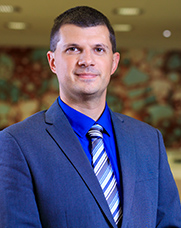
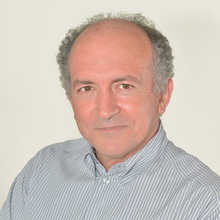
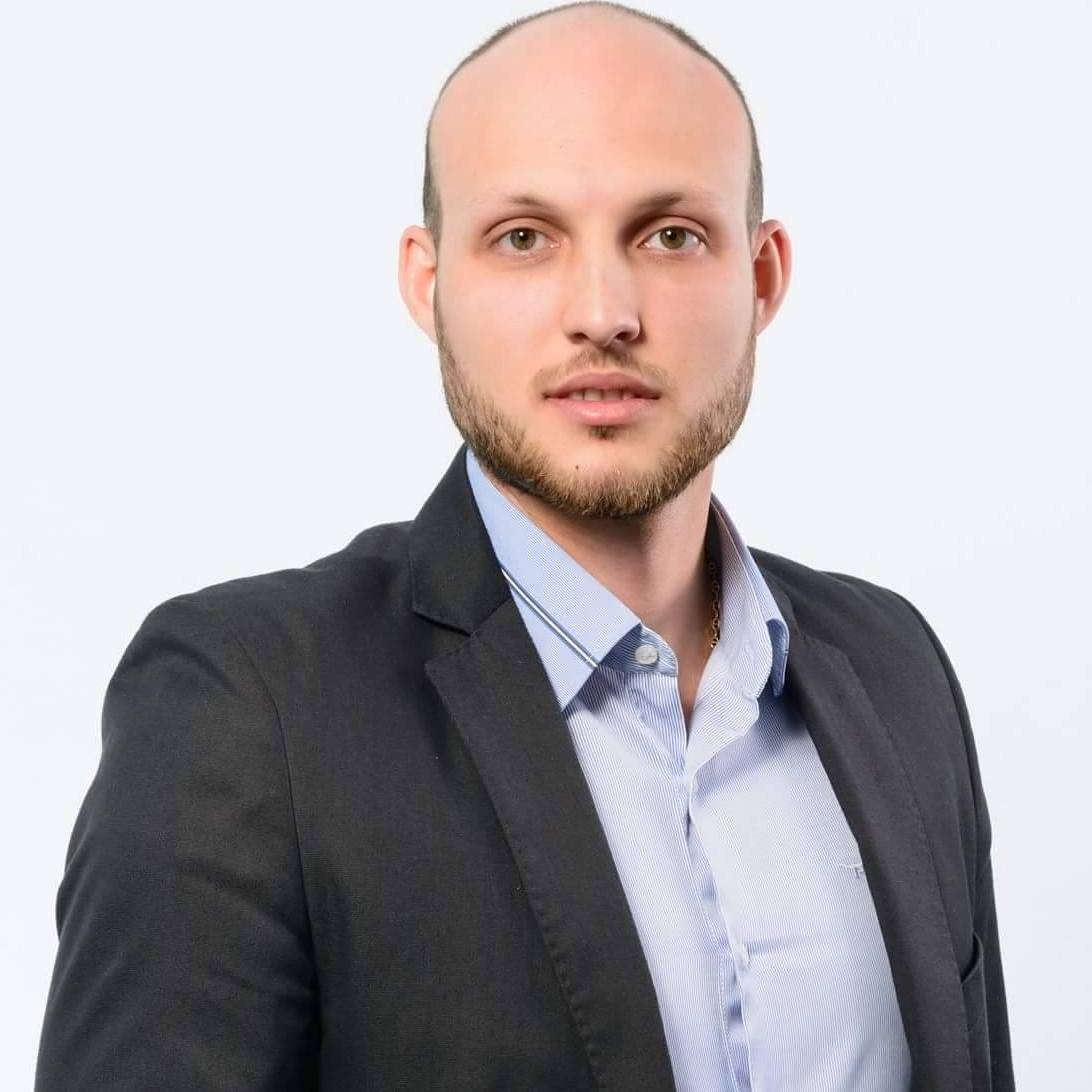
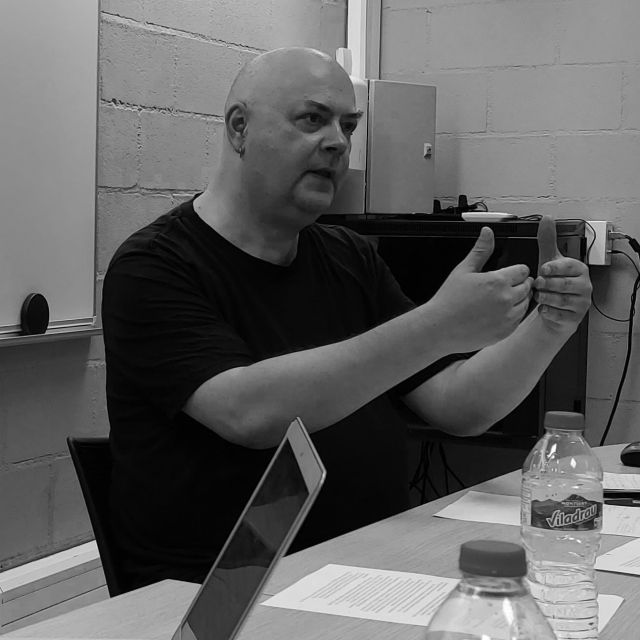
Dr. Fran Galetić serves as faculty member in the Economic Theory Department at the Faculty of Economics & Business, University of Zagreb. His office is located in room B511 where he holds regular office hours on Mondays from 09:00 to 11:00. He can be contacted via email at fgaletic@efzg.hr or through his professional website. His research interests encompass several key economic domains: Public Finance and Taxation systems Monetary Policy and Green Central Banking Media Economics with focus on public television Tourism Economics and crisis impacts Market Concentration and competition analysis Dr. Galetić's scholarly work demonstrates significant engagement with both theoretical and applied economics, particularly examining Croatian economic contexts within broader European frameworks. His recent publications show particular attention to tax collection efficiency, the greening of monetary policy, and the evolving market position of public broadcasting institutions in post-transition economies. His publication record reveals consistent scholarly productivity across various economic subfields, with notable contributions to academic conferences, journal articles, and educational materials including textbooks on fundamental economics principles. The research output spans multiple languages and addresses both theoretical frameworks and practical policy applications.
Rachida Justo is a Professor of Entrepreneurship and Social Entrepreneurship at IE Business School since 2006, teaching across Executive, Graduate, Undergraduate, and PhD programs. Her pedagogical focus is on equipping future leaders with tools to create social and economic value through business practices. PhD in Economics and Development (cum laude), Universidad Autónoma de Madrid, Spain Entrepreneurship Teacher’s Program, Harvard Business School, U.S. Bachelor’s degree in Business Administration (with honors), IHEC University, Tunisia Her research interrogates the intersection of gender dynamics , social entrepreneurship , and blended value creation , challenging assumptions about non-economic goals in business. She explores systemic approaches to the Sustainable Development Goals (SDGs), emphasizing gender equality and family-business interplay . Key themes include reconciling professional/family ambitions, double-bottom-line strategies, and socio-emotional wealth in microcredit ecosystems. Recent publications in journals like Frontiers of Entrepreneurship Research examine impact investing frameworks, allyship in inclusive entrepreneurship, and institutional conflicts in resource governance. Her work spans 2017-2024, reflecting evolving dialogues on sustainability , microcredit dynamics , and gendered success metrics . Scientific Awards: Best Women’s Entrepreneurship Paper Award (Academy of Management Conference) IE’s Best Teaching Case Award Rachida’s 15 most recent publications reveal trends in impact investing , gender bias , and family enterprise resilience . Her cross-cultural perspective (Spanish-Tunisian) informs global research, while her role in the Global Entrepreneurship Monitor since 2002 underscores her influence in measuring entrepreneurial activity. She combines academic rigor with real-world application to advance systemic social change.
Anna P. Durbin, MD , is a Professor in the Department of International Health at the Johns Hopkins Bloomberg School of Public Health and holds joint appointments in the School of Medicine . She is a leading investigator at the Center for Immunization Research and core faculty of the Johns Hopkins Vaccine Initiative and Center for Global Health . Education MD – Wayne State University, 1987 BS – University of Michigan, 1983 Research Interests Dr Durbin’s work focuses on the evaluation of experimental vaccines in human clinical trials, with a special emphasis on dengue and malaria . Her group conducts Phase I live-attenuated dengue vaccine trials aimed at selecting optimal monovalent components for tetravalent formulations. She also leads malaria vaccine trials at a dedicated clinical site in Washington DC. A complementary arm of her research uses rhesus macaque models to dissect the immunopathogenesis of severe dengue disease , examining viral, host and immunologic determinants of protection and pathology. Scientific Awards NIH Merit Award (2005) – for outstanding basic and translational research in respiratory-virus and flavivirus vaccine development NIH Director’s Award (2010) Grants & Programmatic Leadership Principal Investigator, Operation of a Facility for the Testing of Malaria Vaccines in Human Subjects Director, Dengue Vaccine Initiative Lead, Multiplex oral-fluid antibody assay for arbovirus diagnosis, surveillance and prevention Labs & Teams Dr Durbin heads the Dengue & Malaria Vaccine Programs at the Center for Immunization Research , supervising multidisciplinary teams that integrate clinical trial units, immunology laboratories and non-human primate facilities.
Luciano Pezzolo is a Full Professor in the Department of Humanities at Ca' Foscari University of Venice specializing in Modern History (HIST-02/A). His academic career focuses on the economic, military, and institutional history of the Venetian Republic and Italian states from the Middle Ages through the early modern period. His primary research interests include: Economic history of the Republic of Venice Military Institutions in Italy (1400-1700) Institutions and economics in the Venetian Republic (1300-1800) The origins of Italian capitalism between the Middle Ages and early modern age Financial markets in pre-industrial Europe Professor Pezzolo teaches multiple courses across various degree programs including Global History of the Modern Age, Economic and Social History of the Modern Age, History of Military Institutions, and An Open City in Historical Perspective: Venice. He serves these courses for Master's Degree programs in Cultural Anthropology, Italian Philology, History, and History of Arts, as well as undergraduate degrees in History and Hospitality Innovation. His scholarly work demonstrates a consistent focus on pre-industrial Italian economic structures, examining Venetian financial systems, public debt mechanisms, and early capitalist development through interdisciplinary approaches that bridge economic, political, and military history. He serves as a Member of the Technical-Scientific Committee of the Ca' Foscari Challenge School (DSU) and participates in the Scientific Committee for the 'Annals of Military History in the Modern Age' book series published by FrancoAngeli Editore. Professor Pezzolo maintains advanced proficiency in English, advanced written and intermediate spoken French, and intermediate written/basic spoken Spanish.
Katsumasa Nishide is a Professor at Waseda University's Graduate School of Business and Finance (Waseda Business School), where he has been employed since April 2024. Previously, he was a Professor at Hitotsubashi University's Graduate School of Economics (2016-2024), and before that at Yokohama National University in various capacities including Professor at the Faculty of International Social Sciences and Associate Professor at the International Graduate School of Social Sciences. He received his Ph.D. in Economics from Kyoto University in 2006. His educational background includes: Doctoral course at Kyoto University Graduate School of Economics (2003-2006) Master's course at Kyoto University Graduate School of Economics (2001-2003) Faculty of Economics at Kyoto University (1999-2001) Faculty of Law at Hitotsubashi University (1988-1992) Professor Nishide's primary research interests focus on financial economics and financial engineering, with particular expertise in market microstructure, high-frequency trading, regime-switching models, real options analysis, and systemic risk. His work often combines mathematical finance with economic theory to address complex financial market phenomena. He has made significant contributions to understanding how uncertainty, particularly regime uncertainty, affects investment decisions, asset pricing, and market structure. His recent publications show a strong trend toward analyzing high-frequency trading markets, strategic positioning in competitive environments, and the application of real options theory to corporate finance decisions. His work frequently employs sophisticated mathematical models including Markov-switching frameworks, continuous-time models, and game-theoretic approaches to examine market dynamics under uncertainty. Professor Nishide serves on several important committees: Member of the Science and Technology Promotion Council at the Ministry of Education, Culture, Sports, Science and Technology (since 2025) Workshop on the Functioning of the Secondary Market for Securities at Japan Securities Research Institute (since 2023) Funds Investment Basic Issues Research Committee at Police Mutual Aid Association Headquarters (since 2023) Asset Management Advisor at Pension Fund Association (since 2019) Member of Journal Committee at Securities Analysts Association of Japan (since 2014) He is also an active researcher with numerous grants, including ongoing projects funded by the Japan Society for the Promotion of Science on financial market stability and the impact of high-frequency trading. His teaching portfolio includes courses on Financial Engineering, Fixed Income Investments, and Market Microstructure at Waseda University.
Sho Kuroda is an Assistant Professor at Waseda University 's Faculty of Commerce (non-tenure-track) since October 2023, concurrently serving as a researcher at the Research Institute of Business Administration (RIBA). He earned his Ph.D. in Policy and Planning Sciences from University of Tsukuba in September 2023. His research focuses on applied econometrics , environmental economics , real estate , urban economics , and regional sciences . His work includes discrete-continuous choice models for carbon policy analysis, spatial econometric studies on automobile demand, and computational methods for energy-resilient communities. Recent publications (2021-2025) examine carbon dividend frameworks, transportation emission reductions, and hedonic models for urban view valuation. Articles demonstrate expertise in policy simulation , spatial modeling , and renewable energy integration . He teaches Introductory Econometrics , Basic Statistics , and Data Analysis Using Statistical Packages at Waseda University's Graduate Schools of Commerce and Accountancy. Concurrent roles include developer of educational materials for R/Stata-based statistical analysis and causal inference.
Curtis J VanderWaal serves as Chair and Professor of Social Work at Andrews University, where he has taught since 1990. He also directs the Center for Community Impact Research at the Institute for Prevention of Addictions and serves on multiple community boards including Riverwood Center and Corewell Health Hospite and Palliative Care. His academic journey began with a BS from Andrews University, followed by an MSW from the University of Michigan (1987), and a PhD from Case Western Reserve University (1995). Dr. VanderWaal's research spans several interconnected areas with a focus on substance abuse treatment & prevention, social capital, faith-based ministries, program evaluation, and faith-based LGBT issues. His work frequently examines the intersection of religious communities and social issues, particularly regarding mental health and substance abuse. Recent projects have explored mental health disparities among LGBTQ+ students at faith-based universities, community impact through participatory research methods, and addressing social determinants of health for patients with chronic conditions. His research output demonstrates strong trends in community-engaged scholarship, with significant emphasis on practical applications of social work research. Many projects involve collaborations with community organizations like the United Way of Southwest Michigan, where he has led evaluations involving over 150 students since 2010. His recent publications show increasing focus on LGBTQ+ issues within conservative religious contexts, mental health outcomes, and interdisciplinary approaches to trauma-informed education. J.N. Andrews Medallion (2014) Sigfried H. Horn Scholarly Research Award (2012) Student Advising Award from Andrews University (1992) Zapara Excellence in Teaching Award (1998) Andrews University Teacher of the Year award (1999) Inducted into Sigma Xi Scientific Research Society Inducted into Phi Kappa Phi Honor Society Inducted into Phi Alpha Honor Society Dr. VanderWaal has secured significant research funding throughout his career, with over 30 funded projects totaling more than $175,000 in recent United Way evaluations alone. He currently serves as Principal Investigator for multiple active grants including the United Way Turning Outward Evaluation ($14,000) and the Trauma-Informed Academic Partnership Grant ($50,000). His funding sources include prestigious organizations such as the Robert Wood Johnson Foundation, National Institute of Justice, and the General Conference of Seventh-day Adventists. He has mentored over 150 students in research activities, with many becoming co-authors on presentations and publications. As Director of the Center for Community Impact Research, Dr. VanderWaal leads a team conducting program evaluations and community needs assessments. The center partners with organizations like the United Way of Southwest Michigan to evaluate programs in health, basic needs, education, and income. Recent work includes the Community Conversations project, which used focus groups and surveys to understand community priorities across 159 participants in Southwestern Michigan. The center provides valuable hands-on research experience for social work students while delivering actionable insights to community stakeholders.
Dr. Núria Badenes Plá is a Professor at the Complutense University of Madrid and a key contributor to the Institute for Fiscal Studies. Her academic career spans over 25 years with a focus on Applied Economics, particularly in public economics, taxation, and microsimulation modeling. She has co-authored 41 journal articles, 18 collective works, 8 books, and directed 2 PhD theses. Research Interests: Dr. Badenes Plá's work examines how fiscal policies affect income distribution, with specific expertise in gender financial gaps, tax reform assessments, and microsimulation techniques like EUROMOD. Her research covers household economic behavior during crises, wealth taxation models, and the redistributive impacts of universal basic income. Key collaborations with José Manuel González Páramo and Borja Gambau Suelves 2024 thesis direction on microsimulation modeling at UNED 2011 thesis on altruistic behavior in negotiations at Complutense Scientific output includes 75 citations (H-index: 4) since 1994, with recent 2024-2023 articles analyzing tax reforms, pandemic economic impacts, and gender financial dynamics in Spain. She has contributed to policy debates on fiscal neutrality, local government reforms, and environmental taxation.
Univ.-Prof. Bernhard Kittel is a leading academic at the Institute of Economic Sociology (University of Vienna), where he serves as director. His research spans Economic Sociology , Need-based Justice , Experimental Political Science , and Comparative Welfare State Analysis . Current Roles: Chair of Scientific Advisory Board at GESIS, Member of Vienna Center for Electoral Research, Board Member of Vienna Society for Sociology Academic Functions: Former Vice Dean of Faculty of Economics and Business, Associate Editor of Journal of Experimental Political Science Research Highlights: He leads major projects like the Austrian Corona Panel Project (FWF-funded), Distributional Preferences and Need-based Justice in Networks (FOR2104), and Cultural Pathways to Economic Self-Sufficiency (EU Framework Program). His experimental work on justice in social exchange networks and refugee labor market integration has been widely cited. Scientific Cooperations: Collaborates with DIW Berlin , VieCER , and contributes to the European Social Survey . His media presence includes regular Corona crisis analysis in outlets like Der Standard and A&W Blog .
Dr. Ivan Nikolayev Sabev is an Assistant Professor at the Faculty of Economics, Technical University - Gabrovo, specializing in Management. He holds a Doctorate in Social, Economic and Legal Sciences (2011) and maintains an active research profile with numerous publications and projects focused on accounting, revenue management, and business analysis. His research interests primarily center around accounting practices, revenue management, and financial reporting, with particular emphasis on machine-building enterprises. His scholarly work explores accounting technologies, comparative analysis methods, VAT systems, and revenue optimization strategies within industrial contexts. Dr. Sabev has developed practical approaches for improving accounting systems and revenue management that have direct applications in business settings. Dr. Sabev's publication record demonstrates consistent scholarly output from 2018 to 2022, with a clear focus on accounting methodologies applied to industrial enterprises. His work spans both theoretical frameworks and practical applications, with particular attention to revenue generation, financial reporting, and management accounting systems. His research shows a progressive development from basic accounting principles to more sophisticated revenue management strategies within competitive business environments. Dr. Sabev has participated in four significant research projects between 2018-2021, all focused on developing innovative management products and services, particularly for companies in mechatronics and clean technologies sectors. These projects involved collaboration with multiple faculty members and students, demonstrating his commitment to both research and student mentorship. As an educator, Dr. Sabev teaches several key business disciplines including Business Analysis, Fundamentals of Accounting, and Training Practice. His teaching approach emphasizes practical application of theoretical knowledge, with courses designed to develop students' skills in financial analysis, accounting practices, and business management. His curriculum materials indicate a strong focus on real-world business scenarios and problem-solving approaches.
Dr. Ruth Lightbody serves as a Senior Lecturer in Politics at Glasgow Caledonian University, where she maintains an active research profile while accepting PhD students. Her institutional base is firmly within the Politics department at Glasgow Caledonian University, with research connections extending to the University of Strathclyde and University of the West of Scotland through her educational background and collaborative projects. Dr. Lightbody's research centers on deliberative democracy, with particular expertise in public hearings, citizen assemblies, and community engagement mechanisms. Her work investigates how diverse participation affects democratic legitimacy, with growing focus on climate assemblies and Universal Basic Income deliberations. The research fingerprint shows strong concentration in UK Social Sciences (100%), Decision Making (87%), Scotland-focused work (75%), Policy Making (67%), and Democracy studies (56%). Her recent publication trend shows increasing output through 2025, with articles spanning deliberative democracy frameworks, public values research, climate assembly analysis, and poverty perception studies. These works demonstrate consistent methodological sophistication while addressing pressing democratic challenges in policy contexts. Understanding the core principles of participative democracy and a framework for measuring impact (Fellowship awarded competitively, May 2023) Significant research impact with 76 Scopus h-index Multiple publications generating news mentions and social media engagement Recognition from Scottish Parliament related to democratic engagement Dr. Lightbody maintains an active grant portfolio with five current or recent projects, serving as Principal Investigator on multiple research grants including 'It takes a village' and 'Playful Beginnings' family wellbeing initiatives. She collaborates extensively with researchers across disciplines, particularly with colleagues like McKendrick, Sinclair, and McHugh on projects spanning community resilience, Universal Basic Income, and deliberative democracy. Her supervision record includes doctoral students, with her institutional profile explicitly noting availability for new PhD candidates. Her work contributes significantly to UN Sustainable Development Goals, particularly those related to quality education and reduced inequalities, through research that strengthens democratic processes and community engagement in policy-making.
Naveed Hakeem serves as a Lecturer in Economics at Glasgow Caledonian University, where he completed his PhD in 2023. His academic appointment focuses on policy-relevant economic research within Scotland's devolved governance context, with particular emphasis on welfare systems and poverty reduction strategies. Dr. Hakeem's research expertise spans welfare economics , childcare policy impacts , and basic income feasibility in devolved systems. His methodological approach combines rapid evidence reviews with regional economic modeling , generating policy insights for Scottish institutions. Key contributions include analyses of childcare expansion effects on parental employment and household budgets in low-income families across Glasgow. Recent scholarly output (2022-2025) demonstrates consistent focus on Scotland-specific economic policy challenges, with peer-reviewed publications examining income guarantee systems and local economic development. This work frequently intersects with Scottish Government priorities through commissioned research for the Scottish Poverty and Inequality Research Unit. As a supervisor, Dr. Hakeem actively accepts PhD students interested in welfare policy analysis, maintaining structured guidance through regular meetings and opportunities for policy engagement. His collaborative network includes researchers across Scottish universities and practitioners within poverty reduction initiatives.
Stuart White serves as University Lecturer in the Department of Politics and International Relations at the University of Oxford and Fellow in Politics at Jesus College. He recently completed a Visiting Professorship at the Centre de théorie politique (2023-2024), where he led seminars on Marxism, republicanism, and democratic innovations including Citizens' Assemblies. His research centers on normative political economy and democratic theory, with deep engagement in universal basic income frameworks, inheritance tax justice, state-union dynamics, and migration policy design. White's work consistently bridges radical republican philosophy with practical policy applications, emphasizing how institutional structures can promote substantive freedom and democratic equality beyond formal rights. White's publication trajectory reveals evolving focus from foundational social minimum concepts ( The Civic Minimum , 2003) through egalitarian theory ( Equality , 2006) toward contemporary radical republican synthesis ( Radical Republicanism , 2020). His current book project extends this trajectory into political economy, examining how republican freedom principles might restructure economic governance. As supervisor, White emphasizes theoretical rigor combined with policy relevance. His advising approach likely focuses on developing students' capacity to connect historical political thought with innovative solutions to current democratic challenges, particularly regarding economic justice and institutional design. His recent seminar topics indicate strong interest in non-traditional democratic participation models and transnational justice frameworks.
Nicole Carell, Ph.D., serves as an external Lecturer at Alice Salomon Hochschule Berlin (ASH Berlin), a specialized university of applied sciences in Berlin focused on social work, public health, and related disciplines. She is actively teaching courses in the Winter Semester 2025/26 as part of the Legal Foundations of Social Work curriculum. Dr. Carell's research interests center on the legal aspects of social welfare systems, with particular expertise in social administrative law and legislation related to livelihood security. Her work bridges the practical application of legal frameworks within social work practice. Currently teaching two core courses for the Social Work program, she contributes to foundational legal education for future social workers. Her courses address critical legislation that governs social support systems in Germany. As an external faculty member, Dr. Carell brings practical legal expertise to the academic environment, connecting theoretical social work education with real-world legal frameworks that social workers must navigate.
David Chavanne is a Professor of Economics and Chair of the Department of Economics at Connecticut College. He joined the college in 2012 as an assistant professor and has since advanced to full professor. He also serves as the Entrepreneurship Pathway Co-Coordinator at the institution. Dr. Chavanne received his educational training at: B.A. from College of the Holy Cross Ph.D. from George Mason University Dr. Chavanne is a behavioral economist who specializes in experimental economics, behavioral economics, economics and philosophy, income redistribution, and law and economics. His research primarily focuses on how people's policy preferences are affected by perceptions of how luck and personal responsibility shape life situations. He uses surveys and experiments to better understand what drives perceptions of fairness, particularly examining how information about personal responsibility affects preferences for income redistribution and debt relief. His work also explores bargaining behavior and perceptions of fairness across different areas, with a significant portion of his recent research examining opioid addiction stigma and policy preferences related to healthcare and redistribution. Dr. Chavanne's research demonstrates a consistent thread examining the intersection of moral psychology and economic decision-making, particularly how cognitive biases like the headwinds/tailwinds effect influence policy preferences. His work spans multiple disciplines including economics, psychology, public health, and law, with a growing focus on healthcare policy, addiction treatment, and redistribution mechanisms. Dr. Chavanne teaches courses in behavioral finance, experimental economics, law and economics, and microeconomic theory. He has expressed interest in how economics can be integrated with other social sciences, philosophy and law, and how economic ideas can be communicated to people unfamiliar with, and resistant to, the economic way of thinking.