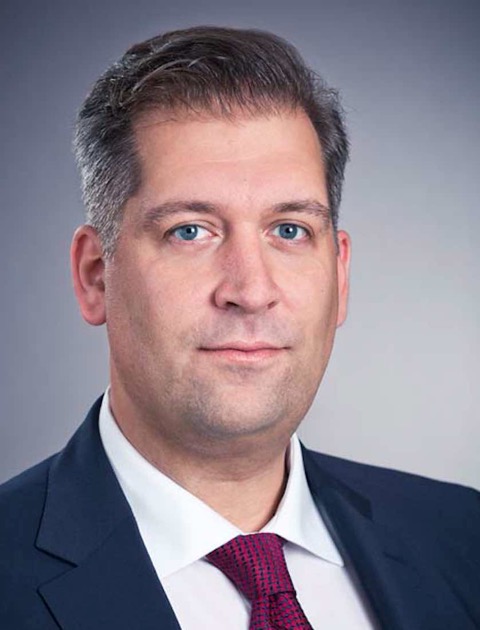
Dr. Aykut Ozturk is a Lecturer in Political & International Studies at the University of Glasgow's School of Social & Political Sciences. He joined in 2020 after earning his PhD in Political Science from Syracuse University. His research focuses on democracy/authoritarianism, political identities, and online survey methods. He teaches courses on authoritarian political communication and authoritarianism. Education: PhD in Political Science, Syracuse University Research Interests: His work spans public opinion (political identities, polarization), comparative politics (democracy/authoritarianism dynamics, Turkish politics), and methodological innovations in online surveys/experiments. He explores how authoritarian regimes sustain support through propaganda and emotional appeals. Grants & Collaborations: GCID Small Research Grant: 'Fighting Disinformation' (collaborator: Candas Ayan et al.) Research on Kurdish political participation with Dr. Sevinc Ozturk Teaching: Authoritarian Political Communication (PGT) Issues in Authoritarianism (Honors) Advising: Currently supervising Candas Ayan (de-citizenization in Turkey/India) and Siyuan Zhang (gendered expectations on Chinese social media).
Paul Withers is a Professor and Chair of the Department of Astronomy at Boston University. He leads research on planetary atmospheres and ionospheres, with a focus on Mars and Venus, and serves as Principal Investigator on multiple NASA-funded research projects. Education: B.A. in Physics, 1998, Queens' College, Cambridge University M.S. in Physics, 1998, Queens' College, Cambridge University M.A., 2001, Queens' College, Cambridge University Ph.D. in Planetary Science, 2003, University of Arizona Professor Withers' research focuses on the upper atmospheres and ionospheres of terrestrial planets, particularly Mars and Venus. His work involves analyzing spacecraft data and developing theoretical models to understand how solar flux, neutral atmospheres, magnetic fields, and ionospheres interact under unique planetary conditions. He has made significant contributions to understanding the response of the Martian ionosphere to solar flares, the structure of the Venus ionosphere, and meteoric plasma layers in planetary ionospheres. His research often involves multi-instrument campaigns and coordinated observations across different spacecraft missions including Mars Express, MAVEN, and Venus Express. Analysis of Professor Withers' recent publications reveals a strong emphasis on Martian ionospheric dynamics, particularly its response to solar activity and its variability under different conditions. His work frequently combines data from multiple missions to create comprehensive models of planetary upper atmospheres. He has developed important methods for analyzing radio occultation data and reconstructing atmospheric properties from entry, descent, and landing measurements. Major Funded Projects: "Characterizing the topside bulge in the ionosphere of Mars" (NASA Mars Data Analysis Program, 2014, $144K) "Integration of MAVEN neutral and plasma observations" (NASA MAVEN Participating Scientist Program, 2013, $284K) "Radio occultation studies at Mars" (NASA Early Career Fellowship Program, 2013, $99K) "EDL reconstruction for MSL" (NASA, JPL contract, 2012, $199K) "Meteoric plasma layers on Venus and Mars" (NASA Planetary Atmospheres Program, 2012, $232K) Professor Withers has been actively involved in mentoring students and collaborating with international researchers. He serves as a key member of the Mars Upper Atmosphere Network (MUAN) and has contributed to community white papers for planetary science decadal surveys. His work supports future Mars landers through atmospheric modeling and surface pressure prediction, with direct applications to mission planning and execution. He has presented his research at numerous international conferences including the American Geophysical Union meetings, Division for Planetary Sciences meetings, and European Planetary Science Congress. His work has important implications for understanding planetary climate evolution, space weather effects on technological systems, and the search for habitable environments beyond Earth.
Dr. Isak Vento is a Project Researcher at the Institute for Social Research, affiliated with the Faculty of Social Sciences, Economics and Law at Åbo Akademi University. His research focuses on collaborative governance, political compromise, and public policy dynamics through innovative methodologies such as survey experiments. Role: Project Researcher Institution: Åbo Akademi University Unit: Faculty of Social Sciences, Economics and Law Research Institute: Institute for Social Research Research Interests: Collaborative governance models and legitimacy perceptions Political compromise mechanisms in democratic systems Project-based administration and EU policy implementation Transparency dynamics in fiscal consolidation Language minority issues in social research Service satisfaction metrics in public administration Recent Publications (2024-2025): Analyzed governance trade-offs through experimental designs, explored EU cohesion policy impacts, and investigated political compromise perceptions using qualitative methods. Articles demonstrate methodological diversity combining survey experiments with policy analysis. Contact: isak.vento@abo.fi
Chris Marone is a Full Professor (Professore Ordinario) at La Sapienza Università di Roma since 2020, with prior roles as Professor of Geophysics at The Pennsylvania State University (2003–2020) and Associate/Assistant Professor at MIT (1997–2000, 1992–1997). His research spans earthquake physics, geomechanics, and rock deformation. Ph.D. in Geophysics from Columbia University (1988) 40+ years of academic experience across multiple institutions His work focuses on frictional mechanics, slow earthquakes, and fault slip behaviors, integrating laboratory experiments and field observations. Recent themes include rate-state friction laws, rock-fluid interactions, and granular mechanics. Key trends in his publications reveal interdisciplinary approaches combining deep learning (2022), high-frequency seismic signatures (2022), and poromechanics (2022) with traditional geophysical methods. His research has dominated fault healing and stress dynamics for decades. ERC Advanced Grant: TECTONIC Louis Néel Medal (European Geosciences Union) Fellow of the American Geophysical Union Paul F. Robertson Award for Breakthrough of the Year Kerr-McGee Career Development Professorship
Maurizio Conti is a Full Professor of Economics at the Department of Economics, University of Genova . He holds a PhD from the University of Essex and an MSc from the University of Warwick, with additional affiliations as an IZA Research Fellow and board member of the Italian Association of Labor Economics (AIEL) . Educational Background : PhD in Economics (Essex, 2004); MSc Economics (Warwick, 2000); Laurea in Business and Economics (Genova, 1998). Research Focus spans labour economics , industrial economics , and transport economics . Key topics include: Impact of labour market institutions (e.g., employment protection, unions) on firm investment in physical/human capital Transport infrastructure effects on productivity, house prices, and regional development Policy evaluation in regulated industries and public procurement Recent Publications analyze high-speed rail impacts, cooperative industrial relations, and firm dynamics under regulatory frameworks, with methodologies ranging from quasi-experimental designs to cross-country comparative analyses. Scientific Recognition : IZA Research Fellow (since 2006) Organized conferences like the Genoa Labour Workshop and participated in COMPIE and NERI networks Teaching includes courses on MICROECONOMICS , Economic Policy , and Transport Economics , with a focus on applied analysis, productivity measurement, and regulatory frameworks.
Joost de Moor is an Assistant Professor in Political Science at Sciences Po’s Centre for European Studies and Comparative Politics (CEE) . His research bridges Environmental Politics , Social Movements , and Political Participation , with a focus on climate activism, lifestyle politics, and post-political strategies. He holds a PhD in Social Sciences: Political Science from the University of Antwerp (2016) and has held postdoctoral positions at Keele University (2016-2018) , Stockholm University (2018-2021) , and Leiden University (2021) . A visiting scholar at the University of Mannheim (2015) , his work spans urban environmentalism, climate summit dynamics, and strategic movement adaptation.
Halina Frydman is a Professor in the Department of Statistics and Operations Research at the Leonard N. Stern School of Business, New York University, where she has been a faculty member since 1978. Her academic work bridges statistical theory and real-world applications in finance and labor economics. Institution: New York University School: Leonard N. Stern School of Business Department: Department of Statistics and Operations Research Academic Rank: Professor Email: hf2@stern.nyu.edu Education: Ph.D. in Mathematical Statistics, Columbia University, 1978 M.A. in Mathematical Statistics, Columbia University, 1974 B.S. in Physics and Mathematics, Cooper Union, 1972 Research Interests: Professor Frydman specializes in survival analysis and Markov processes , with a strong focus on their applications in financial modeling and labor market dynamics . Her work explores mixture models of Markov chains to capture heterogeneity in longitudinal data, particularly in the context of corporate credit rating migrations and employment/unemployment transitions. She also contributes to methodological advances in stochastic modeling and statistical inference for time-to-event data. Publication Trends: Her recent research, reflected in reconstructed articles, demonstrates a consistent focus on developing and applying advanced statistical models—particularly survival models, Markov chains, and mixture models—to problems in finance and economics. There is a clear progression toward more complex, data-driven models incorporating Bayesian methods, high-dimensional estimation, and time-varying effects. Scientific Awards: No awards explicitly mentioned in the source text. Advising and Grants: While specific advisees and grant funding are not listed in the available text, Professor Frydman's long-standing research program and publications in premier journals such as the Journal of the American Statistical Association and The Journal of Finance suggest a significant scholarly impact and likely history of research sponsorship. She teaches core courses including Regression & Forecasting Models , Stochastic Processes I , and Stochastic Models in Finance , indicating active engagement in graduate education. Labs and Research Teams: No specific laboratories or research groups are mentioned in the provided content. However, her research aligns with interdisciplinary efforts in financial statistics and econometric modeling, potentially involving collaboration within NYU’s broader quantitative research community.
Ronja Sczepanski is an Assistant Professor at the Centre for European Studies and Comparative Politics (CEE) at Sciences Po. Her research explores the intersection of national and European identities, focusing on how political perceptions, social sorting, and behavioral processes drive identity change. Specializes in identity formation through political events like referenda Analyzes neighborhood effects and ethnic diversity on identity dynamics Investigates political party framing of social groups Her recent work examines how differentiated integration impacts EU policy compliance and validates open-source machine translation for text analysis. She teaches courses on European integration at institutions including ETH Zurich and the University of Cologne. Recipient of the PolMeth Europe Best Poster Award (2023) Published in journals like Comparative Political Studies and European Union Politics
Professor Inge Hoff is affiliated with the Norwegian University of Science and Technology (NTNU) in the Department of Civil and Environmental Engineering, where he has served since 2009. Prior to this, he held roles as senior researcher and research leader at SINTEF. Research Interests : Materials for road construction, frost protection, laboratory testing, pavement dimensioning, road rehabilitation, state development modeling, ground-penetrating radar surveys, and concrete/natural stone coverings. Students : Mentors active PhD fellows Lisa Hannasvik, Arman Hamidi, Clara Weber, and Shoiab Ahmad. Teaching : Coordinates courses like TBA4204/BYGT1102 Transport Infrastructure , BYGT2204 Road and Railway Construction , and BA8600 Pavement Structure Dimensioning . Recent publications highlight his expertise in granular material behavior, asphalt durability under climate stressors, and advanced structural assessment techniques. Collaborations with international researchers and presentations at major conferences (TRB, International Conference on Bituminous Mixtures) demonstrate his ongoing contributions to road engineering.
Sergio Carrera serves as Senior Research Fellow and Head of the Justice and Home Affairs Unit at the Centre for European Policy Studies (CEPS), a prominent Brussels-based think tank. Additionally, he holds the position of Adjunct Professor at the Paris School of International Affairs (PSIA) in SciencesPo, France, where he contributes to academic teaching and research in international affairs. Dr. Carrera's academic background includes a Ph.D. on immigration and citizenship from Maastricht University (The Netherlands), an LL.M. in European, Comparative and International Law from the University of Maastricht, and a Law Degree from Universidad de Salamanca in Spain. His extensive educational foundation in European and international law underpins his expertise in EU justice and home affairs policy. His primary research interests focus on EU justice and home affairs (JHA) law and the Area of Freedom, Security and Justice policy, with particular emphasis on migration, asylum, citizenship, and Schengen policies. Dr. Carrera's expertise also extends to EU criminal justice law and police cooperation, examining their impacts on data protection, privacy, and the rights of the defense. His work consistently addresses the intersection between security measures and fundamental rights within the European context. Dr. Carrera has produced an extensive body of scholarly work, with over 190 published publications according to the available information. His recent research has particularly focused on EU-US data transfers, rule of law challenges in the context of migration management, global asylum governance, and the evolving landscape of EU security policy. His publications demonstrate a consistent concern with ensuring that security and migration policies uphold fundamental rights and the rule of law. Among his notable contributions are policy analyses on the European Green Deal's implications for climate policy, assessments of the EU's response to the Ukraine crisis, and examinations of the impact of the Trump administration on EU security policy. His research often bridges academic analysis with practical policy recommendations for EU institutions. Dr. Carrera leads and participates in numerous research projects addressing critical issues in EU policy. Current initiatives include "Reclaiming our past, rebuilding our future: new approaches to fighting antigypsyism" (2024-2026) and the "Study on Mapping Civil Dialogue Practices in the EU Institutions" (2024-2025). Previous significant projects include "Global Asylum Governance and European Union's Role" (ASILE, 2019-2023), "Pan-European Response to the ImpactS of COVID-19" (PERISCOPE, 2020-2023), and "IT tools and methods for managing migration FLOWS" (ITFLOWS, 2020-2023). His work has been commissioned by various EU institutions, including the European Parliament's Policy Department for Citizens' Rights and Constitutional Affairs, demonstrating the policy relevance and impact of his research. Dr. Carrera's expertise is frequently sought for task forces addressing timely issues such as EU-US data transfers, digital justice, and cross-border cooperation in criminal matters.
James H. Stock is a Professor at Harvard University , affiliated with the Faculty of Arts and Sciences and the Harvard Kennedy School . He serves as Vice Provost for Climate and Sustainability and Director of the Salata Institute for Climate and Sustainability . His research spans macroeconomic forecasting , monetary policy , and environmental policy , with a focus on energy economics and U.S. climate change policy . Education : Ph.D. in economics and M.S. in statistics from University of California, Berkeley Roles : Chair of Harvard Economics Department (2007–2009), Member of President Obama’s Council of Economic Advisers (2013–2014) His recent research examines the macroeconomic impact of carbon taxes in Europe and the U.S., climate implications of LNG exports , and policy reforms for electrifying transportation . He also contributes to econometric methods and time-series analysis. Scientific Awards : None explicitly mentioned. Grants : Contributions to climate policy research include projects on carbon pricing leakage , electric vehicle adoption , and comprehensive social cost of CO2 quantification. Labs & Teams : Leads the Salata Institute for Climate and Sustainability , a multidisciplinary hub for climate research.
Kristin Sziarto is an Associate Professor of Geography at the University of Wisconsin-Milwaukee (UWM), holding affiliations in Urban Studies and serving as Faculty Director of the L&S Curriculum and Governance. Her work bridges social movements, urban spatial politics, and biopolitical analysis. She holds a PhD in Geography from the University of Minnesota (2007), MA from the University of Georgia (2000), and BA in Theater from Williams College (1988). Education: PhD, Geography, University of Minnesota, 2007 MA, Geography, University of Georgia, 2000 BA, Theater, Williams College, 1988 Her research focuses on spatial dimensions of social movements, including health equity campaigns in Milwaukee, religion-labor alliances, and geographies of resistance. Current projects include the Muslim Milwaukee Project examining Islamic community dynamics. She also investigates pedagogical methods in geography education to foster critical spatial thinking. Her publications address infectious disease governance, anti-corporatization movements, stealth feminism in academia, and the intersection of race and biopolitics in public health initiatives. She teaches courses on world regions, cartography, and critical geographies of power.
Dr Filip Slaveski is a Senior Lecturer in Russian/Soviet and East European History at the School of History, The Australian National University. He specializes in Soviet Empire studies, focusing on mass conflict, food crises, political control, and their contemporary echoes. His work examines Ukraine, Russia, and post-WWII dynamics, particularly Soviet governance and post-war reconstruction. Slaveski holds a PhD in History and has published extensively on Soviet famines, post-war Ukraine, and Soviet-German occupation policies. His notable works include Remaking Ukraine after WWII (2021) and The Soviet Occupation of Germany (2013). He has received funding through ARC DECRA grants and contributed to major projects on Soviet famines and post-war recovery. Research Interests: Soviet Union, Ukraine, Conflict Studies, Famine, Repression, Nationalism. Grants: ANU Futures Scheme (2023–2026) and The Last Soviet Famine Project (2021–2025).
Thomas Michael Sattich is an Associate Professor at the University of Stavanger , affiliated with the Faculty of Social Sciences and Department of Media and Social Studies . His research focuses on geopolitical implications of sustainability transitions, particularly energy policy interdependence and EU-China relations. PhD in Political Science and Economics Expertise in qualitative methods, mixed methods (cluster analysis), and data visualization Lead researcher on EU-funded digital climate negotiation simulation projects His recent publications examine renewable energy geopolitics, industrial policy competition, and sustainability education frameworks. Methodologically, he specializes in Qualitative Comparative Analysis (QCA) and network analysis, contributing to debates on energy security and regional cooperation.
Gianni Dal Maso is a Professor of Mathematical Analysis at the International School for Advanced Studies (SISSA) in Trieste, Italy. He has been a faculty member at SISSA since 1985, first as Associate Professor and then as Full Professor since 1987. He has held several leadership positions at SISSA including Head of the Sector of Functional Analysis and Applications (1993-1998, 2001-2010), Deputy Director (2010-2015), and Coordinator of the Mathematics Area (2016-2020). His educational background includes: 1973-1977: Undergraduate student in Mathematics at the University of Pisa and Scuola Normale Superiore 1977: Degree in Mathematics with honors at the University of Pisa (thesis: "Gamma-limits of set functions," advised by Ennio De Giorgi) 1977: "Diploma" in Mathematics from the Scuola Normale Superiore 1977-1981: Post-graduate Research Fellowship in Mathematics ("Perfezionamento") at the Scuola Normale Superiore Dal Maso's research focuses on the Calculus of Variations, with particular emphasis on semicontinuity and relaxation problems, Gamma-convergence, and more recently, free discontinuity problems and their applications to mechanics. His work bridges pure mathematical analysis with practical applications in material science, particularly in plasticity and fracture mechanics. He has developed mathematical frameworks for understanding crack propagation, material failure, and the behavior of solids under stress, contributing significantly to both theoretical foundations and practical modeling approaches in these areas. His extensive publication record shows a clear evolution from foundational work in Gamma-convergence (culminating in his influential book "An Introduction to Gamma-Convergence" in 1993) toward increasingly sophisticated models of material behavior, particularly in fracture mechanics and plasticity. Recent work demonstrates continued innovation in handling complex discontinuities, non-local effects, and multi-scale phenomena in material science applications. Among his notable scientific recognitions: 1982: Stampacchia Prize, awarded by the Scuola Normale Superiore 1990: Caccioppoli Prize, awarded by the Italian Mathematical Union 1996: Medaglia dei XL per la Matematica, awarded by the Accademia Nazionale delle Scienze detta dei XL 2003: Prize of the Minister for the Cultural Heritage for Mathematics and Mechanics, awarded by the Accademia Nazionale dei Lincei 2005: Prize Luigi and Wanda Amerio, awarded by the Istituto Lombardo Accademia di Scienze e Lettere Dal Maso has supervised 42 PhD students at SISSA, demonstrating a strong commitment to academic mentorship. His research has been significantly supported by multiple National Research Projects (PRIN) in Italy, and notably by an ERC Advanced Grant "Quasistatic and Dynamic Evolution Problems in Plasticity and Fracture" (QuaDynEvoPro) from 2012-2017, where he served as Principal Investigator. This major project focused on nonlinear evolution problems in plasticity and fracture, with three main research directions: plasticity with hardening and softening, quasistatic crack growth, and dynamic fracture mechanics. His scholarly activities extend to editorial service, with membership on the boards of numerous prestigious journals including Archive for Rational Mechanics and Analysis, SIAM Journal on Mathematical Analysis, and Journal of Convex Analysis. He has also been active in the mathematical community through membership in scientific committees and academies, including the Accademia Nazionale dei Lincei since 2014.