Prof. Dr.-Ing. Elisabeth Clausen is a Professor and Director of the Chair and Institute for Advanced Mining Technologies at RWTH Aachen University. She holds key roles in the Specialist Group for Raw Materials and Disposal Technology, serves as a rectorate representative, and leads the Commission for EU Research Funding. Her research spans Underground mining automation Acoustic emission diagnostics Sustainable mining systems Space resource extraction Advanced sensor technologies Her recent publications focus on autonomous mining machinery, underground communication systems, and acoustic emission analysis across 15+ studies from 2013–2025, with particular emphasis on Ultra-wideband positioning Thermographic detection Crack monitoring in planetary gearboxes Explosive atmosphere safety Mineral processing diagnostics Digitalization trends Prof. Clausen contributes to mining education reform through initiatives like CDIO™ and has developed innovative learning spaces in underground mines. She coordinates international educational labs and integrates sustainability into mining engineering curricula, with publications on Adaptive ventilation systems Mining education frameworks Future-proof mineral extraction Entrepreneurial mindset in engineering
Riddhi Das is a Postdoctoral Researcher at the University of Freiburg, affiliated with the Cluster of Excellence liv MatS (Freiburg Center for Interactive Materials and Bioinspired Technologies). Their research focuses on soft robotics, particularly the design, fabrication, and actuation of pneumatic soft robots. Current work emphasizes developing soft autonomous machine (SaM) systems with integrated logic gates and sensors for environmental interaction. Key research interests include biomimetic robotics inspired by biological systems such as seahorses and earthworms, peristaltic locomotion in granular media, and modular robotics for multi-terrain environments. The lab aims to merge advancements from liv MatS research areas into fully operational autonomous robotic systems. Publications highlight innovations in bioinspired robotics, granular medium locomotion, and programmable materials. While no awards are explicitly mentioned, their work aligns with cutting-edge interdisciplinary robotics research. Advising and grants details are not provided in the text. The lab is part of the liv MatS initiative, focusing on interactive materials and bioinspired technologies.
Research Institute for Mining History and Mining MuseumGermany
Chiara Levato is a Research Fellow at the Department of Mining Archaeology, Deutsches Bergbau-Museum Bochum, affiliated with Ruhr-Universität Bochum where she pursues doctoral studies. Her academic foundation includes an MA in Humanities from Università degli Studi di Bari Aldo Moro (2012), specializing in prehistoric iron oxide mining. She maintains active fieldwork involvement, notably with the Grotta della Monaca Research Mission in Italy. Her research examines Paleolithic mining practices through archaeometric approaches. Primary interests include: Ochre extraction methodologies in prehistoric Europe Functional analysis of macrolithic mining tools via use-wear traces Iron oxide/hydroxide exploitation in Mediterranean contexts Paleolithic technological systems in mining contexts Publications consistently address prehistoric mining archaeology, focusing on Italian and Greek sites. Her work integrates microscopic analysis, archaeological survey data, and comparative studies of mining techniques across Mediterranean cultures, establishing patterns of resource exploitation from the Copper Age to the Upper Paleolithic. Current projects include the functional analysis of tools from Tzines (Thasos, Greece), employing experimental archaeology to reconstruct Paleolithic hematite mining processes. She collaborates with international teams, including UMR 8215 – Trajectoires at Nanterre, France.
Dr. Daniel Kaune is a researcher at the Historical Seminar of the Faculty of Philosophy at Leibniz University Hannover. He completed his doctoral thesis in September 2022 with the topic "Legal Norms and Legal Practice in Late Medieval Basel," earning a summa cum laude distinction. His academic career began in 2009 when he enrolled in a teacher training program at Leibniz University Hannover, focusing on history with a specialization in late medieval history. His educational background includes: 2008: Abitur at Helene Lange School in Hanover 2009-2014: Studies of History (focus on medieval history) and Catholic Theology at Leibniz University Hannover 2013-2014: One-year scholarship for study support from the Friends of the University of Hannover 2014: Graduated with M.Ed. degree 2015-2022: Doctoral studies at the History Department of LUH Dr. Kaune's research focuses on Late Medieval History (14th/15th century), the Transition to the Early Modern Period (16th century), Legal History, and the History of Cartography. His specialized research areas include changes in legal practice in the 15th century, early hand-drawn regional maps (15th-17th centuries), and regional history in the Hessian region. He has made significant contributions to Digital Humanities through his work on interactive multimedia applications in historical contexts. His publication record demonstrates a strong focus on the intersection of legal history and cartography, with numerous articles exploring eyewitness testimony, visual evidence in court proceedings, and the development of regional maps. His work often examines how spatial awareness evolved in the late medieval and early modern periods, particularly through the lens of legal documentation and administrative practices. Dr. Kaune has been actively involved in research projects including "The View of the Small World" (2013-2015) on early hand-drawn regional maps and the innovative "Who the fuck is Manfred?" project (2017-2020), which resulted in a published volume of student research on the Hohenstaufen dynasty and the Interregnum period. He currently leads the research project "Spatial Awareness Underground," investigating administration and work organization in early modern Upper Harz mining during the 16th and 17th centuries. As an educator, Dr. Kaune has developed novel approaches to research-based learning, particularly through his project seminars that guide students through the complete research process from question formulation to publication. His commitment to innovative teaching methods is evidenced by his numerous publications on pedagogical approaches in historical education.
Research Institute for Mining History and Mining MuseumGermany
Tina Asmussen serves as Head of the Research Department for Mining History at the German Mining Museum Bochum and holds a Junior Professorship in Early Modern Mining History at Ruhr University Bochum. Her interdisciplinary work bridges historical research with contemporary resource challenges, connecting museum-based scholarship with academic teaching. Her educational background includes: History and German Studies at University of Basel PhD in Early Modern Knowledge History (2012) from University of Lucerne Postdoctoral research at Max Planck Institute for History of Science (2014-2017) SNF Ambizione Fellowship at ETH Zurich (2017-2020) Asmussen's research centers on the interconnected histories of knowledge, economy, and environment in early modern Europe, with particular focus on mining cultures. She examines how resource extraction shaped material practices, ecological understandings, and cosmological frameworks through innovative approaches combining material culture studies with environmental history. Her current book project Subterranean Oeconomies – Mining and Resource Cultures in Early Modern Europe explores the complex relationships between underground labor, economic systems, and environmental transformations. Analysis of her recent publications reveals consistent thematic trajectories across mining history, demonstrating how material resource flows intersected with knowledge production, economic networks, and cultural belief systems. Her work increasingly addresses the historical roots of contemporary resource challenges, particularly through collaborations examining toxic legacies and sustainable resource practices. Key scientific recognition includes: Ambizione Research Fellowship (Swiss National Science Foundation) Heinrich Winkelmann fellowship Forum Basiliense Fellowship (University of Basel, 2025) Asmussen actively leads major research initiatives including the DFG/AHRC-funded Toxic Heritage project examining pollution landscapes in Harz and Cornwall, and the Leibniz-funded Commodity Frontiers in Eastern Europe network. She coordinates the Minescapes international workshop series and serves as PI for the DFG Graduate College Wissen – Glauben – Behaupten . Her grant portfolio reflects strong collaborative leadership across European and transatlantic institutions including Columbia University and Max Planck Institute. She directs the Mining History Research Department at the German Mining Museum, which integrates museum collections with academic research through projects like Anthropocene Commons and the Metals, Minerals and Life Cycle initiative. Her team combines archaeological, historical, and environmental approaches to investigate long-term resource dynamics, with particular emphasis on material flows and socio-ecological transformations.
Professor André Niemann at the University of Duisburg-Essen's Institute of Hydraulic Engineering and Water Management is a leading expert in water resources management, focusing on flood protection, dam control systems, and AI-driven hydrological forecasting. His work bridges practical engineering challenges with advanced data science applications. Academic Leadership: Coordinated projects like interSim (interactive simulation for vocational training) and PROWAVE (forecast-based dam control) Research Impact: Pioneered ensemble optimization methods for reservoirs and LSTM models for inflow forecasting Technological Innovation: Developed AI frameworks for sensor data quality control in water management His research addresses critical intersections between hydraulic engineering and climate resilience, with recent projects analyzing flood forecasting systems ( HÜProS ), urban drainage optimization, and sustainable hydropower solutions using legacy mining infrastructure. Collaborations span institutions like Harz Waterworks, Deltares, and international conferences (IAHR, ICOLD, EGU). Publications since 2012 cover topics from underground pumped storage feasibility to real-time control of urban reservoirs, with a growing emphasis on machine learning applications since 2023. He actively engages in fieldwork, including excursions to dams and control centers, and teaches modules ranging from hydromechanics to environmental monitoring.
Dr. Pooya Hamdi is a Senior Researcher at the Department of Engineering Geology and Hydrogeology, RWTH Aachen University, Germany. He leads the Rock Mechanics Group and has been actively involved in national and international projects since 2018. Senior Scientist & Rock Mechanics Group Leader Lecturer at RWTH Aachen PhD from Simon Fraser University (2015) His research focuses on rock mechanics, numerical modeling, and geohazard assessment for underground infrastructure. Key projects include PRECODE (excavation disturbance zones), LADY (landslide dam stability), and paraglacial slope failure analysis in Alaska and Switzerland. Recent publications highlight his work on 3D numerical modeling of regional stress, freeze-thaw effects on rock toughness, and hydro-mechanical coupling in crystalline rocks. He supervises MSc/BSc theses and teaches courses on underground excavation, slope stability, and field excursions. Member of International Society of Rock Mechanics (ISRM) Reviewer for journals: Rock Mechanics and Rock Engineering, Journal of Landslides Current projects: BGE, DFG, Interreg V-A Euregio Meuse-Rhine
Dr. Michal Kruszewski serves as a Senior Researcher at the Department of Engineering Geology and Hydrogeology at RWTH Aachen University, where he leads investigations in reservoir geomechanics, rock mechanics, and fault mechanics with applications in deep geothermal energy systems. His expertise spans numerical modeling, hydraulic testing, and stress state analysis, contributing significantly to sustainable geothermal resource development. His academic credentials include: Ph.D. in Geosciences from Ruhr University Bochum (2023) M. Eng. in Geology and Mining from AGH University of Science and Technology, Cracow, Poland (2017) Dr. Kruszewski's research focuses on the critical relationship between crustal stress states and fault behavior in geothermal reservoirs. His work examines how stress conditions affect fault stability and permeability, with direct implications for induced seismicity risk during geothermal operations. He employs advanced numerical modeling techniques combined with field data analysis to address challenges in geothermal energy development, particularly in the Ruhr region of Germany and Los Humeros in Mexico. His investigations into fault reactivation potential during fluid injection operations have provided valuable insights for safer geothermal system design. His publication record demonstrates consistent research productivity with numerous high-impact articles focusing on geomechanical characterization of geothermal systems. A significant portion of his work addresses the practical challenges of deep geothermal energy development, particularly the relationship between stress states, fault reactivation, and fluid flow in the subsurface. His recent publications (2023-2025) show continued innovation in modeling techniques and field applications. Dr. Kruszewski maintains active membership in key professional organizations: European Geosciences Union (EGU) American Geophysical Union (AGU) International Geothermal Association (IGA) Polish Geothermal Society (PSG) Society of Petroleum Engineers (SPE) As project lead for SIEGFRIED (BMWK) and contributor to PRECODE (BGE), he oversees research initiatives addressing critical challenges in underground engineering and geothermal development. His work on the PRECODE project investigates excavation-induced damage in tunnel environments, with implications for deep geological repositories. Dr. Kruszewski maintains strong international collaborations, particularly with Mexican research institutions through the GEMex project, advancing understanding of superhot geothermal systems in volcanic environments.
Mohammadreza Jalali serves as Professor and Chair of Engineering Geology and Hydrogeology at RWTH Aachen University's Faculty of Civil Engineering. His academic journey spans multiple prestigious institutions including ETH Zurich and the University of Waterloo, with extensive industry experience at Schlumberger and GEOMEC Engineering. His current research focuses on the intersection of geomechanics and hydrogeology with practical applications in energy and waste management systems. Dr. Jalali earned his Ph.D. in Earth & Environmental Sciences from the University of Waterloo (2013), following an M.Sc. in Petroleum Engineering (2007) and B.Sc. in Mining Engineering (2004), both from the University of Tehran. His educational background combines engineering fundamentals with earth sciences expertise, providing a strong foundation for his interdisciplinary research approach. His research interests center on Rock and Geomechanics, Applied Hydrogeology, and their applications to critical infrastructure challenges. Specializing in Thermo-hydro-mechanical coupled problems in rocks, he investigates Hydro-mechanical characterization of rocks, Hydraulic stimulation techniques, and Discrete fracture network modeling. His work has significant implications for Nuclear Waste Repositories and Deep Geothermal Energy systems, addressing some of the most pressing energy and environmental challenges of our time. Analysis of his recent publications reveals a strong focus on the mechanical behavior of clay-rich formations, particularly Opalinus Clay which is crucial for nuclear waste disposal. His work combines advanced experimental techniques with sophisticated numerical modeling to understand rock behavior under complex thermo-hydro-mechanical conditions. The research shows increasing emphasis on energy storage applications, particularly hydrogen storage in salt caverns, reflecting emerging energy transition needs. Dr. Jalali maintains active collaborations with major underground research laboratories including the Grimsel Test Site in Switzerland and the Bedretto Underground Laboratory. His work integrates field-scale experiments with laboratory investigations and numerical modeling, creating a comprehensive research framework that bridges theoretical understanding with practical engineering applications.
Georg Agricola University of Applied SciencesGermany
Dr. Marcin Pawlik is a Researcher at the Post-Mining Research Center of the Georg Agricola University of Technology since 2020. He holds a Doctorate (2021) from the Technical University of Bergakademie Freiberg's Faculty of Geosciences, following a Master's (2019) and Engineer degree (2018) in Geodesy and Cartography from Wrocław University of Technology. His research focuses on Earth observation, geodata management, and geomonitoring, particularly in post-mining environments. He is affiliated with societies like the German Geological Society (DGGV) and the European Association of Geoscientists and Engineers (EAGE). His work emphasizes innovative monitoring methods combining multispectral UAV/satellite data and digital twin technologies for post-mining rehabilitation. Key projects include long-term geomonitoring frameworks for the Prosper-Haniel Mine, vegetation index development for environmental assessment, and risk management strategies for underground surveys. Over 20 peer-reviewed articles reflect his contributions to sustainable georesource management and environmental monitoring technologies. Publications highlight advanced applications of remote sensing, geoinformatics, and data fusion techniques. Current research trends include integrating digital twins with geospatial data for real-time environmental impact analysis, as well as developing indices for water and vegetation monitoring in post-mining landscapes. Pawlik collaborates with institutions on projects like the Prosper-Haniel Mine case study, focusing on subsidence analysis and ecological recovery. His research bridges geosciences and engineering to address challenges in sustainable resource management and environmental restoration.
Max Planck Institute for the History of ScienceGermany
Thomas Morel is a Lecturer in the history and teaching of mathematics at the Higher School of Teaching and Education, University of Lille, with a focus on the Lens Mathematics Laboratory (EA 2462). He holds a PhD in the History of Science from the University of Bordeaux (2013) and a post-doctoral qualification from Technische Universität Berlin. His research centers on the social history of mathematical sciences in early modern Europe, particularly within German-speaking underground surveying (Markscheider) and the history of geodesy and instrumentation in the 18th century. PhD, University of Bordeaux (2013) PhD, Technische Universität Berlin (2015) Lecturer, University of Lille (2015–present) Visiting Researcher, Max Planck Institute for the History of Science (2013–2015) His research explores the intersection of practical mathematics, mining, and knowledge production. Recent publications analyze classical sources like Euclid in mining contexts, the evolution of subterranean geometry, and statistical methodologies from the 19th century. His current project investigates geodesy's role in early modern European science. Thomas is a board member and current president of the French Society for the History of Science and Technology and contributes to editorial boards of Centaurus and Image des mathématiques . He collaborates on initiatives like the CIRMATH working group, examining mathematics' circulation through newspapers.
Florian Amann is a Professor and Chair of Engineering Geology and Hydrogeology at RWTH Aachen University. His research focuses on geomechanics, geothermal energy systems, rock mechanics, and underground storage solutions. Key areas include salt cavern hydrogen storage, fracture mechanics in crystalline rocks, and geotechnical challenges in tunneling and mining. He leads projects at the BedrettoLab and Grimsel Test Site, investigating fault activation, reservoir engineering, and long-term clay behavior for deep geological disposal. His work addresses energy transition needs and sustainable use of subsurface resources. His recent studies explore the interplay between thermal-mechanical processes in geothermal reservoirs, induced seismicity during hydraulic stimulation, and the impact of burial history on clay properties. He collaborates on multi-scale characterization of rock masses and TBM performance metrics for tunneling in complex geologies. Research outputs emphasize practical applications for renewable energy storage and hazard mitigation in alpine regions. Amann's expertise spans experimental and numerical modeling, with contributions to fault zone dynamics, excavation damage zones, and the reuse of abandoned mines. His team employs advanced geophysical techniques like 3D seismic imaging and microseismic monitoring to advance understanding of subsurface processes.
Helmholtz Centre for Environmental ResearchGermany
Estanislao Pujades Garnes is a postdoctoral researcher at the Computational Hydrosystems Department of the Helmholtz Centre for Environmental Research - UFZ in Leipzig, Germany. He holds a PhD in Hydrogeology from the Technical University of Catalonia (2013) and has worked at the University of Liège (Belgium) and the Spanish National Research Council (CSIC). Research Focus Groundwater dynamics in underground structures Numerical modeling of coupled hydrological processes Geo-energy systems (Underground Pumped Storage Hydropower) Hydrochemical evolution in aquifers Urban infrastructure-groundwater interactions Scientific Contributions 15+ peer-reviewed publications (2017-2022) on groundwater modeling, UPSH efficiency, and contaminant transport Key presentations at EGU, AGU, IAH, and International Nitrogen Workshop conferences Supervised PhD and Master's students in hydrogeological research Awards Marie Curie BEIPD-COFUND Postdoctoral Fellowship (2014-2016) FI-DGR PhD Fellowship (Catalonia Government, 2010-2013)
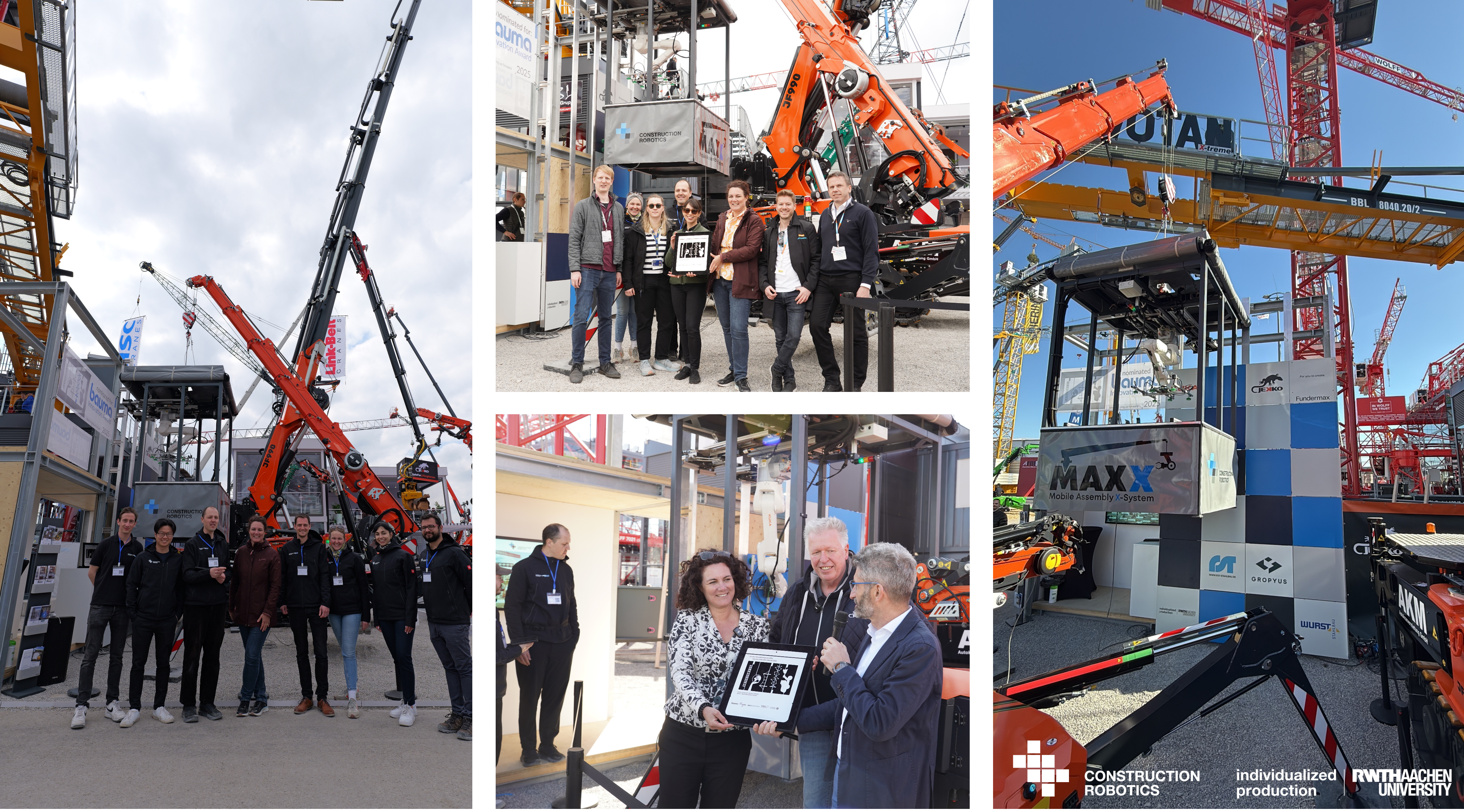
Prof. Dr. Sigrid Brell-Cokcan is a full-time Professor at the Chair of Individualized Building Production at RWTH Aachen University. Her work focuses on integrating construction robotics , 5G networks , digital twins , and BIM to advance automation in the construction industry. She leads projects like MAXX (awarded the bauma Innovation Award 2025 ) and TARGET-X, emphasizing interdisciplinary collaboration with industry partners such as KUKA AG, Jekko Srl., and Fraunhofer Institutes. Research Highlights: 5G-enabled robotic deconstruction Semantic data connectivity for steel assembly Ontology-driven automation frameworks Human-robot collaboration in unstructured environments Recent Trends: Focus on 5G networks for real-time construction monitoring Development of semantic digital twins for steel fabrication Integration of Vision Transformers and edge computing in robotic systems Rule-based automation for acoustic façade analysis Scientific Awards: bauma Innovation Award 2025 (Research category) for the MAXX project Her collaborations span HOCHTIEF ViCon , UNIBERG GmbH , and the 5G-Industry Campus Europe . She also contributes to teaching and international research programs like the Research-Driven Project on construction robotics.
Ingrid Scholl is a Professor at the University of Applied Sciences Aachen , specializing in computer science education. She teaches modules including Algorithms and Data Structures , Computer Graphics , Image Processing , and Virtual Reality/Augmented Reality . Her interdisciplinary project DataLake - Big Data Analysis and Visualizations focuses on extracting insights from large datasets using VR/AR technologies. Key Research Areas : Artificial Intelligence, Autonomous Systems, Virtual Reality, Medical Imaging, and Parallel Programming. Projects : Development of low-energy sensors for environmental monitoring, digital twin modeling of buildings for VR visualization, and collaborative VR experiences via HTC Vive. Publications highlight her work on autonomous mining vehicles, scene generation for AI training, and volume rendering in VR. Her recent contributions focus on operational design domains and mapping approaches in autonomous systems.