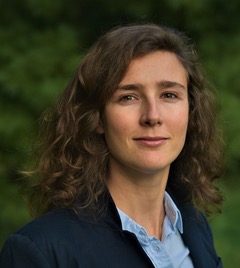
Dr. Laura Minet is an Assistant Professor in the Department of Civil Engineering at the University of Victoria. She leads the Clean Air (CLAIR) lab, focusing on improving urban air quality and reducing health impacts from air pollution through advanced modeling and policy analysis. Her expertise spans air quality, transportation engineering, and population health. Education: BEng/MEng (Ecole Centrale de Nantes), MASc (McGill University), PhD (University of Toronto). Postdoctoral work at the Diamond Environmental Research Group (2020-2021). Research Interests: Urban air quality modeling, vehicle emissions, dispersion modeling, and the intersection of transportation policies with public health. The CLAIR lab develops empirical and physical models to evaluate urban planning impacts and climate-driven changes. Recent research emphasizes machine learning applications in air quality prediction, health co-benefits of zero-emission vehicles, and disparities in pollution exposure. Over 40 publications span environmental engineering, public health, and transportation systems. Recruitment: Actively seeking graduate students/postdocs in environmental engineering, atmospheric science, and related fields. Contact via email with subject 'CLAIR lab opportunities'. Labs/Teams: Director of the CLAIR lab focusing on urban air quality solutions. Engaged in interdisciplinary collaborations involving urban planning, public health, and environmental policy.
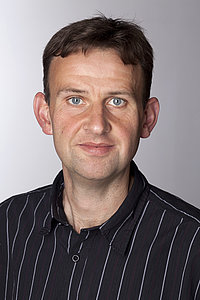
Gert Zöller is an Associate Professor of Applied Mathematics at the University of Potsdam, specializing in statistical seismology and mathematical modeling of earthquake processes. He has held this position since 2018, following a period from 2008-2018 as a Research Associate and Lecturer at the Institute of Mathematics at the University of Potsdam. His research focuses on statistical and physical models for earthquakes and other natural disasters, seismic hazard assessment, and extreme value statistics. Dr. Zöller earned his Diploma in Physics from Rheinische Friedrich-Wilhelms-University Bonn in 1995, his Doctorate (Dr. rer. nat.) from the University of Potsdam in 1999, and completed his Habilitation (Dr. rer. nat. habil.) in 2006. His academic journey included visiting scholar positions at the University of Southern California and the University of California, Santa Barbara in 2005. He has been actively involved in several major research initiatives including the DFG Collaborative Research Center 1294 (Data Assimilation) since 2017 and the DFG Graduate School NatRiskChange (Natural hazards and risks in a changing world) from 2015-2024. His research centers on developing sophisticated statistical models for earthquake forecasting, particularly focusing on the Groningen gas field in the Netherlands where induced seismicity has been a significant concern. Dr. Zöller's work integrates physics-based models with statistical approaches to improve seismic hazard assessment, with recent publications exploring Bayesian methods, Gaussian process modeling, and spatio-temporal analysis of earthquake sequences. His publications span top journals including Journal of Geophysical Research, Geophysical Journal International, and Bulletin of the Seismological Society of America. Dr. Zöller serves as a reviewer for numerous prestigious scientific journals including Science, Geophysical Research Letters, and Journal of Geophysical Research. He was Associate Editor of Nonlinear Processes in Geophysics from 2006-2014 and served as Scientific Officer for 'Earthquake Hazards' in the European Geosciences Union from 2010-2014. His professional memberships include the Seismological Society of America, American Geophysical Union, and European Geosciences Union. Currently, Dr. Zöller teaches 'Mathematics II for Economists' and serves on the Mathematics Examination Board at the University of Potsdam. His ongoing research continues to contribute significantly to the field of statistical seismology and earthquake hazard assessment, with publications extending into 2025.
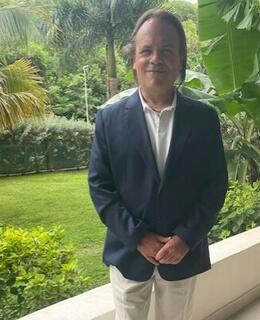
Johannes H. Jensen is a researcher at the Norwegian University of Science and Technology (NTNU), specializing in unconventional computing and material computation. His primary research focus lies in artificial spin ice systems, particularly exploring nanomagnetic metamaterials and their applications in neuromorphic computing. Research areas: Unconventional computing, Material computation, Artificial spin ice, Nanomagnetic metamaterials, Neuromorphic computing, Magnetic dynamics Maintainer of the flatspin simulation framework Recent publication: "Clocked dynamics in artificial spin ice" in Nature Communications (2024), introducing astroid clocking for precise ferromagnetic domain control
Yuta Sugiura is an Associate Professor in the Department of Information and Computer Science at Keio University's Faculty of Science and Technology. His research focuses on innovative human-computer interaction techniques, particularly in wearable computing, tangible interfaces, and novel input methods. Previously, he worked as a postdoctoral researcher at the National Institute of Advanced Industrial Science. Dr. Sugiura's research interests span Human-Computer Interaction, Wearable Computing, Augmented Reality, Tangible User Interfaces, Gesture Recognition, Ubiquitous Computing, Haptics, and Virtual Reality. His work often explores how everyday objects and environments can become interactive surfaces, with notable projects including the iRing (intelligent ring), SenSkin (skin as interface), and EarHover (mid-air gesture recognition for hearables). He has developed numerous novel interaction techniques that leverage physical properties of materials and human physiology for input and output. His recent publications indicate a strong focus on hearable computing, medical applications of HCI, edible interfaces, and novel authentication methods. The research shows a consistent pattern of exploring unconventional interaction surfaces and leveraging subtle physical phenomena for input sensing. His work has significant implications for healthcare applications, particularly in neurological disorder screening and rehabilitation. Best Paper Award Dr. Sugiura has advised numerous students who have gone on to publish significant work in top-tier HCI venues. His research has been supported by various grants enabling the development of novel interaction techniques and systems. He maintains strong collaborations with researchers across Japan and internationally, particularly in the fields of wearable computing and medical applications of HCI. His laboratory appears to focus on lifestyle computing, developing interfaces that integrate seamlessly into daily activities. Current projects include exploring edible displays, adaptive ear interfaces, and novel authentication methods using wearable devices. Future work seems to be heading toward more medical applications of HCI, particularly in neurological assessment and rehabilitation.
Vivek Amin is an Assistant Professor in the Department of Physics at Indiana University. His research focuses on theoretical investigations of condensed matter systems, particularly spintronics and spin-orbit torque mechanisms. He explores how spin and magnetic moments of electrons can be harnessed for information processing and storage, including applications in magnetic memories and neural networks. Education: B.S. in Electrical Engineering, University of Texas at Austin, 2006 Ph.D. in Physics, Texas A&M University, 2014 Research Interests: Spintronics and low-power spintronic devices Spin-orbit torque in materials like topological insulators and ferromagnets Design of spin-based neural networks Quantum materials and their magnetic properties Recent work includes studying interface-generated spin currents and their applications in energy-efficient computing. Awards: None explicitly listed in the provided text. Advising & Grants: No advisees or grants detailed in the text. His research is supported through institutional and collaborative efforts. Labs/Teams: Not specified in the provided materials.
Aleksandra Pawlicka is a prominent researcher specializing in cybersecurity , explainable AI , and disinformation detection . Her work bridges ethical considerations with technical innovations in network security and AI applications , particularly focusing on the intersection of human-robot collaboration , fake news analysis , and IoT vulnerabilities . Key research areas: Cybersecurity Ethics, AI Explainability, Disinformation Mitigation Notable collaborations: Marek Pawlicki, Rafal Kozik, Michal Choras Her publications analyze xAI challenges in intrusion detection, machine learning for network security, and ethical dilemmas in cybersecurity. She contributes to projects like ULTIMATE (robotic AI) and SWAROG (fake news detection), emphasizing transparency and practical implementation. Recent work explores adversarial attacks against AI systems , few-shot learning for cybersecurity, and neuro-symbolic reasoning for trustworthy AI. Her 2023 study on ChatGPT's impact on scientific communication highlights evolving technological and ethical landscapes in academic practices.
Dr. Gözde Damla Turhan is a Researcher at the Department of Architecture within the Faculty of Fine Arts and Design at İzmir University of Economics, a position she has held since September 2017. She holds a B.Sc. in Architecture from İzmir Ekonomi Üniversitesi (2014), followed by dual Master's degrees: M.Arch in Advanced Architectural Design (2016) and M.Sc. in Architecture (2016). Her Ph.D. in Design Studies (2022) focused on biobased materials, computational design, and digital fabrication. Current research interests include AI applications in design (machine learning, diffusion models, LLMs), and sustainable material innovation. Her work bridges architecture and computational technologies, emphasizing bio-based materials (e.g., bacterial cellulose), digital fabrication methods, and AI-driven design processes. She has explored topics like urban rehabilitation via GANs, NFT art hybrid experiences, and life cycle assessments of unconventional construction materials. Publications (2016–2023) span computational form-finding, material science, and digital tools in architecture. She actively contributes to design pedagogy, investigating how AI tools like diffusion models can reshape educational frameworks.
Stefano Nichele is a Professor at the Department of Computer Science and Communication, Østfold University College, Norway. He holds additional roles as Professor II at OsloMet and has served in leading academic positions since 2014. His research focuses on Artificial Life (ALife), Neuro-Inspired AI, and Machine Learning, with a particular emphasis on cellular automata, reservoir computing, and neuro-inspired substrates. Nichele co-directs the Østfold AI (ØAI) hub and is an active member of IEEE, ELLIS, and the Norwegian AI Research Consortium (NORA). He earned his PhD in Computer Science from NTNU (2015) and completed his MSc at the University of Insubria, Italy. His work bridges computational systems and biological substrates, exploring criticality in neural networks and quantum-evolutionary algorithm interactions. He has received prestigious awards, including the Young Research Talent grant (2019) and the Distinguished Early-Career Investigator award (2024). Nichele’s research spans theoretical and applied domains, with over 50 publications on cellular automata dynamics, neuro-inspired robotics, and AI ethics. His recent projects include studying in vitro neural networks for computational capacity assessment and developing frameworks for body-brain co-evolution in soft robotics. Education: PhD in Computer Science, NTNU (2015) MSc in Computer Science, University of Insubria (2009) Awards: Young Research Talent grant (2019) Distinguished Early-Career Investigator (2024) Grants & Roles: Co-director of the Østfold AI hub Board member of NORA (Norwegian AI Research Consortium) Labs & Collaborations: Focus on neuro-inspired AI systems and unconventional computing Partnerships with institutions like Simula Metropolitan and the International Society for Artificial Life (ISAL)
Dr. Ilan Kroo Academic Appointments: Thomas V. Jones Professor in Aeronautics and Astronautics at Stanford University's School of Engineering. Active in teaching and research since at least 1983 (PhD Stanford). Education: PhD in Aeronautics and Astronautics, Stanford University (1983). Research Focus: Multidisciplinary optimization and aircraft synthesis Unconventional aircraft configurations (e.g., joined wings, oblique wings) Low-speed aerodynamics: vortex wake analysis, induced drag computation Awards: Elected Member of the National Academy of Engineering (2013–Present). Teaching: Leads courses on aircraft design, applied aerodynamics, and sustainable aviation. Courses include AA 146A/B, AA 241A/B, and independent study modules. Students: Advises master's students William Ho, Sean Lin, Adrian Loekman, and Sebastian Monsalvo. Labs/Teams: Involved in NASA and industry-sponsored projects on computational aircraft design and transonic formation flight. Recent Work: Focus on pilot-induced oscillation mitigation, extended formation flight efficiency, and UAV swarm control. Active in publishing since 2009, with 116+ papers.
Eduardo H. Fradkin is the Donald Biggar Willett Professor of Physics and Engineering at the University of Illinois at Urbana-Champaign, where he also serves as Director of the Institute for Condensed Matter Theory (ICMT). A Center for Advanced Study Professor, Fradkin has been a faculty member at Illinois since 1979, progressing from postdoctoral researcher to assistant professor (1981), associate professor (1984), and full professor (1989). His research spans the interface between quantum field theory and condensed matter physics, with particular focus on topological phases of matter, fractional quantum Hall effect, high-temperature superconductors, and strongly correlated systems. Fradkin pioneered the application of quantum field theory methods to condensed matter problems, including his groundbreaking work showing the smooth connection between Higgs and confinement phases in gauge theories, which remains fundamental to understanding gauge theory phases. His research has significantly advanced our understanding of electronic liquid crystal phases, pair density wave superconductivity, and intertwined orders in quantum materials. His recent publications reveal continued leadership in theoretical condensed matter physics, with 2023-2025 works exploring intertwined orders in high-temperature superconductors, topological aspects of pair density waves, quantum Hall nematics, and the physics of UTe 2 as a potential topological superconductor. These works demonstrate his ongoing contributions to understanding complex quantum phases and their experimental signatures. Fellow of the American Physical Society Member of the National Academy of Sciences Fellow of the American Academy of Arts and Sciences Eugene Feenberg Memorial Medal (2024) Simon Guggenheim Memorial Foundation Fellowship Donald Biggar Willett Professor of Physics Fradkin has mentored numerous graduate students who have become prominent physicists, including Matthew Fisher and Ana López. His theoretical frameworks have guided extensive experimental work in condensed matter physics worldwide. He directs the Institute for Condensed Matter Theory, fostering interdisciplinary research at the frontier of quantum materials. His influential textbooks, including "Quantum Field Theory, An Integrated Approach" (2021) and "Field Theories of Condensed Matter Systems" (2013), have shaped the education of generations of theoretical physicists.
Russell King is the Henry Armfield Foscue Distinguished Professor of Industrial and Systems Engineering (ISE) at North Carolina State University's College of Engineering. He serves as the Director of Graduate Programs for the ISE department, responsible for administering degree programs serving approximately 190 graduate students. King is also a Fellow of the Institute of Industrial and Systems Engineers and has received numerous teaching and research awards throughout his 37-year career at NC State. Dr. King earned his Ph.D. in Industrial Engineering from the University of Florida (1986), following a Master of Industrial Engineering (1982) and Bachelor of Science in Systems Engineering (1980). His undergraduate journey was unconventional, having considered seven different majors including pre-med, biology, microbiology, biochemistry, math, and ornamental horticulture before selecting engineering. His doctoral work was completed under advisor Thom Hodgson, who moved from Florida to become NC State's ISE department head during King's studies. King's research focuses on solving practical problems across diverse areas including logistics, scheduling, and inventory control for additive manufacturing, remanufacturing, and military systems under risk. His work spans pricing strategies, stress control of 3D-printed parts, supply chain design, and military logistics optimization. His research approach bridges theoretical rigor with real-world applications, resulting in consulting engagements with Ford Motors, The Gap, Dillards Department Stores, and the Institute for Defense and Business. Analysis of his recent publications shows a consistent focus on military logistics applications (5 of 10 recent papers), additive manufacturing integration (3 papers), and supply chain risk management (4 papers), demonstrating how his research has evolved to address emerging challenges in manufacturing and defense logistics while maintaining practical relevance. C. A. Anderson Outstanding Faculty Award, ISE Department at NC State University (2020, 2014, 2008, 2002, 1996, 1986) Albert G. Holzman Distinguished Educator Award, Institute of Industrial Engineers (2010) Henry Armfield Foscue Distinguished Professor (2017) Edward P. Fitts Distinguished Professor (2012) NCSU George H. Blessis Outstanding Undergraduate Advisor Award (2010) Teaching Excellence Award in the OR Division, Institute of Industrial and Systems Engineers (2019) Technical Innovation in Industrial Engineering, Institute of Industrial Engineers (2003) Fellow, Institute of Industrial Engineers (2006) As an academic leader, King has developed innovative programs including a dual Master of Industrial Engineering/Master of Business Administration program and a distance education Master of Engineering degree. His mentorship has produced three students who placed in the top 3 of IIE's dissertation award competition, with two taking first place. He has served as associate editor for the Journal of Manufacturing Systems and IIE Transactions, contributing to the scholarly community beyond his own research. Outside academia, King and his daughter are Masters of Taekwondo under Grand Master K.S. Lee of Morrisville, NC.
Dr. David E. Lumley is the Cecil & Ida Green Endowed Chair in Geophysics and Professor of Earth Sciences & Physics at the University of Texas at Dallas (UTD), serving as Department Head since 2021. He holds a PhD from Stanford University (1995), MSc and BSc from the University of British Columbia (1989/1986). His research focuses on wavefield inversion methodologies for 4D time-lapse seismology, subsurface imaging, and applications to CO2 sequestration, induced seismicity, and planetary geodynamics. Lumley directs UTD's Seismic Imaging & Inversion Lab and previously led the Center for Energy Geoscience at University of Western Australia (2009-2017). Education: PhD in Geophysics, Stanford University (1995) MSc in Geophysics & Astronomy, UBC (1989) BSc (Hons) in Geophysics & Astronomy, UBC (1986) Research Interests: Pioneering 4D time-lapse seismology, seismic full-waveform inversion (FWI), ambient noise imaging, and applications to energy transition challenges. Current projects include monitoring Yellowstone's magmatic system, CO2 storage validation, and induced seismicity characterization. Combines HPC, AI, and geostatistical methods to solve inverse problems in exploration geophysics and environmental monitoring. Awards: SEG's J. Clarence Karcher Award (1996), 8 Best Paper Awards, Distinguished Lecturer for AAPG/SEG/SPE, and SEG Endowed Scholarships. Named SEG's first 'Pioneer of Geophysics' in 2005. Grants: Over $135M in competitive funding from NSF, DOE, DOD, and international agencies. Active in industry partnerships through ventures like 4th Wave Imaging (acquired by Fugro, 2007). Labs/Teams: Leads Seismic Imaging & Inversion Lab at UTD, collaborating with global networks in Australia, Europe, and industry consortia. Co-developer of seismic inversion software tools used in energy and environmental sectors.
Leonhard Summerer is an Associate Professor at the Faculty of Mathematics, Department of Mathematics . His research primarily focuses on Diophantine Approximation , Geometry of Numbers , and Parametric Approximation . His work explores the Approximation Property in parametric settings, Lattice Theory , and Linear Dependence in number theory. Recent publications include studies on Jarník’s identity, simultaneous approximation to multiple reals, and geometric interpretations of number-theoretic problems. He has authored numerous peer-reviewed articles and contributed chapters to educational books such as 77-mal Mathematik für Zwischendurch , emphasizing mathematical outreach and pedagogical innovation . Active in academic discourse, he has delivered talks on topics like Packings and Tilings in Z and Simultane Approximation m reeller Zahlen since 2006.
Bruno Tucunduva Ruviaro is an Associate Professor in the Department of Music within the College of Arts and Sciences at Santa Clara University, where he has taught since Fall 2012. Originally from Brazil, Ruviaro is a composer and performer with a specialization in electronic music. Prior to joining Santa Clara, he studied and worked at the Center for Computer Research in Music and Acoustics (CCRMA) at Stanford University. Ruviaro's primary research focus is Music Composition with a strong emphasis on Electronic Music. His specific interests include electronic music composition, laptop orchestras, live-electronics, acousmatic music, and sampling & musical borrowing. He also explores secondary interests spanning theater, dance, linguistics, speech, radio art, Linux, intellectual (im)property issues, and the intersection of music & politics. His work demonstrates a consistent exploration of how technology transforms musical creation and performance. Ruviaro's scholarly output reveals a strong trajectory in electronic and computer music composition, with particular attention to laptop orchestras and musical borrowing practices. His recent works like Pós-Tudos and Mozart and the Elections demonstrate his continued innovation in contemporary composition, while publications such as From Schaeffer to* lorks and Intellectual Improperty reveal his theoretical engagement with the evolving nature of musical instruments and copyright in digital contexts. His compositions frequently incorporate technology in innovative performance setups, as seen in works utilizing smartphones and unconventional sound production methods. Ruviaro is the director of SCLOrk (Santa Clara Laptop Orchestra), continuing a tradition from his time at Stanford where he was part of SLOrk (Stanford Laptop Orchestra). He teaches courses including Intro to Electronic Music (MUSC 9), SCLOrk - Santa Clara Laptop Orchestra (MUSC 157), Music Theory III (MUSC 3), Experimental Sound Design (MUSC 115), Form and Analysis (MUSC 113), and Beginning Composition (MUSC 37), along with private composition lessons. His educational contributions include A Gentle Introduction to SuperCollider , making complex music programming more accessible to students.
Mario Costa Sousa is a Professor in the Department of Computer Science at the University of Calgary. He holds a BSc from Catholic University of Petrópolis (1989), an MSc from Pontificia Universidade Católica do Rio de Janeiro (1994), and a PhD in Computer Science from the University of Alberta (1999). His primary research focuses on computer graphics, scientific visualization, and sketch-based modeling with applications to geoscience and reservoir engineering. He leads the illustrares research group, which develops novel visual computing paradigms for interdisciplinary challenges in science, engineering, and design. Research interests include non-photorealistic rendering, sketch-based interfaces, visualization/visual analytics, and human-data interaction. His work integrates geoscientific data with interactive modeling tools to address reservoir uncertainty and enhance decision-making in energy and environmental domains. Recent projects involve rapid prototyping of subsurface CO2 sequestration models and machine learning for drill core analysis. He teaches courses such as CPSC 591/691 Rendering (Fall 2024), CPSC 319 Data Structures (Winter 2025), and DATA 501 Data Science Capstone (Winter 2025). His research has contributed to energy innovation initiatives at the University of Calgary, focusing on geothermal energy and unconventional reservoirs. Key collaborations include work on Gaussian process-based uncertainty quantification, functional data analysis for production forecasting, and immersive VR tools for surgical training (e.g., NeuroSimVR and JackVR oil rig simulators). His publications span reservoir modeling, geological visualization, and interactive systems for spatial data exploration.