Xiaolong LiuView profile
Assistant Professor
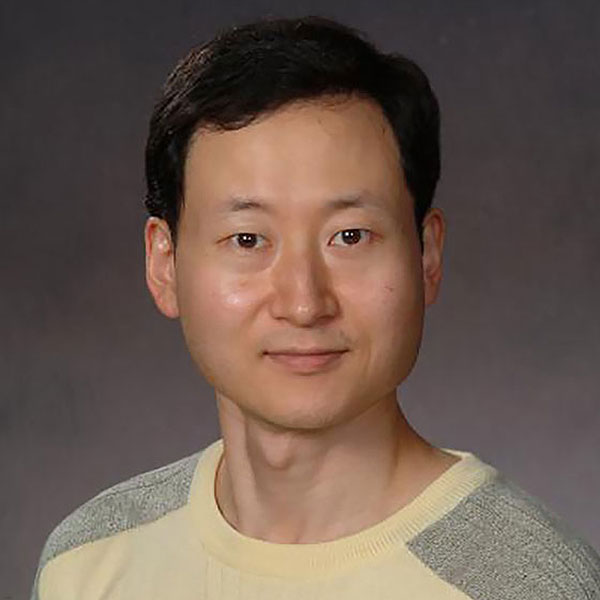
Xiaolong Liu is an Assistant Professor in the Department of Physics & Astronomy at the University of Notre Dame. His research focuses on creating and studying novel quantum states of matter, particularly unconventional superconductivity, using advanced scanning probe microscopy techniques such as spectroscopic imaging scanning tunneling microscopy (SI-STM) at cryogenic temperatures. He leads a lab specializing in atom-scale manipulation, in situ material synthesis via molecular beam epitaxy, and 2D heterostructure fabrication. His experimental approaches include ultra-high vacuum environments with magnetic fields up to 9 T and in situ transport measurements. Education: Liu earned a BS from the University of Science and Technology of China (2013) and a PhD from Northwestern University (2018). His work bridges quantum materials research with nanoscale fabrication, emphasizing both fundamental physics and technological applications. His group's research has led to breakthroughs in visualizing electron fluid dynamics and discovering Cooper-pair density waves in transition metal dichalcogenides. Research Interests: His lab explores quantum phenomena in engineered 2D materials and heterostructures, including borophene synthesis, topological superconductors, and electronic phase transitions under extreme conditions. Techniques include single-atom/molecule manipulation and quantum simulation through atomic-scale architectures. Awards & Recognition: Liu has received the 2023 Ralph E. Powe Junior Faculty Award, 2022 Blavatnik Regional Award for Young Scientists (Physical Sciences & Engineering), and the 2022 IUPAP Young Scientist Prize in Low Temperature Physics. His work has been published in top journals like Nature, Science, and Nature Materials. Labs & Teams: His research group operates within the Nieuwland Science Hall, focusing on advanced microscopy and nanofabrication. Collaborations involve theoretical physicists, materials scientists, and engineers to address grand challenges in quantum matter and next-generation electronics.