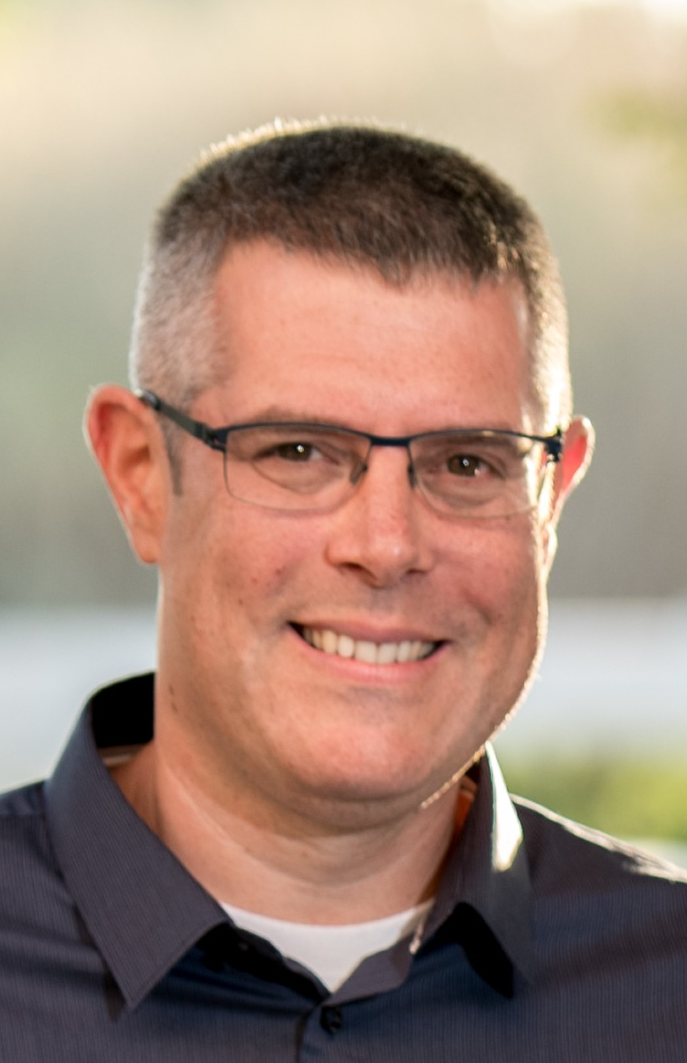
Ami WieselView profile
Professor
Ami Wiesel is a Professor at The Rachel and Selim Benin School of Computer Science and Engineering at The Hebrew University of Jerusalem. His research focuses on statistical signal processing, machine learning, and covariance estimation. Previously, he completed his postdoctoral studies at the University of Michigan with Professor Alfred Hero, earned his PhD in Electrical Engineering from Technion under Professors Yonina Eldar and Shlomo Shamai, and obtained his MSc and BSc in Electrical Engineering from Tel Aviv University. His research interests include robust covariance estimation , statistical learning , signal detection , and MIMO communications . Wiesel has made significant contributions to the field of structured covariance estimation, particularly in elliptical distributions and Tyler's estimator. His work bridges theoretical statistics with practical applications in radar systems, wireless communications, and hyperspectral imaging. Wiesel's publications show a clear trend toward integrating deep learning with traditional statistical signal processing methods. His recent work explores unbiased estimation using neural networks, fair principal component analysis, and deep learning applications for target detection with constant false alarm rate. His research spans theoretical foundations in covariance estimation to practical implementations in radar and communications systems. Among his notable scientific achievements are: Young Author Best Paper Award (2019) for 'Learning to Detect' Young Author Best Paper Award (2006) for 'Linear precoding via conic optimization for fixed MIMO receivers' Student Paper Award (2017) for 'Deep MIMO detection' Wiesel has advised numerous graduate students who have gone on to publish significant work in the field. His research has been supported by various grants focusing on statistical signal processing, machine learning applications, and radar systems. His monograph 'Structured Robust Covariance Estimation' (2015) has become a reference in the field. He maintains an active research group focusing on the intersection of statistical learning and signal processing, with applications in communications, radar, and medical imaging.