Shirley Gatenio Gabel is Professor and Mary Ann Quaranta Chair for Social Justice for Children at Fordham University's Graduate School of Social Service. Holding a Ph.D. from Columbia University, she specializes in human rights-based approaches to social policy affecting children and families. Her work integrates comparative policy analysis with rights implementation frameworks. Her research publications consistently address human rights implementation in social policy, particularly examining vulnerable populations and policy effectiveness. Recent work explores COVID-19 impacts on families, paid leave disparities, and transnational advocacy at the UN. She represents the International Association of Schools of Social Work at the United Nations and has consulted for UNICEF and UNESCO. As editor of the Journal on Human Rights and Social Work, she advances rights-based approaches globally. Her work emphasizes translating human rights principles into practical social policy and professional practice.
Ellen Baake is a Professor of Biomathematics and Theoretical Bioinformatics at the Faculty of Technology, Bielefeld University (since 2012 as full professor; joint membership in the Faculty of Mathematics since 2011). Her work bridges mathematical population genetics, probability theory, and mathematical immunobiology, with a focus on mutation-selection balance, recombination dynamics, and stochastic processes in evolutionary systems. Education : Habilitation in Zoology and Theoretical Biology, Munich University (1999) PhD in Theoretical Biology, Bonn University (1989) Diploma in Biology, Bonn University (1985) Her research explores the interplay of mutation, selection, and drift through exact solutions and probabilistic frameworks, leveraging models like the Moran process and Wright-Fisher equations. Recent projects include DFG Collaborative Research Centre 1283 on uncertainty and randomness. Notable awards include the 2022 Feldman Prize and the 2007 Kloosterman Chair. She has led initiatives such as the Research Centre for Mathematical Modelling (2006-2023) and the DFG Priority Programme on probabilistic structures (2011-2022).
Kristin Linnerud is a Professor at the Norwegian University of Life Sciences (NMBU), affiliated with the Forestry and Renewable Energy Section. Her research focuses on renewable energy policy, sustainable development, climate change mitigation, and the socio-economic dimensions of energy transitions. She has contributed extensively to understanding the interplay between energy systems, environmental sustainability, and societal challenges. Her work examines topics such as offshore wind energy development, public acceptance of renewable projects, and the governance of sustainable development goals. She has also explored policy frameworks for decarbonization, including renewable energy incentives and the implications of climate policy uncertainty on investment decisions. Key themes in her publications include the analysis of sustainable energy narratives, the role of aesthetics in circular economy practices, and the assessment of global sustainable development interactions. Her research frequently bridges academic disciplines, combining political science, environmental economics, and socio-technical systems analysis. While no specific awards or grants are listed in the provided text, her prolific publication record reflects sustained contributions to energy and environmental policy research.
Luca Zamboni is a Lecturer in Economics at the University of East Anglia (UEA), affiliated with the School of Economics. He is also a member of the Behavioural Economics research group. His primary research focuses on Microeconomic Theory, Game Theory, and Experimental Economics, with a particular emphasis on Information Economics and Behavioural Economics principles. While no formal educational details are provided, his academic role indicates a strong background in economics. His research interests revolve around theoretical and applied aspects of economic behavior, leveraging experimental methodologies to explore decision-making processes under uncertainty and information asymmetry. No scientific awards, grants, or advising activities are explicitly mentioned in the provided text. His affiliation with the School of Economics suggests potential involvement in departmental initiatives or collaborations, though specific labs or teams are not detailed here.
Riley Dugan is a Professor and Chair of the Department of Management and Marketing at the University of Dayton's School of Business Administration. He holds a PhD in Marketing from the University of Cincinnati (2014), an MBA (2007), MS in Accounting (2008), and a BA in Political Science from Emory University (2001). His research focuses on sales management, organizational behavior, and marketing strategy, with notable work on salesperson well-being, technology integration in sales, and crisis management in sales environments. His educational background spans multiple disciplines, reflecting his interdisciplinary approach to marketing and management. He teaches courses including Principles of Marketing, Sales Negotiations, and Value Analysis of Major Sales Engagements. Notable achievements include the 2024 Milestone Book Selection award. Riley’s research frequently explores the interplay between technology, human behavior, and organizational effectiveness. Recent studies address topics like salesperson resilience under flexible work arrangements, the impact of competitive intelligence on performance, and ethical considerations in cause-related marketing. His work emphasizes practical applications for businesses and educational institutions.
Mag. Günther Schreder is a Lecturer at the Department for Knowledge and Communication Management at the University for Continuing Education Krems. His research focuses on usability design, information visualization, collective intelligence, and cognitive aspects of organizational communication. He has led and contributed to multiple interdisciplinary projects, including the 'Co-Mind' initiative exploring boundary objects in innovation processes and the 'Isotype goes Data Journalism' project analyzing historical visualization techniques. His teaching includes courses on Usability Design Methods and Cognitive Psychology, emphasizing practical applications of design thinking and collaborative learning frameworks. Key research projects include developing system models for organizational improvisation, analyzing risk factors for refugee mental health, and advancing synoptic visualization approaches for cultural heritage collections. He has collaborated on EU-funded initiatives like the 'INNOMAT' project on barrier-free ticket vending machines and contributed to the 'Schema Processing in Organizational Culture' study. Schreder's work bridges cognitive science with practical design solutions, aiming to enhance user-centered systems and public engagement through innovative visualization strategies.
Dr. Sun Joseph Chang is a Professor of Forestry at Louisiana State University Agricultural Center, affiliated with the School of Renewable Natural Resources. His research focuses on forest economics, carbon sequestration optimization, and timber management strategies. He holds a B.S. from National Chung Hsing University (Taiwan, 1972), an M.F.S. from Harvard University (1975), and a Ph.D. from the University of Wisconsin-Madison (1979). His research interests span forest taxation policy, Faustmann model extensions, and the economic implications of carbon sequestration. Notable contributions include studies on optimal harvest strategies under price uncertainty and institutional timberland investments. He has authored influential papers on topics like stumpage price volatility mitigation using financial derivatives and the historical evolution of forest valuation theories. Dr. Chang’s work frequently integrates mathematical modeling with policy analysis, addressing challenges in sustainable forestry and climate change adaptation. His publications demonstrate a strong focus on bridging theoretical economics with practical forest management practices.
Prof. Stelian Coros is an Associate Professor at the Department of Computer Science, ETH Zürich, and Head of the Institute for Intelligent Interactive Systems. His research focuses on robotics, computational design, and control systems, with applications in robotic manipulation, simulation, and autonomous systems. His work integrates principles from computer science, mechanical engineering, and artificial intelligence to advance the capabilities of robots in real-world environments.
Jaap Eising is a Lecturer at the Department of Information Technology and Electrical Engineering at ETH Zürich. His research focuses on control systems, data-driven control methodologies, optimization algorithms, and system identification. He explores topics such as affine time-invariant systems, robust control of linear systems, and adaptive control strategies for uncertain systems. His work emphasizes theoretical foundations and practical applications in control theory, leveraging data-driven approaches to enhance system analysis and stabilization. Recent publications highlight advancements in data-driven techniques for mode detection, parameter variation decoupling, and cautious optimization under noisy data. His research also addresses challenges in online adaptive control and stabilization of switched systems. Key themes include informativity frameworks, quadratic matrix inequalities, and the integration of statistical modeling with control theory. No scientific awards or grants are explicitly mentioned in the provided texts. His academic contributions are centered on advancing control systems through rigorous mathematical analysis and innovative algorithmic designs.
Atul Kumar is a Researcher in computer science with publications spanning quantum computing, machine learning, and cybersecurity. His work appears in journals including IEEE Transactions on Visualization and Computer Graphics, Knowledge-Based Systems, and IEEE Access. His research focuses on quantum machine learning algorithms, medical image analysis, hardware security, and chaotic encryption systems. Recent investigations explore quantum support vector machines, hardware Trojan attacks, and uncertainty-aware neural representations for scientific visualization. Analysis of his publication portfolio reveals consistent methodological innovation in applying quantum computing principles to traditional computing problems, particularly in image processing and classification tasks. His security-focused research examines vulnerabilities in hardware systems and develops cryptographic solutions using chaotic maps.
Christopher Brinton is the Elmore Associate Professor of Electrical and Computer Engineering at Purdue University, where he leads the ION research lab. His work sits at the intersection of networking, communications, and machine learning, investigating contemporary network architectures including Fog computing systems, the Internet of Things (IoT), NextG Wireless, and social learning networks. Dr. Brinton received his PhD in Electrical Engineering from Princeton University in 2016, following a Master's degree in EE from Princeton in 2013 and a BSEE from The College of New Jersey in 2011. Prior to joining Purdue, he served as the Associate Director of the EDGE Lab and a Lecturer of Electrical Engineering at Princeton University. His research focuses on network optimization, machine learning, edge and fog computing, signal processing, wireless networks, distributed computing, communication and information theory, and social learning networks. Dr. Brinton's work employs foundational techniques including convex and non-convex optimization, machine learning, and signal processing to address challenges in emerging network architectures. His research spans from theoretical foundations in information theory to practical implementations in next-generation wireless systems, with an increasing emphasis on distributed learning approaches that maintain privacy while achieving high performance. Dr. Brinton's recent publications demonstrate a strong trajectory toward integrating machine learning with networking challenges, particularly in distributed and edge computing environments. His work shows growing emphasis on federated and decentralized learning approaches that address privacy concerns and communication constraints in real-world network deployments, while also advancing theoretical understanding of network optimization problems. NSF CAREER Award ONR Young Investigator Program (YIP) Award DARPA Young Faculty Award (YFA) AFOSR Young Investigator Program (YIP) Award Intel Rising Star Faculty Award (RSA) Dr. Brinton has been active in teaching across multiple levels, lecturing courses on network principles, signals and systems, and computer communication networks. He is also the co-author of "The Power of Networks: Six Principles That Connect Our Lives," which has been used for introductory college courses worldwide and formed the basis for popular MOOCs that have collectively enrolled over 400,000 students. His teaching spans undergraduate and graduate levels, including specialized courses on wireless communication networks and Python for data science. As leader of the ION research lab, Dr. Brinton oversees a team investigating the theoretical and practical aspects of network optimization, with projects spanning fog computing systems, IoT, NextG Wireless, and social learning networks. His lab collaborates with major industry partners including Qualcomm, Nokia, Intel, Cisco, Dell, and Ericsson on cutting-edge research in next-generation networking technologies.
Roberto Casadio is a Full Professor at the Department of Physics and Astronomy 'Augusto Righi', University of Bologna. He is affiliated with the INFN (National Institute for Nuclear Physics) Bologna Section and the AM² center. His research focuses on quantum gravity, black hole physics, cosmology, and dark matter/energy phenomena. Education: Ph.D. in Physics, University of Bologna (1996) Laurea in Physics (cum laude), University of Bologna (1992) Research Interests: Quantum aspects of gravitational collapse, cosmology via alternative gravity theories, black hole formation/evolution, and dark sector physics. Techniques include horizon quantum mechanics, generalized uncertainty principles, and minimal geometric deformations. Grants & Collaborations: Principal Investigator of RFO2010, FFABR grants Member of SIGRAV steering committee, INdAM, and Einstein Telescope collaborations Awards: Outstanding referee (Classical and Quantum Gravity, Physics Letters B) Editorial role at Universe Teaching: Courses include General Relativity, Quantum Cosmology, and Relativity Theory for undergraduate/master students. Labs/Teams: Coordinator of INFN Bologna Theory Group and member of EuCAPT/ET-Bologna research units.
Cyrus Neary is an incoming tenure-track Assistant Professor in the Department of Electrical and Computer Engineering at the University of British Columbia (UBC), where he will direct the Artificial Intelligence in Robotics & Engineering (AIRE) Lab. Previously, he was a postdoctoral researcher at Mila (Québec AI Institute) and l’Université de Montréal. His research bridges AI system engineering and engineering applications, focusing on compositional design, physics-informed learning, and reliable autonomous systems. He holds a Ph.D. and M.Sc. in Computational Science from The University of Texas at Austin’s Oden Institute, and a Bachelors of Applied Science in Engineering Physics from UBC. Education : Ph.D. in Computational Science (2024), University of Texas at Austin M.Sc. in Computational Science (2021), University of Texas at Austin B.A.Sc. in Engineering Physics (Honors Mathematics minor), University of British Columbia (2019) Research Focus : Developing AI systems that integrate engineering principles and physics-based knowledge for control, robotics, and autonomy. Key areas include multiagent reinforcement learning, physics-informed neural networks, and compositional system design. His work emphasizes reliability, certification, and efficient data utilization in high-stakes applications. Lab & Opportunities : The AIRE Lab at UBC seeks students (MASc/PhD) to explore AI-robotics intersections. Application deadlines are Jan 15, 2025, with priority given to early submissions (Dec 31, 2024).
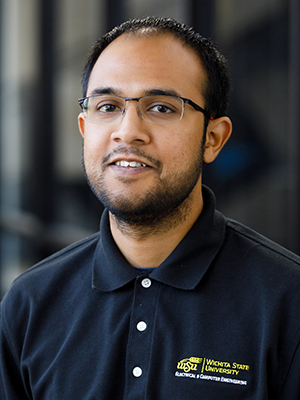
Arun-Kaarthick Manoharan is an Assistant Teaching Professor at Wichita State University's College of Engineering, specializing in Electrical and Computer Engineering. His research focuses on advancing power systems, smart grids, and renewable energy integration while addressing challenges in cybersecurity, distributed energy resources (DER), and grid reliability. He holds a Ph.D. and actively contributes to academic and industry collaborations. Key research interests include optimizing transmission and distribution networks, mitigating risks from cyber threats, and enhancing grid resilience through DER integration. His work bridges theoretical modeling with practical applications, such as market mechanisms for solar energy and battery storage systems. Publications highlight innovative solutions for high-voltage DC transmission planning, equitable load management during extreme events, and social welfare improvements through DER market participation. His research often emphasizes interdisciplinary approaches, combining engineering principles with economic and policy considerations. Dr. Manoharan is affiliated with Wichita State University’s Department of Electrical and Computer Engineering, contributing to both teaching and applied research. His technical expertise spans electric vehicle charging optimization, grid-edge technology modeling, and reliability evaluation of cyber-physical systems.
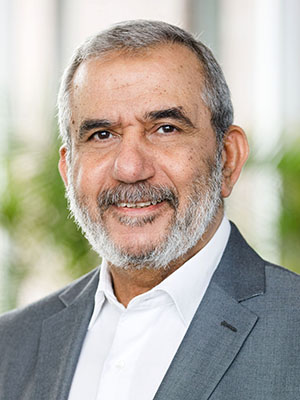
Dr. Gamal Weheba is a Professor in the Department of Industrial, Systems, and Manufacturing Engineering at Wichita State University’s College of Engineering. His research focuses on additive manufacturing, quality management, and statistical process control. He holds the honor of being an ASQ Fellow. Education: Ph.D. in Industrial Engineering, University of Central Florida M.Sc. in Production Engineering, Menoufia University, Egypt B.Sc. in Production Engineering & Mechanical Design, Menoufia University, Egypt Research Interests: Applications of 3D printing in construction and historical preservation Software quality measurement and ISO standards compliance E-learning quality management during crises Statistical process control methodologies Virtual reality in manufacturing and education Article Trends: Recent work emphasizes additive manufacturing’s role in construction (e.g., Portland cement 3D printing) and quality management innovations. Over 25 years of publications reflect sustained contributions to manufacturing processes, metrology, and educational technology. Awards: ASQ Fellow Advising & Grants: No explicit student advisees listed, though extensive professional experience in quality systems suggests mentorship roles. Grants and service details are not detailed in the text. Labs/Teams: Not explicitly mentioned. Research collaborations likely tied to additive manufacturing and quality initiatives.