University of Illinois Urbana-ChampaignUnited States
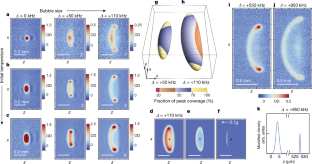
Smitha Vishveshwara is a Professor in the Department of Physics at the University of Illinois at Urbana-Champaign. She holds affiliations with the university’s Materials Research Laboratory and Beckman Institute. Her interdisciplinary work bridges quantum condensed matter theory, biophysics, and artistic expression. PhD in Theoretical Physics (University of California, Santa Barbara, 2002) Postdoctoral Researcher (2002–2005) in the Department of Physics at UIUC Her research focuses on quantum systems, including: Strongly correlated systems in low dimensions (Luttinger liquids, induced superconductivity in nanotubes) Topological order and Majorana fermions in superconductors Quench dynamics in spin chains and optical lattices Microgravity Bose-Einstein condensates and quantum bubbles Biophysics applications (protein networks via percolation theory) Gravitational parallels in quantum Hall systems Recent publications reveal trends in quantum Hall interferometry, Majorana detection schemes, and microgravity condensate dynamics. Awards include the NSF CAREER Award, Simons Fellowship, and APS Fellowship. She teaches courses like “Where the Arts Meets Physics” and has co-created art-science projects such as Quantum Voyages and Quantum Rhapsodies .
Jose D'Incao is an Associate Research Professor at the University of Colorado Boulder and an Associate Fellow at JILA, a joint institute of the National Institute of Standards and Technology (NIST) and the University of Colorado. His research focuses on ultracold atomic systems, particularly the study of few-body correlations in atomic systems at ultracold temperatures, including Efimov physics and quantum dynamics in Bose-Einstein condensates. His work addresses fundamental challenges in atomic, molecular, and nuclear physics, with applications to quantum control and novel phases of matter. His research interests include the theoretical analysis of three-body recombination processes, universal few-body physics in spinor condensates, and the interplay between coherence and dissipation in ultracold gases. He has contributed to understanding the generalized Efimov effect in one and two dimensions and explored dynamics in systems such as hybrid ion-atom mixtures and optical lattices. Key projects include studies of Efimov states via Feshbach resonances, light-assisted collisions in optical tweezers, and precision measurements of many-body interactions in microgravity. His work often involves collaboration with experimental groups to bridge theoretical predictions with advancements in cold atom technologies. Jose D'Incao has received funding from the National Science Foundation (NSF) and the Binational Science Foundation (BSF) for projects exploring universality in few-body systems and coherent control of Efimov physics. His research has implications for precision metrology, quantum simulation, and the development of novel quantum technologies.
Travis L. Nicholson is an Assistant Professor of Physics at Duke University with a secondary appointment in Electrical and Computer Engineering and membership in the Duke Quantum Center. His research pioneers quantum science experiments with ultracold neutral atoms, particularly Group III elements. Education: M.S. in Physics, University of Colorado, Boulder (2011) Ph.D. in Physics, University of Colorado, Boulder (2015) Dr. Nicholson's work focuses on cooling atoms near absolute zero, optical trapping, and quantum state manipulation. His team achieved the first laser cooling of Group III atoms (indium), enabling novel quantum many-body states, quantum computing architectures, and atomic clocks with unprecedented accuracy. He also develops quantum sensors and explores theoretical proposals for novel lasers. Analysis of his 15 most recent publications (2022-2010) reveals three dominant themes: advancing optical lattice clock precision to 10 -18 levels, pioneering quantum simulation with triel atoms, and developing superradiant lasers for quantum metrology. His Group III atom research has established new quantum control paradigms. Scientific Awards: 2022 NUS Physics Breakthrough Prize for realizing the first indium magneto-optical trap Dr. Nicholson actively mentors graduate students including PhD candidates Connor Bowerman and Jinchao (recently defended), and Master's graduate Desiree Lim (now at PASQAL). His research is supported by Duke Quantum Center collaborations and industry partnerships, notably as scientific advisor to PlanQC, a leading neutral atom quantum computing company. Nicholson Labs operates within the Duke Quantum Center's Chesterfield Building, focusing on quantum computing, simulation, and metrology. The group recently relocated from NUS and maintains an active culture including university events like Duke basketball games, with ongoing recruitment for new research members.
Prof. Will Raven is a Professor of Physics at Smith College, where he joined the Department of Physics in 2013. He has mentored over 70 undergraduate researchers, published 8 peer-reviewed articles since 2020, and secured five NSF grants, including the NSF CAREER award. His research focuses on high-precision spectroscopy of neutral light atoms to test quantum electrodynamics (QED) and contribute to nuclear structure theory. Ph.D., University of Wisconsin–Madison B.S., Clarkson University Prof. Raven’s research group explores fundamental atomic physics, testing the Standard Model by measuring properties of beryllium, boron, nitrogen, and oxygen atoms. He designed a course, PHY242 Research in High Precision Spectroscopy, accessible to first-year students without calculus or physics prerequisites. His work combines experimental techniques with educational innovation, emphasizing accessible research opportunities. His recent publications (2025–2020) span precision spectroscopy of light atoms, hyperfine structure analysis, and laser stabilization methods. These articles represent fields such as Atomic Physics, Quantum Mechanics, and Optical Physics. American Physical Society 2025 Prize for a Faculty Member for Research in an Undergraduate Institution NSF CAREER award Smith College Student Government Association’s teaching award (twice) Prof. Raven has secured NSF grants for his research, including RUI grants for experimental projects and MRI grants for instrumentation. He leads the Raven Lab, an experimental group dedicated to undergraduate research training and fundamental atomic physics studies.
Eric Cornell is an Adjunct Professor and Nobel Laureate (2001 Physics) affiliated with the University of Colorado Boulder's Department of Physics and JILA, a joint institute with NIST. His research focuses on experimental Atomic, Molecular, and Optical Physics, including precision measurements of the electron's electric dipole moment (EDM) and studies of ultracold atomic gases. He has pioneered work on Bose-Einstein condensation and recently explored extracting electricity from waste heat. Research Interests: Precision metrology for fundamental physics, ultralow-temperature quantum systems, and applications of ultracold atoms. Notable projects include the use of trapped HfF+ molecular ions to enhance EDM measurements and collaborations on axion-like particle detection. Awards: Nobel Prize in Physics (2001) for Bose-Einstein condensation, 2024 Teaching Award for outstanding contributions to physics education. Grants & Collaborations: Lead researcher in JILA's Physics Frontiers Center, which received a $25M NSF grant. Collaborates with Jun Ye and others on eEDM experiments and quantum technologies.
Giulia Semeghini is an Assistant Professor of Applied Physics at Harvard University's School of Engineering and Applied Sciences (SEAS) . Her research focuses on experimental investigations of highly-entangled phases of matter and quantum information processing using programmable atom arrays. The Semeghini Lab, part of the Harvard Quantum Initiative (HQI) and the Center for Ultracold Atoms (CUA), explores intersections between condensed matter physics, high-energy physics, and quantum chemistry. Key achievements include assembling an ultra-high vacuum chamber for atom arrays in 2024 and relocating to the Goel building (HQI's new home) in April 2024. The lab actively recruits students and researchers for open positions at all levels. Research themes span quantum simulation, topological qubits, entanglement engineering, and scalable quantum architectures. Publications emphasize quantum gate implementations, hybrid atom systems, and variational Monte Carlo enhancements. No scientific awards are explicitly listed, but contributions to quantum hardware and algorithms are notable. The lab collaborates widely, aiming to bridge theory and experiment in quantum technologies.
Li Yang is the Albert Gordon Hill Professor of Physics at Washington University in St. Louis, specializing in theoretical condensed matter physics and computational materials science. His research combines quantum mechanical modeling with large-scale simulations to investigate electronic structures and quantum phenomena in novel materials. Current projects explore topological quantum materials, Bose-Einstein condensates, and nanoscale quantum effects for next-generation technologies. Yang's group develops computational methods to predict electronic, optical, and topological properties of quantum materials. Their work addresses fundamental questions about electron interactions, quasiparticle dynamics, and quantum confinement effects. Recent publications focus on Josephson effects in ultracold atomic systems, quantum algebra representations, and topological phases in reduced-dimensional structures. His contributions to predicting many-electron excitations in two-dimensional semiconductors were recognized as Physical Review B 50th Anniversary Milestones. Yang has received multiple honors including the NSF CAREER Award and Albert Gordon Hill Professorship. He directs an active research group advancing computational approaches to quantum material design.
State University of New York at New PaltzUnited States
Dr. Greis Julieth Kim Reyes serves as Assistant Professor of Physics in the Department of Physics and Astronomy at SUNY New Paltz, where she conducts computational research on semiconductor materials and defects. Her work bridges theoretical physics and practical materials design for energy applications. Her educational journey includes a Ph.D. in Physics from University at Buffalo (2024), Master's in Physics from Universidad Nacional de Colombia (2014), and Bachelor's in Physics-Education from Universidad Distrital Francisco José de Caldas (2010). This international background informs her interdisciplinary approach to materials science. Dr. Reyes specializes in computational exploration of intermediate band semiconductors, defect engineering, and magnetic materials using density functional theory (DFT) and machine learning. Her research reveals how atomic-scale defects create novel electronic properties, particularly in 2D materials like C 3 N/C 3 B bilayers and perovskite oxides. She employs iterative Kohn-Sham methods to simulate electronic behavior and optical responses, with recent work focusing on excitonic effects for solar energy applications. Analysis of her 15 most recent publications shows consistent emphasis on computational discovery of materials with tailored optical and electronic properties. Key trends include defect-enabled photocatalysis, interlayer exciton engineering in van der Waals heterostructures, and Jahn-Teller effects in doped semiconductors - all targeting next-generation energy technologies. Her scholarly recognition includes: Bahethi Scholarship (SUNY Buffalo, 2022) Silvestro Scholarship (SUNY Buffalo, 2022) Marshall Plan Foundation grant (Johannes Keppler Universität, 2018) As an educator, Dr. Reyes develops interactive quantum mechanics curricula using Mathematica simulations, as evidenced by her GitHub repository. She teaches General Physics and Quantum Physics courses while integrating computational tools to build student intuition for quantum materials. Though specific research students aren't listed, her teaching philosophy emphasizes critical thinking through problem-solving sessions and real-world applications. Her computational laboratory work focuses on first-principles simulations of materials, with active development of educational resources for quantum mechanics instruction. Current projects explore machine learning pipelines for materials discovery and defect-property relationships in emerging semiconductor systems.
Nicholas P. Bigelow is the Lee A. DuBridge Professor of Physics and Professor of Optics at the University of Rochester . He leads the Cat Group , oversees the Integrated Nanosystems Center (URNano) , and is affiliated with the Rochester Quantum Information Center, the Materials Science Program, and the Rochester Theory Center for Optical Science and Engineering. Education: B.S. in Engineering Physics and Electrical Engineering (1981) from Lehigh University, M.S. and Ph.D. in Physics (1989) from Cornell University. His research spans quantum optics , quantum physics , and experimental atomic/molecular physics . Key projects include: Creation and manipulation of ultracold atomic vapors (e.g., two-species Bose-Einstein condensates). Quantum control of ultracold molecules and their cooperative behavior. Quantum noise in atomic measurements. Theoretical studies on spinor condensates, multi-component Bose-Einstein condensates, and cold atom-atom interactions. He has served as Chair of the Physics & Astronomy Department (2007–2013), Chair of the NASA Microgravity Physics Program's Fundamental Physics Discipline Working Group, and Director of Undergraduate Studies (1998–2004). Scientific Awards Sloan Foundation Fellowship David and Lucile Packard Foundation Fellowship National Science Foundation Young Investigator Award University Dean's Award for Meritorious Service in Ph.D. Defenses (2003) Fellow of the American Physical Society (2004) Fellow of the Optical Society of America (2007) Award for Excellence in Undergraduate Teaching (1998, 2006) As a Topical Editor for Optics Letters (2004) and organizer of research meetings, he contributes to advancing quantum control , laser cooling , and ultra-fast spectroscopy . His work bridges experimental and theoretical research in quantum atom-photon interactions .
University of California , Santa Barbara (UCSB)United States
Glenn H. Fredrickson is the Mitsubishi Chemical Professor of Functional Materials in the Department of Chemical Engineering at the University of California, Santa Barbara, with additional appointments in the Materials Department. He directs the Mitsubishi Chemical Center for Advanced Materials (MC-CAM) and the Complex Fluids Design Consortium (CFDC), and previously chaired the Chemical Engineering department (1998-2001). He is an elected member of both the National Academy of Engineering and the National Academy of Sciences. Education Ph.D. Chemical Engineering, Stanford University (1984) M.S. Chemical Engineering, Stanford University (1981) B.S. Chemical Engineering, University of Florida (1980) Research Interests Fredrickson leads an internationally recognized program in theoretical and computational polymer science , focusing on self-assembly of block copolymers , complex fluids , and field-theoretic simulation methods . His group pioneered field-theoretic simulations (FTS) —numerical techniques to solve statistical field theories of polymers—enabling predictive design of advanced materials including high-performance plastics, ion-conducting electrolytes, and nanostructured membranes. Current themes include quantum-fluid analogs, machine-learning-accelerated discovery, and sustainable polymer formulations. Recent Publication Trends Between 2022 and 2025, Fredrickson’s group published extensively on block copolymer morphology control , polymer electrolytes for energy storage , phase-separation kinetics , and quantum many-body analogs in soft matter . Notable advances include machine-learning-enhanced self-consistent field theory, molecularly informed models for surfactant and polyelectrolyte systems, and the application of polymer field theory to spin-orbit-coupled Bose-Einstein condensates. Scientific Awards & Honors Election to National Academy of Sciences (2021) Materials Theory Award, Materials Research Society (2017) William H. Walker Award, AIChE (2016) Polymer Physics Prize, American Physical Society (2007) Election to National Academy of Engineering (2003) Alfred P. Sloan Fellow (1992) Camille and Henry Dreyfus Teacher-Scholar Award (1991) Presidential Young Investigator Award, NSF (1991) Research Group & Funding The Fredrickson Research Group comprises ~15 graduate students and several post-doctoral researchers. The group is supported by multi-agency grants including NSF, DOE, and industry partnerships through the Mitsubishi Chemical Center for Advanced Materials and the Complex Fluids Design Consortium. Laboratory & Collaborative Networks State-of-the-art computational facilities are housed in the Materials Research Laboratory (MRL) at UCSB. Collaborative projects extend to leading experimental groups worldwide, integrating theory with synthesis, characterization, and device testing to accelerate materials innovation.
Barbara Capogrosso Sansone is an Associate Professor of Physics at Clark University. She holds a Ph.D. in Physics from the University of Massachusetts, Amherst (2008) and a B.S. in Physics from the University of Torino (2000). Her research focuses on quantum phases of dipolar bosons in optical lattices, exploring topics such as supersolid phases, cavity-coupled systems, and topological order in ultracold atomic gases. She employs quantum Monte Carlo methods to investigate many-body phenomena in strongly interacting systems. Her work examines phase transitions in dipolar boson configurations, including bilayer systems, twisted geometries, and cavity-mediated interactions. Recent studies address novel phases like pair-supersolidity, thermocrystallization, and quantum phases in twisted bilayers. She also investigates nonlocal topological signatures, such as worldline braiding properties, to characterize quantum phase transitions. Her research has been presented at venues like the APS Division of Atomic, Molecular and Optical Physics Meeting. While no specific grants or awards are listed in the provided materials, her extensive publication record reflects sustained contributions to the field of quantum many-body systems and ultracold matter.
Philip Johnson is a Professor and Chair of the Department of Physics at American University (AU), where he has been since 2006. He also serves as Director of the Integrated Space Science and Technology Institute (ISSTI), supporting over 20 AU faculty and external partners like NASA's Goddard Space Flight Center. His research focuses on quantum computing, superconducting qubits, ultracold atoms, and effective interactions in few-body systems. He holds a PhD in Theoretical Physics from the University of Maryland and completed postdoctoral work at NIST and the University of Maryland's superconducting quantum computing group. His academic leadership roles include Associate Dean of Research for AU's College of Arts and Sciences and service on the American Physical Society's council. His research explores quantum control, nonequilibrium dynamics, and applications in quantum sensing and metrology. Key areas include ultracold bosons in optical lattices, nonlocal interactions, and hybrid machine learning approaches for quantum systems. He collaborates with institutions like the Joint Quantum Institute and Johns Hopkins Applied Physics Laboratory. Johnson's recent work advances theoretical frameworks for few-atom systems and superconducting qubits, with publications addressing topics like topological properties of interactions and correlations in quantum systems. His contributions span experimental and theoretical physics, emphasizing interdisciplinary applications in space science and technology through ISSTI.
Distinguished Professor of Physics at the University of California Davis College of Letters and Science since 1989. Primary affiliation with the Department of Physics, with significant cross-disciplinary collaborations in Applied Mathematics and Computer Science through NSF and DOE grants. Research focuses on quantum many-body phenomena in condensed matter systems and ultracold atomic gases. Expertise spans magnetism, superconductivity, metal-insulator transitions, and quantum phase transitions. Pioneers advanced Quantum Monte Carlo simulation techniques, particularly determinant quantum Monte Carlo for Hubbard and electron-phonon models. Current work investigates spatial inhomogeneities in quantum phases and strong interparticle interactions. Recent publications reveal growing integration of machine learning with quantum simulation. Research trends indicate deepening exploration of SU(N) symmetric systems, flat-band quasicrystals, photonic quantum simulators, and neural quantum states. Increasing emphasis on interdisciplinary approaches combining condensed matter theory, quantum information science, and computational mathematics. Key methodological focus remains on overcoming fermionic sign problems and developing scalable numerical algorithms. Principal investigator for major grants from the National Science Foundation (NSF), Department of Energy (DOE), Office of Naval Research (ONR), and Defense Advanced Research Projects Agency (DARPA). Significant funding through NSF Information Technology Research and DOE Scientific Discovery through Advanced Computing Programs for quantum simulation algorithm development.
Professor Cindy Regal holds the Baur-SPIE Endowed Chair in Optical Physics and Photonics at the University of Colorado Boulder, affiliated with JILA, a joint institute of the university and NIST. Her research focuses on engineering isolated quantum systems for quantum information and optics, particularly manipulating single/few neutral atoms and controlling phonons in mesoscopic oscillators using optical interfaces and laser cooling. She has pioneered optomechanical systems, including laser-cooled membranes and microwave-to-optical transducers. Regal’s work bridges atomic physics and quantum engineering, with applications in quantum sensors and quantum networks. Education/Background : Ph.D. in Physics, notable contributions in ultracold atoms and optomechanics. Her research interests emphasize quantum optomechanics, cryogenic Rydberg atom arrays, and electro-optic quantum converters. Collaborations include projects like the National Quantum Nanofab (NQN), funded by NSF, and the Quantum Systems Accelerator. Recent publications (2025) highlight advancements in Rydberg atom trapping, optomechanical cooling, and quantum magnetometry. Awards include the Brown Investigator (2025) and Baur-SPIE Chair (2020). Teaching : Courses include Physics 2010 (Classical Mechanics), 3330 (Electronics for Physical Sciences), and advanced quantum mechanics. Funding sources include NSF, Brown Institute, AFOSR, and ONR. Her lab (Regal Lab) collaborates with groups like JILA’s Kaufman and Lehnert teams. Future work includes scaling quantum systems and developing quantum technologies.
Han Pu is a Professor in the Department of Physics and Astronomy at Rice University, specializing in theoretical ultracold atomic physics. His work focuses on quantum properties of atoms/molecules at near-absolute-zero temperatures, exploring wave-particle duality and quantum systems' controllability. He joined Rice in 2003 after postdoctoral research at the University of Arizona (1999-2002). Education: PhD in Physics, University of Rochester, 1999 Research Interests: Spin-orbit coupled quantum gases Quantum magnetism in atomic gases Non-equilibrium dynamics of quantum gases One-dimensional quantum gas behavior Spin-charge separation phenomena Quantum simulation with trapped ions Research Contributions: Dr. Pu's work bridges atomic physics with quantum optics and condensed matter physics. Recent studies include developing protocols for entanglement quantification using spin squeezing, simulating electron transfer models via trapped ions, and exploring phase transitions in Dicke systems. His team also investigates exact solutions for the Hubbard model and employs machine learning to approximate quantum spin systems. Lab Affiliation: Core member of the Rice Laboratory for Ultracold Physics (RLUP), advancing experimental/theoretical collaborations in quantum systems.