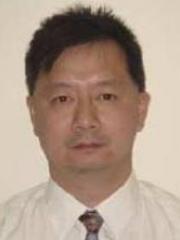
Professor Aniruddha Desai is a Research Professor and Director of the Centre for Technology Infusion (CTI) at La Trobe University. He holds a Bachelor’s in Industrial Electronics, a Master’s in Micro-electronics, and a PhD in Computer Science. His expertise spans microelectronics, AI, IoT, and sensor networks, with a focus on socially impactful applications like transportation, healthcare, and precision agriculture. Research Interests: Ultra-low power systems Micro-nano electronics AI/ML and edge computing IoT and sensor networks Transportation and logistics Major Projects: Led multi-million-dollar R&D programs in areas such as smart cities, energy management, and smart farming. Notable collaborations include the IIT Kanpur - La Trobe University Research Academy and the Asian Smart Cities Research and Innovation Network. Awards: Recipient of the 2016 Vice-Chancellor’s Award for Research Excellence and the 2020 Victorian Tall Poppy Award for Science. Served on advisory panels for the Australian Research Council and provided expert testimony in parliamentary inquiries. Labs/Teams: Directs the CTI, which delivers technology-based innovations to industry and government. Co-founded the Asian Smart Cities network to advance urban technology solutions.
Dr. Wibowo Hardjawana is a Senior Lecturer in Telecommunications Engineering at the School of Electrical & Computer Engineering , University of Sydney. He holds a PhD from the University of Sydney and serves as an ARC DECRA Research Fellow. His research focuses on wireless network softwarisation, enabling programmable radio interfaces to address traffic elasticity in 5G/6G systems. Education : PhD (University of Sydney) Grants : ARC DP210100744 (2021), ARC DECRA DE140101114 (2014) His work spans 5G/6G network architectures , machine learning for wireless systems , and open radio interfaces . Key contributions include graph representation learning for interference management, Bayesian neural network detectors for OTFS modulation, and NOMA decoding techniques . Recent publications analyze ultra-reliable low-latency communications , UAV-enabled networks , and stochastic geometry in wireless systems . He has collaborated with institutions in China, Indonesia, and UAE, and engaged with industry partners like Telstra and Ausgrid.
Professor Anne Marie Thow is a faculty member at the Menzies Centre for Health Policy , School of Public Health, University of Sydney. Her research explores public policy making at the intersection of economic policy and nutrition, with regional collaborations in Asia, Africa, and the Pacific. Appointed to WHO Nutrition Guidance Advisory Group (2018) Member of Sydney Policy Lab, Sydney Southeast Asia Centre, and Charles Perkins Centre Research Interests : Multi-sectoral policy for nutrition in low- and middle-income countries Globalization and economic policy impacts on diets Food systems governance and policy coherence Recent Publications highlight food environment financing, sugar taxation in Indonesia, bilateral investment treaties with health safeguards, and cross-sectoral nutrition policy dynamics across the Pacific and Africa. Her work employs qualitative and computational methods to address dietary risks, trade agreements, and NCD prevention. Teaching and Supervision : Coordinates Health Policy and Health Economics (HPOL5000) and Global Health Policy (HPOL5007) in the Master of Health Policy program. Supervises 2 PhD students and co-supervises 7, focusing on food systems, globalization, and nutrition policy. Scientific Awards : Vice Chancellor’s Award for Excellence (2016): Outstanding teaching and research Faculty of Medicine and Health Award (2019): Early career research
Associate Professor Zihuai Lin leads the IoT in Healthcare and Radar Imaging group at the University of Sydney's School of Electrical and Computer Engineering. He holds a PhD from Chalmers University of Technology and has prior experience at Ericsson Research and Aalborg University. His research focuses on IoT, 5G/6G systems, healthcare AI, TeraHertz communications, radar imaging, and wireless signal processing. Education: PhD in Electrical Engineering, Chalmers University of Technology, Sweden (2006) Postdoctoral work at Ericsson Research, Sweden Associate Professor, Aalborg University, Denmark (pre-Sydney role) Research Interests: IoT wireless sensing and healthcare applications 6G/THz communications and radar imaging Artificial Intelligence in signal analysis and network optimization MIMO/OFDMA systems and resource allocation Current Projects: 6G/THz communications and holographic MIMO Edge AI for healthcare IoT (eGate system) Ultra-low latency techniques for short-packet 5G Millimeter-wave power transfer and safety protocols Awards: 2021 IoT Awards Health Category Finalist (eGate system) Nominated for 2022 iTnews Best Health Project Advising & Labs: Supervising 8 PhD students in AI-driven healthcare, federated learning, and quantum imaging Led 10+ completed PhD projects in 5G/6G and wireless systems Affiliated with the Center of IoT and Telecommunication (CIoTT) and Sydney Nano Institute
Justin Lipman is a Professor in the School of Electrical and Data Engineering at the University of Technology Sydney (UTS). He serves as Director of the Cyber Digital Centre and previously led the RF and Communications Technologies Lab. With over 12 years of industry experience at Intel and Alcatel, his expertise spans cybersecurity, IoT, 5G/O-RAN, digital agriculture, and smart cities. Lipman holds a PhD in Telecommunications Engineering from the University of Wollongong. Research & Funding Secured $35M+ in research grants, including projects like UTS Vault ($8M) and the Nokia 5G Futures Lab. Focus areas: Cybersecurity, IoT infrastructure, wireless communications, and smart agriculture. 24 U.S. patents granted, including innovations in IoT security and metamaterials. Education PhD in Telecommunications Engineering (University of Wollongong, 2004) Industry experience: Chief Architect at Intel (2006–2016), Program Manager at Alcatel-Lucent (2005). Awards & Recognition IEEE Senior Member (2012) Leadership roles: Deputy Chief Scientist (Food Agility CRC), Board Director (Internet of Things Alliance Australia). Teaching & Labs Supervises HDR/PhD students in areas like SDN and IoT. Labs: RF and Communications Lab, BlueSky initiative.
Dr. Beeshanga Abewardana Jayawickrama is a Senior Lecturer and Data Science Engineering Course Director at the School of Electrical and Data Engineering, University of Technology Sydney (UTS). He holds a BEng in Telecommunications Engineering (Hons I) and a PhD in Electronic Engineering (Wireless Communications) from Macquarie University, Sydney, Australia, completed in 2011 and 2015 respectively. As a Senior Member of the Institute of Electrical and Electronics Engineers (IEEE), he maintains active research and industry collaborations. His educational background includes: BEng in Telecommunications Engineering (Hons I), Macquarie University (2011) PhD in Electronic Engineering (Wireless Communications), Macquarie University (2015) Dr. Jayawickrama's research focuses on cutting-edge wireless communication technologies with particular emphasis on 5G/6G Physical Layer signal processing algorithms, Machine Learning techniques for Physical Layer signal processing, Ultra-Reliable Low-Latency Communications, Non-Terrestrial Networks, Compressed Sensing (Sub-Nyquist Sampling), and spectrum sharing. His work bridges theoretical innovation with practical implementation, evidenced by numerous patents and industry collaborations. He has published over 40 prestigious conference and journal papers while developing algorithms that have been incorporated into commercial 5G base stations. Analysis of his recent publications reveals a strong focus on satellite communications, particularly cognitive GEO-LEO satellite networks, where he explores spectrum sharing, beam design, and interference management. His research increasingly integrates machine learning techniques with traditional signal processing approaches, especially for spectrum sensing and channel estimation in next-generation wireless systems. The trend shows growing emphasis on practical implementation and experimental validation of theoretical concepts. His scientific recognition includes: Macquarie University Medal in Engineering Vice-Chancellor's Commendation for Academic Excellence Outstanding Teacher Award (2021) Multiple competitive scholarships from Macquarie University and CSIRO In terms of teaching and supervision, Dr. Jayawickrama has taught numerous undergraduate and postgraduate subjects including Advanced Telecommunication Engineering, 4G/5G Mobile Technologies, Communication Systems, and Engineering Research Thesis. His current research is supported by significant grants including the AI-SSPCAS project (CSIRO), Smart Flood and Storm Intelligence Sensing Initiative (NSW Department), and CogSat: Cognitive Satellite Radio (SmartSat CRC). Previously, he has secured research funding from Intel Corporation and Nokia Research Centre. Dr. Jayawickrama has held leadership roles including Course Director for Data Engineering since 2021 and UTS IEEE Student Branch Counsellor from 2017-2020. His industry experience includes research positions at Ericsson in Sweden (working on 5G New Radio receiver algorithms) and Intel Labs in the USA (working on Licensed Shared Access and Citizens Broadband Radio Service).
Dr. Trong Toan Tran is a Senior Lecturer (equivalent to Associate Professor in the US) at the School of Electrical and Data Engineering , University of Technology Sydney (UTS). He leads the Nanoscale Electro-Thermo-Optical (NETO) laboratory and holds prestigious fellowships including the DECRA and UTS Chancellor's Postdoctoral Research Fellowship. His research focuses on quantum optics, nanophotonics, solid-state physics, and nanofabrication, with breakthroughs in quantum light sources and thermal sensing technologies. Dr. Tran earned his Ph.D. in Material Science and Chemical Engineering, completing a thesis on quantum emission from hexagonal boron nitride. His work in Nature Nanotechnology (2016) introduced room-temperature ultra-bright quantum emitters, now cited over 1,600 times. He has secured over $2M in grants, including leadership in the Quantum Challenge 2032 and DECRA projects. His team develops advanced photonic devices, thermal sensors, and quantum technologies. Key research themes include quantum emitters in 2D materials , nanoscale thermometry , and optical architectures . He has advised three PhD students and serves on editorial boards for top journals like Physical Review Letters and Nature Communications . Recognition includes an h-index of 34, 6,100+ citations, and awards such as the AIP Postgraduate Excellence Award (2017). Beyond academia, he engages in science communication, advocating for quantum technologies and nanomaterial applications.
Dr. Abhronil Sengupta serves as an Associate Professor in the School of Electrical Engineering and Computer Science at The Pennsylvania State University, holding the Joseph R. and Janice M. Monkowski Career Development Professorship. He maintains secondary appointments in the Department of Materials Science and Engineering and the Materials Research Institute (MRI). His academic foundation includes a PhD in Electrical and Computer Engineering from Purdue University (2018) and a B.E. from Jadavpur University, India (2013), complemented by a DAAD Fellowship at the University of Hamburg (2012) and research internships at Intel Labs (2016) and Facebook Reality Labs (2017). Dr. Sengupta's research pioneers the convergence of Nanoelectronics, Neuroscience, and Machine Learning to develop event-driven cognitive intelligence systems. His interdisciplinary work spans sensor-to-algorithm stacks with emphasis on neuromorphic hardware architectures for ultra-low-power applications, addressing critical challenges in energy-efficient AI. His exceptional contributions have earned prestigious recognition: ARO Early Career Award (2024) NSF CAREER Award (2023) IEEE EDS Early Career Award (2023) Facebook Faculty Award (2018) IEEE SiPS Best Paper Award (2018) Purdue Bilsland Dissertation Fellowship (2017) With over 95 peer-reviewed publications and 3 US patents, his research program attracts significant funding from agencies like NSF and ARO. His work has gained international visibility through features in MIT Technology Review, IEEE Spectrum, and Nature Materials. He actively shapes the field through editorial roles at IEEE Transactions on Cognitive and Developmental Systems and Scientific Reports, plus technical committee service for 12+ conferences including DAC and ICCAD. His MRI affiliation enables cross-cutting collaboration in advanced materials for next-generation computing systems.
Associate Professor Xiangyun Zhou is affiliated with the School of Engineering at The Australian National University (ANU). He holds editorial roles as Executive Editor for IEEE Communications Letters and has served on editorial boards for IEEE Transactions on Wireless Communications and other journals. His research focuses on communication theory, wireless networks, physical layer security, IoT systems for wildfire detection, and energy-efficient communication protocols. He has organized major international workshops and conferences, including ICC and Globecom sessions on physical layer security and energy harvesting communications. Dr. Zhou is a Fellow of the IEEE and has contributed to projects such as IoT ground sensing systems for bushfire detection and 6G terahertz communication systems. Education: Bachelor of Engineering (First Class Honours) from ANU (2007) Ph.D. in Engineering from ANU (2010) Postdoctoral Fellowship at University of Oslo (2010–2011) Research Interests: Wireless communications, physical layer security, covert communication, terahertz systems, IoT applications, and energy-efficient protocols. Grants & Projects: Principal Investigator on projects like ‘Ultra-Fast and Secure Terahertz Communications for 6G Wireless Systems’ (2023–2026) and ‘ANU Bushfire Smoke Dataset’ (2024–2024). Worked on ‘IoT Ground Sensing Systems for Wildfire Detection’ and ‘Secure Wireless Machine-Type Communications’. Labs/Teams: Involved in ANU’s engineering research teams and serves on IEEE committees. Active in community initiatives like the ANU Football Club’s Men’s Master League.
Joe Coventry is an Associate Professor at the Australian National University (ANU), affiliated with the School of Engineering within the ANU College of Systems & Society . He holds an ANU Translational Fellowship and has extensive experience in developing and commercializing concentrating solar technologies. Previously, he served as Principal Engineer at Wizard Power, leading the engineering team for the Big Dish CSP technology. Education: BE/BSc, University of Melbourne (1997) PhD, Australian National University (2004) Research Interests: His work focuses on advancing concentrating solar thermal (CST) and thermal energy storage (TES) technologies to enhance their competitiveness and accelerate decarbonization in power and heavy industries. Key areas include low-cost heliostat technologies , sodium receiver systems , optical absorber coatings , high-temperature thermal storage , and green hydrogen supply for industry . Awards: 2023 SolarPACES Technology Innovation Award 2021 Solar Energy Journal Best Paper Award 2018 ANU Translational Fellowship Grants & Collaborations: Lead Investigator in ARENA’s Ultra-Low-Cost Solar Integration and HILT CRC’s High-Temperature Thermal Storage and Green Hydrogen Supply projects. Active in Australian Solar Thermal Research Institute (ASTRI) and ANU Grand Challenge ‘Zero-Carbon Energy ’ initiatives. Also leads ARC Linkage projects on absorber coatings and liquid metal heat transfer . Labs & Teams: Core member of the Heavy Industry Low-Carbon Transition CRC and ASTRI program, collaborating with global partners like NREL and Sandia National Laboratories.
Dr. Hui Ma is a Senior Lecturer in Power & Energy Systems at the University of Queensland, affiliated with the School of Electrical Engineering and Computer Science. His expertise spans Electrical Asset Management, Power Systems, and High Voltage Engineering. He holds a PhD from the University of Adelaide and has been at UQ since 2008. Education: B.Eng and M.Eng from Xi'an Jiaotong University; M.Eng (Research) from Nanyang Technological University; PhD from the University of Adelaide. Research focuses on improving electricity network visibility through modeling, sensing, and signal processing, alongside data mining for renewable-integrated grids. Key areas include transformer condition monitoring, insulation diagnostics, and smart grid technologies. He edits IEEE Transactions on Power Delivery and participates in IEEE Smart Grid initiatives. Recent work addresses PV forecasting, low-frequency grid instability, and transformer aging analysis. His publications emphasize machine learning applications in energy systems and fault diagnosis. Collaborations involve Australian utilities and industry partners.
Chunnong Zhao is an Associate Professor at the School of Physics, Maths and Computing at The University of Western Australia. His research focuses on experimental gravitational wave physics and precision measurement technologies, particularly addressing high-optical power effects in laser interferometers. He pioneered work on parametric instability mitigation, which was critical for the Advanced LIGO project. His innovations include opto-acoustic parametric amplifiers and optomechanical filters, enabling ultra-sensitive gravitational wave detection. Current projects involve developing optomechanical negative dispersion technology to improve detector sensitivity at high frequencies. Research Interests: Gravitational wave detection technology Optomechanical systems and quantum optomechanics Parametric instability control in interferometers Optical cavity stabilization techniques Laser interferometry applications Binary neutron star merger signal analysis Grants & Projects: Tilt sensors for 6D seismology Australian Partnership in Advanced LIGO+ Quantum Australia Centre Renewable Microgrid Pilot for Gravitational Wave Facilities Led collaborations on Advanced LIGO's parametric instability suppression and developed novel optomechanical devices for next-generation detectors. Current research explores quantum-limited optomechanical sensors and negative dispersion applications in gravitational wave astronomy.
Sammy Diasinos is a Senior Lecturer in the Department of Mechanical Engineering at Macquarie University's School of Engineering and affiliated with the Advanced Drone Systems Research Centre. His research focuses on aerodynamics, computational fluid dynamics, and vehicle dynamics with applications in sustainable aviation and automotive engineering. Dr. Diasinos' work centers on aerodynamic performance optimization, ground effect phenomena, and vortex dynamics in racing cars and drones. His research extends to biomedical fluid dynamics, investigating human upper airway geometry and aerosol delivery mechanisms. Key methodologies include computational modeling, wind tunnel testing, and experimental validation of aerodynamic systems. His publication trends reveal a strong emphasis on numerical simulations for complex flow problems, development of specialized CFD solvers, and innovative educational applications through virtual reality. Recent work bridges fundamental fluid dynamics with practical applications in electric aviation, sustainable transport, and medical device optimization. Dr. Diasinos leads and collaborates on major research initiatives including AURAe (Australian Ultra-efficient Regional Aviation - Electric), the 144-core CFD processor project, and the MQ Sustainable Energy Research Centre. His project portfolio demonstrates sustained funding success across sustainable aviation, high-speed imaging, and human-powered vehicle development. As a core member of the Advanced Drone Systems Research Centre, he maintains active collaborations across Macquarie University's engineering faculty, particularly in sustainable energy systems and interdisciplinary fluid dynamics research involving biomedical and computer science teams.
Professor Yonghui Li is a faculty member at the University of Sydney, holding the position of Professor and Director of the Wireless Engineering Laboratory within the School of Electrical and Information Engineering. His research focuses on cutting-edge areas such as wireless communications, IoT, 5G/6G networks, machine learning, and signal processing. He has authored over 400 publications, including a book on full-duplex communications, and secured over $8 million in competitive research funding. Notably, he was awarded the Australian Research Council (ARC) Future Fellowship (2012) and IEEE Fellow (2015). Education: PhD in Telecommunications (2002) Roles: Editor for IEEE Transactions on Communications, Specialty Chief Editor of Frontiers Signal Processing Journal Key Projects: Multi-gigabit mm-wave cellular networks, machine learning for wireless spectrum management, 5G ultra-reliable low-latency systems His research has led to high-impact outcomes, including ISI high-cited papers and ESI Web of Science recognition. He also pioneered the IoT undergraduate program at the University of Sydney. Awards: IEEE Best Paper Awards (ICC 2014, PIMRC 2017), ARC Fellowships Grants: $500M national 'Smart Grid Smart City' project participation Current projects explore 3D beamforming, non-orthogonal multiple access, and physical-layer security in 5G systems. His work bridges theory and practice, with prototypes developed for mm-wave networks and AI-driven spectrum management.
Branka Vucetic is a Laureate Professor and ARC Laureate Fellow at The University of Sydney's School of Electrical and Computer Engineering. She leads the Centre for IoT and Telecommunications, focusing on advancing wireless communication systems, including mmWave, URLLC, and IoT. Her research spans coding theory, multi-user detection, and networked control systems. With over 300 publications and four books, she has received prestigious awards such as the Chinese Government Friendship Award and the CSIRO Eureka Prize. She advises numerous PhD and Master’s students on topics like RIS-assisted wireless communications and AI-driven clinical decision support. Education: MSc and PhD from the University of Belgrade. Research interests include 6G technologies, reconfigurable intelligent surfaces, and mission-critical IoT applications. Her work addresses latency, reliability, and energy efficiency challenges in modern communication networks. Current roles include Director of the Centre for IoT and Telecommunications and Fellowships in multiple academies. Awards highlight her contributions to innovation and leadership in engineering and science. She collaborates on projects funded by ARC and industry partners, focusing on practical applications like smart grids and autonomous systems.