Dr. Dongyun Nie is an Assistant Professor at Dublin City University's School of Computing. She holds a PhD in Computer Science with a specialization in Customer Relationship Management. Her core research explores customer lifetime value, forecasting, data mining, and record linkage. Her recent publications demonstrate interdisciplinary work spanning health informatics, sports analytics, and environmental data engineering. Research predominantly focuses on machine learning applications for real-world data challenges including eye-tracking systems, lifelog analytics, and public health data infrastructure. Teaching responsibilities include modules on Machine Learning (CA4109), Enterprise Systems Configuration (CA2049), and Web Design (CA106), integrating research expertise into computing education.
Liadh Kelly is an Assistant Professor in the Department of Computer Science at Maynooth University's Faculty of Science & Engineering. She supervises PhD students in applied artificial intelligence, focusing on intelligent search, ubiquitous computing, and multimodal information access. She is affiliated with the ADAPT SFI Research Centre, SFI Centre for Research Training in Foundations of Data Science, and Human Health Institute. BSc in Computer Science MSc (Research) in Computer Science PhD in Computer Science Her research explores context-sensitive retrieval and evaluation methodology in AI-driven systems. Key areas include ubiquitous computing for personal data analysis, deep learning classification for mental wellness indicators, and multimodal lifelogging integration. Recent publications focus on urban mental wellbeing classification , contextual cue analysis , and AI-driven health search systems . Articles address smart city applications , consumer health search , and cross-lingual medical retrieval . Professional roles include Doctoral Consortium Chair at ECIR 2023 and Programme Committee member for SIGIR and ICWSM conferences. She leads grants for 4-year PhD studentships with stipend and fee coverage.
John Breslin is a Personal Professor in Electronic Engineering at the College of Science and Engineering, University of Galway, serving as Director of the TechInnovate and AgInnovate programmes. Associated with two Taighde Éireann – Research Ireland Centres, he is a Principal Investigator at Insight Centre for Data Analytics (specializing in data analytics) and a Funded Investigator at VistaMilk (Agri-Technology), while also leading the EDIH Data2Sustain project. With an h-index of 50, over 12,000 citations, and 300+ peer-reviewed publications including seminal books on the Social Semantic Web, he ranks among Ireland's most influential researchers in digital technologies. Breslin's research fundamentally bridges Semantic Web technologies, AI-driven data analytics, and practical innovation. His co-creation of the SIOC framework—implemented across 65,000+ websites by entities like Yahoo and Boeing—demonstrates real-world impact in social data interoperability. Current work leverages blockchain and federated learning for sustainable Agri-Technology through VistaMilk, while his TechInnovate programmes translate academic research into commercial ventures across healthcare, smart manufacturing, and energy systems. Analysis of his 15 most recent publications reveals dominant themes in AI-enhanced security (35% of works), blockchain applications for sustainability (27%), and multimodal AI for healthcare (20%). His team pioneers privacy-preserving techniques for IoT and medical devices, neurosymbolic visual reasoning frameworks, and federated learning architectures addressing data heterogeneity—directly supporting his roles in national research infrastructures like Insight and VistaMilk. John has received several prestigious awards: IIA Net Visionary Award (twice) ITAG Outstanding Contribution to the ICT Sector Award Galway Chamber President’s Award Best Irish-Published Book Award (2020 for Old Ireland in Colour) Multiple Best Paper Awards He leads major research initiatives funded by Taighde Éireann – Research Ireland: Insight Centre for Data Analytics (as Principal Investigator) VistaMilk SFI Research Centre (as Funded Investigator) EDIH Data2Sustain (as Principal Investigator) His entrepreneurial programs TechInnovate and AgInnovate have mentored 200+ startups, securing €50M+ in follow-on funding. Breslin co-founded PorterShed (Galway City Innovation District) and serves on Scale Ireland's Steering Group, creating Ireland's most active regional innovation ecosystem outside Dublin. He maintains active industry partnerships with Vodafone, Boeing, and agricultural cooperatives through VistaMilk's testbed facilities.
Ian Pitt is a Lecturer in Usability Engineering and Interactive Media at University College Cork (UCC). He leads the Interaction Design, E-Learning and Speech (IDEAS) Research Group, focusing on multimodal human-computer interaction, auditory interfaces, and accessibility solutions for visually impaired users. Pitt holds a D.Phil from the University of York, followed by research fellowships at Otto-von-Guericke University in Germany before joining UCC in 1997. His research interests include speech-based interfaces, e-learning systems, and accessibility technologies for blind users. Key projects include the EU-funded ENABLE Network (2011–2014) and prototype development for UniWink. He has secured significant grants, including €72,009 from IRCSET for voice analysis research and €19,478 from the EU for ICT-supported learning initiatives. Pitt has advised numerous PhD students, including Flaithri Neff (2011), Emma-Kate Crowley (2014), and current candidates Aine Kearns and Patrick Egan. His publications span journals like International Journal of Game-Based Learning and conferences such as ICCHP and ACM SIGACCESS. He has contributed to committees for conferences like CHI and the Irish HCI conference. Teaching modules include Usability Engineering, Human-Computer Interaction, and Digital Media Development. His work emphasizes inclusive design principles, with projects addressing navigation systems for blind students and adaptive e-learning frameworks. Recent research trends focus on ICT-delivered aphasia rehabilitation, emotional BCI interfaces, and multimodal learning systems. Collaborations include international partners through EU grants, reflecting his global impact in accessibility and educational technology.
Luigina Ciolfi is a Professor of Human Computer Interaction in the School of Applied Psychology at University College Cork (UCC), Ireland. She is a Co-Principal Investigator at Lero, the Science Foundation Ireland Research Centre for Software. Her academic journey includes roles at Sheffield Hallam University, University of Limerick, and visiting positions at Maynooth University and University of Rome Tor Vergata. She holds a Laurea (summa cum laude) from the University of Siena and a PhD from the University of Limerick, both in Human-Computer Interaction. Her research focuses on human experiences with digital technologies in collaborative contexts, particularly in cultural heritage and work practices. She contributes to fields like CSCW, participatory design, and qualitative methodologies. Ciolfi has led over €8M in research grants, authored/co-authored numerous books and journal articles, and served on editorial boards and international committees. She is a Senior Member of the ACM and an ACM Distinguished Speaker (2021-2024). Her current roles include Vice-Head of the School of Applied Psychology and Chair of UCC's Academic Council Research and Innovation Committee. She leads the Digital Cultures, New Media, and Cultural Analytics research cluster under the Future Humanities Institute. Ciolfi’s work emphasizes ethical and inclusive technology design, with projects addressing cultural heritage, nomadic work practices, and digital wellbeing.
Kevin Meehan is Lecturer in Computing at ATU, Principal Investigator at Mathematical Modelling and Intelligent Systems for Health and Environment (MISHE), and Principal Investigator at Wireless Sensor Applied Research (WiSAR). His research explores computer vision, machine learning, and intelligent systems. Research focuses on: Deep learning approaches for computer vision Graph neural networks for biological applications Context-aware computing systems Pedestrian trajectory prediction Immune response classification His recent publications develop novel machine learning architectures for motion prediction and biological network analysis. He has secured over €400,000 in research funding and collaborated with 45+ SMEs on technology projects.
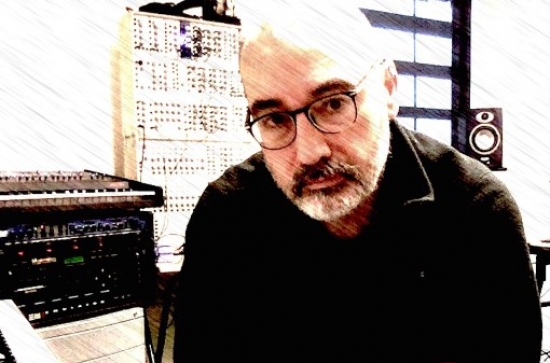
Victor Lazzarini is a Professor of Music at Maynooth University, Ireland, specializing in computer music and audio signal processing. He holds a BMus from Universidade Estadual de Campinas (UNICAMP), Brazil, and an AMusD from the University of Nottingham, UK. His research spans electroacoustic music, digital signal processing, and music technology. He leads the Csound project, a widely used sound and music computing system, and authored libraries like Aulib and Aurora. Education: Bachelor of Music (BMus), UNICAMP, Brazil Advanced Music Degree (AMusD), University of Nottingham, UK His research interests include sound synthesis, computer music languages, and the intersection of music with technology. He has authored over 150 peer-reviewed publications and books such as Spectral Music Design: A Computational Approach (Oxford UP, 2021) and co-edited volumes like Ubiquitous Music Ecologies (Routledge, 2020). His work bridges academic and industrial sectors through projects like the Enterprise-Ireland-funded commercialization initiative. Prof. Lazzarini’s contributions to music technology include pioneering tools like Csound, which enable real-time audio synthesis and processing. His articles span topics from digital filter design to historical computer music archaeology, reflecting his expertise in both theoretical and applied domains. Awards: AIC/IMRO International Composition Prize (2006) He advises on interdisciplinary projects such as the BeatHealth initiative, integrating ubiquitous computing and music. His creative output includes electroacoustic compositions performed globally and released on labels like FarPoint Recordings. Lazzarini actively collaborates with international teams, contributing to conferences like DAFx and ICMC, and leads initiatives like the Ubimus (Ubiquitous Music) research network.
Rem Collier is an Associate Professor in the School of Computer Science at University College Dublin (UCD). He holds a PhD in Computer Science from UCD (2001) and has held academic roles including Assistant Lecturer (2004), College Lecturer (2005–2018), and his current position since 2018. His research focuses on Multi-Agent Systems (MAS), Agent-Oriented Software Engineering (AOSE), Hypermedia MAS, Digital Twins, and applications in smart agriculture and urban simulation. He leads the CONSUS project (2022–2024) and collaborates on CAMEO (2021–2024). Education: BSc (Pure/Applied Mathematics, University of Bristol, 1994), MSc (Computation, UMIST, 1995), MPhil (UMIST, 1996), PhD (UCD, 2001). Research interests include Agent Factory Framework, ASTRA programming language, and integrating MAS with microservices. Notable achievements include the CIA System Innovation Award 2003 (ACCESS architecture) and Best Paper Awards at EMAS2020 and Mobile Learning 2006. His work spans over 150 peer-reviewed publications and grants such as HOTAIR (2004–2005) and SIFT (2008–2011). Teaching includes modules on Multi-Agent Systems, Distributed Systems, and Security. He has coordinated courses at UCD and the Joint UCD-Fudan program in Beijing and Sri Lanka. Labs/Teams: Active in Hypermedia MAS Simulation, collaborating on projects like CONSUS and CAMEO, emphasizing smart agriculture and distributed knowledge graphs.
Joseph Timoney is a professor at the Department of Computer Science , Maynooth International Engineering College , Maynooth University. He teaches undergraduate programs in Computer Science and Music Technology, with expertise in audio signal processing, musical sound synthesis, and digital modeling of analog subtractive synthesis. His research spans sound synthesis algorithms, audio watermarking, and ubiquitous music ecosystems.
Dr. Kevin Doolin is Executive Director at the Walton Institute for Information and Communications Systems Science, part of South East Technological University (SETU), where he oversees applied and commercial research activities. He plays a central role in driving EU research participation, proposal development, and commercialization across research units. Education: EdD in Understanding Research Orientation in Academic Institutions, University of Sheffield (Awarded: 11 April 2025) Bachelor of Technology in Electronic Engineering, (Awarded: 30 September 1994) Kevin’s research focuses on Pervasive Computing , the foundation of the Internet of Things (IoT), with applications in smart agriculture, interoperability, and digital platforms. His work bridges technical innovation and research management, particularly in EU-funded projects. Recent publications emphasize digital agri-food systems, supply chain interoperability, and the twin green-digital transition in agriculture. His most recent articles reflect a strong trend toward applying computing technologies to agricultural sustainability, with emphasis on interoperability architectures, farmer adoption of smart technologies, and secure digital systems. These works are published in journals such as Computers and Electronics in Agriculture and Digital Communications and Networks , and include commissioned reports for the European Commission. Scientific Contributions: Coordinated H2020 DEMETER (€17.5M, 60 partners), focusing on agriculture supply chain interoperability Coordinated multiple EU and Enterprise Ireland projects (SOCIETIES, PERSIST, IMSARCS) Founder of Fuseami, a Walton Institute startup for event networking Active contributor to policy and innovation ecosystems Dr. Doolin advises research units and staff on grant acquisition and commercialization. He has secured significant funding from EU Framework Programs (FP6, FP7, H2020), Enterprise Ireland, and the European Innovation Council. His leadership extends to research strategy, proposal development, and cross-unit collaboration. He is involved in innovation networks such as the Community of Practice on Industry-Academia Collaboration and contributes to standards and editorial work. His external role as President of Waterford Chamber of Commerce further underscores his commitment to regional innovation and economic development.
Aisling O'Driscoll is a Senior Lecturer at the School of Computer Science and Information Technology (CSIT), University College Cork (UCC), Ireland since 2017. She previously held roles at Cork Institute of Technology (CIT) from 2005 to 2017, including a PhD in Location Management and Hybrid Geo-Routing (2014). Her research focuses on communication protocols for wireless systems, particularly in vehicular networks, IoT, and bioinformatics. She leads the Connected Autonomous Vehicles (CAV) working group in the SFI CONNECT Centre and chairs UCC's Athena Swan committee. Education: PhD (CIT, 2014), MEng (Research, 2006), BSc (2004) Grants: Over €3M in funding from SFI, EU, and industry, including the SFI Blended Autonomous Vehicle (BAV) Spoke and AWS grants Research interests include decentralized network solutions for autonomous systems, parallelized bioinformatics algorithms, and vehicular communication protocols. Awards include the 2021 National Teaching Hero Award and recognition at Áras an Uachtaráin for women in science. Labs/Teams: Leads CAV initiatives in CONNECT, collaborates with Jaguar Land Rover and Teagasc Outreach: Founded IWish Campus Day to promote STEM for girls, and chairs IT@Cork's Tech Talk Committee
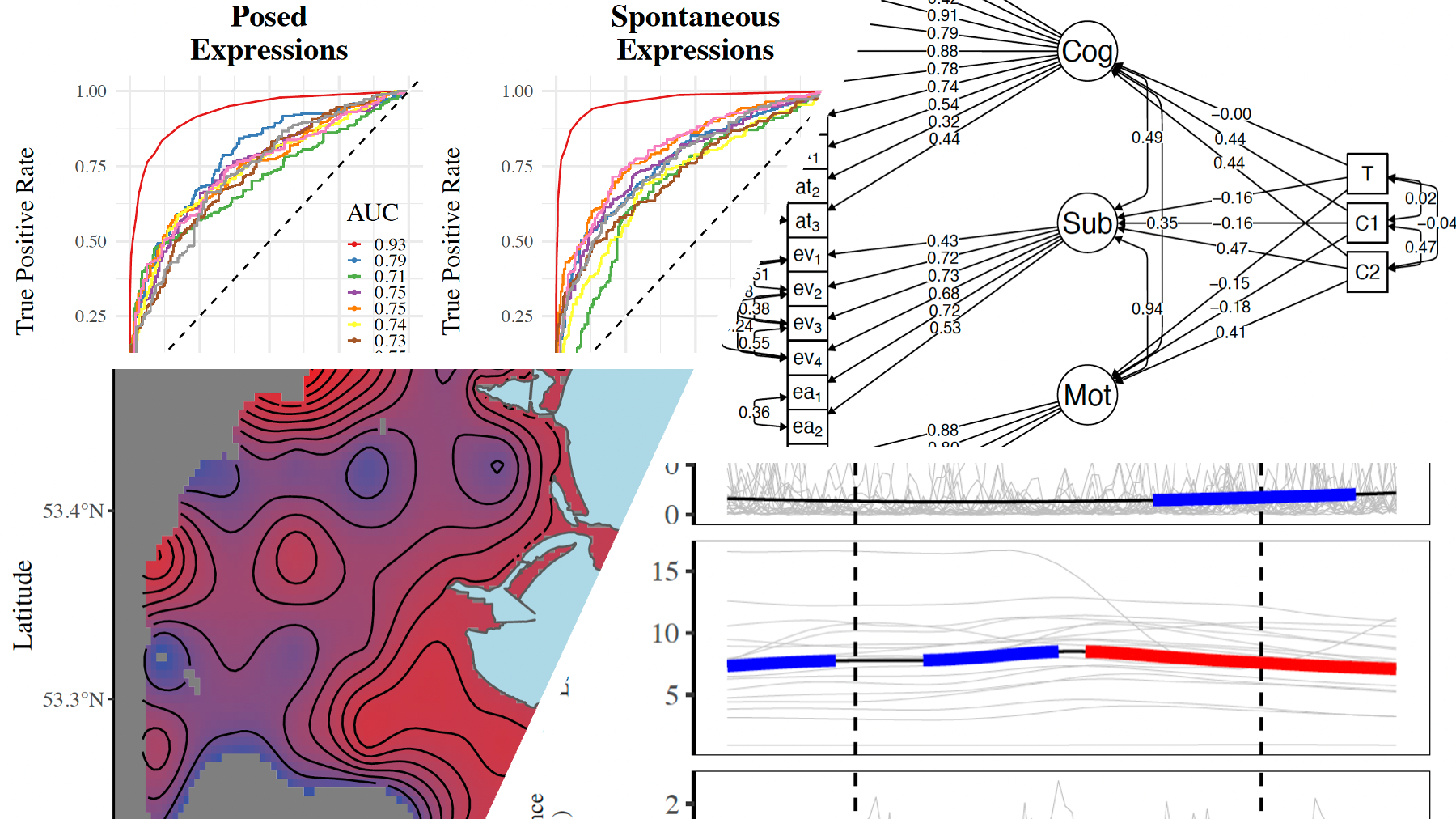
Dr. Damien Dupré is an Assistant Professor of Business Research Methods at Dublin City University's Business School. He holds a Ph.D. in Social and Experimental Psychology from Université Grenoble-Alpes, France. His research focuses on psycho-physiological responses in real-world settings, particularly through the analysis of facial expressions and wearable device data. He co-developed the DynEmo database for dynamic facial emotion analysis and collaborated with institutions like Queen’s University, Sensum Ltd, and UCD’s Insight Centre. His expertise includes multivariate time series analysis for machine learning applications in emotion recognition and human-computer interaction. Education: Ph.D. in Social and Experimental Psychology (Université Grenoble-Alpes), postdoctoral work involving physiological measurements of marathon runners. Key collaborations include projects with Sensum Ltd (emotion sensors), Queen’s University (facial expression analysis), and Ixiade (emotional UX evaluation). Research interests span emotion statistics, wearable devices, and physiological computing. Recent work emphasizes automatic facial expression recognition systems and their validation through dynamic datasets. His publications address challenges in emotion detection accuracy across commercial classifiers and the impact of facial interface designs on emotional perception. Teaching responsibilities include Data Analytics for Business, Quantitative Research Methods, and Strategic Consultancy modules. He leads the DCU R Stats Club and actively contributes to open-source tools for data science education. Current projects include the Motoklik–AI-PoC initiative as DCU PI. Professional engagement includes Mastodon activity promoting RStats pedagogy and GitHub repositories showcasing code for emotion analysis (e.g., machine_challenge repo). His work bridges psychological theory, technological innovation, and business analytics applications.
Dr. Dimitris Chatzopoulos is an Assistant Professor (Ad Astra Fellow) at the School of Computer Science, University College Dublin. He holds a PhD from The Hong Kong University of Science and Technology and academic qualifications in Computer Engineering from the University of Thessaly, Greece. His research focuses on privacy-preserving systems, AI-driven decentralized applications, mobile computing, blockchain technology, and combating fake news. Education: PhD in Computer Science and Engineering, The Hong Kong University of Science and Technology (2013–2018) MSc in Computer Engineering and Communications, University of Thessaly, Greece Professional Diploma in University Teaching & Learning, University College Dublin Research Interests: Mobile and distributed systems Decentralized AI and blockchain applications Privacy-enhancing technologies Extended reality (XR) interfaces Metaverse infrastructure Awards & Recognition: Heidelberg Laureate Forum Participant (2017) Grants & Projects: "AI-enabled decentralized sensing for mobile and distributed systems" (2023–2026) "DIGITISE: Cross-sector services for societal empowerment" (2024–2027) Ad Astra Fellowship (2020–2027) Teaching & Supervision: Module coordinator for courses such as Blockchain & Decentralisation, Cloud Computing, and Python OOP PhD thesis supervisor
Micheal Crotty serves as an Applied Researcher in the Department of Computing and Mathematics at South East Technological University, affiliated with the Walton Institute. His research focuses on the development and implementation of pervasive computing systems with applications across multiple sectors. His research interests center around pervasive computing environments and smart spaces, with particular expertise in the development of platforms that bridge physical and virtual worlds. Crotty's work emphasizes user-centric design in enterprise and educational environments, focusing on how technology can adapt to personal preferences and improve user experiences in smart spaces. His research spans both theoretical frameworks and practical implementations of pervasive systems. The analysis of Crotty's publication record reveals a consistent focus on network architectures, pervasive environments, and transportation applications. His work demonstrates progression from foundational smart space concepts to more specialized applications in transportation and environmental monitoring. The research shows strong interdisciplinary connections between computer networking, environmental science, and human-computer interaction. Throughout his career, Crotty has secured significant research funding through multiple EU and national projects. His project leadership demonstrates strong technical coordination abilities and international collaboration skills. Crotty currently works on applying pervasive computing principles to the transportation sector, specifically developing "Smarter Transport" solutions. His technical expertise spans network management systems, recursive network architectures, and the integration of physical and virtual environments through pervasive computing technologies.
Chris Bleakley is a Professor at the School of Computer Science, University College Dublin (UCD). His research focuses on pervasive computing, indoor positioning systems, and networked embedded systems. He has secured over €2 million in research funding as PI, supervised 12 PhD and 4 MSc students, and authored 1 book and numerous journal/conference papers. Prior to UCD, he held roles as VP Engineering at Massana Ltd, Senior Researcher at Broadcom Eireann, and IT consultant with Accenture. He holds a PhD in Electronic Engineering from Dublin City University and a BSc in Computer Science from Queen's University Belfast. Professional Roles: Associate Editor of Electronics Letters, Senior IEEE Member, ACM Member. Former Head of School of Computer Science at UCD (2019–2022). Research Interests: Indoor positioning (ultrasonic/WiFi), embedded systems, sensor networks, and algorithmic history. Key applications include smart agriculture, biomedical devices, and environmental monitoring. Grants: Includes projects like WiPhyLoc8 (WiFi positioning), EEDSP (embedded health systems), and MobiFit (sports monitoring). Over 18 grants secured between 2004–2022. Education: PhD (1995, DCU), BSc (1st class, Queen's University Belfast). Notable Work: Developed high-accuracy indoor positioning systems using ultrasonic and WiFi technologies. Authored Poems That Solve Puzzles , a popular science book on algorithm history.