Prof. Dr. Jörg E. Drewes is a Full Professor and Chair at the Research Institute for Urban Water Management, Technical University of Munich (TUM), Germany. He also serves as Academic Program Director for Environmental Engineering at TUM and is a co-founder of Waterloop Solutions GmbH. His work spans advanced water treatment technologies, wastewater reuse, and environmental health surveillance. Affiliations : TUM, Colorado School of Mines, King Abdullah University of Science and Technology, UNSW Water Research Centre Research focuses on advanced oxidation processes , membrane fouling mitigation , micropollutant removal , and wastewater epidemiology for public health. His team develops integrated systems for water-energy-food nexus applications and graphene oxide-based treatment solutions. Recent publications address PFAS remediation , UVC-LED pre-treatment for biofouling control, and GIS-based wastewater surveillance models . Awards include the Bayerische Staatsmedaille (2023) and William Dunbar Medal (2022). 2023 : Bayerische Staatsmedaille 2022 : William Dunbar Medal 2018 : IWA Fellow He leads the Nexus@TUM initiative and contributes to EU water resilience strategies. Collaborations include projects in Germany, China, India, and Spain, focusing on climate-resilient water systems and resource recovery .
Dr. Irene Carra is a Senior Lecturer in Chemical Processes at Cranfield University's Cranfield Water Science Institute , specializing in advanced water treatment technologies. Her research focuses on removing pollutants from water sources using methods like Advanced Oxidation Processes (AOPs) and ion exchange. She holds a PhD in Advanced Oxidation Processes from the University of Almería (Spain) and has collaborated with industry partners such as Anglian Water, Thames Water, and Atkins. Her work includes developing resilient water treatment systems and investigating emerging technologies like microbubble ozonation and piezocatalytic reduction. Research Interests: Advanced Oxidation Processes for micropollutant removal Fate and by-products of organic micropollutants Future water treatment technologies Ion exchange for organic matter removal Resilient and sustainable water treatment systems Key Collaborations: Anglian Water (Innovation Discovery team) Thames Water Typhon Treatment Systems Drinking Water Inspectorate Publications: Dr. Carra has authored over 30 peer-reviewed articles, including studies on ozone mass transfer enhancement via microbubbles, charge carrier behavior in photocatalysts, and coagulation-based removal of PFAS compounds. Her work bridges fundamental science and practical water treatment solutions. Students: She supervises PhD researchers including Lucie Bertolaso, Ananthu Mohan, Samuel Yeboah Nyarko, and Priya Dharwadkar, focusing on topics like photocatalytic systems and ion exchange mechanisms. Labs/Teams: Active in Cranfield's Water theme, contributing to global research on sustainable water management and advanced treatment technologies.
David Hutchins is Professor of Biological Sciences and holder of the George and Louise Kawamoto Chair in Biological Sciences at the University of Southern California (USC Dornsife College). He previously served on the faculty at the University of Delaware (Assistant → Associate → full Professor of Oceanography, 1996–2007) and was a post-doctoral researcher at SUNY Stony Brook. Education Ph.D. Biology, University of California, Santa Cruz (1994) M.S. Biology, Portland State University (1989) B.S. Biology, Portland State University (1987) Post-doctoral training, SUNY Stony Brook (1994–1995) Research focus centres on phytoplankton biology and biogeochemical oceanography in the context of global change . Using laboratory and field experiments his group examines how ocean acidification, warming and de-oxygenation affect microbial communities from the tropics to polar seas. Key topics include nitrogen fixation by cyanobacteria, trace-metal (especially iron) limitation, the cellular stoichiometry of nutrient cycles, and the increasing prevalence of harmful algal blooms . Cutting-edge tools span physiology, biochemistry, ‘omics and experimental evolution, while new collaborations with Earth-system modellers seek to integrate these findings into global climate projections. Recent publications (2022-2024) highlight feedback loops between phytoplankton and nutrient cycles under warming , silicon sequestration driven by acidification , and distinct adaptive strategies of diazotrophic cyanobacteria to temperature stress—demonstrating a trajectory from cellular mechanisms to ecosystem-scale consequences. Honours and awards John Martin Award, ASLO (2023) George and Louise Kawamoto Chair in Biological Sciences (2021) Fellow, American Association for the Advancement of Science (2018) Sustaining Fellow, ASLO (2015) NSF Antarctic Service Medal (2011) Funding & leadership Over his career Hutchins has secured >US$20 million in competitive grants from NSF, Sea Grant, the Moore Foundation and others, spanning studies of CO₂ impacts on nitrogen fixers, harmful algal bloom toxicity, and trace-metal biogeochemistry. He has led major multi-institutional projects such as the NSF “Evolution and Climate Change in the Ocean” (ECCO) initiative and served as Marine Environmental Biology Section Head at USC (2012-2013). Laboratory & teams The Hutchins Laboratory at USC comprises post-docs, graduate students and technicians working at the interface of microbial ecology and global change. The group maintains active field programmes in the Pacific and Southern Oceans and collaborates closely with Earth-system modellers, remote-sensing scientists and public-health researchers to forecast climate-driven changes in marine ecosystems and their societal impacts.
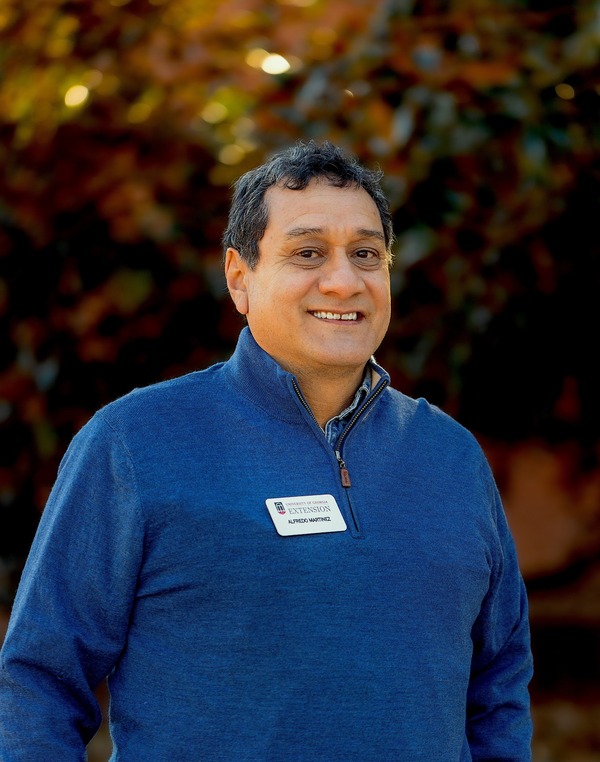
Alfredo Martinez-Espinoza is a full Professor and Extension Plant Pathologist in the Department of Plant Pathology, College of Agricultural and Environmental Sciences, University of Georgia, Griffin, GA. Since 1999 he has led an integrated research and extension program tackling diseases of turfgrass, small grains, and non-legume forages, providing science-based solutions to growers, turf managers, and the green industry across the southeastern United States. Education Ph.D., Plant Pathology, Montana State University–Bozeman, MT, USA (1993) B.S., Plant Pathology, National Autonomous University of Mexico, Mexico (1984) Post-Doctoral Fellowship, Molecular Biology–Fungal Genetics, University of Kentucky, Lexington, KY, USA (1993–1994) Research & Extension Focus Dr. Martinez’s program integrates fundamental molecular research with practical extension to address high-impact plant diseases. He investigates Clarireedia species causing dollar spot on turfgrasses, Fusarium species responsible for Fusarium head blight of wheat, and Rhizoctonia pathogens inducing large patch on zoysiagrass. His work spans population genetics, fungicide resistance monitoring, advanced molecular diagnostics (LAMP, PCR-RFLP), and evaluation of non-chemical tools such as UV-C radiation and nanobubble technology. Extension efforts include developing bilingual educational materials, smartphone apps, and hands-on workshops that rapidly translate research findings into actionable management recommendations for golf-course superintendents, sod producers, and row-crop growers. Publication Trends Across nearly 300 scholarly works, Dr. Martinez’s publications from 2020-2025 reveal a pronounced emphasis on (i) genomic and population-level analyses of fungal pathogens attacking turf and wheat, (ii) innovative physical and biological control strategies to reduce chemical inputs, and (iii) rigorous economic assessments of disease-induced yield losses in North American wheat systems. The breadth of sub-fields covered—ranging from nanobubble technology and UV-C phytotoxicity to mycotoxin profiling and GWAS-based resistance breeding—illustrates his commitment to multidisciplinary, solution-oriented science. Honors & Awards Excellence in Extension Award (UGA, 2021) D.W. Brooks Award for Excellence in Extension (2019) Extension Materials Award (UGA, 2018) GACAA Senior Specialist Award (2016) Walter B. Hill Award–Faculty (2015) Lifetime Honorary Member Award, Georgia Association of County Agricultural Agents (2013) Honorific Greenkeeper of the Year, Spain (2010) CAES Diversity Award (2009) National & State Communication Awards, NACAA & GACAA (2009) Distinguished Alumni Award, Universidad Autónoma Agraria Antonio Narro (UAAAN) Grants & Funding Dr. Martinez has secured continuous extramural support exceeding 87 projects. Major ongoing funding includes USDA-NIFA grants for systems-based IPM and UV-C disease suppression, industry partnerships with Syngenta, BASF, Envu, Corteva, Bayer, and collaborative cultivar-development grants through UGARF and GCSAA. These resources support graduate students, technical staff, and multi-state research networks. Teams & Collaborations He serves as Graduate Program Faculty in Plant Pathology, mentoring M.S. and Ph.D. students. His laboratory collaborates with breeders, soil microbiologists, nematologists, and economists across UGA campuses, the Southern Plant Diagnostic Network, and international partners in Spain and Mexico. The Turfgrass Research and Education Center in Griffin houses his field plots, molecular lab, and extension demonstration areas.
Prof. Plamen Zagorchev is a faculty member at the Medical University of Plovdiv, serving as a Professor in the Department of Medical Physics and Biophysics. He has held guest professorships at Ruhr University Bochum (Germany), Bad Kissingen Balneological Institute (Germany), and Southwest University (China). MPhys in Physics PhEng in Physics Engineering PhD in Physiology Doctor of Biological Sciences (DBSc) His research bridges biophysics, neurophysiology, and innovative medical technologies, focusing on laser applications in dentistry, photobiomodulation, and molecular mechanisms of smooth muscle activity. Key areas include laser medicine , neurophysiology , molecular biology , and phytotherapy . Recent publications highlight his work on phototherapy for smooth muscle regulation , nanoparticle-based drug delivery , and laser-dentistry innovations . His interdisciplinary studies span biomedical optics, cancer epigenetics, and natural product pharmacology. Prof. Zagorchev has supervised 11 PhD theses and led national research projects. He is affiliated with the Research Institute at Medical University of Plovdiv, contributing to divisions like translational neuroscience and pharmaceutical innovations for personalized medicine.
Marc Deshusses is a Professor of Civil and Environmental Engineering at Duke University and Duke Kunshan University, with over two decades of experience in environmental engineering research and education. His work bridges fundamental research with practical applications for global sanitation and pollution challenges. Dr. Deshusses received his Ph.D. from the Swiss Federal Institute of Technology (Switzerland) in 1994. His research program focuses on innovative approaches to environmental challenges, with particular emphasis on waste treatment technologies that can be deployed in both developed and developing contexts. Deshusses' research interests span multiple interconnected domains including environmental remediation, waste-to-energy conversion, decentralized sanitation systems, biofilm engineering, advanced oxidation processes, and mathematical modeling of environmental systems. A significant portion of his recent work centers on Supercritical Water Oxidation (SCWO) technology for destroying persistent contaminants like PFAS ('forever chemicals') and developing novel sanitation solutions for resource-limited settings. His lab has pioneered the Anaerobic Digestion Pasteurization Latrine (ADPL) system, which provides onsite fecal sludge treatment with pathogen reduction. His recent publication record reveals a strong focus on PFAS destruction using SCWO technology, with multiple papers analyzing treatment efficiency across different waste matrices including sludge, ion exchange resins, and firefighting foams. Parallel research streams address bioaerosol monitoring, VOC treatment using novel bioreactor designs, and sanitation technologies applicable in developing countries. AAAS Fellow, American Association for the Advancement of Science (2006) Dr. Deshusses has successfully mentored numerous graduate students who have gone on to make significant contributions in environmental engineering. His research has been supported by major funding sources including the Bill & Melinda Gates Foundation, which has enabled his team to develop and field-test sanitation technologies in Kenya and the Philippines. His entrepreneurial spirit led to the founding of 374Water, a company commercializing SCWO technology for PFAS destruction. The Deshusses lab operates as an interdisciplinary research hub with multiple active projects including the SCWO pilot plant on Duke's campus, which has successfully completed 100-hour continuous operation tests. The lab collaborates with wastewater treatment facilities, government agencies, and international partners to address pressing environmental challenges related to emerging contaminants and sanitation infrastructure.
Alexei Meșalchin serves as Scientific Secretary at the Institute of Applied Physics of the Academy of Sciences of Moldova, where he conducts research in semiconductor physics and photonics while managing the institute's scientific administration. His work bridges theoretical understanding with practical applications in optical materials science. Meșalchin earned his PhD in Physics and Semiconductor Engineering after completing undergraduate studies in Physics and Informatics at Moldova State University (1997-2002). His academic foundation led to a research career focused on semiconductor materials and optical phenomena. His research interests focus on non-crystalline semiconductors , photosensitive materials engineering , and photoinduced effects . Meșalchin's work explores chalcogenide glasses (particularly arsenic sulfide/selenide compounds), diffraction phenomena, holographic recording mechanisms, and the optical properties of novel materials. His investigations examine how light interacts with these materials to develop advanced optical technologies. Analysis of Meșalchin's 2020 publications reveals a strong focus on semiconductor-based optical materials, with particular emphasis on chalcogenide glasses and azopolymers. His work spans theoretical modeling of diffraction phenomena to practical applications in holographic recording and optical data storage. The research demonstrates consistent engagement with both fundamental material properties and their technological implementations. Notable projects include: CSSDT 15.817.02.04A (2015-2018): Synthesis of chalcogenide semiconductor materials for photovoltaics and photonics CSSDT 14.819.02.20A (2014-2015): Formation of complex diffraction structures in photosensitive layers FP7-INCO 609534 (2013-2016): EU-funded cooperation project with Eastern Partnership countries Meșalchin maintains active research collaborations while fulfilling his administrative responsibilities as Scientific Secretary. His work appears in international journals and conference proceedings, demonstrating engagement with the global research community in semiconductor physics and optical materials science. He contributes to both theoretical understanding and practical applications of photoinduced phenomena in semiconductor materials.
Kari Sholtes, PhD, is an Associate Teaching Professor at the Colorado Mesa University – University of Colorado Boulder Partnership. She holds a PhD in Environmental Engineering from the University of Colorado Boulder, an MS in Environmental Engineering from the University of North Carolina, Chapel Hill, and a BS in Civil Engineering from the University of Colorado Boulder. Her research focuses on water infrastructure development for underrepresented communities, UV disinfection systems, and appropriate technologies for drinking water treatment. Dr. Sholtes has extensive experience in civil and environmental engineering across private, public, and NGO sectors. Her work emphasizes stakeholder needs and operational simplification for equitable water access. Key contributions include guidance documents for cholera prevention, water safety plans for St. Lucia, and SARS-CoV-2 surveillance frameworks. Her publications span pandemic response strategies, UV LED disinfection efficiency, and zoonotic disease outbreaks linked to aquatic frogs. She teaches courses in environmental engineering, geotechnical systems, and engineering design at CU Boulder. While no formal awards are listed, her work demonstrates significant contributions to public health and sustainable water solutions. She actively collaborates on curriculum development and interdisciplinary projects, bridging academic and applied engineering challenges.
Professor Martin Heßling serves as Dean of Studies for the Faculty of Mechatronics and Medical Engineering at Ulm University of Applied Sciences. He also holds the positions of Deputy Director of the Institute of Medical Engineering and Mechatronics and Head of the Biotechnology Laboratory. His academic career spans multiple disciplines at the intersection of engineering and medical technology. Professor Heßling's research interests focus on biophotonics, optics, medical engineering, and biotechnology. His work particularly emphasizes radiation disinfection methods using visible light and LEDs, ophthalmological applications, and bioreactor development. His research has significant implications for medical device development, infection control, and tissue engineering. Analysis of his recent publications reveals a strong focus on applying optical technologies to medical challenges. His work spans from fundamental photobiological mechanisms to practical medical device development, with particular emphasis on LED-based disinfection systems, ophthalmic applications, and cartilage tissue engineering. The interdisciplinary nature of his research bridges physics, engineering, microbiology, and clinical medicine. Professor Heßling actively teaches courses in Biophotonics, Biotechnology, Biochemical Engineering, Optics/Optoelectronics, and Electrical Engineering, contributing to the education of future engineers and medical technology specialists. Dean of Studies, Faculty of Mechatronics and Medical Engineering Deputy Director, Institute of Medical Engineering and Mechatronics Head of Biotechnology Laboratory His laboratory work focuses on the development of innovative bioreactor systems for tissue engineering, particularly for cartilage regeneration, and the application of optical technologies for disinfection and medical diagnostics. His research team collaborates extensively with clinical partners to translate engineering solutions into practical medical applications.
Irina Kudrjavtseva is a full-time Research Fellow in Solid State Physics at the Institute of Physics, University of Tartu, Estonia. Her career at the university began in 1988 as an engineer, progressed through post-doctoral and extraordinary researcher appointments, and has remained continuously within the Faculty of Science and Technology. Education University of Tartu, Faculty of Physics and Chemistry – BSc/Engineering Diploma (1988) University of Tartu, Faculty of Physics and Chemistry – PhD in Physics (1997) Thesis: “Creation and stabilization of radiation defects under VUV-irradiation of KBr, KCl and RbCl crystals” Supervisors: Aleksandr Luštšik, Jevgeni Vassiltšenko Research Interests Dr Kudrjavtseva specializes in radiation physics , luminescent VUV spectroscopy and thermo-activation spectroscopy of wide-gap materials . Her work focuses on understanding the formation, stability and annealing of radiation-induced defects in crystalline insulators such as corundum (Al₂O₃), magnesium aluminate spinel (MgAl₂O₄), fluorides and sulfates. She employs time-resolved luminescence, EPR, optical absorption and Raman techniques to probe defect dynamics, energy transfer and scintillation properties. Recent Publication Trends Between 2020 and 2025 her co-authored papers reveal a strong emphasis on swift heavy-ion irradiation effects in oxides and fluorides, post-irradiation annealing , and the development of UV-C phosphors for next-generation light sources. Studies span fundamental defect physics to applied materials engineering, including nanopowder synthesis, high-pressure luminescence, and radiation hardness of ceramics. Scientific Awards No specific prizes, medals or fellowships are listed in the provided documents. Teaching & Service 2006–2008: Lecturer, “Electrical Measurements” 2009–2016: Instructor, “Physical Measurements for Chemists” laboratory 2016–2018: Instructor, “Laboratory Course” practicals 2015: Member, Local Organizing Committee, 9 th International Conference on Luminescent Detectors and Transformers of Ionizing Radiation (LUMDETR-2015) Projects & Teams Active contributor to the Center of Excellence in Sustainable Green Hydrogen and Energy Technologies (€6.99 M flagship, 2024-2030, PI Marco Kirm) within the University of Tartu, indicating continued involvement in collaborative, externally-funded research consortia.
Ezra L. Cates is an Associate Professor of Environmental Engineering at Clemson University, affiliated with the School of Civil & Environmental Engineering and Earth Sciences. He leads the Cates Lab, focusing on radiation-based environmental technologies, including photocatalytic processes for water treatment and UVC disinfection. His work integrates materials science and environmental engineering to address challenges like PFAS contamination and biofilm control. Educated at the University of North Carolina - Asheville (B.S., 2007), Georgia Tech (Ph.D., 2013), and Yale University (Postdoc, 2013–2014), Cates has received prestigious awards such as the 2019 EPA Early Career Award and the 2021 UV Technology Paper of the Year. His research emphasizes sustainable solutions for water treatment, including advanced oxidation processes and photocatalytic materials. Key research areas include UVC LED reactors, PFAS degradation using bismuth oxyhydroxy phosphate and boron nitride, and optimizing reactor configurations for contaminant removal. His lab collaborates with industry partners like Ardurra Group and has secured grants from the EPA, DoD, and NASA. Grants: $1.01M for PFAS destruction (DoD), $458K EPA STAR grant, and $700K NASA project. Lab Members: Mojtaba Qanbarzadeh (Ph.D., 2024), Laura DiGiacomo (EREF Fellow), and others advancing photocatalytic systems. Teaching: Courses include Environmental Engineering, Solid Waste Management, and Water Treatment Operations. Recent publications highlight advancements in PFAS degradation mechanisms, UV reactor design, and biofilm dynamics under UVC irradiation. The lab’s innovations aim to bridge materials science and environmental sustainability, addressing global water quality challenges.
University of Natural Resources and Life Sciences ViennaAustria
Markus Bacher is a researcher at the Institute of Chemistry of Renewable Resources, Department of Natural Sciences and Sustainable Resources, University of Natural Resources and Life Sciences, Vienna (BOKU). His research spans renewable resources chemistry, cellulose and lignin valorization, natural product isolation, and bioactive compound discovery from fungi and plants. His scientific interests include: Cellulose chemistry and modification Lignin analysis and functionalization Green solvents and ionic liquids Phytochemical profiling of medicinal plants Bioactive metabolites from fungal endophytes and filamentous fungi Material properties of biopolymers and biomass-derived compounds The recent publications reveal a strong focus on analytical methodologies (HPLC, NMR, FTIR), reaction mechanisms in polysaccharide chemistry, and the development of sustainable materials from renewable feedstocks. Key themes include cellulose dissolution and cross-linking, lignin characterization, and the discovery of novel bioactive natural products. Markus Bacher has not received any explicitly mentioned scientific awards in the provided text. He has not supervised any theses or led externally funded research projects listed in the profile. However, he has been a project employee in several significant research initiatives, including the Christian Doppler Laboratory for Modern Cellulose Chemistry and Analytics and projects on lignocellulose recycling and fungal metabolites. His work is conducted within collaborative research environments at BOKU, particularly within the Institute of Chemistry of Renewable Resources and in cooperation with the Institute of Microbial Genetics, focusing on interdisciplinary approaches to renewable materials and bioactive compounds.
Dr. Azra Kocaarslan is a Liebig Fellow in the Macromolecular Chemistry Research Unit at the Institute of Nanotechnology, Karlsruhe Institute of Technology (KIT), Germany. Her research focuses on advanced polymer chemistry, photopolymerization mechanisms, and nanomaterial-based catalysis for organic and biomedical applications. Research Interests Photopolymerization techniques under visible and near-infrared light Nanomaterials (e.g., black phosphorus, graphitic carbon nitride) for catalytic systems Click chemistry (CuAAC) and bioconjugation strategies Hydrogels for drug delivery and exosome encapsulation Design of complex macromolecular architectures Publications Trends Her recent work emphasizes light-driven polymerization methods, sustainable nanomaterials, and biomedical delivery systems. Keywords include polymer chemistry, nanotechnology, and catalysis, with subfields spanning nitroxide-mediated synthesis, heterogeneous photocatalysis, and hydrogel engineering. Awards Liebig Fellowship for innovative research in macromolecular chemistry
Simone De Camillis is a Research Fellow at the Australian National University , affiliated with the Materials Physics department. Their research focuses on nanophotonics, ultrafast dynamics, and biophysics, with significant work on upconversion nanoparticles and attosecond spectroscopy. University: Australian National University Department: Materials Physics Email: u1106703@anu.edu.au Research interests span Nanophotonics (upconversion nanoparticles, luminescence enhancement), Ultrafast Dynamics (attosecond pulses, charge migration), and Biophysics (ultrafast processes in DNA building blocks, bio-relevant molecules). Key trends include enhancing super-resolution imaging, studying radiation effects on biomolecules, and exploring plasma physics in magnetized systems. Their publications from 2014–2022 demonstrate interdisciplinary expertise bridging materials science, quantum physics, and biophysics. No scientific awards or student advising details were explicitly mentioned in the provided texts.
Professor Tomasz Klimczuk is affiliated with the Institute of Nanotechnology and Materials Engineering at Gdańsk University of Technology. He serves as Head of Section in the Division of Strongly Correlated Electronic Systems and holds a faculty position in the Faculty of Applied Physics and Mathematics. His research spans condensed matter physics and materials science. 2019: Obtained the title of Professor 2008: Obtained the degree of dr hab. inż. (habilitation) 2001: Obtained the degree of dr inż. His research interests include superconductivity, magnetism, and materials engineering, focusing on intermetallic compounds and quantum phenomena. Recent work explores cluster spin-glass behavior, photocatalytic energy conversion, and crystalline electric field effects. His 15 most recent articles (2025) address quantum oscillations, photocatalytic H2 generation, cluster glass systems, and mixed valence compounds, reflecting interdisciplinary work in nanotechnology and solid-state physics. Professor Klimczuk has led multiple projects funded by Polish National Science Center (NCN) programs like OPUS and HARMONIA. His lab synthesizes novel materials such as Heusler-type compounds and BaFe2Al9-structured systems.