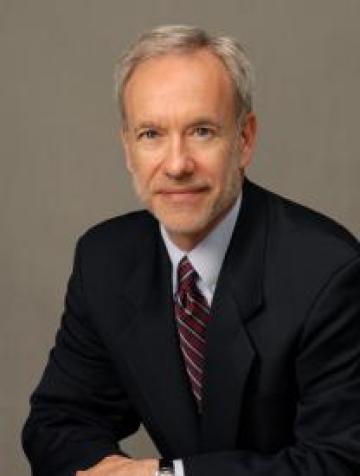
Avery Goldstein is the David M. Knott Professor Emeritus of Global Politics and International Relations at the University of Pennsylvania’s Political Science Department. He serves as the Inaugural Director of the Center for the Study of Contemporary China and Associate Director of the Christopher H. Browne Center for International Politics. His research focuses on international relations theory, strategic/security studies, and Chinese politics, with a particular emphasis on China’s grand strategy, US-China relations, and security dynamics in East Asia. Goldstein’s academic career includes seminal works such as Rising to the Challenge: China’s Grand Strategy and International Security (2005) and Deterrence and Security in the 21st Century (2000). He has authored over 30 journal articles in top-tier publications like International Security and International Organization , exploring themes ranging from nuclear deterrence to China’s geopolitical ambitions. Additionally, he is a Senior Fellow at the Foreign Policy Research Institute (FPRI), amplifying his influence in policy-relevant scholarship. His research consistently bridges theoretical frameworks with empirical analysis, addressing critical issues such as power transitions, crisis instability, and the implications of China’s rise for global order. Goldstein’s advisory roles and institutional leadership reflect his dual commitment to academic rigor and real-world policy engagement.
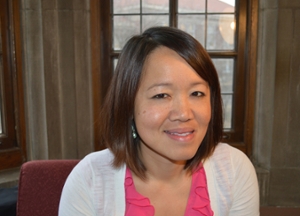
Monica Trieu is an Associate Professor in the School of Interdisciplinary Studies at Purdue University, where she focuses on the intersection of race, ethnicity, and immigration with particular emphasis on children of immigrants. Her scholarly work bridges sociology and Asian American studies through critical examination of identity formation and systemic inequalities. Education: Ph.D. in Sociology, University of California, Irvine (Asian American Studies emphasis) Master's in Sociology, University of California, Irvine Research Focus: Professor Trieu's expertise spans International Migration, Post-1960s Immigrants and Refugees, 1.5 and Second-Generation Identity, Transnational Ties, and Historical/Contemporary Asian American Experiences. Her scholarship critically analyzes internalized racism, regional identity formation (particularly in the Midwest), and the psychological impacts of anti-Asian violence during the pandemic. She employs intersectional frameworks to explore how refugee experiences, cultural adaptation, and transnational connections shape ethnic identity among Southeast Asian Americans and other immigrant communities. Publication Trends: Her 2013-2024 publications reveal evolving engagement with contemporary crises—from pandemic-induced mental health challenges and anti-Asian violence to structural invisibility of Midwest Asian American communities. While maintaining core focus on identity negotiation among second-generation immigrants, her recent work expands into comparative analyses of Asian American/Latina/o transnational patterns and refugee resettlement experiences, demonstrating methodological versatility across ethnographic, survey, and media analysis approaches. Professional Impact: As author of Identity Construction among Chinese-Vietnamese Americans: Being, Becoming, and Belonging (2009) and publications in Journal of Ethnic and Migration Studies and Journal of Asian American Studies , Trieu has established herself as a key voice in Midwest Asian American scholarship. Her research directly informs institutional responses to rising anti-Asian sentiment and contributes foundational frameworks for understanding regional ethnic identity formation beyond coastal enclaves.
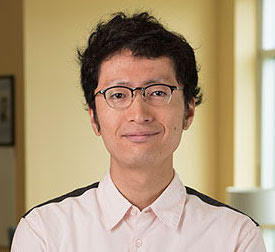
Takuya Tsunoda serves as Assistant Professor of Japanese Film and Media in the Department of East Asian Languages & Cultures at Columbia University, with prior teaching appointments at Colgate University and the University of Chicago. Currently on leave for spring 2022, he maintains his office in 416 Kent Hall (contact: (212) 854-5040, tt2101@columbia.edu). His academic credentials include: BA: Waseda University (2002), Columbia University (2005) MA: Columbia University (2008) PhD: Yale University (2015) Dr. Tsunoda's research centers on institutional-media interplay through historical and theoretical lenses, examining how technologies shape socio-cultural practices and knowledge formations. His seminal work investigates Iwanami Productions' evolution from educational/science film provider to New Cinema pioneer, arguing that Japan's 1960s cinematic revolution originated in institutionalized audio-visual pedagogy rather than political radicalism. Current explorations extend to media reflexivity, alpine photography, insect ecology, children's media engagement, and diegesis in contemporary visual culture. Teaching : Courses include East Asian Cinema, Japanese Contemporary Media Culture, Japanese New Wave Modernism, Documentary Film Studies, and Critical Approaches to East Asian Theory. His publication trajectory (2018-2022) reveals consistent focus on postwar Japanese media archaeology, connecting educational film, industrial cinema, and New Wave movements through archival analysis. Key themes include cross-medial academicism, mediascape transformations, and the socio-political dimensions of visual pedagogy in reconstructing cinematic modernism. Active research trajectories include transnational New Wave parameters, television documentary studies, and ecological media representations, with ongoing book project examining Iwanami Productions' institutional legacy.
Rutgers, The State University of New JerseyUnited States
Nick Kapur is an Associate Professor in the Department of History at Rutgers University–Camden, within the School of Arts and Sciences. He specializes in modern Japan and East Asia, with a focus on transnational perspectives, US-Japan relations, environmental history, gender, and cultural studies including literature and film. His educational background includes a Ph.D. from Harvard University (2011), an M.A. from Stanford University (2003), and a B.A. from Stanford University (2002). Kapur's research examines the intersections of political economy, culture, and international relations in modern Japan, particularly in the postwar era. His acclaimed book, Japan at the Crossroads: Conflict and Compromise after Anpo (2018), analyzes the 1960 protests and their lasting impact on Japanese society and US-Japan relations. He has also published extensively on the Japanese student movement, environmental policy, and Meiji centennial celebrations. His recent and forthcoming articles reflect a sustained engagement with Cold War Japan, dissent, nationalism, and transnational history. Kapur is known for innovative teaching methods, including historical simulations on Pearl Harbor and samurai-era Japan. He is the founder of the Modern Japan History Association and has contributed significantly to digital humanities through projects like the Digital Archive of Japan’s 2011 Disasters and the development of educational apps. His publications from the past decade show a consistent focus on political protest, cultural memory, and international relations in 20th-century Japan. His scholarly contributions include numerous peer-reviewed articles, book chapters, translations, and book reviews in leading journals such as Diplomatic History , The Journal of Asian Studies , and The Asia-Pacific Journal . Kapur advises graduate students and teaches courses on Japanese, Chinese, and Korean history, World War II, and environmental history. He has played a leadership role in promoting Japanese studies globally and continues to be an active researcher with works forthcoming in 2025. His current projects include digital applications for historical education.
Timothy Webster serves as Professor of Law and Associate Dean for Faculty Research and Development at Western New England University's School of Law, with prior academic appointments at Yale Law School, Case Western Reserve University, and international institutions including University of Paris—Dauphine and National Taiwan University. His educational qualifications include: B.A., Yale University M.A., Yale University J.D., Cornell Law School LL.M., Cornell Law School Webster's research focuses on intersections between international law and East Asian domestic legal systems (China, Japan, Korea, Taiwan), examining human rights frameworks, international trade mechanisms, foreign investment regulations, and transnational litigation strategies. His scholarship demonstrates deep engagement with historical justice issues and contemporary legal challenges in the region, delivered through presentations at over 175 international conferences conducted in English, French, Japanese, and Mandarin. Analysis of his recent publications reveals consistent thematic concentration on war reparations, state immunity doctrines, corporate liability frameworks, and civil society's role in transnational redress movements, with empirical studies of litigation patterns across East Asia forming a distinctive methodological thread. His professional recognition includes: Catherine Jones Professor of the Year award (2023 and 2024) Asia Scholars Network fellowship (Luce Foundation) U.S.-Japan Network for the Future membership (Mansfield Foundation) Public Intellectuals Program selection (National Committee on U.S.-China Relations) As Associate Dean, Webster mentors law students in international legal studies while directing faculty development initiatives. His research is substantially supported by elite fellowships from the Luce Foundation, Mansfield Foundation, and National Committee on U.S.-China Relations, enabling extensive international collaboration. Webster has testified before Congress regarding China's WTO compliance and contributes legal analysis to major media outlets including The Conversation, South China Morning Post, and Los Angeles Times.
Professor Mari Yoshihara is a bilingual scholar and writer affiliated with the University of Hawaii as a Core Faculty member. She serves as Editor of American Quarterly , the journal of the American Studies Association, and collaborates with international scholars. Her research focuses on U.S. cultural history, U.S.-Asian relations, Asian American studies, gender studies, and literary studies. She holds a BA from the University of Tokyo and a PhD from Brown University. Her work bridges academic and popular audiences, with notable publications including Embracing the East (2003), Musicians from a Different Shore (2007), and Dearest Lenny (2019). She also writes extensively in Japanese on topics ranging from graduate education to contemporary American culture. Her interdisciplinary approach combines historical analysis, ethnography, and personal narratives to explore cultural exchanges, identity, and music. Professor Yoshihara actively engages with classical music as an amateur pianist, participating in prestigious competitions like the Van Cliburn International Piano Competition. Her writings and fieldwork on music competitions highlight themes of civic engagement and cultural significance. Her blog and website further showcase her interests in U.S. affairs, classical music, and cross-cultural relationships.
Christina Klein is a Professor of English and American Studies at Boston College, serving as Director of the Ph.D. Program, American Studies Program, and Literature Core Program. She holds a B.A. in Film Studies from Wesleyan University and a Ph.D. in American Studies from Yale University. Her research focuses on Korean cinema, transnational genres, and Cold War cultural encounters between Asia and the U.S. Expertise: Korean Cinema, Transnational Genres, Cold War Cultural History Affiliations: Harvard's Institute of Korean Studies (Research Associate), Asian Studies Program Steering Committee Her work analyzes films like Bong Joon-ho’s works and explores how Hollywood genres are reworked through Korean contexts. Recent publications include Cold War Cosmopolitanism (2020) and Cold War Orientalism (2020). She has contributed to journals like American Quarterly and Cinema Journal .
Shuxian LUO is an Assistant Professor of Asian Studies at the University of Hawai’i at Mānoa, specializing in Indo-Pacific maritime security, Chinese foreign policy, and U.S.-China relations. Her research focuses on crisis management mechanisms, territorial disputes, and geopolitical dynamics in the South China Sea and Yellow Sea. She holds a Ph.D. in International Relations from Johns Hopkins SAIS (2021), an M.A. in China Studies from Johns Hopkins SAIS (2016), an M.A. in Political Science from Columbia University (2008), and a B.A. in English Literature from Peking University (2007). Her current book project analyzes China's escalation strategies in maritime disputes, while ongoing research includes studies on Sino-Russian relations, Hong Kong’s Baodiao movement, and Arctic geo-economic interests. Her recent publications explore AI risks in U.S.-China crisis management, China’s conciliatory posture toward South Korea, and ASEAN’s role in great power competition. Dr. Luo’s work bridges theoretical frameworks with real-world policy implications, emphasizing the interplay between military tactics, legal frameworks, and diplomatic signaling in conflict prevention. She frequently publishes in journals like China International Strategy Review and the Journal of Contemporary China, and contributes to policy analyses for institutions like Brookings and War on the Rocks.
Dr. Timothy Fraser is a Computational Social Scientist serving as Ezra Systems Research Associate in Cornell University's Systems Engineering Program and Coordinator for the Center for Transportation, Environment, & Community Health (CTECH). Holding a PhD in Political Science from Northeastern University (2022), he focuses on climate change adaptation, disaster resilience, and energy policy using big data analytics, GIS, and AI. His work bridges computational methods with societal challenges, emphasizing community engagement and policy impact. Education: PhD in Political Science, Northeastern University (2022) MA in Political Science, Northeastern University BA in International and Global Studies, Middlebury College Research Interests: Fraser’s research integrates computational social science with environmental policy, exploring how social networks and governance structures influence cities' climate adaptation strategies. Key areas include renewable energy adoption, disaster evacuation dynamics, and pandemic response mechanisms. He employs mixed methods such as network analysis, statistical modeling, and fieldwork. Grants & Awards: Fulbright Fellowship (2016), Kyushu University Japan Foundation Doctoral Fellowship (2020) USDOT Multimillion Grant Administrator (2022-2023) Teaching & Mentorship: Fraser teaches statistical methods and research design at Cornell, advising over 30+ students in projects published in leading journals. He coordinates capstone teams and mentors researchers in data science and policy analysis. Labs & Projects: Leads the Climate Action in Transportation dashboard initiative (Gao Labs), developing tools for emissions visualization. Collaborates on UNDP social capital mapping projects in Mexico and Paraguay, applying spatial analysis techniques for vulnerable communities.
Takuya Matsuda is an Assistant Professor at Aoyama Gakuin University in Tokyo, Japan, and a Non-Resident Fellow in the Asia Program at the Foreign Policy Research Institute (FPRI). His work centers on alliance dynamics, great power relations, and U.S. grand strategy in the western Pacific, positioning him at the intersection of academic and policy-oriented international security research. His research interests include: Alliance Politics Great Power Competition US Foreign Policy and Grand Strategy Indo-Pacific Security US-China Relations Deterrence and Reassurance Theory The recent articles reflect a consistent focus on strategic stability in U.S.-China relations, the evolution of U.S. alliances in the Indo-Pacific, and long-term planning for geopolitical competition. His work bridges academic rigor with policy relevance, often published in leading journals and think tank platforms. His scientific contributions are recognized through publications in outlets such as The Washington Quarterly , Survival , and Foreign Policy , though no formal awards are listed in the text. He advises students in international relations and contributes to academic and policy discourse through research collaborations and commentary. He has held research positions at George Washington University, Notre Dame, National Taiwan University, and the University of Tokyo. His research is supported by affiliations with FPRI and Aoyama Gakuin University, and he is part of a broader network of scholars focused on Asian and global security dynamics, including institutions in the U.S., Japan, and Europe.
Markus Nornes is a Professor of Asian Cinema at the University of Michigan, affiliated with the School of Art & Design, Department of Film, Television and Media, and Department of Asian Languages and Cultures. His research focuses on Japanese and broader Asian cinema, documentary filmmaking, and film translation theory. He earned his Ph.D. from the University of Southern California in 1996 and has taught at Michigan since then. His work explores the political and ethical dimensions of nonfiction film, particularly in Japan's documentary history from the Meiji era through Hiroshima, and the evolution of screen translation. He advocates for 'abusive translation' to challenge conventional subtitling norms. Current projects include a critical biography of Adachi Masao and a multi-volume Japanese film theory translation collection. Recent publications include Brushed in Light (2021) on calligraphy in East Asian cinema, Hallyu 2.0 (2015) analyzing Korean media's digital expansion, and Forest of Pressure (2007) on Ogawa Shinsuke's collective. His Google Scholar profile reflects a career bridging film history, translation ethics, and transnational media studies. Faculty Research Grant for Taiwan Studies, Ministry of Education, Taiwan (2011) Visiting Professorship at Fudan University (2010) Edwin O. Reischauer Visiting Professor at Harvard (2008-2009) Japan Foundation Research Fellow (2004-2005) Fulbright Research Fellow (1999-2000) As a filmmaker, Nornes co-directed The Big House (2018) and When We're Together (2020), often collaborating with students. He has curated major film retrospectives at Yamagata International Documentary Film Festival and University of Michigan, specializing in Japanese and Asian nonfiction cinema. His digital humanities projects, such as the Ozu and the Poetics of Cinema online reprint, showcase his commitment to accessible film scholarship.
Michael K. Bourdaghs is the Robert S. Ingersoll Professor in East Asian Languages and Civilizations and the College at the University of Chicago, where he also chairs the Committee on Japanese Studies. He specializes in modern Japanese literature, culture, and intellectual history, with particular expertise in Japanese popular music and literary/critical theory. Professor Bourdaghs's research focuses on Japanese literature within global contexts, emphasizing how Japanese literature moves across multiple global networks. His current project rethinks Japanese cultures of the Cold War era, examining how Japanese writers, filmmakers, and musicians participated in multiple Cold War networks beyond the typical U.S./Japan bilateral framework. His scholarly work reveals consistent themes across Japanese literature, critical theory, and cultural history, particularly regarding property ownership, nationalism, and geopolitical alignments. His extensive publication record includes major works such as Sound Alignments: Popular Music in Asia's Cold Wars (2021), A Fictional Commons: Natsume Sōseki and the Properties of Modern Literature (2021), and Sayonara Amerika, Sayonara Nippon: A Geopolitical Pre-History of J-Pop (2012), demonstrating his interdisciplinary approach connecting literary analysis with political, historical, and theoretical frameworks. Professor Bourdaghs has received recognition for his scholarly contributions through numerous publications with prestigious academic presses including Duke University Press, Columbia University Press, and the University of Michigan Center for Japanese Studies. As an educator, Professor Bourdaghs teaches courses on East Asian popular music, Japanese literature, and sound in Japanese literature. His commitment to bridging academic communities extends to his editorial work introducing Japanese critical theory and scholarship to English-language readers, fostering greater academic exchange between Japan and Western institutions.
Taishi Muraoka serves as an Assistant Research Fellow at Academia Sinica's Institute of Political Science in Taipei, Taiwan, a position he has held since 2022. His academic journey includes postdoctoral fellowships at Harvard University's Program on US-Japan Relations and Washington University's Weidenbaum Center, following his 2019 Ph.D. in Political Science from Washington University in St. Louis. His educational background encompasses a B.A. in Political Science from the University of North Carolina at Charlotte (2013) and a B.A. in Law from Chuo University, Japan (2011). His research expertise spans electoral politics, political institutions, and social media's role in political communication, with particular emphasis on cross-national comparative analysis. Muraoka's scholarly work reveals consistent focus on electoral system design and voter behavior, with recent publications examining polarization's emotional dimensions, multilingual party communication, and diaspora voting incentives. His methodological approach combines large-scale cross-national data analysis with quasi-experimental designs, frequently leveraging social media interactions as behavioral indicators. His scientific recognition includes the 2023 Richard E. Matland Best Paper Award from the Midwest Political Science Association and multiple travel grants from major associations like APSA and MPSA. His award portfolio reflects consistent early-career excellence in political methodology and comparative research. Current research initiatives include a 2025 Academia Sinica Grand Challenge grant on electoral system habit-formation and a Weidenbaum Center-funded project on radical-right party responses to extremism. His collaborative network spans institutions in Europe, Asia, and North America, with frequent co-authorship patterns indicating strong interdisciplinary partnerships.
University of California, Los AngelesUnited States
Vinay Lal is Professor of History and Asian American Studies at the University of California, Los Angeles (UCLA), where he has been teaching since Fall 1993. He holds a joint appointment in the Department of History and the Asian American Studies Department. Born in Delhi and raised across multiple countries including India, Indonesia, Japan, and the United States, Lal brings a global perspective to his scholarship and teaching. His educational journey began at Johns Hopkins University, where he earned both his B.A. (1982) and M.A. (1982) from the Humanities Center with concentrations in literature, history, and philosophy. He then studied film in Australia and India on a Thomas J. Watson Fellowship before pursuing his Ph.D. at the University of Chicago's Department of South Asian Languages and Civilizations, which he completed with Distinction in 1992. His dissertation, 'Committees of Inquiry and Discourses of 'Law and Order' in Twentieth-Century British India', received the Marc Galler Award for the best dissertation in the Division of the Humanities at the University of Chicago. Lal's research spans an extraordinary breadth of intellectual interests, with primary focus on Indian history, historiography, public and popular culture in India, the Indian diaspora, colonialism, human rights, American politics, the architecture of nonviolence, Gandhi studies, and the global politics of knowledge systems. His work consistently challenges conventional disciplinary boundaries, engaging with topics ranging from the politics of religion and ethnicity in South Asia to the moral and political thought of Mohandas Gandhi, from the partition of India to the intersection of history and popular cinema. His scholarship reflects a deep commitment to decolonizing knowledge systems and exploring alternative epistemologies from the Global South. His publications reveal a scholar deeply engaged with both historical analysis and contemporary political issues. The 15 most recent articles demonstrate his consistent focus on South Asian politics, historical memory, nonviolence, and the politics of knowledge. His writing spans academic journals, major newspapers, and public intellectual platforms, with a distinctive voice that bridges scholarly rigor and public accessibility. His work on Gandhi, colonialism, and contemporary Indian politics forms a particularly strong thread throughout his recent publications. Fellow of the World Academy of Art and Science (elected February 2000) William R. Kenan Fellow, Society of Fellows in the Humanities, Columbia University (1992-93) Senior Fellowship from the American Institute of Indian Studies National Endowment for the Humanities Fellowship for University Teachers Fellowship from the Society for the Promotion of Science/Japan Area Studies Center Listed among the '101 Most Dangerous Professors in America' in David Horowitz's book Fulbright-Nehru Fellowship for Academic and Professional Excellence Fellow at the Stellenbosch Institute for Advanced Study (STIAS), South Africa (2024) Oxford University Press India Academic (Humanities) Delegate (2022-2028) As a dedicated mentor, Lal has supervised numerous PhD students who have gone on to prominent academic careers at institutions including CSU-Sacramento, UNC-Charlotte, O.P. Jindal University, UC Irvine, and the University of Pittsburgh. His teaching portfolio at UCLA is exceptionally broad, encompassing undergraduate courses on Indian Civilization, British India, contemporary South Asia, and world history, along with graduate seminars on Indian politics and religion, historiography of modern India, nationalism and colonialism, Indian cinema, and postcolonial theory. His lecture courses are available in their entirety on his academic YouTube channel, which has garnered over 3 million views and 36,000 subscribers. Lal has also served as University of California's Director of the Education Abroad Program in India and as Professor of History at the University of Delhi during 2010-11. Lal is a founding member of the Backwaters Collective on Metaphysics and Politics (2010-2020), which met annually in Kerala, and was associated with Multiversity, a group of scholars focused on decolonizing Western knowledge systems. His current work includes a four-book project titled 'The Genocide and Hope Quartet: Studies in the Architecture of Oppression and the Redemptive Possibilities of Nonviolence', examining Dandi, Auschwitz, Hiroshima, and Robben Island. He maintains an active public intellectual presence through his blog 'LAL SALAAM' and his academic YouTube channel, making scholarly content accessible to wider audiences.
David L. Howell is the Robert K. and Dale J. Weary Professor of Japanese History and Professor of History at Harvard University, holding a joint appointment in the History Department. He serves as Acting Director of the Program on US-Japan Relations at the Weatherhead Center for International Affairs and is currently Department Chair of East Asian Languages and Civilizations. On leave during the 2025-2026 academic year, he has been a Harvard faculty member since 2010 after teaching at the University of Texas at Austin and Princeton University. His educational background includes: B.A. from the University of Hawai'i at Hilo Ph.D. in History from Princeton University Studies at Hokkaido University in Sapporo Howell specializes in Japanese social history during the Tokugawa (1603-1868) and Meiji (1868-1912) periods, examining how political and economic transformations impacted ordinary citizens. His current research investigates the Meiji Restoration's societal continuity and urban waste management systems in pre-modern Japan, revealing intricate connections between institutional change and daily life. His publications from 1995-2014 demonstrate evolving scholarly focus from economic structures in fisheries to cultural identity and diplomatic practices, consistently centered on nineteenth-century Japan. Key thematic threads include spatial identity formation, urban development, and the intersection of local customs with national modernization efforts. Howell served as editor of the Harvard Journal of Asiatic Studies (2014-2024) and co-edited The New Cambridge History of Japan volume on Early Modern Japan (2024), significantly shaping contemporary scholarship in Japanese historical studies.