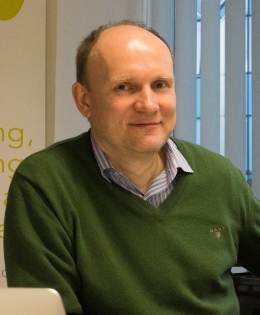
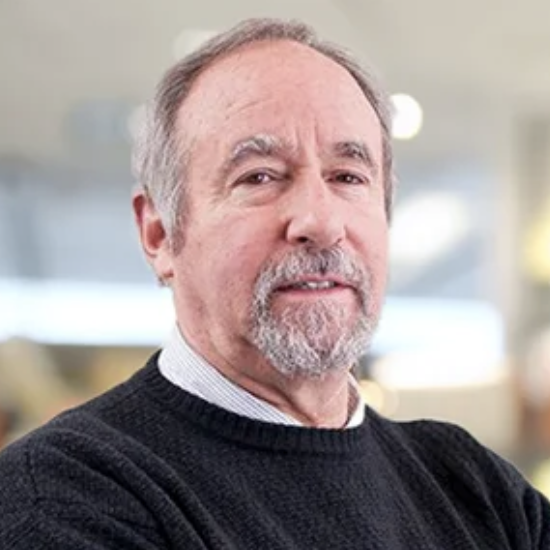
Janis Stirna is a Professor and Unit Head at the Department of Computer and Systems Sciences (DSV), Stockholm University. He leads the PRECIS research group, focusing on theories and tools for organizational and IT solution design. PhD in Computer and Systems Sciences (2001), Royal Institute of Technology, Sweden Associate Professor (2008), Jönköping University Research Interests include enterprise modeling, requirements engineering, organizational patterns, and knowledge management. His work spans methodologies like EKP, EKD, and 4EM, with notable coordination of the EU FP7 project CaaS (Capability as a Service). He co-edited key Springer publications on enterprise modeling and capability management. Teaching: Delivers Object-Oriented System Analysis with UML to DSV BSc students. Leadership: Chairs IFIP Working Group 8.1 and co-initiated the PoEM conference series.
Luisa Domingues is an Assistant Professor in the Department of Information Science and Technology at ISCTE - University Institute of Lisbon. She serves as an Integrated Researcher at ISTAR-Iscte - Research Center in Information Sciences, Technologies and Architecture, specializing in Information Systems research. Her academic qualifications include a PhD in Information Science and Technology from ISCTE-IUL (2013). Her primary research interests focus on: Project Management : Methodologies, risk assessment, and knowledge sharing Database Systems : Management, interoperability, and standardization e-Government Solutions : Public sector information systems and shared services Ontological Frameworks : Particularly for architectural heritage documentation Educational Technologies : Blended learning approaches in higher education Her recent publications (2016-2024) demonstrate a strong focus on project management methodologies, knowledge transfer, and information systems in public sector contexts. Key thematic trends include PMBOK framework applications, agile methodology adoption challenges, data science project risks, and technological solutions for cultural heritage preservation. Most works employ case study research and empirical validation methods. Dr. Domingues maintains an active advising portfolio with 1 doctoral candidate and 36 master's students, primarily focusing on topics in project management, information systems, and data science applications. She has held significant academic leadership positions including: 4th Year Coordinator for Bachelor's in Computer Science and Business Management (2020-2027) Program Director for the same degree (2017-2019) At ISTAR-Iscte research center, she contributes to projects involving information systems architecture, data standardization, and knowledge management frameworks.
Dr. Wahab Hamou-Lhadj is a Professor and Chair at the Department of Electrical and Computer Engineering , Concordia University, and an Affiliate Researcher at NASA JPL, Caltech . He leads research in Artificial Intelligence for IT Operations (AIOps) , Software Observability , and Model-Driven Engineering , focusing on improving the reliability of digital systems in AI-driven environments.
Juergen Dingel is a Professor in the School of Computing at Queen's University, Canada. He joined the faculty in 2000 and holds a PhD in Computer Science from Carnegie Mellon University (1999). His research focuses on software modeling, model-driven engineering, formal methods, and formal verification, with applications in real-time systems and embedded systems. He leads the Modeling and Analysis in Software Engineering (MASE) research group. Education: PhD in Computer Science, Carnegie Mellon University (1999) M.Sc. in Pure and Applied Logic, Berlin University of Technology (1994) M.Sc. in Computer Science, Berlin University of Technology (1992) Research Interests: Model-driven engineering and transformation Formal specification and verification Automated testing and debugging Real-time and embedded systems Service composition and distributed systems His work emphasizes practical tools like Papyrus-RT and MDebugger , integrating formal methods into software development. Grants & Collaborations: Funded by NSERC, OCE, and industry partners (IBM, GM, Ericsson) Focus on automotive systems, IoT, and safety-critical applications Service: Editorial board member for SoSyM , STTT , and JOT Former chair of the MODELS Steering Committee (2016–2018) PC co-chair for MODELS 2014 and FMOODS/FORTE 2011 Labs & Teams: Leads the MASE group, which develops open-source tools for model-driven engineering. Collaborates with industry on automotive and IoT projects.
Chanchal K. Roy is Professor of Software Engineering/Computer Science at the University of Saskatchewan and Co-Director of the Software Research Lab. He leads an NSERC CREATE graduate program on Software Analytics Research and co-leads the Data Management group for an NSERC CFREF project on Food Security, with over 170 publications cited 6,000+ times. His research centers on software clone detection using the widely adopted NICAD system, software evolution, empirical studies, and AI-driven software analytics. Recent work integrates large language models for code generation, clone detection in the AI era, and developer interactions with tools like ChatGPT, emphasizing practical applications in maintenance and analytics. Analysis of his 15 most recent publications reveals a strong trend toward AI/ML integration in software engineering: 12 of 15 articles (2025) explore LLMs, quantum computing, or deep learning for tasks like bug localization, code snippet generation, and feature-toggle analysis. Key themes include empirical validation of AI tools, Stack Overflow data mining, and cross-domain frameworks for Society 5.0. His scientific awards include: Most Influential Paper Awards (SANER 2018, ICPC 2018) Outstanding Young Computer Science Researcher Award (CS-Can/Info-Can, 2018) New Researcher Award (University of Saskatchewan, 2019) New Scientist Research Award (College of Arts and Science, 2019) As lead of the NSERC CREATE program and CFREF data group, he mentors graduate students in software analytics while securing major grants. He actively serves on program committees for ASE, ICSE, and FSE, reviewing journals and organizing workshops on clone detection and empirical methods. His lab focuses on real-world applications in food security data management and software evolution. The Software Research Lab, co-directed by Roy, drives projects like NICAD and the NSERC CREATE initiative, emphasizing open-source contributions and industry collaboration. Current efforts include quantum-SE integration and AI-augmented maintenance tools under the CFREF food security mandate.
Pierre KELSEN is a Full Professor in the Department of Computer Science at the University of Luxembourg's Faculty of Science, Technology and Medicine (FSTM). His research focuses on Software Engineering, Formal Methods, Model-Driven Engineering, and Algorithmic Graph Theory. He leads the LASSY Laboratory for Advanced Software Systems, emphasizing model decomposition, regulatory compliance, and formal verification techniques. Education: PhD in Computer Science (1993, University of Illinois at Urbana-Champaign), M.Sc. (1989, UIUC), and Diploma (1986, University of Karlsruhe). Postdoctoral work at the University of British Columbia and Max-Planck-Institut für Informatik. Research Interests: - Development of formal modeling languages (e.g., VCL, F-Alloy) - Model transformation and validation frameworks - Algorithms for compliance and complexity challenges - Visual and modular design methodologies Funding: - ASINE (FNR Pearl, 2013–present): Architecture-based service innovation - MaRCo (FNR Core, 2010–2013): Business-centric regulatory compliance Publications span model-driven engineering, formal methods, and algorithmic foundations, with recent work exploring AI integration in domain modeling and compliance analysis. Labs/Teams: LASSY Laboratory, collaborating on tools like Lightning and Democles for executable modeling frameworks.
Alfredo Capozucca is a full permanent Researcher at the Department of Computer Science (DCS) within the Faculty of Science, Technology and Medicine (FSTM) at the University of Luxembourg. He holds a PhD in Computer Science from the University of Luxembourg (2010) and an M.S. from the National University of Rosario, Argentina (2003). His research focuses on modern software engineering methods, dependable systems, and computing education, with an emphasis on formal verification and sustainable computing practices. Capozucca has contributed to the design of courses at undergraduate and master's levels, including serving as Deputy Programme Director for the BSc in Computer Science from 2021-2024. His work bridges theoretical foundations with practical applications in education and industry. Research interests prominently include AI in education (e.g., ChatGPT's role in formal specification writing), formal verification techniques, and the integration of DevOps philosophies into academic curricula. He has authored numerous papers on topics ranging from security policy analysis to energy-efficient transactional models. Capozucca's contributions extend to open-source projects and tool development, such as the Messir UML requirements engineering tool. His teaching spans software engineering fundamentals, dependability, and modern DevOps practices, reflecting a commitment to aligning education with industry needs. Key professional roles include R&D engineer positions (2004-2006) and leadership in educational program design. His research infrastructure is based at the Maison du Nombre facility in Luxembourg. While no specific grants or awards are listed, his extensive publication record and teaching contributions highlight sustained academic engagement.
Boris Jukic is a Professor and Director of Applied Data Science at the Reh School of Business , Clarkson University. With a PhD from the University of Texas at Austin, he teaches courses such as Visual Basic Programming for Business Applications and Development of Business Applications on the Internet. Dr. Jukic's research focuses on: Management and pricing of networks and telecommunication services Application of data management and presentation strategies in e-business and e-commerce IT architecture's impact on organizational success metrics His recent publications highlight trends in data warehousing , IT architecture , and business intelligence . Notable subfields include data modeling , incentive-compatible pricing , and process-data integration . Contact: Email: bjukic@clarkson.edu Phone: 315/268-3884 Office: 227 Bertrand H. Snell Hall, Clarkson University
Bernhard Rumpe is a Professor and Chair of Software Engineering at the Department of Computer Science 3, RWTH Aachen University, Germany. He leads a research group focused on model-based software engineering, domain-specific languages, and digital twins, with strong industrial collaborations and applications in embedded systems, AI, IoT, and autonomous vehicles. His research centers on improving software development through model-driven engineering, generative techniques, and formal modeling using UML, SysML, and the MontiCore language workbench. Key interests include digital twins, variability modeling, model composition, and the integration of cyber-physical systems with information systems. The recent publications highlight a consistent focus on model-driven digitalization, language workbenches, and system integration. Trends show increasing emphasis on digital twins in manufacturing and societal systems, formal verification of model transformations, and educational applications of model-driven low-code platforms. His work bridges theoretical foundations with industrial applicability. Keynote Speaker, OOPSLE 2025 General Chair, GPCE 2023 Session Chair, MODELS 2020 Program Committee Member, SLE, GPCE, ICSE, ECMFA He advises master’s and doctoral students and leads a vibrant research team that has successfully executed over 100 research projects. His group develops foundational tools like MontiCore and applies them in industrial contexts, contributing to software quality and developer efficiency. No formal grants are listed, but sustained project funding is evident. He is involved in several research labs and teams centered around the Software Engineering Chair at RWTH Aachen, focusing on language workbenches, model-driven development, and digital twin systems. The team actively contributes to open research through publications, tools, and industrial partnerships.
Jeff Offutt is a Professor and Chair of the Department of Computer Science at the University at Albany, College of Nanotechnology, Software, & Engineering. Previously, he was a Full Professor with Tenure in Software Engineering at George Mason University since 2005. He received his PhD in Information & Computer Science from the Georgia Institute of Technology in 1988. His research spans software testing, mutation testing, model-based testing, automatic test data generation, web application testing, and software engineering education. He has led significant projects such as the NSF-funded integration of CS into K-5 classrooms and the Google-funded SPARC project for scalable CS1/CS2 instruction. The 15 most recent articles reflect a continued focus on mutation testing cost reduction, model-based testing oracles, educational innovations, and security aspects of web applications. Trends include empirical validation, industrial applicability, and bridging theory with practice in software testing and engineering education. John Toups Presidential Medal for Excellence in Teaching (2020) George Mason University’s Alumni Association Faculty Member of the Year (2020) Outstanding Faculty Award from the State Council of Higher Education for Virginia (2019) Best Paper Award at ICST 2021 10-Year Most Influential Paper Award at MODELS 2020 George Mason University Teaching Excellence Award (2013) ACM Notable Article Award (2013) Jeff Offutt has mentored numerous graduate students including Upsorn Praphamontripong, Nan Li, and Yu-Seung Ma, and has led major grant-funded projects such as the SPARC educational model and NSF initiatives on K-5 CS integration. His textbook Introduction to Software Testing (with Paul Ammann) is widely adopted globally. He led the MS in Software Engineering program at GMU and developed several new courses in software testing, web engineering, and usability. He pioneered innovative teaching methods using web technologies and asynchronous learning models. He also co-founded the IEEE International Conference on Software Testing, Verification and Validation (ICST) and served as Editor-in-Chief of Software Testing, Verification and Reliability from 2007 to 2019.
Prof. Dr. Ulrich Frank is a full Professor of Business Information Systems and Enterprise Modeling at the University of Duisburg-Essen, Faculty of Computer Science. He serves as Director of IS:link, an international student exchange network he founded. His academic career spans multiple prestigious institutions including University of Mannheim, GMD, IBM Almaden Research Center, University of Koblenz-Landau, and University of Duisburg-Essen since 2004. His educational background includes: Business Administration studies (minor in Applied Computer Science) at University of Cologne Doctorate in Political Science from University of Mannheim (1986) Habilitation at University of Marburg (1993) Prof. Frank's research focuses on multi-perspective enterprise modeling, with particular emphasis on object-oriented and multi-level modeling approaches. His work bridges business administration and computer science, exploring conceptual modeling, knowledge management systems, business process reorganization, and the theoretical foundations of business informatics. He has made significant contributions to modeling languages like FMMLx and XModelerML, advancing multi-level modeling techniques for enterprise information systems. His recent publications demonstrate a strong focus on multi-level modeling languages, with particular attention to UML extensions, language engineering, and the application of large language models in systems engineering. The research trajectory shows consistent development of modeling frameworks that support enterprise architecture, business process modeling, and domain-specific language design, with increasing attention to AI-assisted modeling approaches in recent years. Prof. Frank has received significant recognition through editorial positions at leading journals: Co-Editor of Enterprise Modelling and Information Systems Architectures Co-Editor of Business & Information Systems Engineering Co-Editor of Information Systems and E-Business Management Co-Editor of Software and Systems Modeling Member of the Standing Committee of the European Conference on Information Systems (ECIS) Prof. Frank has served in numerous academic leadership roles including as Chairman of the Examination Board for Business Information Systems, member of the Research Commission at University of Duisburg-Essen, and Appointment Commissioner (2021-2023). He has reviewed for major funding organizations including the German Research Foundation, Federal Ministry of Education and Research, and Swiss National Science Foundation. As founder and senior consultant of IS:link, Prof. Frank leads an international student exchange network connecting universities worldwide. His research group focuses on multi-perspective enterprise modeling (MEMO), developing frameworks and tools for business information systems design and implementation.
Nazli Goharian is a Clinical Professor of Computer Science at Georgetown University and Associate Director of the Information Retrieval Lab. She holds a PhD from Florida Institute of Technology and joined Georgetown in 2010 after industry experience and previous academic positions at Illinois Institute of Technology. Education: PhD Computer Science, Florida Institute of Technology (2001) MSc Computer Science, George Mason University (1995) BSc Computer Science, Dortmund University (1992) Her research spans information retrieval, text mining, and natural language processing with applications in health/medical domains. She focuses on developing computational methods for medical search, mental health analysis from social media, clinical text summarization, and adverse drug reaction detection. Her recent publications (2020-2016) predominantly focus on neural ranking models, transformer architectures for document retrieval, and clinical NLP applications. Notable trends include work on BERT-based re-ranking, zero-shot multilingual retrieval, and ontology-aware medical summarization. Awards & Honors: EMNLP 2017 Best Long Paper Award COLING 2018 Honorable Mention & Area Chair Favorite Julia Beveridge Award for Faculty (IIT, 2009) Multiple Teaching Excellence Awards (2002-2007) Research Leadership: She has supervised 6 PhD students to completion with placements at leading institutions. Secured over $500,000 in research funding from NSF, Adobe, and international partners. Founded the Semi-Annual Graduate Research Presentation Days at Georgetown and served as Program Chair for ECIR 2024. She leads the Information Retrieval Lab which focuses on developing novel algorithms for efficient document retrieval, cross-lingual search, and specialized applications in healthcare text analysis.
Christian Hilbes is a Lecturer at the School of Engineering of Zurich University of Applied Sciences (ZHAW). He serves as Deputy Head of the Institute for Applied Mathematics and Physics (IAMP) and co-leads the research focus on Safety-Critical Systems. Active projects include leadership roles in Autonomous Predictive Interlock Systems , Personnel Safety Systems , and Triggering Conditions for Autonomous Cars . He specializes in STPA (Systems-Theoretic Process Analysis) , UML-based modeling , and Dynamic Flowgraph Modeling for safety-critical applications. Email: christian.hilbes@zhaw.ch His research integrates safety analysis with emerging technologies like autonomous systems and nuclear facilities, contributing to publications at MIT STAMP Workshops and in journals like Nuclear Engineering and Design . He actively collaborates on European Spallation Source (ESS) safety frameworks and develops domain-specific languages for STPA.
Dr. Siyuan Ji is a Reader in Model-based Systems Engineering (MBSE) at Loughborough University, serving as Deputy Head of the Manufacturing, Systems & Management Academic Community and Deputy Director of the Doctoral Training Centre in MBSE. He previously held a Senior Lecturer position in Systems Engineering at the University of York, where he led the MSc Programme in Safety-Critical Systems Engineering. His academic journey includes a PhD and MSc in Physics from the University of Nottingham, followed by research roles in model-based systems engineering at Loughborough University. His research focuses on advancing model-based techniques for systems engineering, particularly in safety-critical systems, formal methods, and complex system design. He has contributed to areas such as hazard management (e.g., BSafeML framework), response time analysis in real-time systems, and model synchronization for requirements engineering. His work bridges theoretical foundations with practical applications in automotive systems, embedded software, and educational technology. Dr. Ji holds the title of Fellow of the Higher Education Academy and has published extensively on topics ranging from quantum technology reporting to conversational tutoring systems. His research emphasizes interdisciplinary collaboration, evident in projects like the EPSRC-funded analysis of vehicles as complex systems. He actively contributes to both academic and industrial advancements in systems engineering methodologies and education innovation. His professional roles include managing doctoral training programs, overseeing academic communities, and advancing systems engineering education. Collaborations span industry partnerships and international academic networks, reflecting his commitment to impactful research and training the next generation of systems engineers.
David Garlan is a Professor at the Software and Societal Systems Department within the School of Computer Science at Carnegie Mellon University , where he also serves as Associate Dean for Master’s Programs . He received his Ph.D. from Carnegie Mellon in 1987 after working in industry as a software architect. His research focuses on controlling complexity in large software systems through formalized architectural design, self-adaptive systems, and cyber-physical systems. He developed AcmeStudio , a widely used architecture design environment, and pioneered formal representation and analysis of software architecture. Education : Ph.D. in Computer Science (Carnegie Mellon, 1987) Research Interests include: Software Architecture: Formal methods for architectural design, end-user composition, and architectural styles Self-Adaptive Systems: Stochastic planning, model checking, security adaptation, and uncertainty reduction Cyber-Physical Systems: Multi-view design methods, consistency checking, and automotive systems Recent Article Trends address microservice resiliency, hybrid planning (combining formal methods and ML), simulation-augmented robotics, and sustainable machine translation. Themes include stochastic modeling , probabilistic verification , and adaptive decision-making . Scientific Awards : Stevens Award Citation (2005) ACM SIGSOFT Outstanding Research Award (2011) Allen Newell Award for Research Excellence (2016) IEEE TCSE Distinguished Education Award (2017) Nancy Mead Award (2017) Fellow of IEEE and ACM Advising and Grants : He has advised 25+ graduate students and collaborated on projects with Toyota and the Software Engineering Institute. His work includes model-based adaptation, automated planning, and formal verification of adaptive systems. Labs & Teams : Affiliated with the Institute for Software Research and works on tools like AcmeStudio, Rainbow, and IPL for architectural modeling and self-adaptation.