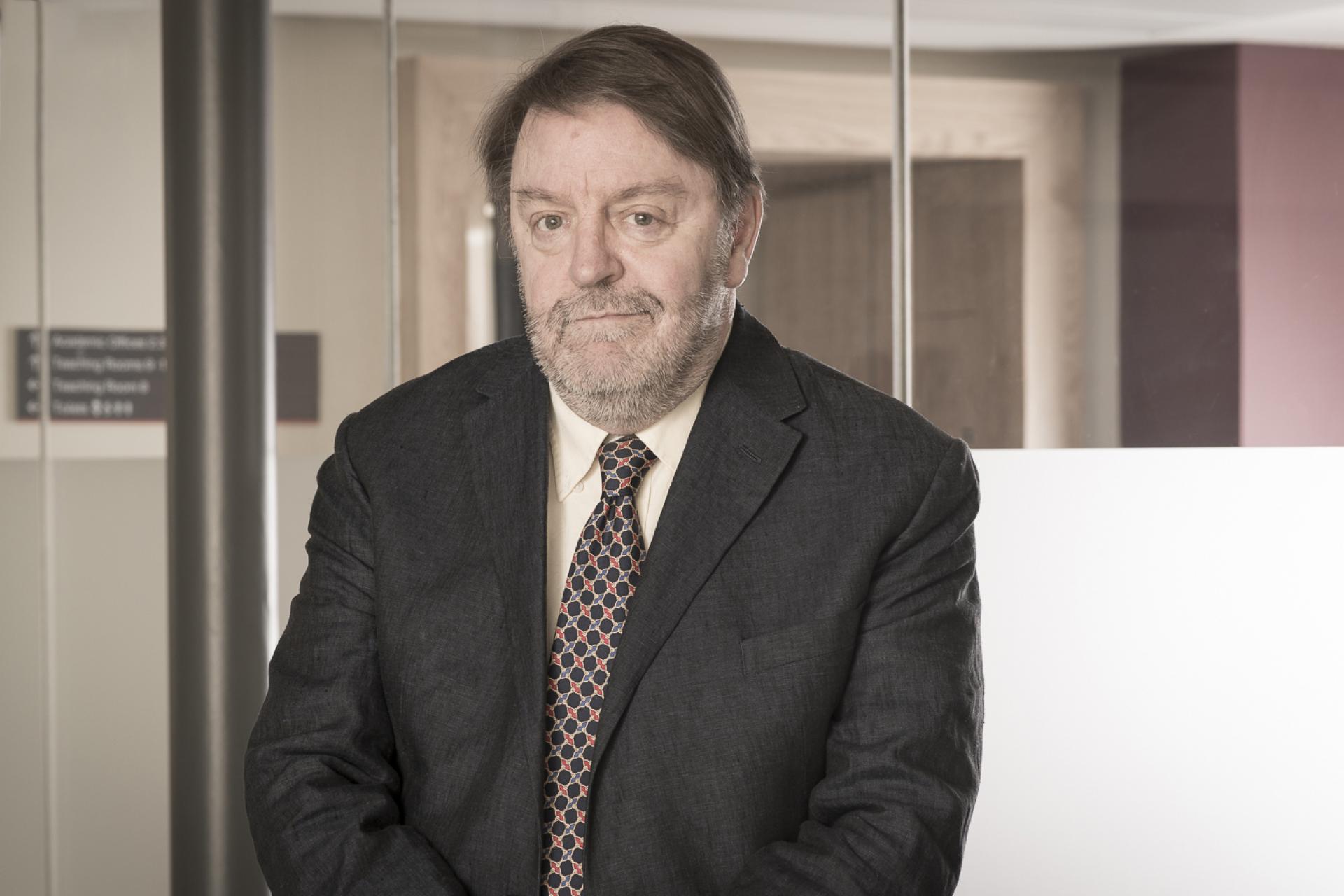
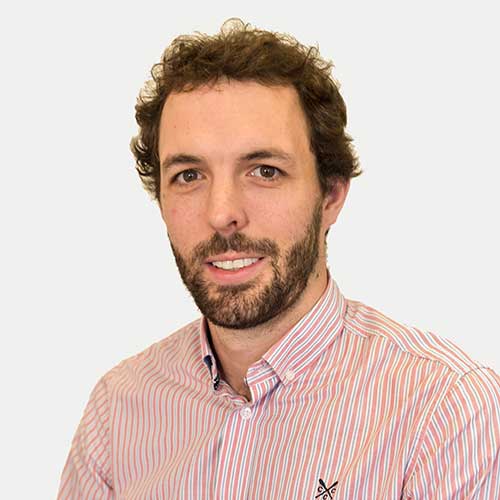
Dr. Robert Lane is a Senior Lecturer in EU Law at the School of Law, University of Edinburgh. His expertise spans EU constitutional and administrative law, the jurisprudence of the European Court of Justice (ECJ), internal market law, and competition law. He holds a BA, MA, and PhD in Law. **Research Interests**: Dr. Lane's work focuses on the constitutional dynamics of the European Union, particularly the administrative and judicial frameworks governing EU institutions. He examines the methods and reasoning of the ECJ, the evolution of competition law post-Lisbon Treaty, and the interplay between EU law and national legal systems. His research also addresses contemporary issues such as the legal implications of the Scottish Independence Referendum and the impact of crises like the COVID-19 pandemic on EU legal frameworks. **Education**: PhD in Law MA in Law BA in Law **Advising and Grants**: No formal advisees or grants are listed in the provided information. His academic contributions are primarily through research publications and books. **Labs/Teams**: No specific research labs or collaborative teams are mentioned in the profile.
Professor Catherine Boone holds the Harold Laski Chair in Political Science at the London School of Economics and Political Science (LSE), concurrently serving as Programme Director for African Development in the Department of International Development and affiliated with the Department of Government. Her research focuses on political economy, property rights, and regional inequalities in Africa, emphasizing how land tenure systems shape political conflict and electoral dynamics. Boone has been funded by major institutions including the ESRC, SSRC, and World Bank. She is a Fellow of both the British and American Academies of Arts and Sciences. Current projects include studying commodity chain governance in Kenya and Côte d'Ivoire. Boone's 2014 book Property and Political Order: Land Rights and the Structure of Politics in Africa won the APSA Luebbert Book Award (2016). She leads initiatives like the APSA-ASA Africa Initiative and advises the SSRC African Peacebuilding Network. Boone’s research integrates spatial analysis and institutionalist frameworks to explain Africa’s political economies, challenging assumptions of institutional 'weakness' through empirical studies of land policies and electoral behavior. Education & Career : While specific academic credentials are not detailed here, Boone's career trajectory includes professorships at LSE since 2013, prior roles at universities in the US, and extensive fieldwork across West and East Africa. Her work bridges comparative politics and development studies, with a focus on subnational political structures. Research Interests : Boone investigates how property rights frameworks influence political stability, electoral competition, and ethnic conflict. Her work highlights how spatial inequalities—rooted in colonial-era policies—shape contemporary political dynamics in Africa. Recent projects examine land certification impacts and the governance of agricultural commodity chains. Awards & Grants : Boone has secured funding from the UK ESRC for the Spatial Inequalities in African Political Economy project (2023). Her accolades include the 2024 Distinguished Africanist Award and multiple best-book prizes. She has held leadership roles in APSA sections and African studies associations. Advising & Mentorship : While no specific student names are listed, Boone mentors through her LSE courses (e.g., African Political Economy) and research initiatives. Her work often involves collaborative field research teams in Kenya and Côte d'Ivoire. Labs & Teams : Boone coordinates interdisciplinary projects at LSE’s International Inequalities Institute and STICERD. Her research group analyzes geospatial data and conducts field experiments on land policy impacts.
Dr. Richard Hayton is an Associate Professor of Politics at the University of Leeds, affiliated with the School of Politics and International Studies within the Faculty of Social Sciences. His research focuses on British party politics, political ideologies, and national identity, with a particular emphasis on the Conservative Party, Brexit, and Englishness. He co-directs the Centre for Democratic Politics and serves as Editor of the British Journal of Politics and International Relations . Hayton holds a PhD and has held editorial roles for multiple journals. His work on Conservative modernization, leadership dynamics, and territorial politics has been widely published. He secured a White Rose Collaboration Fund grant to study Northern England governance. He has supervised numerous PhD students, including Oliver Booth and Ryan Swift, exploring topics like party factionalism and regional identity. His research interests include Euroscepticism, constitutional reform, and the politics of national identity. He co-authored studies on post-Brexit UK-Australia relations and contributed to special issues on coalition politics and conservative statecraft. Awards include Fellow of the Higher Education Academy (FHEA). Hayton's advisory roles include the Political Studies Association and the Centre for Democratic Politics. His grants and collaborations reflect a commitment to interdisciplinary research, linking party politics, identity, and governance. He maintains active social media engagement via Twitter and Google Scholar.
Yolande Bouka is an Assistant Professor in the Department of Political Studies at Queen’s University in Kingston, Canada, where her research and teaching bridge International Relations, gender studies, and African security. Holding a Ph.D. in International Relations from American University and an M.A. from Seton Hall University, she previously served as a Visiting Assistant Professor at the Elliott School of International Affairs, George Washington University, and as a Post-Doctoral Fellow at the University of Denver. Education Ph.D., International Relations – American University M.A. – Seton Hall University Research Interests Dr Bouka’s scholarship interrogates the intersections of gender, political violence, and security in Africa. Her current multi-sited historical and political analysis examines female combatants in Southern Africa, while her forthcoming book manuscript In the Shadow of Prison explores power, identity, and transitional justice in post-genocide Rwanda. She is particularly interested in decolonial approaches to fieldwork ethics, non-state armed groups, and the gendered dimensions of conflict and peacebuilding. Across her publications—ranging from high-impact journals to policy briefs—three thematic strands are evident: (1) gendered political participation and violence in Kenya’s devolved system, (2) continental and international mediation efforts in the African Great Lakes region, and (3) critical reflections on race, positionality, and methodology in the study of African politics. Awards & Fellowships Fulbright Scholar Program Fellowship American Association of University Women Fellowship Grants, Advisory Roles & Field Experience Bouka’s research has been supported by competitive international grants and underpinned by extensive fieldwork. She currently sits on the Research Advisory Council of the RESOLVE Network, a global consortium dedicated to empirically grounded research on violent extremism. Between 2014 and 2016 she led the Conflict Prevention and Risk Analysis Division of the Institute for Security Studies in Nairobi, managing multi-country projects on peace and security in the Great Lakes Region. She has provided technical expertise and research support to USAID, the UK Department for International Development, the United Nations, the African Union, the Center for Strategic and International Studies, and the United States Institute of Peace. Labs & Research Teams While no formal laboratory is listed, Dr Bouka collaborates with a transnational network of scholars and policy institutes through the RESOLVE Network and maintains active partnerships with research centres across Africa, Europe, and North America.
Carolyn Rowe is Reader in Politics and co-director of the Aston Centre for Europe (ACE) at Aston University's School of Politics, History and International Relations. She is an expert in territorial politics within the European Union, German federalism, and devolution in the United Kingdom. Dr. Rowe has provided analysis on Brexit, devolved governance, and the role of German Länder in the EU to various organizations including EU institutions, the Scottish Parliament, and the UK Shadow Europe team. She currently leads research projects funded by DAAD and the James Madison Charitable Trust, focusing on multi-level governance post-pandemic and intergovernmental relations in the UK after Brexit. Her research primarily examines how subnational entities interact with the European Union and how governance structures adapt to political changes like Brexit and pandemics. Her work spans territorial politics, federalism studies, and the evolving dynamics of paradiplomacy across European regions. Member of Editorial Advisory Board for German Politics (since 2021) Former guest editor for German Politics (2008) Research referenced in news outlets, academic platforms, and Wikipedia As an educator, Dr. Rowe teaches courses on European Union institutions and policies, political communication, and European integration. Her teaching directly connects with her research expertise in European politics and governance, providing students with cutting-edge insights into contemporary political challenges.
Camron Aref-Adib is a researcher and policy analyst specializing in economic and public policy , currently affiliated with the Resolution Foundation . His work spans labour market dynamics , regional inequalities , housing affordability , and fiscal policy . Prior to this, he served as Head of Office and Senior Parliamentary Researcher for Rushanara Ali MP and was an Overseas Development Institute (ODI) Fellow in Nigeria’s Ministry of Industry, Trade and Investment, focusing on trade policy and economic diversification. Education: BSc in Government and Economics, London School of Economics (LSE) Master’s in International and Development Economics, Yale University His research emphasizes the geographic disparities within the UK , particularly the North-South divide , and the impact of housing and employment policies on living standards . He has contributed to analyses of public spending reviews , regional pay gaps , and the evolving challenges of home ownership beyond London. Scientific Awards: Overseas Development Institute Fellow (ODI) His notable publications address regional economic imbalances , the housing crisis , labour market recovery , and policy responses to inequality . These works frequently inform debates on public service distribution , tax reforms , and devolution in UK cities.
David Wright is an Associate Professor and Director of Graduate Studies at the Centre for Cultural and Media Policy Studies within the School of Creative Arts, Performance and Visual Cultures at the University of Warwick. He joined Warwick in 2008 and the Centre in 2009 after completing five years of post-doctoral research with the ESRC's Centre for Research into Socio-Cultural Change (CRESC) at the Open University. His PhD from the University of Nottingham in 2004 focused on work in the UK retail book trade. His research spans cultural policy, creative industries, and the memorialization of popular culture, with particular focus on statues and monuments to comedians and musicians. He has contributed significantly to understanding how digital technologies transform cultural policy and the future of creative work. His monograph Celebrity and Public Art: Memorialising Popular Culture is under preparation with Liverpool University Press, following his earlier work Understanding Cultural Taste (2015). Wright has been actively involved in major research projects including the evaluation of Coventry UK City of Culture 2021, special issues of Arts and the Market on Evaluating Cities of Culture, and a UKRI Policy Support Fund project on cultural devolution in the UK. His research often examines the relationship between universities and broader cultural ecosystems. He teaches across MA programs including Global Media and Communication (which he co-founded in 2010), International Cultural Policy and Management, Creative and Media Enterprises, and the BA in Media and Creative Industries. His teaching includes modules on Working in the Cultural and Creative Industries and The Mediated Self. Director of Graduate Studies at Centre for Cultural and Media Policy Studies Co-founded MA in Global Media and Communication (2010) Coordinated Work-in-Progress seminars for PhD students Regular contributor to multiple MA programs at Warwick Wright has received research funding from UKRI's Policy Support Fund and has collaborated with numerous academic and creative sector partners including Culture Commons. His work bridges academic research with practical cultural policy applications, particularly in local and regional contexts.
Professor Ruth Patrick is a Professor of Social Policy at the University of York, currently holding a part-time role in the School for Business and Society. She joined York in 2018 and previously served as a Postdoctoral Researcher at the University of Liverpool. Her doctoral work at the University of Leeds explored the lived experiences of welfare reform. Beyond academia, she has extensive experience in practice-oriented roles, including work with Shelter and Foundation (housing support for offenders) and think tanks like the Fabian Society and IPPR. Her academic background includes a BA, MA, and PhD from Leeds. Her research focuses on bridging the gap between political narratives on poverty and the lived realities of those relying on social security. Key areas include welfare conditionality, participatory methodologies, and the impact of austerity policies on larger families. She leads major projects like Covid Realities and its successor Changing Realities , which engage low-income families in participatory research to drive policy change. Another project, largerfamilies.study , investigates the effects of the two-child limit and benefit cap. Publications highlight her critical analysis of welfare systems, devolution, and family policies. Recent works emphasize participatory research’s role in policy advocacy, particularly during the cost-of-living crisis. She advocates for inclusive policy-making that prioritizes lived experiences. Professor Patrick combines academic leadership with grants from ESRC and the British Academy. She supervises PhD students in areas like poverty representations, co-produced methodologies, and social citizenship. She serves on Oxfam’s UK Poverty Policy Advisory Group and editorial boards of prominent journals. Her collaborative work includes partnerships with groups such as the Dole Animators and ATD Fourth World, emphasizing participatory solutions to poverty. She actively contributes to public discourse through media articles and blogs, challenging stigmatizing narratives and advocating for systemic reforms.
Stephen Tierney is Professor of Constitutional Theory at Edinburgh Law School and Director of the Edinburgh Centre for Constitutional Law . He previously served as Deputy Head of the Law School (2017–2020) and holds an Honorary King’s Counsel (KC) 2024 and Fellow of the Royal Society of Edinburgh (FRSE) 2020 . His work spans the UK and comparative constitutional law , focusing on federalism , direct democracy , and constitutional theory . His research explores the constitutional implications of Brexit , plurinational federalism , and the role of referendums in democratic processes. He has led projects funded by the British Academy , ESRC , and the Australian Research Council , including grants totaling £5,000,000 for the Centre on Constitutional Change . Scientific Awards: Honorary KC (2024) FRSE (2020) British Academy Senior Research Fellowship ESRC Senior Research Fellowship He advises governments and parliamentary committees on constitutional matters, particularly devolution and referendum law . His 145+ research outputs include three Oxford University Press monographs and extensive work on federalism , multinational states , and constitutional deliberation .
Malcolm Petrie serves as Senior Lecturer in the School of History at the University of St Andrews, where he contributes to the Institute of Legal and Constitutional Research. His academic profile centers on modern Scottish political history, constitutional developments, and the political ramifications of Brexit within the UK's evolving governance framework. Dr. Petrie's research explores critical intersections of political identity and constitutional change in Scotland, with particular emphasis on post-devolution independence movements, historical party realignments, and Brexit's impact on democratic representation. His work reveals how historical narratives around unionism, nationalism, and political rhetoric continue to shape contemporary Scottish politics and constitutional debates. His publication trajectory demonstrates a clear evolution from foundational studies of mid-20th century Scottish political culture toward urgent analyses of current constitutional challenges. Recent works consistently address themes of political representation, referendum consequences, and the shifting dynamics between Scottish and UK-wide political institutions, reflecting deep engagement with both historical contexts and present-day constitutional crises. Dr. Petrie has received significant recognition for his scholarly contributions: Royal Historical Society David Berry Prize (2017) He actively mentors doctoral researchers including C. E. McKinven on Scottish legal history topics and has secured substantial research funding from major bodies including the Arts and Humanities Research Council, Carnegie Trust, and Leverhulme Trust for projects examining conservatism, unionism, and Scottish political culture. As Principal Investigator for the ongoing 'Conservatism and Unionism in the UK, 1968-1997' project (2023-2026), he collaborates within the Institute of Legal and Constitutional Research while contributing to the Scottish Magazines Network, maintaining active engagement with both academic and public discourse on Scotland's political future.
Dr. David Beel is a Senior Lecturer in Human Geography at Manchester Metropolitan University (MMU), affiliated with the Department of Natural Sciences. He holds an honorary role as a Research Fellow in Geography at the University of Sheffield and is an Associate Fellow at SPERI. His academic journey includes a bachelor's degree from the University of Hull, followed by a master's and PhD in Geography from the University of Glasgow. Prior to MMU, he held roles as a Research Fellow at the University of Aberdeen, Research Associate at the University of Sheffield, and Senior Researcher at Staffordshire University. His research focuses on foundational economic models, city-region governance, civil society engagement, and regional development. Key areas of interest include economic policy, urban-rural dynamics, cultural heritage, and digital transformation. He actively supervises PhD students on topics such as local economic policy, alternative economic frameworks, and rural development. Dr. Beel’s work bridges theoretical insights with practical policy analysis, particularly exploring how civil society actors influence devolution processes and economic strategies. His recent publications address topics like municipalism in Zagreb, circular economy debates in Amsterdam, and the socio-spatial impacts of growth deals in Wales and Northern England. He emphasizes interdisciplinary approaches, integrating geography, political economy, and sociology to address contemporary urban and regional challenges. His academic contributions include over 30 peer-reviewed articles and reports, focusing on themes like post-neoliberal economic strategies, cultural heritage’s role in community well-being, and the geohistorical contexts shaping city-regions. He collaborates with institutions such as dot.rural and WISERD, reflecting his commitment to applied research with societal impact.
Dr. Thomas Lundberg is a Research Affiliate in the School of Social & Political Sciences at the University of Glasgow, specializing in Politics. His office is located in the Adam Smith Building where he contributes to the department's research activities. Dr. Lundberg's research focuses primarily on electoral systems, political representation, and Scottish politics. His work extensively examines mixed-member proportional representation systems, particularly in the UK and comparative contexts. He investigates how electoral systems shape political behavior, representation, and governance structures, with special attention to devolution and regional autonomy arrangements. His publication record reveals a consistent scholarly trajectory examining electoral reform processes, with particular expertise in Scottish parliamentary systems. His recent work has expanded into political science pedagogy, exploring collaborative teaching methods in political science education. His research demonstrates both theoretical sophistication and practical relevance to democratic institutions. Dr. Lundberg has maintained an active publication record since the early 2000s, with significant contributions to understanding the evolution of electoral systems in Britain and internationally. His book Proportional Representation and the Constituency Role in Britain (2007) represents a major contribution to the field. His collaborative work demonstrates engagement with international scholars across Europe, reflecting the comparative nature of his research interests. His publications appear in leading journals including Government and Opposition , Parliamentary Affairs , and British Journal of Politics and International Relations .
Dr. Hayley Roberts is a Reader in Public International Law at Bangor University, serving as Deputy Head of the School of History, Law and Social Sciences and Subject Lead for Law. She holds a PhD in underwater cultural heritage law from Bangor University (2012). Her research focuses on underwater cultural heritage protection, climate change impacts on marine environments, and international law interactions with devolved governance. She is Vice-Chair of the Royal Commission on Ancient and Historical Monuments of Wales, a member of the UK National Decade Committee for Ocean Science, and serves on the editorial board of Ocean Development & International Law . Roberts has secured significant funding, including AHRC/GCRF grants for marine cultural heritage projects in Tanzania. Her teaching includes modules on international law of the sea, sustainable seas, and climate change law. Awards include the Bangor University Teaching Fellowship (2017) and Fellow of the Higher Education Academy. She advises on legal aspects of deep-sea mining, maritime disputes, and cultural heritage preservation in BBC and S4C documentaries. Her professional roles include membership in UK Blue Shield’s Underwater Heritage Working Group, the Law Council of Wales, and the UKRI Talent Panel College. She supervises PhDs on underwater heritage, climate policy, and maritime law.
Jennifer A. Hillman is a senior fellow for trade and international political economy at the Council on Foreign Relations (CFR) and a Professor at the Georgetown University Law Center, where she teaches international trade and business law. She specializes in U.S. trade policy, WTO law, Brexit, climate change, and international investment. Her career blends academic scholarship, legal practice, and high-level public service. Senior Fellow, Council on Foreign Relations (CFR) Professor, Georgetown University Law Center Board of Visitors, Sanford School of Public Policy, Duke University Her research focuses on the intersection of trade, law, and global governance. Key areas include WTO dispute settlement, digital trade, carbon border adjustments, investor-state dispute settlement reform, and the legal dimensions of Brexit. She has published extensively, including co-authoring the leading casebook International Trade Law and authoring Getting to Brexit and Legal Aspects of Brexit . Her recent publications reveal a strong trend toward integrating climate action with trade policy, exploring tools such as carbon border adjustments and green goods trade, while also addressing systemic issues like WTO reform, digital trade rules, and subsidy disciplines. She frequently analyzes the legal and economic implications of U.S. tariff policies and executive overreach in trade matters. Scientific Awards: Lifetime Achievement Award, Association of Women in International Trade (2021) Advising and Grants: While specific advisees are not listed, she led a practicum at Georgetown that enabled students to work on real-world trade issues for developing country governments and NGOs. Her work is supported through her affiliations with CFR and Georgetown, and she contributes to major policy initiatives such as RealEcon and the Greenberg Center for Geoeconomic Studies. Labs and Teams: She collaborates regularly with CFR colleagues, including Inu Manak and Helena Kopans-Johnson, on the 'Trade Tools for Climate Action' series. She is also involved in broader expert networks at CFR, including term member conferences and policy task forces.
Dr. Tom Hannant is a Lecturer in Law at Swansea University's Hillary Rodham Clinton School of Law, joining in 2017. He holds an LLB from Cardiff University, an LLM from Cambridge University, and a PhD from Queen Mary, University of London. His research focuses on Legal and Political Philosophy, Public Law, Human Rights, and Devolution. He convenes the School's Public Law Discussion Group and teaches Public Law to first-year undergraduates. A Fellow of the Higher Education Academy, he participates in the University's Open Door Teaching programme. Education: LLB, Cardiff University LLM, University of Cambridge PhD, Queen Mary, University of London Research Interests: Theoretical foundations of human rights UK Public Law Devolution and constitutional frameworks Legal and political philosophy Recent Articles: His work analyzes post-Brexit devolution challenges, Welsh legal jurisdiction, and the implications of UK constitutional acts. He critiques legal frameworks for human rights and explores free speech dynamics. Awards: Fellow of the Higher Education Academy Supervision & Grants: Currently supervising PhD research on counter-terrorism propaganda and religious manifestation rights. Previously supervised an LLM thesis on judicial liability. Engages in collaborative research on devolution and Brexit impacts. Labs/Teams: Leads the Public Law Discussion Group, fostering dialogue on constitutional and administrative law issues.