Andreas Maier is a Researcher at the University of Hamburg's Faculty of Mathematics, Informatics and Natural Sciences, affiliated with the Computational Systems Biology department. He began his PhD in May 2021 with Cosy.Bio (Center for Systems Biology) at UHH, focusing on drug repurposing projects such as REPO-TRIAL. Previously, he completed a Bioinformatics master's thesis at TUM (Technical University of Munich), developing a web application for analyzing molecular disease networks. His research interests emphasize network medicine, drug repurposing, and computational tools for biomedical discovery. He has contributed to platforms like NeDRex-Web, Drugst.One, and BioCypher, which democratize access to systems medicine workflows. His work bridges heterogeneous data integration, federated learning for rare diseases, and quantum computing applications in genetics. Maier's publications highlight innovations in knowledge graph-based drug discovery, privacy-preserving federated learning, and single-cell network analysis. He actively develops open-source bioinformatics tools to address challenges in disease module identification and patient stratification. His projects align with the REPO4EU consortium and other collaborative initiatives in translational bioinformatics.
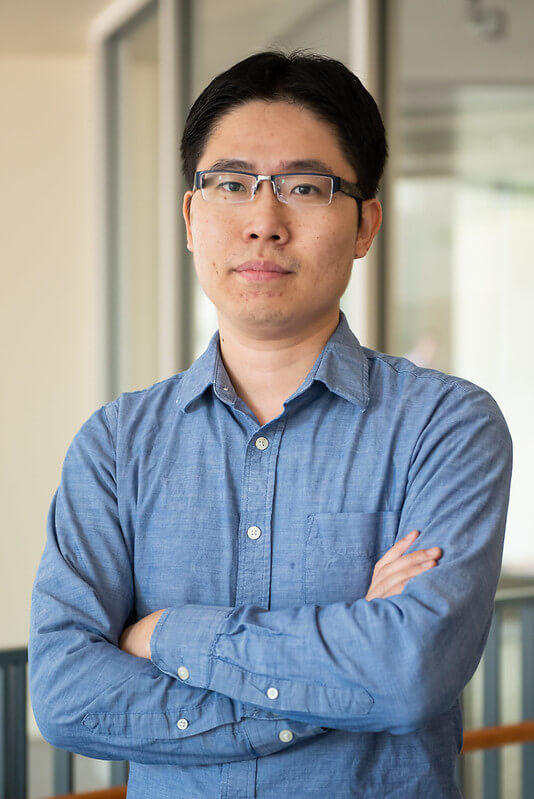
Xianyang Zhang is a Professor in the Department of Statistics at Texas A&M University, affiliated with the College of Arts & Sciences. He holds a Ph.D. from the University of Illinois at Urbana-Champaign (2013) and a B.S. from the University of Science & Technology of China (2008). His research focuses on high-dimensional statistics, functional data analysis, kernel methods, and genomics, supported by grants from NIH, NSF, and Texas A&M. Education: Ph.D., Statistics, University of Illinois at Urbana-Champaign, 2013 B.S., Statistics, University of Science & Technology of China, 2008 Research Interests: Xianyang Zhang develops statistical theories and methodologies for complex data structures, including high-dimensional inference, kernel-based testing, change-point detection, and microbiome analysis. His work bridges computational and theoretical statistics, addressing challenges in genomics, omics-wide studies, and spatial statistics. Key Contributions: Developed KDist , a package for kernel and distance-based statistical inference Authored fastcpd for efficient change-point detection Advanced covariate-adaptive FDR control methods for omics studies Contributed to microbiome analysis tools like MicrobiomeStat and LinDA Advising & Grants: Advises multiple Ph.D. students in statistics and interdisciplinary projects Recipient of NIH and NSF grants for high-dimensional statistical research Collaborates with institutions like Mayo Clinic and Chinese University of Hong Kong Labs/Teams: Leads research groups focused on statistical methodology development, software implementation, and applications in computational biology and genomics.
Hugo Paquet is a Researcher at INRIA Paris and a member of the ANTIQUE team at École Normale Supérieure , PSL University. He completed a PhD in Computer Science (2015–2019) at the University of Cambridge under Glynn Winskel , focusing on concurrent game semantics for probabilistic programming. His postdoctoral work includes positions at LIPN, Paris (2022–2024, funded by a Marie Skłodowska-Curie Award) and University of Oxford (2020–2022). He has contributed to conferences including LICS , ESOP , FSCD , and POPL . Education : PhD in Computer Science (University of Cambridge, 2019) Research Interests : Probabilistic programming (semantics, inference algorithms, nonparametric models), categorical semantics (game semantics, concurrency models, adjunctions), combinatorial species, and 2-dimensional categories. Teaching : Category Theory (2023–2024), Bayesian Statistical Probabilistic Programming (2021–2022), Lambda-calculus and Types (2020–2021), and small-group teaching at Cambridge (Logic, Discrete Mathematics, Semantics). Awards : Marie Skłodowska-Curie Award under the Paris Region Fellowship Programme Labs : INRIA Paris, ANTIQUE team (2024–present)
Amit Sen is a Professor of Economics at Xavier University, with expertise in econometrics, applied statistics, and time series analysis. He co-directs the Center for International Business and oversees international study programs for the MBA and B.S.B.A. in International Business. His research focuses on methodological challenges in unit root testing and structural breaks in time series data. Educational Background: Ph.D. in Economics & Statistics (co-major) from North Carolina State University, M.E. in Economics, and B.A. (Honours) in Mathematics. Sen’s research has been published in leading journals such as the Journal of Business and Economic Statistics, The Econometrics Journal, and Computational Statistics & Data Analysis. His work emphasizes statistical inference in non-stationary time series and economic applications like income convergence and unemployment disparities. He teaches econometrics, time series analysis, and international business courses across undergraduate, M.S., and MBA programs. Sen also contributes to the Philosophy, Politics & the Public Honors program and the Modern Languages & International Economics B.A. program at Xavier. His recent publications (2018-2003) explore unit root methodologies, innovation variance breaks, and economic empirics, reflecting a consistent focus on advancing econometric techniques for real-world data analysis. No scientific awards are mentioned in the provided text.
Sid Horton is an Associate Professor and Director of Cognitive Psychology in the Department of Psychology at Northwestern University. He holds affiliations with the Northwestern Department of Linguistics and the Center for Technology and Social Behavior. Horton’s research focuses on psycholinguistics and pragmatics, exploring how social and cognitive factors influence language use, particularly in discourse production and comprehension of non-literal language. His work also examines epistemic judgments and theory-of-mind development. Education: B.S. Psychology/German (Duke University, 1991), M.A. and Ph.D. in Cognitive Psychology (University of Chicago, 1994 and 1999). Postdoctoral training at SUNY-Stony Brook and Georgia Institute of Technology. Editorial roles include Associate Editorships at Discourse Processes and Memory & Cognition . Research Interests: Pragmatics, discourse processing, figurative language, common ground, and aging effects on communication. His recent work investigates typing cues in written messages and analogical reasoning’s role in theory of mind. Awards: Fellow, Society for Text and Discourse (2011–2017). Teaching: Cognitive Psychology (PSYCH 228), Research Methods (PSYCH 205), and graduate courses on experimental pragmatics and dialogue. Labs: Cognition and Communication Lab (Swift 217 and Cresap 108), supervising undergraduate and graduate research on topics like bilingualism, emoji usage, and perspective-taking.
Roy Wollman is a Professor at the University of California, Los Angeles (UCLA) in both the Department of Integrative Biology and Physiology and the Department of Chemistry and Biochemistry within the College of Letters and Science. His work bridges experimental and computational approaches to study dynamic signaling networks and their impact on cellular decisions. Research Focus: Computational and systems biology of signaling pathways Key Techniques: Single-cell analysis, spatial transcriptomics, quantitative modeling Major Themes: Information transmission in biochemical networks, cellular decision-making, epigenetic regulation Recent work has emphasized spatial transcriptomics mapping of brain regions, wound response signaling, and multi-scale analysis from cell biology to physiology. His lab has developed computational tools like scPNMF for gene selection and JSTA for cell segmentation and annotation. Key findings include mechanisms of TNF-induced cell death tradeoffs and laminin scarring effects in stem cell function. Roy Wollman has received continuous NIH funding since 2009, including grants for studying NFκB dynamics (R01GM117134), corneal wound signaling (R01EY024960), and single-cell technologies for traumatic brain injury (R01NS117148). His research combines high-throughput microscopy with computational modeling to understand how cells process dynamic signals.
Sanat K. Sarkar serves as a Professor in the Department of Statistics, Operations, and Data Science at Temple University's Fox School of Business and Management. An internationally renowned expert, he has pioneered foundational work in multiple testing theory with applications spanning genomics, neuroimaging, and high-dimensional data analysis. His methodological innovations address critical challenges in false discovery rate control under complex dependency structures. Research Interests: Dr. Sarkar specializes in Multiple Testing, Statistical Methodologies, High-Dimensional Statistical Inference, and Multivariate Statistics. His work develops rigorous frameworks for hypothesis testing in modern scientific contexts where thousands of simultaneous tests are performed, ensuring reliable discoveries in fields like genetic association studies and brain connectivity mapping. Key contributions include adaptive FDR procedures and methods for structured hypothesis groups. Publication Trends: Over 2020-2025, his 11 publications demonstrate sustained leadership in refining false discovery rate methodologies. Recent work tackles correlated data (2025), knockoff variable selection (2022), and hierarchical hypothesis structures (2021-2024), reflecting his focus on real-world applicability in biomedical big data. His research bridges theoretical statistics with practical computational solutions. Honors and Awards: Fellow, Institute of Mathematical Statistics Fellow, American Statistical Association Elected Member, International Statistical Institute Musser Award for Research Excellence (Fox School) Multiple Dean's Research Honor Roll Inductions Research Support and Service: Funded continuously by NSF and NSA grants, Dr. Sarkar co-organized the NSF-CBMS conference on Multiple Comparisons and serves on editorial boards of Annals of Statistics , American Statistician , and Sankhya . He regularly delivers invited talks at international venues and mentors junior researchers in statistical methodology development.
Adlen Ksentini is a Professor at EURECOM, a leading graduate school and research center in Sophia Antipolis, France, specializing in digital science and communication systems. His extensive research focuses on next-generation mobile networks (5G/6G), network management, and the integration of artificial intelligence with telecommunications infrastructure. Dr. Ksentini actively contributes to major EU research initiatives including 6G-BRICKS and AC3, serving as a key researcher and project leader in the development of future network architectures. Dr. Ksentini's research interests center around network slicing, intent-based networking, edge computing, and the application of machine learning to network management problems. His work bridges theoretical advancements with practical implementations in 5G/6G systems, with particular emphasis on zero-touch network management, energy efficiency optimization, quality of service assurance, and the integration of large language models with network operations. His research has significantly contributed to the development of O-RAN (Open Radio Access Network) frameworks and the evolution of network automation. His recent publication trends reveal a strategic shift toward AI-native network architectures, with increasing focus on integrating large language models (LLMs) with network management systems. His work demonstrates a clear progression from traditional network management approaches to more autonomous, AI-powered systems capable of intent-based configuration, self-optimization, and predictive maintenance. The publications show strong emphasis on practical implementations within the 6G research ecosystem, addressing critical challenges in network slicing, resource allocation, and energy efficiency. As a research supervisor, Dr. Ksentini mentors several PhD students including Abdelkader Mekrache, Karim Boutiba, Bouziane Brik, and Houda Hafi, who frequently appear as co-authors on his publications. His research is primarily funded through major EU research projects such as 6G-BRICKS (Building Reusable Testbed Infrastructures for Cloud-to-Device Breakthrough Technologies) and AC3 (which focuses on Cloud Edge Continuum). Dr. Ksentini is actively involved with the 6G-BRICKS project consortium and the AC3 project team, where he contributes to developing next-generation network architectures that integrate communication, computing, and sensing capabilities. His work within these projects focuses on creating reusable testbed infrastructures and addressing security and trust management challenges in the cloud-edge continuum.
Dr. Swati Chandna is a Senior Lecturer at the School of Computing and Mathematical Sciences, Birkbeck, University of London. She holds an honorary position as an Honorary Lecturer in Statistics at University College London (UCL) from January 2023 to January 2026. She earned her PhD in Statistics from Imperial College London in 2013. Her research focuses on statistical modeling, network analysis, and bioinformatics, with notable contributions to stochastic networks, single-cell genomic data analysis, and complex-valued signal processing. Teaching responsibilities include modules such as Bayesian Methods, Analysing Data, Statistical Analysis, and Project Applied Statistics. She serves as Admissions Tutor for Graduate Certificate and Diploma in Statistics for Data Science and as School Ethics Lead at Birkbeck. Her work bridges theoretical statistics with practical applications in genomics, environmental modeling, and biomedical research. Dr. Chandna’s recent research explores topics like covariate-driven network estimation, stochastic modeling of genomic data, and bootstrap techniques in source separation. Her publications reflect interdisciplinary collaboration across statistics, computer science, and life sciences.
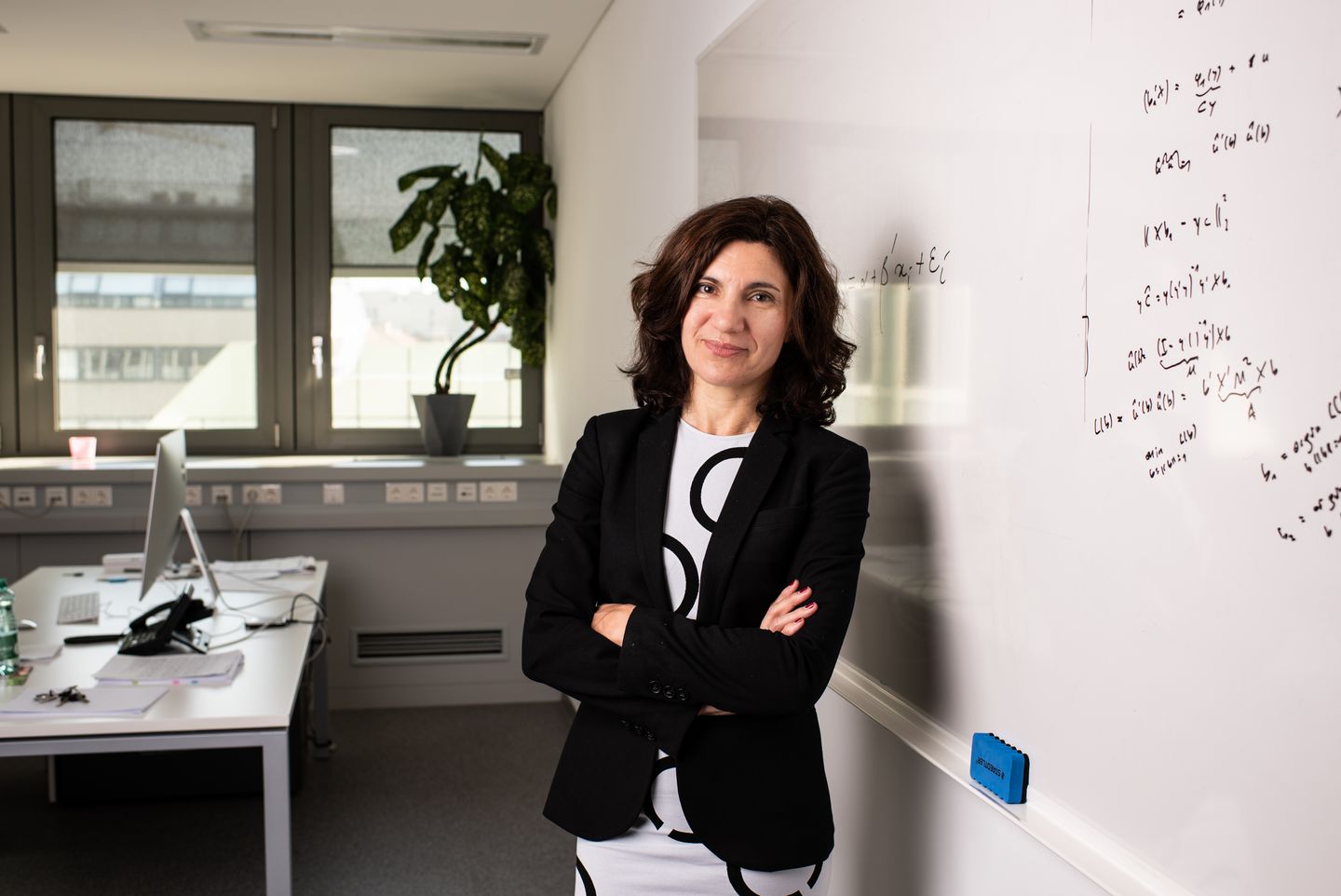
Efstathia Bura is a Professor heading the Applied Statistics Research Unit (ASTAT) within the Institute of Statistics and Mathematical Methods in Economics at TU Wien's Faculty of Mathematics and Geoinformation. Her research focuses on dimension reduction techniques in regression and classification, high-dimensional statistics, and their applications in biostatistics, econometrics, and legal statistics. She leads projects like ProbInG (WWTF-funded) and the SecInt Doctoral College on statistical verification of cyber-physical systems. Her work integrates advanced statistical methodologies with interdisciplinary applications, emphasizing practical solutions for complex data challenges. Current projects explore probabilistic program analysis, security properties in cyber-physical systems, and dynamic econometric modeling. She collaborates internationally, with notable contributions to statistical theory and applications in law, healthcare, and telecommunications. Key research themes include time-varying regression models, sufficient dimension reduction for mixed predictors, and fusion of statistical methods with machine learning. Her publications bridge theoretical advancements and real-world problem-solving, reflecting her role as a leading academic in modern applied statistics. Her team includes postdocs and assistants working on WWTF and SecInt grants, focusing on probabilistic systems and statistical verification. While no formal student advisees are listed, her collaborative projects engage junior researchers in cutting-edge statistical research.
Vassilis Christophides is a Professor of Computer Science at the University of Crete and holds an advanced research position at Inria Paris, where he leads work in the MiMove team. His research spans databases, web information systems, big data processing, and IoT analytics, with a strong emphasis on entity resolution, data integration, and scalable data mining. He has supervised numerous research projects funded by the European Union and the Greek State, and has published over 130 articles in top-tier conferences and journals. Research Interests: His primary research areas include Databases, Web Information Systems, Big Data Processing and Analytics, and Information Systems for the Internet of Things. He also focuses on entity resolution, knowledge graphs, streaming data, and explainable AI, particularly in the context of anomaly detection and fairness-aware data systems. His recent work explores hybrid attention models for entity alignment and causal analysis in time series classification. Recent Research Trends: Analysis of his recent publications (2021–2025) reveals a strong focus on entity resolution with fairness constraints, explainable anomaly detection, and adaptive scheduling in IoT edge analytics. He also investigates deepfake detection, crop type mapping using satellite data, and structural bias in knowledge graphs, demonstrating a broad and impactful research portfolio at the intersection of data management and machine learning. Scientific Awards: 2004 SIGMOD Test of Time Award Best Paper Award, ISWC 2003 Best Paper Award, ISWC 2007 Advising and Grants: While specific student names are not listed in the provided texts, Christophides has co-authored numerous papers with researchers such as Vasilis Efthymiou, Ioannis Tsamardinos, and Nikolaos Myrtakis, suggesting active mentorship. He has been the scientific coordinator of multiple EU and national research projects, indicating substantial grant leadership and project management experience. Labs and Teams: He is affiliated with the MiMove team at Inria Paris, a research group focused on mobility and data-intensive systems. His work bridges academic and applied research, leveraging Inria’s infrastructure for large-scale data experimentation and innovation in IoT and edge computing environments.
Lionel Truquet is a Lecturer-Researcher in Statistics and Director of Research at ENSAI (École Nationale de la Statistique et de l'Analyse de l'Information). His research focuses on advanced statistical methodologies, including time series analysis, Markov chains, and ecological data modeling. He has contributed to multivariate autoregressive binary models, compact space time series models, and nonstationary count processes. Research Interests: His work emphasizes statistical theory applied to dependent data, with a strong focus on ecological applications. Key areas include ergodic properties of Markov chains, mixing properties of time series, and modeling presence-absence data. His methods address challenges in high-dimensional and nonstationary environments. Publications: Recent work includes influential contributions such as the TJALLING C. KOOPMANS ECONOMETRIC THEORY PRIZE-winning paper on iterations of dependent random maps. His publications span top journals like Bernoulli, the Annals of Applied Probability, and the Journal of Time Series Analysis, reflecting his expertise in both theoretical and applied statistics. Teaching: He teaches advanced courses such as Asymptotic Statistics and Dependence at the M2 level, reflecting his commitment to training future statisticians in cutting-edge methodologies.
Claire Le Goues is an Associate Professor in the School of Computer Science at Carnegie Mellon University , affiliated with the Software and Societal Systems Department (formerly Institute for Software Research). She holds a Ph.D. and M.S. in Computer Science from the University of Virginia and a B.A. in Computer Science from Harvard College. Her research focuses on software engineering with emphasis on program analysis , transformation , and search-based repair . She leads the squaresLab group and co-directs the REUSE@CMU summer program. Her work spans automated program improvement (stochastic/formal approaches), software assurance, quality metrics, and systems from open source to robotics. Recent scientific awards include the ACM FSE 2025 Test of Time Award Honorable Mention and the Presidential Early Career Award for Scientists and Engineers (PECASE) . She mentors students in software engineering and actively collaborates on projects like SearchRepair and GenProg , supporting empirical benchmarks such as ManyBugs and IntroClass . She teaches software engineering and program analysis at undergraduate, master’s, and doctoral levels, addressing challenges in scaling modern systems. Her lab focuses on software repair , code transformation , and AI-driven testing .
Hwanhee Hong is an Associate Professor in the Department of Biostatistics and Bioinformatics at Duke University School of Medicine and a member of the Duke Clinical Research Institute. Affiliated with the Biostatistics, Epidemiology, and Research Design (BERD) Methods Core and the B&B Faculty, Dr. Hong maintains an active research program focused on statistical methodology development for clinical applications. Dr. Hong's educational background includes a Ph.D. in Biostatistics from the University of Minnesota (2013), an M.S. in Biostatistics from Harvard University (2010), and a B.S. in Statistics from Chung-Ang University, Korea (2008). Prior to joining Duke, they completed a postdoctoral fellowship at Johns Hopkins Bloomberg School of Public Health under Dr. Elizabeth A. Stuart. Research interests center on Bayesian statistical methods for comparative effectiveness research, network meta-analysis, causal inference, measurement error correction, and data integration across multiple sources. Their work emphasizes adaptive information borrowing to address clinical and public health questions, particularly in developing flexible Bayesian modeling frameworks that synthesize diverse data streams for evidence generation. Analysis of recent publications reveals consistent methodological focus on network meta-analysis techniques, causal inference with error-prone covariates, generalizability assessment, and time-to-event analysis. The research spans applications in pediatrics, cardiology, obesity treatment, and vaccine effectiveness, demonstrating strong translational impact across medical domains. Dr. Hong actively collaborates with biostatisticians, epidemiologists, clinicians, and health policymakers through multiple funded projects, though no formal awards or fellowships are documented in the provided materials. Participant, Faculty Success Program, National Center for Faculty Development & Diversity (2023) Participant, Faculty Curriculum on Anti-Racism, Duke Office of Faculty Advancement (2021) Teaching responsibilities include BIOSTAT 719: Generalized Linear Models. Current grant funding spans eight major projects totaling over $20 million, primarily from NIH and PCORI, addressing pediatric care coordination, mental health interventions, obesity treatment, diabetes management, and advanced biostatistical methodology development. Dr. Hong's laboratory work focuses on computational approaches for data integration, maintaining active collaborations with the Duke Clinical Research Institute and multiple external institutions including Johns Hopkins University and North Carolina State University.
Giles Reger is a Senior Lecturer in the Formal Methods Group of the School of Computer Science at the University of Manchester. He completed his BA in Computer Science at the University of Cambridge in 2009, followed by an MSc in Advanced Computer Science at the University of Manchester in 2010 (awarded Highest Achiever of the Year), and earned his PhD from the University of Manchester in 2014 with a thesis titled "Automata based monitoring and mining of execution traces". His research spans several key areas within computer science: Automated Theorem Proving (first-order) Saturation-based techniques Reasoning with theories and quantifiers Finite Model finding Collaborative and Concurrent proof attempts Runtime Monitoring/Verification Temporal specification languages Specification Mining/Inference Dr. Reger leads multiple EPSRC-funded research projects including SCorCH (Secure Code for Capability Hardware), CAPS (Collaborative Architectures for Proof Search), and QuTie (reasoning with Quantifiers and Theories). His work on the Vampire theorem prover and MarQ monitoring tool demonstrates his bridge between theoretical computer science and practical applications. Recent publications show strong focus on runtime verification, theorem proving, and program analysis with applications to security and performance monitoring. Notable awards: Highest Achiever of the Year Award for MSc studies Dr. Reger collaborates extensively with institutions including the University of Oxford, Arm, Amazon Web Services, and CERN (CMS Experiment). As Manchester lead on the SCorCH project, he develops formal analysis tools for security-aware hardware chips. His work on the VyPR framework enables developers to analyze Python program performance through temporal specification languages and monitoring algorithms.