Jean Colombani is a Professor at the Institute of Light and Matter (Université Claude Bernard Lyon 1). He leads the Liquids and Interfaces team and focuses on materials science, fluid dynamics, and colloidal physics. Previously, he was active in the Mechanical and Production Engineering department for over two decades. Research Highlights: His work explores colloidal gel mechanics solute transport phenomena (Soret effect) durability of mineral materials dissolution-precipitation processes drop evaporation on reactive substrates recycling of paper electronics Collaborations span institutions like UCLA, Tokyo University, Padua, and Grenoble, with multiple Arqus grants supporting international exchanges. He mentors PhD candidates such as Alexandra Mailleur and engages in science-art partnerships. Scientific Awards: Arqus grant (2022) Arqus grant (2020) Arqus grant (2017)
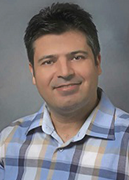
Denis Morris is a Full Professor and Vice-Dean of Research in the Department of Physics at the University of Sherbrooke, affiliated with the Interdisciplinary Institute for Technological Innovation (3IT), Quantum Institute (IQ), and Quebec Centre for Advanced Materials (RQMP). His educational background includes: M. Sc. in Physical Engineering (Fiber Optic Probe and Two-Phase Flow Study) from École Polytechnique de Montréal (1986) Ph. D. in Physics (Optical Study of Strain Relaxation in InAs/GaAs Systems) from Université de Montréal (1990) Post-doctoral research at France Telecom's National Center for Telecommunications Studies (1991-1993) Professor Morris specializes in time-resolved optical spectroscopy for semiconductor nanostructure analysis, with core research on carrier/spin relaxation dynamics in quantum systems. Key focus areas include: Quantum dot/well interdiffusion techniques for broadband infrared emitters/detectors Terahertz device development and time-domain spectroscopy applications Ultrafast optical processes influenced by cavity modes, intense electromagnetic fields, and surface/bulk traps Femtosecond-resolution characterization spanning visible to far-infrared spectra His methodologies directly enable innovations in quantum dot photodetectors, terahertz radiation detectors, biomolecule sensors, and quantum computing hardware. He leads an active research group utilizing photoluminescence, transient absorption, electro-optic sampling, and terahertz spectroscopy techniques, with institutional ties to 3IT, IQ, and RQMP driving interdisciplinary materials science advancements.
Professor Yuka Tabe of the Department of Physics, Faculty of Science and Engineering at Waseda University, is a leading researcher in Biophysics and Soft Matter Physics . Her work focuses on Liquid Crystals , Langmuir Monolayers , and Thermomechanical Coupling in chiral systems. Key affiliations: Waseda University (2012–present) Professional memberships: The Physical Society of Japan The Japanese Liquid Crystal Society Her research interests span: Cholesteric liquid crystal dynamics under thermal gradients Induced smectic phase formation in binary mixtures Photo-polymerization in 2D systems Defect manipulation in liquid crystal colloids Molecular diffusion in ordered soft materials Nanoscale patterning via micelle templating Recent publications (2016–2021) demonstrate: Heat-driven rotation of cholesteric droplets (Lehmann effect) Stabilization of double-twisted structures via elastic energy competition Photochemical control of topological defects in LC emulsions Gas permeation studies in smectic films Charge-transfer-induced smectic phase ordering Molecular dynamics simulations of 2D diffusion
Daiki Tanaka is an Assistant Professor at the School of Fundamental Science and Engineering, Waseda University, specializing in microfluidics, inorganic chemistry, and nanotechnology applications for chemical synthesis and bioengineering. His research focuses on developing innovative microfluidic devices for precise control of chemical reactions, protein crystallization, and single-cell analysis. Education: PhD from Waseda University (2018), MS in Chemistry from Tokyo University of Science (2014) Key research areas include microdroplet manipulation , functional material synthesis , and passive flow control systems . Recent work demonstrates single-micron droplet generation , chiral molecule synthesis , and high-efficiency cell encapsulation without conventional centrifugation. His 2025 review on additive-manufactured microfluidics highlights advancements in quantum dot synthesis scalability. Scientific contributions are recognized through awards such as the 2023 New Chemical Technology Research Encouragement Prize and the 2019 Micromachines Best Paper Award . His interdisciplinary approach integrates chemistry, physics, and biotechnology to push boundaries in lab-on-a-chip technologies. Key Awards: 12th New Chemical Technology Research Encouragement Prize (2023) 2019 Micromachines Best Paper Award Daiki Tanaka's work extends to securing industrial property rights for microfluidic devices and editorial committee memberships , reflecting his leadership in advancing chemical engineering methodologies.
Professor Jenny leads the Jenny Research Group at ETH Zürich, specializing in turbulent reactive flows, rarefied gas kinetics, and biomedical fluid dynamics. Her work bridges fundamental research with industrial applications in energy systems and fluid mechanics. Develops advanced turbulence models (TDDM, hybrid LES/RANS) for multi-scale flows Pioneers data assimilation frameworks for RANS simulations using adjoint methods Advances particle-based stochastic algorithms for fractured porous media transport Her recent publications emphasize adaptive time integration techniques, probabilistic modeling of non-linear transport phenomena, and optimized simulation tools for hydrogen storage systems. The group's methodological innovations focus on reducing computational costs while maintaining physical accuracy through novel regularization strategies. Key applications include combustion device optimization, high-pressure tank filling analysis, and fractured reservoir simulations. Current projects integrate machine learning with traditional CFD methods to address challenges in droplet clustering, flame surface density propagation, and supersonic spray dynamics. The research framework spans from direct numerical simulations of fundamental flow physics to industrial-scale hybrid modeling implementations.
Dr. Ahmed Kaffel is a Teaching Professor in the Department of Mathematical Sciences at the University of Wisconsin-Milwaukee's College of Letters and Science. With a multidisciplinary background spanning mathematics and engineering, he holds a PhD in Mathematics from Virginia Tech and has held postdoctoral positions at Brown University and the University of Maryland. His research develops advanced numerical methods to solve physical problems in fluid mechanics, porous media, and biomedical systems. Core interests include: Computational fluid dynamics (Newtonian/viscoelastic fluids, free-surface flows) Multiscale modeling of transport in porous media Inverse problems for medical imaging reconstruction Applications of machine learning in computational biology High-performance scientific computing techniques (FEM, FVM, spectral methods) Recent publications demonstrate a shift toward medical imaging and data science applications, building on his foundational work in hydrodynamic stability. His 8 most recent articles (2010-2020) primarily appear in leading fluid dynamics and heat transfer journals. Dr. Kaffel has taught extensively across the mathematics curriculum, currently instructing courses in linear algebra, calculus, and differential equations at UW-Milwaukee. His pedagogical approach emphasizes connecting theoretical concepts to real-world applications in engineering and biosciences.
Professor Andreas Kronenburg serves as Institute Director and Dean of Studies at the Institute for Reactive Currents (WASTE) at the University of Stuttgart. With a background in mechanical engineering from RWTH Aachen and a PhD in Combustion Engineering from the University of Sydney, he has established himself as a leading researcher in combustion science. His career includes significant positions at Imperial College London where he served as Governor's Lecturer in Thermofluids (2000-2007) and Reader in Combustion (2007-2008) before joining the University of Stuttgart in 2009. Professor Kronenburg's educational background includes: RWTH Aachen, Mechanical Engineering (1989-1994) Universidad Politécnica de Madrid, Study Abroad (1992-1993) University of California at Davis, Study Abroad (1992-1993) University of Sydney, PhD in Combustion Engineering (1995-1998) His research focuses on advanced combustion modeling, particularly turbulent reactive flows, spray combustion, and nanoparticle dynamics. Kronenburg has made significant contributions to Large Eddy Simulation (LES) techniques, Conditional Moment Closure (CMC) methods, and particle-based modeling approaches. His work spans fundamental combustion science and practical applications in energy systems, with recent emphasis on sustainable fuels including hydrogen, ammonia, and biomass conversion. His research group develops sophisticated computational models that address challenges in predicting complex combustion phenomena with high accuracy. Analysis of his recent publications (2023-2026) reveals a strong focus on emerging energy technologies, particularly hydrogen and ammonia combustion for decarbonization, advanced particle dynamics in combustion systems, and computational methods for efficient simulation of complex reacting flows. His work demonstrates consistent innovation in modeling techniques while addressing practical engineering challenges in sustainable energy systems. Professor Kronenburg's scientific achievements have been recognized with numerous prestigious awards: Fellow of the Combustion Institute (2019) Distinguished Paper Award of the Combustion Institute (2013) Hinshelwood Prize for meritorious work of a young researcher (2006) Two Sudgen Awards for significant contributions to combustion science (2005, 2006) Best paper award at the Australian Symposium on Combustion (1997) Springorum Commemorative Medal for academic excellence (1994) With over 3,300 citations across 164 publications and an h-index of 33, Professor Kronenburg maintains an active research program with significant impact. His work has received support from organizations like the German Research Foundation (DFG), and he collaborates extensively with international institutions including Imperial College London and the University of Sydney. The computational resources available to his research group through bwGrid and HLRS enable large-scale simulations that advance the understanding of complex combustion phenomena. The Institute for Reactive Currents under Professor Kronenburg's leadership focuses on cutting-edge research in combustion science and engineering. The institute develops advanced computational models for predicting combustion behavior in various applications, from traditional energy systems to emerging sustainable technologies. With expertise in both fundamental combustion processes and practical engineering applications, the institute contributes significantly to addressing current challenges in energy conversion and environmental protection.
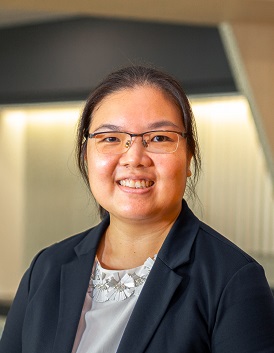
Dr. Elaine Yeu Yee Lee serves as Senior Lecturer and Associate Dean – Academic Practice at Swinburne University of Technology Sarawak's Faculty of Engineering, Computing and Science. With over 15 years of institutional affiliation since 2009, she holds dual engineering qualifications: BEng (Hons) in Mechanical Engineering from Curtin University (2008) and PhD in Engineering from Swinburne (2018). Education BEng (Hons) Mechanical Engineering, Curtin University of Technology (Sarawak Campus), 2008 PhD Engineering, Swinburne University of Technology (Sarawak Campus), 2018 Her research program spans Thermal Fluid, Building Services, and Biomass Waste-To-Wealth conversion, with deep specialization in porous media heat/mass transfer phenomena. Current projects investigate phase transitions in porous structures and sustainable valorization of agricultural residues through green solvent extraction. She employs experimental methodologies including thermogravimetric analysis and pyrolysis kinetics to address energy and environmental challenges. Dr. Lee's publication record since 2008 shows consistent focus on thermal processes in porous media, evolving from fundamental evaporation/condensation studies (2010-2017) to applied biomass conversion (2020). Her 2020 ARFMTS paper on inclined-plate condensation represents the latest theoretical advancement, while recent conference presentations emphasize practical biomass applications. Awards & Recognition Vice-Chancellor’s 2019 Community Engagement Award (Highly Commendable) for sustainability outreach She currently supervises research students through two active grants focused on agro-biomass pyrolysis, with prior completion of a plastic-waste insulation project. Her professional engineering credentials include Chartered Professional Engineer status (Engineers Australia) and dual Malaysian engineering board certifications. Dr. Lee actively encourages research higher degree candidates in thermal-fluid and sustainable materials domains. Professional Affiliations Chartered Professional Engineer, Engineers Australia (CPEng MIEAust) APEC Engineer & International Professional Engineer (IntPE(Aus)) Graduate Engineer, Board of Engineers Malaysia Associate Member, Institution of Mechanical Engineers (AMIMechE) Associate Member, Institution of Chemical Engineers (AMIChemE)
Professor Alisa DeStefano serves as Associate Professor in the Department of Mathematics and Computer Science at College of the Holy Cross. Her academic career spans over three decades, including prior appointments as Assistant Professor at Holy Cross (1992-1999), Visiting Professor at Boston University (1994-1995), and Lecturer at Dartmouth College (1989-1992). Her educational background includes: Ph.D. in Mathematics, Dartmouth College (1992) A.M. in Mathematics, Dartmouth College (1989) B.S. in Mathematics (summa cum laude), Northeastern University (1987) DeStefano's research centers on Control Theory, specializing in Universal and Discrete Observability of Dynamical Systems. Her work rigorously examines state estimation for wave and heat equations on bounded domains and compact homogeneous spaces, while bridging connections to topological dynamics and abstract harmonic analysis. This interdisciplinary approach integrates techniques from partial differential equations, global analysis, and mathematical physics to solve fundamental problems in system observability. Her publication trajectory (1990-2001) reveals consistent contributions to observability theory, evolving from discrete wave equation analysis to sophisticated constructions of universally observable torus flows and topological dynamics equivalences. Key venues include SIAM journals, IEEE conferences, and Birkhäuser's Progress in Systems and Control Theory series. Notable recognitions include: Summer Faculty Fellowship (awarded 1994, 1997, 1998) Association for Women in Mathematics Travel Grant (1993, 1998) NSF ILI-IG Grant (1993) She maintains active professional engagement through the Mathematical Association of America, American Mathematical Society, and Association for Women in Mathematics. Her teaching portfolio spans Real and Abstract Analysis, Fourier Analysis, differential equations, and chaos theory, reflecting her dual expertise in pure and applied mathematics. While specific current grant details aren't provided in the source material, her historical funding record demonstrates sustained research productivity in mathematical control theory.
Étienne Robert is a Full Professor in the Department of Mechanical Engineering at Polytechnique Montréal. He holds a B.Eng from Polytechnique Montréal and M.Sc./Ph.D. degrees from École Polytechnique Fédérale de Lausanne (EPFL). His primary affiliation is with Polytechnique Montréal, with past research experience at CERN. Professor Robert's research focuses on experimental approaches to fluid mechanics, particularly combustion dynamics and multiphase systems. Key research themes include: Fundamental studies of diffusion flames and thermo-diffusive instabilities Soot formation mechanisms and carbon nanostructure synthesis Acoustic manipulation of sub-micron particles for separation applications Hypergolic ignition systems for rocket propulsion Aerosol dynamics relevant to pathogen transmission and environmental systems His publication record shows strong emphasis on combustion science (40%), fluid dynamics (30%), aerosol physics (20%), and applied thermal engineering (10%). Recent work increasingly addresses sustainable energy applications including biomass polygeneration and hydrogen systems. Professor Robert leads an active research group with current supervision of 1 postdoctoral fellow and 4 PhD students. He has graduated 10 PhD and 11 Master's students working on projects spanning fundamental combustion, aerospace materials, and environmental fluid mechanics. Research funding includes NSERC Discovery grants and participation in EU-funded collaborations. Laboratory capabilities center on specialized combustion diagnostics, aerosol characterization systems, and acoustic manipulation setups. The group maintains unique experimental facilities including a one-dimensional diffusion flame burner enabling fundamental studies unobtainable in conventional systems.
Jean-Claude Roy is an Associate Professor in Fluid Mechanics and Thermodynamics at the Bourgogne Franche-Comté University , affiliated with the UFR STGI (Science, Technology, and Industrial Engineering Unit) and part of the Energy Department . He has been active in research since 1991, focusing on computational fluid dynamics (CFD) applications in agricultural and thermal engineering. PhD in Mechanical Engineering (1991) - Mixing of anisothermal flows Academic Appointments: Fluid Mechanics, Thermodynamics, and CFD modeling His research spans two primary domains: Greenhouse Micrometeorology - Modeling heat, water vapor, and CO2 transfers in greenhouse environments, with emphasis on climate distribution, natural ventilation, and crop transpiration. Magnetocaloric Heat Transfer - Investigating heat pumps using magnetocaloric regenerators, oscillating flows, and innovative composite materials for sustainable refrigeration. Key publication trends show expertise in: CFD modeling of magnetocaloric devices and regenerators Thermal and aerodynamic analysis of projectiles and transducers Climate control in agricultural facilities He collaborates extensively with researchers like Thierry Boulard, Yannick Bailly, and Stefan Giurgea, contributing to 58+ publications. His work bridges mechanical engineering principles with agricultural and environmental applications, focusing on both heat transfer and fluid dynamics challenges.
Benedetta Giulia Franzelli is a CNRS Researcher (Chargée de recherche) at the EM2C laboratory , affiliated with CentraleSupélec and Université Paris-Saclay . She holds a Visiting Researcher position at the CRECK Modeling Group, Politecnico di Milano . Her research focuses on nanoparticle production in turbulent flames , combining theoretical , experimental , and numerical approaches to address challenges in soot formation, flame synthesis of metal oxides, and combustion modeling. PhD in Energy and Transfer, CERFACS/INPT Toulouse (2011) Postdoctoral Fellow, Stanford University (2013-2014) Master in Numerical Fluid Dynamics, Politecnico di Milano (2007) Her work spans combustion science , turbulent reactive flows , and nanoparticle synthesis , with recent studies on TiO₂ nanoparticle characterization , soot-LII diagnostics , and LES modeling of swirled flames . She coordinates the European Cost action Cyber's Young Researcher and Gender Balance committee and chairs the 2024 Bernard Lewis Fellowship committee. Scientific Awards : ERC Starting Grant (SOTUF project, 2017-2023) CNRS Bronze Medal (2018) Zonta International Amelia Earhart Fellowship (2009-2010) Prix Aerospace Valley (2012) Bernard Lewis Fellowship (2014)
Franck Richecoeur is an Associate Professor at CentraleSupélec, specializing in experimental combustion and thermoacoustic phenomena. He holds a HDR (French post-doctoral degree) from the University of Rouen and has supervised PhD students like PIEYRE Amanda, MAZUR Marek, and TAO Wenjie. Education: PhD in High-frequency combustion instabilities (2006, École Centrale Paris), Master's (2003, University of Poitiers), Engineering degree (2003, ENSMA) Research Focus: Flame dynamics, combustion noise, ultrasound-based diagnostics, acoustic boundary conditions, and combustion instabilities in aerospace propulsion systems. Scientific Contributions: Over 20 peer-reviewed publications (e.g., Journal of Fluid Mechanics , Combustion and Flame ), with recent works on spray combustion dynamics, thermoacoustic optimization, and droplet evaporation diagnostics. Awards: Stanford Summer Program Fellowship (2012), AIAA Best Paper Award (2006) Teaching: Fluid mechanics, aerodynamics, and multidisciplinary project courses at École Centrale Paris.
Vitalij Iosifovitsj Kalikmanov is a Lecturer in Engineering Fluid Dynamics, focusing on multiphase systems and interfacial phenomena. His research spans fluid dynamics, thermodynamics, and laser spectroscopy applications in hypersonic flows. Research Interests His work addresses fundamental and applied aspects of sound wave propagation in two-phase systems cluster formation under extreme supersaturation interfacial free energy in solid-vapor transitions non-equilibrium condensation in supersonic nozzles resonance ionization spectroscopy for flow diagnostics statistical mechanical modeling of phase transitions Scientific Activity Between 2016 and 2022, he contributed to journals like Physics of Fluids and The Journal of Chemical Physics , with recent work on effective-medium models for nucleation presented in 2023. Collaborations include researchers in Belgium, Italy, and the Netherlands.
Dr. Maureen Hood serves as Associate Professor of Radiology and Bioengineering at the Uniformed Services University of the Health Sciences (USU) and functions as a clinical scientist. She maintains dual affiliation with the Walter Reed National Military Medical Center (WRNMMC) as a cardiovascular MR imaging consultant and MR safety expert, driving translational research in military and veteran healthcare settings. Her educational foundation includes: Bachelor of Science in Biology, Minor in Mathematics, University of Puget Sound Associate of Technical Arts in Radiologic Technology, Tacoma Community College Bachelor of Science in Nursing, University of Maryland, School of Nursing Master of Science in Nursing Informatics, University of Maryland, School of Nursing Doctor of Philosophy in Nursing Research, Uniformed Services University of the Health Sciences Dr. Hood's research program bridges engineering and clinical medicine through advanced imaging techniques. Her cardiac MRI work establishes critical correlations between T1/T2 mapping sequences and histological markers in heart failure models, while her current focus on ultrasound-mediated drug delivery targets precision treatment for infections. This dual trajectory in diagnostic imaging innovation and therapeutic application defines her unique contribution to biomedical science. Publication analysis reveals consistent expertise in cardiac MRI physics and safety spanning two decades. Her work demonstrates progressive technical sophistication from foundational contrast agent research to advanced quantitative mapping techniques, with strong emphasis on preclinical validation and clinical translation. Key thematic threads include myocardial tissue characterization, vascular imaging optimization, and rigorous safety protocols for MR environments. Scientific recognition includes: Fellow of the American Heart Association (2015-present) Best Cardiac MR Poster at NASCI Annual Meeting (2011) Linda Strangio Editor’s Award from ARNA (2006) Dr. Hood directs significant research initiatives including the Early Career Scientist Award-funded project on ultrasound-enhanced antibiotic delivery for osteomyelitis. Her leadership extends to editorial responsibilities for Military Medicine and abstract grading for major cardiology/radiology societies, demonstrating commitment to scholarly advancement beyond direct research output. She actively shapes the field through leadership roles in the American Heart Association's Leadership Council on Cardiovascular Radiology, the ISMRM MR Safety Committee, and NASCI research committee, fostering collaborative networks that integrate military medical imaging with broader academic radiology communities.