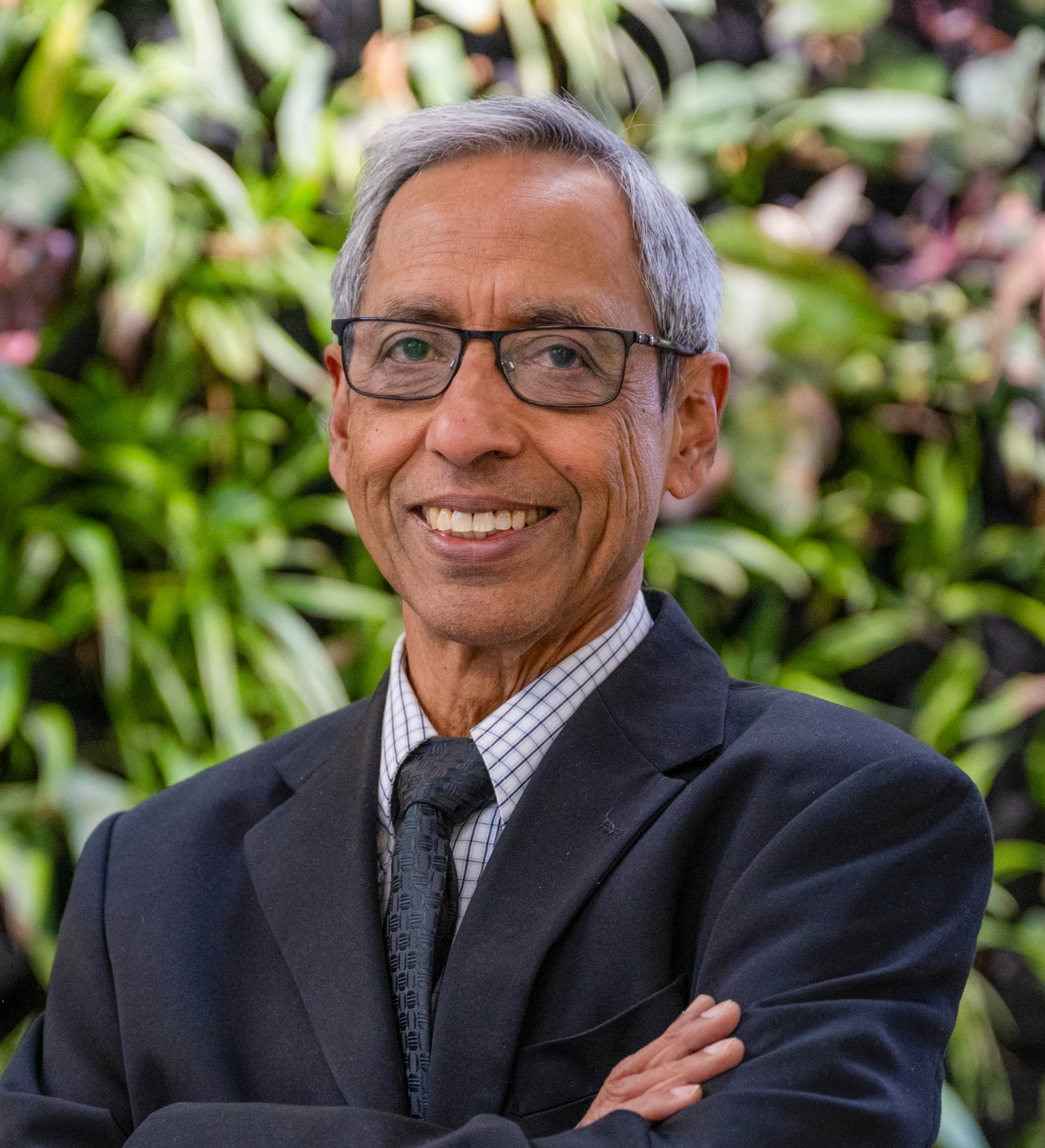
Omid Mahian is a professor at Ningbo University, Ningbo, China, with significant contributions to thermal engineering, renewable energy, and nanotechnology. His research focuses on optimizing heat transfer mechanisms in systems like supercritical CO 2 cycles, printed circuit heat exchangers, and photovoltaic thermal modules. He has over 14,597 documents cited, with an h-index of 81 and 287 publications on Scopus. Key research areas: Thermal Load, Surface Roughness, Microchannel Flow, Exergy Destruction, Renewable Energy, Forced Convection. Recent work explores advanced cooling techniques (e.g., wicked heat pipes, grooved copper foam) and nanofluid applications for atmospheric water harvesting and CO 2 absorption. His studies address energy efficiency in off-grid systems, including predictive dispatch strategies for hybrid renewable energy, supersonic separation for carbon capture, and thermal management in electric vehicle motors. Omid Mahian has authored 180 articles on ScienceDirect, with a focus on improving energy systems through innovative designs and materials. His collaborations span numerous disciplines, emphasizing sustainability and technological feasibility.
Jungeun (Jenny) Won is an Assistant Professor of Research in the Department of Biomedical Engineering at the School of Engineering and Applied Sciences, University at Buffalo. Her research focuses on optical imaging , biomedical device development , medical image analysis , and artificial intelligence in OCT . She leads the Translational Biophotonics Laboratory , where she develops advanced OCT techniques for medical applications such as diabetic retinopathy , otitis media , and biofilm analysis . Contact: 215J Bonner Hall, Buffalo NY 14260, jungeunw@buffalo.edu Related Links: CV PDF , Google Scholar , Lab Website Her recent work involves high-resolution OCT for longitudinal studies on retinal degeneration, VISTA OCTA for blood flow analysis, and 3D motion correction algorithms to enhance image quality. She also explores multimodal imaging combining OCT with Raman spectroscopy for bacterial differentiation and microplasma-based therapies for ear infections.
Olivier Coutier-Delgosha is a Professor and Assistant Department Head for Graduate Studies in the Department of Aerospace & Ocean Engineering at Virginia Tech. He holds a Ph.D. and MS from the Institut National Polytechnique de Grenoble (INPG), France, and a BS from Ecole Nationale Supérieure de l'Energie. His research focuses on cavitation, multiphase flow dynamics, and propulsion systems, particularly in rotating machinery and environmental fluid mechanics. He leads the Cavitation, Propulsion & Multiphase Flow Lab and collaborates with organizations like SNECMA and CNES. Education: Ph.D., Mechanical Engineering, Institut National Polytechnique de Grenoble (2001) MS, Mechanical Engineering, Institut National Polytechnique de Grenoble (1997) BS, Ecole Nationale Supérieure de l'Energie (1997) Research interests include cavitating flow modeling, environmental fluid dynamics (oil spills), and thermal effects in cavitation. His work combines experimental methods (X-ray imaging, PIV) with advanced CFD simulations. Notable projects include a 400k€ SNECMA-funded study on rocket engine inducers and a NICOP ONR project on cavitation erosion. Publications span 20+ years, emphasizing cavitation instabilities, turbulence modeling, and multiphase flow regimes. Awards include a Fulbright Grant and leadership roles in ISROMAC conferences. He serves as an Associate Editor for the Journal of Fluids Engineering and reviews for multiple top journals. Labs and teams: Cavitation, Propulsion & Multiphase Flow Lab; Center for Research and Engineering in Aero/Hydrodynamic Technologies (CREATe).
Professor Dinos Arcoumanis FREng is a distinguished academic at City, University of London, where he has served as Professor since 2000. He previously held academic positions at Imperial College London from 1988-2000, progressing from Lecturer to Reader and ultimately to Professor of Internal Combustion Engines. At City University, he has held significant leadership roles including Head of the Aeronautical, Civil and Mechanical Engineering Department, Dean of the School of Engineering & Mathematical Sciences, Pro-Vice-Chancellor for Research and International Links, and Deputy Vice-Chancellor (Research & International) until August 2014. He remains actively involved in research and academic leadership, currently serving as Director of the International Institute of Cavitation Research and Coordinator of the World Cities World Class (WC2) University Network. Professor Arcoumanis holds undergraduate and graduate degrees in Physics, Engineering and Mechanical Engineering from the Aristotelian University of Thessaloniki, Greece (1973), the University of California at Irvine, USA (1980), and the Imperial College of Science, Technology and Medicine, London (1984), respectively. His primary research focuses on internal combustion engines, with specific expertise in combustion, exhaust emissions, and engine lubrication. Professor Arcoumanis has pioneered the application of laser diagnostics and computational fluid dynamics to study internal combustion engines, with particular interest in automotive fuels including renewable and alternative fuels. His work bridges fundamental fluid mechanics with practical engine applications, addressing critical environmental engineering challenges in the transportation sector. His recent research has expanded into cavitation phenomena, fuel cell technology, and the development of sustainable propulsion systems for future transportation needs. Professor Arcoumanis's extensive publication record demonstrates a clear evolution in research focus, beginning with fundamental studies of diesel engine combustion and progressing toward advanced fuel injection systems, alternative fuels, and environmental sustainability. His work consistently bridges theoretical fluid mechanics with practical engine applications, with recent emphasis on cavitation phenomena in fuel systems and the integration of renewable energy technologies with traditional combustion systems. The interdisciplinary nature of his research connects mechanical engineering principles with environmental science, materials science, and energy systems engineering. Professor Arcoumanis has received numerous prestigious awards and honors throughout his career: 1991 Dugald Clerk Prize of IMechE 1995 and 1998 Arch T. Colwell Merit Award of the Society of Automotive Engineers Elected Fellow of the Royal Academy of Engineering (FREng) in 2001 Honorary doctorate from St. Petersburg State Polytechnic University of Russia (2009) Professor Arcoumanis has made significant contributions to academic leadership and professional service. He founded the International Journal of Engine Research (JER) in 1999 and serves as its Editor for Europe. He has coordinated the World Cities World Class (WC2) University Network since 2010, which brings together international institutions in major cities to address research challenges in transport, global health, business, and cultural industries. He has also served as a consultant to Brussels (DG17) and Bechtel Ltd. on the Auto-oil II European Programme (1998-2000), and was appointed Ambassador-at-Large of the Hellenic Republic for Energy Policy and New Technologies in September 2012. His research has been supported by various funding bodies including the Lloyd's Register Educational Trust, which funds the International Institute of Cavitation Research that he directs. Professor Arcoumanis leads the International Institute of Cavitation Research, a partnership between City University London, Loughborough University, and Delft University of the Netherlands. He has established collaborative research teams focused on engine combustion, fuel injection systems, and alternative propulsion technologies. His research group has developed advanced experimental facilities for studying fuel spray dynamics, combustion processes, and cavitation phenomena in engine systems. These teams regularly collaborate with automotive industry partners and international research institutions to address cutting-edge challenges in engine technology and sustainable transportation.
Aniket Ambekar is a Research Fellow at the Department of Chemical Engineering and Chemistry, Eindhoven University of Technology. His research focuses on multiphase flow dynamics in porous media, with expertise in computational fluid dynamics (CFD) and experimental validation techniques. He holds a PhD in Chemical Engineering from the Indian Institute of Technology Delhi (2022), an MSc in Computational Fluid Dynamics from National Institute of Technology (2016), and a BSc in Chemical Technology from the University of Pune (2013). Research interests include packed bed hydrodynamics, gas-liquid flow mechanisms, and the role of wettability in two-phase systems. His work combines high-resolution simulations (e.g., volume-of-fluid method) with experimental measurements to study flow regimes, interfacial dynamics, and phase distribution. Notable contributions address perforation effects in structured packings, particle aspect ratio impacts, and monolith gas-liquid interactions. He has received prestigious awards including the Marie Skłodowska-Curie postdoctoral fellowship (2022) and the Outstanding Ph.D. Thesis Award (2024). Collaborations span European institutions, focusing on energy-efficient separation processes and reactor design optimization.
Christopher E. Brennen is the Richard L. and Dorothy M. Hayman Professor Emeritus of Mechanical Engineering at Caltech. With over 50 years at Caltech, his research spans cavitation dynamics, multiphase flows, and turbomachinery. He authored fundamental texts including Cavitation and Bubble Dynamics and Hydrodynamics of Pumps . Brennen's experimental work established foundational principles for cavitation noise prediction and rotordynamic forces in pumps. His current research examines granular flow phenomena including wave-induced sediment transport and 'booming dunes'. He has supervised 30+ PhD students and consulted for NASA, US Navy, and nuclear regulatory agencies. Honors include the ASME Fluids Engineering Award (twice), Fulbright Scholarship, and Caltech's prestigious Richard Feynman Prize for teaching excellence. His textbook Fundamentals of Multiphase Flow remains standard reference in mechanical engineering programs worldwide.
Corrado Maurini is a Professor in Mechanics at Sorbonne University , Paris, France. He leads two international master programs: Mécanique des Solides (Solid Mechanics) and Computational Mechanics .
Nikita Kavokine serves as Tenure Track Assistant Professor at École Polytechnique Fédérale de Lausanne (EPFL) within the School of Basic Sciences . His dual appointments span the Institute of Chemical Sciences and Engineering (ISIC) and the School of Chemical Sciences and Engineering (SCGC) , where he leads the Quantum Plumbing Lab (LNQ) and contributes to graduate teaching. Based at Building CH A2 398 in Lausanne, he maintains active research and instructional roles across EPFL's chemistry and chemical engineering programs. His research pioneers quantum nanofluidics and nanoscale transport phenomena , focusing on electron-ion coupling mechanisms in confined geometries. Key investigations include quantum friction in water-carbon interfaces, hydroelectric energy conversion through nanochannels, and plasmon-hydron resonances in two-dimensional materials. His work bridges condensed matter physics, electrochemistry, and fluid dynamics to develop fundamental principles for next-generation nanofluidic devices and quantum sensors. Analysis of his 15 most recent publications (2023-2025) reveals three dominant research thrusts: quantum-enhanced energy conversion (evident in hydroelectric drag and electron cooling studies), non-classical ion transport (including ionic Coulomb blockade and interaction confinement), and emergent quantum hydrodynamics (momentum tunneling, collective modes). These publications consistently integrate advanced numerical methods with nanoscale experimental systems, establishing new paradigms for solid-liquid quantum interactions. Kavokine currently supervises three PhD students: Gispert Peter , Lu Hao , and Rigaux Killian David . His teaching portfolio includes graduate courses in Statistical Mechanics for Chemistry and Nanofluidics , emphasizing theoretical frameworks for many-particle systems and nanoscale fluid dynamics. Research funding supports his laboratory's exploration of quantum effects in nanofluidic channels, though specific grant details are not provided in source materials. The Quantum Plumbing Lab (LNQ) operates at the forefront of nanoscale quantum transport research, utilizing advanced nanofabrication and characterization techniques to probe electron-ion coupling phenomena. The lab's interdisciplinary team combines expertise in quantum physics, electrochemistry, and fluid dynamics to investigate fundamental limits of energy conversion and transport at atomic scales, with particular focus on graphene-based systems and angstrom-scale confinement.
Prof. Tom Van Gerven is a chemical engineering specialist at KU Leuven's Process Engineering for Sustainable Systems (ProcESS) group. His research focuses on process intensification using alternative energy forms (ultrasound, microwaves, light) for sustainable metallurgy, mineral carbonation, and solvent extraction applications. He leads innovations in low-grade ore processing and carbon capture technologies. Key Research Areas: Process intensification, green metallurgy, CO₂ utilization, and advanced crystallization techniques Recent Work: 2025 publications highlight reactor optimization, mineral carbonation of industrial residues, and acoustic/microwave-assisted separations Technical Expertise: CFD modeling, sonochemical reactors, ionic liquid extraction, and environmental impact analysis
Ronan Vicquelin is a University Professor (1st Class) at CentraleSupélec, Paris-Saclay University, affiliated with the EM2C Laboratory (CNRS). He serves as Head of the Department of Aeronautics, Space and Transport and co-supervises the High Performance Computing Mésocentre. His academic appointments include previous roles as University Professor (2nd class) and Head of Aerospace programs. Education includes Habilitation (University of Rouen Normandy, 2018), PhD in Energetics (École Centrale Paris, 2010), M.Sc. in Mechanical Engineering & Aerospace (École Centrale Paris, 2006), and Engineering Diploma (École Centrale Paris, 2006). Research focuses on turbulent reacting flows with emphasis on: numerical simulation of combustion systems, LES/DNS methodologies, uncertainty quantification, hydrogen combustion dynamics, conjugate heat transfer, and radiative energy transfer. Current investigations explore flame stabilization mechanisms, multi-physics coupling, and high-performance computing applications for aerospace propulsion systems. Publications predominantly address combustion science, with recent works (2021-2025) emphasizing hydrogen flame dynamics, NOx emission control, advanced numerical methods for reactive flows, and experimental validation of turbulent combustion models. Thermal radiation effects and multi-phase flow interactions constitute emerging themes. Advises multiple PhD candidates with projects funded by ANR, EU programs (ACHIEVE, SOPRANO), and industry partnerships (Safran, Air Liquide). Research grants include PEPR OXY3C, ANR HyMaX, and ANR OXYTEC focusing on zero-emission combustion technologies. Leads experimental and computational research at EM2C Laboratory, coordinating teams working on turbulent combustion diagnostics, high-fidelity simulations, and development of the Mésocentre HPC infrastructure for large-scale CFD.
Theodore Kim is a Professor of Computer Science at Yale University, where he co-leads the Computer Graphics Group with Julie Dorsey and Holly Rushmeier. His research focuses on physics-based simulation, including fluid dynamics, solid mechanics, and fractal growth structures. He holds a PhD from the University of North Carolina at Chapel Hill and has held academic positions at UCSB and the University of Saskatchewan. His work has been applied in over two dozen films, earning him SciTech Oscars in 2012 and 2022. He previously served as a Senior Research Scientist at Pixar, contributing to projects like *Cars 3*, *Coco*, and *Incredibles 2*. Education: Ph.D., Computer Science, University of North Carolina at Chapel Hill (2006) M.S., Computer Science, University of North Carolina at Chapel Hill (2006) B.S., Computer Science, Cornell University (2001) Research Interests: Kim’s work bridges academia and industry, emphasizing practical applications of physics-based simulation. Notable areas include hair and skin simulation for animation, fluid dynamics, and the historical context of computer graphics innovations. His research also addresses racial biases in graphics, such as in hair and skin modeling. Articles Trends: Recent work emphasizes diverse representation (e.g., Black hair simulation), biomechanical accuracy (feather modeling), and historical analysis of technical contributions (e.g., Búi Tướng Phong’s legacy). Earlier publications focus on fluid subspace methods, wavelet turbulence, and efficient simulation techniques. Awards: Academy Award for Scientific and Technical Achievement (2012, 2022) NSF CAREER Award (2013–2018) UCSB Harold J. Plous Award (2015) Best Paper Awards at SCA (2011, 2016, 2018) Grants & Labs: Leads Yale’s Critical Computing Initiative and directs undergraduate studies in CS. His lab collaborates with industry (e.g., Pixar) and emphasizes open-source software. Current projects include fractal design tools and anti-racist graphics research.
Arturo Macchi is a Professor in the Department of Chemical and Biological Engineering at the University of Ottawa, Faculty of Engineering. He holds a Ph.D. from the University of British Columbia, and MASc and B.Eng. degrees from the École Polytechnique de Montréal. His research focuses on multiphase reactor engineering, particularly fluidized bed systems, gas hydrates, microreactors, and CO₂ capture technologies. Collaborations include institutions like CanmetEnergy-Ottawa, NRC-ICPCE, and industry partners such as Syncrude Canada Ltd. and Lonza Inc. Key research areas include high-pressure multiphase reactors, CO₂ capture via dual fluidized beds, and microreactor design for pharmaceutical applications. His work integrates computational fluid dynamics (CFD) modeling with experimental validation to address challenges in energy efficiency, process intensification, and sustainable energy storage. Recent projects explore calcium looping processes for thermochemical storage and oxy-fuel combustion technologies. Publications highlight advancements in fluidization dynamics, bubble column hydrodynamics, and scale-up methodologies for industrial hydroprocessors. His contributions span both fundamental and applied research, bridging academic insights with industrial applications in petrochemical, environmental, and pharmaceutical sectors.
Dr. Nihar Biswas is a Distinguished Professor in the Department of Civil and Environmental Engineering at the University of Windsor. His research focuses on enzymatic wastewater treatment, hazardous waste management, and sustainable infrastructure. He holds a PhD from the University of Ottawa and has contributed to over 100 publications. Dr. Biswas is a Fellow of the Canadian Society for Civil Engineering and recipient of the Albert E. Berry Medal for outstanding contributions to environmental engineering. Education: PhD, University of Ottawa MASc (Master of Applied Science) B.Eng, University of Calcutta Research Interests: Enzymatic treatment of industrial wastewater Water quality and drinking water disinfection Hazardous waste treatment technologies Water and wastewater management in developing countries Bioremediation of pharmaceutical contaminants Professional Roles: Co-editor, Canadian Journal of Civil Engineering Member of multiple international advisory panels (WHO/PAHO, NSERC) Invited speaker at institutions globally, including China and Mexico Grants & Collaborations: NSERC/URIF/ICST-funded enzymatic wastewater treatment projects Pilot plant development in Mexico for industrial refinery wastewater Industry partnerships in advanced oxidation processes Labs & Projects: Pioneer in soybean peroxidase-catalyzed wastewater treatment Research on stormwater infrastructure resilience Development of retention treatment basins for combined sewer overflows
Rajinder Pal is a Professor at the University of Waterloo, specializing in rheology of complex fluids, colloidal systems, and transport phenomena. His research focuses on the rheological behavior of suspensions, emulsions, and nanomaterials, with particular emphasis on non-Newtonian fluid dynamics, interfacial phenomena, and exergy analysis of multiphase flows. He has contributed extensively to understanding the viscosity modeling of concentrated suspensions and emulsions, nanoparticle-stabilized dispersions, and thermodynamic optimization of industrial processes. Key research areas include the development of novel viscosity models for asphaltene nanoaggregates, cellulose nanocrystals, and starch nanoparticles in industrial applications. His work bridges fundamental fluid mechanics with practical engineering challenges, addressing topics such as catastrophic phase inversion in Pickering emulsions, drag reduction in turbulent flows, and exergy destruction in pipeline systems. Pal also investigates the integration of nanomaterials into energy storage systems, such as graphene-based supercapacitors stabilized by ionic liquid/surfactant complexes. His publications span over two decades, demonstrating sustained contributions to chemical engineering, material science, and colloid science. Notable recent work includes studies on rheology of high internal phase emulsions (HIPEs), nanocomposite mechanical properties, and the thermodynamic analysis of cyclic processes using the Gouy-Stodola theorem. Pal's research has implications for food processing, pharmaceuticals, oil recovery, and sustainable materials development. While no formal awards or grants are explicitly listed in the provided materials, his extensive publication record reflects significant academic impact. He advises on graduate research in rheology and colloids but no specific student names are mentioned. Pal's work often emphasizes practical applications of fundamental fluid mechanics principles, with a focus on energy-efficient systems and nanotechnology-driven solutions.
Dr. Lateef Akanji is a Senior Lecturer in the Department of Petroleum Engineering at the School of Engineering, University of Aberdeen, where he has been contributing since 2014. He previously served as Lecturer and Head of the Petroleum Technology Research Group at the University of Salford, Assistant Professor at King Saud University, and Visiting Lecturer at the University of Leoben. His academic journey includes a PhD from Imperial College London and degrees from the University of Ibadan. University: University of Aberdeen School: School of Engineering Position: Senior Lecturer, Petroleum Engineering Email: l.akanji@abdn.ac.uk Education: PhD, Petroleum Engineering, Imperial College London M.Sc., Petroleum Engineering, University of Ibadan B.Sc. (Honours), Petroleum Engineering, University of Ibadan DIC (Diploma of Imperial College) Research Interests: Dr. Akanji's research centers on multiphase flow in porous and permeable media, with applications in enhanced oil recovery (EOR) in clastic, carbonate, and unconventional shale reservoirs. His work integrates theoretical, experimental, and computational fluid dynamics, utilizing platforms like Python, C++, and Fortran. He is pioneering the application of artificial intelligence in petroleum engineering, particularly in EOR screening and production optimization. His research includes pore-scale modeling, gas-lift systems, and nuclear reactor flow dynamics. Publication Trends: His recent publications (2025–2021) reflect a strong focus on fluid displacement in porous media, shale reservoir characterization, AI applications in energy, and nuclear safety. Notable themes include computational modeling of multiphase flow, biosurfactant EOR, and advanced numerical methods for reservoir simulation. Scientific Awards and Honors: Fellow of the Higher Education Academy (FHEA) Chartered Engineer (CEng) Chartered Petroleum Engineer European Engineer (Eur Ing) Member of the Energy Institute (MEI) Advising and Grants: Dr. Akanji supervises numerous PhD students in areas such as AI-based production optimization, permeability upscaling, and biosurfactant EOR. He leads research funded by PTDF, TETFUND, Sonangol, and Elphinstone, focusing on high-pressure high-temperature flow loops, gas-lift pilot rigs, and neuro-fuzzy screening systems. His collaborative projects involve institutions in the UK, Austria, and Australia. Laboratories and Research Platforms: He contributes to the development of the Complex System Modelling Platform (CSMP++), a C++-based API for simulating multi-physics flow in porous systems, co-developed with ETH Zurich and Montanuniversität Leoben. He also leads a technology innovation platform for EOR, including experimental rigs for biosurfactant screening and gas-lift stability testing.