Professor Thomas Bein is affiliated with the Department of Chemistry at Ludwig-Maximilians-Universität München (LMU) , where he leads the Functional Nanosystems research group. His work focuses on synthesizing and characterizing nanostructured materials with applications in energy, catalysis, and biomedical delivery. Mesoporous nanoparticles for drug delivery Semiconductor nano-morphologies for photovoltaics Photoelectrochemical water splitting Metal-organic frameworks (MOFs) Electroactive networks His research emphasizes atomic-scale control of material architectures using self-assembly, hydrogen bonding, and covalent interactions, enabling precise tuning of electronic, optical, and catalytic properties. A review of his recent publications reveals cutting-edge investigations into covalent organic frameworks (COFs), perovskite-inspired solar materials, and functional nanoparticle systems. Key trends include optimizing energy conversion efficiency, enhancing stability in optoelectronic devices, and exploring bio-compatible nanocarriers for targeted therapies. Professor Bein’s group actively contributes to interdisciplinary projects at the intersection of chemistry, physics, and biomedical engineering, with ongoing collaborations in solar energy, sustainable materials, and nanomedicine.
Steven A. Corcelli is a Professor and Interim Dean of the College of Science at the University of Notre Dame, with a research focus on Theoretical Chemistry and Molecular Dynamics Simulations . His work bridges Physical Chemistry and Biochemistry , targeting Energy Applications and Biomolecular Binding Mechanisms . He leads the Computational Molecular Science & Engineering Laboratory (CoMSEL). Ph.D., Chemistry, Yale University (2001) Sc.B., Chemistry, Brown University (1997) Research interests span ionic liquids for Carbon Capture , aqueous electrolytes in battery technologies , and molecular binding processes in immunology and DNA interactions . His group employs GPU-accelerated simulations and weighted ensemble methods to uncover structural and dynamic motifs. Recent publications highlight trends in vibrational spectroscopy , TCR-MHC binding , and CO2 solvation mechanisms . Awards include the Thomas P. Madden Award (2020) , ACS Fellowship (2016) , and NSF CAREER Award (2009) . Staff: Erin Brossard (Ph.D.), Nell Karpinski, Shuang Wu, Noah Vasconez, Kaitlyn Handy, Isabel Thompson
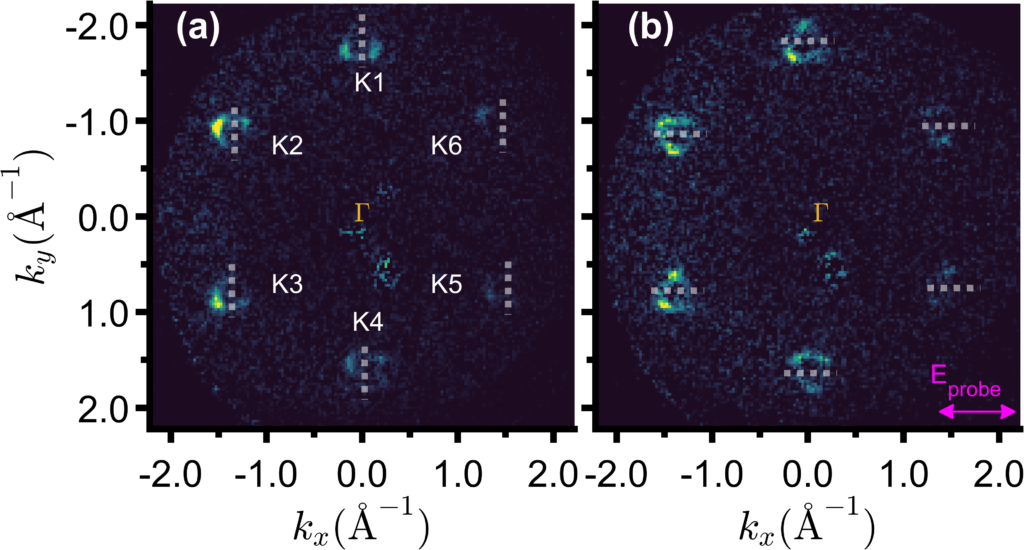
Professor Tom Allison leads an active research group at Stony Brook University focusing on ultrafast laser spectroscopy and nonlinear optics. His laboratory specializes in time- and angle-resolved photoemission spectroscopy (tr-ARPES) and frequency comb laser development for studying ultrafast dynamics in novel materials. His research interests center on understanding electron dynamics in two-dimensional materials, particularly graphene and transition metal dichalcogenides. Using sophisticated tr-ARPES instrumentation, his group investigates pseudospin dynamics, valley polarization, and exciton coupling with unprecedented momentum and energy resolution. The research bridges condensed matter physics, quantum materials, and ultrafast optical science. Professor Allison's recent publications demonstrate a strong focus on 2D materials physics, with particular attention to momentum-resolved phenomena in graphene and TMD heterostructures. His group combines cutting-edge experimental techniques with theoretical modeling to unravel complex ultrafast processes at the quantum level. Scientific Recognition: DOE Office of Science Highlight for work on valley polarization dynamics in monolayer WS2 NSF Major Research Instrumentation grant for developing high-power frequency combs Marie Skłodowskiej-Curie fellowship awarded to group member Grzegorz Professor Allison has successfully mentored multiple graduate students to completion of their degrees, including PhD candidates Jin Bakalis and Myles Silfies, and MS student Michael Wahl. His former postdoc Alice Kunin has secured an assistant professor position at Princeton University. Current research is supported by NSF funding for developing advanced frequency comb technology spanning from THz to soft x-ray regions.
Maiken H. Mikkelsen is the James N. and Elizabeth H. Barton Associate Professor in the Department of Electrical and Computer Engineering at Duke University, with a joint appointment in the Department of Physics . Her research focuses on quantum nanophotonics , plasmonics , and light-matter interactions in nanoscale materials, aiming to advance optoelectronics, quantum science, and biomedical diagnostics. Education B.S. in Physics, University of Copenhagen (2004) Ph.D. in Physics, University of California, Santa Barbara (2009) Postdoctoral Fellowship, University of California, Berkeley Her work explores nanophotonic engineering for quantum optics , spintronics , and ultrafast optoelectronics , with recent studies on nonlinear metasurfaces and plasmonic enhancement of immunoassays for point-of-care diagnostics. Publications highlight 2D semiconductor emission control , ultrafast single-photon sources , and metasurface-based photodetectors . Scientific Awards Maria Goeppert Mayer Award (2017) NSF CAREER Award (2015) Moore Inventor Fellow (2021) ONR/Air Force/Army Young Investigator Awards (2015-2017) Cottrell Scholar (2016) Stansell Family Distinguished Research Award (2021) She advises graduate students in Duke’s Electrical & Computer Engineering and Physics programs and leads the Mikkelsen Lab , which emphasizes ultrafast spectroscopy and quantum material development . The lab has graduated PhD students like Eunso Shin and Hengming Li (2025).
François Peeters is a Full Professor of Physics at the University of Antwerp, Belgium, holding the position since 2000 (with Dutch title 'gewoon hoogleraar' since 2003). He previously served as Research Director (FWO-VI) at the University of Antwerp (1996-1999), Research Leader (NFWO) (1992-1996), and Senior Research Assistant (NFWO) (1988-1992), establishing a distinguished academic career spanning over three decades. His educational background includes a Ph.D. in Physics from the University of Antwerp (1982), followed by a Habilitation (Hoger aggregaat) from the same institution (1987), and a postdoctoral fellowship at Bell Laboratories in Murray Hill, New Jersey (1982-1983). His academic journey also featured research periods at prestigious institutions including the High Magnetic Field Laboratory in Grenoble, University of California Berkeley, Oxford University, and several Brazilian and Australian universities. Peeters' research focuses on theoretical condensed matter physics , specializing in the electronic, optical, and magnetic properties of nanostructured systems. His work encompasses semiconductors , superconductors , graphene , and hybrid quantum systems , with particular emphasis on strong correlations in both classical (colloids, dusty plasma) and quantum (quantum dots) environments. His theoretical frameworks bridge fundamental quantum mechanics with practical nanotechnology applications, driving innovations in spintronics and quantum device design. Analysis of his publication record reveals a clear evolution from foundational work on polaron physics and quantum Hall systems in the 1980s-1990s toward contemporary research on graphene, topological materials, and programmable quantum nanodevices. His most cited works demonstrate consistent leadership in mesoscopic physics, with recent publications showing increased focus on spin-dependent transport phenomena and two-dimensional material systems. His scientific recognition includes: Fellowship in the American Physical Society (2005) APS Outstanding Referee award (2008) Doctor Honoris Causa from University of Szeged, Hungary (2009) Peeters has supervised 26 completed PhD theses and currently leads the Condensed Matter Theory research group comprising 3 ZAP researchers, 16 PhD students, and 8 postdocs. His grant portfolio includes coordination of an EU Marie Curie Training site on 'Electrons on helium', participation in multiple EU projects, COST actions, and ESF networks, demonstrating sustained success in securing competitive international funding. The Condensed Matter Theory group maintains extensive international collaborations, evidenced by Peeters' research visits to over 10 institutions worldwide and regular hosting of 3-4 international visitors at postdoc or professorial levels. The group's output of over 770 refereed publications with 12,000+ citations reflects its position at the forefront of theoretical condensed matter physics research.
Rupert Huber is a Professor at the Department of Experimental and Applied Physics, University of Regensburg, where he has held a chair since 2010. His research focuses on ultrafast quantum phenomena, terahertz science, and lightwave electronics, with a strong emphasis on nanoscale imaging and quantum materials. He leads the Huber group, which has launched the ERC project 'Orbital Cinema' and produced numerous high-impact publications in journals like Nature and Nano Letters . Chair for Experimental and Applied Physics, University of Regensburg (2010–present) Emmy Noether Group Leader, University of Konstanz (2007–2010) Alexander von Humboldt Fellow, UC Berkeley/Lawrence Berkeley National Lab (2004–2006) His research explores terahertz spectroscopy , quantum materials , and ultrafast nanoscopy , often combining experimental innovation with theoretical insights. Recent work includes groundbreaking studies on exciton dynamics in van der Waals magnets and subcycle imaging of electron wave motion. The group’s publications frequently appear as coverstories in Nature Photonics and Nano Letters . Huber has received prestigious awards such as the Gottfried Wilhelm Leibniz Prize (2019) , ERC Starting Grant (2012) , and OSA Fellowship (2018) . He has supervised numerous Ph.D. and Master’s students, including recent awardees like Joshua Mornhinweg (faculty dissertation prize, 2024) and Josef Riepl (best tutor award, 2024).
Prof. Dr. Sven Höfling is the Head of Chair and leader of the '2D Materials' Group at the Department of Technical Physics, University of Würzburg. His research focuses on semiconductor nanostructures, photonic systems, and quantum materials, with expertise in low-dimensional systems and light-matter interactions. He leads projects in the Cluster of Excellence ct.qmat and collaborates on EU, DFG, and industry-funded initiatives in quantum technology and nanophotonics. Affiliations: Chair of Technical Physics, University of Würzburg Address: Am Hubland, P1 Building (Room AU26), 97074 Würzburg, Germany Research highlights include topological polariton lasers, quantum dot photonics, and mid-infrared optoelectronics. His work spans experimental physics with strong ties to theoretical models, emphasizing applications in quantum computing and optoelectronic devices. Recent advances include room-temperature polariton lasers and strain-tunable single-photon sources. Key projects include the Würzburg-Wroclaw Nanophotonics Center and collaborations with KAIST-JMU on quantum technology. His lab employs advanced fabrication techniques like circular Bragg gratings and resonant tunneling diodes.
N. Asger Mortensen is a Professor and D-IAS Chair at the Danish Institute for Advanced Study , University of Southern Denmark. He serves as Scientific Director of the DNRF Center of Excellence POLIMA , focusing on polariton-driven light-matter interactions. His career spans leadership roles at SDU and DTU, including VILLUM Investigator grants. Education : Dr. scient. (2021) University of Copenhagen; Dr. techn. (2006), PhD (2001), MSc (1998) from Technical University of Denmark. Research Interests : Quantum plasmonics, nanophotonics, metamaterials, optofluidics, and light-matter interactions in structured materials. His work bridges classical electrodynamics and quantum physics, emphasizing nonlocal effects and polaritonic phenomena. Recent Articles : Explore nonlocality in photonic materials, plasmonic systems in 2D materials, and polariton dynamics. Keywords include Nanophotonics , Quantum Optics , and Condensed Matter , with subfields like Surface Plasmons , Exciton Polaritons , and Topological Insulators . Scientific Awards : Fyens Stiftstidendes Forskerpris (2023) Elected Member, Royal Danish Academy of Sciences and Letters (2022) VILLUM Investigator (2017) European Optics Prize (2008, 2004) Grants : Leads DNRF CoE (2023-2029, ~60 MDKK) and VILLUM Investigator (2017-2023, ~40 MDKK). Co-applicant on numerous international collaborations. Editorial Roles : Associate Editor for Science Advances and Nanophotonics , with past roles at Optics Express and Journal of Physics: Condensed Matter .
Koray Aydin is an Associate Professor in the Electrical and Computer Engineering department at Northwestern University 's McCormick School of Engineering. His research focuses on nanophotonics , optical metamaterials , and inverse design of photonic devices. PhD in Physics, Bilkent University MS and BS in Physics, Bilkent University The Metamaterials and Nanophotonic Devices Lab (MNDL) explores light-matter interactions at the nanoscale. Key research areas include: Plasmonic materials and devices for absorption engineering Metasurfaces for subwavelength light control Two-dimensional materials in optoelectronics 3D printing of millimeter-wave and optical metadevices Hybrid and tunable nanophotonic systems Dynamic metamaterials via self-assembly His publications highlight inverse design methodologies, DNA-assembled metasurfaces , and active nanophotonic materials . Collaborations with Chad Mirkin, Vinayak Dravid, and Prem Kumar have led to breakthroughs in scalable photonic systems and programmable metamaterials. Current efforts in MNDL aim to integrate machine learning with nanophotonic device design, enabling non-intuitive geometries and ultra-compact optical components with applications in telecommunications, defense, and consumer electronics.
Sergey Kubatkin is a Full Professor at the Quantum Device Physics department within the Department of Microtechnology and Nanoscience (MC2) at Chalmers University of Technology , Sweden. His research focuses on quantum devices , graphene-based electronics , and 2D material heterostructures , with applications in quantum computing and metrology . He leads projects under the Graphene Flagship and collaborates with institutions like the European Commission and Knut and Alice Wallenberg Foundation . Key Research Areas: Quantum transport in graphene and 2D materials Decoherence mechanisms in superconducting circuits Van der Waals heterostructures for electronic devices Near-field scanning microwave microscopy Quantum Hall effect for metrology Recent Publications highlight advancements in epigraphene stability , ultranarrow semiconductor transistors , and spin-echo suppression in quantum circuits . His work addresses challenges in quantum noise reduction and low-power electronic devices , often leveraging collaborations with teams like the European Research Council and Swedish Foundation for Strategic Research . Scientific Contributions include foundational studies on graphene quantum Hall resistance standards and single-molecule electronics . Current projects, such as Quantum geometry and flat bands (2025–2030), aim to explore room-temperature superconductivity through 2D material engineering. His lab develops scalable graphene bolometers and high-precision microwave detectors for quantum technologies.
Duncan Farrow is an Adjunct Associate Professor at the School of Physics, Mathematics and Computing, University of Western Australia. His research focuses on fluid dynamics, mathematical modeling, environmental science, biomedical engineering, astrophysics, and hydrology. He has an h-index of 17 and has contributed to over 3 citations in his field. Farrow collaborates globally on projects addressing sustainable development goals, particularly in areas impacting environmental and health sciences. Education details are not explicitly provided in the text. Research interests include free surface flows, porous media interactions, retinal hydrogen dispersal models, and galaxy environment studies. His work often bridges theoretical models with practical applications, such as in biomedical systems and environmental fluid mechanics. Key research areas: Fluid Mechanics, Mathematical Modeling, Environmental Science, Biomedical Engineering, Astrophysics, Hydrology While specific grants or advising roles are not detailed, his publications suggest active engagement in collaborative research projects. Recent studies involve fluid flow into line sinks, hydrogen diffusion in biological tissues, and mid-infrared galaxy properties analysis. No labs or teams are explicitly mentioned in the provided text.
Tran Trung Luu is an Assistant Professor at the Department of Physics , Faculty of Science , The University of Hong Kong . He earned his B.Sc. from Vietnam National University (2007), M.Sc. from Korea Advanced Institute of Science and Technology (2010), and Ph.D. from Ludwig-Maximilians-Universität München (2015). Currently, he leads research in Ultrafast Optics , Strong-Field Laser Physics , and Attosecond Science , with a focus on probing coherent lattice vibrations and electron-phonon coupling in solids using high-harmonic spectroscopy. Education: B.Sc. in Physics, Vietnam National University (2007) M.Sc. in Physics, Korea Advanced Institute of Science and Technology (2010) Ph.D. in Physics, Ludwig-Maximilians-Universität München (2015) Research Interests revolve around Ultrafast Optics and Strong-Field Laser Physics , particularly Attosecond Science applications in condensed matter. His work bridges Nonlinear Spectroscopy with Quantum Dynamics in Solids , utilizing High-Harmonic Generation to study Electron-Phonon Coupling and Anharmonic Phonon Scattering . Publications highlight trends in Coherent Lattice Dynamics , Time-Resolved Photoelectron Spectroscopy , and Optical Manipulation of Bandgaps . Scientific Awards include the ISUILS Young Researcher Award (2015) and an ETH Postdoctoral Fellowship (2015) . As a Principal Investigator , he has secured grants such as RGC ECS project 27300820 and GRF project 17315722 , totaling over HKD 2,819,760. He actively supervises PhD and MPhil students in Ultrafast Optics projects and contributes to invited lectures on Attosecond Science at institutions like Phenikaa University and ETH Zurich.
Ariel Alperstein is an Assistant Professor in the Department of Chemistry & Biochemistry at the University of Delaware's College of Arts & Sciences. She leads the Alperstein Lab, which focuses on developing advanced ultrafast vibrational spectroscopy techniques for nanoscale biological research. Education: B.A. from Skidmore College (2014), Ph.D. from University of Wisconsin-Madison (2020), Postdoctoral Researcher at University of Minnesota (2020-2022) Research Overview : Dr. Alperstein's lab specializes in creating super-resolution stimulated Raman (SRS) and two-dimensional infrared spectroscopy (2DIR) methods to study protein structures and interactions at the nanoscale. Key research areas include: Ultrafast vibrational spectroscopy instrumentation development Live cell imaging of erlotinib resistance in non-small cell lung cancer Desmin fragment-related cardiomyopathy and chaperone protein interactions Protein structural changes induced by microplastics Her work bridges optics development with biochemical applications, emphasizing interdisciplinary approaches to cellular health challenges. Lab Environment : The Alperstein Lab promotes inclusivity through weekly diversity, equity, and inclusion discussions, and maintains a zero-tolerance policy for hate while fostering open communication and collaboration.
Jürgen Hauer is a Professor at the Technische Universität München (TUM) within the TUM School of Natural Sciences . He leads the Professorship for Dynamic Spectroscopy , focusing on ultrafast chemical processes using femtosecond laser spectroscopy. His work spans energy transfer pathways, photocatalytic reactions, and molecular dynamics across ten timescale orders. Research Interests Ultrafast energy transfer in photosynthetic systems Femtosecond spectroscopy for reaction bottlenecks Development of advanced time-resolved methods Photochemical kinetic resolution of enantiomers Application to sustainable chemistry and catalysis Recent Publications (2025) highlight innovations in transient absorption anisotropy, Stokes shift dynamics, and FT-IR bacterial analysis. His scientific awards include the FWF's START Prize and Lise Meitner Fellowship. Teaching activities at TUM include courses in Biophysical Chemistry and Experimental Physical Chemistry.
Prof. Dr. Sangeeta Sharma is a Principal Investigator at the Max Born Institute (MBI) in Berlin, leading Project A04 in the TRR 227 "Ultrafast Spin Dynamics" collaboration. Her work centers on theoretical condensed matter physics, with a focus on ultrafast phenomena in quantum materials. Her research interests include spintronics, valleytronics, and light-matter interaction. She develops models for controlling spin and valley currents using ultrafast light pulses, particularly in two-dimensional materials like graphene, with applications in next-generation electronic devices. Analysis of her recent publications (2024-2025) reveals a cohesive trend toward manipulating valley and spin currents via tailored light pulses in quantum materials. Her theoretical frameworks bridge computational modeling and experimental validation, advancing ultrafast magnetism and quantum transport research. As a Principal Investigator in TRR 227, she leads DFG-funded research and collaborates within Project B4 "Theory for Dynamics in Quantum Materials" at MBI, contributing to international efforts in spin dynamics and correlated matter systems.