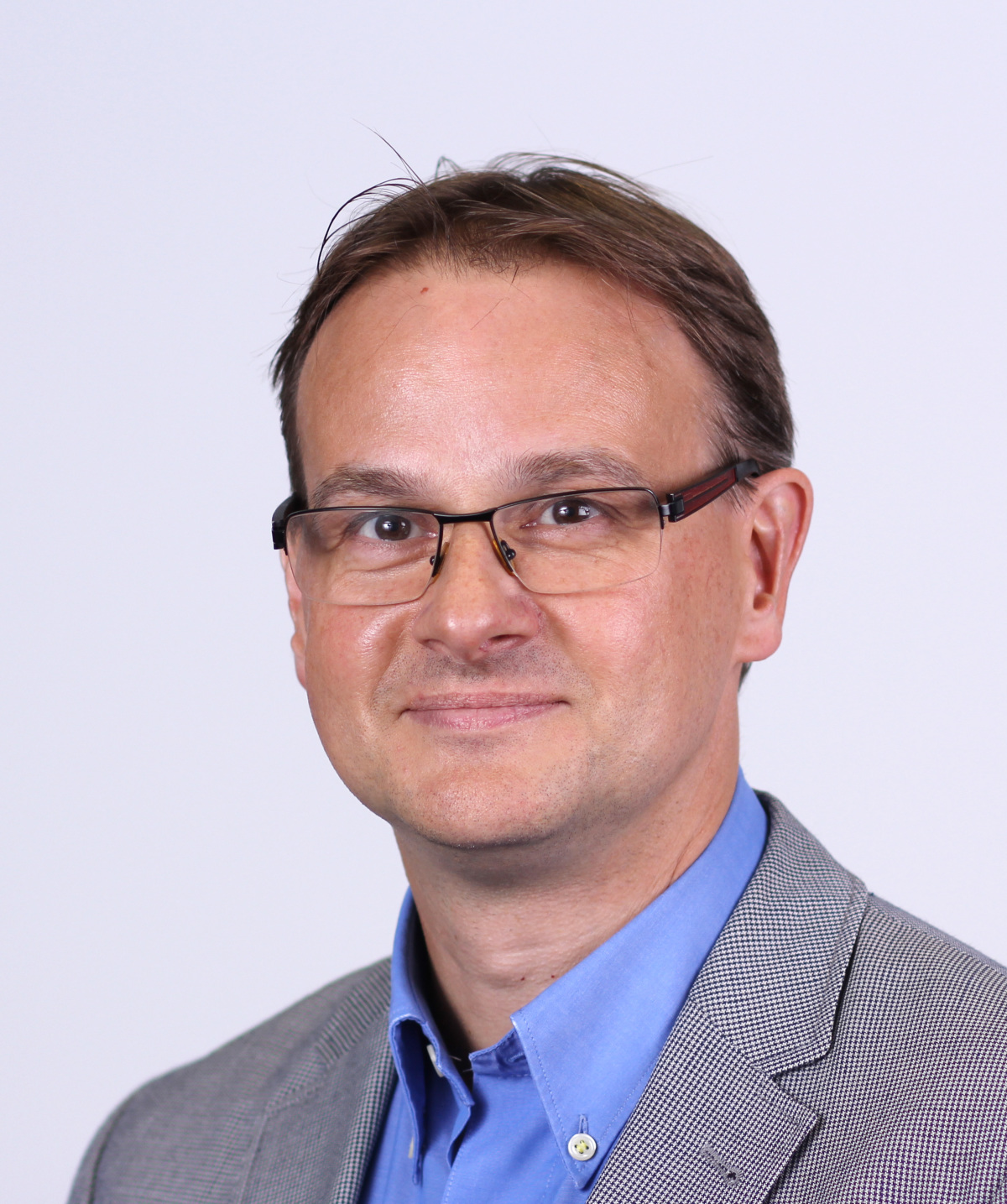
Prof. Dr. Frank Meyer zu Heringdorf is a Principal Investigator at the Collaborative Research Centre 1242 (University of Duisburg-Essen) and holds the Professor rank. His work focuses on ultrafast electron dynamics , spin-state switching , and X-ray spectroscopy in condensed matter systems. Affiliation: University of Duisburg-Essen, Germany Research Focus: Electron correlations, magnetic materials, and nanoscale physics Research Interests: Meyer zu Heringdorf explores collective electronic excitations , non-equilibrium energy transfer , and photoinduced magnetism using advanced techniques like femtosecond laser spectroscopy and soft X-ray absorption . His group investigates spin crossover complexes , magnetocaloric materials , and electron-phonon interactions in heterostructures. Article Trends: Recent publications highlight table-top X-ray sources , renormalized charge transfer in oxides, graphene-mediated magnetic anisotropy , and attosecond pulse synthesis . These works span ultrafast dynamics , nonlinear absorption , and quantum material design . Labs & Collaborations: He leads Project B06 in CRC 1242, collaborating with researchers across European XFEL , nickel and iron compounds , and multiferroic systems .
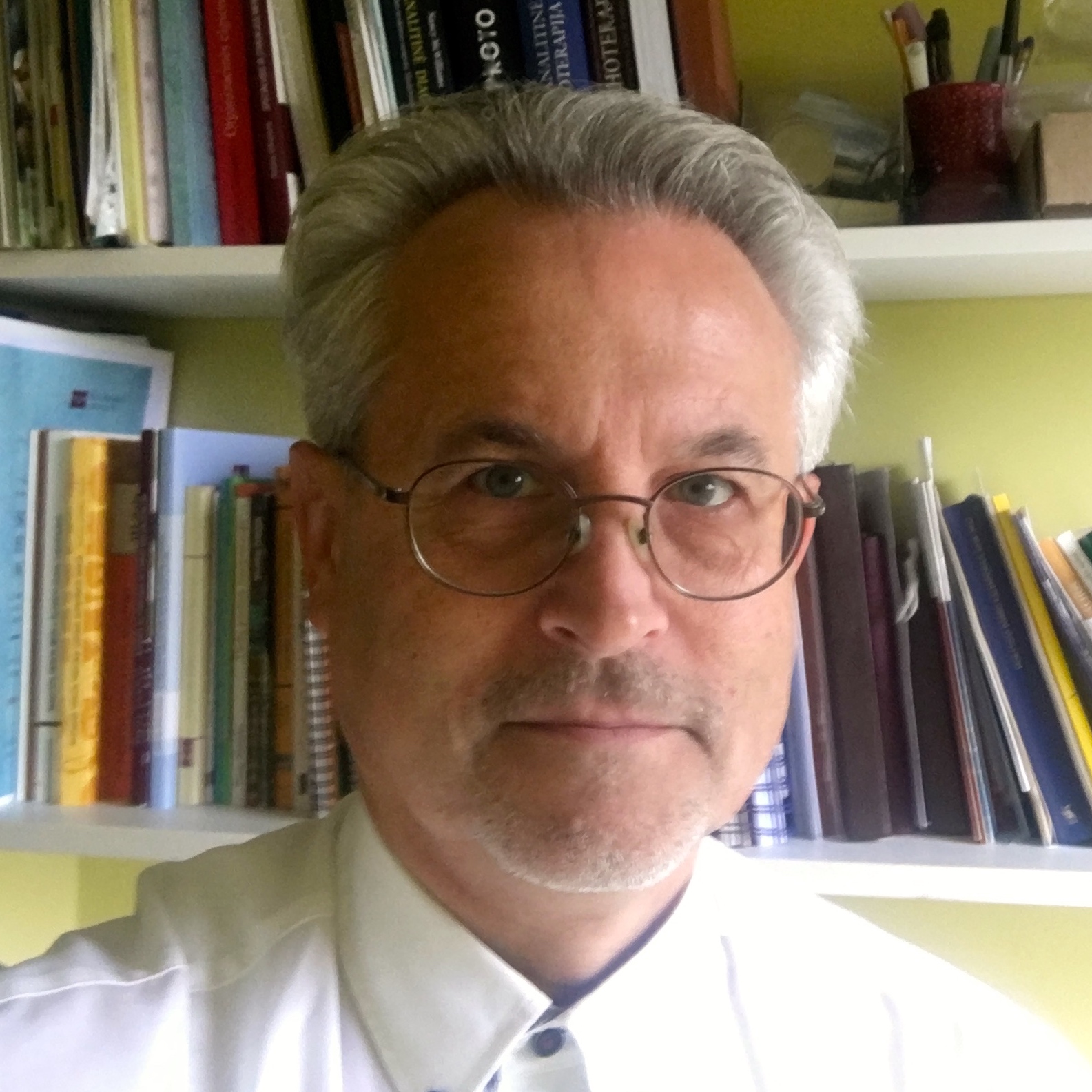
Dr. Valdemaras Aleksa serves as an Associate Professor at the Institute of Chemical Physics within Vilnius University's Faculty of Physics. His research spans vibrational spectroscopy, conformational analysis of molecular structures, ionic liquids, and the polychromy of artworks, alongside physics education. His scientific interests focus on using spectroscopic methods (Raman, IR, NMR) to investigate molecular structures and dynamics, particularly in silicon-containing compounds and ionic liquid systems. His work combines experimental approaches with computational methods like DFT and MP2 to understand molecular conformations and interactions. His research has significant applications in materials science, chemistry, and cultural heritage preservation. Alexa's publications demonstrate a consistent focus on molecular structure analysis through spectroscopic techniques, with recent work emphasizing ionic liquids, silicon compounds, and their conformational properties. His research shows strong international collaboration, particularly with US scientists. Member of VU Teacher Training Professional and Adjunct Pedagogical Studies Program Committee (since 2015) Expert of the Study Quality Assessment Center (SKVC) (since 2018) Member of evaluation committee for best dissertations in physical sciences (2019) Member of Dr. R. Gaška scholarship awarding commission (since 2020) Dr. Aleksa teaches Applied Spectroscopy in the Faculty of Physics, Health Physics and Life Sciences in the Faculty of Medicine, and Didactics of Physics in the Faculty of Philosophy. He has supervised numerous student theses and two doctoral students. His grant leadership includes projects on molecular structure analysis and collaboration with US scientists, as well as participation in EU-funded educational initiatives connecting universities.
Arti Agrawal is an Adjunct Associate Professor in the School of Electrical and Data Engineering at the University of Technology Sydney (UTS). She has been associated with UTS since 2018, initially joining with time split between her academic role and as Director of the Women in Engineering and IT programme. She is also the CEO of Vividhata Pty Ltd, a startup focused on diversity and inclusion. Dr. Agrawal earned her PhD in Physics from the Indian Institute of Technology Delhi in 2005, following an MSc (1999) and BSc Physics (Hons) (1997) from the same institution. Prior to UTS, she worked at City, University of London from 2005-2017, progressing from Research Fellow to Senior Lecturer in the Department of Electrical Engineering. Her primary research focuses on optics and photonics, specifically modeling photonic components such as solar cells, optical fibers, sensors, and lasers using numerical methods like the Finite Element Method (FEM). She is an expert in computational photonics, having authored a book on FEM and edited a book on trends in computational photonics. She serves as an Associate Editor for the IEEE Photonics Journal. Dr. Agrawal's recent publications demonstrate a strong focus on nanophotonics, particularly involving graphene and silicon carbide materials for mid-infrared applications, as well as research on diversity and inclusion in engineering education. Her work spans both fundamental photonics research and practical applications in sensor technology and optical devices. Chartered Engineer (Institution of Engineering and Technology, 2013-present) Chartered Physicist (Institute of Physics) Senior Member IEEE Senior Member Optical Society of America Board of Directors, Optical Society of America (2018) Dr. Agrawal has received research funding including a scholarship from the Defence Science and Technology Group of the Department of Defence for 'Graphene based Nanophotonics for Polarization and Photodetection Filter Design' (2019-2022). She is passionate about mentoring students and has supervised PhD and Master's students in photonics research. Her teaching interests include electromagnetics, optics, and numerical methods, and she has taught first-year undergraduate Physics, Signal Processing, and Biomedical Optics. She leads significant initiatives in diversity and inclusion in STEM, using virtual reality for training and developing evidence-based approaches for managing diverse teams. She has organized workshops including the first Pride in Photonics workshop at CLEO for LGBTQI+ scientists and allies.
Professor Domenico Majolino is a Full Professor at the Department of Mathematical and Computer Sciences, Physical Sciences and Earth Sciences at the University of Messina. He currently serves as Director of the Department (academic periods 2021/22-2023/24 and 2024/25-2026/27) and has held numerous leadership roles including Rector's Delegate for Teaching and e-Learning Evaluation. His research spans multiple disciplines with a focus on physics applied to cultural heritage, environmental science, and biophysics. Professor Majolino graduated in Physics from the University of Messina on May 3, 1984 with full marks and academic honors. He obtained his PhD in Physics on October 1, 1992, discussing the thesis "Study of relaxation processes in structured fluid systems". His academic career progressed from Researcher (1992-2001), to Associate Professor (2001-2004), to Full Professor (2004-present), with his disciplinary sector evolving to focus increasingly on physics for life sciences, the environment and cultural heritage. Majolino's research focuses on seven main areas: 1) Physical methodologies for archaeometry and cultural heritage diagnostics; 2) Environmental and food matrices analysis for radiological risk assessment; 3) Development of techniques for environmental physics, particularly microplastics characterization; 4) Biomedical applications; 5) Cooperative phenomena in hydrogen-bonded systems confined in porous matrices; 6) Hydration processes in aqueous polymer solutions; and 7) Vibrational dynamics of self-assembled drug-carrier systems. His work combines multiple experimental techniques including light scattering, infrared absorption, ultrasonic techniques, neutron diffraction and scattering, and X-ray absorption. His extensive publication record (over 280 publications with an H-index of 36 and more than 5,000 citations as of May 2025) demonstrates consistent contributions across physics, environmental science, cultural heritage preservation, and biomedical applications. Recent publications show a strong emphasis on radiological risk assessment in cultural heritage materials, advanced spectroscopic techniques for material characterization, and environmental pollution studies, particularly regarding microplastics and heavy metals. Professor Majolino has been actively involved in numerous research projects and grants, including scientific directorship of multiple University Research Programs (PRA) and coordination of significant initiatives like the TEC4ART project (Advanced technologies for cultural tourism in Sicily). He has served as scientific manager for PRIN research programs and as reviewer for international research evaluation bodies. His laboratory work involves state-of-the-art facilities at the University of Messina and collaborations with major European research centers including the Laboratoire Leon Brillouin (Saclay, France), the Institut Laue Langevin (Grenoble, France), and the European Synchrotron Radiation Facility. He has organized numerous specialized sessions at international conferences focused on cultural heritage preservation and metrology.