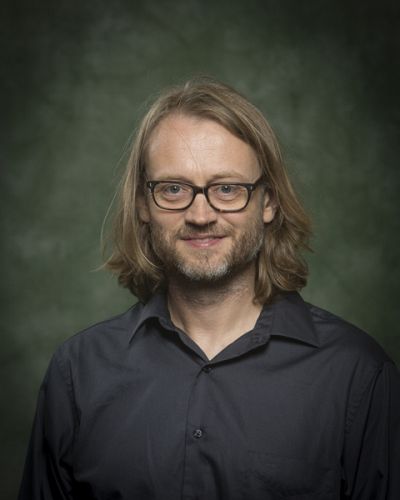
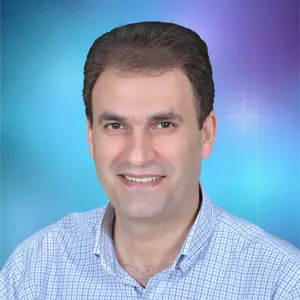
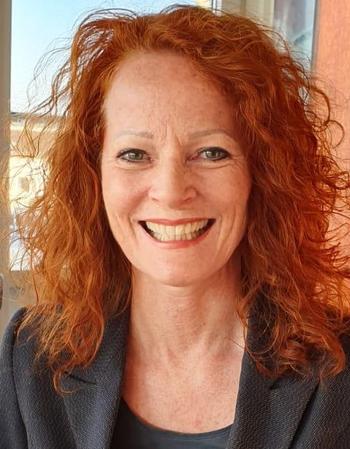
Gregory Key serves as a Turkish Lecturer within the Middle Eastern and Ancient Mediterranean Studies program at Binghamton University. His responsibilities encompass teaching modern Turkish language courses at elementary and intermediate levels, as well as Ottoman Turkish, Turkish literature in translation, and Turkish media and pop culture. Key's research is centered on Turkish linguistics, with a focus on morphosyntax. He investigates the structural properties of Turkish, including causative constructions, unaccusative verbs, and differential object marking. His theoretical work aims to understand Turkish as a coherent synchronic system, and he actively explores the implications of linguistic theory for language pedagogy. His scholarly output demonstrates a consistent emphasis on syntactic and morphological phenomena in Turkish and related languages. Recent publications address complex predicates, language contact between Turkic and Persian, and the decomposition of verbal structures. These contributions highlight his expertise in theoretical linguistics and its application to the Turkish language.
Beyza Eken serves as Assistant Professor in the Department of Software Engineering at Sakarya University's Faculty of Computer and Information Sciences, teaching core courses including Software Project Management, Natural Language Processing, and Graduation Projects while maintaining active research in software engineering and AI applications. Her academic credentials include: Doctorate in Computer Engineering from Istanbul Technical University (2015), thesis: "Software Defect Prediction" Master's in Computer Engineering from Istanbul Technical University (2011-2015), thesis: "Entity Name Recognition in Short Texts" Bachelor's in Computer Engineering from Sakarya University (2007-2011) Dr. Eken's research integrates machine learning with software engineering, specializing in defect prediction models that incorporate personalized developer factors and industrial deployment challenges. Her work bridges natural language processing for Turkish social media analysis with software quality assurance, demonstrating expertise in both theoretical modeling and practical implementation in industrial settings. Recent expansions include neuro-symbolic AI for test oracle generation and MLOps frameworks. Publication trends reveal consistent focus on empirical software engineering from 2018-2021 (defect prediction, community smells, industrial deployment), evolving into cutting-edge domains by 2023-2025 (neuro-symbolic testing, employee feedback analysis, MLOps). Her work shows strong industry-academia collaboration patterns with increasing methodological sophistication. Dr. Eken actively contributes to academic service as reviewer for ACM Transactions on Software Engineering and Methodology (2024) and IEEE Transactions on Software Engineering (2023). She leads research projects including "Developer-specific error prediction modeling" (2020) and the Mevlana exchange project with Ryerson University on data mining for defect prediction (2018), while supervising graduation projects and research area courses that develop student expertise in software engineering practices. Her international research engagement includes participation in the ASTERIx project at Università della Svizzera Italiana's Software Testing and Analysis Research Group (2023), demonstrating ongoing commitment to global collaboration in software engineering advancements.
Assoc. Prof. Nusret YILMAZ, affiliated with Iğdır University's Faculty of Science and Letters, Department of Modern Turkish Literature, is a prominent scholar focusing on Turkish literary criticism, poetry analysis, and thematic studies. His work bridges philosophical inquiry with socio-cultural contexts, particularly in modern and contemporary Turkish literature. Doctorate (2013-2017): Atatürk University, Institute of Turkish Studies, New Turkish Literature Master (2011-2013): Caucasus University, Social Sciences, New Turkish Literature Bachelor (1992-1996): Atatürk University, Faculty of Kazım Karabekir Education, Turkish Language and Literature Teaching His research spans phenomenological criticism, archetypal imagery, and metaphysical themes in Turkish poetry and novels. Articles highlight his exploration of socio-political narratives, historical contexts, and interdisciplinary methodologies like semiotics and feminist critique. He has analyzed works by poets such as İlhan Berk, Ahmet Muhip Dıranas, and Cahit Koysak, emphasizing symbolic representation and cultural discourse. TAKDİR BELGESİ (2020) from Iğdır University for academic contributions He has supervised master's theses on authors like Refik Durbaş, Gülten Dayıoğlu, and Alper Akçam, reflecting his mentorship in Turkish literary studies. His administrative role as Deputy Dean at Iğdır University (2018-2019) underscores his institutional engagement.
Bettina Hannover is a Professor of Research on Schools and Teaching at Freie Universität Berlin within the Department of Education and Psychology, Division of School and Teaching Research. She has held this position since 2002 and has been a leading figure in educational and social psychology in Germany. Her research interests span Educational Psychology , Self and Identity , Gender and Education , Stereotype Threat , Teacher Education , and the Integration of Migrant and Refugee Students . She has developed a cognitive model of the self and investigates how social and cultural contexts shape identity and educational outcomes. The recent publications reflect a strong focus on stereotype threat , identity development , peer relationships , and gender dynamics in educational settings. Her work combines experimental, longitudinal, and intervention-based approaches, often in collaboration with national and international partners. She has received significant recognition, including the Heisenberg Scholarship from the German Science Foundation. Heisenberg Scholarship, German Science Foundation (1995) Bettina Hannover has led numerous funded research projects and advised on educational policy through her work with the Aktionsrat Bildung . She has also been active in academic governance, serving on editorial boards, selection committees for major prizes, and scientific advisory councils. Her work bridges basic research and applied educational interventions, particularly in promoting equity and inclusion in schools. She leads research on teacher competencies, evidence-based teaching (e.g., K2teach project), and the social integration of diverse student populations. Her lab and team focus on experimental and longitudinal studies in real-world school contexts, often involving large-scale data collection and intervention evaluations.
Arianna Bisazza is an Associate Professor in the Computational Linguistics Group at the University of Groningen, where she leads the InClow research group focused on Interpretable, Cognitively inspired, Low-resource language models. Her work bridges computational linguistics, cognitive science, and language acquisition to develop more robust and interpretable language processing algorithms that can adapt to diverse linguistic phenomena worldwide. Dr. Bisazza's research interests span statistical modeling of human languages in multilingual contexts, with particular focus on improving language model performance for "challenging" or low-resource languages. Her work explores how insights from human language acquisition can inform better language modeling techniques, and she investigates methods to make state-of-the-art NLP systems more interpretable and transparent. As a cross-disciplinary researcher, she actively seeks to enhance our understanding of human language processing and evolution through computational modeling tools. Her recent publications reveal a strong emphasis on multilingual evaluation frameworks (like TurBLiMP and MultiBLiMP), interpretability of language models, and connections between human language acquisition and neural network learning. Her work consistently addresses the challenge of making language technology more robust across diverse linguistic structures and typological features. Outstanding Paper Award at the BabyLM Challenge (CoNLL'24 Shared Task) for "BabyLM Challenge: Exploring the Effect of Variation Sets on Language Model Training Efficiency" Dr. Bisazza currently leads a Vidi project funded by the Dutch Research Council (NWO) on improving low-resource language modeling through child language acquisition insights. She is also part of two national consortium projects funded by NWA-ORC initiatives: InDeep (Interpreting deep learning models for language, speech & music) and LESSEN (Low Resource Chat-based Conversational Intelligence). She supervises multiple PhD students, including two China Scholarship Council (CSC)-funded researchers working on simulating human patterns of language learning and change. Her earlier research was supported by a Veni grant (2017-2021) focused on understanding and improving the encoding of linguistic structure in Neural Machine Translation models. As head of the InClow research group, Dr. Bisazza oversees a team investigating interpretable, cognitively inspired approaches to low-resource language modeling. The group's work combines insights from cognitive science and linguistics with cutting-edge NLP techniques to develop language models that better reflect human language processing capabilities, particularly in resource-constrained settings.
Dr Mary Baltazani is a Postdoctoral Researcher in Phonetics at the University of Oxford's Faculty of Linguistics, Philology & Phonetics, affiliated with the Phonetics Lab and Language & Brain Lab. Her research focuses on the interface between phonetics, phonology, and pragmatics, with special attention to intonation, Greek dialects, and sociophonetics. She leads and collaborates on projects examining language contact effects on intonation (e.g., Greek in Cyprus, Cretan Greek under Venetian influence) and the compositional nature of intonational meaning. Education: PhD in Linguistics from UCLA (2002), M.A. in Linguistics (UCLA), and academic positions at institutions including UCL, University College London, and the University of Ioannina. She has organized major conferences like BAAP 2014 and contributed to the creation of educational materials on Greek dialects through projects like VOCALECT. Research Interests : Intonation and pragmatics in Greek Historical and dialectal phonetics Language contact in the Eastern Mediterranean Prosodic typology and socioprosodic variation Current/Recent Projects: Greek in Contact (ESRC-funded): Examines Turkish and Italian influences on Greek intonation. Components of Intonation (British Academy): Investigates whether intonation's meaning is holistic or compositional. Grants include ESRC, British Academy, and NSRF European Regional Development Fund awards. Publications span encyclopedic entries, journal articles, and conference proceedings on topics like Cypriot Arabic prosody, Greek dialectal vowel systems, and historical phonetic change.
Tolga ERDEM is a Researcher at Trakya University's Faculty of Economics and Administrative Sciences, Department of International Relations. Holding a PhD in International Relations (2020) and two bachelor's degrees (2012) with full scholarships, his work bridges cybersecurity, international security, and geopolitical dynamics. Key affiliations include editorial roles in security anthologies and presentations at international conferences. PhD: Cyberspace as a Power Competition Domain Master's Thesis: Europeanization & Religious Identity in Turkey-EU Relations Research spans cybersecurity , space weaponization , AI-driven security , and energy geopolitics . Recent 2024-2025 publications analyze Balkan cybersecurity, water security, and biosecurity frameworks. His 2023 book Uluslararası İlişkilerin Yeni Güç Rekabet Sahası: Siber Uzay established him as a digital geopolitics expert. Journal trends show 2023-2024 focus on UN disarmament policies for AI weapons, space diplomacy frameworks, and EU-Turkey energy dynamics. Conference papers (2024) examine Central Asian water security and Balkan cyber threats. Teaching since 2020, courses include World Conflict Regions , EU-Turkey Relations , and Contemporary International Issues . No scientific awards listed.
Dr Dzavid Haveric is a Research Fellow at the Centre for Islamic Studies and Civilisation , Charles Sturt University . He holds a PhD in Humanities (Victoria University, 2009) and MA in Cultural History (Deakin University, 2004), with additional qualifications in management and journalism. Key affiliations: Institute for Community, Ethnicity and Policy Alternatives (Victoria University) Victoria Museum (Research Associate) Public and Contextual Theology Research Centre (CSU) His research spans Islamic history , Australian Muslim identities , interfaith dialogue , and multiculturalism . Recent work includes military history ( 2024 book ) and socio-historical analyses of human rights in Islamic contexts. Selected recent publication trends: 2024 : Military service and national loyalty narratives 2023 : Islamic jurisprudence in Australian diaspora 2020 : Human rights frameworks in Islamic thought 2019 : Three major books on community building, ANZAC history, and Islamic Australia 2017 : Interfaith community development in Victoria Scientific honors include: 2023 Australian Muslim Professional of the Year (AMAA) Australian Postgraduate Award (2006) Multiple Certificates of Appreciation (2001-2011) He has contributed extensively as a journalist for SBS Radio and Bosnian community newspapers, and held roles at the Parliament of the World's Religions and Victoria Museum .
Assoc. Prof. Arif Yilmaz (b. 1970, Manisa) is a Turkish academic, poet, and literary scholar affiliated with Usak University since 2012, where he serves as Chair of the Department of Turkish Language and Literature at the Faculty of Humanities and Social Sciences. He previously held academic positions at Gaziantep University (2008-2012), Celal Bayar University, and Ankara University. Doctorate (2004): Ankara University - New Turkish Literature Master's (1996): Gazi University - New Turkish Literature Bachelor's (1992): Van Yuzuncu Yil University - Turkish Language and Literature His scholarly focus lies in modern Turkish literature, philology, and literary criticism, particularly examining social realism, epic theater, and 20th-century Turkish poets like Sabahattin Kudret Aksal and Niyazi Yıldırım Gençosmanoğlu. He has published critical editions of Aksal's works and over 15 peer-reviewed articles. Scientific contributions include: 2019 Special Jury Prize for Aksal's critical editions Leadership in Turkish language education centers (GAÜN TÖMER) Academic service including Institute of Social Sciences deputy directorship As an educator, he has mentored 3 doctoral students and taught courses spanning New Turkish Literature , Literary Theory , and Poetic Analysis across multiple universities. His 2024 visiting scholar appointment at Samarkand State Institute of Foreign Languages underscores his international academic engagement.
Djene Rhys Bajalan is an Associate Professor in the History Department at Missouri State University , specializing in Middle Eastern History , particularly the evolution of Kurdish nationalism and the Ottoman Empire's collapse . He holds a DPhil in Oriental Studies from the University of Oxford and has taught at institutions including the American University of Iraq - Sulaimani and Istanbul Bilgi University . Education : DPhil, Oriental Studies (2015), University of Oxford MA, History (2009), Istanbul Bilgi University MSc, Nationalism and Ethnicity (2006), London School of Economics BA, History and Politics (2004), School of Oriental and African Studies His research focuses on nationalism , ethnic identity , and the geopolitical role of Kurdish communities in the Middle East. He analyzes the interplay between Kurdish political activism , Ottoman imperial decline , and modern Kurdish statehood debates , with publications spanning 19th-century Kurdish press to contemporary Rojava analysis . Recent article trends highlight his expertise in post-Ottoman border formation , Kurdish-Ottoman relations , and early modern Kurdish ethno-politics . His work critically examines Kurdish responses to imperialism , youth-led nationalist movements , and historical legacies shaping current conflicts like the 2019 Syrian Kurdish invasion commentary. He contributes to media outlets such as Jacobin and Jadaliyya , addressing topics like Trump's Middle Eastern policies and Kurdish democratic experiments . As a non-activist scholar, his work inherently intersects with Kurdish political struggles due to the subject's nature.
Eylul Ceren Demir serves as an Assistant Professor in the Department of Psychology at Adiyaman University's Faculty of Arts and Sciences, where she also holds the position of Vice Chair of Department since November 2023. She concurrently serves as a Visiting Professor at Middle East Technical University (METU) teaching Qualitative Research in Clinical Psychology (Fall 2023-Spring 2025) and taught Psychological Assessment at Ufuk University in Fall 2023. Her educational background includes an Integrated Doctorate in Clinical Psychology from Middle East Technical University (2018-2023) with a dissertation titled 'When the boundaries exceed: Thematic Analysis of Anorexia Nervosa in Lacanian Psychoanalysis,' a Master's degree in Psychology from Dokuz Eylul University (2016-2018), and a Bachelor's degree in Psychology from Çankaya University with 3.91/4.00 CGPA (2013-2016). Dr. Demir's research focuses primarily on Lacanian psychoanalysis, clinical psychology, and psychopathology, with particular expertise in eating disorders, trauma, suicide prevention, and qualitative research methods. Her work bridges theoretical psychoanalytic concepts with clinical applications, especially in understanding anorexia nervosa, post-disaster psychological trauma, and the therapeutic process. She has developed specialized knowledge in analyzing cinematic characters through psychoanalytic frameworks and examining cultural aspects of mourning and loss. Her publication record demonstrates a clear trajectory from foundational psychoanalytic concepts (2020-2021) toward increasingly specialized clinical applications (2022-2025), with recent work focusing on earthquake trauma, anorexia nervosa from Lacanian perspectives, and therapist development. Her articles consistently integrate psychoanalytic theory with empirical clinical observations, creating a distinctive methodological approach that combines qualitative analysis with Lacanian conceptual frameworks. As an academic leader, Dr. Demir serves as Editor for AYNA Clinical Psychology Journal (since 2022) and Field Editor for Adiyaman Social Sciences Journal (since 2024). She has supervised numerous graduate theses at METU and currently co-advises multiple doctoral students working on topics including neurodivergence in creative industries, OCD experiences, non-suicidal self-injury, and martyr letter analysis. Her clinical work through the AYNA Clinical Psychology Support Unit at METU (2020-2023) involved providing psychotherapy supervision to graduate students and coordinating clinical training processes. She has conducted nearly 1000 hours of therapy sessions with children, adolescents, and adults using psychoanalytic approaches. Dr. Demir remains active in the Freud-Lacan Psychoanalytic Association (since 2018) and serves on Turkey's Science Academy Psychology Terminology Working Group (since 2023).
Assoc. Prof. Dr. Osman AKTAŞ is a Turkish academic affiliated with Ankara Social Sciences University as an Associate Professor in the Faculty of Islamic Sciences , Department of Basic Islamic Sciences. His career spans roles such as Research Assistant (2013–2017) at Osmaniye Korkut Ata University and Doctorate Teaching Staff (2019–2022) at his current institution. Education: PhD in Fundamental Islamic Sciences (2016–2019), Ankara Yıldırım Beyazıt University Master's in Fundamental Islamic Sciences (2014–2016), Yıldırım Beyazıt University BA in Religious Culture and Moral Knowledge (2002–2006), Ankara University Research Interests include Arabic Language and Rhetoric , comparative linguistics between Turkish and Arabic, Islamic sciences, and interdisciplinary neuroscience studies on topics like epilepsy and laughter physiology. He has published extensively in these areas, including works on punctuation systems, prepositions, and word/sentence structures. Advising involves guiding four graduate students, including Mehmet Fevzi Sargın (PhD, 2024) and Asma Idrıs Mohammed Alfassı (Master’s, 2024). A TÜBİTAK 2211/A Domestic Doctoral Scholarship (2017–2019) supported his doctoral research. Despite his academic output, no scientific awards are documented.
Dr. Uğur Aytaç serves as an Assistant Professor in the Department of Philosophy and Religious Studies at Utrecht University's Faculty of Humanities, where he is affiliated with the Ethics Institute. His scholarly work centers on political power, legitimacy, and democratic theory, with particular focus on digital governance, economic institutions, and state power structures. Dr. Aytaç's research program comprises two interconnected strands. His first line of inquiry examines theories of political legitimacy, arguing that normative standards should extend beyond state power to encompass broader social relations including patriarchy and capitalism. He employs ideology critique and other normative methods to study how social actors can resist illegitimate power structures. His second research line analyzes how social media companies' powers transform the digital public sphere, investigating whether these powers can be compatible with democratic values like political equality and free speech, and exploring governance schemes to democratize Big Tech corporations. His scholarly contributions have been published in premier journals including the American Political Science Review, Political Theory, The Journal of Politics, Political Studies, Constellations, and the Journal of Social Philosophy. Dr. Aytaç actively contributes to academic community building as co-coordinator of the political philosophy study group at the Dutch Research School of Philosophy. He also engages with public audiences through lectures such as his 2023 presentation on democracy and social media at the Utrecht Day of Philosophy, and a 5-episode Turkish-language podcast series on political philosophy he hosted during 2021-2022.
Kaan YILMAZ is an Associate Professor at the Faculty of Humanities and Social Sciences at Kastamonu University , Turkey, specializing in Turkish Language and Literature . He holds a PhD (2012) and Master's (2006) in Turkish Language and Literature from Sakarya University and has been a full-time academic since 2003. BA (1999-2003), Sakarya University, Department of Turkish Language and Literature Master's (2003-2006), Sakarya University, Institute of Social Sciences PhD (2006-2012), Sakarya University, Institute of Social Sciences His research focuses on Old Turkish (Orkhon, Uyghur, Karakhanid) and New Turkish (Old Anatolian, Ottoman, Türkiye Turkish), with expertise in diachronic linguistics , lexicography , and dialectology . Recent work explores lexical change , morphological patterns , and dialectological variations . The 15 most recent publications span two domains: (1) Turkish historical linguistics , including studies on Old Turkish etymology , Ottoman dialects , and lexical evolution ; (2) Interdisciplinary collaborations in entomology and invasive species monitoring , possibly indicating citizen science outreach. Scientific Missions : 10 documented collaborations with scholars like Cevdet Şanlı and Ali Rıza Tosun. Editorial Roles : Served as editor for TÜRÜK International Journal (2016-2020). Projects : Led the 2015-2017 BAP project on Kavaid-i Türkiyye , a 19th-century Turkish grammar text. His teaching portfolio includes 35 courses (2012-2022) on Old Turkish , Modern Turkish , and Sociolinguistics . Current work at Kastamonu University emphasizes linguistic continuity and dialect preservation in Anatolian-Turkish contexts.
Christoph Schroeder is a Professor for German as a Second and Foreign Language at the Institute for Germanistics, University of Potsdam. He serves as a corresponding member of the Institute for Migration Research and Intercultural Studies (IMIS) and has held visiting professorships at the University of Cyprus (2004) and Istanbul Bilgi University (2005). His work bridges linguistics, migration studies, and multilingual education. Education: Habilitation in Linguistics (University of Osnabrück, 2004); Promotion (PhD) in Germanistics (University of Bremen, 1995). Key Affiliations: IMIS, Center of Migration Studies (Istanbul Bilgi University), Arbeitsgebiet DaZ/DaF (University of Potsdam). Research Interests focus on language contact, contrastive linguistics, and multilingualism in schools. His work examines orthographic challenges in German-Turkish language contact, secondary predication in Turkish, and strategies for supporting students with non-German native languages through multilingual education frameworks. Notable Projects include leading the Volkswagen Foundation-funded project "Schriftspracherwerb in der Organisation Schule unter den Bedingungen von Migration und Mehrsprachigkeit" (2007-2012), which explored literacy acquisition in multilingual schools across Germany, Turkey, and Cyprus. His editorial roles include co-editing Essener Linguistische Skripte and serving on the editorial board of Language Typology and Universals (STUF) . Publications span contrastive linguistics, language typology, and migration-related educational challenges. Recent work analyzes orthographic systems in language contact scenarios, adverbial modification in Turkish, and article systems across European languages. His research often integrates sociolinguistic and typological perspectives. Professional Memberships: Association of Linguistic Typology (ALT) Deutsche Gesellschaft für Sprachwissenschaft (DGfS) Deutsche Gesellschaft für Fremdsprachenforschung (DGFF)