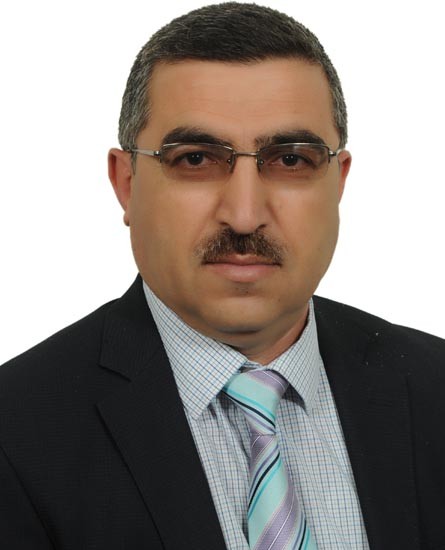
MUSTAFA KESKİNView profile
Associate Professor
MUSTAFA KESKİN serves as an Associate Professor in the Department of Arabic Language and Rhetoric within the Faculty of Theology at Gaziantep University, Turkey. Appointed to this position in 2021 after serving as a Doctor Lecturer since 2013, his academic career is deeply rooted in Islamic theological studies with specialized expertise in Arabic linguistics and rhetoric. His institutional affiliation spans both the Department of Fundamental Islamic Sciences and the specialized Department of Arabic Language and Rhetoric, reflecting his dual focus on theological scholarship and linguistic analysis. His educational trajectory includes: Doctorate (2013-2017): Gaziantep University, Institute of Social Sciences, Department of Basic Islamic Sciences Master's (2011-2013): Harran University, Institute of Social Sciences, Tafsir (Thesis) Licence (2008-2010): Ankara University, Faculty of Theology, Theology Undergraduation Completion (Distance Education) Associate Degree (2006-2008): Anadolu University, Faculty of Open Education, Department of Theology Licence (1995-2002): Anadolu University, Faculty of Business Administration Professor Keskin's research centers on the intersection of Arabic linguistic structures and Islamic theological texts, with particular emphasis on rhetorical devices in the Quran and Hadith literature. His work explores how classical Arabic grammatical frameworks inform Quranic exegesis, analyzes historical linguistic schools like the Baghdad tradition, and investigates poetic devices in early Islamic literature. This scholarship bridges philological precision with theological interpretation, revealing how linguistic choices shape religious meaning in foundational Islamic texts. His publications consistently demonstrate methodological rigor in applying classical Arabic linguistic theories to theological source materials. Analysis of his 15 most recent publications (2018-2024) reveals three dominant scholarly trajectories: systematic examination of rhetorical devices in Quranic surahs (particularly tibāq and metaphor), critical engagement with classical Arabic grammatical treatises (including works by Müberred and al-Fārisī), and historical studies of Islamic scholarly networks connecting Anatolia and Syria. His work demonstrates growing international collaboration, with increasing co-authorship in Arabic-language publications alongside Turkish and English outputs. The research consistently applies linguistic analysis to theological questions, creating a distinctive niche in Quranic stylistics and classical Arabic rhetoric. No scientific awards were documented in the source materials. Professor Keskin has supervised 15 graduate students across doctoral and master's programs, with thesis topics reflecting his core research interests. Doctoral work includes semantic analysis of Quranic roots (e.g., 'krm') and classical rhetorical poetry, while master's research spans prophetic traditions in poetry, Quranic command structures, and human values in early Arabic poetry. His editorial work on 6 academic volumes complements this mentoring role, particularly in publishing classical Arabic texts with contemporary commentary. Conference presentations (9 international venues) demonstrate active scholarly engagement, though specific research grants were not documented in the source materials. No dedicated research laboratories or formal research teams were mentioned in the institutional documentation.