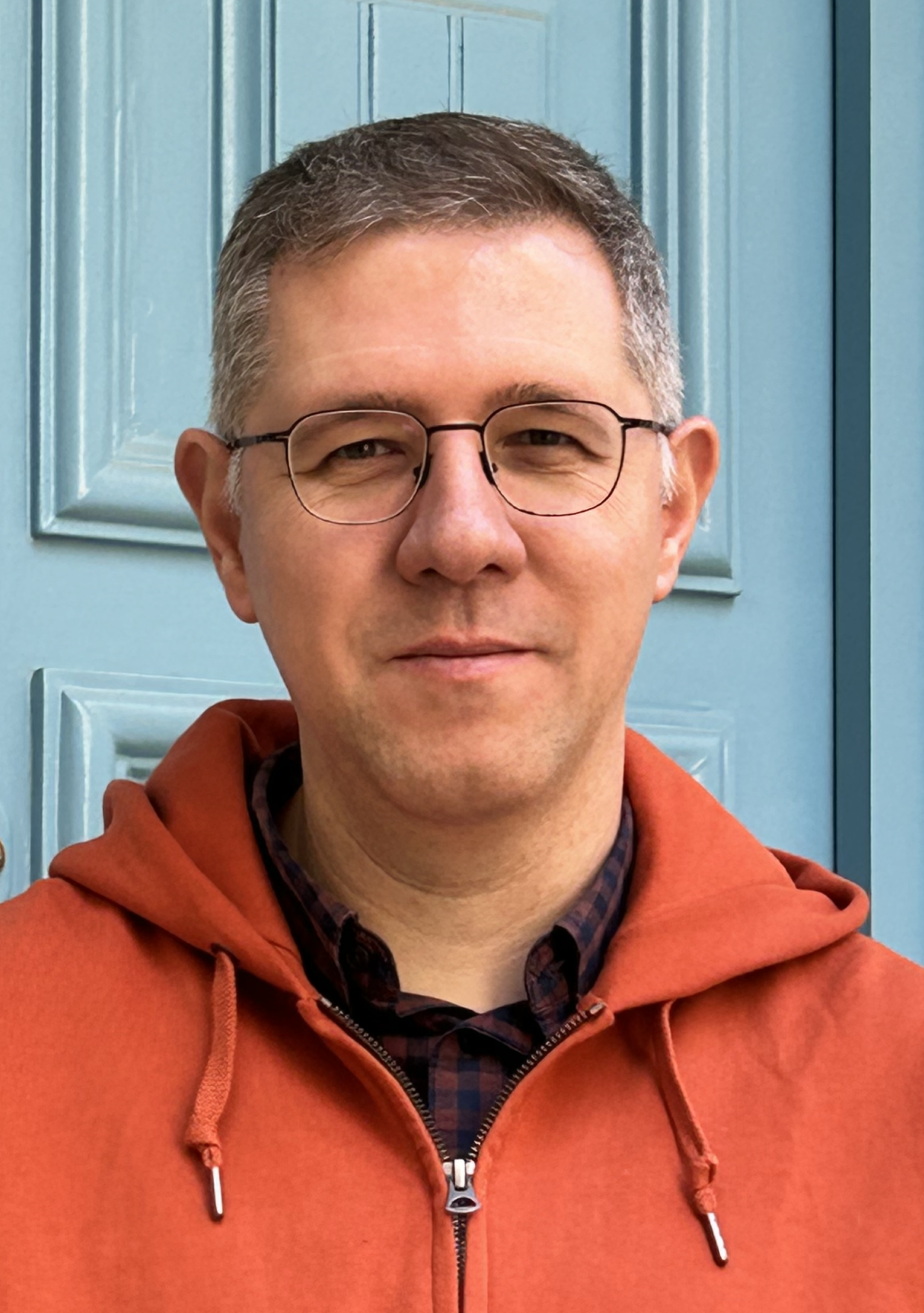
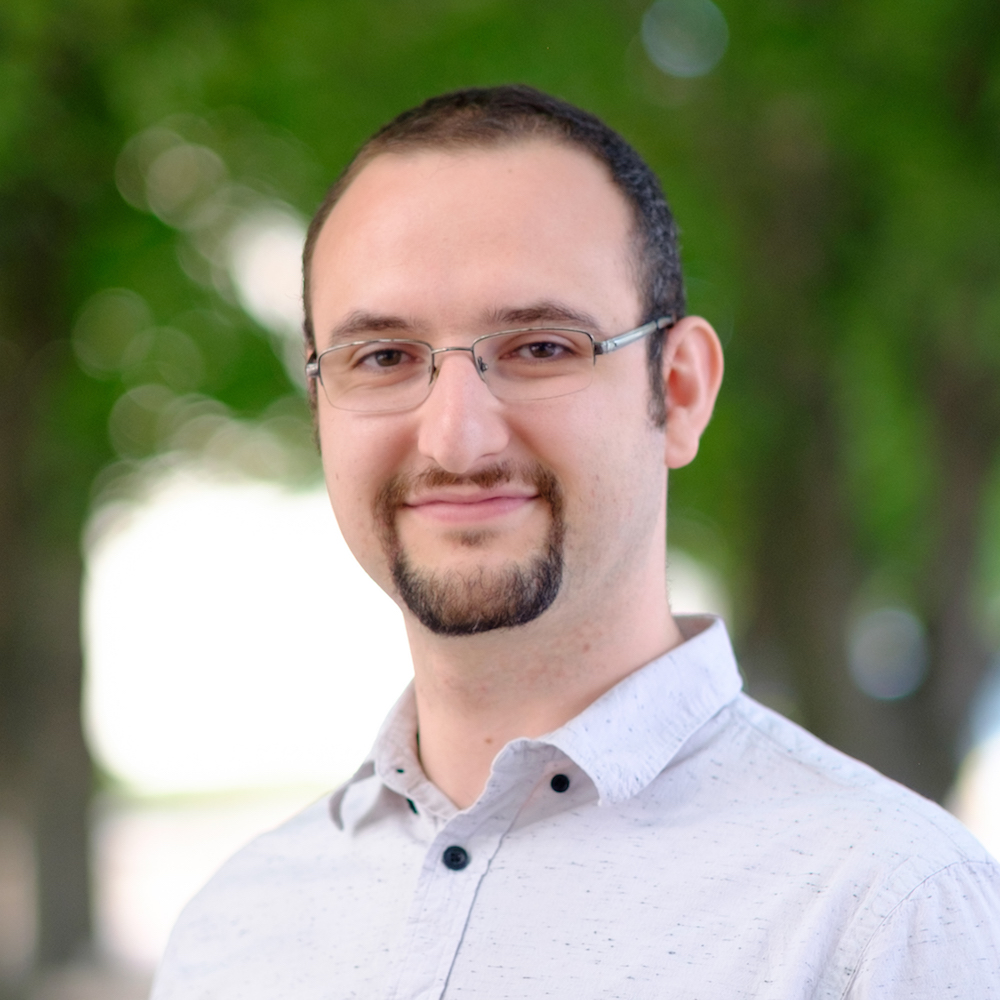
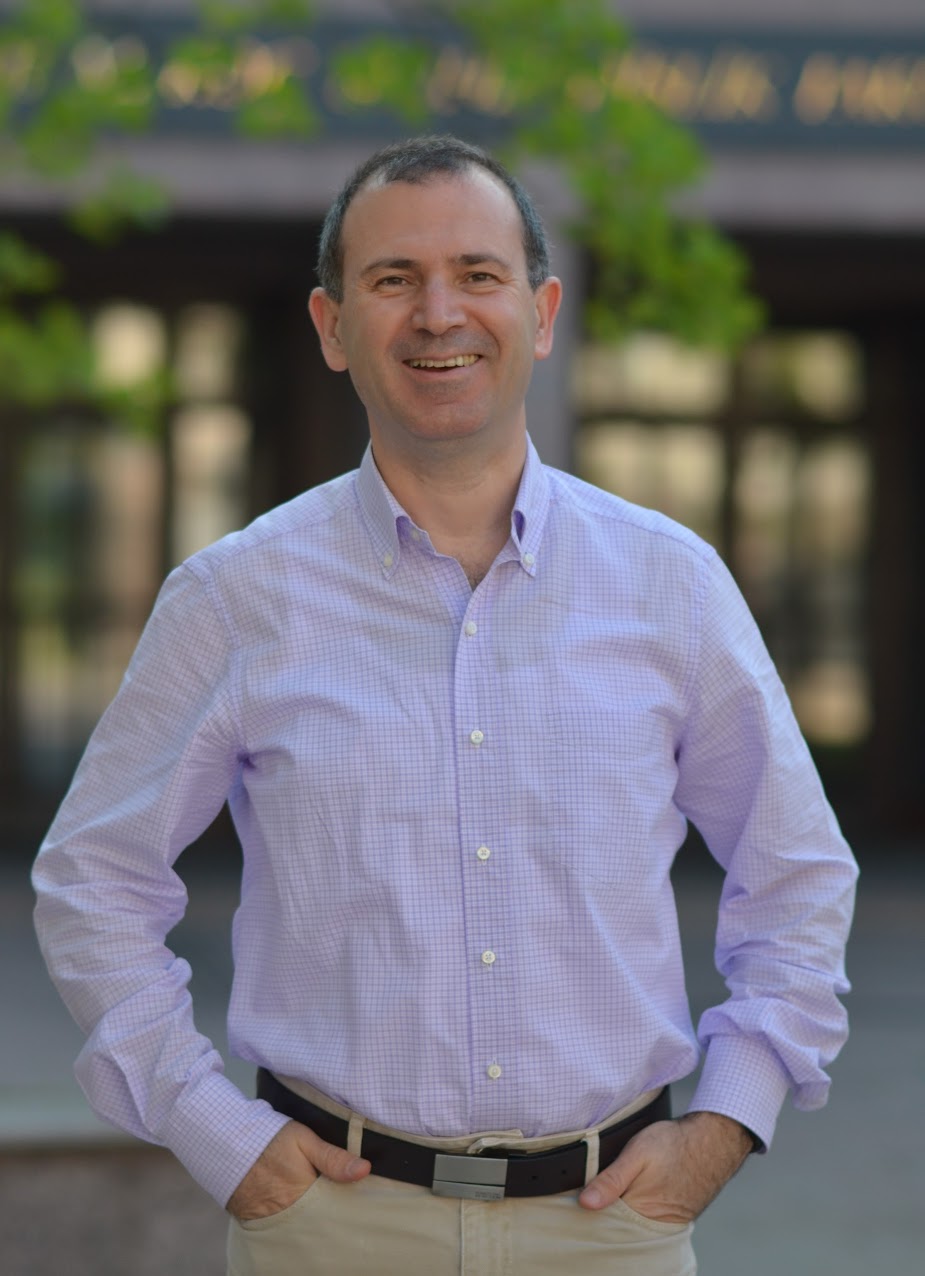
Prof. Dr. Sakibe Nalan BÜYÜKKANTARCIOĞLU is a Professor at Çankaya University, Faculty of Arts and Sciences, Department of Translation and Interpreting Studies (English). She previously served as Professor (2007–2019), Associate Professor (2000–2007), and Assistant Professor (1997–2000) at Hacettepe University, Department of English Linguistics. PhD in English Linguistics (Hacettepe University, 1991) MA in English Language Teaching (Middle East Technical University, 1985) BA in English Teaching (Istanbul University, 1978) Her research spans Linguistics, Cognitive Linguistics, Discourse Analysis, Psycholinguistics, Sociolinguistics, Translation Studies , with a focus on figurative language, interjections, political discourse, and endangered languages. She received the European Language Award (2011) and has supervised numerous PhD and MA theses, including work on Turkish idioms, gender representation, and language awareness. A prolific editor and conference participant, she has contributed to interdisciplinary projects and publications on Turkish sociolinguistics.
Prof. Dr. Gülşen Eryiğit is a Professor at Istanbul Technical University within the Faculty of Computer and Informatics , Department of Artificial Intelligence and Data Engineering . She founded and directs the ITU Natural Language Processing Group , Turkey's leading team in Turkish-language NLP, and serves as Senior Action Editor for ACL RR , Director of ITU TÖMER (Turkish Language Teaching Center), and Co-Chair of the EU UniDive Cost Action WG3. Education: PhD in Computer Engineering from ITU (2007), MSc and BSc from ITU and Marmara University Research: Focuses on Natural Language Processing for Turkish, including dependency parsing , coreference resolution , multiword expressions , and language education technology Her recent work involves multilingual transfer learning , LLM applications for Turkish text simplification, and gamification for morphology education. She has received prestigious awards like the Siemens Excellence Award and TÜBİTAK's Above Threshold Award . Her research has produced 65+ publications and 29+ projects funded by EU, TÜBİTAK, and industry partners. Scientific Awards: Siemens Excellence Award (2007) Above Threshold Award (TÜBİTAK, 2015) Certificate of Appreciation (EU 7th Framework, 2012) Thank You Plaque (ITU, 2017) The ITU NLP Group under her leadership has developed Turkey's first licensed NLP software exported internationally. She collaborates with European institutions through COST actions and participates in ACL, CoNLL, and LREC conferences. Her lab focuses on language technology for Turkish , including sign language processing and social media normalization.
Erkut Erdem is a Professor in the Department of Computer Engineering at Hacettepe University, where he leads the Computer Vision Laboratory (HUCVL). His research focuses on computer vision and machine learning, particularly on incorporating different kinds of context (spatial, temporal and cross-modal) into visual processing across all levels from low to high-level vision. He received his Ph.D. (2008), M.Sc. (2003), and B.Sc. (2001) from Middle East Technical University. Prior to joining Hacettepe University in 2010, he completed a post-doctoral fellowship at Ecole Nationale Supérieure des Télécommunications (2009-2010) and held visiting researcher positions at UCLA (2007) and Virginia Tech (2004). His current research interests include Visual Saliency Prediction, Automatic Image Description, Video/Photoset Summarization, Image Filtering, and Image Editing. Recent work has focused on multimodal learning with video-language models, diffusion-based image editing, and event-based vision for low-light conditions. His research has been published in top venues including NeurIPS, ICLR, ICCV, SIGGRAPH, and ACL. He has received significant recognition including The Young Researcher Award from Turkish Academy of Sciences and being named a 2022 Outstanding Associate Editor of IEEE Transactions on Multimedia. He has secured multiple research projects funded by TUBITAK and received gift funds from Adobe Research for text-guided image synthesis work. Current Teaching: BBM202: Algorithms, AIN434/BBM444: Fundamentals of Computational Photography Graduate Supervision: 6 current Ph.D. students, numerous recent graduates including Burak Ercan (2024) and Aysun Kocak (2023) Professional Affiliations: Co-affiliated with Koç University and İş Bank AI Center (KUIS AI)
Murat FİDAN serves as an Associate Professor in the Department of Economics at Kastamonu University's Faculty of Economics and Administrative Sciences, where he has been a full-time faculty member since 2020. Previously, he held academic positions at Gaziantep University and Kilis 7 Aralık University, specializing in Ottoman economic history and price dynamics. His career spans over two decades of teaching and research in Turkish higher education. His academic credentials include a PhD in Islamic History and Arts from Ondokuz Mayıs University (2003), a Master's in Islamic Law from İnönü University (1996), and a BA in Theology from Ankara University (1993). His foreign language proficiency includes English (YÖKDİL score 60, 2017). FİDAN's research centers on Ottoman economic structures, with particular expertise in price history, trade relations, and institutional analysis. His work bridges Ottoman history with economic methodology, examining narh (price control) records, guild systems, and international trade dynamics. He has published extensively on Kastamonu's regional economy, Ottoman-Russian commercial relations, and the evolution of monetary systems, contributing significantly to understanding pre-modern economic mechanisms through primary source analysis. His publication portfolio shows consistent output with 43 total works including 19 journal articles, 14 conference papers, 2 books, and 8 book chapters. The research demonstrates chronological depth from 2004 to 2024, with recent focus on waqf (endowment) institutions, comparative economic thought, and Eastern Mediterranean maritime history. Methodologically, he combines archival research with economic analysis, primarily using Ottoman-era price records and customs tariff documents. FİDAN has successfully supervised 13 master's theses focusing on Ottoman economic history, Turkish women's labor participation, and regional price dynamics. His sole research project (2016-2018) examined price movements in Kastamonu between 1673-1806 using narh records. He maintains active collaborations with scholars like Serkan Dilek and Tolga Ulusoy, co-authoring multiple publications on economic history topics.
Prof. Sadettin Emre Alptekin is a full Professor of Industrial Engineering at Galatasaray University, Faculty of Engineering and Technology, where he also serves as Vice Dean. Since joining the university as a research assistant in 2000, he has steadily advanced through the academic ranks, becoming an Assistant Professor (2006–2010), Associate Professor (2010–2023), and finally Professor in 2023. Education: PhD (Dr), Industrial Engineering, Istanbul Technical University, Institute of Science and Technology, 2001–2006 MSc, Industrial Engineering, Galatasaray University, Faculty of Engineering and Technology, 1999–2001 BSc, Industrial Engineering, Istanbul Technical University, Faculty of Management, 1995–1999 Languages: Advanced English (C1), Upper-Intermediate French (B2), Advanced German (C1) Research Interests: Prof. Alptekin’s research focuses on Computer Learning , Fuzzy Sets and Systems , and Decision Support Systems . His work integrates artificial intelligence, machine learning, and soft-computing techniques to solve complex industrial and managerial problems in areas such as supply chain management, quality function deployment, blockchain adoption, and mental-health prediction. Publication Trends: Across more than 50 refereed publications, Prof. Alptekin has consistently explored hybrid intelligent models that combine fuzzy logic, machine learning, and multi-criteria decision-making. Recent articles emphasize deep-learning-based anomaly detection in industrial time-series data, blockchain adoption in supply chains, and machine-learning applications in subjective well-being and mental-health modeling. Scientific Awards & Honors: No specific awards or medals are listed in the provided documents. Research Leadership & Funding: Since 2008 he has been the principal investigator (executive) of 12 nationally funded projects, covering topics such as Industry 4.0 sub-system design, Internet of Things applications, artificial neural networks in organizational decision-making, big-data analytics, and strategic decision processes. Graduate Advising: He has formally supervised at least 8 master’s theses and numerous undergraduate projects. Representative thesis titles include Gaussian-process-regression-based man-hour prediction, machine-learning-driven human-behavior modeling, recommender-system design for e-commerce, thyroid-nodule diagnosis from scintigraphic images, software-effort estimation via neural networks, spreadsheet heuristics for joint-replenishment problems, cross-selling decision systems in insurance, and profitability analyses of Turkish banks under disinflation. Laboratories & Teams: While no dedicated laboratory name is disclosed, his continuous role as Vice Dean and principal investigator implies active leadership of the Industrial Engineering department’s research clusters in intelligent systems and decision support technologies.
Onur Varol is an Assistant Professor at Sabanci University's Computer Science Department and leads the VIRAL Lab, which focuses on computational social science, network science, and machine learning. He has affiliations with the Center of Excellence for Data Analytics. His research spans social bot detection, misinformation analysis, and online behavior modeling.
Cem Say is a Professor in the Department of Computer Engineering at Boğaziçi University's Faculty of Engineering, where he has established himself as a leading researcher in theoretical computer science and artificial intelligence. His academic journey began with the completion of his doctoral dissertation titled Qualitative System Identification in 1992, which was the first thesis of Boğaziçi University's Computer Engineering PhD program. Professor Say's research interests span multiple domains of computer science, with significant contributions to quantum computing, artificial intelligence, and theoretical computer science. His early work focused on qualitative reasoning and simulation, particularly through the QSIM algorithm, where he made significant improvements to filtering techniques and addressed challenges in representing physical systems. Over time, his research evolved toward quantum computation, where he has made substantial contributions to quantum finite automata theory, space-bounded quantum computation, and quantum complexity classes. His recent work explores the energy complexity of computation, bridging theoretical computer science with thermodynamics. His publication record shows a clear evolution from classical AI and qualitative reasoning toward quantum computation. The most recent articles demonstrate his focus on space-bounded quantum computation, energy complexity of regular languages, and interactive proof systems with minimal resources. His work consistently addresses fundamental questions about computational limits, particularly in quantum and sublogarithmic-space models. Professor Say has also made significant contributions to science communication through several books written for general audiences, including 50 Soruda Yapay Zekâ (2018), Yeni Dünya, Yeni Ağ (2020), and En Hakiki Mürşit (2021), which explain complex concepts in artificial intelligence and scientific methodology in accessible terms. Throughout his career, Professor Say has been actively involved in the Turkish academic community, editing proceedings for multiple Turkish symposia on artificial intelligence and neural networks. His doctoral dissertation established foundational work in qualitative system identification, and his subsequent research has consistently pushed boundaries in theoretical computer science, particularly in quantum computation where he has collaborated extensively with Abuzer Yakaryılmaz and other researchers.
Dr. Mehmet Kaya is a Lecturer in the History Department of Bingöl University's Faculty of Arts and Sciences since 2009. He holds a PhD in Republic History from Fırat University (2004) and has served as Department Head (2009-2012) and currently leads the Republican History Subdivision. His research focuses on Turkish-Iranian relations, modern Middle Eastern history, and the diplomatic history of the Republic of Turkey. Education: BA in History (Fırat University, 1987), MA in Revolutionary History (Istanbul University, 1992), PhD in Turkish-Iranian Relations (Fırat University, 2004) Research interests include 20th-century diplomacy, Ottoman-Turkish transition, and regional geopolitics. He has published extensively on topics like Iran's 1979 Revolution, Turkish-Israeli relations, and Kurdish uprisings. Recent works analyze Iran's Syria policy (2022) and Ali Şeriati's influence on the Iranian Revolution (2024). He co-authored chapters in volumes like Modern İran Tarihi (2021) and participated in international conferences on Karabakh conflicts and Iranian opposition groups. Serves as referee for Bingöl University's Social Sciences Journal.
Tuğba Dalyan is an Associate Professor in the Department of Computer Engineering at Istanbul Bilgi University, Faculty of Engineering and Natural Sciences. She holds a Ph.D. in Computer Engineering from Yıldız Technical University (2014), an MSc from Kocaeli University (2007), and dual BSc degrees in Mathematics and Computer Science and Business Administration (Minor) from Istanbul Bilgi University (2003). She has been a faculty member since 2016 and previously served as a Teaching Staff member and Research Assistant at the same institution. Her research focuses on Natural Language Processing , Machine Learning , Deep Learning , Text Mining , Data Science , and Big Data Analytics . Her work spans computational linguistics, sentiment analysis, author profiling, machine translation, and smart systems. She has led and contributed to numerous research projects, particularly in AI-driven urban solutions and health technologies. The most recent publications show a strong trend in Turkish NLP, zero-shot classification, multimodal AI (image captioning), emotional robotics, and decision support systems using fuzzy logic. Her work combines theoretical rigor with practical applications in smart cities, education, and healthcare. Best Paper Award , CICLing 2012 TÜBİTAK 2209-A student project awards (2022–2024) Horizon2020 Eşik Üstü Ödülü , MIMOSCSA 2024 TÜBİTAK 2242 competition: 2nd and 3rd place (2016, 2018) She has advised numerous student research projects, many of which have received national recognition. She has directed multiple TÜBİTAK and institutional research grants, including projects on smart homes, blockchain crowdfunding, mental health, and AI for social polarization. Her leadership roles include Head of Department, Vice Dean, and Director of Graduate Programs. Tuğba Dalyan leads research in AI and NLP with a strong emphasis on Turkish language technologies. She is involved in interdisciplinary teams working on emotional robots, smart city platforms, and citizen science ecosystems. Her lab activities focus on neural networks, text analysis, and intelligent systems development.
Assoc. Prof. Dr. Ali Şükrü Özbay currently serves as an Associate Professor at Karadeniz Technical University's Faculty of Arts, Department of English Language and Literature. He earned his PhD and MA in Applied Linguistics from Karadeniz Technical University and holds a BA in English Language and Literature from Ankara University. Education : PhD (2015) and MA (2004) from Karadeniz Technical University; BA (1996) from Ankara University Dr. Özbay's research focuses on Corpus Linguistics , Learner Corpora , Academic Writing , Translation Studies , and Language Pedagogy . His work investigates lexical bundles, support verb constructions, and pragmatic markers through computational corpus analysis. Recent publications analyze four-word recurrent expressions in educational technology contexts, collocational priming in Turkish EFL learners' mental lexicon, and semantic prosody of intensifiers in academic corpora. He supervises theses on data-driven learning applications and corpus-based teaching materials. Dr. Özbay has held managerial roles including Deputy Head of Department (2019–present) and Assistant Coordinator for Erasmus+ programs (2017–2021). He actively participates in international conferences and has published in journals like Turkish Studies , Australian Journal of Applied Linguistics , and Hacettepe Eğitim Dergisi .
Asst. Prof. Hilal Öztürk Baydere serves in the Department of Western Languages and Literatures at Karadeniz Technical University's Faculty of Arts and Humanities since 2021, advancing to Assistant Professor in 2024 after beginning her academic career at the university's School of Foreign Languages in 2013. Her institutional trajectory reflects deep integration within Turkey's translation studies community. Her academic foundation includes: Doctorate in Translation Studies (2016-2022) from Istanbul University's Institute of Social Sciences Postgraduate degree in English Translation and Interpretation (2011-2015) from Hacettepe University Undergraduate degree in English Language and Literature (2007-2011) from Hacettepe University Her research centers on Translation Studies with acute focus on machine translation's disruption of literary translation practices. She investigates translator competence evolution in AI-driven environments, creativity preservation in machine-assisted workflows, and historical/cultural dimensions of translation. Her work bridges theoretical linguistics with practical technological applications, particularly examining lexical diversity and stylistic integrity in neural machine translation outputs. Publication analysis reveals three dominant research vectors: (1) Machine translation evaluation frameworks for literary texts (25% of output), (2) Historical/cultural memory representation through translation (33%), and (3) Translator identity and competence in digital ecosystems (42%). Recent work increasingly incorporates large language models while maintaining strong philological grounding in English-Turkish translation contexts. She actively supervises student research on AI translation applications including subtitle translation effectiveness and e-commerce review sentiment analysis. Her TUBITAK-funded doctoral scholarship (2017-2022) and current membership in the European 'Language in the Human-Machine Era' research consortium demonstrate significant grant acquisition and international collaboration. Conference participation spans 8+ annual international symposia since 2017, primarily KTUDELL and NALANS events. Her ongoing projects with the European Cooperation in Science and Technology group indicate future research directions exploring human-AI symbiosis in translation pedagogy and professional practice, particularly regarding creativity metrics and cultural adaptation in neural machine translation systems.
Dr. Duygu Yavuz is an Assistant Professor at Yeditepe University's Faculty of Arts and Sciences, Department of Turkish Language and Literature. Her academic journey includes a PhD in Turkish Language and Literature from Sakarya University (2011-2017), MA in Old Turkish from Mimar Sinan Fine Arts University (2009-2011), and BA in Turkish Language and Literature from the same institution (2005-2009). Education: PhD: Turkish Language and Literature, Sakarya University (2011-2017) MA: Old Turkish, Mimar Sinan Fine Arts University (2009-2011) BA: Turkish Language and Literature, Mimar Sinan Fine Arts University (2005-2009) Her research focuses on historical linguistics, Turkic dialectology, metaphorical semantics, and loanword adaptation in Old Turkish texts. She has extensively analyzed Turkic conceptual systems through light and fire metaphors, verb morphology, and reduplication patterns in folklore. Recent publications examine Harezm Turkish, Uyghur texts, and compounding mechanisms in Turkic languages. She has presented at international conferences on topics like dialectal variations and cultural symbolism in historical linguistics. Teaching Experience: Turkish Language History (EDTR 121, TLL 113) Old Turkish (EDTR 211-212, TLL 219-220) Contemporary Turkish (EDTR 261-262, TKL 201-202) Teacher Training (PTUR 402-403) Previously worked at the Turkish Ministry of National Education (2014) teaching Turkish Language and Literature. Affiliated with academic societies tracked through memberships in indexing services like TR DİZİN, MLA, and SOBIAD.
Bekir Taner Dincer is a Professor at Muğla Sıtkı Koçman University, Faculty of Engineering, Department of Computer Engineering. He has been actively teaching courses including Web Development and Programming, Artificial Intelligence, Data Mining, Natural Language Processing, and Senior Design Projects for multiple academic years including the upcoming 2025-2026 term. Dr. Dincer earned his Bachelor's degree in Statistics from Middle East Technical University (1988-1993), followed by a Master's degree in Statistics and Computer Science from Muğla Sıtkı Koçman University (1996-1998), and completed his Doctorate in Computer Science from Ege University's International Computer Institute (1998-2004). His research focuses on Information Retrieval, Natural Language Processing (particularly for Turkish language), and related computational linguistics areas. His work addresses challenges in Turkish language processing including morphological analysis, constituent chunking, information retrieval systems, and term weighting methods. He has made significant contributions to adapting information retrieval techniques for agglutinative languages like Turkish, which presents unique challenges compared to Indo-European languages. His publication record shows a consistent research trajectory with recent work (2013-2018) focusing on risk-sensitive evaluation methods, learning to rank, entity recognition in big data, and specialized approaches for Turkish language processing. His research often bridges theoretical information retrieval concepts with practical applications for Turkish text processing. Dr. Dincer has served as editor for prestigious publications including the International ACM SIGIR Conference proceedings and ACM Transactions on Information Systems journal, demonstrating recognition of his expertise by the international research community. He has supervised numerous graduate students, guiding PhD and Master's theses on topics including unsupervised syntactic disambiguation for Turkish, statistical analysis of word roots and affixes, and information retrieval system design. His research has been supported by TÜBİTAK projects including the Design of a Statistics-Driven Selective Information Retrieval System (2015-2018) and the Design of a Statistical Information Access System (2011-2014).
Hacer Atar Yıldız is an Associate Professor at the Department of Electronics and Communication Engineering, Faculty of Electrical and Electronics Engineering at Istanbul Technical University (ITU). She holds a B.Sc. (1997) and M.Sc. (2000) in Electronics Engineering from Karadeniz Technical University, and a Ph.D. (2015) in Electronics Engineering from ITU. Her research focuses on analog circuit design, integrated circuits, analog filters, memristor structures, and graphene sensors. Education: Ph.D. in Electronics Engineering (2015), Istanbul Technical University M.Sc. in Electronics Engineering (2000), Karadeniz Technical University B.Sc. in Electronic Communication Engineering (1997), Karadeniz Technical University German Language Education (2001), Munich Technical University Research Interests: Her work emphasizes innovative analog circuit solutions, including memristor-based systems, neural networks, and sensor technologies. Notable contributions include memcapacitor/meminductor emulator circuits and cryogenic bandgap designs. She also explores applications in plant identification using copula models and thermal compensation for microbolometers. Professional Experience: Associate Professor at ITU (2022–present) Researcher at Virginia University (2018) Expert Engineer at Türk Telekom (2003–2009) Intern at Marco GmbH (Munich, 2001–2002) Teaching: She has taught courses such as Introduction to Electronics, Electronic Design, and Analog Circuits at both undergraduate and graduate levels. Recent courses include EHB 222E and EHB 335. Languages & Hobbies: Fluent in English and German. Enjoys swimming, long-distance running, Turkish folk music, and outdoor activities.
Engin Erzin is a Professor at Koç University's College of Engineering, leading the KUIS AI Lab and Multimedia, Vision and Graphics Lab . His research focuses on AI-driven human-centric systems, affective computing, and multimodal interaction analysis. He has contributed extensively to robotics, speech processing, and human-robot interaction through over 70 peer-reviewed publications since 2008. Research interests include: Affective computing and emotion recognition from speech/gestures Human-robot interaction and socially engaging agents Speech-driven animation and gesture synthesis Multimodal data fusion for interaction analysis Deep learning applications in robotics and biomedical engineering Recent work emphasizes: Developing adaptive pHRI controllers for manufacturing tasks Creating engagement measurement frameworks for human-machine interfaces Advancing Turkish speech recognition through self-supervised learning Designing multimodal databases for interaction studies Labs: KUIS AI Lab : Focuses on AI applications in robotics and human-computer interaction Multimedia Lab : Specializes in vision, graphics, and audiovisual analysis