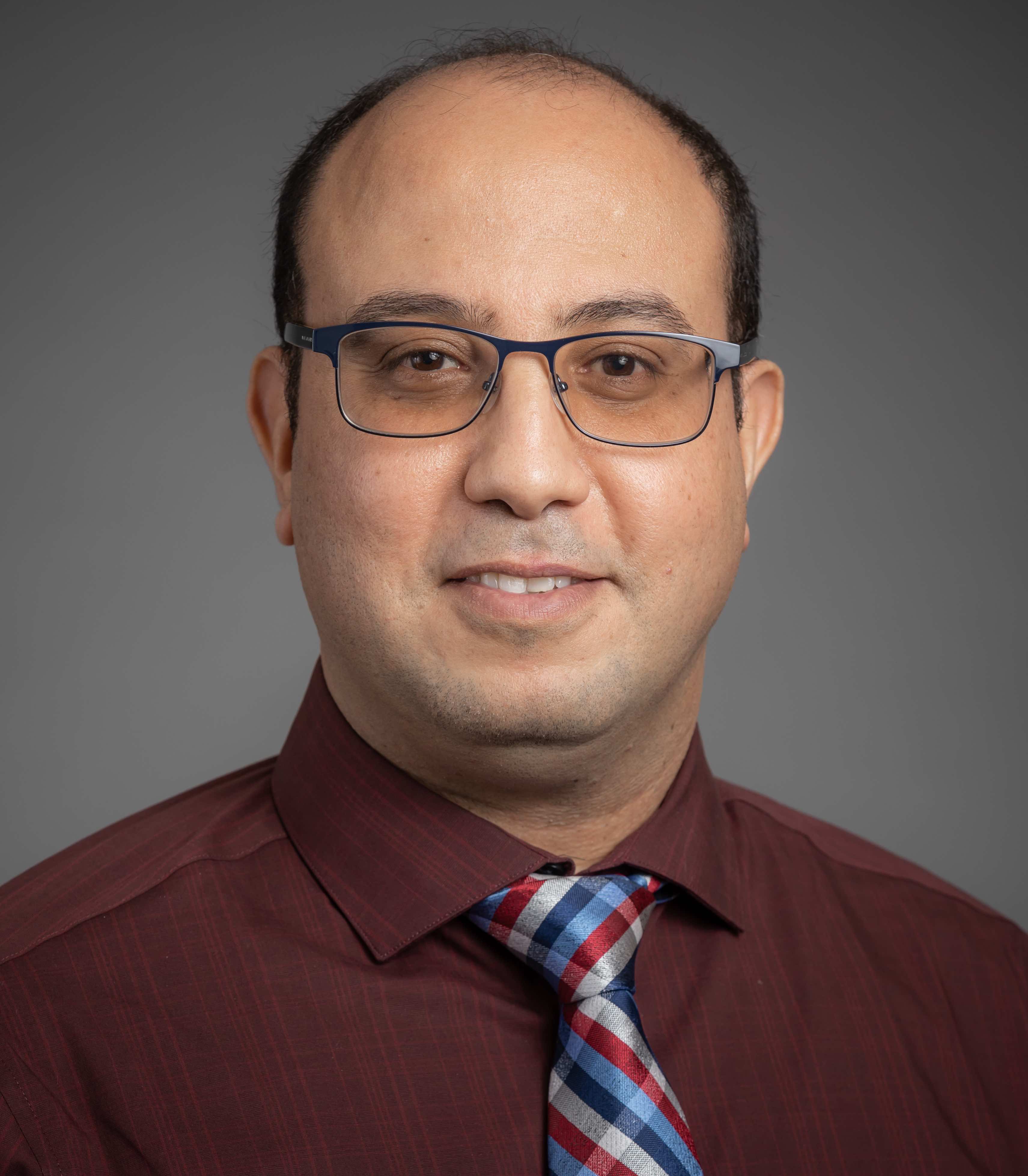
Mohamed Mohamed is a Lecturer in Aeronautical & Mechanical Engineering at the Faculty of Computing, Engineering and Science. His research focuses on aerodynamics, turbulence modeling, high-speed flows, aircraft design, and green energy solutions. He employs experimental and numerical methods such as wind tunnel tests and advanced computational approaches like LES and RANS. Research Interests: Aerodynamics of aircraft wings, turbomachinery efficiency, renewable energy technologies (e.g., tidal/wave energy), and biofuel development. Recent Work: Includes studies on nanocomposite membranes for wastewater treatment, low-speed delta wing aerodynamics, and biodiesel performance in diesel engines. His publications span topics from membrane engineering to biofuel utilization, reflecting a strong emphasis on sustainable energy and aerospace innovation.
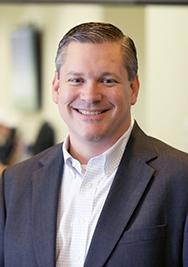
Stephen T. McClain is a Professor and Graduate Program Director in the Department of Mechanical Engineering at Baylor University, with a research focus on in-flight ice accretion, gas turbine blade aerodynamics, uncertainty analysis, and experimental techniques. He holds a Ph.D. and MS in Mechanical Engineering from Mississippi State University (2002, 1997) and a BSME from the University of Memphis (1995). His research spans ice accretion modeling for aircraft safety, additive manufacturing roughness in turbine cooling channels, cold-soaked fuel frost analysis, and biomimetic hair sensors for gust mitigation. Collaborative projects with NASA, the Air Force, and the FAA address aviation safety, turbine efficiency, and fluid dynamics challenges. Recent publications emphasize additive manufacturing roughness, frost evolution in cold climates, and microwave systems for water collection efficiency. These works fall under broad keywords like Mechanical Engineering , Aerospace Engineering , and Fluid Dynamics , with sub-fields including Turbulent Flow Modeling , Surface Roughness , and Phase Change . Scientific awards include the 2007 W. M. Rohsenow Award for gas-turbine heat transfer and the 2004 ASEE Best Paper Award for innovative teaching. He has mentored 25+ graduate students and led the development of facilities like the Baylor Frost Tunnel and Climatic Chamber Aviation Frost Facility (CAFF). Notable grants include NASA Cooperative Agreement NNX12AB85A and FAA Agreement 17-G-011. His work integrates experimental, computational, and educational initiatives, reflecting his dual role as a researcher and educator.
Brent D Cameron is a Professor in the Department of Bioengineering at the University of Toledo's College of Engineering. His research focuses on biomedical engineering, with emphasis on biosensors, surface plasmon resonance, non-invasive glucose monitoring, and optical polarimetry. Over a career spanning decades, he has pioneered advancements in real-time physiological glucose sensing, DNA aptamer-based diagnostics, and wearable biosensing technologies. Research Trends: His publications reflect expertise in Biosensors for glycated hemoglobin and cortisol Aptamer microarrays and DNA origami Surface plasmon resonance and optical polarimetry Machine learning for glycemic prediction Transdermal biomarker detection Collaborations: He has published extensively with co-authors including Scott M. Pappada and Dong Shik Kim, covering areas from cancer therapy to diabetes management. His work has been referenced in patents and widely shared in academic and clinical settings.
Sofaine Bourouaine is an Assistant Professor at the College of Engineering and Science , Florida Institute of Technology, within the Department of Aerospace, Physics and Space Sciences. His research focuses on solar wind physics, particularly on the mechanisms of coronal heating, plasma acceleration, and turbulence processes that transfer energy across scales. His work integrates theoretical modeling , spacecraft data analysis (including Parker Solar Probe and Solar Orbiter), and numerical plasma simulations . Key areas of investigation include: Solar wind turbulence and energy cascade Wave-particle interactions in heliospheric plasmas Statistical analysis of magnetic field fluctuations Role of Alfvén waves in solar wind acceleration Impact of magnetic reconnection on solar wind generation Intermittency in magnetohydrodynamic turbulence The analysis of his 15 most recent publications reveals consistent themes in solar wind turbulence characterization, spacecraft data interpretation, and mission design concepts like the Firefly (4π) Constellation . While no formal awards or students are mentioned in the available data, his contributions to solar wind physics are evident through his focus on turbulence dynamics and wave-particle energy transfer mechanisms.
Sreejith Nadakkal Appukuttan is a Researcher III in the Computational Science Center at the National Renewable Energy Laboratory (NREL). He specializes in numerical methods for high-performance computation of reacting and non-reacting fluid flows. Education: PhD in Energy and Transfer from Institute National Polytechnique de Toulouse Master of Aerospace Engineering from Indian Institute of Technology Kanpur Bachelor of Mechanical Engineering from National Institute of Technology Warangal His research focuses on computational fluid dynamics, aerodynamics, propulsion, and combustion, with applications to energy systems, sustainable technologies, and exascale computing. He has developed solvers for reacting flows using advanced techniques like adaptive mesh refinement (AMR) and material point method (MPM). Scientific Awards: None explicitly mentioned. Professional Experience: Lead Engineer at General Electric India Technology Center (2011–2017) Engineer at BrahMos Aerospace (2007–2009) Collaborations: Active in computational science networks, focusing on material point method, reacting flows, and exascale computing.
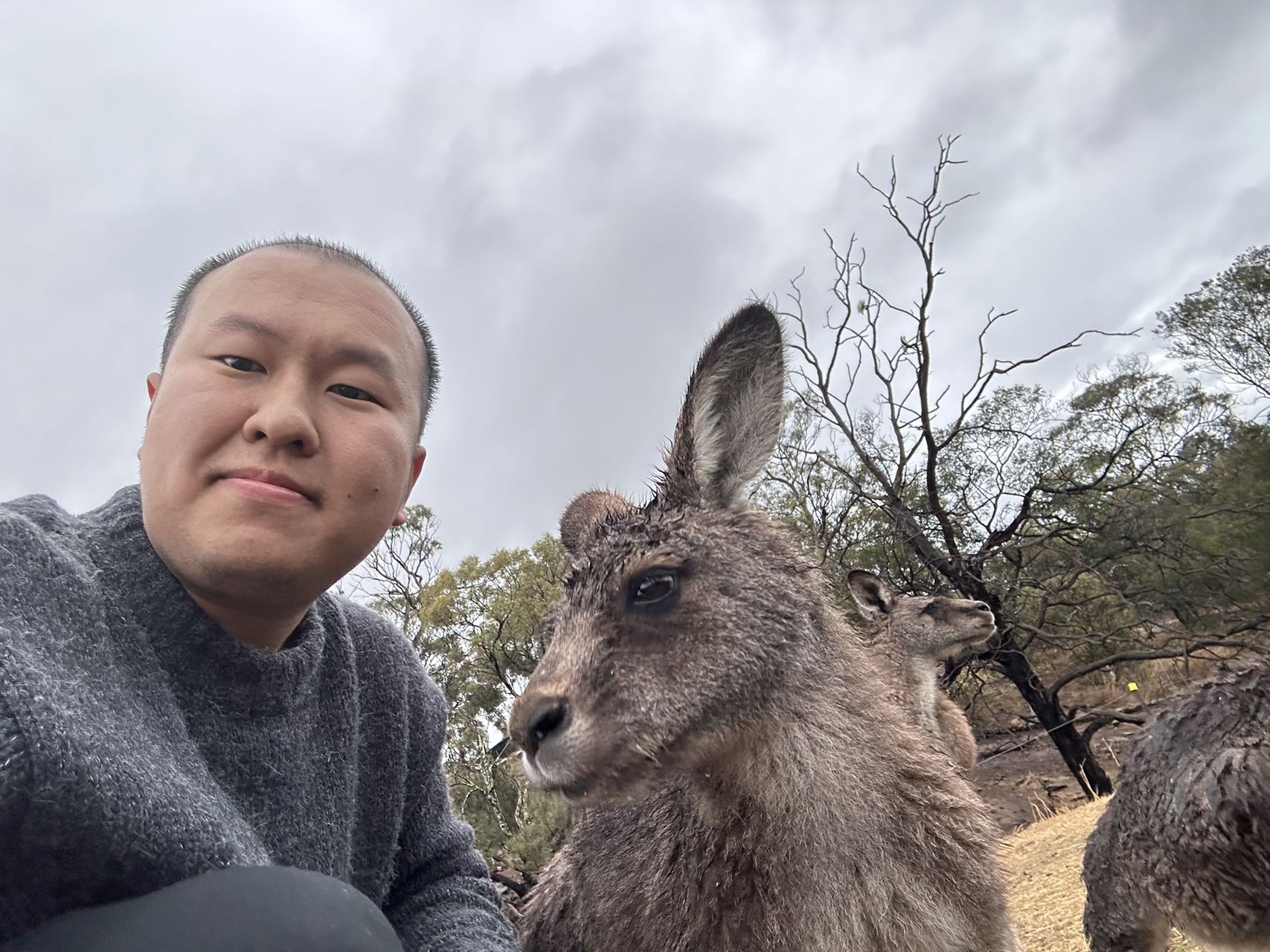
Dr. Jiachen Lu is a Research Associate at the Centre of Excellence for Climate Extremes (CLEX) , UNSW Sydney. He holds a Ph.D. in Built Environment (2024), an M.Sc. in Mechanical Engineering (2019), and a B.Eng. in Petroleum Engineering (2017). Ph.D. in Built Environment, UNSW Sydney M.Sc. in Mechanical Engineering, UC San Diego B.Eng. in Petroleum Engineering, Southwest Petroleum University His research focuses on urban climatology , land surface modelling , and computational fluid dynamics , particularly in improving urban canopy parameterization in climate models like CABLE. He develops one-dimensional urban flow models with advanced turbulent transport schemes (MLUCM v3.0) and studies how building height variability affects airflow. Recent publications include machine learning applications for wind flow prediction from urban morphology (Environmental Research Letters, 2025) and systematic analyses of urban canopy dynamics using EDMF schemes (Geoscientific Model Development, 2024). His work intersects atmospheric science , CFD simulations , and urban climate adaptation . National 1st prize , Contemporary Undergraduate Mathematical Contest in Modeling (2017) Honour graduate , Sichuan Province (2017) 1st place (blind review) , China Petroleum Engineering Design Competition (2017)
Professor Melissa Hart serves as the Associate Director - Training and Leadership at the ARC Centre of Excellence for 21st Century Weather , affiliated with the Institute for Marine and Antarctic Studies at the University of Tasmania. She specializes in urban climate research, thermal comfort, and air quality, with a focus on cross-institutional collaboration and climate education. Email: melissa.hart@utas.edu.au Co-Chair, World Climate Research Programme Training Academy Her research explores: Urban heat island effects and microclimate dynamics Integration of citizen science in climate monitoring Thermal comfort modeling and climate-sensitive design Impacts of extreme weather on educational environments Recent publications investigate: Machine learning applications for outdoor thermal sensation Building height variability in urban canopy flow Land surface temperature dynamics Smartwatch-based ambient temperature measurement Scientific recognition : UNSW Vice-Chancellors Award for Higher Degree Research Leadership She leads national researcher development programs and contributes to global climate discourse through modeling advancements and interdisciplinary studies.
Prof. Dr. Rinie Akkermans is Professor of Aerodynamics and Flight Mechanics at Hamburg University of Applied Sciences (HAW Hamburg), affiliated with the Department of Automotive and Aeronautical Engineering. He holds leadership roles as Vice-Director of the Research and Technology Transfer Center 'Future Air Mobility' and serves on the university Senate. His academic background includes a PhD in Physics from TU Eindhoven and an MSc in Aerospace Engineering from TU Delft. Research expertise spans computational and experimental fluid dynamics with emphasis on: Aeroacoustics and noise reduction techniques Turbulent flow modeling using DNS/LES methods Aerodynamic optimization of wings, propellers, and high-lift systems Bio-inspired flow control and vortex dynamics He actively supervises PhD candidates from TU Braunschweig, Volkswagen AG, and Beihang University. Recent publications focus on advancing computational methods (Lattice Boltzmann, Overset-LES) and experimental validations in aeroacoustics, flow control, and propeller/wing optimization. Work frequently appears in leading aerospace journals including AIAA Journal and Aerospace Science and Technology . Professional service includes doctoral committee memberships and industry collaborations with Volkswagen AG on automotive aeroacoustics. No awards are documented in the provided text.
Oscar Vento serves as a Fixed-term Assistant Professor in the Department of Energy (DENERG) at Politecnico di Torino, Italy, within the College of Mechanical, Aerospace, and Automotive Engineering. His academic responsibilities span teaching Computational Heat and Mass Transfer at the PhD level in Energetics and Fluid Machines across Bachelor's and Master's programs in Mechanical Engineering since the 2019/20 academic year through current 2025/26 offerings. Research Focus: Dr. Vento's work centers on fluid machinery and thermal systems, with emphasis on internal combustion engines, fuel injection technologies, and sustainable energy solutions. His expertise includes Gasoline Direct Injection (GDI) systems, cavitation phenomena, thermal-hydraulic performance analysis, and real-time control methodologies for fuel systems. Research aligns with UN Sustainable Development Goals 7 (Clean Energy), 9 (Innovation), 11 (Sustainable Cities), and 12 (Responsible Consumption). Publication Trends: Recent publications (2022-2025) demonstrate consistent focus on experimental and numerical investigations of fuel injection dynamics, with increasing emphasis on alternative fuels (ammonia), neural network applications, and transient flow measurement techniques. Research bridges fundamental fluid mechanics with practical automotive engineering challenges, particularly in emission reduction and energy efficiency. Advising and Intellectual Property: Co-supervises PhD candidate Carmelo Baronetto (Energetics program, 39th cycle, 2023-present) Holds national patent: System and method for measuring injected flow rate using a neural network (with Ferrari and Novara) Cod holds national/international patents: Control of the quantity injected into internal combustion engines (with Ferrari, Novara, Violante, Zhang) Research Context: Collaborates extensively within Alessandro Ferrari's research group, with publications spanning ENERGY, FUEL, ENERGIES, and Journal of Fluid Mechanics. Work addresses critical challenges in sustainable transportation through advanced diagnostics, control systems, and alternative fuel combustion research.
Dr. Opukuro David-West is a Senior Lecturer in Mechanical Engineering at the School of Physics, Engineering and Computer Science, University of Hertfordshire. He holds a PhD in Mechanical Engineering from the University of Strathclyde and has previously worked as a researcher at Queen’s University of Belfast, Kingston University, and Plymouth University. Research focus on composite structures, dynamic loading, vibration measurement, and finite element analysis Published extensively on natural composites, green materials, and structural integrity Active in structural health monitoring, model updating, and impact mechanics Recent research trends show emphasis on sustainable composites (flax, hemp), bio-inspired stacking configurations, and energy absorption properties under quasi-static loading. His computational methods integrate finite element analysis with experimental validation, particularly in wind turbine systems and structural dynamics. Scientific awards include: Corporate Member of the Institution of Mechanical Engineers Fellow of the Higher Education Academy Chartered Engineer (CEng) status He has served as an external examiner for Solent University, module moderator for international institutions, and editorial board member for the International Journal of Mechanical Engineering and Applications. His work involves collaborations with EPSRC, Technology Strategy Board, and industry partners like Caterpillar and Raytheon UK.
Dr. Stephan Kelm serves as the Head of Thermofluid Dynamics and System Analysis (Safety Research) at the Institute of Energy Technologies (IET-4), Forschungszentrum Jülich. His work focuses on nuclear safety engineering, particularly in containment thermal hydraulics, hydrogen safety, and severe accident analysis. Kelm leads critical research in computational fluid dynamics (CFD) applications for nuclear safety, with extensive expertise in containment atmosphere modeling, hydrogen risk assessment, and passive safety systems. His research interests span nuclear safety engineering, hydrogen behavior in containment systems, computational fluid dynamics for nuclear applications, severe accident analysis, thermal hydraulics, and uncertainty quantification. Kelm's work addresses critical safety challenges in nuclear power plants, particularly concerning hydrogen combustion risks, containment integrity during severe accidents, and the development of advanced simulation tools for safety assessment. Kelm has contributed significantly to the development and validation of the containmentFOAM CFD solver, which has become a specialized tool for nuclear containment analysis. His research encompasses both fundamental fluid dynamics phenomena relevant to nuclear safety and practical applications for reactor design and accident management. He actively participates in major European collaborative projects including AMHYCO and SASPAM-SA, focusing on hydrogen safety and advanced reactor designs. His extensive publication record demonstrates leadership in nuclear safety research, with numerous conference proceedings and journal articles covering containment thermal hydraulics, hydrogen risk assessment, CFD model development, and severe accident management strategies. Kelm's work bridges theoretical fluid dynamics with practical nuclear safety applications, contributing to enhanced safety standards in the nuclear industry. As a senior researcher at one of Europe's leading nuclear research institutions, Kelm collaborates extensively with international partners and contributes to the development of safety guidelines and regulatory practices for nuclear power plants worldwide.
Marcel Aach is a researcher at the Jülich Supercomputing Centre (JSC) within Research Centre Jülich, focusing on high-performance computing (HPC) and artificial intelligence (AI) integration. His work spans hyperparameter optimization, quantum-classical hybrid systems, and scalable deep learning architectures. Research Focus: AI-driven CFD simulations, medical imaging analysis, and edge AI optimization Infrastructure: Leverages JSC's HPC systems for large-scale computational tasks Recent publications highlight his contributions to resource-adaptive AI training, turbulent flow prediction using GRU models, and enhancing CT data accuracy for respiratory simulations. His work intersects HPC scalability, machine learning efficiency, and interdisciplinary applications. While no scientific awards are explicitly documented in the provided texts, his research demonstrates technical leadership in merging classical and quantum computing paradigms for AI optimization.
Dr David Bradney is a Conjoint Lecturer at the University of Newcastle (Australia) within the Mechanical Engineering department and serves as Engineering Manager at TUNRA Bulk Solids . His academic career spans roles as Research Associate (2017-2018) and Associate Lecturer (2016-2018). Education: PhD (2016) and Bachelor of Mechanical Engineering (Honours) from the University of Newcastle Research Interests focus on Wind Energy and Bulk Materials Handling , with expertise in Computational Fluid Dynamics (CFD) , Discrete Element Method (DEM) , and Finite Element Modelling . His work addresses turbine performance in turbulent flows, fatigue load analysis, and industrial wear prediction. Publications span wind turbine blade dynamics, thermal stress in coal handling equipment, and marine biomechanics studies. Recent projects analyze shiploader trimmer flap failures and small wind turbine fatigue life using advanced simulation techniques. Total Funding: $976,436 across 9 grants (2017-2024) Key Funders: Australian Coal Research Limited, Department of Industry, Innovation and Science, Melvelle Equipment Corporation Professional Contributions include developing Arduino-based wind turbine monitoring systems, novel rail pre-tensioning technology, and smart conveyor safety systems. He has supervised one Master's student in coal dust mitigation research.
Dr. Sam Stennett is an Adjunct Research Fellow at the School of Mechanical and Mining Engineering , The University of Queensland , specializing in Hypersonics and advanced shock tunnel technology. His research focuses on developing and optimizing experimental facilities like the X3R Free-Piston Reflected Shock Tunnel for long-duration hypersonic testing. University: The University of Queensland School: School of Mechanical and Mining Engineering Rank: Research Fellow Email: s.stennett@uq.edu.au Stennett's work bridges Mechanical Engineering and Aerospace Engineering , emphasizing Computational Fluid Dynamics (CFD) validation, 3D Flow Analysis , and Experimental Fluid Dynamics . He contributes to shock tunnel design and hypersonic flow modeling , collaborating with experts like Prof. Peter Jacobs and Dr. David Gildfind. His publications highlight advancements in free-piston driver optimization , piston trajectory measurement , and CFD solver development , with a 2024 study in Experiments in Fluids demonstrating multi-mode shock expansion tunnel capabilities.
Dr. Yuchen Dai is a Postdoctoral Research Fellow at the School of Chemical Engineering, University of Queensland (UQ), with expertise in computational fluid dynamics (CFD), microfluidics, and non-linear dynamic systems. He previously worked at Griffith University and the Queensland Micro&Nanotechnology Centre (QMNC) until 2023. PhD in Mechanical Engineering (2021), University of Queensland His research spans heat & mass transfer, fluid mechanics, and analytical methods, focusing on microfluidic devices for biomedical applications. Recent publications highlight innovations in droplet generation, cell separation, and viscoelastic fluid behavior. Dr. Dai has authored 10 journal articles (2018–2025) and 1 conference paper, covering topics like microfluidic particle manipulation , double emulsion stability , and liquid marble mixing . He is currently available for supervision.