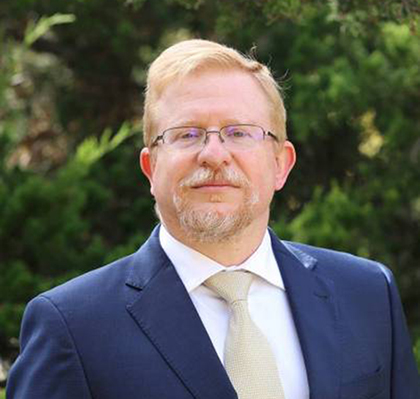
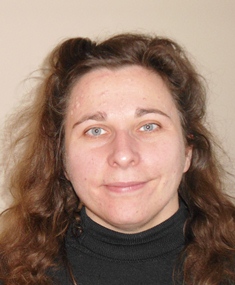
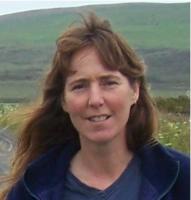
Dr. Leanne Archer is a Researcher in the School of Geographical Sciences at the University of Bristol, specializing in hydrology and climate change impacts. Her work focuses on flood risk assessment in Small Island Developing States, extreme rainfall events, and the application of convection-permitting climate models. She collaborates with experts like Prof. Paul Bates and Dr. Jonty Rougier on interdisciplinary projects addressing tropical cyclone hazards and climate adaptation strategies. Her research interests include analyzing flood exposure in vulnerable regions, soil moisture dynamics in urban flooding, and improving global flood forecasts for humanitarian operations. Archer’s publications emphasize the implications of climate change on rainfall-driven disasters, particularly in Puerto Rico and East Africa, using high-resolution climate projections to evaluate future risks under 1.5° C and 2° C warming scenarios. Recent work explores innovations like the Surface Water Ocean Topography Mission for flood modeling and evaluates the suitability of TanDEM-X data for inundation studies in island nations. Her contributions bridge environmental science with policy, aiming to enhance disaster preparedness and resilience in climate-sensitive regions.
Charles F. Harvey is a Professor in the Department of Civil and Environmental Engineering at the Massachusetts Institute of Technology (MIT), where he investigates hydrology, carbon cycling, and groundwater contamination. His work spans tropical peatlands, arsenic pollution in South Asia, and coastal groundwater dynamics, with field sites in Borneo, Bangladesh, and Vietnam. Education: B.A. in Mathematics (Oberlin College, 1986), M.S. in Applied Earth Science (Stanford University, 1992), Ph.D. in Geological and Environmental Sciences (Stanford University, 1996). Harvey’s research focuses on hydrogeology , carbon sequestration , and contaminant transport . He explores how groundwater flow and biogeochemical processes interact in tropical peatlands and coastal systems, with significant implications for climate change and water security. His recent publications emphasize tropical peatland hydrology , arsenic mobilization , and coastal groundwater exchange , integrating field experiments, remote sensing, and computational models. Scientific Awards AGU Fellow GSA Fellow Meinzer Award (GSA) Prince Sultan bin Abdulaziz International Prize for Water M. King Hubbert Award for Hydrology NSF Young Investigator Award Harvey leads the Harvey Lab , mentoring students and researchers in projects ranging from groundwater arsenic mitigation to coastal marsh biogeochemistry . His work bridges terrestrial and marine systems , addressing critical planetary challenges.
Padhraic Smyth is a Distinguished Professor and Hasso Plattner Endowed Chair in Artificial Intelligence at the University of California, Irvine (UCI), holding joint appointments in the Department of Computer Science and Department of Statistics. He leads the DataLab research group, focusing on machine learning, AI, and their applications in climate science, healthcare, and education. His research spans probabilistic modeling, deep learning, and human-AI collaboration. Education: PhD in Electrical Engineering from the California Institute of Technology (1988), MSEE (1985), and BEng (1984). Prior to UCI, he worked at NASA's Jet Propulsion Laboratory (1988–1996). Research Interests: Machine learning, AI, pattern recognition, Bayesian methods, climate science applications, algorithmic fairness, and human-AI interaction. He has published over 200 papers and co-authored textbooks like Modeling the Internet and the Web . Awards: ACM Fellow, IEEE Fellow, AAAI Fellow, AAAS Fellow, and ACM SIGKDD Innovation Award recipient. He has held leadership roles in UCI's Center for Machine Learning and Data Science. Key Projects: Human-AI collaboration frameworks, robustness in deep learning, climate modeling using spatio-temporal data, and AI fairness with missing attributes. Collaborates with institutions like NASA and industry partners (e.g., Google, eBay). Labs/Teams: Director of UCI’s Data Science Initiative and HPI Research Center in Machine Learning. Supervises a vibrant PhD program with over 30 alumni in academia and industry.
Sai Ravela is a Principal Research Scientist in the Department of Earth, Atmospheric and Planetary Sciences (EAPS) at the Massachusetts Institute of Technology (MIT). His research focuses on nonlinear stochastic dynamics, coherent fluid systems, uncertainty quantification, and autonomous observing technologies. He specializes in developing data-driven methodologies for natural hazard detection, climate change impacts, and environmental risk assessment. Ravela’s work integrates computational science with geophysical applications, including storm surge modeling, extreme rainfall analysis, and geothermal exploration. He pioneers techniques like neural dynamical systems and adversarial learning to improve predictive accuracy in nonstationary climate regimes. His contributions span environmental monitoring systems, autonomous aircraft resilience frameworks, and policy-informed climate vulnerability assessments. Key research areas include: Coastal flood risk in Bangladesh and Vietnam Dynamic data-driven applications systems (DDDAS) Machine learning for geosciences and environmental systems Uncertainty quantification in complex fluid dynamics He leads interdisciplinary projects at MIT’s Computational Science and Engineering (CSE) program, advancing methods for data assimilation, surrogate modeling, and real-time environmental observatories. His innovations bridge theoretical frameworks with practical solutions for climate adaptation and disaster resilience.
Sarah Kang is the Director of the Department of Climate Dynamics at the Max Planck Institute for Meteorology in Hamburg, Germany, a position she has held since August 2023. She leads the Director's Research Group (CDY) focusing on fundamental climate dynamics. Prior to this, she served as Professor in the Department of Urban and Environmental Engineering at Ulsan National Institute of Science and Technology (UNIST) in South Korea from 2011-2023, progressing through assistant, associate, and full professor ranks. Her research examines complex climate system dynamics, with emphasis on: Large-scale atmosphere and ocean circulation patterns Tropical-extratropical climate interactions Hydrological cycle responses to climate change Mechanisms of polar amplification Teleconnections between ocean basins and climate zones Analysis of her recent publications reveals dominant research themes: Ocean-atmosphere coupling mechanisms Radiative forcing and climate sensitivity Hemispheric climate asymmetries Tropical precipitation dynamics Polar warming impacts on global circulation with consistent methodology employing high-resolution climate modeling and observational verification. Major scientific recognitions include: AGU Atmospheric Sciences Ascent Award (2022) AOGS Kamide Lecture Award (2018) Editor's Citation for Excellence in Refereeing (GRL 2018) UNIST Teaching Excellence Award (2012) NCAR Advanced Studies Fellowship (2009) She maintains extensive professional engagement as: Co-chair of CLIVAR Climate Dynamics Panel Science Steering Committee member for CFMIP Associate Editor for Frontiers in Climate Editor for AGU Advances Board member of Korean Meteorological Society
Mariam Zachariah serves as a Research Fellow at the Centre for Environmental Policy within the Faculty of Natural Sciences at Imperial College London. She is a core contributor to World Weather Attribution (WWA), an international scientific collaboration conducting rapid climate change attribution analyses for extreme weather events globally. Her work bridges climate science, vulnerability assessment, and policy-relevant research. Her educational foundation includes a PhD from the Indian Institute of Technology Bombay (IITB), where she investigated climate impacts on Indian agriculture. This research focused on drought and extreme temperature effects on crop yields in major agrarian regions, recognizing agriculture's critical role in India's climate-vulnerable economy. Zachariah's research centers on near-real-time attribution of extreme events to quantify human-induced climate change influences. Her expertise spans climate modeling, statistical analysis of extreme weather, and integrating vulnerability frameworks to assess compound impacts on communities. She examines how climate change interacts with socioeconomic factors to exacerbate disasters, particularly in agricultural systems and flood-prone regions worldwide. Analysis of her recent publications reveals a dominant focus on rapid attribution of droughts, floods, and heatwaves across diverse global contexts - from the Horn of Africa to Central Europe and South America. These studies consistently demonstrate climate change as a significant amplifier of event severity, while emphasizing how pre-existing vulnerabilities determine actual impacts. Her work increasingly addresses compound hazards and the intersection of climate change with infrastructure failures and land management. As a key member of the World Weather Attribution initiative, Zachariah collaborates with climate scientists, social scientists, and vulnerability experts in a unique operational framework that delivers scientific assessments within days of extreme events. This work directly informs policymakers, media, and affected communities about climate change's role in contemporary disasters.
Hyuck Jin Park is a Full Professor in the Department of Energy Resources and Geosystems Engineering at Sejong University, South Korea, where he has been teaching and conducting research since 2003. With a Ph.D. in Engineering Geology from Purdue University, his expertise spans geotechnical engineering, landslide analysis, and geospatial technologies. Professor Park has built a distinguished career in landslide hazard assessment, combining traditional geotechnical approaches with modern machine learning techniques to improve prediction accuracy and risk management. His educational background includes: B.S. in Geology from Yonsei University (1990) M.S. in Geophysics from Yonsei University (1993) Ph.D. in Engineering Geology from Purdue University (2011) Professor Park's research focuses on the spatial and temporal probability of landslide occurrence, utilizing fuzzy logic, probabilistic analysis, GIS, Monte Carlo simulation, and machine learning for landslide hazard assessment. His work integrates physically based models with statistical approaches to better understand landslide mechanisms and improve prediction capabilities. He has made significant contributions to the development of methodologies that account for geological uncertainties in hazard assessment, with applications ranging from rock slope stability to rainfall-induced shallow landslides. His recent publications demonstrate a clear trend toward integrating explainable artificial intelligence with traditional geotechnical approaches for natural hazard assessment. Professor Park's work increasingly focuses on making machine learning models transparent and interpretable while maintaining high predictive accuracy. The research spans multiple hazard types including landslides, earthquakes, and floods, with a growing emphasis on climate change impacts and data-scarce environments. With an h-index of 28 and over 3,421 citations, Professor Park has established himself as a leading researcher in his field. His work has been published in high-impact journals including Engineering Geology, Landslides, and Catena, reflecting the significance and quality of his contributions to geotechnical engineering and natural hazard assessment. Professor Park has mentored numerous researchers through collaborative projects and has secured funding for his innovative work in landslide prediction and hazard assessment. His research has involved significant international collaboration, particularly with researchers from Malaysia, Australia, and Yemen, addressing landslide and flood risks in diverse geographical contexts. He leads research activities within the Department of Geoinformation Engineering at Sejong University and has contributed to the development of specialized tools like DEWS (Distance, Elevation, Watershed, and Slope unit) for landslide early warning systems.
Mingfang Ting is a Professor of Climate at the Columbia Climate School , affiliated with the Lamont-Doherty Earth Observatory . She co-directs the M.S. in Climate program and serves as Co-Senior Director for Education at the Columbia Climate School. Her research focuses on climate variability, extremes, Asian monsoons, Arctic sea ice, and climate change impacts on agriculture and health. Education: Ph.D. in Climate Dynamics (Princeton University, 1990), M.S. and B.S. from Peking University (1985, 1983). She has taught climate science at Columbia since 2004. Research Interests: Investigates weather/climate extremes in a warming world, Asian monsoon dynamics, Arctic sea ice variability, decadal climate modes, and hydroclimate impacts. Recent work emphasizes heatwaves, drought-flood linkages, and climate model projections. Key Projects (2020–2023): Advancing predictive understanding of North American drought Asian monsoon response to climate change Causal mechanisms of dry/humid heat extremes Arctic transport pathways and sea ice loss Scientific Contributions: Authored/co-authored over 200+ peer-reviewed articles. Her 2022 analysis of the 2021 North American heatwave and 2022 Pakistan floods exemplifies climate attribution science. Awards: AMS Distinguished Scientific Award (2021) AGU Fellow (2022) NSF CAREER Award (1995) Reuters' World’s Top Climate Scientists (2021) Leadership: Former Co-Editor-in-Chief of Journal of Climate (2020–2023). Active in climate education and global resilience initiatives through the Decarbonization Network. Labs/Teams: Leads interdisciplinary teams at LDEO focusing on climate dynamics and extreme event analysis. Collaborates internationally on monsoon systems and Arctic research.
Matthew D. Barrett is a researcher at James Cook University , specializing in plant systematics and fungal taxonomy. His work spans diverse areas including angiosperm phylogenomics, fungal biodiversity, and conservation biology of rare Australian flora. Research Focus : Phylogenomic analysis, fungal systematics, and ecological adaptations of Australian plant species. Publications : Contributed to major studies in Nature , Studies in Mycology , and Telopea , with a particular emphasis on Western Australian endemics. His recent publications highlight integrative approaches combining morphological and molecular data for taxonomic revisions, particularly in Basidiomycota and Orchidaceae.
Professor Tirthankar Roy holds the position of Professor of Economic History at the London School of Economics and Political Science (LSE). His expertise spans South Asian economic history, global historical dynamics, environmental history, and the legacies of colonial empires. He teaches courses such as EH307 (Economic History of South Asia, 1600–2000) and EH404 (India and the World Economy). His research interrogates long-term patterns in Indian capitalism, the interplay between climatic conditions and economic change, and the persistence of colonial legal frameworks in modern India. Key contributions include Monsoon Economies: India’s History in a Changing Climate and co-authored works like Law and the Economy in Colonial India and its sequel. His recent book Water and Development: The Troubled Economic History of the Arid Tropics examines water resource management in arid regions. He actively engages with public discourse via social media, countering historical myths about colonialism with evidence-based scholarship. Research interests include the economic development of South Asia, global historical comparisons, environmental determinants of economic activity, and the socio-political dimensions of colonial legal systems. His work bridges historical analysis with contemporary policy debates, emphasizing the need for evidence-based understanding of historical processes.
Dr. Patrick S. Market is a Professor of Atmospheric Science and currently serves as the Director of the School of Natural Resources at the University of Missouri. He also acts as Interim Co-Director of the Missouri Water Center. His research focuses on synoptic and mesoscale dynamics, particularly winter weather, heavy rainfall, flash flooding, and severe local storms. He has contributed to advancements in precipitation efficiency studies and operational forecasting techniques. His work explores the role of artificial intelligence in weather prediction and communication, emphasizing the continued importance of human expertise in an automated forecast process. Dr. Market has secured grants for data stream maintenance and digital equity planning, and he has led educational initiatives integrating research into synoptic meteorology classrooms. Notable collaborations include projects with the National Weather Service and studies on the Ozark Plateau's topographical influence on weather systems.
Dr. Jonathan T. Overpeck is the Samuel A. Graham Dean of the School for Environment and Sustainability (SEAS) at the University of Michigan, where he also holds the William B. Stapp Collegiate Professorship of Environmental Education. He is a Professor of both Climate and Space Sciences and Engineering, and Earth and Environmental Sciences, with a career spanning climate-vegetation interactions, abrupt climate change, monsoon dynamics, drought hydroclimate, sea level rise research, and interdisciplinary climate assessment. Overpeck has published over 230 works cited 60,000+ times, emphasizing public education, university-community partnerships for climate solutions, and environmental justice initiatives. PhD in Geological Sciences, Brown University MSc in Geological Sciences, Brown University BA in Geology (Honors), Hamilton College His research spans climate-biosphere interactions , climate variability and abrupt change , monsoon dynamics , drought and hydroclimate , sea level rise , climate law , and climate adaptation . Overpeck pioneered studies on megadrought terminology, temperature-driven drought intensification, and the aridification of North America. His work with the NOAA Paleoclimate Program and World Data Center for Paleoclimatology established foundational understanding of climate dynamics through annually-laminated sediment analysis in the Cariaco Basin. Overpeck's 2020-2024 research includes climate aridification , hydroclimate scaling mismatches , and temperature-precipitation interactions , with recent focus on Antarctic heatwaves, Mississippi River Basin changes, and corporate climate accountability. His article trends show concentration in climate attribution , hydrological extremes , paleoclimate modeling , and climate policy analysis . Scientific Honors: 2024 U.S. National Academy of Sciences 2015 American Geophysical Union Fellow 2009 AAAS Fellow 2007 Nobel Peace Prize contributor (IPCC) 2005 Guggenheim Fellowship Multiple U.S. Department of Commerce awards Overpeck has led or participated in significant climate adaptation projects , including NSF grants totaling $5.1M+ for Southwest Hydroclimatic Extremes (2017-2020), Amazon Drought Impacts (2014-2018), and Quantifying Drought Risk (2013-2018). He serves on the Colorado River Research Group (2014-present) and advises Climate Communication (2011-present). Current initiatives include Great Lakes University positioning, Michigan's climate resilience planning, and the Audacious Water podcast series examining Mississippi River Basin transformations. Overpeck actively contributes to climate policy discourse , advocating for science-informed decision-making and stakeholder collaboration across government, military, and corporate sectors.
Hyemi Kim is an Adjunct Professor at the School of Marine and Atmospheric Sciences (SoMAS), Stony Brook University. Her research focuses on climate variability across subseasonal to decadal timescales, including topics like the Madden-Julian Oscillation (MJO), tropical-extratropical interactions, and extreme weather events such as atmospheric rivers and tropical cyclones. Education: Ph.D., 2008, School of Earth and Environmental Sciences, Seoul National University, South Korea Research Interests: Hyemi Kim's work spans four primary areas: (1) Climate prediction from subseasonal to decadal scales, (2) Tropical-extratropical interactions, (3) Extreme events (atmospheric rivers, storm tracks, tropical cyclones), and (4) Machine learning applications for subseasonal-to-seasonal (S2S) prediction. Publication Trends: Her research output emphasizes the MJO, its interactions with other climate modes (QBO, ENSO), and implications for extreme weather. Recent works analyze atmospheric rivers, storm tracks, and tropical cyclone activity, often linking these to large-scale climate variability. Publications frequently employ climate models (e.g., CESM1, SubX, NMME) to assess predictability and improve forecasting frameworks. Labs & Teams: She collaborates with institutions like the National Center for Atmospheric Research (NCAR) and contributes to multi-model experiments such as the Subseasonal Experiment (SubX) and North American Multi-Model Ensemble (NMME).
Dr. Emily Black is a Professor of terrestrial processes and climate at the University of Reading's Department of Meteorology, where she serves as research division lead for Earth Observation and Space and is a senior scientist at the National Centre for Atmospheric Science (NCAS). She leads the TAMSAT programme (Tropical Applications of Meteorology using SATellite data and ground-based observations), which provides real-time rainfall products and soil moisture forecasts to stakeholders across Africa through the TAMSAT-ALERT system. Her work bridges fundamental climate science with practical applications for climate risk management, particularly in vulnerable African communities. Dr. Black's research focuses on the hydrological cycle and its associated hazards, land-atmosphere interactions and their impact on climate, African climate and rainfall monitoring, and soil moisture monitoring and forecasting. She has established herself as a leading expert in African climate systems, with particular expertise in understanding rainfall patterns, drought mechanisms, and the development of forecasting tools that translate scientific knowledge into actionable information for decision-makers. Her work combines observational analysis, modeling approaches, and direct engagement with stakeholders to ensure scientific outputs address real-world needs. Analysis of Dr. Black's recent publications reveals a strong focus on the practical application of climate science for risk management, particularly through the TAMSAT-ALERT system. Her work spans multiple disciplines including climatology, hydrology, meteorology, and agricultural science, with consistent emphasis on African contexts. The research shows evolving sophistication in forecasting techniques, moving from basic rainfall monitoring to integrated systems that predict soil moisture, agricultural impacts, and drought risks. A notable trend is the increasing integration of user needs into scientific development, reflecting her commitment to user-driven science and knowledge exchange. Dr. Black has built an extensive collaborative network across institutions globally, with frequent co-authors including Richard P. Allan, Tristan Quaife, Brian J. Hoskins, Pier Luigi Vidale, and Julia Slingo, all from the University of Reading. Her work has been cited by numerous leading climate scientists worldwide, demonstrating her significant impact on the field. She has secured funding for multiple projects focused on climate monitoring, forecasting, and risk management in Africa, with particular emphasis on agricultural applications and drought resilience. As leader of the TAMSAT programme, Dr. Black oversees a team that combines satellite data analysis, ground-based observations, and modeling expertise to develop climate services specifically tailored for African contexts. The TAMSAT-ALERT system represents a major advancement in seasonal forecasting capabilities for the continent, providing critical information for agricultural planning and disaster risk management. Her team's work has evolved from basic rainfall monitoring to integrated systems that predict soil moisture, crop conditions, and drought risks, demonstrating continuous innovation in climate service development.
Professor Jo Smith is a Personal Chair at the University of Aberdeen ’s School of Biological Sciences , specializing in systems modelling, soil organic matter dynamics, and nutrient management. With over two decades at Aberdeen and prior roles at Rothamsted Research and British Petroleum, Smith focuses on carbon sequestration, greenhouse gas emissions, and agricultural sustainability. Research interests include: Soil organic matter and nutrient dynamics in tropical, temperate, and nutrient-depleted soils Climate-smart agriculture across global regions Decision support systems for nitrogen fertilizer optimization Impact of organic resource use on poverty alleviation in Sub-Saharan Africa Machine learning applications in predicting soil nutrient losses Recent publications highlight trends in: Stable isotope analysis for agricultural water management Modelling carbon-nitrogen interactions in data-limited agroforestry systems Policy frameworks for regenerative agriculture and net-zero transitions Tropical peatland emissions and exclosure-based soil restoration High-lignin biofuel byproduct utilization for soil sustainability Collaborations span institutions including: Centre for Ecology and Hydrology (nitrogen cycles, GHG measurements) Nanjing Agricultural University (biochar applications in China) Addis Ababa University (nutrient recycling in Ethiopia) Scottish Government (wind farm carbon calculator development) Makerere University (biogas impact studies in Uganda) Teaching responsibilities include coordinating the Honours Essay course (BI4017/BI4517) and contributing to modules in ecology, environmental science, and risk assessment.