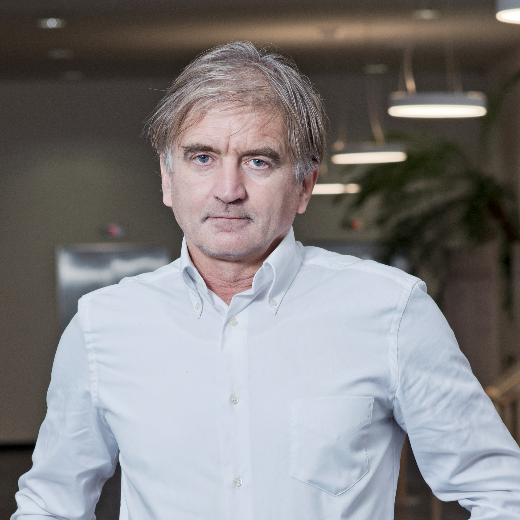
Luca Sebastiani is a Full Professor in Horticultural Sciences (AGR/03) at Scuola Superiore Sant'Anna in Pisa, Italy, since 2014. He currently coordinates the PhD Course in AgroBioSciences and has previously served as Director of the Institute of Life Sciences (2016-2021). His academic career includes roles as Associate Professor (2002-2014) and Assistant Professor (1998-2002) at the same institution. PhD in Plant Biology from Scuola Superiore Sant'Anna (1996) MSc in Agricultural Sciences from University of Pisa (cum laude, 1991) Postdoctoral research in agricultural biotechnology (1996-1998) Research Interests: Focus on plant-environment interactions, particularly abiotic and biotic stress responses in crops. Key areas include: Physiological and molecular responses to climate change stressors Nutraceutical enhancement of food crops Plant germplasm conservation using molecular markers Agriculture 4.0 integrating AI, IoT, and robotics Phytoremediation using poplar and Brassica species Scientific Contributions: His work bridges molecular mechanisms (aquaporin function, heavy metal transport) with ecosystem-level applications (precision irrigation, contaminant phytoremediation). Recent publications emphasize genome sequencing, stress tolerance modeling, and nutraceutical food development. ISHS Medal for SapFlow Workshop organization (2011) Giovanni Spitali Foundation Award for PhD dissertation (1998) Collaborations: Extensive international collaborations with institutions like Beijing Forestry University, Comenius University, and Purdue University. Currently supervises projects in plant phenotyping, omics technologies, and sustainable crop management.
Giovanni Giuseppe Vendramin is a Research Director at the Institute of Biosciences and BioResources (IBBR) within Italy's National Research Council (CNR), based in Florence. He holds a magna cum laude degree in Forest Sciences from the University of Florence (1981) and has held research fellowships at institutions including the USDA Forest Service (USA) and University of Göttingen (Germany). His career includes leadership roles as Director of IBBR and recognition as an Honorary Research Fellow at Bioversity International. Vendramin's research focuses on forest genetics, conservation genomics, and phylogeography. He investigates adaptive responses of trees to environmental change, genetic diversity patterns in glacial refugia, and conservation strategies for endangered species. His work employs genomic tools to study local adaptation, gene flow, and demographic history across Mediterranean and European tree species. Recent publications emphasize climate adaptation mechanisms, genomic signatures of selection, and conservation genetics. Articles from 2021-2023 predominantly explore genetic resilience to glacial cycles, microgeographical adaptation in conifers, and biodiversity conservation frameworks. Research integrates molecular ecology, paleoecology, and landscape genetics. Scientific Awards: Medal for distinguished Italian scientists (Accademia Nazionale delle Scienze, 2022) Honorary Doctorate (University of Zvolen, Slovakia, 2012) Vendramin has led over 35 national/international projects and advises graduate students and postdoctoral researchers. He coordinates an IUFRO unit and contributes to EU scientific commissions. His laboratory employs genomic techniques for biodiversity conservation, with collaborations across European research networks.
Andrea Nardini is a Full Professor at the University of Trieste , Department of Environmental Biology, specializing in Plant Physiology and ecophysiological responses to environmental stressors. He serves as Coordinator for the Environmental Biology Board of Studies and member of multiple doctoral college boards (XXIX–XXXIX cycles). His research group focuses on Plant Physiological Ecology , investigating hydraulic strategies, drought tolerance, and xylem functionality across diverse species. University of Trieste, Department of Environmental Biology Full Professor of Plant Physiology Coordinator, SM56 - Environmental Biology Board of Studies Research areas: Plant Hydraulics, Drought Adaptation, Ecophysiology His recent work analyzes climate extremes' impacts on grasslands, xylem embolism reversal mechanisms, and green roof plant water relations. Collaborative projects include the H2020 Graphene Flagship and national grants on drought-resistant crops. Students in his group (Agnese Cometto, Giada Caorsi, et al.) explore topics from lichen symbiosis to biomonitoring applications. While no explicit awards are listed, his 15+ recent publications highlight leadership in plant stress physiology and environmental adaptation.
Martina Tomasella is a Researcher in Plant Physiology (BIO/04) at the Department of Life Sciences (DSV) of the Università degli Studi di Trieste. She obtained her PhD in Natural Sciences at the Technische Universität München (Germany) and specializes in drought stress responses in plants, with particular focus on xylem vulnerability to embolism, post-stress hydraulic recovery, and the role of non-structural carbohydrates in drought resilience. Currently involved in research projects such as 'Sopravvivenza e accrescimento della vegetazione su verde pensile sottile' and 'Assegnazione di Ateneo microgrants 2023/2024', Dr. Tomasella applies plant ecophysiological principles to optimize green roof irrigation management and improve Mediterranean urban vegetation sustainability . Her research contributes to understanding plant water relations through advanced techniques like synchrotron-based X-ray microtomography, combining fundamental plant physiology with applied ecological solutions. Key collaborations include working with Prof. Andrea Nardini's team on tree hydraulic failure mechanisms and participating in boards of studies for the 'Biological Sciences and Technologies' and 'Global Change Ecology and Sustainability' degree programs. Recent publications analyze fibers' role in embolism reversal , karstic bedrock water reservoirs , and grapevine drought adaptation , reflecting her expertise in plant hydraulics and climate change mitigation strategies . Her work bridges laboratory experiments with field applications, focusing on nature-based solutions for urban environments and agricultural systems.
Roberto Tognetti is a Full Professor at the Free University of Bolzano within the Faculty of Agricultural, Environmental and Food Sciences. His research bridges forest ecophysiology and ecosystem-level processes to address climate change impacts on mountain forests. MSc in Forest Science, University of Florence PhD in Plant Ecophysiology, Trinity College Dublin His work focuses on forest ecophysiology , tree growth dynamics , and climate-smart forestry . He studies how trees interact with environmental disturbances, integrating biological mechanisms and ecosystem functions across spatial-temporal scales. Current projects emphasize forest restoration in degraded areas and sustainable management of mountain forests. Recent publications highlight his contributions to: Understanding climate-growth relationships in European beech Assessing resilience in mixed-species forests Developing remote sensing tools for biodiversity monitoring Modeling carbon fluxes in coniferous ecosystems He has led initiatives like the EFI Project Centre on Mountain Forests (MOUNTFOR) and the COST Action CA15226 Climate-Smart Forestry , shaping pan-European sustainable management frameworks.
Giorgio Alberti is a Full Professor at the University of Udine , Department of Agri-Food, Environmental and Animal Sciences. His research focuses on forest ecology, carbon sequestration, remote sensing applications, climate change impacts on tree species, and ecosystem services. He leads projects like CarboMark and contributes to Horizon Europe initiatives. Key Research Areas Forest carbon dynamics and biodiversity conservation Integration of field measurements with remote sensing Climate change adaptation in agricultural and forest systems Ecosystem service trade-offs in protected areas His recent work involves machine learning for forest carbon estimation, ecohydrological studies in vineyards, and global biodiversity assessments. He actively participates in international collaborations, including the LATEST Erasmus+ project and Dinaric Alps old-growth forest research. Project Involvement PRI. FOR. MAN Dashboard for wood resource mapping Horizon Europe Project 101081177 on carbon-biodiversity datasets Post-windstorm forest regeneration studies in the Alps Governance of Natura 2000 protected areas
Paola Quatrini is an Associate Professor in Earth and Marine Sciences at the University of Palermo, affiliated with the School of Basic and Applied Sciences. She specializes in microbiology, bioremediation, and environmental microbiology, focusing on microbial adaptations in extreme environments, soil science, and marine biology. Her teaching includes courses such as Microbiology and Marine Microbiology for undergraduate and graduate programs in Chemical Engineering, Marine Biology, and Natural Sciences. Education: Not explicitly listed in the provided texts. Affiliations: University of Palermo, Department of Earth and Marine Sciences. Her research explores microbial communities in contaminated environments, bioremediation strategies for pollutants like chlorinated solvents, and the microbiome of Mediterranean plants. Key projects include the LIFE Desert Adapt initiative addressing desertification and the study of microbial interactions in volcanic soils and marine ecosystems. Recent work highlights innovations in biofilm-based bioremediation systems and the role of endophytic microbes in plant resilience. Recent articles emphasize topics such as hydrothermal system microbiology, cyanobacterial adaptations, and microbial-driven bioremediation of industrial pollutants. She actively contributes to international conferences and interdisciplinary collaborations. Grants/Awards: None explicitly listed in the provided texts. However, involvement in projects like LIFE Desert Adapt suggests external funding participation. Labs/Teams: Engages in collaborative research on microbial ecology, biotechnology, and environmental sustainability, leveraging interdisciplinary networks within and beyond the university.
Camilla Wellstein is a Tenured Associate Professor in the Department of Vegetation and Landscape Management at the University of Bolzano, within the Faculty of Agricultural, Environmental and Food Sciences. Her research focuses on Functional Biodiversity, Global Change Ecology, and High Mountain Ecosystems, addressing climate change impacts, vegetation dynamics, and sustainable land management. She collaborates with institutions like the Competence Centre for Sustainability and has contributed to projects such as the ReSurveyEurope database. Research Interests : Climate Change Adaptation in Alpine and Mediterranean Ecosystems Mountain Forest and Grassland Ecology Plant Functional Traits and Biodiversity Conservation Traditional Agricultural Practices and Sustainability Her recent work emphasizes Abies alba resilience, glacial refugia dynamics, and ice-core-derived vegetation history. Over 150 publications span topics from LiDAR-based forest analysis to carbon sequestration in short-rotation plantations. Key Collaborations : Fondazione FiemmePer ETS (Sustainability Collaboration) Südtiroler Sparkasse (Stiftungsprofessorin für Nachhaltigkeit) International networks on mountain ecosystem research No specific advisees or grants are listed in the provided materials.
Teofilo Vamerali serves as an Associate Professor in the Department of Agricultural, Food, Environmental and Animal Sciences (DAFNAE) at the University of Padua, Italy. His academic field is AGR/02 (Agronomy and Field Crop Production), with research operations based at the Agripolis campus in Legnaro, Padua. He maintains active engagement in European agricultural research initiatives and collaborates across interdisciplinary teams focused on sustainable farming systems. Dr. Vamerali's research centers on agroforestry systems , particularly poplar-based alley cropping with cereal and legume intercrops. He investigates crop physiological responses to abiotic stresses (shading, drought, salinity) and develops innovative nutrient management strategies like foliar nitrogen application. His work extends to phytoremediation of perfluoroalkyl substances (PFAS), plant-microbe interactions for stress mitigation, and soil-plant dynamics in diversified farming systems. This research bridges fundamental plant physiology with practical agronomic solutions for climate-resilient agriculture. Analysis of Vamerali's recent publications (2023-2025) reveals three dominant research trajectories: (1) Optimization of tree-crop interactions in silvoarable systems, with emphasis on poplar-wheat/maize yield relationships and microclimate effects; (2) Development of sustainable fertilization protocols using microbial biostimulants and precision foliar application to reduce chemical inputs; (3) Investigation of phytoremediation mechanisms for emerging contaminants like PFAS. His work consistently combines field experimentation with physiological and molecular analyses to address food security and environmental sustainability. No scientific awards or fellowships are documented in the available source material. Information regarding student supervision, research grants, or laboratory infrastructure is not specified in the provided texts. His collaborative projects (e.g., European EARTHONE initiative) suggest involvement in multi-institutional teams, but specific advising roles or funding details remain unreported. Vamerali's research demonstrates strong alignment with European agricultural policy priorities through projects addressing climate change mitigation and soil health. His work on agroforestry systems positions him within networks focused on practical implementation of diversified farming models in Mediterranean and temperate climates, though specific laboratory facilities or dedicated research teams are not detailed in available sources.
Lucio Calcagnile is a Full Professor of Applied Physics (SSD FIS/07 - Physics applied to Cultural Heritage, the Environment, Biology and Medicine) at the University of Salento, Department of Mathematics and Physics "Ennio De Giorgi" since 2005. He serves as Deputy Director of the Department and is a member of the scientific committee of ISUFI-Istituto Superiore Universitario di Formazione Interdisciplinare. His work is centered at CEDAD (Center for Applied Physics, Data and Diagnostics), which he founded and directs. Dr. Calcagnile received his PhD in Physics from the University of Bari in 1991. He began his academic career at the University of Lecce as a researcher in 1992 and was promoted to Associate Professor in 1999 before becoming a Full Professor in 2005. His educational background established the foundation for his interdisciplinary research approach spanning physics, archaeology, and environmental science. Professor Calcagnile's research is predominantly experimental and interdisciplinary, focusing on ion-matter interactions, development of new materials using ion beams, non-destructive nuclear techniques for dating and analysis of materials, isotope mass spectrometry, and accelerator mass spectrometry. His work has significant applications in archaeology, geology, environmental sciences, and forensic sciences. He has established CEDAD as the first Italian center for radiocarbon dating research and services, creating a hub for interdisciplinary scientific investigation. His recent publications demonstrate a strong focus on applied physics in cultural heritage preservation, environmental monitoring, and advanced materials. Calcagnile's work frequently involves accelerator mass spectrometry for radiocarbon dating across diverse applications from archaeological artifacts to environmental samples. He also conducts significant research on semiconductor materials and their applications in radiation detection, showing the breadth of his scientific contributions. Professor Calcagnile has held leadership roles in numerous international conferences, including serving as co-chairman of the 11th International Conference on Accelerator Mass Spectrometry (Rome, 2008) and upcoming co-chairmanship of the 4th International Radiocarbon in the Environment Conference (Lecce, September 2024). He is a member of the Advisory Committee for multiple international conferences including Radiocarbon International Conference and Accelerator Mass Spectrometry International Conference. As a research leader, Calcagnile has been responsible for significant projects including PON SIDArt, Blu-Archeosys, ITA@CHA, DICET formazione, DEDALO, BIO OPEN LAB, and PRP@CERIC. He has participated in PRIN, INFN, and International Atomic Energy Agency projects. For the IAEA, he developed two training courses on radiocarbon and accelerator mass spectrometry available on the NUCLEUS portal. He has also served as a referee for ESF, ERC, PRIN projects and the European IPERION-HS platform. Calcagnile coordinates the Applied Physics Group at the University of Salento and is co-responsible for the BIO OPEN LAB Laboratory for the strengthening of the CERIC-ERIC European Research Infrastructure. He is also responsible for the University of Salento's participation in the European research infrastructure project ACTRIS: Aerosols, Clouds and Trace Gases. His laboratory network supports international research collaborations and provides essential services for cultural heritage dating and environmental analysis.
Enrico Serra is a Full Professor at the Department of Mathematical Sciences 'GL Lagrange' (DISMA) of the Polytechnic University of Turin. He serves as the Coordinator of basic subjects for the 2nd year of Engineering , teaching Mathematical Analysis II across Energy and Mechanical Engineering degree courses since 2019/20 academic year. His academic career spans multiple institutions, including the University of Turin and University of Milan, where he contributed to doctoral programs in Pure and Applied Mathematics. Scientific Sector: MATH-03/A - Mathematical Analysis (Area 0001 - Mathematical and Computer Sciences) ERC Sector: PE1_11 - Theoretical aspects of partial differential equations His research focuses on nonlinear analysis , calculus of variations , and partial differential equations , particularly applying asymptotic methods and variational principles to problems on metric graphs. Recent publications analyze ground states and bound states of nonlinear Schrödinger equations on graphs, exploring existence, uniqueness, and multiplicity results across theoretical and applied settings. Key Trends: Normalized solutions and energy minimization Sign-changing and constant sign states on graphs Dimensional crossover phenomena Supercritical and subcritical growth Applications to quantum graphs and physical models
Sanja Baric is a Professor at the Faculty of Agricultural, Environmental and Food Sciences of Free University of Bozen-Bolzano (unibz), Italy. Her research focuses on plant pathology , particularly chestnut blight and apple postharvest diseases , integrating molecular genetics and agricultural technology to enhance disease detection and management. Current projects address phytoplasma infections in apple trees and fungal pathogens in fruit crops. She teaches courses in plant protection and phytopathology for bachelor’s and master’s programs in Agricultural, Food and Mountain Environmental Sciences. Her publications emphasize genetic diversity of pathogens like Cryphonectria parasitica and Colletotrichum species , alongside innovative diagnostic tools such as knowledge-based Bayesian networks and duplex TaqMan assays . While no specific awards are listed, her work aligns with EU-funded collaborations and interdisciplinary agricultural research .
Leonardo Montagnani is a Full Professor at the Free University of Bozen-Bolzano, Faculty of Agricultural, Environmental and Food Sciences. He holds an Italian National Scientific Qualification as Associate Professor in Ecology, Geophysics, and Science and Technology of Tree and Forest Systems (2014), a PhD in Forest Ecology from the University of Padua (2000), and a Degree in Forest Sciences from the University of Tuscia (1996). His academic roles include former Assistant Professor at the same institution (2016-2023) and Contract Professor for Biochemistry and Physiology of Agricultural Plants (2012-2013). Montagnani's research integrates plant physiology, micrometeorology, and biogeochemistry to study: Carbon/water cycling in forest/agricultural systems Biosphere-atmosphere interactions Climate change impacts on ecosystems Microclimate dynamics Ecosystem restoration His work employs eddy covariance, stable isotopes, and remote sensing techniques across alpine, boreal, and agricultural landscapes. Research trends from recent publications show strong focus on: Climate change effects on carbon fluxes Ecosystem functional heterogeneity Disturbance ecology (mining/wind impacts) Water use efficiency in agriculture Biogeochemical modeling advancements Field methodologies consistently integrate multi-scale observations from tree rings to satellite data. Montagnani leads multiple interdisciplinary projects including: ASTER (Atmospheric boundary-layer modeling) GreenCITIES (Urban green infrastructure) WEST (Water use efficiency in South Tyrol) CliMicrobe (Soil respiration sensitivity) He coordinates the Massimo Tagliavini's Lab and serves on editorial boards for PeerJ, Sustainability, and Frontiers in Forests and Atmosphere.
Pierpaolo CAVALLO is a Researcher at the Department of Physics 'ERCaianiello' of the University of Salerno . He holds an ORCID (0000-0003-3111-5241) and can be contacted at pcavallo@unisa.it. His office is located at Fisciano Campus, Building F, Fourth Floor, Room 011, with reception hours on Tuesdays 9:00-11:00 or via TEAMS appointments. Research Focus : Metabolomics, public health, stress analysis, pediatric obesity, cardiovascular diseases, and food safety. Key Contributions : Development of metabolomic signatures for cancer and liver disease, studies on stress biomarkers, and innovations in agricultural and clinical data analysis. Publication Trends : Recent work emphasizes metabolomic profiling (2019-2023), with applications in endometrial cancer screening, coeliac disease diagnostics, and maritime food safety. Collaborations span clinical research (2016-2020) and plant-microbe interactions (2014).
Stefano Leonardi is an Associate Professor at the Department of Chemical, Life and Environmental Sustainability Sciences , University of Parma , where he has been working since 1999. He obtained his PhD in Ecology from the University of Parma in 1993 with a thesis on beech population biology. Since 2016, he has served as President of the Master's Degree in Ecology and Nature Conservation . His career spans research collaborations with institutions like Oregon State University and funding from CNR and USDA.