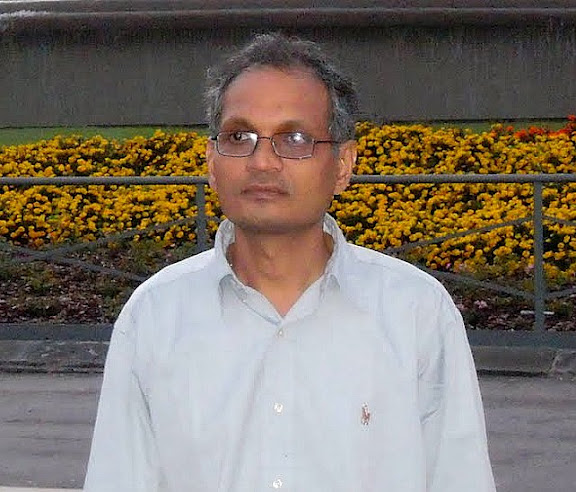
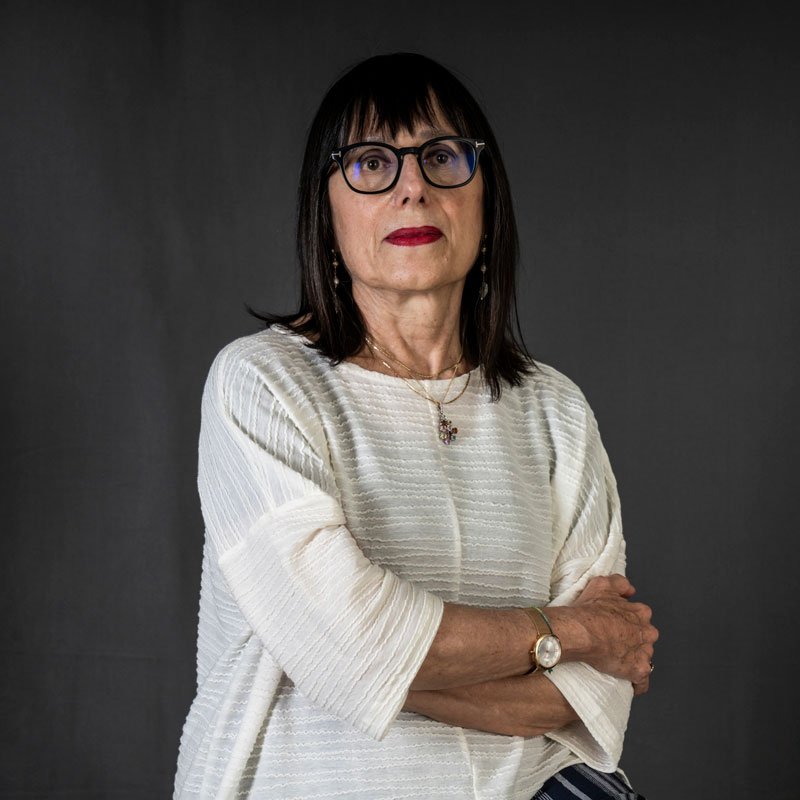
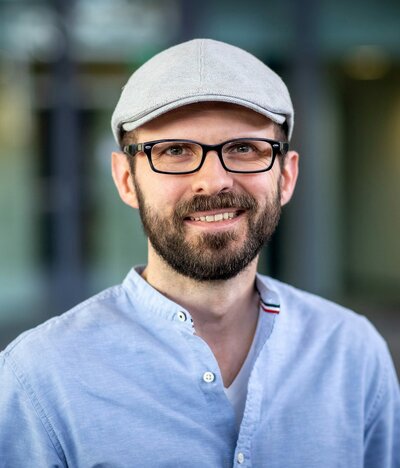
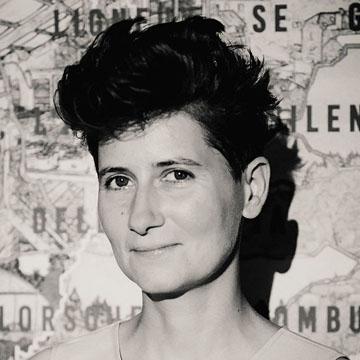
Dhanya Sridhar is an Assistant Professor at the Department of Computer Science and Operations Research (DIRO) of the University of Montreal and a core academic member of Mila - Quebec Artificial Intelligence Institute. She holds a Canada CIFAR AI Chair and co-leads the IVADO R3AI working group on safe and aligned AI. PhD from University of California Santa Cruz Postdoctoral research at Columbia University Data Science Institute Her research focuses on integrating causality and machine learning to build AI systems that are robust to distribution shifts, capable of efficient task adaptation, and aligned with human knowledge. Recent work includes causal effects of social interactions on US election participation and causal modeling in geriatric-oncology patient outcomes. Current research themes: Causal representation learning Temporal causal inference Counterfactual modeling Causal abstraction in large models Responsible AI development Scientific awards: Canada CIFAR AI Chair Major grants: NSERC Discovery Grant (PVX20965-RGP) 2023-2029 NSERC DGECR Grant 2023-2025 Multiple MITACS Acceleration Quebec grants Advising: PhD students: Philippe Brouillard, Shruti Joshi, Mizu Nishikawa-Toomey, Tom Marty, Cristian Manta
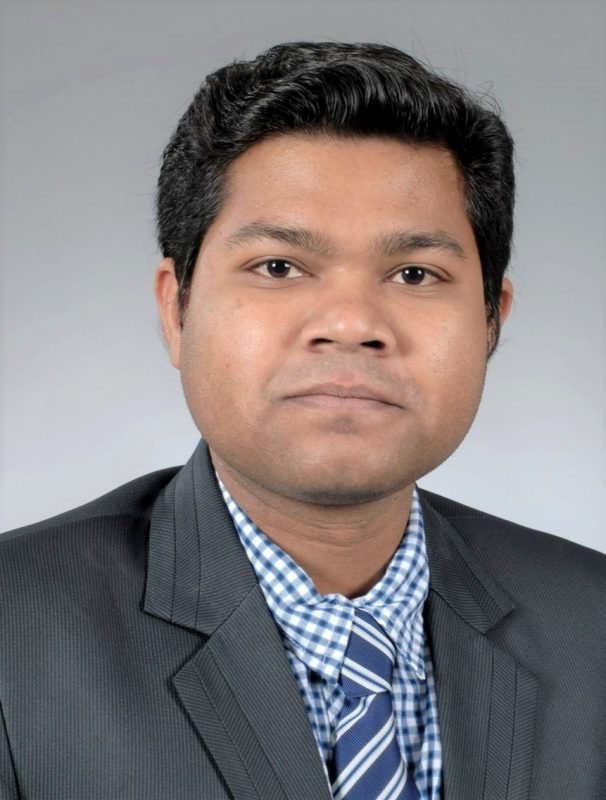
Anirudha Sahoo is an Associate Professor at the Department of Computer Science and Engineering, Indian Institute of Technology Bombay. His research focuses on computer networks, with emphasis on Quality of Service (QoS) in wireless networks, QoS-based routing, traffic engineering, voice routing, and wireless sensor networks.
Prof. Dr. Uwe Götze is a Chair Holder of Management Accounting and Control at the Faculty of Economics and Business Administration , Technische Universität Chemnitz , Germany. His career spans over three decades, with a focus on corporate accounting, controlling, and investment planning. He has held leadership roles such as Vice President for Transfer and Academic Qualification (2016–2017) and Dean of Faculty of Economics and Business Administration (2006–2009, 2016). Research Interests: Götze’s work emphasizes Corporate Accounting and Controlling Investment and Cost Accounting Strategic Planning under Uncertainty Occupational Health and Safety Economics Activity-Based Costing and Benchmarking Risk Management in Industrial Companies Location Structural Design for Multinationals Publications include foundational works on investment accounting, cost management, and risk control. His recent articles (2000–2001) address economic value added, life cycle costing, and risk modeling, reflecting interdisciplinary applications in logistics, sustainability, and production. Scientific Awards: Honorary Professor, Babeş-Bolyai University (2017) Grants and Collaborations: Götze leads subprojects in the Collaborative Research Centre 692 (High-strength aluminum materials) and Cluster of Excellence 'Energy-efficient Product and Process Innovations' . He co-founded the German-Portuguese SustEEM Research Group with Instituto Superior Técnico, Lisbon.
Donatella Spano is Full Professor and Scientific Coordinator of the PhD programme in Agrometeorology and Ecophysiology of Agricultural and Forestry Ecosystems at the University of Sassari, Italy. She also coordinates the Agrometeorology and Ecophysiology Laboratory at the same university and serves as Senior Member of the Strategic Council of the Euro-Mediterranean Centre on Climate Change (CMCC). A founding member and former President (2015–2016) of the Italian Society for Climate Sciences, Prof. Spano has held numerous high-profile roles including Regional Minister for the Environment of Sardinia (2014–2019) and Pro-Rector for Research at the University of Sassari (2009–2014). Education Degree in Agricultural Sciences, University of Sassari Three-year Post-Doctoral specialisation in Biometeorology, University of Sassari Research Focus Prof. Spano’s work lies at the intersection of agrometeorology, biometeorology, and ecophysiology . Her team investigates the energy and mass exchange between terrestrial ecosystems and the atmosphere using advanced micrometeorological techniques such as Surface Renewal. She pioneered temperature-based phenological models to quantify chilling requirements and degree-day accumulation. Current research lines include climate-change impacts on crop yields (coffee, olives, maize), fire-behaviour modelling (danger indices and propagation), and the development of integrated systems for quantifying net CO₂ exchanges at urban and territorial scales. Across her recent publications, two dominant themes emerge: (1) climate-change projections and their sectoral impacts , where process-based and ensemble models are used to evaluate water demand, yield trends, and fire risk under future climates, and (2) micro-to-macro scale biometeorological observations , combining eddy-covariance data, phenological monitoring, and sensor-network optimisation to refine predictive models. Scientific Awards & Recognition Medal of the University of Sassari for best scientific production (2012) Best Practice Paper Award, American Society of Civil Engineers (2001, co-recipient) Advising & Grants Prof. Spano has chaired more than 40 doctoral and master theses. She is responsible for the scientific cooperation agreement with the University of California, Davis, a collaboration active since 1993. She leads or participates in numerous EU-funded projects focused on climate-change adaptation, sustainable farming strategies, and integrated fire-risk management systems. Laboratory & Team Leadership Since 2006 she has directed the Agrometeorology and Ecophysiology Laboratory at the University of Sassari, managing a team of 25 researchers, post-docs, and PhD students in cutting-edge experimental and modelling activities.
Christof Löding , currently an Adjunct Professor at the Lehrstuhl für Logik und Theorie diskreter Systeme (Informatik 7) department of RWTH Aachen University , is a leading researcher in Automata Theory , Formal Verification , and Logic in Computer Science . His work bridges theoretical foundations with practical applications in software verification, automata minimization, and game theory. Research Interests include automata theory, formal verification, logic, tree automata, game theory, and computational models. Publications span topics like Finite-valued Streaming String Transducers , Deterministic Parity Automata , and Stochastic Game Strategies . Collaborations with researchers like Emmanuel Filiot , Sarah Winter , and León Bohn highlight his contributions to automata and verification. Email : loeding@informatik.rwth-aachen.de He has actively published in venues such as ICALP , LICS , and STACS , focusing on deterministic automata, transducers, and logic-based computational systems. His work on Hyperlogic for Strategies in Stochastic Games (2025) and Minimal History-Deterministic Automata (2025) showcases his ongoing influence in formal methods and automata theory.
Billy Thomas is an Extension Forester Staff member at the University of Kentucky, affiliated with the Martin-Gatton College of Agriculture, Food and Environment and the Department of Forestry and Natural Resources. He contributes to the Social Sciences Team within the Forest Health Research and Education Center and leads initiatives such as the Kentucky Forestry Economic Impact Reporting, Forestry Webinar Series, and Kentucky Master Woodland Stewards Program. As an educator, he serves as Editor of Kentucky Woodlands E-News and Associate Editor of Kentucky Woodlands Magazine . M.S., Forestry, University of Kentucky, 1999 B.S., Forestry, University of Kentucky, 1997 His research and extension work focus on non-industrial private forest issues, woodland owner education, and the intersection of environmental policy with economic and social dimensions of forestry. He teaches two courses: Forests and Forestry (FOR 100) covering forest growth and management, and Human Dimensions of Forestry and Natural Resources (FOR 400) addressing societal trends, globalization, and urbanization's impact on natural systems. Billy Thomas's publications highlight trends in forest health, economic impacts of non-traditional forest products (e.g., maple syrup), invasive species management (e.g., emerald ash borer), and reclamation of surface-mined lands. His work often integrates geospatial and web-based technologies for woodland management education.
Hendrik Baier is an Assistant Professor in the Information Systems group at Eindhoven University of Technology (TU/e), where he joined in 2022. His research focuses on creating agents capable of succeeding in complex decision-making tasks to help human users solve real-world problems. His work spans planning for long-term goals, learning in unknown environments, and explainability of AI systems for effective human-AI interaction. Dr. Baier's research interests center on planning and search algorithms, reinforcement learning, and explainable AI systems. His work investigates how AI can think ahead and explain its reasoning process, particularly in sequential decision-making contexts. He applies these techniques to practical domains including logistics and transportation, smart manufacturing, and sustainable energy systems. His research bridges theoretical foundations with real-world applications through collaborative projects with industry partners. Analysis of his recent publications reveals a strong focus on explainability in sequential decision-making, with increasing integration of large language models to enhance traditional planning algorithms. His work spans theoretical foundations of Monte Carlo Tree Search, programmatic policy generation, multi-agent reinforcement learning, and practical applications of these techniques. A notable trend is the growing emphasis on human-AI collaboration, where AI systems must not only perform well but also effectively communicate their reasoning to human users. Dr. Baier actively collaborates with researchers across multiple institutions, including CWI Amsterdam where he maintains an affiliation, and has participated in significant interdisciplinary efforts such as the Dagstuhl Seminar on Explainable AI for Sequential Decision Making. His research group at TU/e works closely with industry partners to translate fundamental research into practical applications. He is affiliated with EAISI (Eindhoven Artificial Intelligence Systems Institute) and contributes to the Decision Making with Artificial Intelligence educational program at TU/e. His laboratory work focuses on developing benchmark environments and frameworks that enable rigorous evaluation of decision-making algorithms, with recent contributions including MOMAland for multi-objective multi-agent reinforcement learning.
Saharon Rosset is a Professor and Chair in Modern Statistics and Data Science at the Department of Statistics and Operations Research, School of Mathematical Sciences, Tel Aviv University, since 2007. His expertise spans statistical learning theory, machine learning, and computational biology, with a focus on integrating statistical methods into biological and data science applications. Research Interests: Statistical Learning, Computational Biology, Genomics, Data Science Teaching: Statistics of Big Data, Statistical Genetics, Bootstrap Methods, Data Science His recent publications explore diverse applications including ATP production mechanisms, SARS-CoV-2 evolution, gene-environment interactions, and music structure analysis. He employs methodologies from high-dimensional statistics, random effects modeling, and multiple hypothesis testing. Scientific Awards : Best paper award at KDD-2011 KDD Cup 2007 Winner Best application paper award at KDD-02 He has mentored numerous PhD and MSc students, including Oren Yuval, Giora Simchoni, and Rajesh Karmakar. His collaborative work appears in journals like PNAS , Biometrics , and Journal of Machine Learning Research .
Stephen Dirk Bjørn Wolthusen is a Professor at the Norwegian University of Science and Technology (NTNU) in the Department of Information Security and Communication Technology. He is based in Gjøvik, Norway, and his work focuses on cybersecurity, critical infrastructure protection, and cyber-physical systems. His research spans network topology, smart grids, formal methods, and privacy in IoT systems, with a particular emphasis on security vulnerabilities and resilience in resource-constrained environments. His recent publications address hierarchical information overlays, adversarial pathways in smart grids, and formal methods for securing cyber-physical systems. His work frequently appears in journals and conferences such as IFIP Advances in Information and Communication Technology , Lecture Notes in Computer Science (LNCS) , and IEEE conference proceedings . Topics include adversary models, queueing networks, access control, and policy enforcement in tactical and industrial contexts.
Dr. Anna Colin is Programme Director of the MFA Curating program at Goldsmiths, University of London, where she serves as a Lecturer in the Department of Art. With over twenty years of experience as a curator working both freelance and institutionally, her practice spans curatorial, pedagogical, social, and ecological fields. She has held significant positions including associate curator at Lafayette Anticipations in Paris (2014-2020), associate director of Bétonsalon – Centre for art and research in Paris (2011-2012), and curator at Gasworks, London (2007-2010). She co-curated British Art Show 8 (2015-2016) and has worked with numerous international institutions including CA2M in Madrid, Whitechapel Gallery in London, and Contemporary Image Collective in Cairo. PhD, School of Geography, University of Nottingham (2022) Permaculture Design Certificate, Permaculture Association UK (2024) Level 2 Practical Horticulture Certificate, Royal Horticultural Society (2022) MA Curating Contemporary Art, Royal College of Art (2005) BA Arts Management, London Southbank University (2003) Dr. Colin's research interests focus on the intersection of art, ecology, and alternative educational models. Her work explores how cultural practitioners can engage with human and non-human ecosystems, examining holistic and intersectional organizational models that resist chrononormativity. She investigates sustainability as a dynamic, cyclical process rather than a product-oriented goal, drawing inspiration from ecology, agroecology, and arboriculture to reconceptualize art institutions' relationship to waiting, slowness, rest, and longevity. Her current research examines regenerative artistic, curatorial, and institutional practices that serve ecosystems, with particular attention to the Black Atlantic, agricultural and digital commons, and colonialism's impact on the natural environment. Analysis of Dr. Colin's recent publications reveals a consistent thematic focus on ecological approaches to art and institutions, with increasing emphasis on practical applications of ecological principles. Her work demonstrates a clear trajectory from examining alternative educational spaces (as in her PhD research on multi-public educational and cultural spaces) toward developing concrete ecological frameworks for cultural institutions. The publications show growing integration of horticultural knowledge with curatorial practice, particularly evident in projects like 'Chaleur Humaine' and 'ĝardeno paradizo' which combine energy studies with landscape design and community engagement. Dr. Colin welcomes doctoral applicants seeking to work in cultural production at the service of ecosystems, regenerative artistic practices, alternative institutional models, and critical pedagogies. She has supervised numerous curatorial projects and community-based initiatives through Open School East, which she co-founded in 2013 as an alternative art school and community space in London and later Margate. Her collaborative approach extends to working with artists, horticulturalists, and community groups on projects that integrate art with practical ecological interventions. Dr. Colin has established several significant collaborative spaces and research groups, most notably Open School East which operated for eight years under her directorship. Her work with the Centre for Art and Ecology at Goldsmiths demonstrates her commitment to developing institutional frameworks that support ecological thinking in the arts. Current projects include 'The Ecosystemic Clock' research initiative exploring non-linear time in ecological contexts and 'ĝardeno paradizo,' a pedagogical and landscaping project in Sète, France that rehabilitates outdoor spaces to accommodate biodiversity and community needs.
Ioannis Havoutis is an Associate Professor in Engineering Science at the Oxford Robotics Institute , University of Oxford. His research integrates dynamic whole-body motion planning , control systems , and machine learning for robotics with arms and legs . He holds a PhD (2011) and MSc with distinction (2007) from the University of Edinburgh, focusing on machine learning for motion planning of articulated robots. University of Edinburgh: PhD in Robotics (2011), MSc in Machine Learning (2007) His work spans dynamic legged locomotion , learning from demonstration , and terrain-adaptive control , with applications in quadruped robots and teleoperation . Key contributions include symplectic meta-learning , skill switching criteria , and flow-based trajectory optimization . Recent publications focus on 2025 advancements in adaptive manipulation , generalist parkour policies , and diffusion models for locomotion. He has received awards such as the Frontiers in Robotics & AI Best Paper Award (2019) and CLAWAR 2015 Best Technical Paper Award . Teaching roles include B16 Operating Systems courses at Oxford and Advanced Robotics lectures at IIT. Contact: havoutis@robots.ox.ac.uk | ioannis@robots.ox.ac.uk | Address: Oxford Robotics Institute, 17 Parks Road, Oxford, OX1 3PJ, UK
Carlo D'Eramo is a Professor in Reinforcement Learning and Computational Decision-Making at the Center for Artificial Intelligence and Data Science (CAIDAS) of Julius-Maximilians-Universität Würzburg (JMU). He leads the LiteRL research group and the hessian.AI independent research group, focusing on lightweight methods for adaptive autonomous agents in complex real-world environments. B.Sc., M.Sc. in Computer Engineering - Politecnico di Milano (2011, 2015) Double M.Sc. in Computer Science - University of Illinois at Chicago (2015) Ph.D. in Information Technology - Politecnico di Milano (2019) His research spans multiple RL domains including multi-task learning , curriculum learning , adversarial RL , options learning , and multi-agent coordination . Recent work explores physics-informed ML, neural network distillation, and uncertainty-driven exploration. 2025 publications highlight advancements in: Bellman update optimization via adaptive distillation uncertainty propagation in tree search multi-agent policy gradients real-world educational applications The group's work shows increasing specialization in physics-integrated RL and efficient neural architectures. Spotlight Presentation - ICML (2025) Spotlight Presentation - ICLR (2024) Oral Presentation - NeurIPS (2020) As Senior Area Chair for RLC and Area Chair for major AI conferences (AAAI, NeurIPS, ICLR), he contributes to academic governance. His team includes researchers like Ahmed Hendawy, Théo Vincent, and Georgia Chalvatzaki, with collaborations spanning TU Darmstadt and hessian.AI.
Abhilash Chandel serves as an Assistant Professor of Precision Agriculture Technologies and Data Management in the Department of Biological Systems Engineering at Virginia Tech, holding a 50% research and 50% extension appointment since December 2021. His work bridges advanced data analytics with practical agricultural solutions, focusing on optimizing crop production through technological innovation. Dr. Chandel's academic foundation includes: Ph.D. in Biological and Agricultural Engineering from Washington State University (2021) M.Tech. in Farm Machinery and Power Engineering from IIT Kharagpur (2015) B.Tech. in Agricultural and Food Engineering from IIT Kharagpur (2015) His research program centers on precision agriculture technologies, specializing in aerial and satellite remote sensing, machine learning applications for crop monitoring, and data-driven water stress detection. Key innovations include AI-enabled mobile tools for real-time field diagnostics, multispectral imagery analysis for disease identification, and evapotranspiration mapping systems for irrigation optimization. His work addresses critical challenges in water management, yield prediction, and sustainable crop production across diverse agricultural systems. Analysis of Dr. Chandel's publication record reveals consistent advancement in UAS-based crop monitoring, with increasing emphasis on AI integration for real-time decision support. His research spans multiple cropping systems including soybeans, peanuts, wheat, and specialty crops, demonstrating particular expertise in thermal-RGB fusion techniques for physiological stress assessment and machine learning frameworks for yield prediction. Recent work shows expanding applications in disease detection (anthracnose, nematodes) and precision nutrient management. Dr. Chandel's contributions have been recognized through multiple awards including: Graduate Student Leadership Award (WSU, 2021) Walter and Vinnie Hinz Outstanding Graduate Student Award (2020) Winner of Microsoft-WSU Digital Ag-Athon (2020) Multiple travel awards and departmental recognitions during graduate studies Through his extension appointment, Dr. Chandel develops practical resources for Virginia farmers including VCE publications on drone-based nematode assessment, peanut maturity mapping, and multispectral disease diagnosis. His work demonstrates strong collaboration with agricultural stakeholders to translate research into field applications, though specific details of graduate student mentoring or major grant funding were not documented in available sources.
Peter Kennedy is a Professor in the Department of Plant and Microbial Biology at the University of Minnesota's College of Biological Sciences, where he serves as Interim Associate Dean of Research and holds the PMB Wardle Chair of Microbial Ecology. His Kennedy Lab investigates plant-microbe interactions, with a primary focus on ectomycorrhizal fungal symbioses in forest ecosystems. The lab integrates mycology, microbiology, ecology, evolution, and molecular biology to study how biotic and abiotic factors shape ecological communities. Research employs field sampling, greenhouse experiments, and molecular techniques to examine fungal necromass decomposition, carbon sequestration mechanisms, and climate change impacts on microbial communities. Key areas include the 'Gadgil Effect' (fungal guild interactions controlling carbon cycling), protist roles in soil food webs, and biogeographic patterns of symbiotic versus saprotrophic fungi. Recent publications reveal strong trends in fungal necromass decomposition dynamics under warming and nitrogen fertilization, with emphasis on melanin's role in carbon stabilization and microbial community shifts. Work increasingly connects molecular mechanisms (e.g., gene expression in Ascomycota) to ecosystem-scale carbon cycling. Scientific recognition includes: Fulbright fellowship (2019) for Colombia-based biodiversity research PMB Wardle Chair of Microbial Ecology (2022), supporting new microbial ecology directions Mentorship spans 14+ PhD students including Lotus Lofgren (UC Riverside), Craig See (Northern Arizona University), and Chris Fernandez (Syracuse University). Major grants include NSF Dimensions of Biodiversity (oak symbiont networks), Gadgil Effect studies, and SPRUCE experiment collaborations. International partnerships with Norway (University of Oslo), China (Xishuangbanna Institute), and Colombia (Universidad Nacional) drive cross-continental research. The Kennedy Lab operates the Itasca ForestGEO plot and maintains strong ties with the Bell Museum fungal collections. Current initiatives include protist-fungal interaction studies, necromass RNASeq analyses, and expansion of FUNGuild—a community resource for fungal ecological guild classification.
Gobert Lee is a Lecturer in Statistical Science at the College of Science and Engineering, Flinders University, and a Full Member of the Medical Device Research Institute. His work bridges artificial intelligence with medical imaging and biomedical engineering. Primary Affiliations: Flinders University, Medical Device Research Institute Academic Role: Lecturer in Statistical Science Research Interests: Lee specializes in applying machine learning and deep learning to medical imaging challenges, particularly focusing on: Computer-aided diagnosis (CAD) for breast cancer detection Whole-body CT segmentation and computational human anatomy Construction of human voxel models for radiation dose calculation Statistical pattern recognition in radiologic studies His research aligns with UN Sustainable Development Goals in Digital Health and has produced significant work in: CT/MRI translation using generative models (CycleGAN) Superpixel-based segmentation techniques Texture analysis for tumor classification Radiation dosimetry modeling Pediatric imaging challenges Scientific Network: Collaborations span multidisciplinary areas including: Medical imaging analysis Biomedical engineering AI for healthcare applications Climate resilience projects Key trends in his publications (2018-2023) show increasing focus on: Deep learning architectures for cross-modality imaging Automated segmentation of complex anatomical structures Statistical optimization in noisy/dense imaging environments Integration of AI with radiation safety protocols