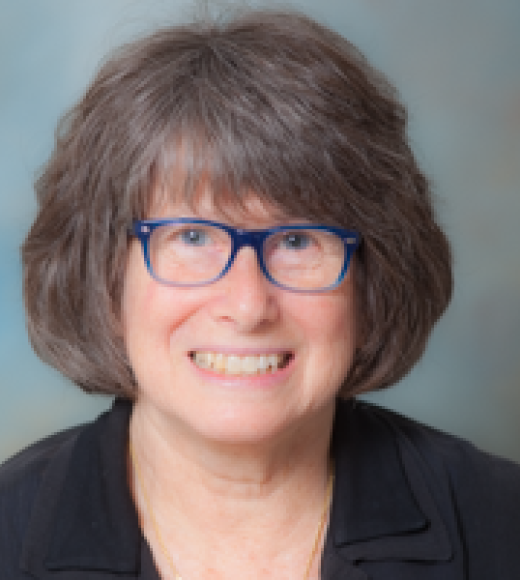
Professor Gail S. Goodman, a Distinguished Professor of Psychology at the University of California, Davis, is a pioneering scholar in developmental psychology and psychology-law intersections. She directs the Center for Public Policy Research and has established foundational research in children's eyewitness memory and child victims' experiences in legal contexts. Ph.D., M.A., B.A. in Psychology from the University of California, Los Angeles Her research focuses on memory development and children's roles as witnesses, examining trauma-memory relationships, attachment influences, emotional regulation, and forensic interview techniques. Her work has informed legal policies and been cited in U.S. Supreme Court decisions. Key trends in her recent publications include trauma's impact on memory accuracy, false memory balancing, and courtroom dynamics for child witnesses. Her studies span developmental psychology, forensic science, and trauma recovery. 2017 APSAC Handbook chapter on child interview techniques 2017 American Psychologist review on trauma memory and counseling 2016 chapters on memory development and trauma psychopathology Professor Goodman has received numerous accolades, including APA's Urie Bronfenbrenner Award, APS's James McKeen Cattell Award, and an Honorary Doctorate from the University of Oslo. She has also earned teaching and mentoring awards at UC Davis. As Director of UC Davis's Center for Public Policy Research, she consults with global agencies on child maltreatment policies and leads interdisciplinary teams studying memory, trauma, and legal systems. Her work bridges academic research with practical applications in law and child welfare.
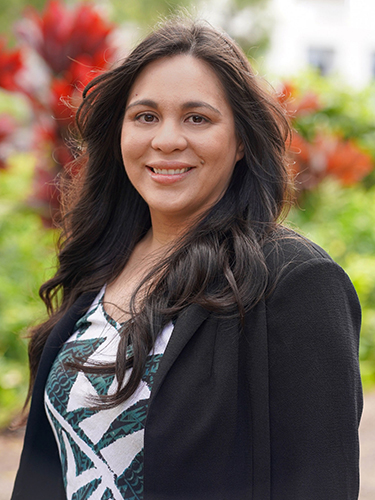
Mapuana Antonio is an Associate Professor and head of the Native Hawaiian and Indigenous Health Program at the University of Hawai'i at Manoa. A Native Hawaiian scholar, she conducts community-based participatory research with Native Hawaiian communities to improve holistic health and wellbeing through a focus on resilience and cultural alignment. Her educational background includes: DrPH in Community-Based and Translational Research from the University of Hawai‘i at Mānoa Certificate in Measurement and Statistics (EDEP) from the University of Hawai‘i at Mānoa MA in Counseling Psychology from Washington State University BS in Psychology from Washington State University Dr. Antonio's research takes a strengths-based approach to enhance the physical, mental, and spiritual health of Native Hawaiians. She redefines health and resilience through Native Hawaiian worldviews, addressing structural and socio-cultural determinants. Her work emphasizes community-based participatory research, cultural practices, and the role of 'Āina (land) connectedness in fostering resilience and optimal wellbeing (Mauli Ola). Her recent publications (2017-2024) demonstrate a consistent focus on developing culturally grounded measures for Native Hawaiian health and resilience. Key projects include the Ke Ola O Ka ‘Āina study on 'Āina connectedness and the adaptation of historical loss scales. Her research integrates qualitative and quantitative methods, often co-developed with community partners, to address health disparities and promote culturally relevant interventions. Dr. Antonio has not been mentioned to have received specific scientific awards in the provided information. She secures significant research funding, including as PI for the Ola HAWAII and PIKO pilot studies and co-PI for Project Mōkiha funded by the Robert Wood Johnson Foundation. Her grants support community-driven initiatives in Indigenous health, resilience, and environmental restoration. She mentors students and community members through the NHIH Summer Health Academy and collaborative research projects. Dr. Antonio leads the Native Hawaiian and Indigenous Health Program and collaborates with community research groups such as the Pono Research Hui and Limu Hui. Her work is deeply embedded in partnerships with Native Hawaiian communities, ensuring that research is conducted with and for the community to restore cultural practices and health sovereignty.
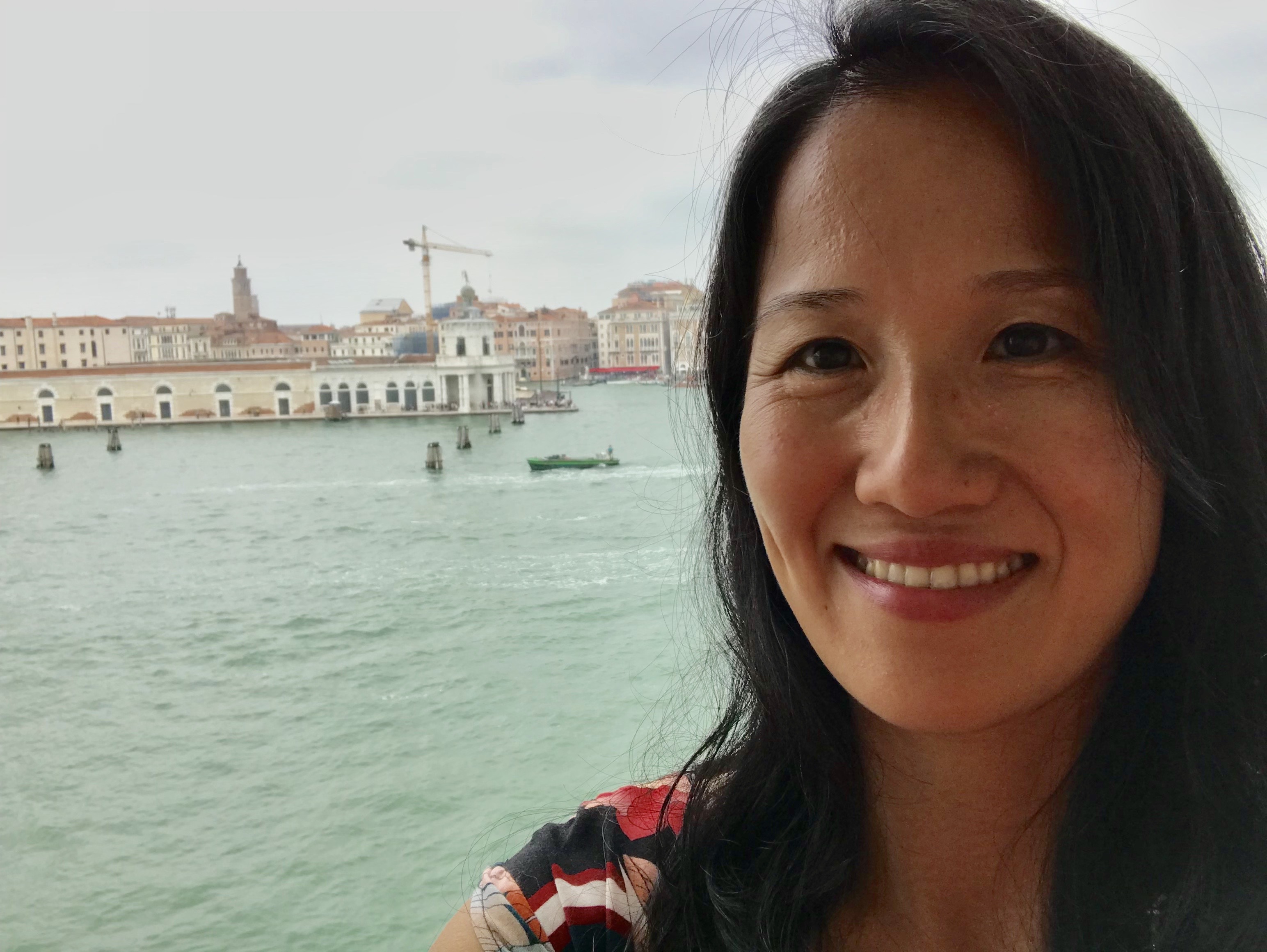
Ana Paulina Lee is an Assistant Professor of Writing and Digital Humanities in the Comparative Literature, English, and Creative Writing Department at the American University of Paris. She joined AUP in 2025 after teaching Latin American literature and culture at Columbia University for eight years and serving as a Mellon Postdoctoral Fellow at Tulane University. Her interdisciplinary scholarship bridges literature, history, law, and urban studies with particular focus on marginalized narratives in the Americas. Ph.D. from University of Southern California M.A. from New York University B.A. from Binghamton University Professor Lee's research examines how stories—archival, fictional, oral—shape legal imagination, social life, and urban experience in the Americas. She specializes in the intersections of magic, law, and literature in Latin America, with particular focus on Asian and African diasporas in Brazil. Her work traces how narrative functions as both historical record and catalyst for social transformation, exploring themes of slavery, emancipation, colonial legacies, and urban memory. She approaches these topics through interdisciplinary lenses combining literary analysis with histories of labor, migration, and performance. Lee's recent publications reveal a consistent focus on marginalized narratives and their impact on social structures. Her scholarship connects legal history with cultural production, showing how magical thinking and narrative practices shape urban spaces and social relations. Works like 'Urban Sorcery, Segregation, and Spectacle in Twentieth-Century Rio de Janeiro' and 'Black Magic City' demonstrate her innovative approach to understanding the relationship between occult logics and legal frameworks in Brazilian contexts. Her research on diasporic communities, particularly Chinese and Japanese experiences in Latin America, contributes significantly to transnational and comparative race studies. David B. Larson Fellowship in Health and Spirituality, Kluge Center, United States Library of Congress (2025-2026) National Endowment for the Humanities Fellowship (2025) Social Sciences Research Council, Inaugural Recipient of Interdisciplinary Projects in the Social Sciences (2020-2023) Institute for Ideas and Imagination Fellowship, Columbia University in Paris, France (2021-2022) Provost's Tsunoda Senior Fellowship, Visiting Scholar, Waseda University, Tokyo, Japan (2019) Heyman Center Fellow, The Heyman Center for the Humanities, Columbia University (2017-2018) Fulbright, Lisbon, Portugal (2013-2014) Professor Lee's scholarly activities have been generously supported by major research grants from the National Endowment for the Humanities, the Social Sciences Research Council, and the Library of Congress. Her work demonstrates a commitment to interdisciplinary approaches that bridge humanities and social sciences, particularly through projects examining intersections of race, migration, and cultural production in the Americas. Her publication 'Socially Engaged Oral History Pedagogy Amid the COVID-19 Pandemic' indicates a strong commitment to innovative teaching methods and community-based research. While specific details about current advisees aren't provided, her research program suggests engagement with graduate students interested in diaspora studies, urban history, and literary-cultural analysis. Though not explicitly mentioned in the available information, Professor Lee's research on urban spaces, magic, and law in Brazil likely involves collaborative work with scholars across disciplines. Her participation in centers like the Institute for Ideas and Imagination at Columbia University suggests engagement with interdisciplinary research communities focused on global cultural production and social transformation. Her work contributes to ongoing conversations about how narrative practices shape legal frameworks and social structures in the Americas, particularly regarding racial formation and diasporic experiences.
Dr. Amy Damashek serves as Professor in the Department of Psychology at Western Michigan University, teaching undergraduate and graduate courses while mentoring Clinical Psychology doctoral students. She chairs the department's Diversity, Equity, and Inclusion Committee and maintains an active research program focused on vulnerable populations. Education: Ph.D. in Psychology, University of Missouri-Columbia (2007) Postdoctoral Fellowship, University of Oklahoma Health Sciences Center (2009) Research Focus: Her work centers on preventing child maltreatment and unintentional injuries among at-risk youth, with specialized expertise in infant sleep-related deaths and health disparities . She develops culturally responsive parenting interventions for low-income and Spanish-speaking families, emphasizing community-based solutions through home visiting programs. Publication Trends: Recent work (2020-2023) demonstrates consistent focus on pandemic adaptation of family services, safe sleep practices in marginalized communities, and digital intervention strategies. Her mixed-methods approach bridges clinical psychology with public health, prioritizing implementation in real-world settings. Scientific Recognition: Fellow of the American Psychological Association Former President of APA Division 37 (Society for Child and Family Policy and Practice) Grants & Mentoring: Secured federal funding for child injury prevention in underserved communities. Mentors Clinical Psychology doctoral students with emphasis on culturally competent practice, accepting new graduate students for Fall 2025. Her federally funded work directly informs evidence-based home visiting protocols. Research Ecosystem: Collaborates extensively with community health workers, home visiting agencies, and pediatric care providers to implement and evaluate interventions addressing structural barriers in family support systems.
Professor Jeevan R. Sharma serves as Chair of South Asia and International Development and Co-director of the Centre of South Asian Studies at the University of Edinburgh's School of Social and Political Science. An elected General Secretary of the Britain Nepal Academic Council (BNAC), he brings extensive field research experience from Nepal, India, Sri Lanka, and Malawi to his work in development and political anthropology. His current Wellcome Trust-funded transdisciplinary project examines health and well-being of South Asian migrant workers through collaboration with medical scientists and social anthropologists at Aga Khan University and Kathmandu Medical College. Sharma's research interests span labor migration, border-crossing, Maoist conflict, humanitarianism, human rights documentation, and health policy with particular focus on gender dynamics and social transformation. His fieldwork has investigated community health volunteers, maternal and child health, and international research collaboration in South Asia. He has previously worked at Feinstein International Centre at Tufts University (2009-2011) and Save the Children UK (2007-2009), bringing practical development experience to his academic work. His publication trends reveal consistent focus on migration, health policy, and political transformation in South Asia, with increasing attention to transnational health issues and pandemic impacts on vulnerable populations. Recent work examines Covid-19's effects on migrant workers, mental health policy in Nepal, and cross-cultural health measurement tools, demonstrating his commitment to bridging academic research with practical health interventions. Elected General Secretary of the Britain Nepal Academic Council (BNAC) Co-editor of HIMALAYA Journal (2019-2025), transitioning to Editor-at-large from January 2025 Associate Editor of 'South Asia: Journal of South Asian Studies' Co-editor of Routledge Edinburgh South Asia Series Member of ESRC GAP panel C (2024-2025) Member of the commissioning panel for the ESRC Centres Competition 2018 Sharma has secured significant research funding including a Wellcome Trust grant for migrant worker health research, ESRC funding for projects examining low-income migrant workers' access to services in India, and NERC funding for flood resilience research in Nepal's Terai region. His collaborative approach is evident in projects involving multiple institutions across South Asia and the UK, with particular emphasis on transdisciplinary work that bridges social science and medical research. He has served as Principal Investigator on six completed projects and currently leads an active Wellcome Trust-funded initiative. As Co-director of the Centre for South Asian Studies in Edinburgh, Sharma contributes to one of the UK's leading institutions for South Asian research, fostering academic collaboration and knowledge exchange between scholars in the UK and South Asia. His work with the Britain Nepal Academic Council strengthens bilateral academic relations, while his editorial roles with HIMALAYA Journal and South Asia: Journal of South Asian Studies position him at the forefront of scholarly discourse on the region.
Vonda Jump is an Associate Professor in the Social Work department at Utah State University's College of Arts & Sciences , based in the USU Brigham Region (Brigham City, Kaysville, Tremonton). Her work bridges social work and early childhood development, emphasizing practical interventions for family support. Vonda Jump’s research focuses on parent-child interaction , home visiting programs , and language development . She specializes in creating and validating tools like the PICCOLO (Parenting Interactions with Children: Checklist of Observations Linked to Outcomes) and HOVRS-A+ (Home Visit Rating Scales—Adapted and Extended to Excellence) to assess and improve parenting behaviors and home visit quality. Her studies often target low-income and migrant families, including Latino communities, to address disparities in child outcomes. Her recent work highlights trauma-informed instruction for student resilience and technology-based design for inclusive education, particularly with deaf/hard of hearing populations . She has contributed to understanding how maternal warmth, responsiveness, and structured activities like family bookmaking enhance child attachment, vocabulary, and self-regulation. Her research spans longitudinal analyses of parenting stress , temperament , and maternal language strategies in early childhood settings.
Dr. Angelique Jenney is an Associate Professor and the Wood’s Homes Research Chair in Children’s Mental Health at the Faculty of Social Work, University of Calgary. With over 25 years of experience in gender-based violence, child protection, and children’s mental health sectors, she specializes in trauma-informed approaches and simulation-based learning methodologies. Doctor of Philosophy (PhD), Social Work – University of Toronto (2011) Master of Social Work (MSW) – Wilfrid Laurier University (1998) Bachelor of Arts (BA), Psychology Co-op Program – University of Guelph (1995) Her research focuses on child mental health , gender-based violence , trauma across the lifespan , and simulation-based learning . She develops tools to enhance clinical competencies through experiential training, addressing gaps in child protection responses to violence and trauma. Dr. Jenney’s publications highlight innovative practices such as virtual simulations for interdisciplinary education, narrative shelter models for resilience, and trauma-informed interventions with perpetrators. Her work bridges academic research and frontline practice, emphasizing practical knowledge dissemination to parents and policymakers. Faculty Publication Award (2017–2022) Faculty of Social Work Early Career Researcher Award (2021) Teaching Experiential Learning Initiatives Teaching Award (2023) She collaborates with agencies like the Hotchkiss Brain Institute and Mathison Centre for Mental Health Research and Education, contributing to policy development and training frameworks in child welfare.
Nina Vollenbroker serves as Associate Professor of Architecture and Director of the Architectural Design PhD programme at University College London's Bartlett School of Architecture. A registered architect in the UK (ARB) and Germany (Architektenkammer NRW), she also acts as editor for Architectural Research Quarterly since 2020 and serves on the Society of Architectural Historians’ advisory committee on accessibility. Her educational background includes a PhD in Architectural History from UCL, along with multiple UCL degrees: Master of Architecture (2005), Certificate (2004), Master of Science (2002), Diploma (2001), and Bachelor of Architecture from Oxford Brookes University (1997). Vollenbroker's research centers on the intersection of deafness, disability, and architectural design, challenging normative spatial paradigms through historical and contemporary lenses. Her current Paul Mellon Centre-funded project "Hide and Speak" examines the first purpose-built deaf schools in 19th-century Britain, revealing how architecture actively shaped cultural understandings of deafness. She extends this work through "Deafening Architectural Modernism," which re-evaluates Adolf Loos's contributions through the lens of his hearing loss, demonstrating how sensory experience fundamentally informs spatial design. Her broader research encompasses migration studies, gendered domestic spaces, and critical examinations of architectural exclusion. Her recent publications span architectural history, disability studies, and material culture, with significant contributions to edited volumes on deafness in architecture (University of Illinois Press, 2025), mobile home-making (Brill, 2025), and the American West (Routledge, 2025). These works consistently demonstrate her methodological approach of centering marginalized perspectives within architectural discourse. Wilhelm Award from Pioneer America Society for outstanding research in material cultures studies Paul Mellon Centre Mid-Career Fellowship Royal Institute of British Architects Research Award British Academy Research Fund Award Vollenbroker supervises doctoral students in architectural design while securing major research funding from bodies including the Arts and Humanities Research Council, British Academy, and Royal Institute of British Architects. Her international collaborations include work with the Lebanese NGO Biladi on migration studies and knowledge-exchange programs funded by The Council for British Research in the Levant. She regularly convenes major conference sessions, including at the Society of Architectural Historians and Architectural Humanities Research Association conferences, and presents at institutions worldwide including Columbia University, Yale University, and Heidelberg University. Her research group actively engages with disability advocacy organizations and architectural practitioners to translate historical insights into contemporary inclusive design practices, particularly through her editorial work on special journal issues addressing disability and architecture.
Professor Kurt Squire is a leading scholar in games research and development at the University of California Irvine, affiliated with the Donald Bren School of Information and Computer Sciences. He holds a Ph.D. in Education from Indiana University (2004). His work focuses on leveraging computer games and augmented reality to enhance learning outcomes and social impact. Squire has pioneered platforms enabling students and teachers to co-create educational tools, fostering global grassroots communities through collaborative game design. Notable contributions include the Games + Learning + Society (GLS) center, which he co-founded with Constance Steinkuehler and has since relaunched at UCI. He currently explores AR applications, community-based AI design, and mitigating right-wing extremism in gaming ecosystems. Squire’s research has been funded by NSF, NIH, and major foundations, with over a dozen commercially launched games stemming from his projects. Education: Ph.D. in Education, Indiana University, 2004 Research Interests: Squire investigates how games and emerging technologies can address societal challenges through participatory design. His work spans educational equity, cognitive development via casual gaming, and ethical AI frameworks. He emphasizes translating academic innovations into market-ready solutions while aligning with institutional goals. Recent projects include wearable apps for youth self-regulation and trauma-informed GenAI design with marginalized communities. Notable Achievements: Recipient of the Inaugural Hasso Plattner Endowed Chair in Artificial Intelligence (2025) Co-founder of GLS, a globally influential research hub Authored Making Games for Impact (2021), a practitioner-focused guide Labs/Teams: Directs the Games + Learning + Society center at UCI, focusing on XR research, well-being technologies, and entrepreneurship in education. Collaborates with MIT on augmented reality initiatives.
John Finn serves as Associate Professor and Department Chair of the Department of Sociology, Social Work and Anthropology at Christopher Newport University's College of Arts and Sciences. He holds joint appointments with the Honors Program, Center for Crime Equity and Justice Research and Policy, and Center for Sustainability in Education. PhD in Geography, Arizona State University MA in Geography, University of Missouri BA in International Studies, University of Missouri Finn's research examines the socioeconomic, environmental, and health consequences of persistent racial segregation in the United States, with particular focus on Hampton Roads, Virginia and Latin American contexts including Cuba and Brazil. His work integrates urban geography, environmental justice, and human-environment interaction through field research methods. His 2024 solo exhibition 'Living Apart: Geography of Segregation in the 21st Century' at the Virginia Museum of Contemporary Art demonstrates his innovative approach to translating academic research into public engagement. Finn's recent publications reveal strong thematic focus on urban renewal impacts, environmental justice mapping, and Latin American geographies, with increasing emphasis on climate gentrification and spatial epidemiology. 2024 SCHEV Outstanding Faculty Award (Virginia's highest faculty honor) 2021 Alumni Society Award for Teaching and Mentoring 2020 Faculty Excellence Award in Scholarship Class of 2013 Faculty Development Award (2019) Finn has secured over $200,000 in research funding and delivered more than 100 invited lectures across North America, Latin America, and Europe. His work bridges academic research and practical applications through partnerships with medical schools, planning associations, and environmental organizations. He maintains active research teams focused on mapping segregation patterns and analyzing environmental health disparities in coastal Virginia.
Dr. Marguerite Muller is a Lecturer in Education and Society at King's College London, leading the MA Education Management program. She holds degrees including a PhD in Higher Education Studies (University of the Free State, 2016) and a BA in Fine Arts (University of Pretoria, 2004). Her research focuses on arts-based methodologies, educator subjectivity, and social justice in education, employing post-qualitative, narrative, and participatory approaches. Teaching Responsibilities include modules on Education Leadership, Gender, Power, and Inequality in Education Leadership (MA level), and 'Education for the 21st Century: A Global Perspective' (BA level). She actively supervises PhD students exploring arts-based research, decolonial education, and social justice. Key affiliations include the Centre for Public Policy Research at King's College London and prior roles at the University of the Free State (South Africa). Her work emphasizes interdisciplinary collaboration, global South perspectives, and accessible, socially engaged scholarship. Notable recognitions include the NRF South Africa Y Rating (2023). Current research projects explore educator identity, participatory arts-based inquiry, and decolonization in higher education.
Pooja Khatija serves as an Adjunct Professor in the Department of Organizational Behavior at the Weatherhead School of Management , Case Western Reserve University , where she is also a doctoral candidate. Blending scholarship and practice, she focuses her research on Asian American leadership, holistic and inclusive leadership, and implicit biases tied to gender, geography, and social class in recruitment and career advancement. Education Bachelor of Science in Biotechnology Post Graduate degree in Management Doctoral candidate, Department of Organizational Behavior, Weatherhead School of Management Research Interests Dr. Khatija’s scholarly agenda is anchored in advancing equity within organizations. She investigates how Asian American leaders navigate and transform predominantly white institutions, and she develops integrative models of holistic leadership development that emphasize identity, well-being, and social justice. A second stream of inquiry examines implicit biases in hiring and promotion systems, with particular attention to gendered racism and intersectional invisibility experienced by women of color. Her work bridges theory and practice by translating findings into trauma-informed and healing-centered organizational interventions. She leverages coaching methodologies to cultivate inclusive climates and has co-authored critical reviews on reimagining leadership standards that historically center whiteness. Scientific Awards Graduate Dean’s Instructional Excellence Award (2022) Teaching, Coaching & Grants As an educator, Pooja has instructed graduate students in Applied Multivariate Data Analysis (MGMT573) and undergraduates in Leadership in Diversity and Inclusion (ORBH391) across 2020-2022. For over a decade she has coached Management and Engineering graduate students on career and placement strategies, and she is a certified executive coach through Weatherhead’s coaching program. While specific grant details are not enumerated, her sustained engagement in curriculum development and coaching initiatives reflects ongoing institutional investment in her inclusive-leadership agenda. Labs & Teams While no formal lab is named, Pooja collaborates closely with faculty and doctoral peers within the Department of Organizational Behavior and draws on Weatherhead’s broader ecosystem of leadership development and diversity research initiatives.
Dr. Daniel Allen is a Lecturer in Human Geography at Keele University's School of Life Sciences, specializing in human-animal relations. An IUCN/SSC otter specialist, his research on otter conservation and dog theft informs policy and advocacy. He led an Environment Agency project on otter predation perceptions and founded the 'Pet Theft Reform' campaign, influencing UK legislation (Pet Abduction Act 2024). His research examines human-animal bonds, including dog theft impacts and mental health benefits. Current projects include 'No pets! Young people’s transitions to campus living,' funded by the Society for Companion Animals Studies. Teaching includes modules on Nature Conservation, Space and Society, More-than-human Geographies, and Animals and Society. He supervises PhD student Emma Randall on eco-therapy. Awards include the Daily Mirror’s Peoples Pet Awards Special Recognition (2021) and the PM’s Points of Light Award (2022). Publications emphasize spatial justice, animal advocacy, and policy impacts, with recent work on pet theft trends and human-animal bonds in crises.
Claire Hart is an Assistant Professor at Northumbria University and joint Programme Leader for the BSc (Hons) Occupational Therapy. She combines clinical practice experience with academic leadership, focusing on internationalization and innovative teaching in occupational therapy and guidance counseling. Her research emphasizes qualitative exploration of marginalized groups' occupational needs, refugee mental health, and the disproportionate impact of crises like CoVID-19. Education: PhD in Occupational Therapy, 2018 PGCE in Teacher Training (Further Education), 2000 MA in Counselling, 1999 DipCOT in Occupational Therapy, 1988 Research Interests: Refugee mental health, occupational science, qualitative methodologies, and the intersection of austerity and social exclusion. Active in international collaborations and policy advocacy. Grants & Supervision: Supervising Fayrouz Al Haj Moussa’s PhD on refugee mental health service co-production. Involved in research evaluating NHS home-working support and Marie Curie end-of-life programs. Professional Involvement: Member of Occupational Science Europe Board, European Occupational Science Research Committee, and reviewer for prominent journals like the Journal of Occupational Science.
Dr. Mohamed Khalifa is a Visiting Fellow at the Centre for Health Informatics, Australian Institute of Health Innovation, Macquarie University, Sydney. He holds a PhD in Health Innovation from Macquarie University (2020) and an MSc in Health Informatics from the University of Edinburgh (2012). His expertise spans health informatics, AI-driven healthcare solutions, and strategic healthcare management. He has led multidisciplinary teams in developing evidence-based frameworks like GRASP for clinical predictive tools. Affiliations: Visiting Fellow, Macquarie University Director of Studies, College of Health Sciences (Education Centre of Australia) Former Digital Health Officer, Australian Digital Health Agency (2020–2021) His research focuses on AI applications in healthcare, clinical decision support systems, and health analytics. Over 20 years, he has published 60+ peer-reviewed papers and holds an innovation patent (2018). He has received awards including the IMIA Best Paper (2020) and ICIMTH Best Paper (2015). Dr. Khalifa’s work emphasizes improving healthcare efficiency through technology, including projects on predictive tools, emergency room performance, and diabetes management. He is a Fellow of the Australasian Institute of Digital Health and certified in healthcare information systems (CPHIMS).