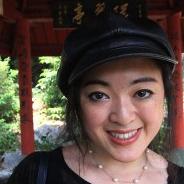
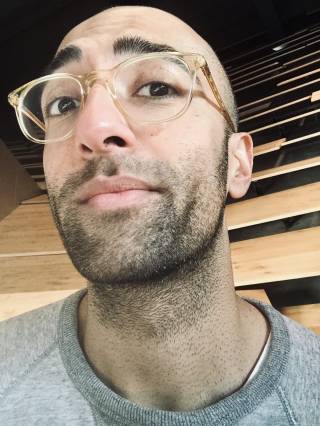
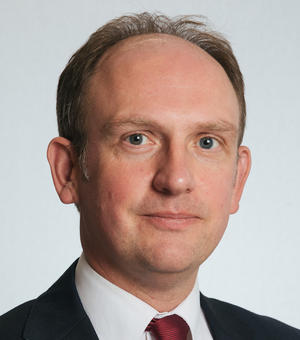
Rachel Leow is an Associate Professor in Modern East Asian History and Fellow of Murray Edwards College at the University of Cambridge. She holds a PhD and MPhil from St Catharine’s College, Cambridge, and a BA from Warwick University. Her research critiques rigid nationalisms in East Asia, focusing on transregional cultural and intellectual histories. Her book Taming Babel: Language in the Making of Malaysia (2016) won the 2018 Harry J. Benda Prize for Southeast Asian studies. Current projects include an anti-diasporic history of Chinese migration and early 20th-century Asian thought-worlds. Leow emphasizes public engagement, contributing to blogs, literary reviews, and collaborative manifestos. She teaches World History courses, including Part IA’s Outline 11 and specialized modules on East/Southeast Asia. She supervises postgraduate students exploring transnational East Asian history from 1850 to the present. Professional affiliations include the Royal Historical Society, Center for History and Economics, and editorial roles at The Historical Journal and Global Intellectual History . Awards include the Harry J. Benda Prize and RHS Fellowship. Her digital work includes a visualization of Afro-Asian Cold War networks and a short film on diasporic identity.
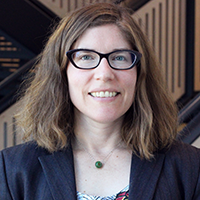
Professor Sujit Sivasundaram is a leading scholar in world history at the University of Cambridge, with affiliations as a Fellow of Gonville and Caius College and director of the Centre of South Asian Studies. His academic journey includes a Research Fellowship at Gonville and Caius College (2001), a Lectureship in South Asian History at the London School of Economics, and his current role as Professor of World History since 2019. Research Interests : Imperial history, history of science, environmental history, cultural history, history of race, and Indian/Pacific Ocean history with a focus on marginalized regions and material culture. Professional Leadership : President of The Pacific Circle , co-editorial roles in Cambridge Oceanic Histories and World Environmental History series, and EDI work at the Faculty of History (2024). Scientific Awards : British Academy Prize for Global Cultural Understanding (2021) Bentley Book Prize for World History (2021) Philip Leverhulme Prize for History (2012) Fellow of the British Academy (elected 2023) Publications emphasize oceanic histories, environmental fragments, and critical re-examinations of Euro-Atlantic historiography. His recent work explores materialist approaches to world history using objects like fossilized ferns and sea cucumbers to challenge universalist narratives.
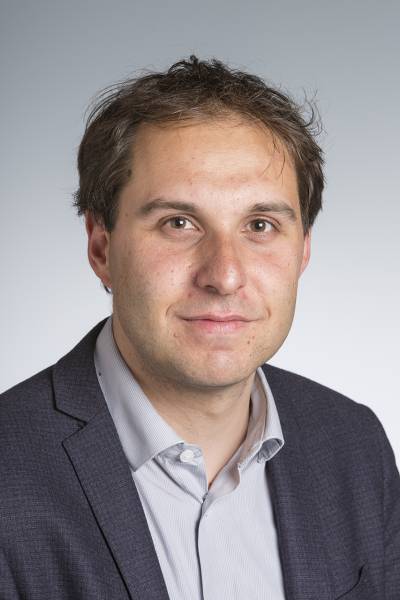
Dr. Roy Fischel is a researcher at SOAS University of London within the School of History, Religions and Philosophies. Specializing in Islamic history , Deccan Sultanates , and persianate cultural exchange , his work bridges South Asian history and Middle Eastern political thought . Education : Not explicitly mentioned in provided texts Research Themes : Persianate cultural diffusion Islamic state formation Deccan sultanate legitimacy Comparative imperial dynamics Gender studies in Ottoman Palestine His academic output demonstrates deep engagement with manuscript circulation (1400-1700) and cosmopolitan language practices. Though no scientific awards appear in the dataset, his supervision of 5 doctoral theses shows significant academic mentorship. Key publications include: 2020: Local States in an Imperial World (monograph) 2019: The Niẓām Shāhīs (encyclopedia entry) 2017: Aḥmadnagar (encyclopedia article) 2008: Sultan Abdülhamid II and Palestine (journal article) His work often analyzes state formation processes through multilingual manuscript cultures and transregional networks .
London School of Economics and Political Science (LSE)United Kingdom
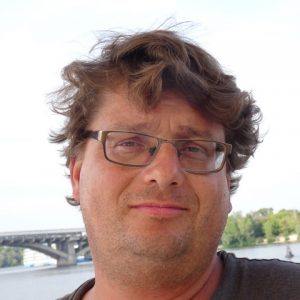
Professor Leigh K. Jenco holds the position of Professor of Political Theory at the Department of Government, London School of Economics and Political Science (on sabbatical during 2024/25). Her expertise spans Chinese Thought, Taiwan Studies, Political Philosophy, and Global Intellectual History. She previously taught at the National University of Singapore and has held visiting roles at Taiwan's Academia Sinica, National Taiwan University, and the University of Heidelberg. Education: B.A. from Bard College M.A. and Ph.D. from University of Chicago Her research explores late Ming neo-Confucian concepts of equality through literary theory and the 20th-century rediscovery of Chinese folksong compendia. She leads the £1.5M British Academy-funded 'Chinese Global Orders' project and was the principal investigator for the EU's 'East Asian Uses of the European Past' initiative. She served as associate editor of the American Political Science Review (2016–2020). Her publications include groundbreaking monographs like Changing Referents (Oxford UP, 2015) and Making the Political (Cambridge UP, 2010), which bridge political theory with Chinese intellectual history. Current projects focus on Ming dynasty poetics and cross-cultural knowledge transfer. Grants & Projects: Lead investigator for 'Chinese Global Orders' (£1.5M, British Academy) EU H2020 'East Asian Uses of the European Past' (€1.2M) She is fluent in Classical Chinese, Mandarin, and English, and her work emphasizes global comparative frameworks to challenge Eurocentric narratives. Her research often intersects historical texts with contemporary political debates, particularly around cultural borrowing and identity formation.
Erika Tan is a Reader in Contemporary Art Practice and Course Leader of MA Fine Art at Central Saint Martins, University of the Arts London. With a multidisciplinary background spanning social anthropology, archaeology, and film directing, her research-led practice investigates postcolonial narratives, transnational identities, and decolonial methodologies through moving image, archival interventions, and curatorial projects. Education includes: M.A Fine Art - Central Saint Martins (1997) B.A (Hons) Social Anthropology and Archaeology - University of Cambridge (1991) Advanced Diploma in Film & Video - Central Saint Martins (1995) Film Directing - Beijing Film Academy (1994) Her research focuses on three primary domains: postcolonial museum practices examining colonial collections and restitution; transnational material histories exploring cultural exchange and identity formation; and decolonial methodologies challenging canonical art histories through archival reexamination. Current projects include SOAS-led research on Southeast Asian restitution paradigms and AHRC-funded work on decolonizing national collections through machine learning applications. Publication trends reveal sustained engagement with archival reinterpretation, particularly through the recurring 'Forgotten Weaver' project examining Malayan craft histories. Recent works demonstrate increased focus on participatory sound installations (e.g., Sonic Soundings ) and feminist knowledge-sharing frameworks like Slideshow Party developed for Singapore Biennale 2023. Significant recognitions include: Arts Foundation Digital Arts Fellowship (1998) ACME 5-year Fire Station Residency (2001) Samsung Digital Art Plus Prize Nomination (2012) Stanley Picker Fine Art Fellowship (2018-2020) As Research Associate with UAL's Decolonising Arts Institute, she contributes to major grants including the AHRC's 'Transforming Collections' initiative. She leads the Moving Image research group and has curated geo-locational projects like Sonic Soundings across international contexts.
Hugh Kennedy , Professor at SOAS University of London within the School of Languages, Cultures and Linguistics, is a leading scholar in early Islamic history. His research spans political structures, military systems, and cultural transitions in the Islamic world. Fields of Interest : Early Islamic History, Abbasid Caliphate, Sacred Space, Historical Geography, Islamic Law. Research Trends : His work explores the evolution of Islamic political terminology, frontier interactions, and the socioeconomic impacts of Muslim rule. He has published extensively on the Ḥajj, urban development, and manuscript production in the Abbasid era. Supervised Theses : Tanaka (zandaqah), Ye (ʿAbbāsid mysticism), Habib (sacred space), Khatun (trade networks), Manstetten (madrasa origins), Lodhi (hijra law), Webb (Arab origins).
Dr. Ahmad Rizky M. Umar is a Marie Sklodowska-Curie Fellow at the Department of International Politics, Aberystwyth University, where he conducts research on transregionalism, Indonesia’s foreign policy, and the evolving global order. He holds a PhD from the University of Queensland, an MSc from the University of Sheffield, and a Bachelor’s from Universitas Gadjah Mada. Prior to joining Aberystwyth, he taught at the University of Queensland and Griffith University (2022–2024). His academic expertise lies in International Relations , particularly focusing on transregional cooperation in the Indo-Pacific , Indonesia’s role in global politics , and the historical construction of 'Asia' in world politics . He is currently leading the TransRWP project, funded by Horizon Europe via the UKRI Guarantee, which analyzes transregional initiatives like the Belt and Road Initiative and the Quad. He is also finalizing a book on the history of the idea of Asia, under advanced contract with a U.S. publisher. Dr. Umar’s recent publications span high-impact journals such as International Affairs , Alternatives , and The International Journal , covering topics including ontological security in Southeast Asia, decolonization, and Indonesia’s evolving foreign policy. His work reflects a strong interdisciplinary approach, bridging political theory, history, and policy analysis. Marie-Curie Sklodowska Postdoctoral Fellowship (2024) ASAA Postdoctoral Writing Grant (2023) Best Paper Award, ISA English School Section (2022) Asia Study Grant, National Library of Australia (2020) Dr. Umar has been funded as a principal investigator on externally funded research and has served as a mentor and educator, teaching courses in International Ethics, Human Rights, and International Relations Theory. He has contributed policy commentary to The Conversation , The Interpreter , and 9DashLine , and his analysis has been cited by major media outlets including BBC Indonesia , The Straits Times , and Nikkei Asia . He previously worked at the ASEAN Studies Center, Universitas Gadjah Mada, where he served as Executive Secretary (2016–2017).
Dr. Patrick Lantschner is an Associate Professor in the History of the Medieval Mediterranean and Near East (500-1500) at University College London's Department of History. His research focuses on political conflicts in medieval cities, comparative transnational approaches between Europe and the Islamic world, and urban political orders. He holds a DPhil from the University of Oxford and was previously a Junior Research Fellow at Merton College, Oxford, and taught at the University of Cambridge. His major work includes The Logic of Political Conflict in Medieval Cities (2015), which won the 2016 Bronisław Geremek Prize. Current research explores shared political structures between European and Islamic cities in Western Eurasia (c.900-1500). He co-edits the medieval/early modern volume of the Cambridge Urban History of Europe . Teaching includes modules on divided societies in the Crusader era, material culture in the Islamic Near East, and global medieval history. He supervises PhD students on topics spanning medieval Mediterranean studies and holds roles as Departmental Education Lead and Director of Undergraduate Teaching at UCL. He also co-convenes the 'European History, 1150-1550' seminar at the Institute of Historical Research.
Prof. Magnus Marsden is a Professor of Social Anthropology at the University of Sussex, affiliated with the School of Global Studies and the Sussex Asia Centre. He specializes in Muslim Asia, focusing on anthropology of trade networks, globalization, and frontier dynamics. His research spans Afghanistan, Pakistan, Central Asia, and diasporic communities in Europe and China. Notable grants include an ERC Advanced Grant and AHRC funding. He holds a PhD (2002) and BA from the University of Cambridge, with prior roles at Trinity College and SOAS. His work explores Afghan traders, Islamic cosmopolitanism, and inter-Asian connectivity. Awards include the 2008 American Institute of Pakistan Studies Book Prize for Living Islam . He advises doctoral students on Central/South Asian and Middle Eastern topics, emphasizing ethnography, trade, and religious networks. His research integrates historical and anthropological methods, addressing geopolitical and commercial systems. Education: PhD (Social Anthropology, Trinity College, Cambridge, 2002); BA (University of Cambridge). Professional roles include Director of the Sussex Asia Centre and Steering Committee member. Grants funded studies on Afghan networks, Eurasian trade, and urban Muslim cosmopolitanism. Public scholarship includes articles for The Conversation and collaborations with artists like Moska Najib. Current office hours: Thursdays 10-11 in Arts C. Research Interests: Islamicate societies, transnational trade networks, frontier anthropology, Afghan diasporas, urban cosmopolitanism, and inter-Asian connectivity. Recent projects examine Jewish-Afghan traders and post-2021 commercial shifts in Afghanistan. Grants: ERC Advanced Grant (2015–2020), AHRC 'Afterlives of Urban Muslim Asia' (2022–2025), Leverhulme Trust grants, and Sussex Asia Centre initiatives. Professional activities include advisory roles for Afghan Institute of Strategic Studies and Action for Development. Labs/Teams: Leading the Sussex Asia Centre's research on Asian networks and collaborating with global anthropologists on Eurasian trade dynamics. Current projects include studies on Afghan traders in Yiwu, China, and diasporic communities in Europe.
Allan Pang is a Researcher in the Department of History within the School of Humanities at the University of Bristol. His work focuses on transregional histories connecting Hong Kong, Chinese diaspora communities, and Southeast Asia. As a historian with expertise in decolonization, cultural policies, and history education, Dr. Pang contributes significantly to understanding the complex interplay between colonialism, Chinese identities, and postcolonial nation-building across East and Southeast Asia. Education: BA, University of Hong Kong MPhil, University of Hong Kong PhD, University of Cambridge Dr. Pang's research engages with themes such as history education, popular music, and decolonisation from a transregional perspective across East and Southeast Asia. His current book project examines the transmission of historical knowledge in Hong Kong, Malaya/Malaysia, and Singapore from the 1950s to the 1990s, analyzing how Cold War politics, decolonization processes, and Chinese politics shaped understandings of 'Chineseness' through educational systems and public historical narratives. He also investigates transregional Chinese popular music across Hong Kong and Southeast Asia since the 1950s, examining how musicians and cultural producers exerted transregional agency through the music industry amidst political transitions, with particular attention to the works of composer Joseph Koo and lyricist James Wong from Hong Kong, Xinyao from Singapore, and campus folk songs from Taiwan. Dr. Pang's publications demonstrate a consistent focus on transregional connections between Hong Kong, Southeast Asia, and Chinese diaspora communities. His work bridges historical analysis with cultural studies, examining how historical narratives are constructed and transmitted through educational systems, popular culture, and public spaces. A notable trend in his recent scholarship is the examination of how Cold War politics shaped cultural production and historical consciousness across Asian contexts, particularly in relation to Chinese identities. His research increasingly incorporates digital humanities approaches, as evidenced by his public education campaign 'Malaysia Unbound' which features a digital interactive map of transregional connections. Scientific Awards: Shortlisted for the Best Article on Global Hong Kong Studies 2023, ICAS (International Convention of Asia Scholars) Book Prize for 'Stamping 'Imagination and Sensibility': Objects, Culture, and Governance in Late Colonial Hong Kong' Associate Fellow of the Higher Education Academy Dr. Pang is actively involved in teaching and public engagement. In 2024-25, he is delivering lectures and seminars for a second-year unit 'Asia in Global Perspective' (team taught). Before arriving at Bristol, he taught courses on empires in maritime East Asia, twentieth-century world history, Hong Kong history, and historiography. His public outreach includes working with Imagined Malaysia, an NGO in Malaysia, on the public education campaign 'Malaysia Unbound: Transregional Histories through Documents,' which explores Malaysia's transregional connections through weekly infographics and a digital interactive map. He also contributes to public initiatives at the Hong Kong History Centre through public talks and online lecture series.
Dr. Michael Bennett is a Lecturer in Early Modern British History at the University of Sheffield's School of History, Philosophy and Digital Humanities. He joined the university in 2022 after working as a Research Associate at The University of Manchester and the Bank of England. His academic work focuses on the social and economic history of the English (later British) empire during the seventeenth and eighteenth centuries, with particular emphasis on the relationship between Britain and Caribbean plantation slavery. His educational background includes: BA (Hons) from King's College London (2015) Masters by Research from the University of Kent (2016) Ph.D. from The University of Sheffield (2020) Dr. Bennett's research centers on the reciprocal relationship between early modern Britain and the Caribbean plantation system. His in-progress book manuscript explores the Caribbean sugar boom beginning in Barbados during the 1640s, analyzing London merchants' role in financing plantation slavery's development. He's particularly interested in how slavery and colonialism shaped London as a global commercial and financial center during the long eighteenth century. Additionally, he maintains a secondary research interest in English trade and colonialism in the Indian Ocean world, with publications examining the East India Company's relationship with slavery and unfree labor. His scholarly output demonstrates a consistent focus on the economic dimensions of empire, particularly the financial mechanisms that supported plantation slavery and colonial expansion. His work bridges economic history with social history, examining how commercial interests drove colonial development and shaped labor systems across multiple imperial contexts, including both the Atlantic and Indian Ocean worlds. Dr. Bennett has received numerous prestigious awards and fellowships for his research: John Carter Brown Library Short-Term Fellowship (2021) Society for Renaissance Studies Postdoctoral Fellowship (2020) Huntington Library Short-Term Fellowship (2020) Eccles Centre for American Studies Visiting Fellowship (2020) AHRC International Placement Scheme Fellowship (2017) AHRC White Rose Competition PhD Scholarship (2016) Roger Scola prize for best MA/MRes thesis (2016) Dr. Bennett is actively engaged in research funding and public projects. His work has been supported by grants from the AHRC, Royal Historical Society, Society for Renaissance Studies, Huntington Library, John Carter Brown Library, and Eccles Centre for American Studies. He recently led the Bank of England's high-profile research project into its historical links to slavery (1694-1888), which resulted in the 'Slavery & the Bank' exhibition. He has also collaborated with Guy's and St. Thomas' Hospital, Somerset House, and community groups on public-facing projects exploring Britain's connections to historical slavery, resulting in research reports that have influenced public memorialization and policy. Dr. Bennett is a core member of Sheffield's Slavery Research Hub, where he collaborates with colleagues across disciplines to investigate the historical and contemporary legacies of slavery. His public engagement work has connected academic research with museum exhibitions, hospital histories, and community initiatives, demonstrating a commitment to making historical scholarship accessible and relevant to diverse audiences.
Dr. Richard David Williams is a Reader in Music and South Asian Studies at SOAS University of London , where he works in the School of Arts and Department of Music . His research bridges musicology, cultural history, and religious studies, focusing on South Asian music's evolution during colonialism and early modernity. BA and MPhil in Theology and Modern South Asian Studies from the University of Oxford PhD in Music from King’s College London Williams' research investigates how music and sound interact with literature, religion, and multilingual environments across South Asia. His first book, The Scattered Court: Hindustani Music in Colonial Bengal (2023), reconstructs interregional musical dialogues between north India and Bengal, centering on the exiled Nawab Wajid ‘Ali Shah's influence. His second book explores Ragamala, an early-modern fusion of musical imagery with poetry, while collaborating with Professor Makoto Kitada on translating the Gulshan-e-‘Ishq epic. His recent publications trace global music historiography, courtesan performance, and sonic dimensions in Shi'ah and Vaishnava traditions. Williams supervises PhD candidates on diasporic music, film song poetics, and Sri Lankan Tamil musical dislocations. He has held a Leverhulme Early Career Fellowship and is a Fellow of the Higher Education Academy (FHEA). Scientific Awards: Leverhulme Early Career Fellowship Fellow of the Higher Education Academy
Dr. Jagjeet Lally is an Associate Professor of the History of Early Modern and Colonial India at the Department of History, University College London (UCL). He serves as Director of the Centre for Transnational and Global History and Co-Director of the Centre for the Study of South Asia and the Indian Ocean World at UCL’s Institute of Advanced Studies. His research focuses on economic and material history, with a particular emphasis on South Asia’s global connections. Lally holds a BA (Hons.) in PPE from Oxford, an MSc in Economic History from LSE, and a PhD from Cambridge. He has held roles including Moses and Mary Finley Research Fellow at Darwin College, Cambridge, and taught at Imperial College London before joining UCL in 2014. His work explores themes such as trade networks, empire dynamics, and material culture. Key publications include India and the Silk Roads (2021) and India and the Early Modern World (2024). He has contributed to museum projects like the Manchester Museum’s South Asia Gallery and served as a historical consultant for documentaries. Lally supervises doctoral students researching topics like Tamil diaspora archives and Indo-Thai Cold War relations. Teaching modules include 'Empire in Eurasia', 'India and the Global Economy', and 'The Great Depression and the Making of the Third World'. His recent work engages with critical heritage studies, South Asian migrant communities, and the historiography of 'failure'.
Professor Marcos Martinón-Torres holds the prestigious Pitt-Rivers Professorship of Archaeological Science at the University of Cambridge, situated within the Department of Archaeology in the School of the Humanities and Social Sciences. His research is primarily conducted through the McDonald Institute for Archaeological Research, with active involvement in specialized laboratories including the Pitt-Rivers Laboratory for Archaeological Science, Computational and Digital Archaeology Laboratory, and Material Culture Research Hub. Professor Martinón-Torres specializes in archaeometallurgy, employing interdisciplinary approaches that bridge archaeological inquiry with advanced materials science. His research spans multiple continents and historical periods, with significant contributions to understanding metallurgical technologies across Eurasia, Africa, and the Americas. Key research areas include ancient bronze production in the Mediterranean, iron technologies in China, early metallurgy in Iberia, and colonial-era metallurgical practices in Jamestown. His methodological toolkit encompasses microstructural analysis, mineralogical studies, chemical composition analysis, lead isotope analysis, and experimental replication techniques. His extensive publication record reveals a consistent focus on experimental archaeometallurgy, particularly the color properties of ancient copper alloys, metal provenance in the Bronze Age, and the intersection of alchemy with early chemistry. His groundbreaking 2006 Nature paper on Hessian crucibles revealed mullite as the key component behind their exceptional properties, representing the earliest known industrial exploitation of this material in Europe. Recent work demonstrates continued innovation in understanding ancient technological processes through advanced analytical methods, with significant contributions to Chinese archaeometallurgy, particularly regarding the Terracotta Army bronze triggers and iron production techniques during the Warring States period. Professor Martinón-Torres maintains active research collaborations across multiple continents and disciplines, regularly presenting at international conferences and contributing to editorial boards of leading archaeological science journals. His work has significantly advanced the field of archaeometallurgy by integrating cutting-edge materials science techniques with traditional archaeological approaches.
Professor Peter Stewart is a leading scholar in ancient art history, currently serving as Professor of Ancient Art at the University of Oxford, Director of the Classical Art Research Centre (CARC), and a Fellow of Wolfson College. His academic journey includes roles at The Courtauld Institute of Art (Reader in Classical Art) and Reading University (Lecturer in Classics and Curator of the Ure Museum). Stewart specializes in Roman provincial art, Gandhara art, ancient Greek textiles, and cross-cultural artistic exchanges across Eurasia. He oversees the Beazley Archive at CARC, a pivotal resource for ancient art research. His research focuses on sculptural traditions, material culture, and the reception of classical art. Notable works include Statues in Roman Society , The Social History of Roman Art , and Gandharan Art and the Classical World . He frequently publishes on Gandhara's artistic connections, Roman imperialism's artistic impacts, and the global dimensions of ancient art. Teaching interests span Greek and Roman art and archaeology. Recent publications emphasize interdisciplinary approaches to Gandharan Buddhist contexts, Roman sarcophagi, and collecting practices. His work bridges archaeological evidence with cultural history, addressing themes like connoisseurship, provenance, and ancient aesthetics' contemporary relevance. As CARC Director, Stewart coordinates international workshops on Gandhara's connections and supervises projects on sculpture collections like Wilton House's. His research highlights art as a medium of cultural dialogue, imperial control, and transregional exchange.