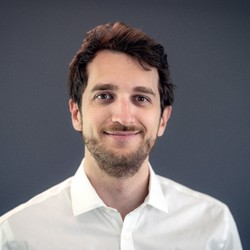
Marc Bonnet is a CNRS research director HDR at ENSTA Paris, working within the Applied Mathematics Unit (UMA) and associated with the Wave Propagation, Mathematical Study and Simulation (POEMS) research group. His academic career spans over two decades with extensive contributions to computational mechanics and mathematical modeling. Dr. Bonnet's research interests focus on wave propagation phenomena, mathematical modeling of physical systems, and advanced computational methods. His work particularly emphasizes boundary element methods, inverse problems, elasticity theory, acoustics, and topological sensitivity analysis. He has developed sophisticated mathematical frameworks for solving complex engineering problems related to structural mechanics and material characterization. His recent publications demonstrate a strong trend toward high-order numerical methods, particularly in boundary integral formulations and polynomial interpolation techniques. His research bridges theoretical mathematics with practical engineering applications, especially in nondestructive testing, viscoelastic material characterization, and microfluidic systems. The interdisciplinary nature of his work spans computational mathematics, solid mechanics, fluid dynamics, and electromagnetics. Throughout his career, Dr. Bonnet has maintained extensive collaborations with researchers across France and internationally, evident from his numerous co-authored publications across diverse application domains.
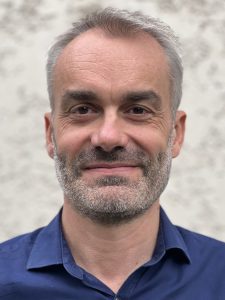
Pierre-Cyril Aubin-Frankowski is a researcher and associate professor in Optimization and Machine Learning at École des Ponts ParisTech, affiliated with CERMICS and the Optimization team. His work connects optimization algorithms, convexity, and infinite-dimensional analysis with applications in optimal transport and control theory. Research Interests Optimization in measure spaces Kernel methods and optimal control duality Generalized gradient flows with non-metric costs Order isomorphisms in function spaces Applications to operations research and transportation systems Article Trends: Recent works focus on extending gradient descent beyond metric spaces, tropical kernels, and connections between linear-quadratic control and Gaussian process covariances. Key themes include Bregman divergences, Wasserstein geometry, and constrained optimization via Hilbertian methods. Scientific Awards Prix Dodu for best communication at SMAI MODE
Damien LAAGE is a Research Professor at CNRS and an Associate Professor at Ecole Normale Supérie , affiliated with the Department of Chemistry . He works on theoretical and computational approaches to chemical reactivity in aqueous environments, with a focus on water dynamics, hydrogen-bond networks, and enzyme catalysis. PhD in Theoretical Chemistry (2001), Sorbonne University Paris, supervised by JT Hynes MSc in Physics (1997), Ecole Normale Supérieure Paris His research leverages machine learning and quantum simulations to model proton transport, hydration shells, and biochemical reactions. Recent work includes applications of neural network potentials and deep learning to interfacial and enzymatic systems. He has received the ERC Starting Grant (2012) , Young researcher award from the French chemical society (2012), and CNRS bronze medal (2010). His publications emphasize water reorientation , hydrogen-bond jumps , and enzyme dynamics .
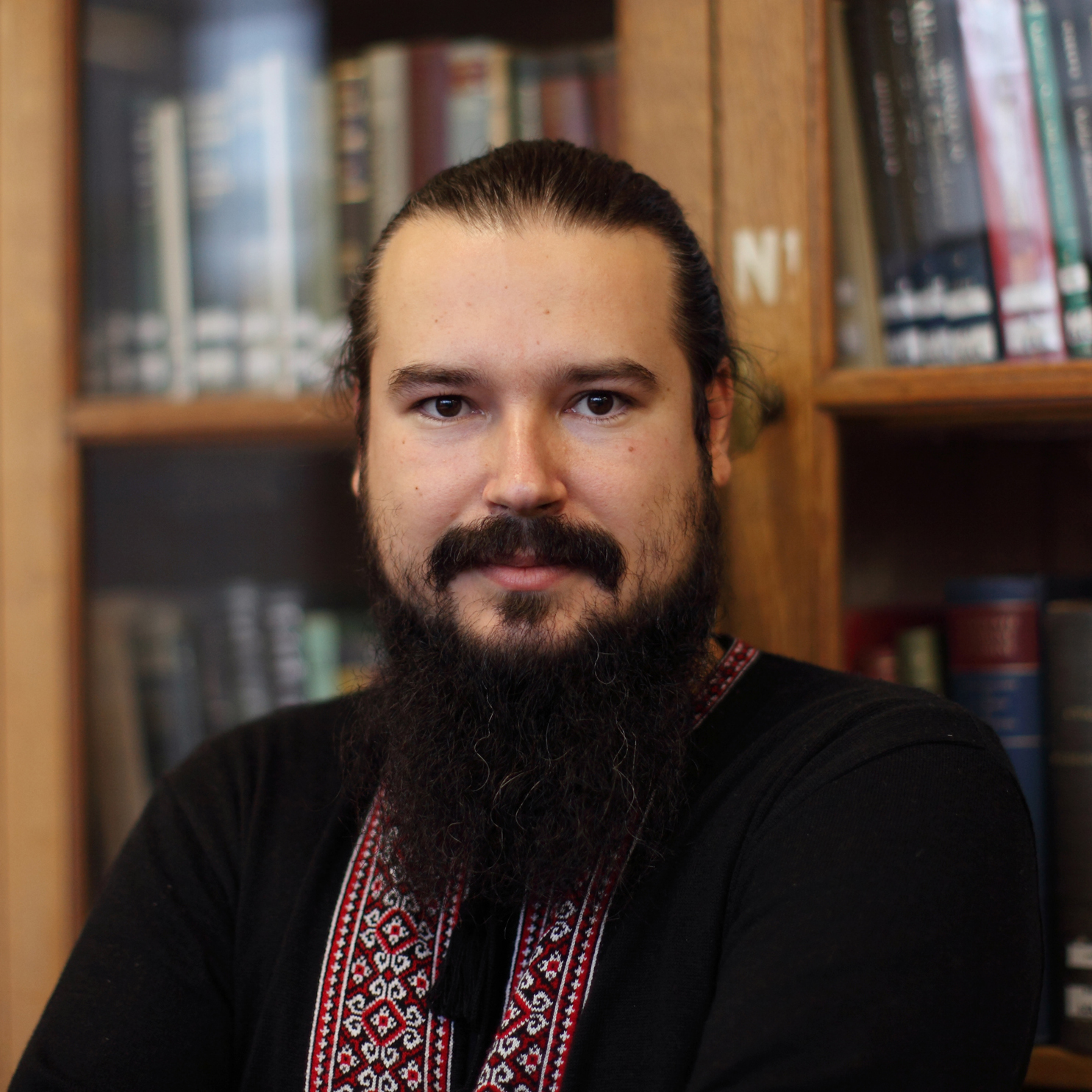
Sergii Rudiuk is a CNRS Research Fellow (Chargé de Recherche) at the Department of Chemistry, Ecole Normale Supérieure (ENS), Paris , where he conducts interdisciplinary research at the intersection of chemistry, physics, and biology. His work focuses on DNA-protein conjugates, DNA nanotechnology, and novel Atomic Force Microscopy (AFM) techniques. Research Trends: Analysis of his recent publications reveals a consistent emphasis on Photocontrolled DNA assembly and disassembly Colloidal and supramolecular self-organization Microfluidic manipulation of biomolecules Design of responsive nanomaterials Membrane biophysics and lipid domain engineering Light-regulated molecular systems Affiliations: Currently affiliated with ENS Paris in the Chemistry Department, he has previously worked in teams led by Prof. Damien Baigl (ENS) and collaborated with researchers across Japan, Germany, and France. Labs & Teams: Active in the Baigl laboratory at ENS, Rudiuk's research involves collaborations with interdisciplinary teams working on soft matter, molecular biology, and nanobiotechnology. His work often bridges experimental physics and chemical synthesis.
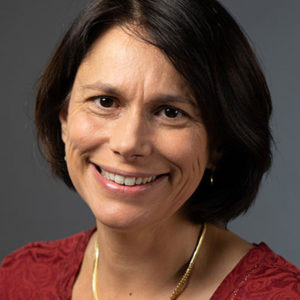
Florence d'Alché-Buc serves as Professor at Telecom Paris (Institut Polytechnique de Paris) and holds a Simons chair at Isaac Newton Institute, Cambridge (May-June 2025). She leads the Signal, Statistics and Machine Learning Research Team (S2A) within LTCI laboratory's Image, Data and Signal Department, and co-organizes the 2025 thematic programme 'Representing, Calibrating and leveraging predictive uncertainty' at Isaac Newton Institute. Her research centers on Machine Learning & Artificial Intelligence with applications in bioinformatics, medical domains, and industrial settings. Key subdomains include (Operator-valued) Kernel Methods, Structured Output Prediction, Complex data analysis, Reliable Machine Learning, and Dynamical Systems Modeling. Her work emphasizes robust theoretical frameworks for real-world deployment, particularly in safety-critical applications requiring interpretability and uncertainty quantification. Recent publications (2019-2024) reveal consistent innovation in kernel-based structured prediction, sketching techniques for scalability, and graph learning with optimal transport. She bridges theoretical advances with industrial applications through collaborations with Airbus, ENGIE, SAFRAN and others, focusing on efficient algorithms for complex data while maintaining rigorous statistical foundations. Scientific recognition includes: Simons chair at Isaac Newton Institute (2025) Ellis Fellow and Board member overseeing European AI PhD programmes She advises doctoral candidates like Jayneel Parekh and leads major initiatives including the Télécom Paris Chair on Data Science & AI (2019-2023) funded by industrial partners, and the ELIAS project (European Lighthouse on AI & Sustainability). Her service includes senior editorial roles at IEEE TPAMI and JMLR, plus program leadership at NeurIPS and ICML. As LTCI laboratory member and occasional CMAP collaborator at Ecole Polytechnique, she drives cross-institutional research through the S2A team while co-organizing international workshops on frugal AI and kernel methods.
Marc Massot is a leading Professor and head of the Laboratory for Molecular and Macroscopic Energetics, Combustion . With a research portfolio spanning combustion, multiphase flows, and high-order numerical methods, he has published 49 peer-reviewed works since 2024 addressing polydisperse sprays, solid-propellant combustion, and advanced Eulerian/Lagrangian modeling. Research Interests: Multi-scale modeling of reacting sprays and solid propellant combustion High-order accurate numerical schemes for hyperbolic balance laws Eulerian multi-fluid and moment methods for polydisperse two-phase flows Experimental validation of numerical simulations in aeronautical and automotive burners Across his recent articles, Massot focuses on coupling large-eddy simulation with sophisticated spray models to predict flame–spray interactions in realistic engine geometries. His work systematically addresses size-distribution effects, evaporation, coalescence, and turbulent dispersion, while developing stable, high-order algorithms suitable for unstructured meshes and stiff chemistry. A common thread is the derivation of minimal yet accurate Eulerian closures from kinetic theory, validated against canonical experiments ranging from counter-flow spray flames to pulsed jet injection. These studies advance both fundamental understanding and engineering design tools for liquid-fueled propulsion and internal-combustion systems. Scientific Awards: No awards are mentioned in the provided text. Advising & Grants: No explicit list of students or funded projects is supplied, though the extensive co-authorship network indicates active mentoring of PhD students and post-docs such as Aymeric Vie, François Doisneau, Frédérique Laurent, and Lucie Fréret. Laboratories & Teams: Marc Massot leads the Laboratory for Molecular and Macroscopic Energetics, Combustion , whose research bridges fundamental combustion science and applied computational fluid dynamics for energy and propulsion applications.
Laurent Soucasse is a Researcher at the Rennes Institute of Electronics and Telecommunications. His work focuses on radiative transfer modeling and its coupling with convective heat/mass transfer phenomena in complex geometries. Key Research Areas: Radiative Transfer, Natural Convection, Computational Fluid Dynamics, Heat and Mass Transfer Recent Article Themes: Simulation of radiation-convection interactions, reduced-order modeling for turbulent flows, and applications to microfluidics, atmospheric entries, and geophysical systems Labs: Rennes Institute of Electronics and Telecommunications
Vincent Pagneux is a Research Director at CNRS working at LAUM (Laboratoire d'Acoustique de l'Université du Maine), a joint research unit between CNRS and Le Mans University. He also holds a teaching position at École Polytechnique in Palaiseau where he instructs courses in Continuum Mechanics and Fluid Mechanics. His academic journey began with a PhD from the University of Maine in 1996, after which he pursued his career as a CNRS researcher. Pagneux's research focuses on wave physics, acoustics, and metamaterials. His work spans several key areas including guided waves (acoustic & elastic), plates (Lamb waves), acoustic propagation in shear flows, propagation in complex media, and 2D acoustics with surface gravity wave analogy. His signature contribution is the development of multimodal approaches for analyzing wave propagation phenomena, particularly in varying cross-section waveguides. Analysis of his publication record shows a consistent output with recent work expanding into water wave phenomena and advanced measurement techniques. His research demonstrates a progression from fundamental wave propagation studies to increasingly complex systems while maintaining strong theoretical foundations. The work spans theoretical, numerical, and experimental approaches, with significant contributions to both acoustic and elastic wave phenomena. Pagneux maintains active collaborations with researchers across multiple institutions including EPSCI Paris, University of Santiago in Chile, and University of Manchester in the UK. These international partnerships reflect the broad relevance of his work across different wave physics domains. His research has practical applications in urban acoustics, non-destructive testing, acoustic metamaterials, and advanced measurement techniques. The combination of theoretical rigor and practical relevance makes his work influential in both academic and applied settings.
Olivier Richoux is a Professor at the Institute of Acoustics, Department of Acoustics, University of Le Mans. His research spans topological acoustics, wave propagation in complex media, and acoustic metamaterials, with significant contributions to understanding nonlinear wave phenomena and topological edge states in engineered structures. Richoux's research interests focus on topological acoustics and nonlinear wave dynamics in structured media. His work explores how topological principles can create robust acoustic waveguides resistant to defects, and investigates soliton formation in periodic systems. Key areas include Su-Schrieffer-Heeger analogues in acoustic lattices, coherent perfect absorption in asymmetric networks, and energy spreading in disordered systems. His experimental-theoretical approach bridges fundamental physics with practical applications in sound control. Analysis of his recent publications (2021-2025) reveals a strong trend toward topological wave engineering in acoustic systems, particularly using Su-Schrieffer-Heeger models to create defect-immune wave paths. His work increasingly integrates nonlinear dynamics with topological concepts, examining soliton propagation and energy localization in disordered media. The research demonstrates consistent focus on experimental validation through acoustic waveguide networks and metamaterial implementations. Richoux actively collaborates within the Institute of Acoustics research ecosystem, particularly with teams working on ultrasonics, metamaterials, and nonlinear acoustics. His work frequently appears in high-impact journals including Physical Review B, Physical Review Applied, and Journal of the Acoustical Society of America, demonstrating strong integration within the international acoustics community. His laboratory work centers on acoustic waveguide networks and metamaterial testbeds for studying topological phenomena. The research group utilizes advanced measurement techniques including laser ultrasonics and optical methods for acoustic characterization, with facilities supporting both theoretical modeling and experimental validation of complex wave phenomena.
Higher School of Aeronautical Techniques and Automotive ConstructionFrance
Dr. Chérif Larouci is an Associate Professor and researcher at ESTACA (Higher School of Aeronautics and Space), where he has served as a teacher-researcher since 2002. Currently, he leads the Embedded Systems and Energy for Transport (S2ET) division, a position he has held since 2013. His academic career at ESTACA also included heading the Command and Systems Team from 2006 to 2013. In 2012-2013, he obtained Authorization to Supervise Research at the University of Paris-Sud 11. Dr. Larouci's educational background includes a PhD in Electrical Engineering from the National Polytechnic Institute of Grenoble (INPG) in 2002, with a thesis on "Design and optimization of static converters for power electronics; Application to sinusoidal absorption structures." Prior to that, he earned an Advanced Studies Diploma (DEA) in Electrical Engineering at INPG (1998-1999) and an Engineering Diploma from the National Polytechnic School of Algiers, specializing in Electrotechnics (1993-1998). His research focuses on power electronics, embedded systems, and energy management for transportation systems, particularly electric vehicles. Dr. Larouci's work spans multiple domains including power converter design, fault-tolerant control systems, energy management strategies, and multiphysical optimization of automotive components. His research has significant applications in electric vehicles, autonomous vehicles, more-electric aircraft, autonomous drones, and various electric transportation systems. Analysis of his recent publications reveals a strong emphasis on optimization techniques for power electronics in transportation applications. His work increasingly integrates multidisciplinary approaches, combining electrical engineering with mechanical, thermal, and control aspects. Recent trends show growing focus on sustainable transportation solutions, battery management systems, and intelligent energy management for electric mobility. His research bridges theoretical developments with practical automotive applications, often involving industry collaborations. IEEE Senior Member (elevated in March 2012) Member of the publication committee of the 3EI journal since 2004 Reviewer for numerous international journals and conferences Expert evaluator for collaborative projects (FUI, ANR, H2020, ADEME, regional projects) Dr. Larouci actively participates in research funding and collaboration through various channels. He has been involved in numerous research contracts and collaborative projects with industry partners. His leadership extends to coordinating the S2ET division, which comprises 20 teacher-researchers, 20 PhD students, and 6 technical and administrative support staff. He also contributes to strategic research directions as a member of several competitive clusters including MOVEO/Nextmove, ID4Car, and Astech. The S2ET division under Dr. Larouci's leadership serves as a comprehensive research environment focusing on embedded systems and energy solutions for transportation. The division maintains strong industry connections and participates in multiple national and European research initiatives. Current research directions emphasize electrification of transportation, autonomous vehicle systems, and sustainable mobility solutions, with particular attention to power electronics and energy management challenges.
Higher School of Aeronautical Techniques and Automotive ConstructionFrance
Sebti Mouelhi is a Lecturer-Researcher at ESTACA'LAB, Pôle S2ET (Systems and Embedded Energies for Transportation), ESTACA Campus Paris-Saclay, France, since 2020. Previously, he held the same role at ECE Paris (2015-2020). His academic work bridges formal verification, control systems, and cybersecurity in transportation contexts. PhD in Computer Science (Université de Franche-Comté, 2011) M.Sc. in Computer Science (University of Lorraine, 2007) His research focuses on formal verification of component-based systems, controller synthesis for hybrid systems, and cybersecurity in vehicular and IoT communications. Recent work includes behavioral contracts for railway systems and V2X waveform optimization . Publications highlight trends in autonomous vehicle security , component-based design , and transportation-specific formal methods . He has contributed to tools like CoSyMA for control synthesis and explored multi-scale abstractions in hybrid systems. Teaching activities include labs on embedded Linux , real-time scheduling , CAN bus , and FreeRTOS using STM32 microcontrollers. His industrial experience (2012-2015) complements his academic expertise with practical insights into safety assurance and R&D in transport technologies.
Higher School of Aeronautical Techniques and Automotive ConstructionFrance
Sebastien SAUDRAIS serves as an Enseignant-chercheur (Teacher-Researcher) at ESTACA, a prominent French engineering school specializing in aeronautics and automotive systems. He is affiliated with the Pôle S2ET research division and the ESTACA'Lab department, where he bridges academic research with industrial applications in automotive software development. His research spans Software Engineering , Model-Based Systems Engineering , and Automotive Software , with deep expertise in Embedded Systems , Real-Time Systems , and Energy Management for electric vehicles. He focuses on AUTOSAR (Automotive Open System Architecture) frameworks, safety-critical system design, and model-driven approaches for automotive innovation, particularly in steering-by-wire systems and energy optimization. Analysis of his 15 most recent publications (2011-2016) reveals consistent contributions to automotive software engineering, emphasizing model transformations, quality-of-service modeling, and energy-aware system design. His work frequently addresses AUTOSAR integration challenges, physical model incorporation for electric vehicles, and safety analysis in transportation systems, demonstrating strong industry relevance through collaborations with automotive research consortia. SAUDRAIS actively contributes to ESTACA'Lab's mission through educational initiatives like the PIRATE projects, which introduce engineering students to research methodologies, and teaches courses spanning algorithmic foundations to advanced model-based automotive system design.
Eric D'Asaro is a Senior Principal Oceanographer and Professor of Oceanography at the Applied Physics Laboratory, University of Washington (APL-UW). He is affiliated with the Ocean Physics department and has made significant contributions to the field of physical oceanography over his extensive career. Dr. D'Asaro earned his B.A. and M.S. in Physics from Harvard University in 1976, followed by a Ph.D. in Oceanography from MIT/WHOI in 1980. His educational background provided the foundation for his innovative research at the intersection of fluid mechanics, oceanography, and engineering. Dr. D'Asaro's research spans a wide number of environments from upper ocean mixed layers to nearshore coastal fronts to fjords to deep convection. Starting from a core interest in turbulence and internal waves, his work has expanded to include new aspects of small-scale oceanography, including submesoscale processes, and the role of all of these mixing processes in controlling biochemical processes in the ocean. For the past 30 years, his experimental work has focused on exploiting the unique capabilities of "Lagrangian Floats," a class of instruments that try to accurately follow the three dimensional motion of water parcels particularly in regions of strong mixing. By measuring big signals, like hurricanes or major blooms, it is easier to unravel the underlying processes because the signal to noise is high. His work bridges fluid mechanics, oceanography, and engineering, making significant contributions to our understanding of ocean mixing processes and their role in global climate systems. His research has important implications for climate modeling, carbon cycling, and predicting the behavior of extreme weather events like hurricanes. Wave Measurements at Ocean Weather Station PAPA Air-Sea Momentum Flux in Tropical Cyclones Salinity Processes in the Upper Ocean Regional Study (SPURS) Lateral Mixing Autonomous Lagrangian Floats for Oxygen Minimum Zone Biogeochemistry Hurricane Lagrangian Floats North Atlantic Bloom EXPORTS: Export Processes in the Ocean from RemoTe Sensing Lagrangian Submesoscale Experiment (LASER) Dr. D'Asaro's laboratory and research team focus on developing and deploying innovative instrumentation for oceanographic measurements, particularly Lagrangian floats that can accurately follow water parcels. His work has resulted in numerous publications spanning from 2000 to the present, with a particularly high output in recent years (2023-2025).
Dr. J. Thomas Farrar is a Senior Scientist in the Physical Oceanography Department at Woods Hole Oceanographic Institution (WHOI), where he conducts research on atmosphere-ocean interactions, tropical dynamics, and upper ocean processes. He holds a joint appointment through the MIT-WHOI Joint Program in Oceanography and teaches graduate courses at MIT. Farrar serves as Science Team co-lead for NASA's Surface Water Ocean Topography (SWOT) Satellite Mission and was Principal Investigator for the $30M NASA Sub-Mesoscale Ocean Dynamics Experiment (S-MODE). Dr. Farrar's research focuses on atmosphere-ocean exchange of heat and freshwater, dynamics and thermodynamics of the upper ocean, tropical dynamics and equatorial waves, oceanic internal waves and eddies, satellite oceanography, and ocean observing systems. His work combines theoretical approaches with observational data from moorings, ships, satellites, and autonomous platforms to understand fundamental ocean processes that influence climate. He has made significant contributions to understanding air-sea interaction, upper ocean mixing, and the role of small-scale ocean features in climate systems. His recent publications demonstrate a strong focus on satellite oceanography, particularly related to the SWOT mission, as well as continued research on upper ocean dynamics, air-sea interaction, and the role of submesoscale processes in ocean mixing and biogeochemical cycles. Farrar's work bridges observational oceanography with climate science, contributing to our understanding of how ocean processes influence global climate systems. 2024: NASA Group Achievement Award for the Sub-Mesoscale Ocean Dynamics Experiment (S-MODE) 2021-present: Science Team co-lead, Surface Water Ocean Topography (SWOT) Satellite Mission 2018: Principal Investigator of the NASA Sub-Mesoscale Ocean Dynamics Experiment (S-MODE) 2017: American Meteorological Society Nicholas P. Fofonoff Award 2012: Editors' Citation for Excellence in Refereeing, Journal of Geophysical Research-Oceans Dr. Farrar has secured significant research funding, most notably as Principal Investigator for the $30M NASA S-MODE mission. His research has been supported by multiple NASA grants including NNX13AE46G, NNX14AM71G, and NNX17AH54G. He actively collaborates with scientists worldwide and has co-authored numerous papers with researchers from institutions across the globe, contributing to major field programs including SPURS (Salinity Processes in the Upper-ocean Regional Study) and VOCALS (VAMOS Ocean-Cloud-Atmosphere-Land Study).
Satoshi Tsuchiya is an Associate Professor at Hokkaido University's Laboratory of Applied Solid State Physics. His work bridges research and education in ultrafast spectroscopy and photo-induced phenomena in organic and correlated materials. Affiliation: Laboratory of Applied Solid State Physics, Hokkaido University Role: Researcher, educator, and mentor to graduate students Research Interests: Tsuchiya's research focuses on ultrafast spectroscopy under extreme conditions (high pressure, low temperatures) to control and explore physical properties, as well as photo-induced ultrasonics for material characterization. Key themes include phase transitions, electron correlation, and electronic inhomogeneity in organic systems. Article Trends: His publications emphasize ultrafast pump-probe spectroscopy, geometrically frustrated materials, Dirac electron systems, and phase separation dynamics. Topics span organic semiconductors, superconductors, and transition metal compounds, with a recurring focus on external stimuli-driven property changes. Grants: Recent grants include JSPS Grant-in-Aid for Scientific Research (B) (2022) and a single-year grant from the Iketani Science and Technology Foundation (2022). Students: Mentored students include Wada, Inomata, Kitajima, Katsumi, Akiba, and Nagata across master's and doctoral theses.