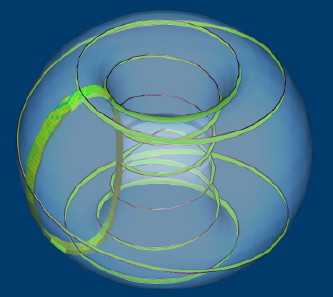
Michael Barnes is a Tutorial Fellow in Physics and Professor of Physics at the University of Oxford. He contributes to the Department of Physics through teaching and research, with a focus on plasma behavior in magnetic fields. His work has critical applications in sustainable energy production via fusion and astrophysical systems. Professor Barnes teaches Mathematical Methods for Physicists to undergraduate students at University College and lectures on Complex Numbers and Ordinary Differential Equations . His pedagogical emphasis is on developing mathematical fluency for advanced physics topics. His research explores plasma turbulence suppression by sheared flows, particularly in magnetic confinement fusion. Key projects include the development of the TRINITY multiscale gyrokinetic transport code and studies on tokamak transport barriers. Recent publications highlight advancements in gyrokinetic simulations, collision operators, and beam diagnostics for fusion applications. Notable trends in his publications include multiscale modeling of plasma turbulence, zonal flow dynamics, and experimental comparisons for fusion devices like JET, MAST, and ITER. Subfields span from fundamental kinetic theory to applied fusion engineering.
Kelsey Swingle is an Assistant Professor of Bioengineering at Rice University, where she leads the Swingle Lab at the intersection of biomaterials science, immune engineering, and reproductive biology. Her research focuses on engineering therapeutic and vaccine technologies with translational potential. Ph.D. in Bioengineering from the University of Pennsylvania B.S.E. in Biomedical Engineering from Case Western Reserve University Dr. Swingle’s research explores the design of lipid nanoparticles (LNPs) and nucleic acid therapeutics for women’s health applications, including pre-eclampsia, preterm birth, and gynecologic cancers. Her work integrates bioengineering principles with immune modulation strategies to develop targeted therapies. The trends in her publications highlight advancements in LNP elasticity optimization for placental mRNA delivery, targeted systemic RNA delivery to the brain, and in utero gene editing applications. Her lab prioritizes interdisciplinary approaches to overcome biological barriers in women’s health. 2025 Solomon R. Pollack Award for Excellence in Graduate Bioengineering Research 2024 Muriel Joan Drew Hege Award for Women in Cellular Immunotherapy Research 2024 Penn Engineering Outstanding Teaching Award 2023 Gordon Research Conference Travel Award 2022 Society for Biomaterials STAR Award 2020 NSF Graduate Research Fellowship The Swingle Lab collaborates with the Texas Medical Center to develop precision nanomedicines. Her team employs in vitro, ex vivo, and in vivo models to study biomaterial interactions with female-specific tissues, emphasizing translational research and inclusive scientific communication.
Christopher Ferrie is an Associate Professor at the University of Technology Sydney (UTS), where he is affiliated with the Faculty of Engineering and Information Technology and the Centre for Quantum Software and Information (QSI). His academic career spans quantum information science, machine learning, and scientific education, with a strong emphasis on both theoretical research and public engagement through science communication. Full-time faculty member at UTS Active researcher in quantum information science Director of the Centre for Quantum Software and Information Author of numerous scientific publications and popular science books Dr. Ferrie earned his PhD in Applied Mathematics from the Institute for Quantum Computing and University of Waterloo in Canada in 2012. His doctoral work focused on quantum information and laid the foundation for his subsequent research career in quantum computing and related fields. Dr. Ferrie's research interests span several interconnected domains within quantum information science. His primary focus is on quantum estimation and control, with particular emphasis on applying machine learning techniques to solve statistical problems in quantum information science. He investigates how quantum systems can be characterized, controlled, and optimized for practical applications. His work bridges theoretical quantum physics with practical implementations, exploring how quantum phenomena can be harnessed for computational advantage. Recent research directions include quantum machine learning, quantum neural networks, and quantum optimization algorithms, with applications ranging from quantum state tomography to solving combinatorial optimization problems. Analysis of Dr. Ferrie's recent publications reveals a strong focus on practical quantum computing challenges. His work consistently addresses the intersection of quantum information theory and machine learning, with particular emphasis on making quantum algorithms more efficient, interpretable, and robust against noise. A significant portion of his recent research explores variational quantum algorithms and their optimization, reflecting the current priorities in near-term quantum computing. His publications also demonstrate growing interest in quantum machine learning applications and the development of techniques for quantum error mitigation and characterization. Dr. Ferrie has secured multiple research grants supporting his work in quantum computing and related fields. His funded projects span quantum control, quantum probability, quantum machine learning, and statistical decision theory, reflecting the breadth of his research program. While specific major awards aren't detailed in the available information, his sustained funding and publication record indicate significant recognition within the quantum information science community. Dr. Ferrie is actively involved in research supervision and teaching, with current funding supporting multiple PhD students and postdoctoral researchers. His teaching responsibilities include courses on quantum computing, where he introduces students to the fundamentals of quantum information processing. His research group at the Centre for Quantum Software and Information focuses on developing novel quantum algorithms and exploring the practical implementation challenges of quantum computing. The Centre for Quantum Software and Information at UTS serves as the primary research environment for Dr. Ferrie's work. This center brings together researchers working on various aspects of quantum computing, from hardware development to algorithm design and applications. Dr. Ferrie's team within the center focuses specifically on quantum software development, quantum algorithm design, and the application of machine learning techniques to quantum information problems. The collaborative environment enables interdisciplinary research that bridges theoretical quantum physics with practical computing applications.
Lifeng Zhou is an Assistant Professor in the Department of Electrical and Computer Engineering at Drexel University, where he leads the Zhou Lab focused on advancing robustness and reliability in multi-robot systems through integration of foundation models. His research addresses real-world challenges in environmental monitoring, disaster response, and urban mobility. Education PhD, Electrical and Computer Engineering, Virginia Tech, 2020 MS, Control Science and Engineering, Shanghai Jiao Tong University, 2016 BS, Automation, Huazhong University of Science and Technology, 2013 Research Focus Dr. Zhou's work integrates robotics, algorithms, game theory and machine learning to develop secure and scalable autonomous systems. Primary research thrusts include: Resilient multi-robot coordination in adversarial environments Large language model integration for robotic decision-making Game-theoretic resource allocation strategies Risk-aware planning for autonomous vehicles Publication Trends Recent work (2024-2025) demonstrates strong focus on large language model applications in multi-robot systems, with 12/15 articles exploring LLM integration for flocking, scene segmentation, and decision-making. Additional emphasis includes adversarial robustness in target tracking (5 articles) and autonomous driving applications (4 articles). Awards and Recognition Best Paper Award, WACV 2025 LLVM-AD Workshop Professional Service Associate Editor, ICRA Conference Editorial Board Laboratory Focus The Zhou Lab develops foundational algorithms for secure and scalable multi-robot systems, with current projects spanning environmental monitoring drones, disaster response coordination, and autonomous vehicle perception systems.
Dr. Prasanth Venugopal is an Associate Professor specializing in Power Electronics with a focus on advanced energy transfer systems and battery technology. His research spans wireless power transfer, electric vehicle charging, and electrochemical impedance spectroscopy for battery diagnostics. Primary research areas: Wireless Power Transfer (100%), Harmonics (88%), Inductive Power Transfer (87%), Battery Engineering (48%) Recent publications demonstrate expertise in transformerless converter designs, multi-level architectures, and AI-driven battery capacity estimation. He has pioneered meander coil topologies for harmonic mitigation and developed computation-light models for battery aging analysis. His work includes collaborations on Li-ion battery degradation, onboard chargers for electric vehicles, and hybrid power systems for electric aircraft. Despite significant output in IEEE Transactions, no explicit awards or student mentoring data appears in the provided texts.
Thiago Batista Soeiro serves as a Full Professor with exceptional scholarly impact, evidenced by over 200 research publications and an h-index of 27. His work fundamentally advances power electronics applications in transportation and energy systems, particularly through innovations in electric vehicle infrastructure and sustainable power conversion technologies. Despite the absence of explicit institutional affiliation in source materials, his research permeates critical IEEE journals and conferences. Professor Soeiro's research portfolio centers on: Power converter design for electric vehicle charging systems AI-driven battery health estimation using electrochemical impedance spectroscopy Wireless power transfer optimization for automotive applications High-efficiency topologies for more electric aircraft Hydrogen energy system integration Advanced semiconductor utilization in grid-connected systems Analysis of his 2023-2025 publications reveals accelerating innovation in wide-voltage-range converters, predictive battery management, and fault-tolerant power systems. His work increasingly bridges machine learning with power electronics, notably through computation-light AI models for battery diagnostics, while maintaining strong focus on practical implementation challenges in EV charging and aircraft electrification. No scientific awards or honors were documented in the available materials. Similarly, information regarding student supervision, research grants, laboratory facilities, or collaborative teams was not provided in the source texts.
Simon Chadwick is a Professor of Sport and Geopolitical Economy at Skema Business School in France. He specializes in the intersection of sports, geopolitics, and economic transformation in the Middle East, particularly focusing on Gulf states' strategic investments in global sports ecosystems. His research examines how nations like Saudi Arabia and Qatar leverage sports to diversify economies, enhance soft power, and address unemployment. Key themes include the commercialization of football leagues, privatization of sports clubs, and the role of multinational corporations in shaping regional sports markets. Chadwick’s recent articles analyze the Gulf’s pursuit of the 2036 Olympics, the integration of esports into national strategies, and the challenges of building fan loyalty in the Saudi Pro League. His work also explores the economic implications of acquiring European football clubs and the long-term sustainability of Gulf-led sports initiatives. He has contributed to debates on 'sportswashing' and argues that Gulf investments extend beyond PR to systemic economic restructuring. His insights are frequently cited in analyses of Saudi Vision 2030 and its sports-related giga-projects like Neom and Diriyah.
Nazanin Tajik is an Assistant Professor in the Department of Industrial and Systems Engineering at Mississippi State University (MSU). She holds a Ph.D. from the University of Oklahoma, an M.S. from the University of Tehran, and a B.S. from Sharif University of Technology. Her research focuses on integrating artificial intelligence, machine learning, and social science concepts to develop cross-disciplinary frameworks for infrastructure resilience, smart transportation systems, and disaster management. Her academic journey includes a Ph.D. at the University of Oklahoma where she contributed to the Risk-Based Systems Analytics Laboratory. At MSU, she established a research center bridging AI/ML tools with socio-technical systems. Key research domains include cyber-physical-social infrastructure resilience, search-and-rescue planning, and game-theoretic robotic designs. Tajik's work emphasizes optimization algorithms for network vulnerability assessment, resource allocation in disaster scenarios, and adaptive recovery strategies. She is actively involved with professional organizations such as INFORMS, ISE, and POMS, reflecting her commitment to advancing operations research and systems engineering methodologies.
Palak Suri serves as an Assistant Professor in the Economics Department at West Virginia University, specializing in urban and labor economics with emphasis on public transit distributional impacts and gender employment dynamics. Education: Ph.D. in Economics, University of Maryland, 2022 Her research investigates socioeconomic effects of urban infrastructure in developing contexts, particularly analyzing Mumbai's metro rail system for travel time savings, employment accessibility, land value appreciation, and air quality improvements. She concurrently examines transportation's role in women's labor market participation through empirical studies on gender-transport-employment linkages. Recent publications (2021-2024) demonstrate methodological rigor through combined reduced-form and structural approaches, establishing connections between public transportation investments and multidimensional welfare outcomes including environmental health, gender equity, and household economic benefits across Indian urban settings.
Zian Qin serves as an Associate Professor in the Department of Electrical Sustainable Energy at Delft University of Technology, Netherlands. His academic journey includes a B.Sc. from Beihang University (2009), M.Sc. from Beijing Institute of Technology (2012), and Ph.D. from Aalborg University (2015), all in Electrical Engineering, with a Visiting Scientist stint at RWTH Aachen University (2014). B.Sc., Electrical Engineering, Beihang University (2009) M.Sc., Electrical Engineering, Beijing Institute of Technology (2012) Ph.D., Electrical Engineering, Aalborg University (2015) His research centers on power electronics-based grid stability, solid-state transformers, and battery energy storage systems. Key contributions span DC microgrid control, magnetic material optimization, and EV charging infrastructure, with fingerprints highlighting expertise in power quality ( 100% ), voltage stability ( 87% ), and grid-forming applications ( 79% ). Current projects like ECS4DRES and GROW focus on resilient renewable energy systems and African energy storage solutions. His 154+ publications reveal strong emphasis on power electronics control ( 83% ), grid integration ( 79% ), and EV technologies ( 42% ), with recent work targeting microgrid vulnerability reduction and data-driven magnetic loss modeling. Awards include IEEE Prize Paper Awards (2023), World Top 2% Scientist recognition, and IEEE Innovation Awards (2024). IEEE International Challenge Excellent Innovation Award (2024) IEEE Open Journal Prize Paper Award (2023) World's Top 2% Scientist (2022-2024) Featured IES Journal Articles (2023) IEEE TIE Distinguished Reviewer (2020) As Founding Chair of IEEE Transportation Electrification Council Benelux Chapter and Dutch National for Cigre WG B4.101, he leads critical industry collaborations. His editorial roles in IEEE TPEL/TIE/JESTPE and projects like PROGRESSUS demonstrate significant grant leadership in next-generation power infrastructure. Lab activities focus on DC systems, energy conversion, and storage validation through Delft's Electrical Sustainable Energy facilities.
Nathan Yee is a Professor at Rutgers University, where he has held academic appointments since 2004. He earned his B.Sc. from McGill University (1997) and Ph.D. from the University of Notre Dame (2001), followed by postdoctoral research at the University of Leeds (2001-2003). His career progression includes positions as Assistant Professor (2004-2010), Associate Professor (2010-2016), and full Professor since 2016. Research Focus Yee's research integrates geochemistry and geomicrobiology to study: mineral transformation processes, interactions between metal ions and mineral surfaces, microbial influences on inorganic element cycling, and contaminant behavior in environmental systems. His work combines experimental approaches with modeling to investigate biogeochemical processes relevant to early Earth evolution, microbial metabolism, and environmental remediation. Key themes include biologically catalyzed redox reactions, metal isotope fractionation, and geomicrobial controls on contaminant transport. Publication Trends Yee's recent publications (2021-2025) demonstrate strong emphasis on microbial-metal interactions, isotope geochemistry, and planetary science. Dominant themes include: isotopic tracing of metal cycling (Ni, Cu, Hg), microbial redox transformations of contaminants (Se, Te, U), photochemical processes in early Earth systems, and astrobiological investigations of planetary bodies like Mars and Enceladus. Methodologies frequently combine laboratory experiments with geochemical modeling.
T. Alan Hatton is a distinguished Professor in the Department of Chemical Engineering within the School of Engineering at the Massachusetts Institute of Technology (MIT). His career spans over four decades with significant contributions to electrochemical separation processes and sustainable engineering solutions. Current research focuses on developing next-generation electrochemical systems for critical environmental challenges. Education: Ph.D., University of Wisconsin, 1981 M.Sc. Eng, University of Natal, Durban, South Africa, 1976 B.Sc. Eng, University of Natal, Durban, South Africa, 1972 Professor Hatton's research centers on electrochemically-mediated separation processes , specifically targeting carbon capture from diverse sources (post-combustion flue gas, ambient air, and ocean water) and advanced water purification systems. His work integrates fundamental transport phenomena with innovative electrochemical engineering to create energy-efficient solutions. Key methodologies include redox-active materials, electro-swing adsorption, and molten salt electrochemistry, with strong emphasis on scalability and real-world implementation. Recent breakthroughs involve oxygen-stable quinone systems for direct air capture and marine carbon dioxide removal technologies. Analysis of his 15 most recent publications (2024-2025) reveals a concentrated focus on electrochemical CO 2 capture and conversion , with 87% of works directly addressing carbon management. Dominant themes include redox-active material design (particularly quinones and iron complexes), process thermodynamics optimization, and novel reactor architectures like fiber sorbents and photoelectrochemical systems. The research demonstrates consistent progression toward practical implementation, with increasing attention to marine carbon removal and integration with renewable energy sources. Scientific Awards: Founding Fellow, AIMBE, 1992 Merck Faculty Development Award, 1989 Class of '22 Career Development Chair, 1988 Presidential Young Investigator Award, NSF, 1985 Everett Moore Baker Award for Excellence in UG Teaching, MIT, 1983 Professor Hatton leads an active research group developing electrochemical separation technologies with significant industry and environmental impact. His laboratory operates at the intersection of fundamental electrochemistry and applied environmental engineering, securing sustained funding for projects targeting carbon capture scalability and water purification innovation. Current efforts focus on translating electro-swing adsorption technology to commercial applications through startup ventures, while maintaining strong educational contributions through MIT's chemical engineering curriculum. The research team maintains collaborations with national laboratories and industry partners to accelerate technology deployment.
Dr. Chee Kiat Seow is an Associate Professor at the University of Glasgow's School of Computing Science. He holds a PhD from Nanyang Technological University (NTU) and an MSc from the National University of Singapore (NUS). His research focuses on cyber-physical security, wireless communication localization, and IoT systems leveraging AI/ML. He has led projects valued in the millions, winning awards like the IEEE Best Student Paper and National Instruments Engineering Impact Awards. Education: PhD (NTU), MSc (NUS) Research: Specializes in UWB positioning, spoofing detection, and IoT integration with 5G/GNSS. Teaching: Courses include Big Data, Software Engineering, and Data Analytics. His recent work addresses NLOS mitigation in indoor localization and cyber-physical security threats. Over 63 publications span journals like IEEE Transactions and conferences such as IPIN and WF-IoT. Supervised 6+ PhD/MSc students on topics like autonomous robotics and AI-driven localization. Grants: Includes $853K for 5G-X Smart Building projects and $797K for GNSS signal authentication. Awards: IEEE PIERS Best Student Paper (2019), NI Engineering Impact Awards (2015-2016). He advises on IoT and cybersecurity for organizations like ARTC and National Instruments. Active in IEEE Signal Processing and Computer Society.
Dr. Fabian Burmann is a Lecturer at the Department of Earth and Planetary Sciences (D-EAPS) at ETH Zurich. His research focuses on geophysical fluid dynamics, particularly experimental investigations of planetary interior flows, dynamo theory, and rotational fluid phenomena. He holds a PhD from ETH Zurich (2020) titled 'An experimental investigation of the effects of topography in planetary fluid dynamics.' Key research interests include: Fluid dynamics in planetary cores and subsurface oceans Precession-driven flows and non-axisymmetric geometries Inertial waves and evanescent wave dynamics Experimental methods for rotating fluids (e.g., ultrasonic velocimetry) Topographic effects on geophysical flows His work has been supported by grants such as 'Developing the next generation of inviscid, inertialess dynamo models' (ETHZ) and 'Unravelling Earth’s magnetic history' (EU). Recent contributions include studies on early-Earth dynamos (2025), precession-driven fluid instabilities (2024), and laboratory experiments exploring planetary-scale fluid behavior.
Dr. Eleodor Nichita is an Associate Professor in the Department of Energy and Nuclear Engineering at the University of Ontario Institute of Technology (UOIT), part of the Faculty of Engineering and Applied Science. He holds a PhD in Nuclear Engineering from Georgia Institute of Technology (USA) and additional degrees from McMaster University and the University of Bucharest. His research focuses on neutron transport, reactor kinetics, advanced nuclear reactor design, and radionuclide production. He teaches a wide range of courses including reactor physics, neutron detectors, and medical imaging applications of radiation. Education: PhD in Nuclear Engineering, Georgia Institute of Technology, United States MS in Health Physics, Georgia Institute of Technology MS in Medical Physics, McMaster University BS in Engineering Physics, University of Bucharest, Romania Research interests emphasize mathematical modeling for nuclear systems, neutronic design of advanced reactors, and production of medical isotopes like Mo-99. His work addresses reactor safety, lattice homogenization techniques, and SCWR (supercritical water-cooled reactor) dynamics. Over 50 peer-reviewed papers and book chapters reflect his contributions to CANDU reactor analysis, PHWR fuel bundle design, and educational innovations in nuclear engineering. Advising and grants: While specific student names are not listed, his extensive teaching portfolio (including graduate-level reactor physics courses) indicates active mentoring. Research grants likely support his work on reactor kinetics and SCWR technology. Lab affiliations: His research is conducted through the Energy Systems and Nuclear Science Research Centre (ERC) at UOIT, focusing on numerical methods and experimental validation for reactor analysis.