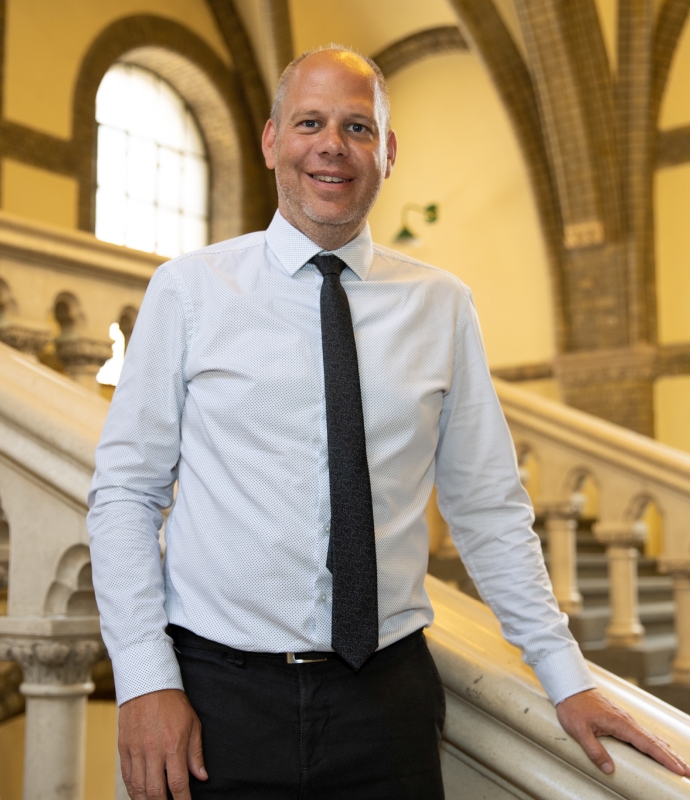
Máté Szabó is an Assistant Professor at the University of Debrecen , affiliated with the Faculty of Informatics and the Department of Information Technology . His email contact is szabo.mate@inf.unideb.hu . He works in areas such as Machine Learning , Smart Cities , and Mobile Computing . His research spans topics like microservice architecture for ensemble models, Markov modeling of traffic flows, and distributed machine learning on mobile platforms. He has explored neural models for conversational AI and gamification in programming education through Minecraft-based challenges. His work also addresses edge computing and data parallelism in mobile environments. His publications (2016–2024) reflect trends in machine learning deployment on Android platforms smart city traffic analytics gamified educational tools cognitive modeling of numerical understanding microservice-based model integration .
Budapest University of Technology and EconomicsHungary
Dr. FARKAS Dávid is an Assistant Professor in the Department of Hydraulic and Water Resources Engineering, Faculty of Civil Engineering, Budapest University of Technology and Economics (BME). His office is located in Building K, basement level, room 12/7, and he holds weekly consultation hours on Mondays from 1–3 pm. Educational contributions include teaching core courses in hydrogeology and groundwater engineering: Groundwater (BMEEOVVMV63) Hydrogeology (BMEEOGMMG62) Infrastructural Design Project (BMEEODHAI41) Research activities concentrate on quantitative hydrogeology, with a special emphasis on karstic groundwater systems, seepage hydraulics, and the safety of flood-protection levees. He couples field investigations in iconic Hungarian cave systems (Buda Castle Cave, Molnár János Cave) with laboratory sandbox experiments and numerical modelling to advance understanding of flow and transport processes in fractured carbonates. Over the past decade his work has evolved from fundamental hydrogeological mapping toward the design and deployment of automated monitoring networks that integrate classical hydrological instruments with modern sensor technologies. This progression is evident in his most recent publications (2024-2025) that document the establishment of high-resolution cave monitoring systems capable of capturing rapid responses to precipitation events. Scientific awards currently listed: none. Advising and grants: no specific student names, grant numbers, or funded project titles are provided in the supplied text. Laboratories and teams: while no dedicated laboratory name is stated, his affiliation with the Department of Hydraulic and Water Resources Engineering implies access to the faculty’s hydraulics and hydro-environmental laboratories, including sandbox and seepage modelling facilities.
Budapest University of Technology and EconomicsHungary
Mahler András , Associate Professor at the Faculty of Engineering (Budapest University of Technology and Economics), specializes in Geotechnical Engineering and Soil Mechanics within the Department of Engineering Geology and Geotechnics . His research integrates numerical modeling and empirical testing to address geotechnical challenges in infrastructure and construction materials. Department: Engineering Geology and Geotechnics Email: mahler.andras@emk.bme.hu Courses: Soil Mechanics, Geotechnical Finite Element Analysis, Numerical Methods in Geotechnics Research Focus Mahler's work emphasizes: Geotechnical Testing : CPT-Vs correlations, hypoplastic parameter calibration, and permeability studies. Material Behavior : Analysis of rolled asphalt, concrete seepage, and collapsible soils. Seismic Applications : Liquefaction hazard assessment and seismic fragility of embankments. His recent publications highlight advancements in soft clay characterization , asphalt modeling , and sustainable soil stabilization using sewage sludge ash. Awards Építő250 Scholarship
Budapest University of Technology and EconomicsHungary
Dr. BOCZ Péter is an Associate Professor at the Faculty of Civil Engineering, Budapest University of Technology and Economics. He serves as a Member of the Faculty Committee on Informatics and works within the Department of Highway and Railway Engineering. His academic role involves teaching and research in transportation infrastructure design. Department: Department of Highway and Railway Engineering Email: bocz.peter@emk.bme.hu His research interests focus on transportation engineering, particularly highway and railway design, leveraging computer-aided methodologies for modern infrastructure solutions. Scientific Awards Magyar Felvételi információ #építő250 ösztöndíj
Budapest University of Technology and EconomicsHungary
László Lengyel is a Professor at the Budapest University of Technology and Economics (BME), affiliated with the Department of Automation and Applied Informatics . His work bridges theoretical and applied computer science, focusing on industrial automation, IoT systems, and model-driven engineering. Research interests include Model transformations and domain-specific languages IoT device management and multi-domain integration Software obfuscation and cybersecurity Graph algorithms and distributed computing (MapReduce) Real-time data analysis in manufacturing Automotive sensor networks His recent publications reflect expertise in model-driven IoT architectures , granule manufacturing automation , and MapReduce-based graph analysis , with a focus on industrial and automotive applications. He contributes to open-source frameworks like SensorHUB and explores gamification in driver behavior systems.
Budapest University of Technology and EconomicsHungary
Dr. TÓTH Csaba is an Associate Professor at the Department of Highway and Railway Engineering, Budapest University of Technology and Economics (BME), Faculty of Civil Engineering. He teaches courses such as Highway and Railway Structures (BMEEOUVAI41) and Pavement Structures (BMEEOUVMU63), while previously teaching Pavement Analysis and Design (BMEEOUVDT81) and Project Management in Transportation (BMEEOUVMU-4). His research focuses on asphalt technology, pavement diagnostics, and sustainable road construction. Phone: +36 1 463 1154 Room: ÉL. ép / 206/E Research Interests: His work emphasizes non-destructive evaluation methods (e.g., Ground-Penetrating Radar), rheological modeling of asphalt binders, recycled asphalt pavement applications, and climate-adapted pavement design. Key methodologies include the Ramberg-Osgood model for dynamic modulus prediction and the virtual inertial point method for structural diagnostics. Scientific Contributions: Recent research trends highlight sustainable road rating systems, thermal stress analysis in asphalt pavements, and advanced diagnostic techniques for infrastructure monitoring. Scientific Awards: Magyar Felvételi Scholarship (#építő250)
Dr. Gergely Kocsis serves as an Associate Professor at the University of Debrecen's Faculty of Informatics, Department of Informatics Systems and Networks. His office is located in the Faculty of Informatics building at 4028 Debrecen, Kassai út 26, ground floor, IF13 (Lecturers' room), with contact email kocsis.gergely@inf.unideb.hu and central telephone +36 52 512 900 75013. Dr. Kocsis's research program focuses on: Information spreading phenomena Agent-based and individual-based simulations Cellular automata applications Network structure and dynamics His scholarly output reveals a sophisticated research trajectory evolving from foundational work on cellular automata modeling of social dynamics (2007-2014) to contemporary investigations of transportation networks, VANETs, and AI applications. The 2023-2025 publications demonstrate particular expertise in network extraction methodologies, containerized computing environments, and the application of generative AI to productivity challenges. His work consistently applies computational modeling approaches to understand complex spreading phenomena across diverse network structures. Dr. Kocsis maintains comprehensive scientific profiles across major academic platforms including Google Scholar, ResearchGate, ORCID, Scopus, and Web of Science, demonstrating active participation in the international research community. His departmental colleagues work in complementary areas such as complex networks, embedded systems, and neural networks, suggesting rich collaborative opportunities within the Faculty of Informatics.
Budapest University of Technology and EconomicsHungary
Tamás Tettamanti is a Professor at Budapest University of Technology and Economics, serving as Deputy Head of the Department of Control for Transportation and Vehicle Systems. He holds a PhD (2013), Habilitation (2023), and DSc (2023) in Transportation Engineering, with expertise in road traffic modeling and control. 2007–2010: PhD Student 2010–2013: Assistant Lecturer 2014–2018: Senior Lecturer 2019–2024: Associate Professor 2025–present: Full Professor Education: High School Graduation (2001), DEUG (2004), MSc in Transportation Engineering (2007), Jazz Trumpet Graduate (2008) PhD (2013), Habilitation (2023), DSc (2023) Research focuses on road traffic modeling, intelligent transportation systems (ITS), autonomous vehicle integration, and emission-aware traffic control. His work bridges theoretical developments with real-world applications, including wireless traffic light systems and deep learning for urban mobility peaks. Scientific Awards: BME PhD Research Prize (2012) Literary Awards from Hungarian Scientific Association for Transport (2013, 2017, 2021, 2023) Bolyai János Research Scholarship (2017–2020) Michelberger Master Prize (2022) BME Jubilee Medal (2023) He has led major projects such as Dynamic Adaptive Traffic Control Services (2020–2024) and Deep Learning Anticipated Urban Mobility Peaks (DARUMA) (2021–2024), with industry collaborations including Google-BME Traffic Lab.
Budapest University of Technology and EconomicsHungary
Dr. Balázs Varga is a Research Fellow at the Department of Control for Transportation and Vehicle Systems, Budapest University of Technology and Economics (BME). He holds a PhD in Transportation and Vehicle Sciences (2021) and an MSc in Vehicle Engineering (2015) from BME. His industry experience includes roles at AVL Hungary as a Software and Function Developer (2016–2018) and academic positions at Chalmers University of Technology (2015) and SZTAKI (2012–2014). Current Role: Research Fellow (2021–present) Teaching: Programming, Control Theory, Traffic Modeling (English language course) Research Interests: Varga specializes in road traffic modeling and control, focusing on AI-based traffic estimation and dynamic traffic management. His work integrates machine learning with mesoscopic and microscopic traffic simulation tools like SUMO to optimize urban mobility and reduce emissions. Projects: He leads the 2020–2024 national development project 'Dynamic, adaptive traffic control services and evaluation tools based on digitally connected data sources' (2019-1.1.1-PIACI KFI). This initiative leverages connected data sources for real-time traffic control and policy evaluation. Key Publications Trends: His recent articles explore topics such as graph neural networks for sensor placement, multiobjective control of emissions, and mixed-reality V2X testing. These works emphasize data-driven approaches, emission reduction, and simulation frameworks for autonomous vehicles.
Budapest University of Technology and EconomicsHungary
Dr. Varga István is a Full Professor at the Budapest University of Technology and Economics (BME) in the Faculty of Transportation Engineering and Vehicle Engineering, and a Scientific Advisor at the HUN-REN Institute for Computer Science and Control. He holds a D.Sc. from the Hungarian Academy of Sciences (2020), a Ph.D. (2007), and an M.Sc. in Transportation Engineering (1998). His primary research focuses on road traffic control and traffic automation systems , with expertise in intelligent transportation solutions and vehicle mechatronics. His research integrates control theory with practical applications in urban mobility, including dynamic traffic light systems, autonomous vehicle impacts, and emission modeling. Recent work explores V2X communication, platooning technologies, and microscopic traffic simulation for urban optimization. He has led major projects such as the national innovation project 'Dynamic, adaptive traffic control services based on digital data sources' (2020-2024) and industrial collaborations with Knorr-Bremse, Siemens, and nuclear energy sectors. Awards include the Hungarian Academy of Sciences Young Prize (2007) and multiple recognitions for technological innovation. Educational activities include courses on Road Traffic Control, Mathematical Methods, and Vehicle System Modeling. Laboratory leadership includes the Road Traffic Control Lab with industry partnerships like Bosch and SWARCO.
Budapest University of Technology and EconomicsHungary
Dr. OROSZ Csaba is an Associate Professor at the Department of Highway and Railway Engineering within the Faculty of Civil Engineering at Budapest University of Technology and Economics . He has taught courses including Economics of Civil Engineering Projects , Roads , and Urban and Regional Development , with a focus on transportation infrastructure and policy. Teaching Areas: Civil Engineering Economics, Road Systems, Urban Development Research Themes: Sustainable Mobility, Rail Systems, Public Transport Policy His research examines urban mobility challenges, including public transport integration, infrastructure modernization, and spatial planning in Eastern Europe. He has contributed to debates on through-running railway stations and soft traffic modes along the Danube quays in Budapest. Notable projects include the Metro Line 2 Reconstruction in Budapest , emphasizing local innovations. His work also addresses the impacts of tolled motorways in Hungary and lessons for transport management in Eastern Europe. Scientific Recognition Recipient of the 250th Anniversary Scholarship of the Faculty of Civil Engineering (BME)
Budapest University of Technology and EconomicsHungary
Tamás Bartha serves as Associate Professor at Budapest University of Technology and Economics' Department of Control for Transportation and Vehicle Systems since 2013, following previous appointments at the Department of Measurement and Information Systems where he progressed from PhD student (1993-1996) to Assistant Professor (2001-2009) and Associate Professor (2009-2013). He concurrently holds a Senior Research Fellow position at the Institute for Computer Science and Control, MTA SZTAKI since 1998. His educational background includes an MSc in Electrical Engineering (1993) and PhD (2001) from the same institution. MSc in Electrical Engineering (1993) PhD (2001) Bartha specializes in formal verification methodologies for safety-critical systems, with particular expertise in nuclear power plant control systems. His research focuses on model checking , formal verification and validation of complex control systems , and reliability analysis of computer systems . His work bridges theoretical computer science with practical transportation and nuclear engineering applications, emphasizing fault tolerance in critical infrastructure. He leads significant projects including MTA SZTAKI's initiatives for the Paks Nuclear Power Plant, contributing to the Reactor Protection System renovation and Universal Test System development. His professional recognition includes multiple MTA SZTAKI awards and international committee memberships. IFAC Technical Committee 1.5 on Networked Systems IAEA Technical Working Group on Nuclear Power Plant Control and Instrumentation Committee on Automation and Computer Science of the Hungarian Academy of Sciences Bartha teaches specialized courses including 'Modern Automotive Products and Development Methods' and delivers formal methods lectures in 'Traffic Automation'. His industry collaborations span major transportation and engineering firms including HungaroControl, Siemens, and Robert Bosch. Fluent in English, German, and Russian, he was born in Budapest on April 22, 1969.
Budapest University of Technology and EconomicsHungary
JÓZSA János is a Professor at the Department of Hydraulic and Water Resources Engineering, Faculty of Civil Engineering, Budapest University of Technology and Economics. He serves as Coordinator of the Specialization in Infrastructure Engineering (MSc) and is a member of both the Pál Vásárhelyi Doctoral School of Civil Engineering and Earth Sciences and the Faculty's Habilitation and Doctoral Council. His research focuses on: Hydrodynamics of surface waters and interface processes Wind-induced lake currents and sediment motion Flow, mixing, and sediment transport in compound-channel rivers Floodplain inundation modeling Effects of ship-induced waves on river banks Analysis of his 2019-2024 publications reveals consistent emphasis on Danube River hydrodynamics, sediment transport mechanisms, and environmental impacts of engineering interventions. Key methodological contributions include validation of 2D/3D numerical models against field measurements, novel sediment transport calculation methods using shear Reynolds number, and practical frameworks for assessing ship wave impacts. His work bridges computational fluid dynamics with environmental monitoring. Professor Józsa has participated in international collaborations including the ERDF-funded SEDDON project for Austrian-Hungarian sediment research. No information on specific research grants or student advising was provided in the source materials.
Budapest University of Technology and EconomicsHungary
Tamás Lovas serves as Associate Professor at the Department of Photogrammetry and Geoinformatics, Faculty of Civil Engineering, Budapest University of Technology and Economics. He teaches advanced courses in Building Information Modeling, Laser Scanning, Remote Sensing, and Intelligent Transportation Systems while supervising diploma theses in Surveying and Geoinformatics Engineering. Education: 1994: High school graduation, Városmajor High School, Budapest 1999: Certified Surveyor and Geoinformatics Engineer, Budapest University of Technology, Faculty of Civil Engineering 2005: PhD (Earth Sciences), Budapest University of Technology and Economics, Faculty of Civil Engineering Research Interests: Dr. Lovas specializes in laser scanning technologies and geospatial data processing with emphasis on airborne and terrestrial point cloud analysis. His work bridges civil engineering applications and computational methods, particularly in infrastructure monitoring and digital representation. Processing, classification, and modeling of airborne laser scanned data Accuracy testing of terrestrial laser scanning Processing and modeling of terrestrial laser scanned data Comparative study of spatial data acquisition technologies His 2022-2025 publications demonstrate accelerating integration of artificial intelligence in point cloud processing, with significant contributions to road surface extraction, urban land cover classification, and BIM automation. Current research trends show strong focus on digital twin development for autonomous vehicles and infrastructure management. Scientific Awards: Republic Scholarship (1998-1999) Karlsruhe Chancellor's Scholarship (1999) ERASMUS scholarship (2000) Korányi Fellowship (2001-2002) János Bolyai Research Scholarship (2008-2011) OHV 1st place (2008) Dean's commendation for ERASMUS committee work (2014) For Students Award - Teaching Department (2017) Advising and Grants: Dr. Lovas mentors students through diploma theses and TDK research projects on topics including object survey with amateur sensors and hull modeling. His research funding includes the prestigious János Bolyai Research Scholarship and international fellowships supporting collaborations with institutions like The Ohio State University. Labs and Teams: As founding member and supervisory board member of the Hungarian BIM Association, he drives industry-academia collaboration. His leadership roles include Deputy Dean of Education at the Faculty of Civil Engineering and responsibility for English language training programs, facilitating international academic exchange.
Budapest University of Technology and EconomicsHungary
Illés Zsombor is an Assistant Professor at the Department of Engineering Geology and Geotechnics within the Faculty of Civil Engineering at Budapest University of Technology and Economics. His research focuses on geotechnical engineering, soil mechanics, and infrastructure resilience against environmental stressors. He has contributed to studies on dike stability, hydraulic conductivity, and climate change impacts on earthworks. Research Themes: Dike monitoring systems, permeability analysis, crack development in cohesive soils, climate adaptation of infrastructure, and geotechnical investigation of granular materials Methodologies: Utilizes geophysical surveys, CPT measurements, grain size distribution modeling, and multidisciplinary approaches to soil-water interaction Key Applications: Flood protection systems, earthwork maintenance, and infrastructure longevity assessment Contact: zsombor.illes@edu.bme.hu