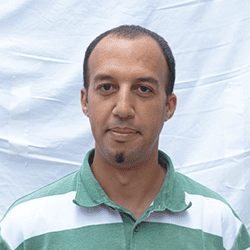
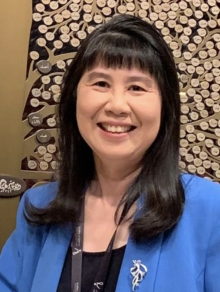
Amine MEHEL is a Research Professor at ESTACA's Mechanics and Environment Center (MSCE) since 2010, specializing in air quality and pollution control in transport systems. His work bridges experimental and numerical studies of turbulent flow interactions with pollutants and nanoparticles. Research Axes : CQA (Characterization of Air Quality) and EDP (Spatiotemporal Dynamics of Pollutants) Key Projects : CEPARER (2022-2025), AmCoAir (2020-2023), CAPNAV (2019-2022), CAPTIHV (2015-2018) His expertise includes experimental facilities like wind tunnels, PIV/LDV measurements, and CFD simulations using Eulerian-Lagrangian approaches. He supervises PhD students and coordinates teaching projects like PIRATE and PRI. Recent publications focus on ultrafine particle dispersion in vehicle wakes, brake emissions in underground stations, and cabin air quality characterization.
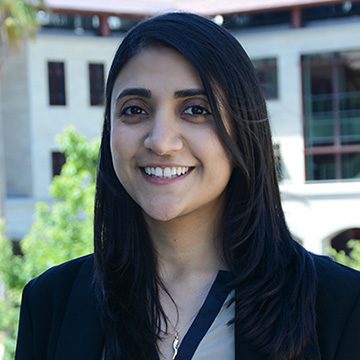
Sadaf Sobhani is an Assistant Professor in the Sibley School of Mechanical and Aerospace Engineering at Cornell University. Her research focuses on thermal management and energy conversion with applications in high-efficiency, low-emission energy systems, spacecraft thermal control, and electrochemical reactors for carbon dioxide conversion. Dr. Sobhani's educational background includes a B.S. (2014), M.S. (2015), and Ph.D. (2019) in Mechanical Engineering from Stanford University. During her doctoral studies, she worked as a research associate at the NASA Ames Research Center and later joined the Lawrence Livermore National Laboratory as a postdoctoral researcher. Her research program integrates computational modeling, experimental techniques, and advanced manufacturing to investigate flow, heat transfer, and chemical reactions in porous media. She leverages the connection between micro-scale features and macro-scale transport properties to develop innovative solutions for energy systems. Her work spans multiple disciplines including combustion engineering, electrochemical systems, and thermal management for spacecraft. Dr. Sobhani's publications demonstrate a consistent focus on porous media combustion, heat transfer optimization, and advanced diagnostic techniques. Her recent work has increasingly incorporated additive manufacturing and machine learning approaches to solve complex thermal management challenges, particularly for space applications and carbon dioxide conversion systems. Gallery of Fluid Motion Award, American Physical Society (2018) Accel Innovation Scholarship, Stanford Technology Ventures Program (2017) Graduate Public Service Fellowship, Haas Center for Public Service (2016) Schneider/MAP Sustainable Energy Fellowship, Haas Center for Public Service (2016) Graduate Research Fellowship, National Science Foundation (2015) AIAA Niagara Frontier Section 2025 Young Professional of the Year Award NASA Early Career Faculty Award (2023) NASA Early Stage Innovations Award (2023) Dr. Sobhani leads an active research group and has secured significant funding including a NASA Early Career Faculty Award and a FuzeHub grant with industry partners Lithoz America and Dimensional Energy. She has developed a new spacecraft thermal management course at Cornell and is actively mentoring students in her laboratory research. The Sobhani Lab, located at 182 Grumman Hall, spans approximately 850 sq. ft. and focuses on spacecraft thermal control, combustion research, non-intrusive diagnostic methods, and ceramic additive manufacturing. The lab utilizes advanced facilities including the Cornell NanoScale Science and Technology Facility and the Cornell High Energy Synchrotron Source.
Federico Miretti is an Assistant Professor at the Polytechnic University of Turin, affiliated with the Department of Energy and the interdepartmental center Cars@PoliTo. His research focuses on hybrid and electric vehicles, with emphasis on energy management strategies, battery state estimation, and sustainable transport solutions. PhD in Energetics from Polytechnic University of Turin Research areas include: Optimization-based Energy Management Strategies for hybrid propulsion systems Simulation and digital twinning of hybrid systems Thermal management for electrified vehicles Techno-economic assessment of mobility solutions Recent publications highlight advancements in battery temperature anomaly detection, wireless power transfer feasibility, and control algorithms for energy efficiency. His work aligns with SDGs 7 (Clean Energy) and 9 (Innovation). Teaching roles include: Fluid Machinery (2019-2025) Energy Management in Hybrid/Electric Vehicles (2021-2025) Projects: PRoSIT (2025): Predictive thermal management demonstrator Consulting contract with MIDAC SpA (2025): Battery Digital Twin development EBOAT project (2025-2026): Technical support for Vulkan
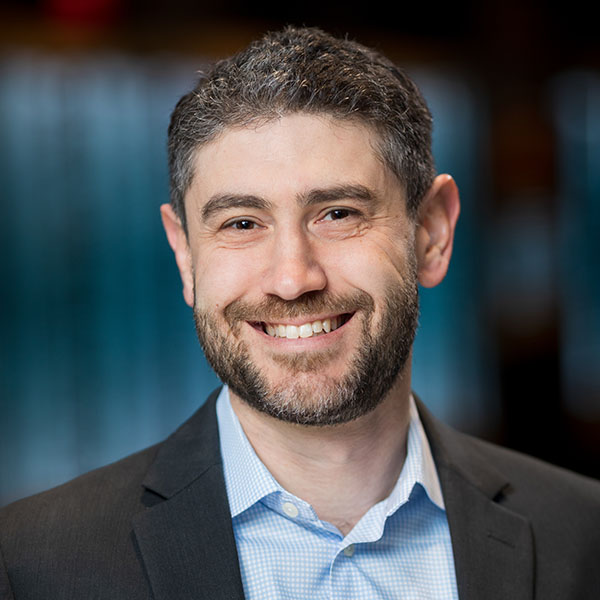
Ezra Golberstein, PhD, is a Professor in the Division of Health Policy & Management at the University of Minnesota's School of Public Health. His academic journey includes a PhD in Health Services Organization and Policy from the University of Michigan (2008) and a BA from Brandeis University (2001). His research focuses on the intersection of health services and policy research with health economics, particularly in mental health services and policy. Golberstein's research interests span health economics , health care policy , mental health , quantitative methods , health insurance , human capital , and non-medical determinants of health . His work examines how health insurance changes, provider incentives, and practice innovations affect healthcare use and outcomes for people with mental health problems. He has published extensively on mental health services utilization, insurance coverage effects, and policy interventions aimed at improving mental healthcare access and quality. His publication record shows consistent scholarly output from 2007 through 2023, with recent work focusing on healthcare delivery innovations, mental health economics, and the impact of policy changes on vulnerable populations. His research demonstrates methodological rigor using quantitative approaches to address pressing questions in health policy. Member, Delta Omega Honorary Society in Public Health Golberstein's research has significant implications for health policy development, particularly in mental healthcare financing and delivery systems. His work on geographic variations in mental health services, insurance parity effects, and innovative service delivery models provides evidence to inform policymakers and healthcare administrators. His studies on college student mental health have contributed to understanding barriers to care and developing more effective campus mental health programs.
Professor David J.A. Evans is a distinguished glacial geomorphologist at Durham University's Department of Geography. His research spans three interconnected themes at the interface of glacial geology and Quaternary science, focusing on palaeoglaciology and the reconstruction of former glaciers and ice sheets through time. With extensive field experience across the Arctic, North Atlantic, and Southern Hemisphere, he has contributed significantly to the understanding of glacial landscapes and processes globally. BA (Hons), St. David's University College, University of Wales, Lampeter, 1982 MSc, Memorial University of Newfoundland, Canada, 1984 PhD, University of Alberta, Canada, 1988 Professor Evans' research centers on glacial landsystems, glacial sedimentology, and Quaternary palaeoenvironments of glaciated basins. His work develops conceptual landsystems models for glacial process-form relationships, with field sites ranging from the Canadian High Arctic to mid-latitude mountains. He has pioneered research connecting subglacial process-form relationships to landform development models, particularly through his studies of active temperate glacier margins in Iceland. His sedimentological work has established a genetically framed classification scheme for tills and glacitectonites. Evans has contributed to major ice sheet reconstructions worldwide, including the British and Irish Ice Sheet (through the BRITICE-CHRONO project), Laurentide Ice Sheet, and Arctic Norway. His extensive publication record demonstrates consistent research activity with 15 recent articles focusing on ice sheet dynamics, glacial landform evolution, and Quaternary environmental reconstruction across multiple continents. These works reveal a strong emphasis on methodological innovation in mapping and analyzing glacial landscapes, with increasing integration of remote sensing and quantitative approaches to understand both contemporary glacier behavior and past ice sheet dynamics. Scientific Recognition: Busk Medal (Royal Geographical Society), 2017, for excellence and originality in the study of glacial landscapes and processes and empowering the next generation Professor Evans has collaborated extensively with international research teams on major projects including BRITICE-CHRONO and has contributed to engineering geology applications through technical guides for glaciated terrains. His work bridges pure academic research with practical applications in engineering geology and environmental management. He has supervised numerous field guides and edited influential publications in glacial geomorphology. His research involves extensive fieldwork in Iceland (particularly on the Vatnajökull ice cap), the British Isles, Canadian Arctic, and other glaciated regions, often using modern glacier systems as analogues for reconstructing past ice sheets. Evans has developed significant expertise in glacial landsystem mapping and interpretation, contributing to both academic understanding and practical engineering applications in glaciated terrains.
Prof. Rama Cont is a Statutory Professor of Mathematics at the University of Oxford and a Professorial Fellow at St Hugh's College . He serves as Director of the Centre for Doctoral Training in Mathematics of Random Systems , Faculty Member of the Stochastic Analysis Group , and Senior Research Fellow at the Institute for New Economic Thinking . Additional roles include Director of the Oxford Martin Programme on Systemic Resilience , Principal Investigator at the Oxford Suzhou Centre for Advanced Research , and Editor-in-Chief of Mathematical Finance . His research interests span pathwise methods in stochastic analysis, rough analysis, functional Ito calculus, mathematical modeling in finance, systemic risk, and data-driven decision systems. Recent publications focus on causal transport, rough volatility, and deep residual networks, reflecting his interdisciplinary approach to mathematics and finance. Functional Ito calculus and pathwise integration Rough volatility and financial market dynamics Systemic risk in financial networks Deep learning applications to finance and stochastic processes He has received prestigious awards including the Louis Bachelier Prize , SIAM Fellowship, Royal Society APEX Award, and IMA Fellowship. His editorial roles and seminar leadership underscore his influence in mathematical finance and stochastic analysis.
Tina Eliassi-Rad is Professor and the Inaugural Joseph E. Aoun Chair at Khoury College of Computer Sciences, Northeastern University in Boston. She serves as Core Faculty at the Network Science Institute and holds External Faculty positions at both the Santa Fe Institute and Vermont Complex Systems Institute. Additionally, she maintains Affiliated Faculty status across six Northeastern University institutes including the NULab for Digital Humanities and Computational Social Science, Global Resilience Institute, Cybersecurity and Privacy Institute, Institute for Experiential AI, and Internet Democracy Initiative. Her research spans: Data Mining & Machine Learning Network Science & Complex Systems Artificial Intelligence & Society She leads two major research initiatives: Trustworthy Network Science , which addresses explainability, transparency, stability, and robustness in network science ML algorithms; and Just Machine Learning , which examines broader complex systems where ML operates to understand and mitigate risks. Her work bridges theoretical foundations with societal applications. Dr. Eliassi-Rad's publication record demonstrates consistent focus on applying network science to critical societal challenges. Her recent research examines pandemic mobility patterns and cybersecurity threats using network-based approaches that combine epidemiological modeling with network analysis techniques. She actively mentors doctoral students through her RADLAB research group, currently advising PhD candidates Wan He (Network Science) and David Liu (Computer Science), along with PhD students Zohair Shafi and Samantha Dies (Computer Science). Her research has secured funding from prestigious organizations including the National Science Foundation, Department of Defense, Defense Advanced Research Projects Agency, Army Research Lab, and others. As leader of RADLAB, she directs research at the intersection of data science, network analysis, and societal impact, with particular emphasis on ensuring that technical advances in AI and network science serve societal needs responsibly and equitably.
Alessia Ferrari is a fixed-term researcher in the Department of Engineering and Architecture at the University of Parma, Italy. She lectures on Hydrology within the Bachelor’s degree programme in Civil and Environmental Engineering and serves as the reference teacher for the same programme across multiple academic years (2020/2021 – 2025/2026). Research Focus Ferrari’s research integrates advanced numerical modelling with real-world flood-risk management. Key themes include: High-resolution 2-D shallow-water simulations using GPU-parallel codes. Porosity-based approaches for large-scale urban flood modelling. Levee-breach hydraulics and emergency-action planning. Calibration of hydraulic models using tools such as PEST. Integration of machine-learning techniques with physics-based flood forecasting. Publication Trends Across more than 25 peer-reviewed works (2015-2025), Ferrari has concentrated on computational hydraulics applied to extreme flood events in Northern Italy (e.g., Parma 2014, Lamone 2024). Her papers consistently advance numerical schemes (ADER, HLLEM Riemann solvers) and GPU acceleration while validating models against field data, thereby bridging theoretical development and practical flood-mitigation strategies. Contact & Office E-mail: alessia.ferrari@unipr.it Office: Science and Technology Campus – Pavilion 10, Engineering Scientific Headquarters, Parco Area delle Scienze 181/A, 43124 Parma, Italy.
Prof. Dr. Wolfgang Nejdl is a Professor at the Institute for Data Science within the Faculty of Electrical Engineering and Computer Science at Leibniz University Hannover. He serves as Executive Director of the L3S Research Centre and Leibniz Forschungszentrum Inclusive Citizenship. Web Science Information Retrieval Artificial Intelligence Deep Learning His recent research focuses on AI applications in medicine , multimodal data fusion , and ethical AI systems . Projects include CAIMed (AI in Causal Medicine) and DAISEC (AI & Cybersecurity). His publications span conferences like AAMAS, WWW, and SIGIR. Notable awards include membership in the National Academy of Science and Engineering (acatech) . Former students hold positions at institutions like Stanford, TU Dresden, and ETH Zürich. Current projects involve climate resilience AI , federated learning for healthcare , and quantum-inspired data science .
Dr. Tommaso Gabrieli is an Associate Professor in Real Estate at the Bartlett School of Planning, University College London (UCL), where he has been employed since September 2015. His academic career spans multiple institutions including the University of Reading, City University London, University of Warwick, and the Catholic University of Milan. His educational background includes: PhD in Economics from the University of Warwick (2009) MSc in Economics from the London School of Economics and Political Science (2003) Fellowship of the Higher Education Academy from the University of Reading (2013) As a theoretical economist trained in the ambrosian tradition of social welfare, Gabrieli's research focuses on the economic analysis of urban policy issues. His expertise encompasses economic modeling of real estate markets, financial viability of urban projects, multi-dimensional value measurements, and value-capture mechanisms. He has developed novel interdisciplinary methods bridging urban planning and design with economics, making him one of few economists actively collaborating with urban planning scholars in the UK. His work addresses Sustainable Development Goals including No Poverty, Good Health, Decent Work, Reduced Inequalities, Sustainable Cities, and Climate Action. His recent publications demonstrate a strong focus on urban design governance, value capture mechanisms, and the interface between economic theory and urban planning practice. The research spans theoretical explorations of post-growth planning and practical applications in land value recovery, particularly examining implications for housing affordability, wealth distribution, and community wellbeing in both urban and rural contexts. His work often integrates behavioral economics with spatial planning considerations. Professional recognition includes: Fellow of the Higher Education Academy Gabrieli has extensive experience supervising PhD and MSc dissertations across multiple institutions. His teaching portfolio includes Real Estate Appraisal and Valuation at UCL, where he leads relevant modules for both undergraduate and graduate programs. He has contributed to significant research projects including 'Street Appeal' commissioned by Transport for London and the Horizon 2020-funded 'UrbanMaestro' project worth 1 million Euros. His research impact has been formally recognized by Transport for London. Currently, he leads the 'Future Urban Growth Lab' project, funded by UCL Knowledge Exchange and Innovation Funding, in partnership with the Royal Town Planning Institute and Politecnico of Turin. This project aims to operationalize an urban growth model prototype for use by local authorities in planning future city development, bridging academic research with practical planning applications.
Partha P. Mukherjee is a Professor of Mechanical Engineering and Associate Head for Research at Purdue University's School of Mechanical Engineering. His research focuses on energy storage systems (batteries, fuel cells), mesoscale physics, and materials interactions. He holds a Ph.D. from Pennsylvania State University (2007), an M.S. from IIT Kanpur (1999), and a B.S. from North Bengal University (1997). Research Interests include: Energy storage and conversion mechanisms Mesoscale physics and stochastic modeling Reactive transport in materials systems Thermodynamics and heat/mass transfer Notable Awards: Scialog Fellow (2017) Dean of Engineering Excellence Award (2017) Emerging Investigator distinction (2016) Morris E. Foster Faculty Fellowship (2016) His research group operates the Energy and Transport Sciences Laboratory (ETSL), advancing battery safety, solid-state battery architectures, and electrochemical systems. Recent work emphasizes solid-state electrolyte interfaces and fast-charging dynamics.
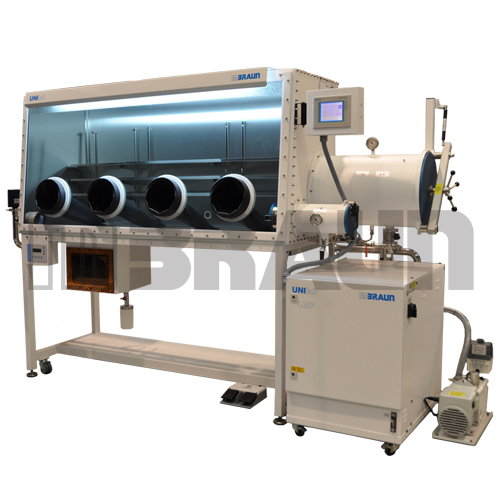
Dr. Likun Zhu is a Professor of Mechanical Engineering at Purdue University's School of Mechanical Engineering in Indianapolis. His research focuses on advanced battery technologies, including lithium-ion and solid-state batteries, with an emphasis on in situ and operando characterization, modeling, and micro/nano fabrication. Dr. Zhu's work addresses critical challenges in battery energy density, safety, and longevity through innovative materials and manufacturing processes. Education: Ph.D. Mechanical Engineering, University of Maryland (2006); M.S./B.S., Tsinghua University (2001/1998). His lab is affiliated with the Birck Nanotechnology Center and equipped with advanced facilities such as gloveboxes, electrochemical analyzers, and microscopy systems. Recent milestones include securing an NSF grant for solid-state battery research (2023) and advising over 30 graduate students. Research Interests: Solid-state batteries, micro/nano fabrication, operando characterization, and sustainable energy materials. His group develops novel electrode materials and designs for high-performance batteries, leveraging cutting-edge in situ techniques to study dynamic processes during cycling. Grants & Awards: NSF grant (2023) for solid-state battery research. Advising: Notable students include Hua Wang (Ph.D. 2024), Xintong Li, and Tianyi Li. Collaborations include work with Professors Hazim El-Mounayri and Andres Tovar on Bayesian optimization of battery materials. Labs & Facilities: The lab, located at ET 118, houses equipment like Arbin battery cyclers, FIB-SEM systems, and Comsol Multiphysics software. Dr. Zhu teaches courses including ME 330 (Dynamic Systems), ME 509 (Fluid Mechanics), and ME 597 (Renewable Energy).
Kerry Fang is an Associate Professor in the Department of Urban & Regional Planning at the University of Illinois Urbana-Champaign. Her research focuses on economic development, land use policy, and their socio-environmental consequences, with interdisciplinary methods spanning economics, statistics, geography, sociology, and computer science. She examines global contexts including the U.S., China, Australia, and Russia. Education: PhD, Urban and Regional Planning and Design, University of Maryland, College Park (2018) MA, Land Management, Zhejiang University (2013) BA, Land Management, Zhejiang University (2011) Research Interests: Corruption in economic development projects Land use programs for coastal resilience Text-mining of planning literature Her work bridges theory and practice, addressing questions like regional inequality and policy efficacy in job creation and innovation. Her recent articles explore topics such as communication networks in development projects, minority-owned business data utilization, and integrating urban data science into economic development curricula. These contributions highlight interdisciplinary approaches to urban challenges. No scientific awards were explicitly mentioned in the provided text. Teaching and Advising: Teaches courses like UP 545: Economic Development Policy and Land Use and Environmental Planning. She advises students on topics intersecting economic development and spatial policy, though specific advisee names are not listed. Labs/Teams: No specific lab or team affiliations were detailed, though her work likely involves collaborations with interdisciplinary research groups.
Ming Lin is a Distinguished University Professor at the University of Maryland, College Park, holding joint appointments in Computer Science (Department of Computer Science), the Institute for Advanced Computer Studies (UMIACS), Electrical and Computer Engineering (ECE), and the Maryland Robotics Center. She holds the Dr. Barry Mersky and Capital One E-Nnovate Endowed Professorships. Her research focuses on physically-based modeling, virtual environments, haptics, robotics, and AI applications in healthcare and urban computing. Education: Ph.D., M.S., and B.S. in Electrical Engineering & Computer Sciences from UC Berkeley. She previously spent 20 years at UNC Chapel Hill before joining UMD in 2018. Research interests include collision detection algorithms (e.g., Lin-Canny algorithm), real-time physics simulation, virtual/augmented reality systems, and medical imaging applications. Her work has led to over 2 million downloads of her group's software tools and licenses with 60+ companies. Notable contributions include the Oculus Rift-related VR technologies and Amazon's virtual try-on system. Awards: IEEE Fellow (2012), ACM Fellow (2011), NAI Fellow (2022), and Washington Academy of Sciences Distinguished Career Award (2020). Active in professional service, she serves on the CRA Board and chairs the Committee on Widening Participation in Computing Research. Advising: Supervises 12+ PhD/Master's students. Her lab (GAMMA Group) focuses on AI-driven robotics, autonomous systems, and physically-based simulations. Key projects include traffic simulation frameworks, medical VR applications, and 3D garment modeling.
Bjorn Sandstede is the Alumni-Alumnae University Professor of Applied Mathematics at Brown University. His research focuses on applied dynamical systems, nonlinear waves, pattern formation, and computational biology. He holds a PhD from the University of Stuttgart and has held faculty positions at The Ohio State University and the University of Surrey before joining Brown in 2008. Sandstede has received numerous awards, including the SIAM J.D. Crawford Prize and the Royal Society Wolfson Research Merit Award. He served as Department Chair at Brown and directed the Data Science Initiative. His work involves interdisciplinary collaborations, such as modeling zebrafish stripe formation and developing computational tools like SCOT for single-cell data integration. Sandstede also mentors extensively, advising over 30 PhD students and postdoctoral researchers. He leads the NSF-funded Institute for Computational and Experimental Research in Mathematics (ICERM) and contributes to initiatives promoting diversity and inclusion in STEM. Education: PhD in Mathematics, University of Stuttgart Undergraduate Degree, University of Heidelberg Research Interests: Applied Dynamical Systems Nonlinear Waves and Pattern Formation Computational Biology Data Science PDE Analysis Awards and Recognition: Alfred P. Sloan Research Fellowship SIAM J.D. Crawford Prize Royal Society Wolfson Research Merit Award Elsevier Jack Hale Award Teaching Excellence Awards from Brown University Fellow of the AMS and SIAM Grants and Leadership: Principal Investigator of NSF grant establishing ICERM Director of Brown's Data Science Initiative Member of Research Advisory Board and Tenure Committees Labs and Teams: Leads the Sandstede Lab at Brown, focusing on computational biology and dynamical systems. Collaborates with the Volkening Lab on zebrafish pattern modeling and the Singh Lab on optimal transport methods.