University of California, Los AngelesUnited States
H. Samy Alim is a Professor and David O. Sears Presidential Endowed Chair in the Division of Social Sciences at UCLA, holding a joint appointment in the Department of Anthropology. He serves as Associate Director of the Ralph J. Bunche Center for African American Studies and leads the UCLA Hip Hop Initiative. Alim’s research focuses on Hip Hop Culture, Black Language, and Culturally Sustaining Pedagogies, with over 25 years of scholarship in these areas. His work bridges academia and activism, emphasizing Hip Hop’s transformative role in global social justice movements. Alim earned his PhD in Anthropology from Stanford University (2003), following MA (2002) and BA (1999) degrees. His academic contributions include twelve authored/edited books, such as Freedom Moves (2023) and Articulate While Black (2012). His research spans Hip Hop’s linguistic innovations, racialized language politics, and its pedagogical potential in education. Key projects include ethnographic studies in Cape Town, South Africa, and collaborative initiatives like the UC Press Hip Hop Studies Book Series. He co-edits the Oxford Handbook of Language and Race and directs the Center for Race, Ethnicity, and Language. Alim has engaged with global Hip Hop artists (e.g., Chuck D of Public Enemy) to co-produce knowledge, emphasizing Hip Hop as a site of theorizing and activism. His teaching and research highlight intersections of language, race, and power, advocating for pedagogies that sustain cultural identities while fostering equity. Collaborations with organizations like Heal the Hood in South Africa reflect his commitment to community-driven scholarship.
Charles Athanasopoulos is an Assistant Professor of African American and African Studies & English at The Ohio State University. His research focuses on intersections of Black rhetorics, media, and culture, with expertise in The Black Radical Tradition, Rhetorical Theory, and Cultural Critique. He earned his Ph.D. in Rhetoric & Communication from the University of Pittsburgh. His work analyzes racial progress, public symbols, and post/Ferguson America through lenses of iconoclasm and critical race theory. Education: Ph.D., Rhetoric & Communication, University of Pittsburgh. Research interests span Black American and Diasporic Cinema, Afro-Caribbean and Greek-Roma identity critiques. He has published in venues like Lateral: The Journal of the Cultural Studies Association and Western Journal of Communication. His 2024 book Black Iconoclasm explores dismantling racial symbols in public discourse. Recent articles address Fanonian thought, anti-racist campus rhetoric, and transnational Blackness studies. His publications critically engage with visual activism, film analysis, and decolonial theories. Current projects include studies on sonic rhetorics in Black women’s music and global race discourses in Mediterranean contexts.
Heidi R. Lewis is the David and Lucile Packard Professor of Feminist & Gender Studies at Colorado College. She serves as President of the National Women's Studies Association (2023-25) and Editor-in-Chief of the Oxford Bibliography in Women's & Gender Studies. Her research focuses on Black Feminisms, Hip Hop discourse, and Critical Media Studies, with a current project challenging narratives around Mumble Rap's authenticity. Lewis holds a Ph.D. in American Studies from Purdue University and has taught interdisciplinary courses including Hip Hop & Feminism and Critical Media Studies. Education: Ph.D., American Studies, Purdue University (2011) M.A., English Literature, Ohio University (2005) B.A., English Studies, Robert Morris University (2003) Research Interests: Lewis interrogates intersections of race, gender, and media through projects like her forthcoming book on Mumble Rap and a documentary on her experiences during the crack cocaine epidemic. She employs discourse analysis to challenge dominant narratives in Hip Hop and feminist theory, emphasizing marginalized voices and transnational collaborations. Service & Leadership: As Director of Feminist & Gender Studies, Lewis secured funding for new faculty lines, student programs, and community partnerships. Nationally, she co-created the #FemSTEMSymposium to bridge feminist inquiry and STEM fields. Her service prioritizes equity, including roles on promotion committees and external reviews for academic centers. Community Engagement: Lewis collaborates with organizations like the Kampagne für Opfer Rassistischer Polizeigewalt and the U.S. Olympic Committee. Her work extends beyond academia through public talks, media contributions, and initiatives like the Marsha P. Johnson Professorship.
Gyu Tag Lee is a Professor in the International Studies Department at George Mason University Korea, specializing in Cultural Studies with a focus on K-Pop, media criticism, and the globalization of culture. He holds a PhD in Cultural Studies from George Mason University (2013), an MA in Communication from Seoul National University, and a BA in English Language and Literature from the same institution. Having completed three years of military service in the Republic of Korea Air Force, he has been teaching at George Mason University Korea since 2014. His research interests span Cultural Studies, Media Criticism, Popular Music, K-Pop and Hallyu, Globalization of Culture, and Music Industry studies. Professor Lee is particularly recognized for his expertise on K-Pop's global expansion, cultural appropriation issues within the industry, and the relationship between Korean cultural identity and global pop music markets. His extensive publications reflect a consistent focus on K-Pop's evolution, from its historical roots to contemporary challenges and future directions. His work examines the tension between local Korean identity and global appeal, the role of digital platforms in fan engagement, and the cultural politics surrounding K-Pop's international success. Professor Lee's research demonstrates how K-Pop functions as both a cultural product and economic phenomenon with significant implications for understanding transnational cultural flows. As a respected commentator in the field, he serves on the selection committee for the Korean Music Awards and has been featured in numerous international media outlets including Wall Street Journal, South China Morning Post, Netflix's documentary Explained, and major Korean broadcasters such as KBS, MBC, and SBS. His insights on cultural appropriation in K-Pop have been particularly influential in shaping discussions about cultural sensitivity and global cultural exchange. Professor Lee teaches courses including Media Criticism, Globalization and Culture, K-Pop, Hallyu, and Korean Society, and Korean Popular Culture in a Global World, bringing his scholarly expertise directly into the classroom to educate the next generation of cultural critics and analysts.
Sergio Rigoletto is an Assistant Professor of Film Studies at the University of Groningen, Faculty of Arts. Previously, he held an Associate Professor position in Cinema Studies and Italian at the University of Oregon, USA. His research focuses on the intersection of film aesthetics with social change, queer media cultures, and Italian cinema. Key areas include transnational queer imaginaries in Mediterranean media, stardom in Neorealist cinema, and gendered labor in film industries. Education: PhD from the University of Reading, MA from Birkbeck College, London, and BA/MA from the University of Catania, Italy. His publications include Masculinity and Italian Cinema: Sexual Politics, Social Conflict and Male Crisis in the 1970s (2014) and Le norme traviate (2020). Current projects involve a monograph on Anna Magnani and Queer from the South: Film, Video Art and Media Activism in the Mediterranean . Research interests span queer media activism, Italian film history, and international television. He has contributed to journals like Journal of Cinema and Media Studies and New Review of Film and Television Studies , analyzing topics such as Xavier Dolan’s cinematic techniques and spectrality in Call Me by Your Name . Rigoletto’s work emphasizes interdisciplinary approaches to film, blending cultural theory with close textual analysis. His recent focus on Mediterranean queer media highlights transnational collaborations and challenges traditional national narratives in cinema.
Robert Wellington serves as Associate Professor and Director of the Centre for Art History & Art Theory at the School of Art & Design, Australian National University (ANU), within the College of Arts & Social Sciences. His academic leadership focuses on advancing art historical research and public engagement through institutional initiatives. His research spans Art History, Early Modern European Art (particularly Louis XIV's France), Museum Studies, Public Humanities, and Cultural Heritage. Wellington investigates transcultural object exchange, royal iconography, and identity construction through material culture, with emphasis on Versailles, medals, and marginalia. His work bridges historical scholarship with contemporary public humanities applications in museums and digital archives. Analysis of his 2020-2024 publications reveals concentrated exploration of Louis XIV's cultural legacy, Versailles' global impact, and the evolving role of humanities institutions. He pioneers digital critical editions while examining how objects shape identity across cultural boundaries, consistently connecting historical practices to modern museum and archival challenges. No scientific awards were documented in the provided materials. As Centre Director, Wellington oversees research programs and institutional partnerships, though specific student advisees and grant details remain unlisted in available sources. His leadership facilitates interdisciplinary projects including the Jean-Benjamin de Laborde digital edition initiative. The Centre for Art History & Art Theory functions as a research hub under Wellington's direction, driving public humanities innovation through the ANU's Art & Design Seminar Series, Visiting Artist Program, and collaborative projects with national collections. Current initiatives focus on digital heritage and community-engaged scholarship within the School of Art & Design framework.
Joshua B. Guild is an Associate Professor in the Department of African American Studies at Princeton University. He is also an Associated Faculty member in the Program in Urban Studies and has been involved with the Center for Digital Humanities. His scholarly work bridges historical research with public engagement and digital innovation. His education includes a PhD in History and African American Studies from Yale University and an undergraduate degree from Wesleyan University, where he was a Mellon Mays Undergraduate Fellow. Professor Guild's research centers on 20th- and 21st-century African American social and cultural history, urban history, and the modern African diaspora. His interests include migration, black internationalism, black popular music, and the black radical tradition. He is deeply engaged in the digital humanities and public scholarship, organizing seminars and contributing to podcasts and public exhibitions. The recent publications and projects reflect a strong focus on urban Black communities, transnational migration, and cultural politics. Themes include the Great Migration, postwar New York and London, New Orleans after Katrina, and the Black 1980s. His work combines historical analysis with cultural critique and social justice advocacy. Scientific Awards and Fellowships: Mellon Mays Undergraduate Fellowship Andrew W. Mellon Foundation Fellowship Ford Foundation Fellowship Woodrow Wilson National Fellowship Foundation Award Charles Warren Center Fellowship (Harvard University) W.E.B. Du Bois Institute Fellow (Harvard University) Professor Guild has advised graduate students through seminars and collaborative projects, though no individual students are named. He has led initiatives supported by institutional grants, particularly in digital humanities and public engagement. His leadership in the 'Black Studies in the Digital Age' seminar and editorial work on the 'Black 1980s' special issue demonstrates his commitment to advancing the field through interdisciplinary collaboration. He is affiliated with the Program in Urban Studies and the Center for Digital Humanities at Princeton, where he contributes to shaping curricula and research directions in African American Studies and digital scholarship.
Dr. Galina Miazhevich is a Senior Lecturer at the School of Journalism, Media and Culture (JOMEC) at Cardiff University, UK. Previously, she served as a lecturer at the University of Leicester's School of Media, Communication and Sociology (2013-2017) and as the Gorbachev Media Research Fellow at the University of Oxford (2008-2012). Her academic career focuses on media representations in post-communist contexts, with particular expertise in Russian and Eastern European media landscapes. Dr. Miazhevich earned her PhD from the University of Manchester, where she subsequently worked for two years as a Research Associate on an AHRC-funded project examining representations of Islam as a security threat. Her educational background has informed her research trajectory, which bridges media studies, political communication, and cultural analysis of post-Soviet societies. Dr. Miazhevich's research spans several interconnected domains: media representations of Islam and multiculturalism in Europe; media and democracy in post-communist Europe; gender, media, and emergent forms of post-Soviet identity; feminism; Eurovision and popular culture; and diaspora, transnationalism, and media. Her work consistently examines how media shapes and is shaped by political transitions, identity formation, and social movements in post-Soviet contexts, with particular attention to marginalized voices and resistance practices. Analysis of Dr. Miazhevich's recent publications reveals a consistent focus on resistance, identity, and power dynamics in post-Soviet media environments. Her work increasingly examines gender and sexuality as political categories, particularly through the lens of feminist and LGBTQ+ resistance to authoritarian regimes. The Eurovision Song Contest serves as a recurring analytical framework for understanding cultural diplomacy and nation-branding strategies. More recently, her research has pivoted toward documenting anti-war resistance following Russia's invasion of Ukraine, examining how celebrities and media figures navigate political dissent under authoritarian conditions. Dr. Miazhevich has received several notable recognitions for her scholarly contributions: AHRC Leadership grant 'A Quiet Revolution: Discursive Representations of Non-heteronormative Sexuality in Russia' (2018-2020, £250,960) Visiting Fellowship at the Davis Centre for Russian and Eurasian Studies, Harvard University (Fall 2023) Fellow of the Higher Education Academy (FHEA) Associate Editor for the Oxford Encyclopedia of Race, Ethnicity, and Communication (2024) Dr. Miazhevich actively mentors the next generation of scholars, currently co-supervising PhD students Diyana Dobreva (with Professor Martin Innes) and John Tasker (with Professor Paul Bowman). She welcomes PhD proposals in areas including digital culture and resistance, media management and misinformation, media and democracy, representation of minority groups, post-communist identity politics, gender and feminism, Eurovision and popular culture, and geopolitics and nation-branding. Her grant portfolio demonstrates sustained success in securing competitive research funding, including leadership of an AHRC grant and participation in the Academy of Finland project FEMCORUS (2021-2025). Dr. Miazhevich is deeply engaged with academic communities, serving as co-convenor of the (Digital) Media and Culture group at the British Association for Slavic and East European Studies (BASEES) since 2016 and as a member of the Advisory Board of the European Communication Research and Education Association (ECREA) since 2021. Her work extends beyond academia through public engagement, including invited talks at prestigious institutions like Harvard University and participation in policy-relevant events at Chatham House addressing LGBTQ+ politics in Russia.
Younghoon Kim serves as a Visiting Professor in the Department of Asian Studies within the Faculty of Arts at the University of British Columbia (UBC), where he contributes to research and teaching in Korean studies, translation, and contemporary media. His work bridges cultural analysis with critical examinations of television and film across Korean and American contexts. Educational Background: Ph.D. from University of Alberta (2011) M.A. from University of Alberta (2006) M.A. from Sogang University (2004) B.A. from Myong Ji University (2002) Dr. Kim's research centers on Korean popular culture and national identity formation, with particular focus on entrepreneurship narratives and self-help culture in contemporary Korea. He investigates contemporary American television dramas as cultural artifacts reflecting societal shifts, while also exploring translation practices and fashion as expressions of cultural identity. His interdisciplinary approach connects media studies with sociological and philosophical frameworks. His recent publications reveal consistent thematic threads examining neoliberal subjectivity through television analysis (including Breaking Bad and Mad Men), Korean youth cultural expressions, and cross-cultural literary adaptations. The scholarly output spans musicology, television studies, and translation theory, with significant contributions to understanding how media shapes identity in both Korean and global contexts. Journal publications demonstrate strong engagement with A&HCI-indexed and Korean Citation Index venues.
Seagh Kehoe is a Senior Lecturer in Chinese Studies at the University of Westminster's School of Humanities, joining in 2019. Previously, he taught at the University of Leicester, University of Nottingham, and University College Dublin. His research focuses on cultural dimensions of social and political transformation in modern China, particularly Chinese media representations of ethnicity, race, gender, sexuality, nationalism, and military. He holds a BA from University College Cork, an MA from Leiden University, and a PhD from the University of Nottingham, with additional studies in Mandarin and Tibetan. His academic work spans journal articles in China Quarterly , positions , and Media, Culture & Society , as well as edited volumes like Cultural China . His research interests include Tibet-China relations, critical university studies, and abolition theory. He supervises undergraduate and postgraduate dissertations on diverse socio-political topics. Kehoe has presented at conferences such as the British Association of China Studies and contributed to workshops on decolonizing Chinese studies. His recent work examines temporal politics in post-2008 Tibet and queer cinema in China. Education: BA Chinese Studies & Sociology (University College Cork) MA East Asian Politics (Leiden University) PhD (University of Nottingham) Mandarin Studies (Sichuan University) Tibetan Studies (Rangjung Yeshe Institute) Grants & Labs: Active in the Contemporary China Centre, contributing to interdisciplinary research on modern China.
Abel Djassi Amado is an Associate Professor in the Department of Politics and Policy at Simmons University, where he has taught since 2016. He holds a PhD in political science/African studies from Boston University, following undergraduate studies in international relations (Technical University of Lisbon) and political science (University of Massachusetts, Boston). Prior to Simmons, he taught at multiple institutions in Massachusetts and Rhode Island and co-directed the University of Rhode Island Summer Abroad in Cabo Verde. He serves on the board of the West African Research Association (WARA). His academic credentials include: BA in International Relations, Technical University of Lisbon, Portugal BA in Political Science, University of Massachusetts, Boston PhD in Political Science/African Studies, Boston University Amado's research centers on Portuguese-speaking African countries (PALOP), with three interconnected pillars: (1) language policy-democracy dynamics in post-colonial states, examining how linguistic distance undermines governance; (2) historical institutionalism of anti-colonial nationalism, particularly the PAIGC movement in Guinea-Bissau and Cabo Verde; and (3) foreign policy analysis, focusing on the militarization of U.S.-Cabo Verde relations. His work bridges political science, linguistics, and African studies to address enduring colonial legacies. His 15 most recent publications (2020-2024) demonstrate consistent focus on Cabo Verde, with recurring themes including Creole language's role in state legitimacy, diplomatic history, and anti-colonial movement impacts. A clear interdisciplinary trend connects language policy, democratic quality, and historical junctures across his scholarship, emphasizing how post-colonial linguistic choices shape contemporary governance. Professionally, Amado co-directs international education programs and actively contributes to WARA's mission of fostering transatlantic academic collaboration on West Africa. He also engages with the Cabo Verdean diaspora through community organizations and the 'Political Matter' blog, where he analyzes Cabo Verdean political affairs.
Ruxandra Paul is a faculty member in the Department of Political Science at Amherst College, where they teach courses ranging from introductory to advanced levels including POSC 470: International Migrations and Politics and POSC 436: European Democracy. Their academic work bridges political science, migration studies, and European Union politics, with a particular focus on how mobility transforms national politics and international relations. Education: PhD (Government), Harvard University A.M. (Government), Harvard University B.A., summa cum laude, PBK (Political Science - International Relations; French), Williams College Paul's research examines how migrations transform national politics and international relations, with particular attention to European citizenship enabling free movement across borders. Their work explores political developments in a world where people's experiential space transcends national territories, especially focusing on Central and Eastern Europe. Current research projects include "Citizens of the Market: Free Movement and Political Change in Central and Eastern Europe" (under contract at Oxford University Press) and studies on pandemic politics, cyberpolitics, and aging/ageism. Paul's publications demonstrate consistent scholarly output in migration politics, with a concentration on European contexts. Their work spans theoretical contributions on transnational citizenship and practical analyses of migration crises, showing an evolving focus from foundational migration studies toward contemporary challenges including pandemic politics and digital governance. Scientific Awards and Affiliations: Minda de Gunzburg Center for European Studies, Harvard University - Visiting Scholar and Local Affiliate Harvard Academy for International and Area Studies Chateaubriand Fellowship of the French Government Weatherhead Center for International Affairs research grant Krupp Foundation research grant Certificate of Excellence in Teaching, Derek Bok Center for Teaching and Learning Paul has received multiple competitive research grants and teaching awards, demonstrating excellence in both research and pedagogy. Their teaching portfolio includes innovative courses like POSC 109: Pandemic Politics: Democracy versus Disease and POSC 239: Acceptable Prejudice: Age, Aging, Ageism, reflecting their commitment to connecting academic research with contemporary issues. Outside of formal academic work, Paul teaches fitness classes (Barre and Barre Cardio) at the Amherst Gym and maintains diverse interests including music, dance, art, and long-distance running.
University of California, Los AngelesUnited States
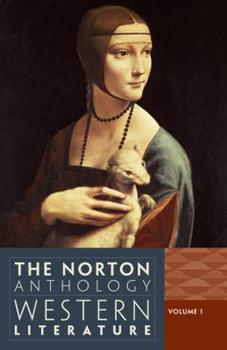
Barbara Fuchs is a Professor in the Department of English at the University of California, Los Angeles, specializing in early modern European literature across Spanish, English, French, and Italian traditions from the 15th to 17th centuries. Her work emphasizes transnational contexts, theater and performance studies, and cultural production within imperial frameworks, with significant contributions to Mediterranean and transatlantic studies. Education Ph.D. in Comparative Literature, Stanford University (1997) B.A./M.A. in Comparative Literature (English, French, Spanish), summa cum laude, Yale University (1992) Research Interests Professor Fuchs' scholarship centers on transnationalism in early modern literature, examining how theater and performance negotiated imperial identities across Mediterranean and transatlantic contexts. Her work critically engages with race and religion in the early modern world, picaresque traditions, and Cervantes studies, revealing how cultural encounters shaped literary production. She bridges historical analysis with contemporary relevance through public humanities initiatives focused on classical Hispanic theater. Publication Trends Her recent publications demonstrate interdisciplinary innovation, merging literary analysis with performance studies and material culture. Recurring themes include transnational exchange mechanisms, racial formation processes, and textual materiality, while recent work addresses pandemic-era digital performance and modern adaptations of classical works. This trajectory highlights her commitment to connecting historical scholarship with current social and artistic practices. Scientific Awards Premio Ñ from the Instituto Cervantes (inaugural award) for promotion of Spanish language and culture Advising and Leadership Professor Fuchs mentors undergraduate and graduate students in early modern studies, translation, and performance. She leads the UCLA "Diversifying the Classics" initiative and LA Escena festival, securing institutional support for these collaborative projects. Her editorial leadership includes serving as articles editor for Renaissance Quarterly and co-editing the Norton Anthology of World Literature , demonstrating field-wide influence. Projects and Teams She directs the "Diversifying the Classics" initiative, which collaborates with theater professionals to adapt Hispanic classical works for contemporary Los Angeles audiences, and founded LA Escena—the biennial festival of Hispanic classical theater. These projects unite scholars, artists, and communities to explore historical texts through modern performance lenses, emphasizing accessibility and cultural relevance.
Jens Rydgren is Professor of Sociology at Stockholm University, where he holds the Chair in Sociology since 2009. He is affiliated with the Department of Sociology within the Faculty of Social Sciences. Rydgren graduated from Stockholm University in 2002 and has been a visiting scholar at Columbia University, Cornell University, Harvard University, École des Hautes Études en Sciences Sociales in Paris, Copenhagen University, and Utrecht University. He is a fellow of the Royal Swedish Academy of Letters. Professor Rydgren's primary research interests lie in political sociology, particularly the study of radical right-wing parties and their voters, with a focus on explaining variation over time and across countries. He also has a longstanding interest in social networks and how relational and contextual factors influence individuals' beliefs, opportunities, and actions. His additional research interests include ethnic conflict, belief formation processes, collective memory, fanaticism, and sociology through literature. Much of his work combines theoretical insights with empirical analysis to understand complex social phenomena. His recent publications demonstrate a consistent focus on radical right-wing politics, xenophobia, nationalism, and social network analysis. Rydgren frequently employs comparative and multi-method approaches to examine political behavior and social phenomena. His work often intersects political sociology with social network theory to understand how contextual factors shape political attitudes and behaviors. He has made significant contributions to understanding how social networks influence various outcomes, from political attitudes to health behaviors. Fellow of the Royal Swedish Academy of Letters Rydgren is currently the Principal Investigator (PI) of the research project "Why do working class voters support the populist radical right?" funded by the Swedish Research Council. Previously, he was PI for the ERC Starting Grant project "Individual Life Chances in Social Context: A Longitudinal Multi-Methods Perspective on Social Constraints and Opportunities" (2011-2018), which combined survey data and register data to study the importance of egocentric networks for young adults' life chances. His research has important implications for understanding contemporary political challenges and developing evidence-based policy responses.
Sujatha Fernandes is a Professor of Sociology at the University of Sydney, joining in 2016. Previously, she held positions at Queens College and the City University of New York’s Graduate Center, and was a Wilson-Cotsen Fellow at Princeton University. She earned a PhD in Political Science from the University of Chicago. Her research focuses on social and labor movements, global Black cultures, migrant workers, and anti-Blackness in the Americas. She has authored six books, including The Cuban Hustle (2020) and Curated Stories (2017), and her work explores storytelling, climate justice, and marginalized communities. Dr. Fernandes has received grants such as the Australian Research Council’s Discovery Project (2021) and contributed to initiatives like the Racial Justice and the Curriculum Project at the University of Sydney. She has been featured in global media, including The New York Times , NPR , and Orion Magazine . Her writing spans academic articles, creative nonfiction, and op-eds addressing climate displacement, migrant rights, and cultural policy. Notable works include analyses of Venezuela’s urban movements, Cuba’s cultural politics, and domestic worker advocacy. She sits on the editorial board of Transition: The Magazine of Africa and the Diaspora . Her interdisciplinary approach bridges sociology, anthropology, and literature, with ongoing projects in climate fiction and interlinked short stories.