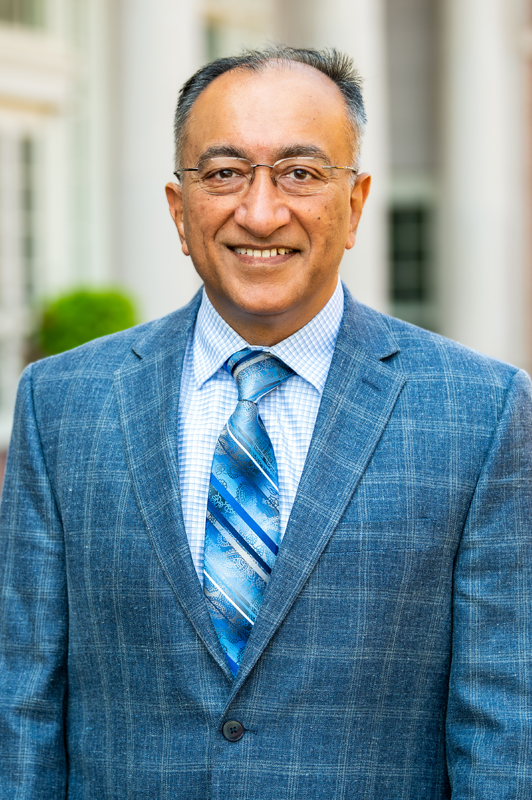
Farhad Rachidi-Haeri is a Titular Professor and Head of the Electromagnetic Compatibility (EMC) Group at EPFL. His expertise spans EMC research, lightning electromagnetics, time reversal techniques, and fault location in power systems. He has led the EMC Group since the 1980s, with funding from the Swiss National Science Foundation, European Union, and private sector collaborations. His work involves international partnerships with institutions like the University of Toronto and KTH. Education: PhD in Electrical Engineering from EPFL (1991), M.S. from EPFL (1986). Roles: President of Swiss National Committee of URSI (2012–2020), Editor-in-Chief of IEEE Transactions on EMC (2013–2015), and member of the Academy of Sciences of Bologna Institute (2019). Research Focus: Lightning interaction with infrastructure, electromagnetic field modeling, time reversal applications for fault detection, and high-frequency transient analysis. His work bridges theoretical physics and engineering, addressing challenges in power systems, lightning protection, and aerospace. Awards: IEEE EMC Technical Achievement Award (2005), Berger Award (2016), and Distinguished Honorary Professor at Tsinghua University (2024). Over 400 peer-reviewed papers and 500 conference contributions reflect his prolific research output. Labs/Teams: Leads the EMC Laboratory at EPFL, focusing on experimental and numerical studies of electromagnetic phenomena. Collaborates with global networks on projects like Laser Lightning Control and structural lightning protection for wind turbines.
Mikko Valkama is a Professor at the Department of Communications Engineering , part of the Faculty of Information Technology and Communication Sciences at Tampere University . His research focuses on advanced wireless communication systems, positioning technologies, and integrated sensing and communication (ISAC). He holds an Orcid ID ( 0000-0003-0361-0800 ) and can be reached at mikko.valkama@tuni.fi . Research interests span 5G/6G networks , RF antenna design , deep learning for signal processing , and millimeter-wave systems . He leads projects on positioning algorithms (e.g., mmWave SLAM, NLOS mitigation), ISAC architectures, and hardware-efficient transmitter linearization. Notable contributions include works on DECT-2020 NR standards, phase-based localization, and RIS-assisted systems. In 2025 alone, his group published over 30 articles on topics such as: Antenna array design for Ka-band and wideband applications Machine learning for power amplifier predistortion Bistatic radio SLAM and mmWave mapping Covert transmission and physical-layer security His work bridges theoretical advancements with practical implementations, often validated through experimental setups (e.g., TUJI1 dataset for indoor localization). No scientific awards were explicitly listed in the provided texts.
Anamitra Pal is an Associate Professor at Arizona State University's School of Electrical, Computer and Energy Engineering. His work focuses on power system resilience, renewable energy integration, and time-synchronized measurement analytics. He leads research initiatives combining artificial intelligence with grid modernization challenges. Ph.D. Electrical Engineering, Virginia Tech (2014) M.S. Electrical Engineering, Virginia Tech (2012) B.E. Electrical and Electronics Engineering, Birla Institute of Technology (2008) Prior to ASU, Pal conducted postdoctoral research at Virginia Tech's Network Dynamics and Simulation Science Laboratory (2014-2016). His research interests center on enhancing grid stability through: Advanced synchrophasor data analytics AI-driven power system security frameworks Renewable generation integration strategies Critical infrastructure protection during extreme events Recent publications demonstrate his focus on grid resilience during wildfires, deep learning-based state estimation, and innovative PMU applications. Pal has received multiple accolades including the NSF CAREER Award (2022) and IEEE Phoenix Section's Outstanding Young Professional Award (2019).
Lars Nordström is a Professor at the Division of Electric Power and Energy Systems within KTH Royal Institute of Technology, Stockholm, Sweden. His work bridges control systems , communication networks , and power systems , with a focus on future architectures, functionality, and quality aspects of ICT for power grid operations. He has led initiatives such as the Swedish Centre of Electric Power Engineering and served as Thematic Leader for Smartgrids in KIC InnoEnergy. In 2014, he was a Visiting Professor at Washington State University. Education : Ph.D., MSc.EE Nordström's research explores the intersection of smart grids , machine learning , and cybersecurity for power systems. Key areas include: Wide-Area Monitoring and Control (WAMC) systems Decentralized control strategies for DC microgrids Impedance modeling using neural networks Data-driven methods for islanding detection ICT reliability and protocol design for grid operations His recent publications emphasize machine learning applications in power systems, including LSTM networks for EV charging management, graph attention networks for stability monitoring, and digital twin approaches for cyber-attack mitigation. These works span disciplines such as Smart Grids, Power Electronics, and Data Science. Scientific Recognitions : Senior Member, IEEE Senior Member, CIRED Senior Member, Cigre Past Chairman, Swedish IEC TC57 Mirror Committee Nordström actively teaches and examines graduate courses like Communication and Control in Electric Power Systems and Computer Applications and Machine Learning in Electric Power Systems . His work influences industry practices through collaborations on digital substations, energy market analysis, and resilience strategies.
Prof. Xiaojing Huang is a Professor of Information and Communications Technology at the University of Technology Sydney (UTS), serving as Head of Discipline for SEDE Communications and Electronics within the School of Electrical and Data Engineering. He leads the Mobile Sensing and Communications program at the Global Big Data Technologies Centre. With over 30 years of experience, he has authored over 300 publications and 31 patents, focusing on wireless communications, signal processing, and antenna technologies. Education: PhD (Electrical Engineering, Shanghai Jiao Tong University, 1989). Previous roles include Principal Research Scientist at CSIRO (2009-2014), Associate Professor at University of Wollongong (2004-2009), and key industry roles at Motorola and Shanghai Yang Tian Science and Technology Corporation. Research interests include full-duplex wireless systems, millimeter-wave and terahertz communications, massive antenna arrays, and mixed-signal processing platforms. His work on the CSIRO Ngara backhaul system earned multiple awards, including the 2012 CSIRO Chairman's Medal and Australian Engineering Innovation Award. Recent grants include $4.2M (AUD) for projects like 'Radio Frequency Camera for Radar Imaging' (ARC DP220101158) and 'Terabit mm-Wave Backbones for Integrated Space Networks' (ARC DP200101532). He has supervised numerous students in high-speed communication systems and full-duplex technologies. Awards include: 2013 CSIRO Leadership Achievement Award, 2012 Australian Engineering Innovation Award, and IEEE Sumner Award (nominee). Active in IEEE standards (802.11/802.15) and collaborations with institutions like Tsinghua University.
Anh Tuan Le is an Associate Professor at the Department of Electrical Engineering, Chalmers University of Technology. He holds a PhD in Power Systems from Chalmers (2004) and a Master's in Energy Economics from the Asian Institute of Technology (1997). Specializes in power grid planning, electricity market modeling, and renewable energy integration Active in electric vehicle-grid interaction and battery storage systems Develops voltage stability solutions and decentralized control strategies His recent research focuses on: Flexibility markets for congestion management Machine learning applications in load forecasting Real-time security margin control using AI Key projects include: DigiRES (2024-2027): Digital integration of multi-energy flexibility POTENT-X (2024-2027): Port energy transition hubs FLEXIGRID (2019-2023): Distribution grid flexibility solutions
Antonello Monti is a Professor and Director of the Institute for Automation of Complex Power Systems at RWTH Aachen University. His research focuses on modern power systems, including smart grid technologies, hybrid AC-DC grids, and quantum computing applications in energy systems. Recent publications demonstrate innovations in grid resilience, EV charging optimization, quantum-assisted power system planning, and advanced simulation techniques. His team develops open-source tools like JuliaGrid for power system analysis and validates concepts through real-time testing platforms. Research addresses energy transition challenges including renewable integration, grid modernization, cyber-physical security, and next-generation optimization methods combining quantum computing with traditional power engineering approaches.
Itsuro Morita is Professor in the School of Fundamental Science and Engineering, Faculty of Science and Engineering, Waseda University, Tokyo. Before joining Waseda in 2022 he spent 23 years at KDDI R&D Laboratories, advancing from researcher to executive research fellow, and has been a visiting researcher at Stanford University. He is an IEEE Fellow and IEICE Fellow recognized for pioneering large-capacity, long-haul optical transmission systems. Education: 2004 – 2005 Tokyo Institute of Technology, Graduate School of Science & Engineering, Department of Electrical and Electronic Engineering (Doctoral coursework) 1990 – 1992 Tokyo Institute of Technology, Graduate School of Science & Engineering, Department of Physical Electronics (M.E.) 1986 – 1990 Tokyo Institute of Technology, School of Engineering (B.E.) Research Interests: Morita’s work sits at the intersection of optical fiber communication and software-defined networking. He explores ultra-high-capacity transmission via space-division multiplexing (multi-core/few-mode fibers), real-time MIMO digital signal processing for modal crosstalk mitigation, and SDN/NFV orchestration of disaggregated optical networks. Additional interests include quality-of-transmission estimation using machine learning, telemetry-enabled control planes (gRPC/gNMI), and metro-embedded edge/cloud architectures for IoT services. Publication Trends: Recent articles emphasize two converging themes: (i) petabit-per-second SDM/WDM experiments using novel fiber geometries and real-time DSP, and (ii) cloud-native SDN control frameworks that integrate machine-learning-based QoT prediction, YANG/NETCONF modeling, and open APIs (TAPI/OpenConfig) for multi-domain, partially disaggregated networks. These works collectively push both the physical capacity frontier and the agility of next-generation optical infrastructure. Scientific Awards: C&C Prize 2024 (NEC C&C Foundation) – contributions to WDM optical submarine cable systems IEICE Achievement Award 2021 – pioneering research on 10-Pbit/s ultra-large-capacity SDM transmission Telecom System Technology Award 2021 – 10.16-Pbit/s dense SDM/WDM transmission record IEEE Fellow (2021) – contributions to large-capacity high-speed transmission systems IEICE Fellow (2020) – research on trans-oceanic high-speed optical signal transmission Ichimura Industrial Award – Contribution Prize 2018 – development of terabit-class submarine cable systems Maejima Hisoka Award 2012 – proposal and demonstration of distributed-control soliton communication Minister of Economy, Trade and Industry Award for Advanced Technology 2006 – 160 Gbit/s ultra-high-speed optical transmission technology Advising & Grants: At Waseda University Morita advises graduate students on experimental photonic networking and leads externally funded projects on petabit SDM transmission and SDN orchestration. While specific grant numbers are not disclosed, his continuous industry-university collaborative testbeds (with KDDI, CTTC, and others) indicate substantial competitive funding. Labs & Teams: He heads the Optical Space-Division-Multiplexing Laboratory at Waseda, maintaining joint experimental facilities with KDDI Research and international partners (e.g., CTTC, Spain). The group operates real-time coherent MIMO testbeds, multi-domain SDN controllers, and fiber-level SDM prototypes capable of petabit-per-second demonstrations.
Patrik Hilber is a Professor at KTH Royal Institute of Technology, working in the Division of Electromagnetic Engineering and Fusion Science within the School of Electrical Engineering and Computer Science (EECS). He serves as Deputy Director of First and Second Cycle Education at EECS and heads the QED AM research group. He is also a board member of YH-electrical engineering. Research Interests: His research focuses on reliability engineering, asset management, maintenance optimization, and smart grid technologies in electric power systems. Key areas include transmission and distribution systems, dynamic line and transformer rating, wind power integration, multiobjective optimization, condition monitoring, and data quality in power systems. He applies advanced modeling and data-driven approaches to improve power system planning, operation, and resilience. The recent trends in his publications (2020–2025) highlight a strong emphasis on dynamic rating technologies (DLR and DTR), data quality and machine learning applications in outage analysis, reliability-centered planning for wind farms and distribution systems, and the integration of renewable energy and electric vehicles. His work bridges theoretical modeling with practical utility applications. Teaching and Academic Leadership: He is examiner and course responsible for several degree projects in electrical engineering, power systems, and energy innovation. He also teaches courses on reliability evaluation, asset management, and innovation in electric power engineering. Publications and Books: He has authored a book titled Reliability Analysis and Asset Management Applied to Power Distribution (2014) and a book chapter on cable segment replacement optimization. His scholarly output includes numerous peer-reviewed articles in leading journals such as IEEE Transactions on Power Systems , Reliability Engineering & System Safety , and Applied Energy . Education: He holds a Ph.D. (2008), a Licentiate degree (2005), and an M.Sc. (2000), all from KTH. He became a Docent (Associate Professor) in 2014.
Pradeep Lall is the MacFarlane Endowed Distinguished Professor and Alumni Professor in the Department of Mechanical Engineering at Auburn University’s Samuel Ginn College of Engineering. He serves as Director of the Auburn University Electronics Packaging Research Institute (EPRI) and holds a joint courtesy appointment in the Department of Electrical and Computer Engineering. A leader in flexible hybrid electronics and harsh environment systems, Dr. Lall has built a world-renowned research program focused on additive manufacturing, electronics reliability, and sustainable materials. Ph.D. in Mechanical Engineering, University of Maryland M.B.A. in Finance and Strategy, Northwestern University M.S. in Mechanical Engineering, University of Maryland B.E. in Mechanical Engineering, Delhi College of Engineering Dr. Lall’s research centers on Flexible Hybrid Electronics (FHE) , Harsh Environment Electronics , Semiconductor Packaging , and Prognostics Health Management . His work leverages additive manufacturing techniques such as Aerosol-Jet, InkJet, and screen printing to develop conformal, robust, and sustainable electronic systems. His innovations include the Flexible Biometric Band for monitoring workers in hazardous environments and additively printed antennas for aerospace applications. His recent focus includes eliminating PFAS from electronics and developing water-based inks for eco-friendly manufacturing. The 15 most recent publications reflect a strong trend toward sustainability , additive manufacturing , and real-world applications in defense, aerospace, automotive, and healthcare. His work bridges fundamental research with industrial realization, particularly through partnerships with NextFlex and federal agencies. Themes include reliability under shock and vibration, sensor development for extreme environments, and workforce training in advanced manufacturing. Dr. Lall has received numerous scientific honors, including: SMTA Founder’s Award (2024) SEMI FlexTech R&D Achievements Award (2023) ASME Avram Bar-Cohen Memorial Medal (2022) IEEE Biedenbach Outstanding Engineering Educator Award (2020) IEEE Sustained Technical Contributions Award (2018) NSF Alex Schwarzkopf Prize (2016) Fellow of ASME, IEEE, NextFlex, and Alabama Academy of Science Dr. Lall has secured over $2 million in annual research funding from SRC, NSF, and NextFlex, leading large-scale projects on sustainable electronics and workforce development. He mentors numerous graduate and undergraduate students and leads the NSF-CAVE3 Center. As founding faculty advisor of the SMTA student chapter, he promotes student engagement in electronics manufacturing. His lab, EPRI, features a full prototyping line for additive electronics and collaborates with industry and government to advance domestic manufacturing capabilities. EPRI, under Dr. Lall’s leadership, partners with the Auburn University Research and Technology Park, the Office of Economic Development, and multiple colleges to drive technology commercialization and workforce education in electronic packaging. The institute is at the forefront of the national effort to reestablish U.S. leadership in semiconductor packaging and advanced electronics manufacturing.
Navid Bayati is an Associate Professor at the University of Southern Denmark, affiliated with the Institute of Mechanical and Electrical Engineering and the Centre for Industrial Electronics. He leads the Control and Protection of Smart Grids (CAP-SG) group and focuses on renewable/hybrid power systems, microgrid protection, and grid code compliance. Education: Ph.D. in Power Systems & Microgrid Protection (2020, Aalborg University); M.Sc. in Power Systems (2017, Amirkabir University of Technology) His research spans renewable energy integration , transient analysis , grid interconnection , and digital twin applications . Recent work includes machine learning for carbon emission prediction, fault localization in DC microgrids, and supercapacitor resilience in hybrid systems. Collaborations include projects like IEA Wind Task 50 and RePoSys , addressing grid renovation, life cycle assessment, and digital twin resilience. His teaching portfolio covers power electronics , energy management , and microgrid control .
Dr. Boyin Ding is an Associate Professor at the University of Adelaide , serving as Academic Director at Haide College and researcher in the Mechanical Engineering department within the Faculty of Sciences, Engineering and Technology. He leads the Wave Energy Research initiative established in 2014, while also contributing to Robotics and Biomechanics through his work with the Flinders Medical Device Research Institute. Research Areas: Ocean Wave Energy Harvesting Control Systems for Renewable Energy 6DOF Robotic Testing Spine Biomechanics Transnational Education Programs Key Collaborations: Australia-China Joint Research Centre for Offshore Wind & Wave Energy Acoustics, Vibration and Control Research Group Scientific Awards: Australian Endeavour Fellowship Malcolm Kinnaird Engineering Excellence Award (2012) His recent publications focus on hybrid offshore energy systems, nonlinear hydrodynamics in wave energy converters, and biomechanical testing technologies. He has developed control algorithms for floating offshore wind-wave systems and pioneered 6DOF robotic platforms for medical applications. As an eligible PhD supervisor, he actively collaborates with global industries and academic institutions.
Dr. Manav R. Bhatnagar serves as a Professor and Brigadier Bhopinder Singh Chair Professor in the Department of Electrical Engineering at Indian Institute of Technology Delhi. He ranks #517 globally in Networking & Telecommunications among the top 2% scientists worldwide according to Stanford University and is a Fellow of INAE, NASI, IET(UK), IETE, and OSI. His academic credentials include a Ph.D. in Signal Processing for Communications from University of Oslo (2008), M.Tech. in Communications Engineering from IIT Delhi (2005), and B.E. in Electronics from North Maharashtra University (1997). He has held visiting appointments at prestigious institutions including Aalto University (Finland), University of Rennes (France), University of Oslo, Indian Institute of Science Bangalore, and University of Minnesota. Dr. Bhatnagar's research spans cutting-edge domains including 5G/6G communication, optical wireless communication, quantum communication, molecular communication, power line communication, and machine learning applications. His work demonstrates significant interdisciplinary connections between communication theory, signal processing, and emerging technologies. His publication record shows a strong focus on wireless and optical communication systems, with recent work addressing challenges in jamming detection, quantum relay systems, IRS-assisted communication, and game-theoretic approaches to resource allocation. His research consistently bridges theoretical foundations with practical applications in next-generation communication systems. NASI-Scopus Young Scientist Award Shri Om Prakash Bhasin Award (2016) Dr. Vikram Sarabhai Research Award (2017) BASIC RESEARCH AWARD of IIT Delhi (2023) Sir Visvesvaraya Young Faculty Research Fellowship (2016) Senior Member of IEEE As an academic advisor, Dr. Bhatnagar has mentored numerous PhD students who have gone on to successful careers at institutions including IIT Jodhpur, IIT Roorkee, Aalto University, and IIT Kanpur. His editorial roles include current Editor of IEEE Transactions on Communications and former Editor of IEEE Transactions on Wireless Communications (2011-2014). His textbook "Telecommunication Switching Systems and Networks" has become a standard reference in the field.
Martin Norgren is a Professor at KTH Royal Institute of Technology, leading the Department of Electromagnetic Fusion Physics. His research focuses on electromagnetic inverse problems, including material characterization, biomedical imaging (e.g., brain current sources), environmental monitoring (e.g., snow and avalanche prediction), and smart grid technologies. He specializes in reconstructing object properties using electromagnetic measurements and has contributed to applications in healthcare, energy systems, and environmental science. His work involves advanced analytical and numerical methods such as mode-matching techniques, perturbation theory, and convex optimization. Notable projects include noncontact current measurement in power grids and transformer diagnostics using microwave radiation. Norgren teaches courses in electromagnetic field theory and electrical engineering design, emphasizing practical applications and interdisciplinary collaboration. Recent research trends highlight advancements in glide/twist symmetry-based metamaterial design, waveguide analysis, and inverse scattering techniques. His studies bridge fundamental physics with applied engineering, addressing challenges in energy infrastructure and medical diagnostics. As a department head, he oversees educational and research programs at KTH, fostering innovation in electromagnetism and fusion physics. His contributions to curriculum development include project-based courses integrating theory and hands-on design.
Xuming He is an Associate Professor at the School of Information Science and Technology (SIST), ShanghaiTech University, where he leads the PLUS Lab. His research spans computer vision and machine learning with a focus on developing algorithms that operate effectively under limited supervision and evolving data conditions. His core research interests include weakly-supervised and few-shot learning for scenarios with sparse annotations, continual learning frameworks for knowledge retention during sequential task acquisition, semantic segmentation techniques for scene understanding, and multimodal vision-language representations. He emphasizes interpretable machine learning to build transparent AI systems capable of human-understandable reasoning, addressing critical challenges in model trustworthiness and deployment reliability. Recent publications reveal strong trends toward novel class discovery in long-tailed recognition scenarios, physics-informed generative modeling for scientific applications, and robust segmentation under distribution shifts. His work increasingly integrates large language models for multimodal reasoning while maintaining focus on efficiency in resource-constrained environments like robotic grasping and medical imaging analysis. He actively mentors students, having supervised Qian He to PhD completion and Chuanyang Hu to Master's degree in 2023. He welcomes prospective graduate students through ShanghaiTech's Computer Science & Technology program and offers undergraduate research projects requiring minimum six-month commitments. The PLUS Lab under his direction drives innovation in learning under supervision constraints, with recent work spanning medical tumor analysis, cross-view geolocation, photonic computing, and semiconductor design verification. The lab's research bridges theoretical advances with practical applications across healthcare, robotics, and scientific discovery domains.