Lawrence C. Reardon is a Professor at the Department of Political Science and International Affairs, University of New Hampshire, specializing in China's political economy, foreign policy, and religious governance. He is also affiliated with Harvard University's Fairbank Center (Research Associate), Woodrow Wilson International Center for Scholars (Luce Fellow), and Jinan University (Special Researcher). Education: Ph.D. in Political Science from Columbia University, M.Phil. in Political Science from Columbia University, M.I.A. from Columbia University, and B.A. in International/Global Studies from Johns Hopkins University. His research focuses on China's economic development strategies, the Belt and Road Initiative, and the intersection of religion and statecraft. He has published extensively in journals like The China Quarterly and China Business Review , and authored or co-edited influential works such as A Third Way: The Origins of China's Current Economic Development Strategy (2020) and The Catholic Church and the Nation-State (2006). Professor Reardon's teaching at UNH includes courses on Asian foreign policy, international political economy, and the Asian studies minor. His work bridges empirical analysis of Chinese policy with broader theoretical debates on crisis-driven reform and state-building, offering critical insights into China's evolving role in global affairs.
Prof. Dr. Abdullah KARATAY is a distinguished academic and practitioner in social work, currently serving as a Professor at the Department of Social Work, School of Social Services, Üsküdar University. With a career spanning both civil service and academia, he earned his BSW from Hacettepe University (1986), MA in Sociology from Middle East Technical University (1992), and PhD in Public Administration, Politics, and Social Sciences from Marmara University (2007). He received his associate professorship in 2013 and professorship at Üsküdar University in 2018. Educational Background: Bachelor of Social Work, Hacettepe University (1986) Master of Arts in Sociology, Middle East Technical University (1992) Doctorate in Public Administration, Politics, and Social Sciences, Marmara University (2007) His research focuses on child welfare , social policy , migration studies , and human rights . His recent publications explore refugee integration, child well-being indicators, and historical child protection policies. A key trend in his work is the intersection of public administration and grassroots social challenges, particularly in urban contexts. He has supervised four graduate theses, including studies on non-marriage dynamics and street children’s social policies. Administrative roles include Department Head (2015-2018), Establishment Director (1999-2014), and current Student Club Consultancy at Üsküdar University. His teaching portfolio covers Social Policy , Ethics in Social Work , and Human Rights , among others.
Holger Zellentin is a Professor of Religious Studies with a focus on Judaistics at the Faculty of Theology, Eberhard-Karls-Universität Tübingen. Previously, he held positions at the University of Cambridge, University of Nottingham, University of California, Berkeley, and Princeton University. His research bridges late antique Jewish, Christian, and Islamic traditions through literary and legal historical analysis. Education: PhD in Religion (Princeton University, 2007), MA in Religion and Classics (Princeton University, 2004), Doctoraal in Judaic Studies (University of Amsterdam, 2001), Doctoraal in Theology (University of Amsterdam, 2000), Diplôme des Études Universitaires Générales (Université des Sciences Humaines de Strasbourg, 1998). Zellentin’s work focuses on late antique religious history, particularly comparative legal cultures and textual interactions between talmudic, biblical, and quranic traditions. His research explores heresy, identity formation, and the reformation of Jewish and Christian legal frameworks in Islamic contexts. Recent publications analyze quranic reinterpretation of biblical laws, talmudic parodies of Christian texts, and late antique legal continuity across traditions. These works connect disciplines like religious studies, legal history, and literary criticism. Scientific Awards: Philip Leverhulme Prize (2014) ERC Consolidator Grant (2020-2025) Zellentin serves as Chair of the International Qur’anic Studies Association (IQSA) and was a board member of the British Association for Jewish Studies (BAJS). His career spans institutions in Germany, the UK, and the US, reflecting transnational academic collaboration.
Mary Neuburger is Professor of History at the University of Texas at Austin, where she also serves as the Director of the Center for Russian, East European, and Eurasian Studies (CREEES) and Chair of the Slavic and Eurasian Studies Department. She holds the Mildred Hajek Vacek and John Roman Vacek Distinguished University Chair in Russian and Slavic Languages. Neuburger earned her Ph.D. from the University of Washington in 1997 and has been at UT Austin since then, progressing from Assistant Professor (1997-2006) to Associate Professor (2006-2012) to full Professor (2012-present). She also maintains affiliate positions in Slavic and Eurasian Studies, Middle Eastern Studies, Jewish Studies, Religious Studies, Women and Gender Studies, Center for Global Business, and Clements Center for National Security. Her research focuses on modern Eastern Europe with specialization in southeastern Europe, particularly Bulgaria. Her scholarly work examines urban culture, consumption, commodity exchange, and the history of truth at the intersection of science and religion. She has authored three major monographs: The Orient Within: Muslim Minorities and the Negotiation of Nationhood in Modern Bulgaria (2004), Balkan Smoke: Tobacco and the Making of Modern Bulgaria (2012), which won the Association for Slavic Studies' Barbara Jelavich Award, and Ingredients of Change: The History and Culture of Food in Modern Bulgaria (2022), which received the Bulgarian Studies Association book prize. She has also co-edited significant volumes including Communism Unwrapped: Consumption in Cold War Eastern Europe (2012) and Wider Arc of Revolution: The Global Impact of 1917 (2019). Her scholarly output demonstrates consistent thematic focus on how everyday consumption practices—particularly related to tobacco, food, and drink—intersect with larger political and social transformations in Eastern Europe. Her most recent work explores media, disinformation, and post-truth politics through the lens of Baba Vanga's legacy in Russian imagination. Bulgarian Studies Association book prize for Ingredients of Change Association for Slavic Studies, Barbara Jelavich Award for Balkan Smoke Co-editor of Journal of Contemporary History As Director of CREEES and Chair of Slavic and Eurasian Studies, Neuburger oversees significant research initiatives and educational programs focused on Eastern Europe and Eurasia. She also serves as Associate Director of the Global Disinformation Lab, connecting her historical expertise with contemporary concerns about information ecosystems. Her extensive teaching record includes graduate seminars on Conflict and Coexistence in Eastern Europe, Empire and Nation in East Central Europe, and undergraduate courses on Cold War Eastern Europe, Cuisine and Culture in East Central Europe, and History and Memory in the former Yugoslavia.
Matt Giani is a Research Associate Professor in the Department of Sociology at The University of Texas at Austin , with additional affiliation at the Texas Behavioral Science Policy Institute (TxBSPI) . His work bridges sociology and educational policy, focusing on equity in postsecondary access, with particular emphasis on low-income students. Education: Ph.D. in Educational Policy and Planning, The University of Texas at Austin Expertise: Quantitative methods, causal inference, longitudinal data analysis Research Themes: Matt’s research explores how educational policies and interventions affect social mobility, particularly in dual enrollment, career and technical education (CTE), and community college transfer pathways. His recent articles highlight credit transfer barriers, CTE policy implementation, and financial certainty interventions for admissions. Methodological Strengths: He leverages national and statewide longitudinal datasets (e.g., Education Research Center at UT Austin) to evaluate the long-term impacts of educational reforms. His funding sources include competitive grants from the National Science Foundation , Spencer Foundation , and Bill & Melinda Gates Foundation .
Lauren Schudde is an Associate Professor in the Department of Educational Leadership & Policy within the College of Liberal Arts at the University of Texas at Austin. Her research focuses on addressing social inequities through higher education policy, with particular emphasis on community colleges and regional public universities serving low-income students. Education: Ph.D. in Sociology from the University of Wisconsin-Madison Postdoctoral Fellow at the Community College Research Center, Teachers College, Columbia University Research Interests: Dr. Schudde investigates dual enrollment pathways, community college transfer policies, and developmental education reforms using mixed methods and state administrative data. Her work examines how policy interventions impact student outcomes, particularly for underrepresented populations including English Learners and low-income students. Research Trends: Analysis of her recent publications reveals sustained focus on corequisite math reforms, dual enrollment efficacy, and transfer student experiences. Her work consistently addresses equity gaps through rigorous analysis of institutional policies and student pathways, with increasing attention to English Learner trajectories and developmental education restructuring. Grants and Affiliations: Funded by the National Science Foundation, Institute for Education Sciences, Spencer Foundation, Bill and Melinda Gates Foundation, and Greater Texas Foundation. Serves as editor-in-chief of Research in Higher Education and maintains research affiliations with UT's Population Research Center, Charles A. Dana Center, Teachers College's Community College Research Center, and UT's Department of Sociology. Labs and Teams: Actively contributes to collaborative initiatives at the Charles A. Dana Center and Community College Research Center, focusing on evidence-based policy interventions to improve educational equity and student success pathways.
Dr. Tyler Becker is an Associate Professor in the Department of Food Science and Human Nutrition at Michigan State University’s College of Agriculture & Natural Resources. He serves as the Nutritional Sciences Experiential Learning Coordinator and chairs the undergraduate Nutritional Sciences curriculum committee. PhD, Michigan State University, 2016 MA, Central Michigan University, 2013 BA, Alma College, 2011 His research focuses on cardiovascular disease risk factors in rural populations, pediatric cardiovascular health, sports nutrition, and exercise physiology. He explores health intervention programs and public health epidemiology, with additional interests in nutrition education and curriculum innovation. Dr. Becker’s peer-reviewed articles emphasize nutrition education, dietary supplement curricula, and predictive modeling in animal health. His 2025 outreach publications address practical topics like nutrient timing for athletes and winter physical activity strategies. CANR Excellence in Teaching – Established Teacher Award (2024) He teaches courses including HNF 102 (Dietary Supplements: Evidence vs. Hype), HNF 250 (Contemporary Issues in Human Nutrition), and HNF 485 (Advanced Public Health Nutrition). His affiliations include the MSU Sensory Evaluation Center and the Center for Research on Ingredient Safety.
Klas Palm is an Associate Professor at Uppsala University specializing in engineering physics with a focus on industrial technology. His research explores complex systems-based collaborative processes for innovative societal change, spanning domains like innovation management , design thinking , and sustainable development . He leads the LEAPFROG research group and contributes to the UUniCORN initiative. Research Themes: Sociotechnical goal conflicts, IoT implementation, systemic design, and organizational ambidexterity Projects: Formas- and Vinnova-funded initiatives addressing public administration innovation His academic work emphasizes the intersection of quality management and innovation in healthcare and municipal sectors. Media contributions include practical handbooks, research anthologies, and films on public sector innovation.
Elisabeth Fevang is a Senior Research Fellow at the Frisch Centre, affiliated with the University of Oslo. She completed her PhD at the University of Bergen in 2019 with a dissertation titled "Economic Incentives, Employment and Health." Her research focuses primarily on labor market economics and health economics, with particular attention to welfare systems, disability insurance, sick leave patterns, and elderly care economics. Dr. Fevang's research interests center on the intersection of health and labor economics. She investigates how economic incentives affect work behavior, particularly regarding sick leave, disability, and care responsibilities. Her work often examines the Norwegian welfare system's impact on labor market participation, with specific focus on vulnerable groups such as elderly caregivers and healthcare workers. She frequently employs register-based data analysis to study policy impacts on labor supply decisions. Her publication record shows consistent output with multiple high-impact articles in 2024, indicating active research in current labor market issues. Her recent work has increasingly focused on healthcare sector employment patterns, particularly shift work schedules in municipal care services, and their relationship to sick leave. Earlier publications established her expertise in disability insurance systems and the "sick pay trap" phenomenon where benefit structures may inadvertently encourage prolonged absence from work. Dr. Fevang is actively involved in numerous research projects at the Frisch Centre, including those examining labor market exclusion, social insurance systems, long-term care effects on elderly workers' participation, and effects of welfare system reforms. Her collaborative work with researchers like Knut Røed, Simen Markussen, and Heidi Gautun demonstrates her integration within Norway's economic research community.
Prof. Dr. Silvia von Steinsdorff serves as Professor of Comparative Democracy and the Political Systems of Eastern Europe at Humboldt University of Berlin's Institute of Social Sciences since 2009. She co-directs the Integrated Research Institute Law & Society (LSI) and holds the position of Vice Dean for Research and International Affairs at the Faculty of Humanities, Cultural, Educational and Social Sciences. Her research centers on political systems operating in the democracy-autocracy gray zone, with emphasis on de-democratization processes and institutions at the politics-law interface. Regional expertise spans Central and Eastern Europe (particularly Russia and post-Soviet states) and Turkey, examining constitutional courts, judicial independence, and authoritarian legal strategies. Current work analyzes threats to judicial autonomy across 40 Council of Europe states through the Einstein/Mercator-funded project "Judicial Autonomy under Authoritarian Attack". Publication trends reveal deepening focus on constitutional erosion mechanisms, with recent articles exploring rule of law backsliding, authoritarian parliamentary practices, and cross-national judicial reasoning patterns. Her interdisciplinary approach bridges political science and legal studies, consistently highlighting how formal institutions adapt under democratic stress. As co-founder and former director (2015-2018) of the Berlin Graduate School of Social Sciences, she has shaped doctoral training while securing major research funding. Her leadership extends to curriculum development for international Master's programs and collaborative projects with European and Turkish scholars. Current administrative responsibilities include advancing research agendas as Vice Dean and steering LSI's interdisciplinary initiatives.
Michael Hyland is an Associate Professor in the Department of Civil and Environmental Engineering at the Samueli School of Engineering, University of California, Irvine. His research focuses on the modeling, analysis, and optimization of smart urban transportation systems, with particular emphasis on shared autonomous vehicles, microtransit integration with fixed-route transit, and sustainable mobility solutions. He employs methodologies from operations research (optimization, Markov decision processes), statistical modeling (discrete choice, regression), and economic analysis to address challenges in urban mobility. Education: Ph.D., Civil and Environmental Engineering (Transportation), Northwestern University, 2018 M.Eng., Civil and Environmental Engineering (Transportation), Cornell University, 2013 B.S. Civil and Environmental Engineering, Cornell University, Magna Cum Laude, 2013 His recent research explores emerging mobility paradigms through topics such as dynamic fleet management, vehicle miles traveled (VMT) impacts, equity in job accessibility, electricity demand implications of e-bikes, and human-machine collaborative planning frameworks. The work often combines large-scale simulation with interpretable modeling techniques. Hyland leads the Hyland Lab , which develops computational tools for evaluating integrated transportation systems. The lab's work spans theoretical modeling (e.g., state-space representations, decomposition heuristics) and applied policy analysis (e.g., assessing Senate Bill 1 infrastructure projects, AV-era parking reforms, and micromobility deployment strategies).
Christopher Hernandez-Roy serves as a senior fellow and deputy director of the Americas Program at the Center for Strategic and International Studies (CSIS) in Washington, D.C., while maintaining an academic affiliation as an affiliated practitioner at James Madison University's Department of Political Science. His research focuses on democratic backsliding, transnational organized crime, geopolitics, and economic and national security issues across the Western Hemisphere including North America, Central America, South America, and the Caribbean. Dr. Hernandez-Roy's educational background includes: BA honors degree in history from Carleton University MPhil in international relations from the University of Cambridge His research portfolio demonstrates deep expertise in monitoring democratic governance challenges throughout the Americas, analyzing transnational criminal networks, and assessing geopolitical competition in the region. Hernandez-Roy has developed specialized knowledge in U.S.-Latin American relations, with particular attention to how great power competition—especially China's expanding influence through legitimate and criminal channels—affects regional stability. His work consistently examines the intersection of security, governance, and economic policy in the hemisphere, with recent emphasis on trade dynamics, democratic resilience, and transnational security threats. Analysis of his publication history reveals growing concern about China and Russia's military diplomacy in Latin America, the impact of U.S. trade policies on North American integration, and the evolving challenges of transnational crime affecting hemispheric security. His research demonstrates how democratic backsliding, corruption, and organized crime intersect to undermine regional stability and U.S. interests. Hernandez-Roy's practical policy experience is substantial: Served as first director of the Department of Public Security at the OAS Led the Department of Sustainable Democracy and Special Missions at the OAS Documented human rights abuses in Venezuela and co-led ICC case efforts Oversaw OAS Mission to Support the Peace Process in Colombia Negotiated anti-corruption missions in Honduras Resolved border disputes between multiple Central American nations Early in his career, Hernandez-Roy worked for the Royal Canadian Mounted Police, providing foundational security expertise. His policy insights are frequently sought by major media outlets including CBS, CTV, CBC, Wall Street Journal, Washington Post, and New York Times, and he has testified before Congress on Western Hemisphere affairs. His work bridges academic analysis and practical policy implementation through his dual roles at CSIS and James Madison University.
Johannes Zachhuber serves as Professor of Historical and Systematic Theology at the University of Oxford's Faculty of Theology and Religion. Previously, he held academic positions at Humboldt University in Berlin, establishing a distinguished career bridging ancient and modern theological traditions. His research spans two primary domains: late ancient Christian theology with its philosophical foundations and nineteenth-century Christian thought. Zachhuber demonstrates exceptional expertise in Patristics, particularly the works of Gregory of Nyssa and the Cappadocian Fathers, while simultaneously exploring the development of German theology from Kant to contemporary times. His work reveals how early Christian thinkers engaged with philosophical traditions and how these engagements evolved through the modern period. Zachhuber's publications reveal a consistent focus on the philosophical dimensions of theological concepts across historical periods. His recent work on Gregory of Nyssa's Hexaemeron, Platonism in late ancient cosmology, and nineteenth-century German theology demonstrates his ability to analyze complex theological-philosophical intersections. The trajectory of his scholarship shows increasing attention to how theological concepts develop in dialogue with broader intellectual currents. As editor of significant reference works including the Oxford Handbook of Nineteenth Century Christian Thought and the Oxford History of Modern German Theology, Zachhuber has shaped scholarly conversations in his field. His editorial work complements his monographs by providing comprehensive frameworks for understanding theological development. Zachhuber's academic contributions extend to interdisciplinary collaborations, particularly in examining concepts like sacrifice and individuality across theological, philosophical, and anthropological perspectives. His work on the reception of ancient philosophical concepts in Christian thought has established him as a leading scholar bridging historical and systematic theological approaches.
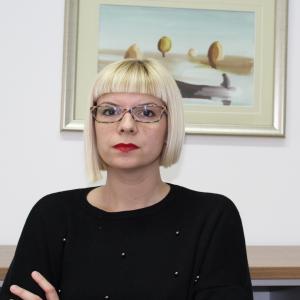
Associate Professor Dunja Duić holds a prominent position at the Faculty of Law, JJ Strossmayer University of Osijek, where she serves as Vice-Dean for Science, International Cooperation, and Postgraduate Studies. Her academic journey includes advanced studies in European Law at Ghent University (LLM cum laude) and a PhD from Zagreb University. Specializing in EU Law, her research focuses on external relations, defense policy, migration, cybersecurity, and human rights. She leads NATO's Science for Peace project on cyber defense and chairs the international conference EU and Comparative Law Issues. As a certified Council of Europe trainer, she develops distance learning programs for legal professionals. Her editorial role for the indexed ECLIC series highlights her scholarly contributions. Professional memberships span the European Law Institute, UACES, and the Croatian-Polish Scientific Networks. Education: Bachelor of Law, Faculty of Law Osijek (2002-2008) Advanced Master of European Law, Ghent University (2008-2009) PhD in European Law, Zagreb University (2009-2014) Research: Her work bridges EU institutional dynamics and practical challenges like migration governance, digital security, and child protection. Notable projects include NATO cyber defense training, EU-Africa security cooperation studies, and comparative analyses of asylum frameworks. Teaching: She instructs courses on EU institutions, external security, and human rights across undergraduate, graduate, and doctoral programs. Her pedagogical innovations include moot court exercises and legal clinics. Leadership: As Vice-Dean, she oversees scientific activities, international partnerships, and postgraduate programs. She collaborates with institutions like the Center for Peace, Nonviolence and Human Rights and the European Law Institute. Professional Development: Visiting scholarships at Johannes Kepler University (2014), Zaragoza University (2017), and Perugia University (2022) enrich her transnational perspective.
Professor Majella Kilkey is a Professor of Social Policy and Director of Research at the University of Sheffield's School of Sociological Studies, Politics and International Relations. She holds additional roles as Director of the CDT in New Horizons in Borders and Bordering and leads the ESRC-funded Centre for Care. Her research focuses on migration studies, transnational families, care systems, aging, gender, and geopolitical transformations. She has earned a PhD, MA, and BSSc (Hons). Her work emphasizes marginalized groups such as migrant care workers, asylum seekers, and older migrants. Key projects include the ESRC-funded 'Storying Life Courses for Intersectional Inclusion' (2022–2025) and the EU H2020 projects MIMY and MIGREC. She also leads research on borders and care within the Centre for Care. Her publications span transnational care dynamics, migration policies, and Brexit's societal impacts. Funded grants total over £10 million, including leadership in projects addressing migrant youth integration, Serbia’s migration challenges, and care systems’ bordering processes. She co-founded the University of Sheffield’s Migration Research Group and supervises PhDs on topics like transnational care networks and asylum seeker transitions.