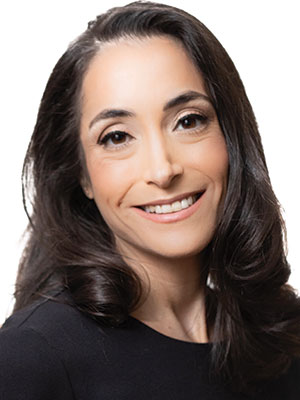
Tracy Rabin, MD, MS, is Associate Professor of Medicine (General Medicine) and Clinical Professor of Nursing at Yale School of Medicine. She directs the Office of Global Health and serves as Associate Program Director for Global and Community Health in the Yale Primary Care Internal Medicine Residency Program. She attends on medical wards at Yale-New Haven Hospital's St. Raphael Campus, directs a multidisciplinary diabetes clinic, and co-leads curricula in community engagement and international medical education through the Makerere University-Yale University collaboration in Uganda. Her research focuses on global health education, clinical ethics, diabetes management, and healthcare transitions. She has developed innovative models for teaching politically charged topics and gender-affirming care. Dr. Rabin's publications address global health equity, non-communicable disease management in Uganda, ethical medical education partnerships, and pandemic responses.
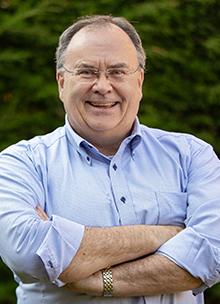
Dr. Matthias Möller is a researcher and academic coordinator at the University of Freiburg, currently serving as Scientific Coordinator of the Strategy Network KulturWissen vernetzt since July 2021. He holds a doctorate from the Ludwig Uhland Institute for Empirical Cultural Studies in Tübingen (2012) and has held academic roles including Acting Professor at the Institute for Cultural Anthropology and European Ethnology (2019–2020) and lecturer at University College Freiburg (2015–2018). His work focuses on social movements, urban studies, right-wing extremism, and cooperative housing. Education: Master's degree in Empirical Cultural Studies, Sociology, and Computer Science (2005) Doctorate, Ludwig Uhland Institute for Empirical Cultural Studies, Tübingen (2012) Research Interests: His research explores cultural knowledge networks, self-organization in housing cooperatives (e.g., Freidorf), right-wing populism, and urban-rural dynamics. Key projects include GrundRisse – A Neighborhood in Transition (2019–2021) and the Work is Work project (2017–2019). He has authored monographs like Living in Cooperation (2015) and co-edited volumes on housing and social movements. Teaching & Grants: Recent courses include seminars on urban-rural representations and cultural anthropology methods. He has received grants from the Hans Böckler Foundation and coordinates interdisciplinary projects linking academia with museums and urban initiatives. Professional Networks: Active in organizations like the German Society for Empirical Cultural Studies and the Société Internationale d'Ethnologie et de Folklore. He organizes conferences on topics like mobility and civil society, and has presented widely on housing cooperatives and political radicalism.
Andrew Martin Fischer is Full Professor of Inequality, Social Protection and Development at the International Institute of Social Studies (ISS), Erasmus University Rotterdam, The Hague. He is a leading scholar in international development, with extensive research on poverty, inequality, and social policy, particularly in China and the Global South. PhD in Development Studies, London School of Economics and Political Science (2007) MA in Economics (Development Economics), McGill University (1994) Fischer’s research spans over 30 years and focuses on the political economy of development, ethnic marginalization in Western China, and the role of redistribution. He has authored key works such as Poverty as Ideology and The Disempowered Development of Tibet in China , and led the European Research Council-funded project Aiding Social Protection (2015–2021). His recent publications explore debt crises in developing countries, global reparations, and the changing demography of Tibet. These works reflect a consistent engagement with themes of justice, marginalization, and structural inequality in global development. International Studies in Poverty Prize (2018) European Research Council (ERC) grant (2014) Fischer has supervised numerous students and early-career researchers and has been actively involved in academic service, including serving as Chair and co-editor of Development and Change and founding editor of the Oxford University Press book series Critical Frontiers of International Development Studies . He has also held external roles such as Scientific Director of CERES Dutch Research School for International Development (2019–2023). His work contributes to UN Sustainable Development Goals related to poverty reduction and social justice. He is affiliated with research networks focusing on agrarian transformation, social policy, and the Global South, and has participated in numerous academic workshops and editorial boards, reinforcing his role as a central figure in critical development studies.
Ashira P. Ostrow is the Peter S. Kalikow Distinguished Professor of Real Estate and Land Use Law at Hofstra Law School, where she also serves as Senior Associate Dean for Academic Affairs and Executive Director of the Wilbur F. Breslin Center for Real Estate Studies. She is a leading scholar in land use, local governance, and real estate law, with a strong focus on the interplay between federal and local land use policies. JD, Columbia University, 2003 BA in Political Science, summa cum laude, University of Pennsylvania, 1999 Professor Ostrow teaches Property, Land Use Law, Real Estate Transactions, and State and Local Government Law. She also contributes to Hofstra’s online health law and policy programs through her course 'Representing Health Care Providers.' Her research is widely published in top legal journals including the Yale Law Journal , Harvard Journal on Legislation , Florida Law Review , and Emory Law Journal . Her recent scholarship explores themes such as federalism in land use regulation, local autonomy, regulatory takings, equity in zoning, and the impact of public health emergencies on land use decisions. She has also examined public-private partnerships, sustainable development, and real estate investment vehicles, demonstrating a broad and evolving research agenda that bridges doctrinal, policy, and practical dimensions of property law. Notable honors include: Selected for the Harvard/Stanford/Yale Junior Faculty Forum Winner of the American Association of Law Schools Scholarly Paper Competition Recipient of Hofstra University's Lawrence A. Stessin Prize for Outstanding Scholarly Publication Before entering academia, Professor Ostrow practiced as a real estate attorney at Davis Polk & Wardwell, representing clients in complex commercial real estate transactions. She advises on academic matters as Senior Associate Dean and leads the Breslin Center, which promotes research and education in real estate. While no specific students are listed, her leadership roles suggest active mentorship and academic guidance. She has not disclosed email addresses publicly, but can be contacted via Hofstra Law. Professor Ostrow is affiliated with the Wilbur F. Breslin Center for Real Estate Studies, where she shapes research and programming on real estate policy, land use innovation, and urban development.
Rui Albuquerque is an Assistant Professor at Universidade Lusófona's Faculty of Law and Political Science in Porto, where he also serves as deputy director. He holds a PhD and Master's in Political Science and International Relations, alongside a Law degree. Academic Focus: History of Ideas, Enlightenment, Liberal Constitutionalism, Roman Law, Portuguese Legal Evolution Publications: Books and articles in Portuguese and international journals His research bridges legal history and political theory, emphasizing the Enlightenment's impact on Portuguese constitutionalism and the historical development of legal systems. Recent articles analyze military-political dynamics, migration crises, and ideological frameworks in European contexts. His scholarly output includes interdisciplinary explorations of historical sovereignty, monarchical transitions, and 21st-century governance challenges. He contributes to public discourse through media outlets like Observador and Público. Notable affiliations include Universidade Lusófona's Porto campus, with a research trajectory spanning historical jurisprudence and contemporary political ideologies.
Prof. Dr. Nedžad Polić is a faculty member at the Faculty of Economics, University of Economics Sarajevo. He holds a Ph.D. in Economic Sciences from the University of Sarajevo's Faculty of Economics. His research focuses on corporate finance, financial systems, banking regulation, data science applications in finance, and privatization models. He teaches courses in Financial Management and actively contributes to academic discourse through numerous peer-reviewed publications. Education: Bachelor's in Economics: Faculty of Economics, University of Banja Luka Master's in Economic Sciences: Faculty of Economics, University of Tuzla Ph.D. in Economic Sciences: Faculty of Economics, University of Sarajevo Research Interests: Prof. Polić explores corporate finance principles, financial leverage impacts, banking regulatory frameworks (e.g., Basel III), and financial market development in emerging economies. He also examines privatization models and their socio-economic implications in transition economies like Bosnia and Herzegovina. His recent work integrates data science methodologies into financial decision-making processes across industries. Article Trends: His publications analyze empirical evidence from Bosnia and Herzegovina and the Western Balkans, focusing on corporate bond markets, banking sector reforms, and corporate restructuring cases. He emphasizes policy-relevant research to address challenges in emerging financial systems. Advising & Grants: No advisees or grants explicitly mentioned in the provided texts. His academic contributions are primarily through teaching and research publications. Labs/Teams: No specific research teams or laboratories associated with his profile in the available information.
Pierre van der Eng is an Associate Professor and Reader in International Business and Business History at the Australian National University (ANU), Research School of Management. He is recognized as Australia's research leader in economic history, with expertise spanning economic and business history, international business, and development economics. His work focuses on Indonesia's economic development, Australia's business history, European integration, and EU-Australia relations. His research has been funded by the Australian Research Council and the Shibusawa Foundation. Van der Eng holds a PhD, MA, and BA, and has advised AusAID on development projects. His research emphasizes Indonesia's economic challenges, including historical famines, CSR evolution, and post-colonial business dynamics. He has contributed to major projects like the 'Indonesia Project' phases IV and V, exploring foreign MNE strategies in Australia and EU-Australia trade relations. His awards include the 2021 nomination as Australia's economic history research leader. He has published widely in top journals and edited volumes, with a focus on long-term economic trends, multinational enterprise strategies, and historical crisis responses. His work bridges historical analysis with contemporary policy implications, particularly in Asia-Pacific economic contexts.
Professor Vikki Boliver is a distinguished academic in the Department of Sociology at Durham University, specializing in educational inequalities and social mobility. Her research focuses on how social class and ethnic background influence access to higher status universities, with particular attention to quantitative methodologies and policy-relevant applications. Professor Boliver's research interests center on educational inequalities, with special emphasis on social class and ethnic disparities in access to prestigious universities. Her work examines social stratification and mobility across multiple generations, investigating how family background influences educational trajectories. She is particularly known for her expertise in quantitative research methods applied to large-scale educational datasets, producing policy-relevant findings that inform university admissions practices and widening participation initiatives. Analysis of Professor Boliver's recent publications reveals a consistent focus on educational stratification, with particular attention to contextual admissions, social mobility across generations, and ethnic disparities in higher education access. Her work spans methodological innovations in measuring educational inequality, critical examinations of meritocracy in university admissions, and cross-national comparisons of educational systems. The research demonstrates increasing attention to intersectional approaches examining how class, ethnicity, and other identity markers interact in shaping educational opportunities. Editorial Board member of Higher Education Policy British Journal of Sociology of Education editorial board member BSA Sociology journal editorial board member Professor Boliver actively supervises numerous PhD students, primarily focusing on educational inequalities, social mobility, and higher education policy. Her supervision portfolio includes both current and completed doctoral projects examining topics such as educational tracking, grammar school effects, ethnic disparities in university access, and contextual admissions practices. She frequently collaborates with other faculty members on supervision teams, contributing her expertise in quantitative methods and educational policy analysis to interdisciplinary research projects.
Dr. Elena Sherstoboeva serves as a Lecturer at Essex Law School, University of Essex, where she specializes in the intersection of media law, digital regulation, and international human rights with particular focus on non-Western contexts. Her scholarly work critically examines freedom of expression frameworks, disinformation governance, and privacy protections within authoritarian and post-Soviet legal systems, especially Russia. Her academic credentials include dual Ph.D. degrees from Ramon Llull University (Spain) and Moscow State University (Russia), complemented by visiting fellowships at the University of Pennsylvania and University of Leeds. These diverse educational foundations underpin her transnational legal perspective. Dr. Sherstoboeva's research program systematically investigates how digital technologies challenge traditional legal paradigms in restrictive regimes, with recurring themes including Council of Europe standards adaptation, judicial mythmaking in authoritarian contexts, and pandemic-era digital surveillance governance. Her methodology bridges doctrinal legal analysis with empirical media studies. Her publication trajectory (2014-2024) reveals escalating engagement with geopolitical crises, notably Ukraine war-related disinformation laws and pandemic surveillance policies. The body of work demonstrates consistent focus on Russian legal evolution while expanding into comparative East Asian digital governance frameworks, reflecting growing scholarly influence in critical media law studies. No scientific awards were documented in the source material. Actively open to supervision, Dr. Sherstoboeva mentors students in media law and digital rights research areas. Her professional experience includes significant consultancy for UNESCO, OSCE, and Council of Europe on media regulation, though specific grant funding details remain undisclosed in available records.
David Cressy is a Research Professor of History at Claremont Graduate University, with a distinguished career in the study of early modern England. He has previously held prominent positions including Humanities Distinguished Professor of History and George III Professor of British History at Ohio State University. His academic journey began at the University of Cambridge, where he earned multiple degrees, before transitioning to a long teaching career in the United States, including roles at liberal arts colleges, California State University, Long Beach, and Ohio State University. PhD, History, University of Cambridge BA, History, University of Cambridge David Cressy's research centers on the social, cultural, and political history of Tudor and Stuart England, spanning from the late 15th to the early 18th centuries. His work explores literacy, ritual, religion, state power, and the lives of the British abroad, including settlers and adventurers in the Atlantic world. He treats English history as embedded within broader British and European contexts, offering nuanced analyses of identity, authority, and societal transformation. His publications reveal a consistent focus on how everyday practices—such as reading, marriage, or speech—intersect with larger political and religious upheavals. Themes of crisis, rebellion, and cultural continuity recur across his works, particularly in studies of revolution (1640–1642), seditious talk, and the role of saltpeter in military history. His interdisciplinary approach draws from anthropology, sociology, and literary studies to reconstruct early modern mentalities. Notable scientific awards and honors include: Humanities Distinguished Professor of History George III Professor of British History Cressy has mentored numerous students and contributed significantly to academic discourse through his publications and editorial work. While specific grant details are not mentioned, his sustained output and prestigious appointments suggest substantial research support. He has also co-authored key sourcebooks used in teaching and research. Though no formal lab or research team is mentioned, his collaborative work and influence on the field indicate a strong scholarly network and legacy in early modern British history.
Nuno Luis Madureira is a Full Professor in the Department of History at ISCTE – Lisbon University Institute, where he is also an Integrated Researcher at CIES-Iscte – Center for Research and Studies in Sociology. His academic affiliations include the School of Social Sciences and Humanities and the research group Historical Dynamics and Global Integration of the World . He has been a visiting scholar at Harvard University and the University of California, Berkeley, and serves on the review boards of the European Science Foundation, Research Foundation – Flanders (FWO), and the Netherlands Organization for Scientific Research (NWO). Madureira holds a PhD in Contemporary Social History from ISCTE-IUL (1996), a Master’s in Historical Economics and Sociology from the Faculty of Social Sciences and Humanities at UNL (1990), and a Bachelor’s in History from the Faculty of Arts at UL (1984). His research spans energy and environmental history, economic and business history, the history of technology and science, and historical occupations. He has authored thirteen books, including Key Concepts in Energy: Technology, Economy and History (Springer, 2014), and numerous peer-reviewed articles in journals such as Energy Policy , Technology & Culture , Business History Review , and Environment and History . His recent publications reflect a deep engagement with energy transitions, fossil fuel history, nuclearization, and the socio-political dimensions of energy systems. Themes such as energy paradoxes, oil pricing, and the historical development of electricity infrastructure recur throughout his work. He has also contributed to major encyclopedias and edited volumes in economic and social history. Madureira is the editor of Frontiers in Sustainability and has coordinated multiple collective research projects. He maintains an active research blog and is fluent in French and English. His work is interdisciplinary, combining historical analysis with insights from economics, engineering, and environmental sciences. Scientific Awards and Recognitions: Member of the permanent pool of referees of the European Science Foundation (2006–2013) Member of the College of Reviewers of the European Science Foundation (2016–2023) Member of the Research Foundation – Flanders (FWO) Review College Consultant for the Netherlands Organization for Scientific Research (NWO) He has advised on research policy and evaluation at national and European levels and is a member of ISCTE's General Board. His work on historical occupations and classification systems has been foundational in Portuguese social history. He has not advised any named PhD or Master’s students in the provided texts. He is not part-time, not retired, and currently active in research and teaching.
Teresa Marat-Mendes is a Full Professor in the Department of Architecture and Urban Planning at ISCTE - University Institute of Lisbon, where she is also an Integrated Researcher at DINÂMIA'CET-Iscte - Center for Studies on Socioeconomic Change and Territory. Her work bridges academia and policy, focusing on sustainable urban transitions, urban metabolism, and spatial planning reform. Full Professor, Department of Architecture and Urban Planning, ISCTE-IUL Integrated Researcher, DINÂMIA'CET-Iscte Coordinator of major research projects: MEMO, SPLACH, HAT Member of ISUF and former President of the Portuguese-language Network on Urban Morphology (PNUM) Teresa's research centers on urban sustainability, with a strong emphasis on urban form, ecological urbanism, food systems, and the 15-minute city concept. She investigates how urban morphology influences material flows, energy use, and social equity, advocating for evidence-based, transformative planning policies that respond to climate change and urban sprawl. Her recent publications and projects reflect a clear trajectory toward integrating urban agriculture, transit-oriented development, and proximity-based urban models. The HAT project (2025–2028) exemplifies this trend, aiming to reduce automobile dependence and food imports through green Proximity-Oriented Development (PODs). Earlier work like the MEMO project analyzed historical urban metabolism in Lisbon, providing sustainable lessons from the past. Scientific recognition includes: Women in Science 2019 Award in Architecture (Ciência Viva) Author of Atlas of the Food System. Challenges for a Sustainable transition of the Lisbon Region (Springer) Strong citation metrics: H-index 14 (Google Scholar), 7 (Scopus) Teresa has supervised numerous research initiatives and collaborated with institutions across Europe. She has served as ERASMUS Coordinator (2002–2016) and Vice Director of her department (2013–2016), contributing to academic governance at ISCTE. Her work connects academic research with business and policy sectors to catalyze urban transitions. She has been involved in key research centers and networks: DINÂMIA'CET-Iscte (research leadership) CITTA and GOVCOPP collaborations Portuguese-language Network on Urban Morphology (PNUM), which she co-founded and led (2015–2018)
Michalis Konsolakis is a Full Professor at the School of Production Engineering and Management, Technical University of Crete (TUC). He holds a B.Sc. (1997) and Ph.D. (2001) in Chemical Engineering from the University of Patras, with postgraduate research at Cambridge University under a Greek-British Joint Research Programme. Previously, he served as Lecturer (2004–2010) and Assistant Professor (2010–2013) in TUC’s Department of Sciences before moving to his current position. His research focuses on heterogeneous catalysis, materials science, and surface science, particularly in energy/environmental processes like CO₂ hydrogenation, catalytic reactor design, and renewable energy systems. He has published over 200 peer-reviewed articles and serves on editorial boards of >10 journals. Konsolakis directs the Materials Science and Processes Lab (MatProLab) and the Industrial, Energy and Environmental Systems Lab at TUC. Teaching highlights include over 10 undergraduate and 5 postgraduate courses in chemistry, thermodynamics, materials science, and catalysis. He authored a general chemistry textbook and lecture notes. His work emphasizes sustainable energy solutions, including CO₂ conversion to synthetic fuels and green hydrogen production. Recent research trends in his publications emphasize advanced catalytic materials (e.g., ceria-based nanomaterials), electrochemical systems for hydrogen production, and techno-economic assessments of bioenergy processes. His labs develop novel catalysts for industrial applications, bridging fundamental science and engineering. Professional roles include editorial board memberships and international peer review for >100 journals. He collaborates globally on projects addressing environmental challenges through catalysis and materials innovation.
Rosella Nicolini is a Professor in the Department of Applied Economics at Universitat Autònoma de Barcelona (UAB). She holds a PhD in Economics from the Catholic University of Louvain (2000) and has extensive visiting positions at institutions like University of Bordeaux, University of New South Wales, and Boston University. Her research focuses on urban economics, demography, regional development, and immigration policy, with a strong emphasis on territorial cohesion and spatial analysis. She has led multiple interdisciplinary projects including 'RURALITIC: RUral Revival' (2025–2028) and 'SOCIAL AND TERRITORIAL COHESION: THE DEMOGRAPHICAL CHALLENGE AND PUBLIC POLICIES' (2022–2025). Her work contributes to UN Sustainable Development Goals related to education and sustainable urbanization. Recent publications explore aging populations in Europe, urban congestion impacts on public transport usage, and spatial segregation dynamics in Barcelona. Nicolini has been a key figure in modeling population distribution and analyzing labor market reforms. She collaborates internationally, having held roles at IAE, Pompeu Fabra University, and the Barcelona Institute of International Studies (IBEI). Her grants include funding from the European Regional Development Fund and the Spanish Ministry of Science. She has supervised over 31 research works, focusing on applied economics methodologies and empirical techniques. Nicolini’s lab and team research integrates spatial econometrics with policy analysis, addressing contemporary challenges in regional development and urban governance.
Carla Preciosa Braga Cerqueira is an Associate Professor at Lusófona University of Porto, affiliated with the School of Communication, Architecture, Arts and Technologies. She is an integrated researcher at CICANT (Research Center for Applied Communication, Culture and New Technologies) and a collaborator at CECS (Centre for Communication and Society Studies) from the University of Minho, where she earned her PhD in Communication Sciences (specializing in Communication Psychology). Her research focuses on media , gender studies , digital communication , and social movements , with a particular emphasis on feminist activism and intersectionality. Degree in Social Communication Postgraduate in Communication Sciences - Information and Journalism PhD in Communication Psychology, University of Minho Her recent work explores Portuguese feminist movements through digital platforms, analyzing how campaigns like the International Feminist Strike re-politicize gender discourse. She investigates media representation of motherhood in sports and sexual harassment in academia , linking these to UN Sustainable Development Goals. Cerqueira actively collaborates with NGOs, serves on the RTP Opinion Council, and organizes academic events like the II MeLCi Lab Autumn School on media and gender. Key projects include: FEMglocal : Global-local feminist movements YouNDigital : Youth digital citizenship IM Lab : Intersectional media analysis