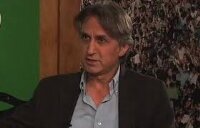
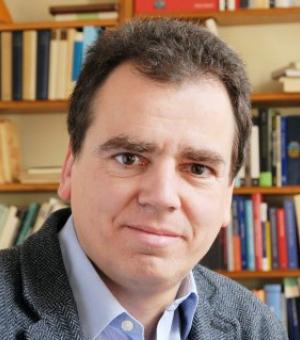
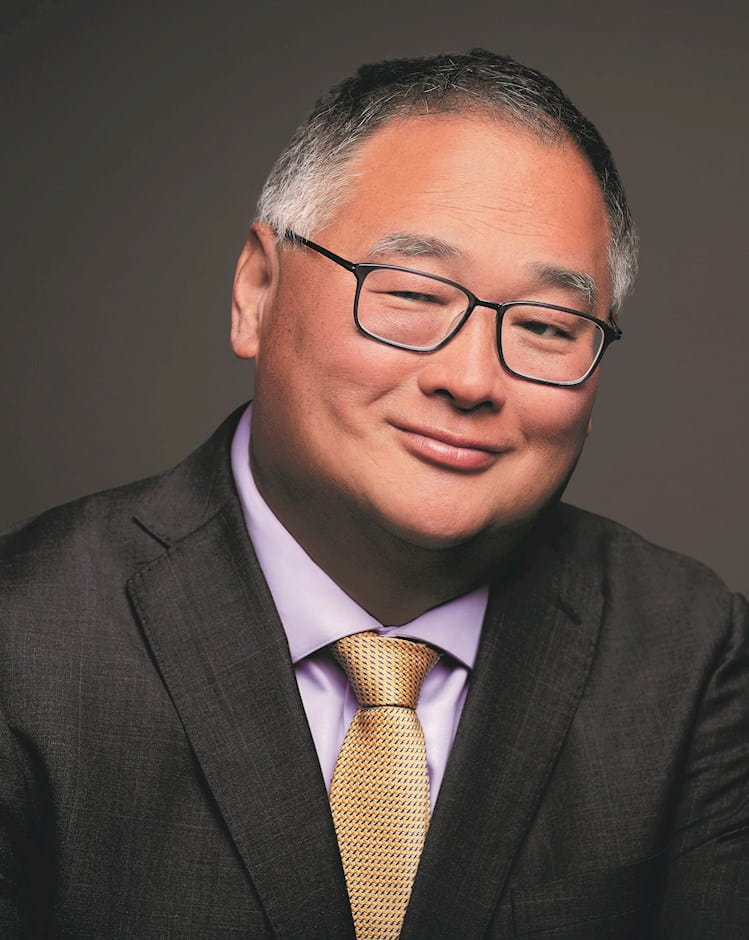
Terrence Chapman is a Professor of Government at the University of Texas at Austin, affiliated with the Robert S. Strauss Center for International Security and Law, Center for European Studies, and Clements Center on History Strategy, and Statecraft. His research focuses on international organizations, conflict resolution, and political economy frameworks. Key research areas include: International institutional legitimacy Global regulatory regimes Public opinion in international affairs Conflict management mechanisms Formal modeling of diplomatic interactions Recent scholarly trends reveal expertise in climate governance negotiations, digital surveillance politics, and regulatory effectiveness. His work spans theoretical modeling and empirical analysis of international collaboration dynamics. Scientific recognition includes: 2011-2012 APSA Conflict Processes Section Book Award Teaching portfolio covers: Science Fiction and Politics International Organization and Law Research Methods in International Politics Previously served as associate/senior editor for International Studies Quarterly .
Jason Brownlee is a Professor in the College of Liberal Arts at the University of Texas at Austin. His research focuses on comparative politics, democracy, and authoritarianism, with a regional emphasis on the Middle East and Southeast Asia. Ph.D., Princeton University Contact: brownlee@austin.utexas.edu Research Interests : Brownlee investigates the persistence of authoritarian regimes, the political economy of repression, and the impact of foreign intervention on domestic politics. His work often analyzes Egypt, Iran, Malaysia, and the Philippines. Key Publications : Authoritarianism in an Age of Democratization (Cambridge, 2007) Democracy Prevention: The Politics of the U.S.-Egyptian Alliance (Cambridge, 2012) The Arab Spring: Pathways of Repression and Reform (Oxford, 2012, co-authored with Tarek Masoud and Andrew Reynolds) Teaching : Brownlee offers courses such as "War/Freedom in South Asia/Middle East" and "Issues & Policies in American Government," delivered both in-person and online.
Asef Bayat is Professor of Sociology and the Catherine and Bruce Bastian Professor of Global and Transnational Studies at the Department of Sociology, University of Illinois, Urbana-Champaign. He has held previous academic positions at the American University in Cairo, Leiden University (where he held the Chair of Society and Culture of the Modern Middle East), and visiting appointments at UC Berkeley, Columbia University, Oxford, and Brown University. His research interests include: Political Sociology Collective Behavior and Social Movements Sociology of Religion Urban Life and Politics Islam and Modernity Contemporary Middle East Bayat's research focuses on the role of ordinary people and subaltern classes in social and political transformations, particularly in the context of the Arab Spring and Middle Eastern urban movements. His work bridges comparative and historical sociology with global and transnational perspectives, emphasizing everyday forms of resistance and the reconfiguration of political Islam. He has extensively explored the sociological dimensions of revolution, modernity, migration, and loss of home. His recent publications, including articles in International Journal of Urban and Regional Research and Journal of Democracy , reflect a sustained engagement with urban politics, revolutionary dynamics, and youth activism in the Global South. The recurring themes across his work include the agency of marginalized populations, the transformation of public space, and the evolving nature of political engagement in non-Western contexts. Bayat has received numerous honors and fellowships: Guggenheim Fellow Ford Foundation Fellow MacArthur Fellow Open Society Fellow Wissenschaftskolleg Fellow, Berlin He has been actively involved in academic leadership, having served as director of the International Institute for the Study of Islam in the Modern World (ISIM) and elected to the Board of the UN Research Institute for Social Development. He has taught key courses such as Global Social Movements, Global Religion and Politics, and Middle Eastern Societies. Though specific students are not listed, his role as a full professor and author of major works indicates extensive mentorship and academic advising. He is affiliated with multiple interdisciplinary centers, including the Center for African Studies, Center for South Asian and Middle Eastern Studies, European Union Center, and Center for Global Studies.
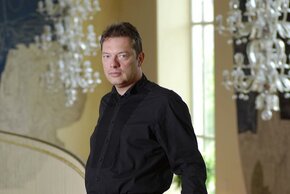
Andreas Stoehr is a renowned Austrian conductor and professor at the Music and Arts Private University of the City of Vienna, leading the conducting department and symphony orchestra since 2013. His career spans prestigious engagements including the Paris Opéra Comique, Deutsche Oper am Rhein, and St. Gallen Theatre, focusing on operatic repertoire from Monteverdi to modernism. He is celebrated for reviving neglected works like Meyerbeer’s Emma di Resburgo and Gluck’s Ezio , emphasizing historical performance practices. His research explores stylistic transitions in music history, blending baroque precision with modern innovation. Education: Trained at Vienna's former Conservatory (now University of Music and Performing Arts), studying piano under Alfred Kremela, conducting with Gennadij Rozhdestvenskij, and musicology at the University of Vienna. Key mentors included David Lutz (accompaniment) and Reinhard Schwarz (conducting). Research Interests: Explores interdisciplinary connections between diverse musical eras, such as Bach’s influence on Schoenberg, and advocates for vocal-orchestral balance in historical repertoires. Projects include CD recordings of Amanda Maier-Röntgen and Andrea Tarrodi’s works, nominated for Swedish Grammis. Awards: Grammy nomination (2016) for Amanda Maier-Röntgen’s Violin Concerto recording. Recognized for innovative stagings of operas like Berg’s Wozzeck and Debussy’s Pelléas et Mélisande . Teaching & Leadership: As professor and symphony orchestra director, Stoehr mentors young conductors. Notable collaborations include the Langenlois Castle Festival (2012–2019) and interdisciplinary projects like Heart and Mouth, and Deed and Life blending Bach with sociological texts. His teaching emphasizes 21st-century conductorship as collaborative architecture, prioritizing emotional engagement over technical authoritarianism. Labs/Ensembles: Leads the MUK Symphony Orchestra, collaborating with ensembles like the Aarhus Symphony Orchestra and Orchestre Philharmonique de Liège. His work bridges academic research with performance practice through projects like the Styriarte Festival’s Schubert revival.
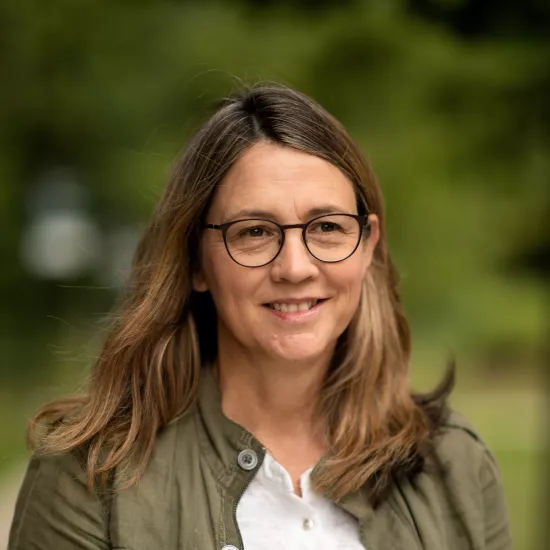
Kati Kulovesi is Professor of Law at the University of Eastern Finland , specializing in International Environmental Law , EU Climate Law, and the intersection of climate change law with international economic law. She works closely with the 3E Center at the Brussels School of Governance, Vrije Universiteit Brussels , and Earth Negotiations Bulletin , with multidisciplinary collaborations in the Atmospheric and Climate Competence Center . Education: LL.M. from University of Helsinki and London School of Economics; PhD from LSE Research Focus: EU Climate Policy, Legitimacy in Climate Governance, Arctic Environmental Regulation, Carbon Market Mechanisms Professional Experience: Legal adviser for Finnish Government, World Bank, UN FAO, European Commission, Nordic Council of Ministers, IUCN, and World Resources Institute Publications span EU Climate Law, WTO-Environmental Disputes, Arctic Governance, and Short-Lived Climate Pollutants, with recent work on the European Green Deal and Fit for 55 Package . Her scholarship integrates legal theory with empirical analysis of climate policy implementation.
Tracey Galloway is an Associate Professor in the Department of Anthropology at the University of Toronto Mississauga (UTM), where she conducts critical research on Indigenous health disparities and policy interventions in northern Canada. Her work bridges medical anthropology, public health, and community-based participatory research to address systemic inequities affecting circumpolar populations. Education: PhD, McMaster University, 2008 MA (institution unspecified) BA (institution unspecified) BScN (institution unspecified) Dr. Galloway's research program centers on chronic disease risk assessment and health system improvement in Indigenous communities, with specific expertise in nutrition transition, food security, child growth patterns, and public health policy evaluation. She examines the impact of federal programs like Nutrition North Canada while developing community-led solutions for health equity. Her methodological approach combines quantitative analysis of health outcomes with qualitative community engagement, emphasizing Indigenous research sovereignty and decolonizing methodologies. Her publication record reveals consistent thematic focus across 15 recent articles, demonstrating interdisciplinary collaboration between anthropology, epidemiology, and health economics. Key trends include rigorous evaluation of colonial impacts on Indigenous food systems, innovative analysis of subsidy program effectiveness, and centering Indigenous patient experiences in healthcare design. Her work consistently prioritizes community-defined research questions and actionable policy recommendations. Dr. Galloway actively mentors graduate students including Darci Belmore, Carly Checholik, Neda Maki, and Hiliary Monteith, guiding research on Indigenous health determinants and policy interventions. While specific grant details aren't publicly enumerated, her collaborative projects involve partnerships with Indigenous communities across Northern Canada and interdisciplinary teams addressing complex health system challenges. She maintains strong community partnerships for her applied research, particularly in Nunavut and Northwestern Ontario, working directly with Anishinabeck and Inuit communities to translate findings into culturally safe health initiatives and policy reforms that address the root causes of health inequities.
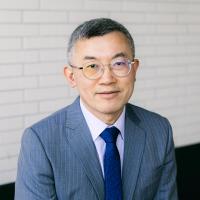
Professor Wei Cui is a distinguished scholar at the Peter A. Allard School of Law at the University of British Columbia, where he joined the faculty in 2013. His expertise spans tax law and policy, international taxation, and Chinese legal studies, with significant contributions to understanding the intersection of tax policy, climate change, and global economic governance. Professor Cui's educational background includes a BA from Harvard College, an MA in Philosophy from Tufts University, a JD from Yale Law School, and an LLM in Taxation from New York University School of Law. He maintains strong institutional affiliations with the Centre for Asian Legal Studies, Centre for Chinese Research, and Centre for Business Law at UBC. Professor Cui's research focuses on tax law and policy with particular emphasis on international taxation, carbon pricing mechanisms, Chinese fiscal systems, and the relationship between tax policy and development. His work bridges theoretical insights with practical applications in tax administration, examining how tax systems function in different political and economic contexts. He has made significant contributions to understanding China's tax system and its implications for developing countries, as well as analyzing innovative approaches to carbon pricing and digital taxation. His recent publications demonstrate a clear trajectory toward addressing contemporary challenges in tax policy, particularly the intersection of taxation with climate change mitigation and digital economy regulation. Professor Cui's research on carbon contracts for difference, output-based pricing systems, and digital services tax reflects his engagement with pressing policy questions facing Canada and the international community. Insight Grant from the Social Sciences and Humanities Research Council of Canada Insight Grant from the Social Sciences and Humanities Research Council of Canada Professor Cui has engaged in significant scholarly supervision and research collaboration, with his work supporting numerous graduate students and research projects. His professional background includes over 10 years of tax law practice with global law firms in New York and Beijing, service as Senior Tax Counsel at the China Investment Corporation (2009-2010), and consultancy roles with China's National People's Congress, Ministry of Finance, State Administration of Taxation, and the United Nations. Professor Cui maintains active research laboratories and teams focused on comparative tax systems, with particular attention to China's fiscal development and its implications for global tax governance. His current research projects examine the evolution of international tax design as part of the post-WWII international economic order and tax/subsidy policies designed to combat climate change and support innovation.
Prof. Johannes A. Lercher is a retired professor (as of April 2023) at the Technical University of Munich (TUM), holding the Chair of Chemical Technology II within the Department of Chemistry. His research focuses on heterogeneous catalysis, particularly understanding catalytic processes at solid-liquid and solid-gas interfaces, with applications in sustainable energy production, CO₂ conversion, and catalytic upcycling of polymers. He has held academic positions at the University of Twente (Netherlands) and the Pacific Northwest National Laboratory (USA), and has been Editor-in-Chief of the Journal of Catalysis . His honors include the Alwin Mittasch Prize (2021), ENI Award (2016), and Kozo Tanabe Prize (2013). His recent work emphasizes low-temperature polymer upcycling, methane activation, and bioinspired catalyst design, leveraging advanced spectroscopic and operando techniques. Despite retirement, his contributions to catalysis research remain impactful. Education: PhD (1980) and Habilitation (1985), Vienna University of Technology Visiting Lecturer, Yale University (1982) Research Interests: Heterogeneous catalysis, catalytic interfaces, sustainable energy carriers, CO₂ valorization, and polymer waste upcycling. Key areas include: Design of catalysts for selective hydrocarbon synthesis Mechanistic studies using advanced spectroscopy Development of scalable catalytic processes for industrial applications Recent Trends in Publications: Focus on low-temperature polymer recycling (e.g., PVC and polyolefin upcycling), methane activation via novel catalysts (e.g., Co 2+ in ZSM-5), and bioinspired catalytic strategies. His work bridges fundamental catalysis with industrial relevance, emphasizing sustainability and energy efficiency. Awards and Recognition: Member, Academia Europaea and US National Academy of Engineering Recipient of multiple international catalysis awards (see full list above) Grants and Labs: Led the Institute for Integrated Catalysis (Pacific Northwest National Lab, 2011–present). His research groups have pioneered studies on zeolite-confined reactions and interfacial catalysis, with collaborations spanning academia and industry. Labs/Teams: Active in the TUM Department of Chemistry and international networks focused on catalytic innovation for a carbon-neutral economy.
Jie Bai is an Associate Professor of Public Policy at Harvard Kennedy School (HKS), focusing on firms and markets in developing economies. His research addresses barriers to firm growth, market frictions, and policy design for private sector development in regions like China, East Africa, and Southeast Asia. Methodologically, he combines randomized control trials, quasi-experiments, and structural modeling from industrial organization and international trade. He holds a Ph.D. in Economics from MIT (2016) and previously worked at Microsoft Research New England before joining HKS in 2017. His work emphasizes collaboration with governments and NGOs to evaluate industrial and trade policies. Key research themes include collective reputation in trade, environmental policy impacts, corruption dynamics, and child labor economics. His recent publications analyze China's dairy industry reputation, Vietnam's firm corruption patterns, and Zambia's product choice perceptions. He co-founded initiatives like the China Econ Lab and China and the Global Economy project to foster research on China's role in global economics. Teaching includes advanced microeconomic analysis and game theory. No grants or labs are explicitly listed in the provided texts.
David Ashmore is a Lecturer in Engineering Economics at the University of Southampton, specializing in transport sector reform, infrastructure procurement, service contract franchising, and public policy. He has over 30 years of international experience working with engineers, policymakers, regulators, and multilateral donors across the UK, Europe, India, the Americas, Africa, and Asia-Pacific regions. Transport Economics Infrastructure Procurement Public-Private Partnerships Policy Analysis His recent research explores sustainable mobility transitions, including ride-hailing dynamics in Indian cities, hydrogen truck adoption in Australia, and equitable infrastructure systems amid rapid urbanization. He emphasizes multistakeholder collaboration and policy innovation in transport reforms. Key publication trends focus on zero-emissions transportation, PPP challenges, automated planning tools, and formal-informal sector integration in developing countries. Articles span conference proceedings, journal articles, and policy-oriented outputs. David serves as a Visiting Research Fellow at the Technical University of Dresden and holds memberships in the Chartered Institute of Logistics and Transport and the Institution of Transportation Engineers. He actively supervises PhD students and leads global transport policy research initiatives.
Dr. Gavin Mount is a researcher at UNSW Canberra , specializing in non-traditional security studies , ethnic conflict , and the sociopolitical implications of emerging technologies . His work bridges theoretical analysis with practical applications in conflict transformation and defense studies. Research Focus: Global politics of ethnic conflict, hybrid peace/war frameworks, and socio-political impacts of drone technology. Teaching: Courses like Ethnic Conflict in World Politics and Law, Force and Legitimacy , with a focus on military education and strategic studies. Publications: Recent work includes contributions to Thinking Swarms (2025) and Hybridity on the Ground in Peacebuilding and Development (2018). Grants: Leads the Curricula Integration of Student Wellbeing Resources project under HERDSA. Key Themes across his research include the intersection of technology and conflict, evolving defense paradigms, and pedagogical innovations in security studies.
Dean B. Carson is a researcher at Umeå University , affiliated with the Faculty of Medicine, Department of Epidemiology and Global Health , and the Arctic Research Centre . His work focuses on rural health systems, social care workforce challenges, sustainable rural development, and community-based approaches to healthcare and food security. Rural Health : Explores capacity-building in rural health research and medical education reform. Public Health : Analyzes service delivery models and co-creation frameworks for elderly care. Geography : Investigates spatial dynamics in northern peripheries, including food production networks and micro-urbanization. Recent publications (2024-2025) examine topics such as rural health research capacity frameworks , hospital-to-home transfer systems , and non-commercial food distribution networks . His studies often integrate theoretical models like Rural Nursing Theory and Beyond Periphery while emphasizing stakeholder engagement and policy translation. Grants and Collaborations : Funded by the Swedish Research Council Formas, American National Science Foundation (NSF), and Riksbankens Jubileumsfond. Collaborates with Arctic-FROST networks and Lifestyle Migration Hub researchers.
David Parrott is a Professor of Early Modern European History at New College, University of Oxford, and serves as Penry Williams Fellow, Tutor in History, and Precentor. He holds a MA (M.A. DPhil Oxf) and completed his BA and DPhil in History at Oxford (Christ Church and Wolfson College) before joining the University of York as a lecturer. Returning to New College in 1992, he specializes in teaching European history between 1500-1700, with a focus on France, Italy, and political/military/cultural themes. His courses include historiography, methodology, and specialized topics like the Thirty Years' War and early modern court culture. His research focuses on 17th-century France and Northern Italy, particularly military history, mercenaries, and private military organizations. Current work explores France’s mid-17th-century crisis. He has published extensively on early modern warfare, including Richelieu’s Army (2001) and The Business of War (2012). No scientific awards are listed, though his scholarly contributions are significant. His teaching and research highlight interdisciplinary approaches to military and political history. While no grants or advising activities are detailed here, his academic roles emphasize mentorship through tutorials and college governance. He contributes to New College’s academic and chapel life as a Tutor and Precentor.
Professor Johannes Zachhuber holds a professorship in Historical and Systematic Theology at the University of Oxford's Faculty of Theology and Religion. His research focuses on modern and postmodern theology, the Continental tradition of philosophy of religion (Kant, Schleiermacher, Hegel), theology of late antiquity, 19th-century theology, religion and politics, and theories of secularization. He examines theological institutions' role in shaping modern discourse while addressing contemporary debates on secularity. His scholarly work bridges historical theology with systematic inquiry, analyzing figures like Schleiermacher, Gregory of Nyssa, and Baur. Recent publications include studies on early Christian cosmology, Schleiermacher’s theology, and Baur’s historicist approach. He critiques secularization narratives and explores patristic thought’s philosophical dimensions. Publications span monographs, edited volumes, and reviews, reflecting his interdisciplinary engagement with theology’s historical and philosophical foundations. He contributes to debates on theology’s role in modern academia and society, emphasizing the interplay between historical context and theological reflection.
Chang-Tai Hsieh is the Phyllis and Irwin Winkelried Distinguished Service Professor of Economics at the University of Chicago Booth School of Business. He is also a PCL Faculty Scholar with the university. His academic appointments include being a Research Associate for the National Bureau of Economic Research, a Senior Fellow at the Bureau for Research in Economic Analysis of Development, and a member of the Steering Group of the International Growth Center in London. His research interests focus on economic development, growth in Asia and Latin America, and applied economics, with particular expertise in macroeconomics. He has conducted extensive research on growth and development patterns across different regions, with special attention to China's economic transformation. His work examines resource allocation, innovation dynamics, trade policy impacts, and structural economic changes. Hsieh's recent publications reveal a strong focus on US-China economic relations, Chinese economic development, and the dynamics of innovation and growth. His research spans multiple subfields including trade policy, resource allocation, economic measurement, and the political economy of development. He has made significant contributions to understanding the economic transformation in East Asia, particularly regarding China's growth model and its implications for global trade. Alfred P. Sloan Foundation Research Fellowship Elected Member of Academia Sinica Two-time recipient of the Sun Ye-Fang Prize Fellow of the American Academy of Arts and Sciences Fellow of the Econometric Society Hsieh has been a visiting scholar at multiple Federal Reserve Banks (San Francisco, New York, and Minneapolis), the World Bank's Development Economics Group, and the Economic Planning Agency in Japan. He is also an active commentator on economic policy, with numerous opinion pieces published in Commonwealth Magazine, Project Syndicate, and other major outlets, particularly focusing on US-Taiwan-China economic relations and trade policy.