Louise Fleming serves as Professor of Nursing and Associate Dean for Academic Operations at the University of Virginia School of Nursing. Her scholarship focuses on congenital adrenal hyperplasia (CAH) and nursing education, developing clinical systems and training protocols for families and children with CAH. She contributes to national policy as a member of the APA's Task Force on Differences in Sex Development. Her research examines family adaptation in pediatric chronic conditions and workforce retention in underserved communities. Recent publications analyze care frameworks for Down syndrome families across 12 countries and healthcare responsibility delegation for youth with chronic illnesses. Honors: UNC Nursing Faculty of the Year Great 100 Nurses of North Carolina (pandemic service) AACN Leadership Fellow American Academy of Nursing Fellow (2023)
Michael Saler is a Professor of History at the University of California, Davis, specializing in modern European intellectual and cultural history with a focus on intersections between science, technology, literature, and secularism. His work explores how 'wonder' and 'belief' operate in secularizing societies. He holds a Ph.D. from Stanford University and a B.A. from Brandeis University. His research publications include influential works like As If: Modern Enchantment and the Literary Prehistory of Virtual Reality (2012) and The Fin-de-Siècle World (2014), both recognized with prestigious awards. His teaching portfolio includes courses on modern European intellectual history, historiography, and interdisciplinary topics like 'Science Fiction and Modernity' in the Honors Program. Education: Ph.D., History and Humanities, Stanford University, 1992 B.A., History & European Cultural Studies, Brandeis University, 1985 Research interests span modernism, enchantment theory, and the cultural history of science. His writing appears in venues like The Washington Post and Times Literary Supplement . He has received multiple teaching awards including the Academic Senate Distinguished Teaching Award (1999). Awards: Choice Outstanding Academic Title (2015) Huffington Post 'Best Book' (2012) Stanford Humanities Center Fellowship (2001) His advising and grants history, while not detailed here, reflects sustained engagement with graduate mentorship in modern European studies. His work frequently bridges humanities disciplines, emphasizing narrative as a lens for understanding modernity's complexities.
Xavier Irz is a Professor at the University of Helsinki's Faculty of Agriculture and Forestry, Department of Economics and Management. His research focuses on sustainable diets, environmental economics, and policy analysis, particularly addressing climate impacts of food systems. He has led projects such as the EU-funded 'Water & Food Futures' and 'Blue Food Sustainability.' Key areas include optimizing diets for reduced carbon footprints, evaluating carbon taxes on food, and analyzing socio-demographic equity in dietary transitions. Education: PhD in Agricultural Economics (not explicitly stated but implied by academic rank) Research interests span food policy, agricultural innovation, and the intersection of health and environmental sustainability. He collaborates internationally on projects like the European carbon tax simulations and forest genetics economics. Advises doctoral students in the Sustainable Use of Renewable Resources program. Active in policy-oriented research, publishing in journals like European Journal of Nutrition and Public Health Nutrition .
David Muchlinski is an Assistant Professor at the Sam Nunn School of International Affairs within the Ivan Allen College of Liberal Arts at the Georgia Institute of Technology. He specializes in computational social science with a focus on political violence, utilizing machine learning and natural language processing techniques to study radicalization processes and conflict forecasting. His research interests include: Predictive modeling of civil wars and mass atrocities Social media analysis for radicalization detection Machine learning applications in conflict studies Natural language processing of extremist communications Cross-national patterns of political violence Muchlinski's publications demonstrate a consistent focus on developing computational methods for conflict analysis, with recent work exploring deep learning approaches to electoral violence measurement and transitional justice mechanisms. His research bridges political science, data science, and artificial intelligence, emphasizing practical policy applications. He is actively recruiting computer science students for research projects in computing for social good, particularly those with expertise in machine learning, data visualization, and network analysis.
Robert MacKay is a Professor of Mathematics and Director of Mathematical Interdisciplinary Research at the University of Warwick. His work bridges pure and applied mathematics, focusing on dynamical systems, mathematical physics, and complexity science with applications to economics, engineering, and fusion energy. He leads the Warwick team in the Simons collaboration on Hidden Symmetry and Fusion Energy, addressing challenges in stellarator design. He teaches advanced courses like MA4H0 Applied Dynamical Systems and TCC Thermal Economics, the latter pioneering a thermodynamic approach to macroeconomics. His research interests include nonlinear dynamics, bifurcation theory, and applications to physics (e.g., plasma confinement), biology, and finance. Collaborations include work on magnetohydrodynamic equilibria and single-particle motion in non-axisymmetric magnetic fields. He has secured grants from EPSRC, Royal Society, and the Simons Foundation, supporting interdisciplinary projects such as the Mathematics of Complexity Science and Systems Biology (2009–2011). MacKay holds prestigious awards including Fellowships from the Royal Society (FRS), Institute of Physics (FInstP), and Institute of Mathematics and its Applications (FIMA). His recent work explores thermal macroeconomics, financial market dynamics, and geometric approaches to plasma confinement. He advises PhD students and postdocs in nonlinear dynamics and PDE theory, fostering the next generation of complexity scientists.
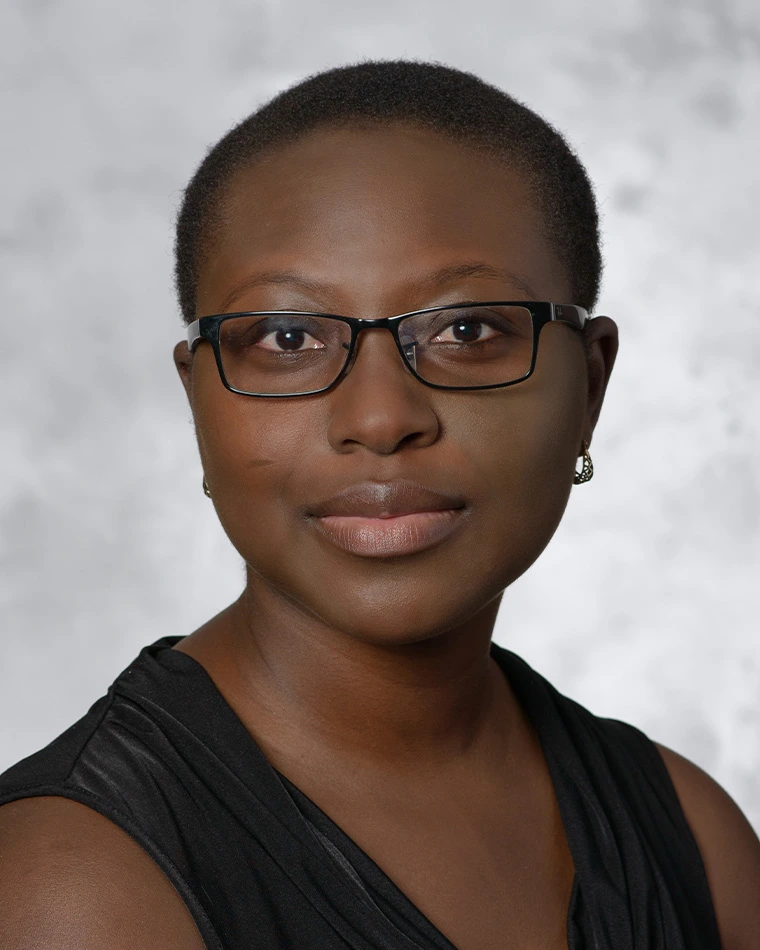
Dr. Angelina Anani is an Associate Professor in the Department of Mining & Geological Engineering at the University of Arizona, College of Engineering. She is also a member of the Graduate Faculty and actively contributes to research and teaching in mining systems optimization, mine planning, and sustainable mining practices. Education: PhD in Mining Engineering, Missouri University of Science and Technology, Rolla, Missouri, United States BS in Mining Engineering (Summa cum laude), Missouri University of Science and Technology, Rolla, Missouri, United States Research Interests: Dr. Anani's research spans a broad spectrum of mining engineering challenges, focusing on modeling and optimization of mining systems , mine planning and production scheduling , and sustainable mining system design . She investigates mine equipment reliability , tunneling and underground works , and energy and water efficiency . A significant portion of her recent work integrates machine learning and data-driven approaches into mine safety and planning, including 3D/4D/VR applications and digital twin systems . Her interdisciplinary approach also includes ethnographic research in mining communities and supply chain management in the mining sector. Publications Trends: Her recent publications reflect a strong shift toward intelligent systems in mining, with increasing focus on machine learning for safety, process mining for maintenance, and digital twin deployment. She combines traditional optimization techniques like discrete event simulation with modern AI to solve complex mining challenges, particularly in underground and transition mines. Scientific Awards: Freeport-McMoRan, Inc. Career Development Grant Society for Mining, Metallurgy and Exploration, Fall 2022 Faculty Core Advising and Grants: Dr. Anani supervises graduate research through MNE 900 (Research), MNE 910 (Thesis), and MNE 920 (Dissertation) courses. She has secured external funding such as the Freeport-McMoRan Career Development Grant, supporting her innovative work in mine optimization and safety. While current students are not listed, her active supervision load indicates ongoing mentorship of master’s and PhD candidates. Labs and Teams: She is actively involved with the San Xavier Underground Mine Laboratory, where she contributes to monitoring systems and digital twin development. Her collaborative work with researchers from Chile and Ghana highlights her international engagement. She is also affiliated with professional societies including the Society of Mining, Metallurgy and Exploration (SME), Society of Mining Professors, and Women in Mining (WIM), contributing to both technical and diversity initiatives in the field.
Wendy Stubbs is an Associate Professor in the School of Social Sciences at Monash University, specializing in corporate sustainability and purpose-driven business models. Her research explores how businesses can holistically address environmental, social, and economic responsibilities, with a focus on B Corps, purpose ecosystems, and the Sustainable Development Goals (SDGs). She leads major ARC-funded projects like 'Sustainability Transformation Pathways for SMEs' and co-investigates the global TRANSFORM initiative. Her PhD (2006) pioneered the 'sustainability business model' concept, recognized as foundational in the field. She has taught corporate sustainability for over 15 years in Monash’s graduate programs. Notable awards include top 0.05% global ranking in Sustainability by ScholarGPS (2024), Banksia Research Award (2019), and multiple teaching commendations. Research interests span sustainability reporting, integrated reporting effectiveness, and governance mechanisms for SDG alignment. Recent work examines SMEs’ experimentation with transformative business models and B Corps’ stakeholder engagement strategies. Her contributions bridge academia and industry via advisory roles with CPA Australia and global sustainability partnerships.
Dr Ben Earle is a Senior Lecturer and Head of the Department of Music at the University of Birmingham. He holds a MA (Cantab), MMus (London), and PhD (Cantab). His academic career includes a Junior Research Fellowship at St John’s College, Oxford before joining Birmingham in 2004. His research focuses on 20th-century music, analysis, critical theory, and the intersection of music with fascist Italy’s cultural politics. He teaches undergraduate and postgraduate modules on topics including modernist music analysis, critical theory, and the history of musical aesthetics. Education: MA from University of Cambridge MMus in Theory and Analysis from King's College London PhD from University of Cambridge Research interests include Marxist aesthetic theory (Adorno/Jameson), Italian and British concert music, and the cultural politics of fascism. His publications analyze composers like Pizzetti, Dallapiccola, and Puccini, with recent work on musical modernism in Fascist Italy. He actively reviews for major journals and contributes to scholarly editions of works by Arthur Bliss and Riccardo Zandonai. Administrative roles include Library representative, Exams Officer, and Director of Learning and Teaching. His current research explores musical realism and the legacy of modernist composers. He advises PhD students on topics ranging from Ghedini’s operas to saxophone performance practices in interwar Italy.
Pedro Gabriel Silva is an Assistant Professor at the University of Trás-os-Montes and Alto Douro (UTAD). He holds a BA in Anthropology from ISCTE-IUL (1996), a DEA and PhD in Contemporary Studies from the University of Santiago de Compostela (2011), and a dual PhD in Social Work from ISCTE-IUL (Portugal) and the University of Jyväskylä (Finland) via co-tutelle (2023). His research focuses on socio-environmental conflicts, environmental justice, social movements, refugee reception policies, and the history of social work. He has conducted visiting research at UC Berkeley’s Institute of European Studies (2006) and the University of Roskilde’s Department of Environmental, Social & Spatial Change (2011). Education Highlights: B.A. Anthropology, ISCTE-IUL, 1996 DEA/PhD Contemporary Studies, University of Santiago de Compostela, 2011 PhD Social Work (co-tutelle), ISCTE-IUL & University of Jyväskylä, 2023 Key Research Projects (2013–2023): SYMBIOS: Demographic Crises & Livable Territories (Galician/EU, 2013–2017) MINECO: Mining Externalities in Iberia (Spanish Government, 2015–2017) PIMA: Environmental Monitoring Program (EDP, 2015–2022) INTEGRURAL: Rural Resilience Education (EU Erasmus+, 2021–2023) His work bridges historical analysis with contemporary social issues, emphasizing radical social work practices in revolutionary contexts and systemic challenges in refugee integration. He leads the Territorial Transitions & Wellbeing (T2WELL) research group, focusing on socio-ecological transitions in marginal regions. Key contributions include analyzing Portuguese social workers’ roles during the 1974 revolution, comparative studies on refugee policies in Portugal and Finland, and transnational social movement dynamics. His research often intersects with participatory methodologies and critical policy analysis.
Rachael Medhurst is a Senior Lecturer in Digital Forensics and Course Leader of the MSc Applied Cyber Security at the University of South Wales, part of the Faculty of Computing, Engineering and Science. She leads research and teaching in Digital Forensics, Cyber Security, and Emerging Technologies, with a focus on authentic workplace emulation learning environments. Her roles include teaching courses such as Digital Crime Scene Management, Mobile Device Forensics, and Incident Response Investigations. Education: BSc (Hons) and MSc in Digital Forensics from the University of South Wales, PGCLTHE (Postgraduate Certificate in Learning and Teaching in Higher Education). Research Interests: Emerging Technology Forensics, Vehicle Forensics, Cybersecurity Incident Response, and Digital Evidence Analysis. Awards: FHEA, MCSFS, MCFE. Her research explores forensic methodologies for emerging technologies like smart vehicles and IoT devices. She has presented at conferences such as the Chartered Society of Forensic Science Conference and contributed to BBC Frontline Fightback, discussing vehicle data vulnerabilities. She leads initiatives to bridge academic and industry practices through partnerships with law enforcement, cybersecurity firms, and certifications like Bond Solon and Magnet AXIOM. Her teaching leverages cutting-edge facilities like the Crime Scene House, Moot Court, and Secure Operations Centre to simulate real-world scenarios. She emphasizes continual professional development, completing training in Windows 11 Forensics, Apple Mac Examinations, and Vehicle Forensics. Recent articles and media appearances highlight her work in public cyber safety, healthcare cybersecurity, and forensic science innovation. She is pursuing a PhD in Emerging Technology and Digital Forensics to advance forensic methodologies for new technologies.
Manuel Duarte Mendes Monteiro Laranja is a Full Associate Professor with Agregação at ISEG (Lisbon School of Economics and Management), University of Lisbon, where he has been a longstanding faculty member since at least 2000. He earned his PhD in Economic Policy of Science, Technology, and Innovation from the University of Sussex in 1997. His academic roles include teaching in Master’s programs such as Industrial Management, Operations and Sustainability, and Innovation and Research for Sustainability, where he has also served as course coordinator. Education: PhD in Economic Policy of Science, Technology, and Innovation, University of Sussex (1997) Current Affiliation: ISEG - Lisbon School of Economics and Management, University of Lisbon Academic Rank: Associate Professor His research centers on science, technology, and innovation policy (STI), with a strong emphasis on smart specialization, entrepreneurial discovery, social innovation, and innovation ecosystems. He has published extensively in journals and contributed chapters to academic books on innovation policy evaluation, transformative innovation, and regional development. His work often explores governance structures, policy mixes, and the systemic challenges in implementing innovation strategies, particularly in Portuguese and Brazilian contexts. The most recent publications show a consistent trend toward transformative innovation policy, smart specialization, and the role of participatory processes in regional development. His articles span topics from industrial resilience to the digital transformation of cities, reflecting a broad interdisciplinary approach that combines economic policy, governance, and sustainability. He frequently investigates innovation modes (STI and DUI), entrepreneurial ecosystems, and the adaptation of European innovation frameworks to developing regions. Scientific Contributions and Leadership: Founder of LCreation - ISEG’s Center for Entrepreneurship and Innovation (2014–2018) Vice-Director of the Interdisciplinary Research Institute (3is), University of Lisbon (2013–2016) Member of the Management Board, KIC EIT Health, University of Lisbon (2014) Executive Innovation Manager, BTEN – Business Talent Enterprise Network (2012–2015) Advisor to the Portuguese Government (Prime Minister’s Office and Secretary of State of Innovation) on technology and innovation policy Manuel has supervised over 70 Master’s students at ISEG, covering diverse topics such as circular economy, Industry 4.0, innovation ecosystems, and sustainability transitions. His advising reflects a strong commitment to applied research and policy-relevant thesis work. He has not held formal grants listed in the text, but his leadership in policy advisory roles and research centers indicates significant involvement in funded initiatives. He has been involved in several research labs and innovation initiatives, including ULab ISEG and Policy Lab, and has contributed to EU-level innovation programs. His leadership in LCreation and 3is highlights his role in fostering interdisciplinary research and entrepreneurial culture within the university.
Victor Román Mendoza is an Associate Professor of Women's and Gender Studies and English Language and Literature at the University of Michigan's College of Literature, Science, and the Arts. He holds a joint appointment across Women's and Gender Studies, English, and American Culture departments, and serves as the Acting Director of the Asian/Pacific Islander American Studies Program while also maintaining faculty affiliation with the Center for Southeast Asian Studies. Education: Ph.D. in English from the University of California, Berkeley Mendoza's research operates at the critical intersection of queer and trans of color critique, critical race theory, and transnational feminist studies. His scholarship explores how U.S. imperialism shapes racial, sexual, and gendered formations through careful analysis of Asian American literature and culture, multiethnic U.S. literary traditions, visual cultures, and modernist formations. His methodological approach combines archival research with theoretical innovation to examine colonial intimacies and imperial citizenship across historical and contemporary contexts. Mendoza's publications reveal a sustained intellectual trajectory examining the intersections of race, gender, sexuality, and U.S. imperial power. His work spans historical analysis of American colonialism in the Philippines to contemporary Asian American literary studies, demonstrating conceptual continuity between seemingly disparate periods through attention to how imperial power operates through intimate relations and cultural formations. Scientific Awards: Finalist for National Book Award in the Philippines (2017) for Metroimperial Intimacies As an educator and institutional leader, Mendoza has significantly contributed to the development of interdisciplinary scholarship at the University of Michigan. His leadership of the Asian/Pacific Islander American Studies Program demonstrates his commitment to building academic structures that center marginalized voices and experiences. While currently not accepting new graduate students, his mentorship has influenced numerous scholars working at the intersections of queer theory, critical race studies, and transnational feminisms. Mendoza's scholarly work is deeply integrated with institutional initiatives at Michigan, particularly through his involvement with the Center for Southeast Asian Studies and the Asian/Pacific Islander American Studies Program, where he helps cultivate research and dialogue on Asian diasporic experiences and U.S. imperial histories.
Styliana Avraamidou is an Assistant Professor in the Department of Chemical and Biological Engineering at the University of Wisconsin-Madison. She leads research in Process Systems Engineering, focusing on expanding Circular Economy supply chains through mathematical optimization and control. Education: PhD (2018, Imperial College), MEng (2014, Imperial College) Her research interests span Mathematical Optimization and Control , Circular Economy Systems Engineering , Energy Systems Engineering , and the Food-Energy-Water Nexus , with applications in sustainable industrial processes and smart manufacturing. Her recent publications highlight trends in bilevel optimization , distributed model predictive control , and circular economy frameworks for plastic recycling and energy systems. These works integrate data-driven models and multi-parametric programming to address industrial challenges. Scientific Awards: 2024 AIChE’s Institute for Sustainability Managing Board Member 2023 iSoGO Young Researcher Award 2022 Bluemke Assistant Professorship 2022 Faculty Sustainability Fellowship Multiple AIChE and Elsevier awards (2016–2020) Avraamidou teaches graduate courses in process optimization, including CBE 750 (Advanced Process Synthesis) and CBE 470 (Process Dynamics), while mentoring research on sustainable chemical systems.
Dr. Changxing Dong is a Research Associate at the Leibniz Institute of Agricultural Development in Transition Economies (IAMO) since November 2010, specializing in agent-based modeling and agricultural policy simulation. He previously worked at Martin-Luther-University Halle-Wittenberg. Current affiliation: IAMO Department of Structural Development of Farms and Rural Areas Prior affiliation: Martin-Luther-University Halle-Wittenberg His research focuses on: Agent-based modeling of agricultural systems Ecosystem services quantification Land market dynamics and resilience Policy simulation tools (AgriPoliS) Multifunctional agricultural land use Recent publications highlight trends in: Deep reinforcement learning integration with agent-based models AgriPoliS software sustainability Spatial analysis of grazing intensity in Kazakhstan Simulation games for policy evaluation He collaborates extensively on projects like AgEnRes, AgriPoliS, MULTAGRI, and Rehwinkel Resilience, working with Alfons Balmann, Ruth Njiru, and Franziska Appel on AI-enhanced agricultural simulations.
S. Alexander Haslam is a Professor of Social and Organizational Psychology and Laureate Fellow at the University of Queensland's School of Psychology, where he maintains an active research program with over 300 peer-reviewed articles and 15 authored or edited books. He currently serves as Associate Editor of The Leadership Quarterly and previously held the Chief Editor role for the European Journal of Social Psychology . His work bridges academia and real-world application through interventions like Groups 4 Health and More Than Sport, targeting mental health via social identity principles. Haslam's research centers on social identity theory and group processes across organizational, health, and social contexts. He examines how shared identities influence leadership, mental health outcomes, and collective resilience, with key applications in workplace stress, athletic performance, retirement transitions, and emergency response interoperability. His social identity model of leadership challenges traditional views by emphasizing group-based influence, while interventions such as social identity mapping directly address loneliness through community identification. The 2025 articles reveal three dominant trends: (1) mental health applications in high-stress occupations (construction, emergency services), (2) identity leadership in sports across cultures, and (3) organizational identity in crisis scenarios. Methodologically, they feature randomized controlled trials, longitudinal designs, and cross-national collaborations—particularly in Japan and Europe—validating the social identity approach for loneliness reduction, team performance, and ethical behavior. Common threads include psychological safety, group membership multiplicity, and intervention scalability. Scientific awards include Distinguished Contribution to Psychological Science from both the Australian Psychological Society and British Psychological Society, plus his 2022 appointment as a Member of the Order of Australia for 'significant service to higher education, particularly psychology, through research and mentoring.' While specific grant details are absent, his work is embedded in major collaborative projects like the Global Identity Leadership Development Project and pandemic response studies. He mentors researchers globally, with his leadership evident in large-scale cross-cultural teams (e.g., 25+ co-authors on Capitol attack analysis). Policy impact is demonstrated through advisory roles in social prescribing and mental health frameworks. Haslam co-leads the Groups 4 Health intervention team and develops tools including the Identity Leadership Inventory–Youth (ILI-Y) and Visual Identity Leadership Scale (VILS). His research group collaborates across sports, clinical, and emergency domains, with ongoing projects on psychedelic therapy, retirement transitions, and AI-human interaction. The BBC Prison Study remains a foundational reference for his organizational identity work.