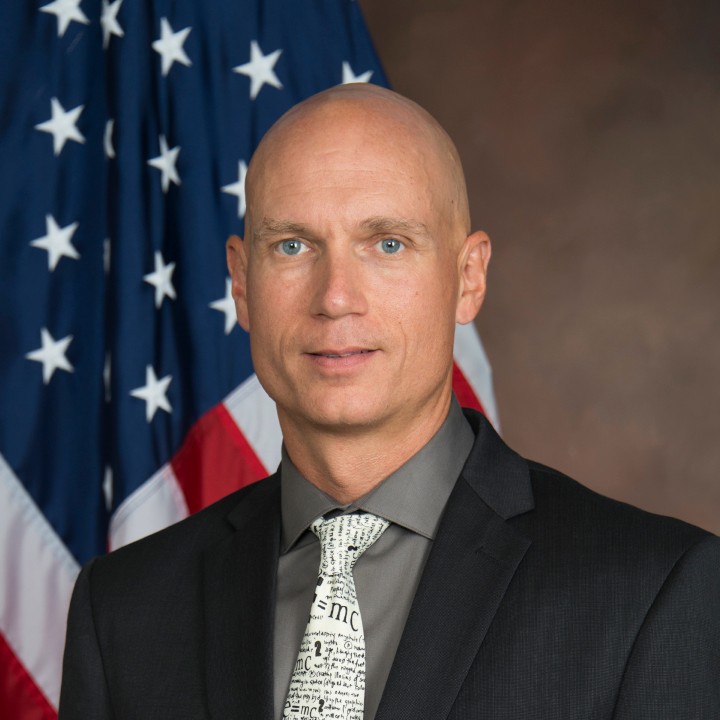
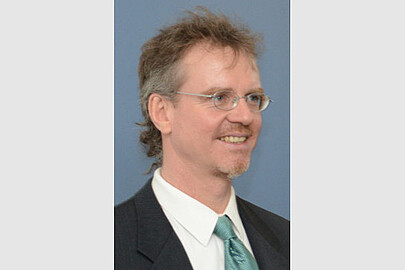
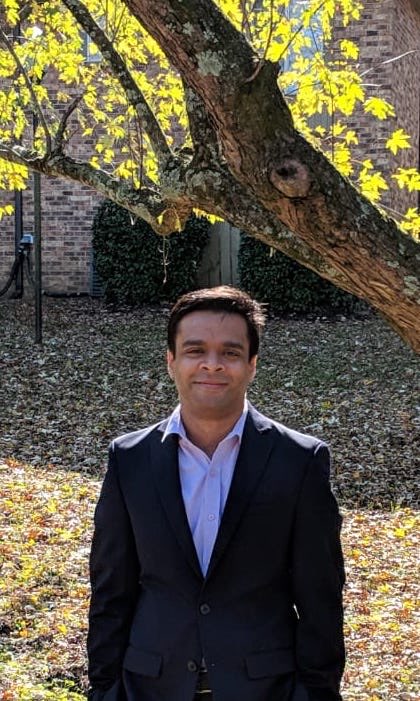
Dr. Matthias Jäger is a Researcher in the Department of Fiber Photonics at the Leibniz Institute for Photonic Technology (IPHT) . His work focuses on advanced optical fiber development, particularly in doped materials and nonlinear laser dynamics. Core technologies: Thulium/Yb/Ho-doped fibers, periodic shadowing for stray light suppression, nonlinear loss management Instrumentation: High peak power laser systems, fluorescence lifetime analysis, multicore emission profiling Research interests span laser physics, materials science, and optical engineering. Recent publications highlight breakthroughs in: Directional stability control for fiber ring lasers (2021-2024) Hybrid Tm:YAG crystal-derived fiber fabrication (2022) Nanoparticle-doped optical fibers (2024) 2 µm eye-safe laser systems (2024) Pr3+-doped nanocrystal fiber integration (2024) Thulium concentration optimization for laser efficiency (2025) His work demonstrates expertise in fiber fabrication methods including: Modified Chemical Vapor Deposition (MCVD) Powder-sinter technology Molten-core processing REPUSIL fiber drawing
D.G. Webster is an Associate Professor in the Environmental Studies Department at Dartmouth College, specializing in environmental governance, political economy, and social-ecological systems. Her research focuses on "precursors to governance," examining the processes social-ecological systems undergo before effective environmental policies can be designed and implemented. Dr. Webster holds a B.A. from Connecticut College and both an M.A. and Ph.D. from the University of Southern California. She serves as Editor of the journal Global Environmental Politics and contributes to her field through service to the Environmental Studies Section of the International Studies Association and the Ocean Taskforce of the Earth Systems Governance Project. She was awarded the Fulbright Distinguished Fellowship in Oceans Governance at the University of Sao Paulo, Brazil for 2024-2025. Her research examines how power disconnects and problem narratives affect environmental governance across various contexts including fisheries, mining, oil production, nutrient pollution, climate change, and public health. She has developed three key conclusions: institutional design cannot be ahistorical; shifting to effective precursors to governance is necessary for successful environmental management; and synergies between environmental and social justice movements are crucial for breaking down governance barriers. Dr. Webster's work employs diverse methodologies including historical analysis, computational modeling, and interdisciplinary collaboration. She has led projects such as the Chesapeake Governance Project, Media Coverage of Climate Related Extreme Events, and the development of the Oceans Governance Toolkit. Her research has been funded by organizations including NSF's Social-Environment Synthesis Center (SESYNC). Among her notable awards and recognitions are her editorship of Global Environmental Politics , service on multiple editorial boards including Environmental Politics and Earth Systems Governance Journal , and her role as a contributor to the International Science Council's Policy Brief on Global Sea-Level Rise. She has also served as a panelist at the UN Oceans Conference in Lisbon, Portugal (2022). Dr. Webster teaches courses including Marine Policy (ENVS 17), Political Economy of US Environmental Governance (ENVS 56), Global Environmental Politics (ENVS 65), and Business, Growth, and the Environment (ENVS 16). She has advised numerous students and collaborated with researchers across disciplines to advance understanding of environmental governance challenges and solutions.
Professor Kenneth S. Allen serves as Professor of Nuclear Engineering in the Department of Physics and Nuclear Engineering at the United States Military Academy (USMA), West Point. A retired U.S. Army officer with extensive aviation and reactor operations experience, he transitioned to civilian academia in 2017 after 14 years of military service including roles as aviation platoon leader, battalion operations officer, and Company Commander in Japan. His academic credentials include: PhD in Nuclear Engineering, University of South Carolina (2011) MS in Nuclear Engineering, University of Florida BS in Civil Engineering, United States Military Academy Dr. Allen's research centers on next-generation nuclear systems, specializing in micro-modular reactors for military applications, advanced fuel management strategies, and computational modeling via MCNP. His current experimental work focuses on alphavoltaic cell development using the USMA Pelletron Particle Accelerator, building on his doctoral research in sodium-cooled fast reactors for minor actinide transmutation. Analysis of his publication history reveals consistent focus on defense-oriented nuclear solutions, with recent work emphasizing tactical power systems and waste reduction through innovative burner reactor designs. His 2018-2011 publications demonstrate technical leadership in sodium-cooled fast reactor optimization and minor actinide transmutation techniques. Professional service highlights: ABET Commissioner Active member: American Nuclear Society, American Society of Engineering Education Honor society memberships: Society of Physics Students, Phi Kappa Phi, Tau Beta Pi Dr. Allen leads the USMA triathlon club as Officer in Charge and maintains an active Ironman triathlete profile, reflecting his commitment to physical excellence alongside academic pursuits.
Dr. Wei Li is a Senior Lecturer in International Business at the University of Sydney Business School , where she co-leads research initiatives on China-Australia economic relations and serves as Program Director for the Master of International Business. Her work bridges academic rigor with industry impact through partnerships with KPMG and the China Studies Centre. Education : BA (Renmin University), MSc (London School of Economics), PhD (Macquarie University) Research Focus : Globalization of Chinese enterprises, RMB internationalization, renewable energy in Asia-Pacific, and diaspora entrepreneurship Leadership : Inaugural Program Director for the Executive Global Unicorn Program with Cheung Kong Graduate School of Business Her research analyzes how Chinese firms navigate regulatory environments in advanced economies, build cross-border legitimacy, and adapt to structural shifts like carbon neutrality policies and geopolitical tensions. Recent work explores employability challenges for international students and digital payment trends in Asia-Pacific. Articles reveal a focus on CSR strategies in conflicting institutional contexts, renewable energy economics , and investment pattern analysis across 15 most recent publications. She has received grants from KPMG and industry partners for research on China-Australia business ecosystems. Dr. Li actively engages in experiential learning through SDG-focused practicum courses and teaches units like MIBS6005 International Business Capstone. She supervises research students on topics including SME informality in emerging markets.
Jan Cermak is Professor and acting Director of the Institute of Meteorology and Climate Research - Atmospheric Trace Gases and Remote Sensing (IMK-ASF) at Karlsruhe Institute of Technology (KIT). His research focuses on atmospheric science with specialization in fog dynamics, aerosol-cloud interactions, and satellite remote sensing applications. His primary research interests include Atmospheric Science, Meteorology, Remote Sensing, Aerosol-Cloud Interactions, Fog and Low Stratus Dynamics, Satellite Meteorology, and Machine Learning Applications. He employs geostationary satellite data and explainable machine learning to investigate fog life cycles, particularly in the Namib Desert and Po Valley, examining how aerosols influence cloud formation and dissipation processes. His work bridges observational meteorology with computational techniques for environmental monitoring. Recent publications (2023-2025) reveal a concentrated research trajectory on fog life cycle analysis using multi-sensor approaches, with significant emphasis on aerosol impacts in polluted regions and arid environments. Key methodological trends include explainable AI for cloud fraction adjustment analysis and high-resolution satellite-based air quality estimation, demonstrating strong interdisciplinary integration of atmospheric physics and data science. Scientific Awards: No awards were documented in the provided source material. Advising and Grants: Source documentation contains no information regarding student supervision, research grants, or funding sources. His leadership role as acting director of IMK-ASF suggests administrative responsibilities within the institute's research framework. Labs and Teams: Cermak leads the Atmospheric Trace Gases and Remote Sensing (IMK-ASF) group at KIT, conducting field campaigns including NaFoLiCA (Namib Fog Life Cycle Analysis) and FAIRARI (Fog and Aerosol Interaction Research Italy). The team specializes in satellite data analysis combined with ground-based observations to study fog dynamics in extreme environments.
Matthias Becker is a Professor at the Institute for Practical Computer Science within the Faculty of Electrical Engineering and Computer Science at Leibniz University Hannover, where he has been a core member of the Human-Computer Interaction group since 2019. He serves as Internship Coordinator for Computer Science and Computer Engineering and holds key roles in the Computer Science Examination Board and Selection Committee, actively shaping academic governance and student development. His academic journey began with PhD studies at the University of Bremen (1996-2000) supported by a DFG grant, followed by a postdoctoral permanent position at Leibniz University Hannover (2000-2019), an Associated Assistant Professor role at École des Mines de Nantes (2000), and a Habilitation in Computer Science in 2013. This foundation enabled his transition to a full professorship in 2019. Becker's research spans Human-Computer Interaction, Simulation and Modeling, and Bio-inspired Computing, with applications in agriculture, renewable energy, and manufacturing. His work integrates distributed systems, optimization algorithms, and wireless sensor networks to solve complex real-world problems, such as greenhouse monitoring, wind farm logistics, and tire noise reduction. Recent publications reveal a strategic focus on practical validation of simulation models and cross-domain applications of nature-inspired algorithms. His 15 most recent publications (2018-2024) demonstrate consistent innovation in applying simulation techniques to offshore wind farm installation, agricultural pest management, and sports science. These works emphasize real-world validation, collaborative problem-solving, and the development of domain-specific optimization frameworks that bridge theoretical algorithms and industrial implementation. As Internship Coordinator, Becker facilitates critical industry-academia connections for students, while his examination board responsibilities ensure rigorous academic standards. His leadership in the Human-Computer Interaction group drives research on interactive systems for agriculture, energy, and health, with particular emphasis on user-centered design in complex operational environments like wind farm logistics and greenhouse automation.
Dr. Ayan Mukhopadhyay serves as a Senior Research Scientist in the Department of Electrical Engineering and Computer Science at Vanderbilt University's School of Engineering. Previously, he was a Post-Doctoral Research Fellow at Stanford Intelligent Systems Lab where he received the 2019 CARS post-doctoral fellowship. His academic journey includes a Ph.D. from Vanderbilt University's Computational Economics Research Lab with a doctoral thesis nominated for the Victor Lesser Distinguished Dissertation Award 2020. His research spans critical domains in smart infrastructure systems with particular focus on: Developing robust decision-making frameworks for cyber-physical systems under uncertainty Creating multi-agent solutions for emergency response optimization Designing machine learning approaches for urban mobility and energy management Building proactive incident detection pipelines using heterogeneous data sources Analysis of his recent publications reveals strong thematic continuity in applying artificial intelligence to real-world infrastructure challenges, particularly in transportation systems, emergency response, and energy management. His work consistently bridges theoretical AI advances with practical implementation in smart city contexts, demonstrating expertise in both algorithmic innovation and systems integration. Award highlights include: CARS Post-Doctoral Fellowship (2019) Best Paper Award at ICLR's AI for Social Good Workshop Victor Lesser Distinguished Dissertation Award Nomination (2020) Dr. Mukhopadhyay leads significant research initiatives through ScopeLab, focusing on creating deployable solutions for public transit, emergency response, and energy systems. His work on vehicle-to-building charging, traffic incident localization, and equitable transit network design demonstrates commitment to solving high-impact urban challenges through rigorous computational methods. Current projects involve developing simulation environments for non-stationary environments (NS-Gym) and explainable planning frameworks integrating formal logic with large language models.
Dr. Zhaoxia Pu is a Professor in the Department of Atmospheric Sciences at the University of Utah and an Adjunct Professor at the School of Computing . Recognized as a Fellow of both the American Meteorological Society and the Royal Meteorological Society, she serves on the NOAA Science Advisory Board and has led 38 federally funded projects from agencies including NOAA, NASA, NSF, DOE, and ONR. Specializes in numerical weather prediction , data assimilation , and AI/machine learning for high-impact weather systems Developed advanced methods integrating satellite/radar data (GOES-R, CYGNSS, TROPICS) with Earth system models (UFS, E3SM, WRF) Recipient of the 2024 Excellence in Research Award and 2023 Provost's Banner Project recognition Research Trends : Her recent publications focus on: Machine learning approaches for precipitation retrieval using GOES-R data Cold fog microphysics and visibility parameterization in complex terrain Tropical cyclone dynamics through radar and lidar data assimilation Boundary layer turbulence in landfalling storms Drought mechanisms linked to synoptic-scale circulation New particle formation in mountainous regions Scientific Leadership : Lead scientist for CFACT NSF field campaign (2021–2025) Editorial board member of leading journals Active reviewer for NSF, DOE, NOAA, and NASA Teaching & Mentorship : Teaches Numerical Weather Prediction , Atmospheric Dynamics , and Introduction to Atmospheric Sciences courses. Has supervised 28 graduate students to completion.
Prof. Dr. rer. nat. Anna Mechler is a faculty member at RWTH Aachen University , specifically affiliated with the Aachen Process Engineering school under the Teaching and Research Area Electrochemical Reaction Engineering . Her research focuses on electrochemical reaction engineering, particularly in the development of advanced catalysts for energy conversion systems. Research Interests: Oxygen evolution reaction (OER) optimization, electrochemical catalyst synthesis, plasma-assisted electrode fabrication, and sustainable energy technologies like fuel cells and water electrolysis. Publications: Recent work highlights the development of Ni-Co-O anodes, mechanochemical activation of catalysts, and innovative methods for improving electrolyzer efficiency and reproducibility. Labs/Teams: Active in the NGP² group at Aachen Process Engineering, contributing to industrial-scale electrochemical process development.
Ben Hodges is a Professor in the Civil, Architectural and Environmental Engineering (CAEE) Department at the University of Texas at Austin, holding the Marion E. Forsman Centennial Professorship in Engineering. He specializes in environmental and water resources engineering, with a focus on computational fluid dynamics (CFD), urban stormwater drainage modeling, and river dynamics. His research bridges hydraulics, geospatial analysis, and environmental fluid mechanics, addressing challenges like flood modeling, water distribution systems, and supersaturated dissolved gas management. Education: Ph.D., Civil Engineering, Stanford University (1997) M.S., Mechanical Engineering, George Washington University (1991) B.S., Marine Engineering/Nautical Science, U.S. Merchant Marine Academy (1984) Research Interests: Development of computational models (e.g., SPRNT, Frehd, SUNTANS) Oil spill transport modeling, saltwater intrusion, and continental river networks High-performance parallel algorithms and hydraulic simulation tools His work emphasizes practical applications, such as designing stormwater systems and predicting environmental impacts like oil spill trajectories. He collaborates on projects with organizations like IBM Research Austin and the U.S. EPA, contributing to tools like the SWMM5+ and PTSNet simulators. Hodges advises a dynamic graduate research group (JETlab) and maintains active involvement in academic conferences and international collaborations.
Kyu-Jung Kim is an Adjunct Lecturer and Visiting Research Assistant Professor at the University of Illinois at Urbana-Champaign's Department of Nuclear, Plasma, and Radiological Engineering. He holds a PhD in Technical Science from the Belarusian National Academy of Sciences and has held roles at INHA University (South Korea), LG Electronics, and multiple research institutes. His research focuses on Low Energy Nuclear Reactions (LENR), metal hydride thermal energy conversion, and direct borohydride fuel cell systems, with notable contributions to fuel cell efficiency, nanoparticle catalysis, and space power applications. Education: BS (1989) and MS (1991) in Mechanical Engineering from INHA University, Korea; PhD (2000) in Technical Science from Belarusian National Academy of Sciences. His career spans academic and industrial roles, including Chief Research Engineer at LG Electronics and advisory positions at Proton Scientific and Controlled Thermal Energy Engineering. Research interests emphasize advanced energy systems, including LENR-based power units, thermal wave phenomena in porous media, and fuel cell innovation. Recent work explores nanoscale catalysts for LENR, regenerative energy storage, and hydrogen-based technologies. His over 50 peer-reviewed articles and patents cover fuel cell design, thermal management, and energy conversion systems. Honors include LG Electronics' Innovative Idea Award (2006) and recognition as 'Great Man of The Month' (2003). He actively consults for energy companies and serves on scientific advisory boards. His interdisciplinary approach bridges nuclear engineering, materials science, and sustainable energy solutions.
Christina Roth is a Professor and Chair of Materials Process Engineering at the University of Bayreuth's Faculty of Engineering. Her research focuses on materials science and electrochemical energy systems, including fuel cells, redox flow batteries, CO₂ electro-reduction, and advanced materials synthesis via templating and electrospinning. She leads projects on operando methods to study catalytic processes and material degradation mechanisms. Her work bridges fundamental electrochemistry with applied energy technologies. Key research areas include developing high-performance electrocatalysts, optimizing electrode structures, and understanding reaction mechanisms under industrial conditions. Recent studies emphasize operando techniques to monitor catalyst behavior during operation, enhancing reliability in high-current-density electrolysis systems. Collaborations span academia and industry, addressing challenges in sustainable energy storage and conversion. Dr. Roth's expertise is reflected in over 150 publications across top journals like Nature Materials , ACS Catalysis , and Journal of the Electrochemical Society . She actively contributes to conferences such as the livMatS Colloquium series and serves on the Scientific Advisory Board. Her lab focuses on innovative materials for next-generation energy systems, emphasizing scalability and environmental impact.
Dominic King is an Honorary Clinical Lecturer at the Department of Surgery & Cancer, Faculty of Medicine, Imperial College London. He transitioned from a full-time NIHR Clinical Lecturer role in 2016 to focus on executive leadership in AI healthcare sectors, including roles at Microsoft AI (Health), DeepMind, Google Health, and UnitedHealth Group. His expertise spans behavioral economics, digital health innovation, and clinical informatics. Education & Research: King holds a PhD in Behavioral Economics, co-authoring the influential Mindspace Report on public policy design. His research focuses on Public Health, Clinical Sciences, and Applied Economics, with contributions to the HELIX Centre (a hospital design initiative) and co-founding Hark, a clinical task management platform acquired by Google. Professional Contributions: He pioneered early digital health programs, leading to numerous products and collaborations with Imperial College. His work bridges clinical practice with AI-driven solutions, emphasizing patient safety and healthcare optimization. Notable projects include AI systems for breast cancer screening and frameworks for esports athlete wellness. Key Themes in Publications: Recent articles explore barriers in healthcare access, biologic therapy efficacy in IBD, AI diagnostic tools, and musculoskeletal interventions. His work consistently integrates behavioral insights with technological innovation to address clinical challenges. Advising & Grants: As a startup founder and academic collaborator, King has secured funding for digital health ventures and co-authored studies on health informatics. His affiliations include the Centre for Health Policy and Patient Safety Translational Research Centre , reflecting his commitment to systemic healthcare improvement. Labs & Teams: Key affiliations include the HELIX Centre (Imperial/Royal College of Art collaboration) and the Behavioural Insights Team , leveraging multidisciplinary approaches to healthcare innovation.
Dr. Heather Macbeth is a Senior Lecturer in Pure Mathematics at Imperial College London, specializing in Kähler geometry, geometric analysis, and the formalization of mathematics. Her research develops geometric analysis techniques for complex manifolds while advancing proof verification through the Lean theorem prover. She leads the development of Lean's Mathlib library, creating formalizations for differential geometry, functional analysis, and representation theory. Her textbook The Mechanics of Proof introduces proof writing through Lean, integrating computer verification with mathematical pedagogy. Funded by a Microsoft Research Lean Award, Dr. Macbeth organizes workshops on formal mathematics and serves on the AMS Committee on Publications. Her geometric research examines Ricci solitons, Yamabe invariants, and Kähler-Einstein metrics, while her formalization work includes Sobolev inequalities and semilinear functional analysis. Research Contributions: Geometric analysis of Ricci solitons and Kähler metrics Formal verification of functional analysis theorems Proof assistant pedagogy and textbook development Contributions to Lean's mathematical library
Dr Nick Naumov is a Senior Lecturer in Hospitality & Tourism Management at the University of Northampton, affiliated with the Events, Tourism & Hospitality department within the Centre for Sustainable Business Practices. His research focuses on critical heritage studies, tourism geography, and niche tourism forms, with particular expertise in post-socialist Eastern Europe, cultural heritage interpretation, and hospitality management innovations. He holds a PhD in Human Geography from King's College London, an MSc in International Tourism from the University of Bedfordshire, and an MBA in Tourism Management from Assen Zlatarov University. Education: PhD (2019), MSc (2011), MBA (2009), BSc (2007) Industry Background: Front Office Operations, F&B Management in Bulgaria/UK/USA Research interests span residents' tourism perceptions, sustainable tourism development, service quality, and qualitative methodologies. His work contributes to UN SDGs related to education and sustainable development. He teaches across undergraduate and postgraduate programs, including BA International Tourism Management and MA International Hotel Management. Recent publications explore cultural tourism dynamics, post-pandemic hospitality trends, and the socio-political dimensions of heritage. He collaborates with the Council of Europe on cultural routes initiatives and oversees academic partnerships in Greece, Singapore, Myanmar, and Sri Lanka.