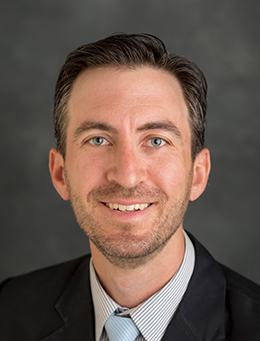
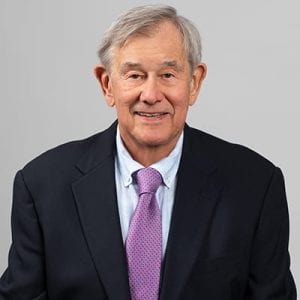
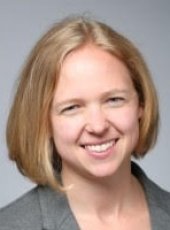
Prof. Dr. Lars Schweizer is a Professor of Strategic Management at Goethe University Frankfurt since 2007. His research focuses on Mergers & Acquisitions, Corporate Development, Organizational Change, Leadership, and Human Resource Management, with applications in pharmaceutical, biotechnology, and telecommunications industries. He served as Dean and Managing Director of Goethe Business School (2008-2013) and currently leads the Master of Digital Transformation Management and Master of Pharma Business Management programs. Holding a doctoral degree and habilitation from the University of Bamberg, Schweizer’s work has been published in top journals like Academy of Management Journal and Strategic Management Journal , while also contributing to encyclopedic entries in organizational sociology and sustainable management. His research explores cross-border M&A dynamics, knowledge transfer, and strategic capabilities in innovation-driven sectors.
Aleksey Cherman is an Assistant Professor in the School of Physics and Astronomy at the University of Minnesota. His research focuses on theoretical aspects of quantum field theory, nuclear theory, and particle physics with particular emphasis on Quantum Chromodynamics (QCD). Cherman's research interests span quantum field theory, nuclear theory, QCD, particle theory, gauge theory, baryon physics, and fermion physics. His work particularly emphasizes the large N limit, confinement phenomena, and symmetry structures in quantum field theories. He investigates fundamental questions about the nature of strong interactions, string theory approaches to QCD, and non-perturbative methods in gauge theories. Analysis of his recent publications reveals a strong focus on confinement mechanisms, symmetry structures in quantum field theories, and the interplay between gauge theories and string theory. His work often explores the large N limit of QCD, 1-form symmetries, and non-perturbative aspects of quantum field theories. Recent research has particularly emphasized the connections between confinement, symmetry, and the structure of gauge theories in various dimensions. Simons Collaboration on Color Confinement and QCD Strings (2022-2026) As Principal Investigator of the Simons Collaboration on Color Confinement and QCD Strings, Cherman leads a major research initiative focused on understanding the fundamental mechanisms of color confinement in quantum chromodynamics and the string-theoretic approaches to describing QCD phenomena. His research program involves both analytical and numerical approaches to non-perturbative quantum field theory problems.
Alessio Tei serves as Associate Professor in the Department of Economics at the University of Genoa, holding dual leadership roles as Member of the Board of Directors for the Italian Center of Excellence for Logistics, Transport, and Infrastructure (CIELI) and Member of the Department Board for Economics. His institutional engagement spans multiple academic programs across Genoa and Savona campuses. His research program centers on transport economics with specialized focus on maritime systems, energy transition markets, tourism infrastructure, and sustainable logistics. Key investigations examine digital transformation impacts through S-100 standards and e-Navigation adoption, technological innovation diffusion in shipping, accessibility frameworks for cultural heritage, and sustainability-driven innovation hubs. Methodological approaches integrate economic modeling with sector-specific regulatory analysis. Recent publications (2024-2025) reveal a cohesive research trajectory examining digitalization's economic implications across transport sectors, particularly maritime operations and tourism infrastructure. The works demonstrate consistent methodological rigor in assessing technological adoption barriers, regulatory impacts, and sustainability transitions through bibliometric reviews, operational impact evaluations, and benchmarking studies. Professor Tei maintains active affiliation with the Italian Center of Excellence for Logistics, Transport, and Infrastructure (CIELI), contributing to national policy development through research on multimodal transport systems, infrastructure sustainability, and technological integration in maritime corridors. His work bridges academic research with practical industry applications through this strategic partnership.
Dr. Stephanie Lansing is a Professor in the Department of Environmental Science & Technology at the University of Maryland's College of Agriculture and Natural Resources. She directs the Bioenergy and Biotechnology Lab, focusing on renewable energy systems, waste treatment, and the Food-Energy-Water Nexus. Her work spans ecological engineering, antimicrobial resistance mitigation, and sustainable bioplastic production from organic waste. College of Agriculture and Natural Resources Environmental Science & Technology Bioenergy and Biotechnology Lab Her research integrates anaerobic digestion , microbial fuel cells , and nutrient recovery to address global sustainability challenges. Recent projects examine bioplastic formation from food waste and AMR dynamics in manure systems , with fieldwork in the US, Africa, and Latin America. She co-developed the NourishNet platform combining real-time surplus food distribution ( FoodLoops ) with spoilage detection ( Quantum Nose ). Active grants exceed $6 million, including two major DOE awards for biofuel and bioplastic production from food waste. Her lab collaborates with institutions like Virginia Tech, Idaho National Laboratory, and international partners. Current team members include PhD candidates Maureen Nabulime and Adanyro Atilago, MS student Rafian Aziz, and undergrad researchers exploring waste-to-energy systems.
Edward Bonder serves as Professor of Cell Biology and Chair in the Department of Biological Sciences within the College of Arts and Sciences at Rutgers University-Newark. His laboratory investigates the structural and functional dynamics of the actin cytoskeleton across multiple biological contexts including morphogenesis, cell-cell contact formation, and organelle motility. Utilizing marine gamete models and cultured epithelial systems, his research bridges fundamental cell biology with developmental processes. Education: B.A. in Biology, University of Pennsylvania (1976) Ph.D. in Cell Biology, University of Pennsylvania (1983) Dr. Bonder's research focuses on actin-myosin interactions governing cellular dynamics, with particular emphasis on myosin motor proteins in fertilization models, adherens junction formation, and mitochondrial motility along cytoskeletal tracks. His work demonstrates how Rho GTPase signaling, microtubule-actin crosstalk, and unconventional myosins regulate cell polarization, wound healing, and embryonic development. The laboratory employs sea urchin coelomocytes and epithelial cell cultures to dissect stimulus-response mechanisms in organelle transport and cell adhesion. Publication analysis reveals sustained contributions to cytoskeletal dynamics over 25+ years, with recent work expanding into cancer biology, stem cell regulation, and host-microbe interactions. Key themes include Rab11-dependent trafficking, CDC42-mediated tumor suppression, and TLR sorting mechanisms - all rooted in fundamental cytoskeletal principles established through earlier sea urchin and epithelial models. No scientific awards are documented in the provided materials. Dr. Bonder maintains active research programs examining cytoskeletal regulation in development and disease, with consistent funding evidenced by continuous publication in high-impact journals including PNAS, Journal of Cell Biology, and EMBO Journal. His laboratory trains researchers in advanced cell imaging, molecular perturbation techniques, and model system applications. The research group operates from 309 Boyden Hall, utilizing sea urchin fertilization models, epithelial cell culture systems, and molecular approaches to investigate cytoskeletal dynamics across scales from single molecules to tissue organization. Current projects integrate traditional cell biology with emerging work in intestinal stem cells and microbial homeostasis.
Christopher Cherry is a Professor and Associate Department Head of Undergraduate Studies in the Department of Civil and Environmental Engineering at the University of Tennessee, Knoxville. His research focuses on sustainable transportation, micromobility (e-bikes, e-scooters), pedestrian and bicycle safety, and the impacts of emerging technologies on urban mobility systems. PhD, Civil and Environmental Engineering–Transportation, University of California, Berkeley (2007) MS, Civil Engineering–Transportation, University of Arizona (2003) BS, Civil Engineering, University of Arizona (2000) Dr. Cherry’s research interests lie at the intersection of transportation engineering, behavioral science, and sustainability. He investigates travel behavior, transportation economics, and the safety implications of shared and electric micromobility systems. His work emphasizes non-motorized transportation and the integration of new technologies into urban planning. He leads the Light Electric Vehicle Education and Research (LEVER) Initiative and is an Associate Director of the Center for Pedestrian and Bicyclist Safety (CPBS), a multi-institutional UTC led by the University of New Mexico. His recent publications span topics such as e-bike adoption, micromobility safety, transit integration, and urban delivery systems. Collectively, these works reflect a strong emphasis on data-driven policy, behavioral modeling, and the environmental and public health impacts of transportation choices. NSF CAREER Award TCE Ferris Faculty Award (2015) TCE Professional Promise in Research Award (2014) CEE Research Recognition Award (2009, 2012) Member, Transportation Research Board Chair, SAE Micromobility Committee Dr. Cherry has supervised numerous PhD and MS students in transportation research and has led multiple federally and state-funded projects on micromobility, transit, and safety. He is actively involved in professional service and collaborates with institutions across the U.S. and internationally, including UC Berkeley, Tsinghua University, and the Asian Development Bank. His work bridges engineering, policy, and public health to advance sustainable and equitable urban mobility. He leads research initiatives on e-bike and e-scooter safety, urban logistics, and the integration of big data into transportation planning. His team utilizes smartphone-based data collection, video analysis, and simulation models to understand real-world behavior and improve system design.
Paul E. Peterson holds the Henry Lee Shattuck Professorship in Harvard University's Faculty of Arts and Sciences, Department of Government, where he directs the Program on Education Policy and Governance (PEPG). He concurrently serves as Senior Editor of Education Next: A Journal of Opinion and Research and as a Senior Fellow at Stanford's Hoover Institution, contributing to their Education Success Initiative focused on state-level policy solutions. His research centers on educational policy with emphasis on school choice mechanisms, charter school efficacy, and social capital dynamics. Peterson has pioneered longitudinal analyses of student achievement trends, documenting significant gains for students of color over 50 years and evaluating voucher program impacts. His work consistently bridges quantitative analysis of NAEP data with policy implementation studies, particularly examining how federalism shapes educational outcomes and how social networks influence intergenerational mobility. Recent publications (2023-2025) reveal three dominant trajectories: rigorous state-level charter performance benchmarking using NAEP metrics, analysis of social capital's role in educational mobility, and examination of political polarization's impact on school reform. His scholarship increasingly addresses pandemic-era educational disruptions while maintaining focus on structural inequities and market-based reform efficacy. His scientific recognition includes: John Simon Guggenheim Fellowship Woodrow Wilson Award from the American Political Science Association Walton Family Foundation Prize for Best Academic Paper on School Choice and Reform As PEPG Director, Peterson leads a high-impact research program producing policy-relevant studies frequently cited in national debates. The program's work on charter school rankings and voucher evaluations has directly influenced state legislation, while his Hoover Institution role connects academic research to practical governance solutions. Though specific grant details aren't provided, PEPG's sustained output indicates substantial research funding, and his editorial leadership at Education Next shapes scholarly discourse through curated opinion-research synthesis. PEPG operates as Peterson's primary research hub, coordinating multi-institutional studies on education policy with emphasis on empirical evaluation of reform initiatives. The program's work integrates quantitative analysis, survey research, and policy experimentation, maintaining strong connections to state education agencies through its focus on actionable solutions for policymakers.
Victor Danneyrolles is an Associate Member and Research Professor at the University of Quebec in Chicoutimi, specializing in Forest Ecology, Landscape Ecology, and Historical Ecology. His work focuses on understanding forest ecosystem dynamics through the lens of historical patterns, contemporary disturbances, and climate change impacts. His research interests span Forest Ecology , Landscape Ecology , Historical Ecology , Biogeography , Fire Ecology , and Disturbance Ecology . He applies Remote Sensing techniques to study ecosystem dynamics and develops approaches for Sustainable Forest Management in the context of global environmental change. His work frequently examines how historical baselines can inform current management practices in boreal and temperate forests. Analysis of his recent publications reveals a strong focus on wildfire dynamics in Canadian boreal forests, with particular attention to historical fire regimes, contemporary fire behavior, and climate change impacts. His research integrates paleoecological perspectives with modern remote sensing techniques to contextualize current disturbance patterns. A significant portion of his work examines how human activities, particularly forestry practices, have transformed forest landscapes over the past century. As a Graduate Student Advisor, Danneyrolles mentors doctoral candidate Aude Laforest and Master's students Gabriel Davidson-Roy, Mathieu Lacroix, and Lydia Ouellet. His research is conducted under grant funding (PCSO), focusing on understanding forest ecosystem dynamics through historical and contemporary lenses to inform sustainable management practices in the face of climate change.
Krista H. Lagus serves as Professor of Digital Social Science at the University of Helsinki's Faculty of Social Science, where she co-founded and directed the Center for Social Data Science (CSDS) starting in 2019. Her interdisciplinary work bridges computational methods with social science inquiry to analyze complex societal behaviors through digital footprints. Her educational foundation includes an M.Sc. in Computer Science (1996) and Ph.D. in Computer and Information Sciences (2000), both earned at Helsinki University of Technology (now Aalto University). This technical background enabled her transition into pioneering computational social science methodologies. Lagus's research integrates artificial intelligence and social science through signature projects: WEBSOM for visualizing large text corpora via self-organizing maps, Citizen Mindscapes for gauging public opinion through digital communication analysis, and Morfessor , a groundbreaking unsupervised morphological segmentation algorithm widely adopted in natural language processing. Her work demonstrates how machine learning can decode societal patterns from digital traces. Her scientific recognition includes: Academy Research Fellow, Finnish Academy of Sciences (2006-2012) Lagus actively supervises graduate students in AI and digital social science while contributing to academic governance as an Editorial Board Member for PeerJ Computer Science. Her research leadership is anchored in the Center for Social Data Science, which she established to foster cross-disciplinary collaboration between computational and social scientists. The Center for Social Data Science (CSDS) operates as her primary research ecosystem, driving initiatives that apply artificial intelligence to contemporary societal challenges. Through CSDS, Lagus cultivates methodological innovations that transform how social phenomena are observed and interpreted in the digital age.
Lev Gonick is the University Chief Information Officer at Arizona State University and holds the academic rank of Professor of Practice in the School of Public Affairs. He also serves as a Senior Global Futures Scientist with the Global Futures Scientists and Scholars initiative, and is affiliated with the Center on Technology, Data and Society. His career spans over 25 years in education, technology, and smart city development, including roles as CIO at Case Western Reserve University (2001-2013) and co-founder/CEO of DigitalC, a broadband innovation nonprofit. Education: Ph.D. in International Political Economy, York University (Canada), 1992 M.A. in World Politics, Binghamton University, 1983 B.A. in Philosophy, Political Science, and Religion, The Ohio State University, 1981 Research Interests: Focuses on the intersection of technology and society, including the future of education, broadband infrastructure, smart cities, IoT, programmable urban systems, and the political economy of information technology. His work emphasizes community engagement through technology and digital equity initiatives. Notable Achievements: Recipient of Inside Business Magazine's Power 100 (2015) Government Technology's Top 25 Doers, Dreamers and Drivers (2011) Broadband Properties Cornerstone Award (2011) NATOA Visionary of the Year (2010) ComputerWorld Premier 100 IT Leader CIO Magazine CIO 100 Award Professional Contributions: Pioneered projects like the Case Connection Zone, foundational to national initiatives like US Ignite and Gig.U. Developed ClevelandPlus in Second Life and OneCleveland digital city initiatives. Advocates for fiber-to-home networks and inclusive technology policies.
Dr. Ioannis Kaparias is an Associate Professor at the University of Southampton and Honorary Lecturer at Imperial College London. His expertise spans transport engineering, Intelligent Transport Systems (ITS), and sustainable mobility solutions. He holds a MEng from Imperial College London (2004) and a PhD in reliable dynamic in-vehicle navigation (2008). His research focuses on traffic management, active travel, public transport optimization, and the integration of new technologies like CAVs and MaaS. He leads the Transportation Research Group (TRG) at Southampton and has contributed to projects funded by the EU, UK authorities, and industry partners like BMW. Key areas include network reliability, cyclist safety, and land use-transport interaction. He is Deputy Editor-in-Chief of the IET Intelligent Transport Systems journal and serves on TRB committees. Teaching includes Highway & Traffic Engineering modules at Southampton and他曾指导过多个研究生项目。他精通希腊语、英语、德语、法语和意大利语。
Professor Mikhail Prokopenko is a leading academic in complex systems research at the University of Sydney's School of Computer Science. He holds a PhD in Computer Science (Macquarie University, 2002), MA in Economics (USA), and MSc in Applied Mathematics (USSR). As Director of the Centre for Complex Systems and Theme Co-Leader for Pathogen Emergence and Spread at the Institute for Infectious Diseases, his work focuses on modeling self-organizing systems, computational epidemiology, and AI applications in pandemic control. Roles: Director of Centre for Complex Systems, Theme Co-Leader (Pathogen Emergence), Theme Leader (Complex Systems) Education: PhD Computer Science (2002), MA Economics (USA), MSc Applied Mathematics (USSR) Affiliations: Fellow of Royal Society of NSW, Specialty Editor for Frontiers in Robotics and AI His research addresses challenges in complex systems like power grids, communication networks, and epidemiological models. Notable contributions include: RoboCup World Champion teams (2016, 2019) in Simulation League COVID-19 modeling featured in Nature's Top 50 SARS-CoV-2 articles (2020) Development of AMTraC-19 agent-based pandemic model Key research areas include: Guided self-organization principles Information dynamics in collective systems Thermodynamic efficiency of complex processes He has supervised over 200 publications and patents, with recent focus on pandemic response optimization and urban system resilience.
Angel Santamaria-Navarro serves as Associate Professor at Polytechnic University of Catalonia (UPC) and Robotics Researcher at the Institute of Robotics and Industrial Informatics (IRI), a CSIC-UPC joint center in Barcelona. His work bridges academic research and real-world deployment in mobile robotics, with current leadership in European TRIFFID (autonomous first-responder systems) and national LENA (lifelong navigation learning) projects spanning urban logistics and emergency response applications. His research centers on Mobile Robotics and Autonomous Systems with emphasis on human-robot collaboration in unstructured environments . Key focus areas include robot navigation in crowded urban settings, manipulation of deformable objects, and deployment of delivery systems like the LogiSmile project piloted across European cities. His work uniquely integrates machine learning with field robotics to solve practical challenges in last-mile logistics and disaster response. Recent publications (2022-2025) reveal a concentrated shift toward real-world robotic deployment , particularly in emergency response (TRIFFID) and urban logistics. Dominant themes include communication-aware multi-robot coordination, probabilistic perception for dynamic environments, and human acceptance studies – reflecting his commitment to transitioning lab innovations to operational field systems through Horizon Europe and national projects. Key recognitions include: 1st place at DARPA Subterranean Challenge, urban circuit (2020) 2nd place at DARPA Subterranean Challenge, tunnel circuit (2019) Beatriu de Pinós research fellowship (2021) Georges Giralt PhD award finalist (2018) R3 accreditation as consolidated researcher (2023) He actively mentors next-generation researchers as supervisor of PhD candidate Hafsa Taher (deep learning for autonomous vehicles) and Master's student Joan Tur Ruiz (object pose tracking). His research portfolio includes €5M+ in competitive funding spanning Horizon Europe projects (TRIFFID, TORNADO), national initiatives (LENA, AUDEL), and industry partnerships like the Vaive Logistics spin-off co-founded in 2023. As core member of UPC's robotics team, he contributed to the NeBula framework that won DARPA's Subterranean Challenge and currently leads development of TRIFFID's autonomous first-responder systems. His work with the LogiSmile consortium demonstrates practical urban deployment of delivery robots across Barcelona, Lisbon, and Milan, while the SOCIAL PIA project pioneers cybernetic avatars for cooperative human-robot teams.
Ana Dyreson is an Assistant Professor in Mechanical and Aerospace Engineering at Michigan Technological University and Associate Research Director at the Center for Innovation in Sustainability & Resilience (CISR). She leads the Great Lakes Energy Group, focusing on climate change impacts on electric power systems , energy transitions in cold climates , and thermal power plant modeling . Her work bridges solar photovoltaic design , electricity grid operational modeling , and the energy-water nexus . Education : PhD in Mechanical Engineering, University of Wisconsin–Madison (2018) MS in Mechanical Engineering, Northern Arizona University (2014) BS in Engineering Mechanics, University of Wisconsin–Madison (2011) Research emphasizes climate-resilient energy systems , particularly solar energy in cold climates and grid-scale modeling . Her 2025-2022 publications investigate snow mitigation on PV panels , heat pump adoption , floating solar-hydropower hybrids , and climate stressor impacts on thermoelectric plants . She develops inclusive teaching methods and advises on renewable energy deployment through initiatives like the Tech Forward Initiative on Sustainability and Resilience . Her team collaborates on multisector dynamics and energy-water-climate research in the Great Lakes region.
Erik R. Scott is the John P. Black Professor of History at the University of Kansas, serving as Director of the Center for Russian, East European & Eurasian Studies and Editor of The Russian Review . His research focuses on modern Russia, the Soviet Union, Cold War history, migration, diaspora, and global international relations. He holds a B.A. from Brown University and a Ph.D. from UC Berkeley, with research fellowships at the Kennan Institute and Georgetown University. Research Interests: Dr. Scott explores migration patterns, Cold War legacies, and Soviet empire dynamics through lenses of diaspora, border policies, and cultural exchange. His award-winning works include Defectors (2023), analyzing Cold War refugee systems, and Familiar Strangers (2016), examining the Georgian diaspora’s role in Soviet evolution. Current projects include a history of the Soviet Union’s collapse through sports. Teaching: He teaches courses on Russian history, the global Cold War, and diaspora studies, emphasizing interdisciplinary approaches using film, literature, and everyday life analysis. Awards & Grants: Recipient of NEH, ACLS, and Fulbright-Hays grants. His books have won multiple prizes, including the Ferrell Book Prize and Johns Family Award. Labs/Teams: Leads the Center for Russian, East European & Eurasian Studies and co-founded the Cold War in the Heartland digital humanities project for educators.